
Winner of an Honourable Mention in the 2026 WLA Student Awards – Graduate category
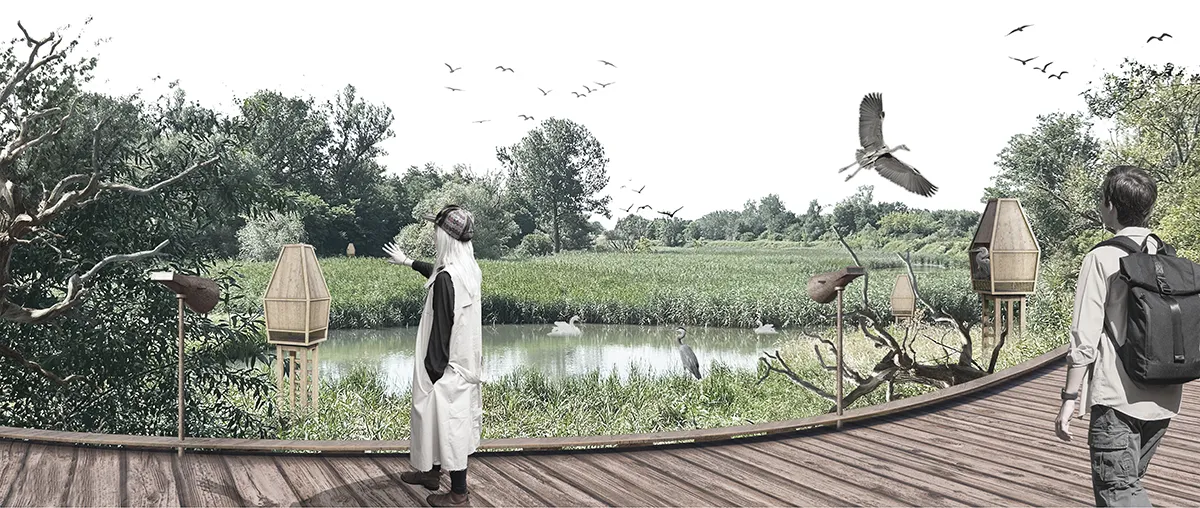
Contemporary riverside landscapes are increasingly losing their role as living ecosystems and becoming spaces subjected to control, regulation, and permanence. Variability, dynamism, processes of succession, and biological relationships that shaped river valleys for centuries have gradually been displaced by the need for stabilization.
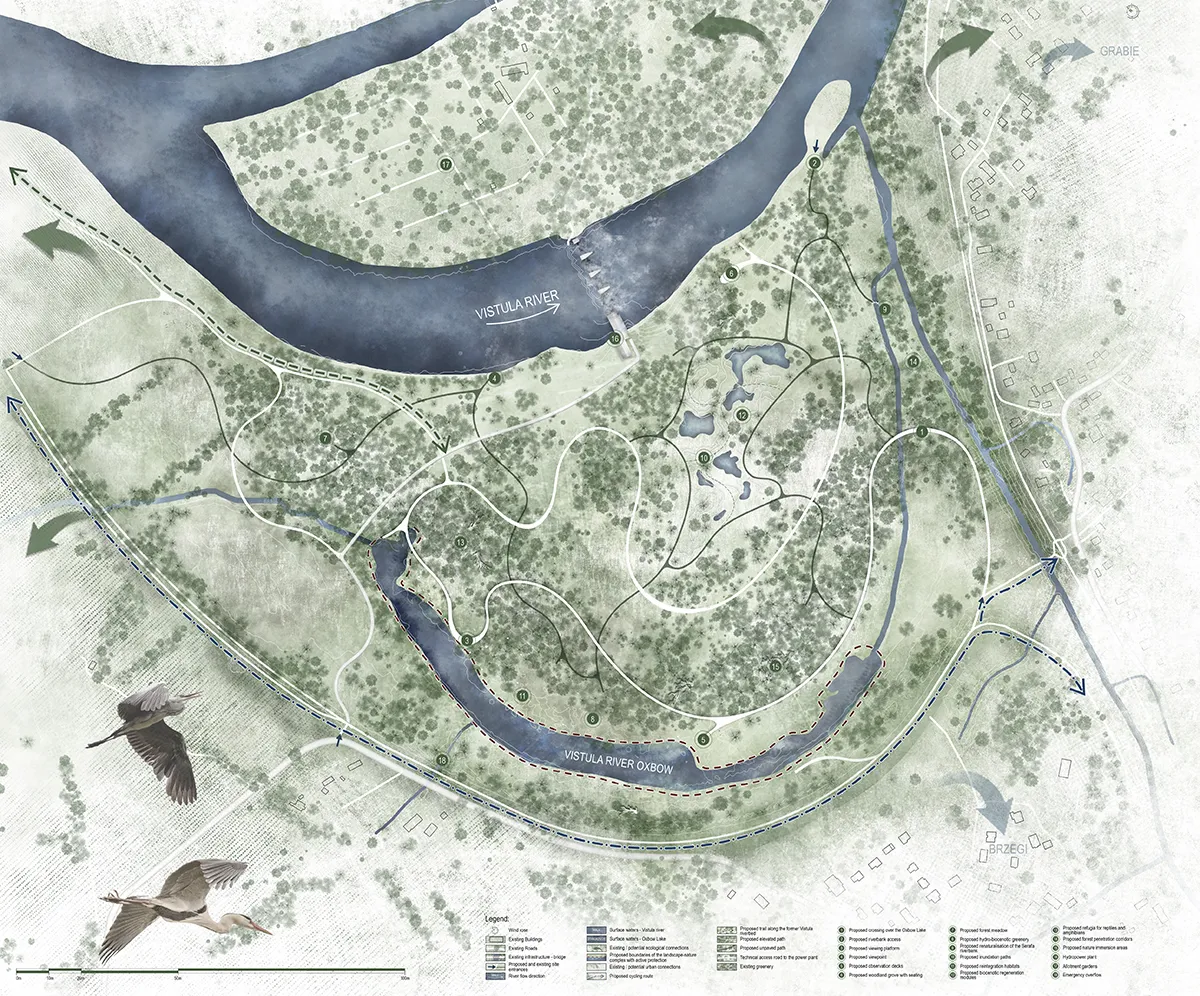
‘Topography of Aquatic Succession’ – Design of a Biocoenotic Park of the Variable Oxbow of the Vistula River in Krakow” – conceives the landscape as a living organism undergoing regeneration, succession, and transformation. The project departs from design strategies based on control and permanence in favor of a space that responds to climate, water, and natural biological processes. It demonstrates that revitalization is not only about imposing a new structure, but also about activating the potential already embedded within the landscape itself. Rather than creating a closed spatial composition, the project initiates a process – a landscape that evolves, matures, and regenerates together with nature. The proposal treats form itself as a tool for protecting the living processes of the oxbow, whose boundaries may gradually expand as succession continues and the biological continuity of the Vistula River valley is restored.
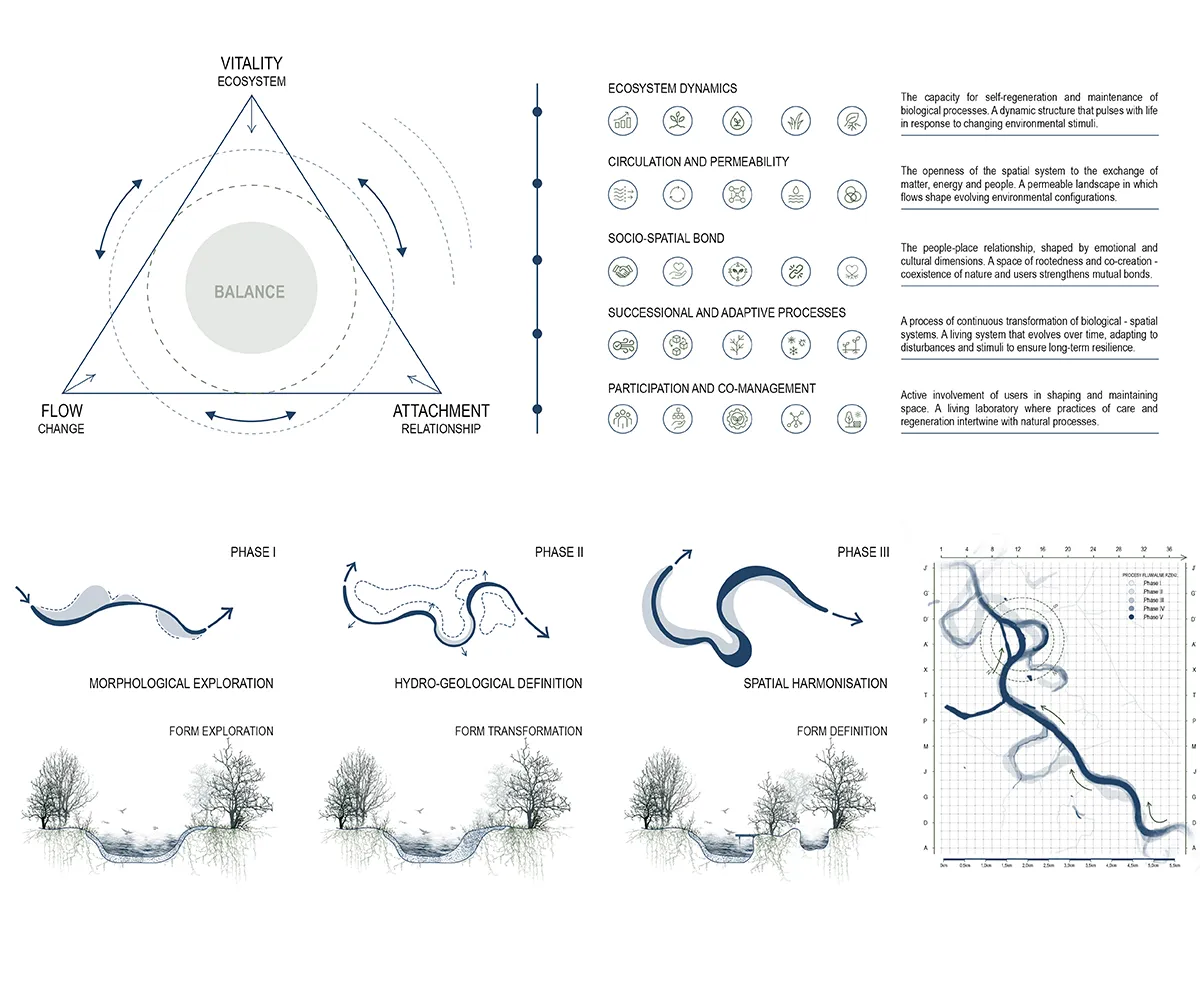
The main framework of the project is based on the ideas of vitality, flow, and attachment – understood in hydrological, ecological, and social terms. The park does not possess one fixed or finished form; instead, it remains open to the rhythm of nature, seasonality, and fluctuating water levels. Water becomes the force shaping the landscape, initiating processes of soil regeneration, vegetation succession, and the restoration of local biodiversity. Nature does not serve merely as a backdrop for architecture – it becomes its co-creator.
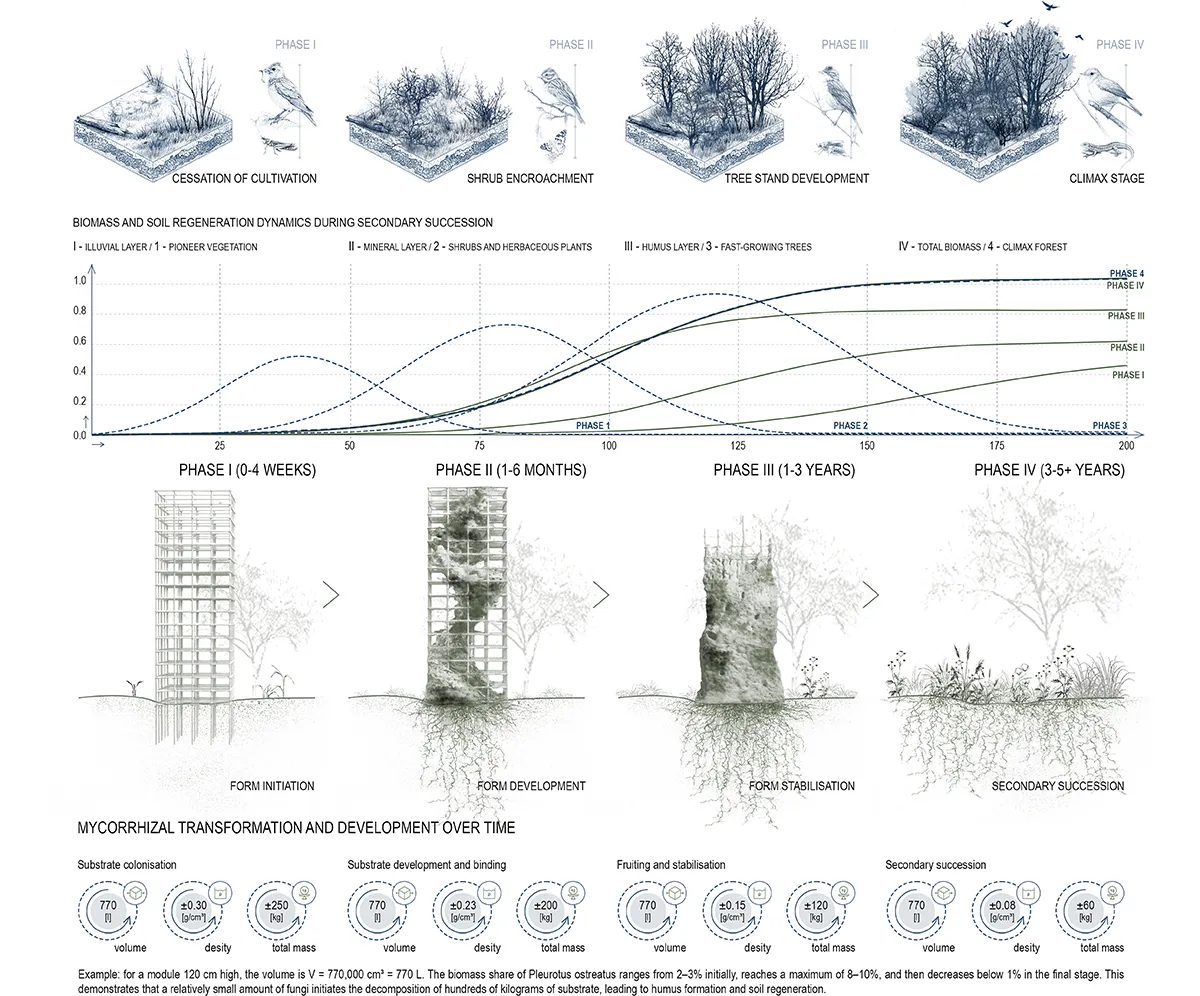
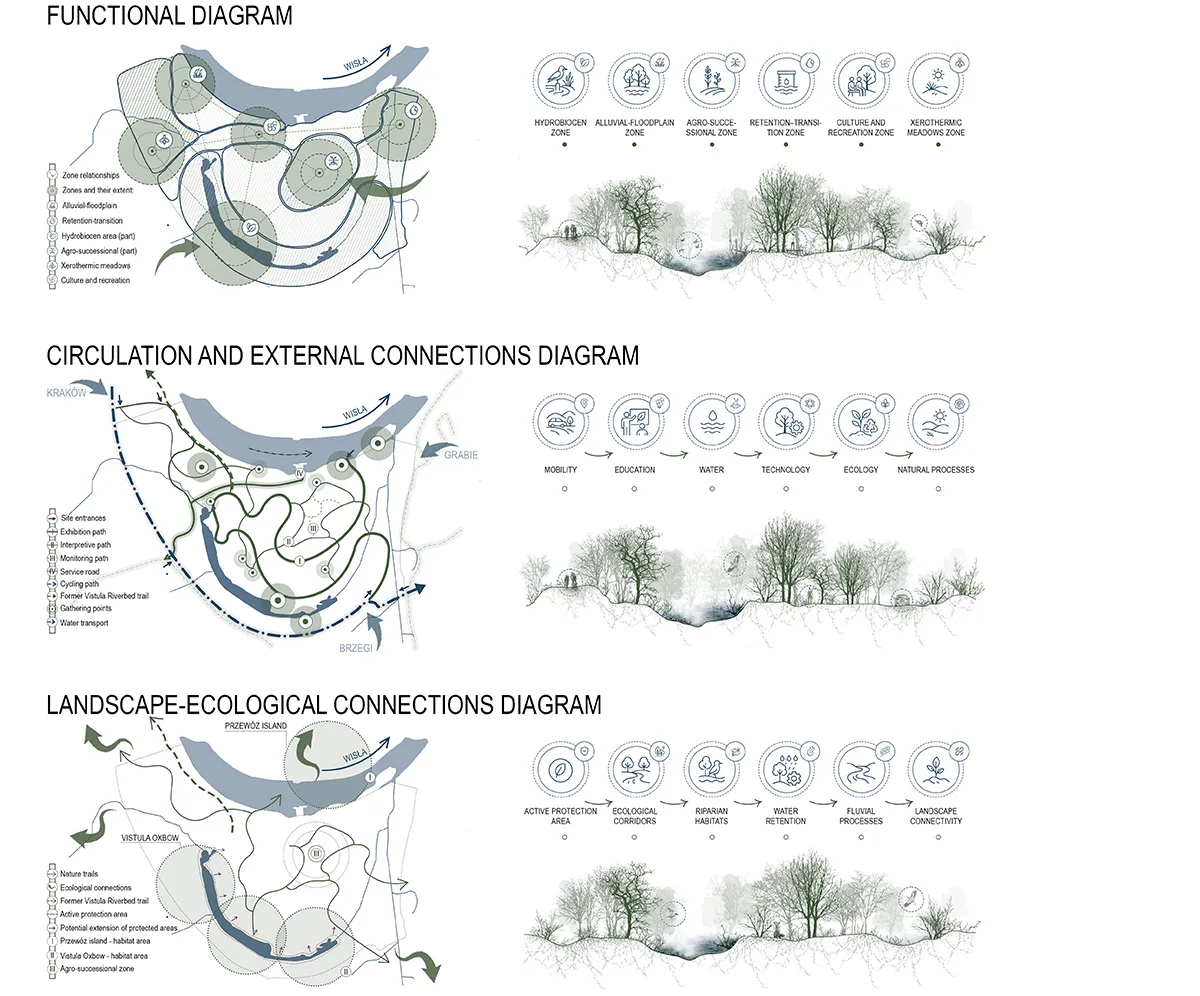
The project is based on an integrated system of ecological and landscape-oriented interventions utilizing nature-based solutions and biological processes occurring within the oxbow ecosystem. The proposed interventions do not function as dominant architectural forms, but rather as elements supporting the natural mechanisms of environmental regeneration. A key component of the project are biodegradable regenerative modules developing the idea of mycorrhization, alongside reintegrative habitats functioning within hydro-biocoenotic zones. These mycelium-based structures are not autonomous objects, but parts of biological processes taking place within the environment itself. They support the restoration of relationships between water, soil, vegetation, and local fauna while adapting to the changing character of the oxbow landscape. Their presence is inherently organic – over time they transform and gradually decompose, cooperating with natural processes rather than interrupting them. The habitats function as shelters and regenerative spaces for local species.
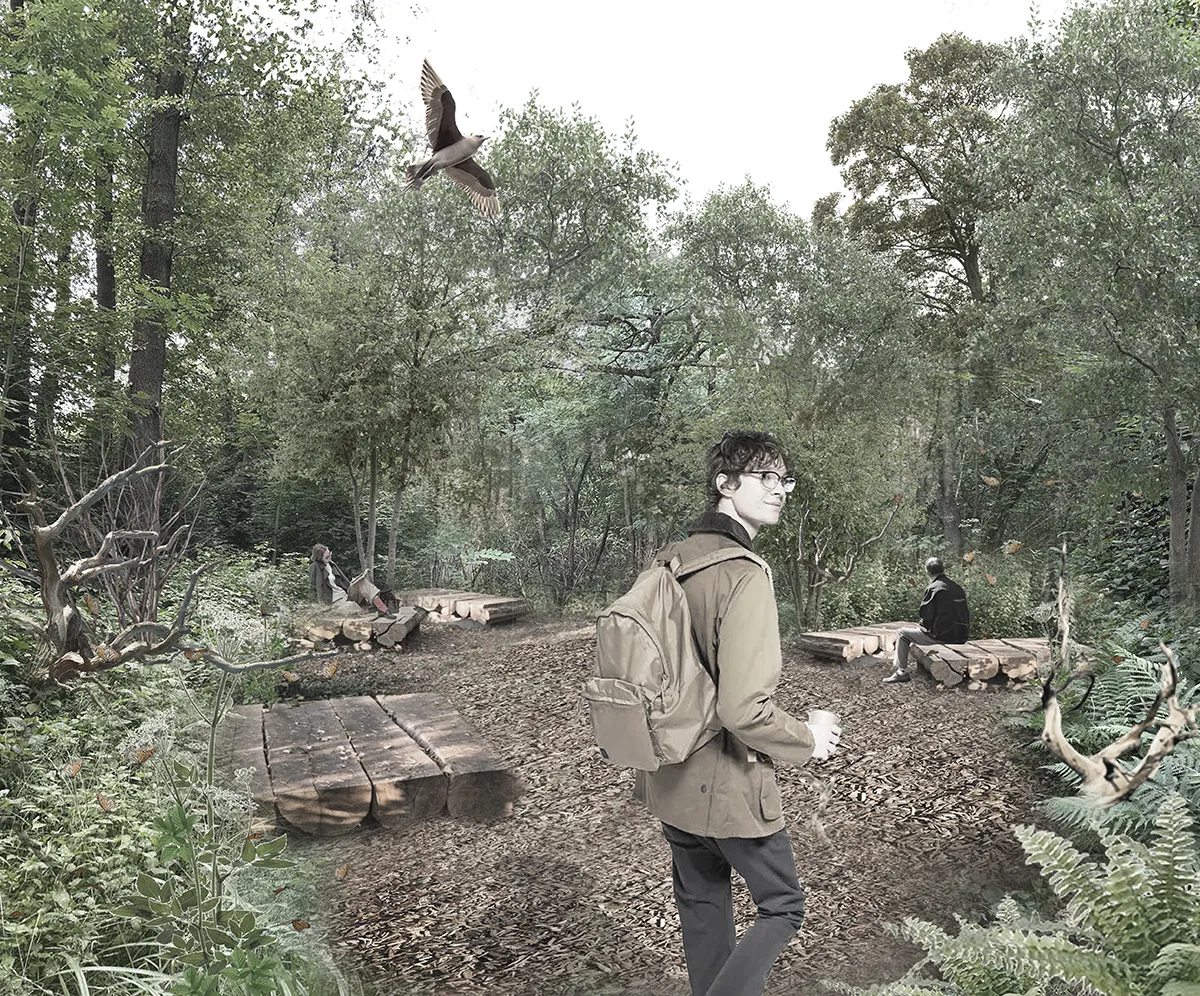
Additionally, the project introduces inundation paths running through periodically flooded areas, enabling direct engagement with the variability of aquatic environments and seasonal landscape transformations. The proposal also includes measures supporting the protection and reintegration of local ecosystems, including refuges for small fauna, active vegetation zones, and solutions strengthening biological continuity. The project proposes a new approach to the revitalization of riverside landscapes – not through domination over the landscape, but through creating conditions for its regeneration.
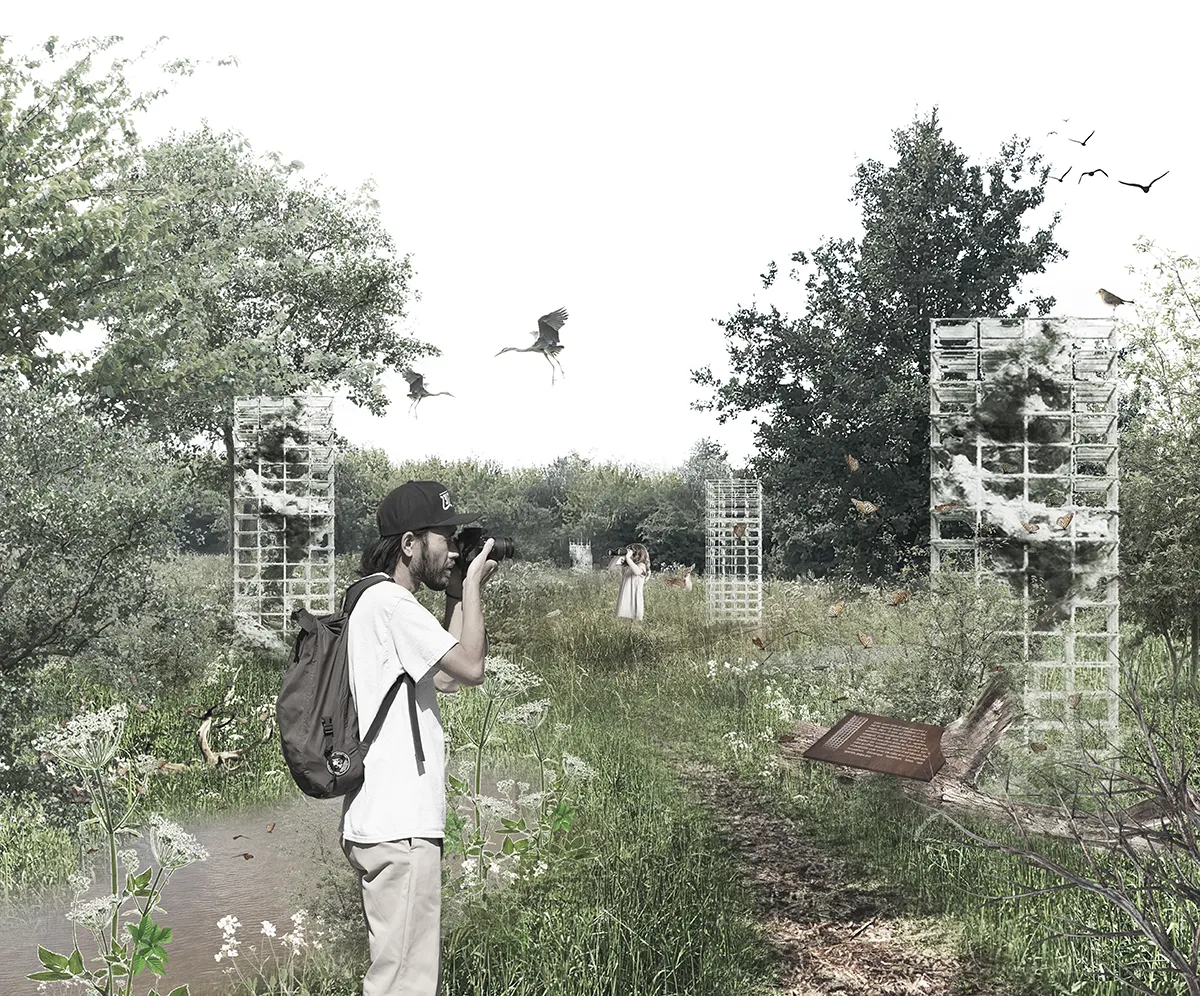
The park becomes a landscape of coexistence – a place of education, reflection, and contact with processes that are increasingly becoming invisible in contemporary cities.
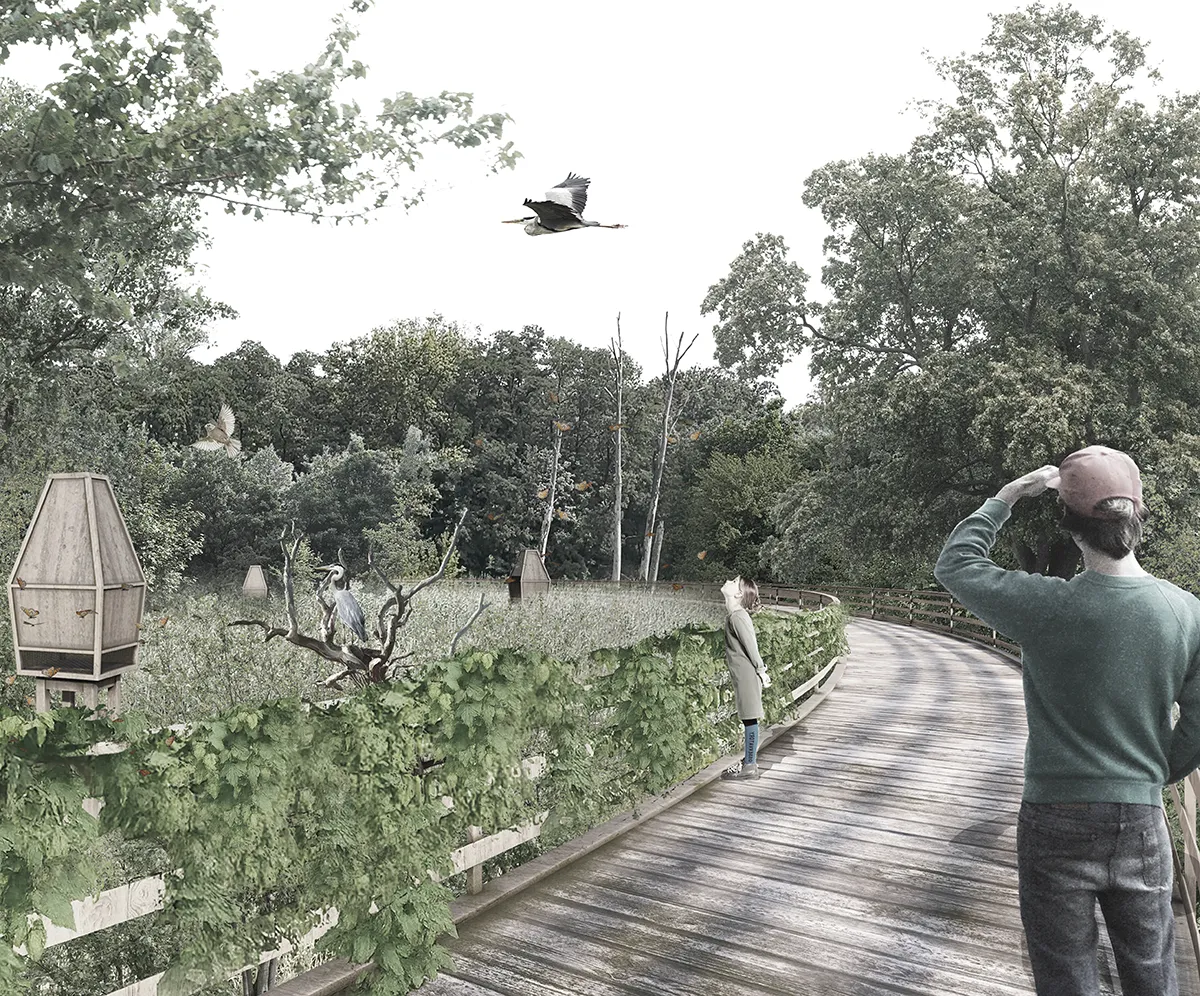
Topography of Aqua-Succession
Student: Angelika Duda – Cracow University of Technology
Supervisor: Katarzyna Łakomy – Cracow University of Technology
Be the first to comment