
A new pergola system brings shade, structure and a more human scale to large outdoor environments
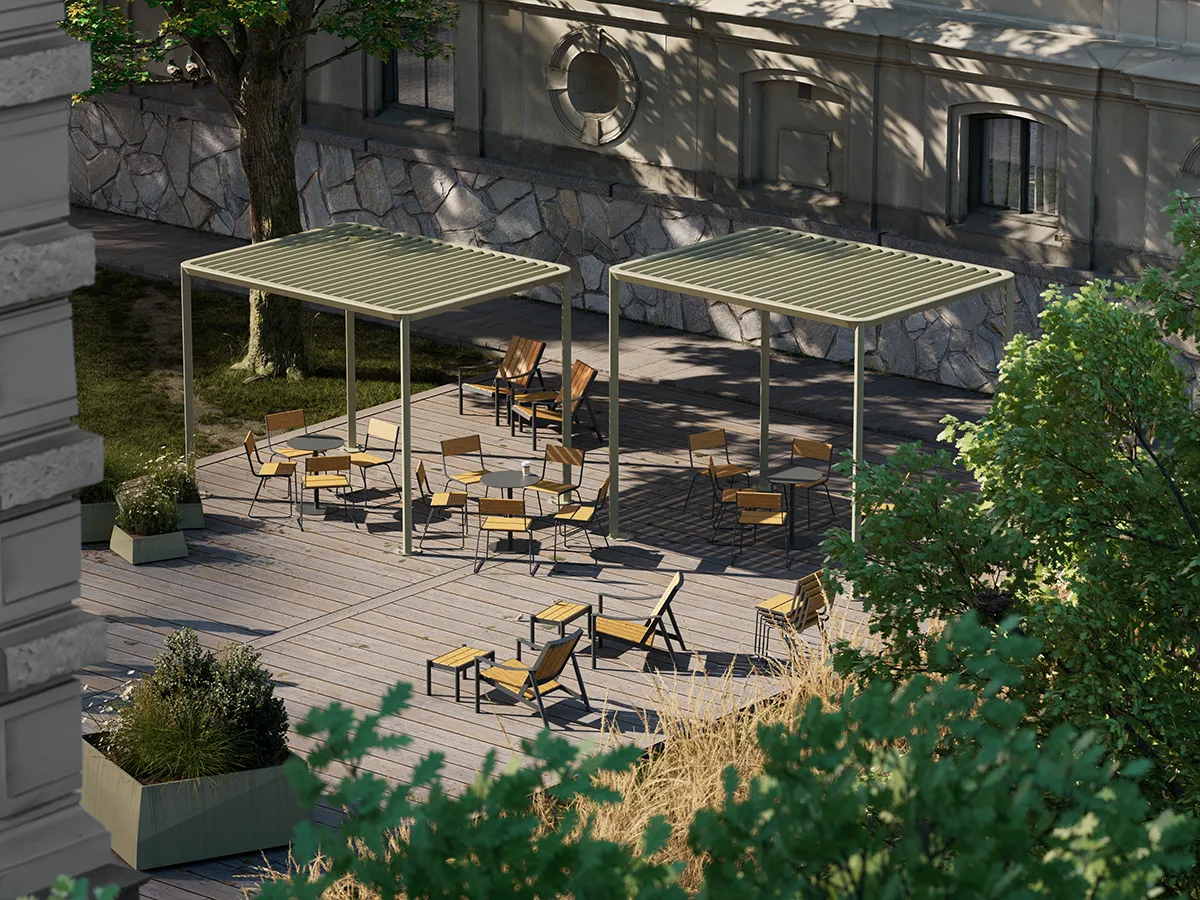
As cities across the world face increasingly intense summer heat, shade is becoming an increasingly important part of how public spaces are designed and experienced. Vestre introduces GLADE, a new pergola system designed by Norwegian furniture designer Allan Hagerup to provide shade while giving large, open environments a stronger sense of place and a more human scale.
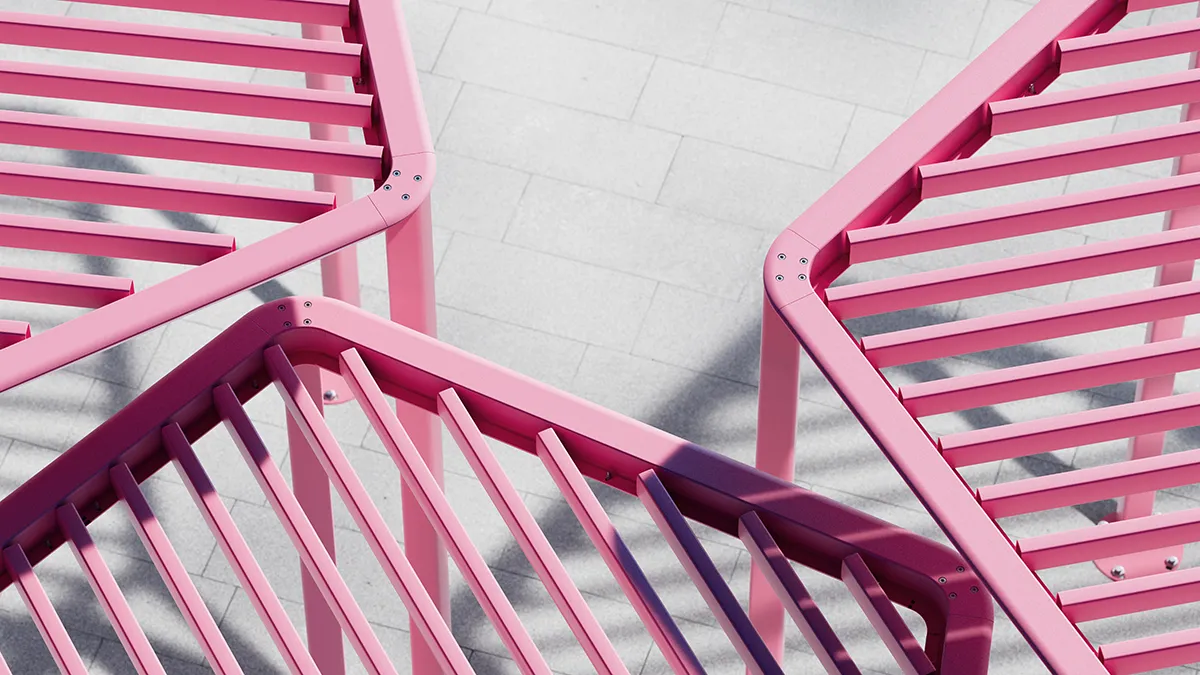
GLADE pergola marks Vestre’s entry into a new product category. It is Vestre’s first large-scale overhead structure, expanding the company’s collection from furniture and smaller spatial elements to a structure that helps shape the spaces around it.
The design draws on a familiar experience: standing beneath a tree canopy, where sunlight filters through rather than being blocked out. GLADE translates this experience into a precise system of overhead slats that filters sunlight and casts changing patterns of light and shadow across the ground, while carefully shaped aluminum surfaces catch and reflect light differently as the sun moves. The name refers to a clearing in a forest — an open space where sunlight reaches the ground through the canopy.
“As cities face more days of extreme heat, shade is becoming an increasingly important part of how we design and experience public space. GLADE marks a new category for Vestre, but it’s built on something we’ve always believed in: that good public space brings people together. It’s not only about protection from the sun — it’s about creating places where people want to stay, meet and belong.”
Bjørn Fjellstad, CEO of Vestre.
Shade as part of public life
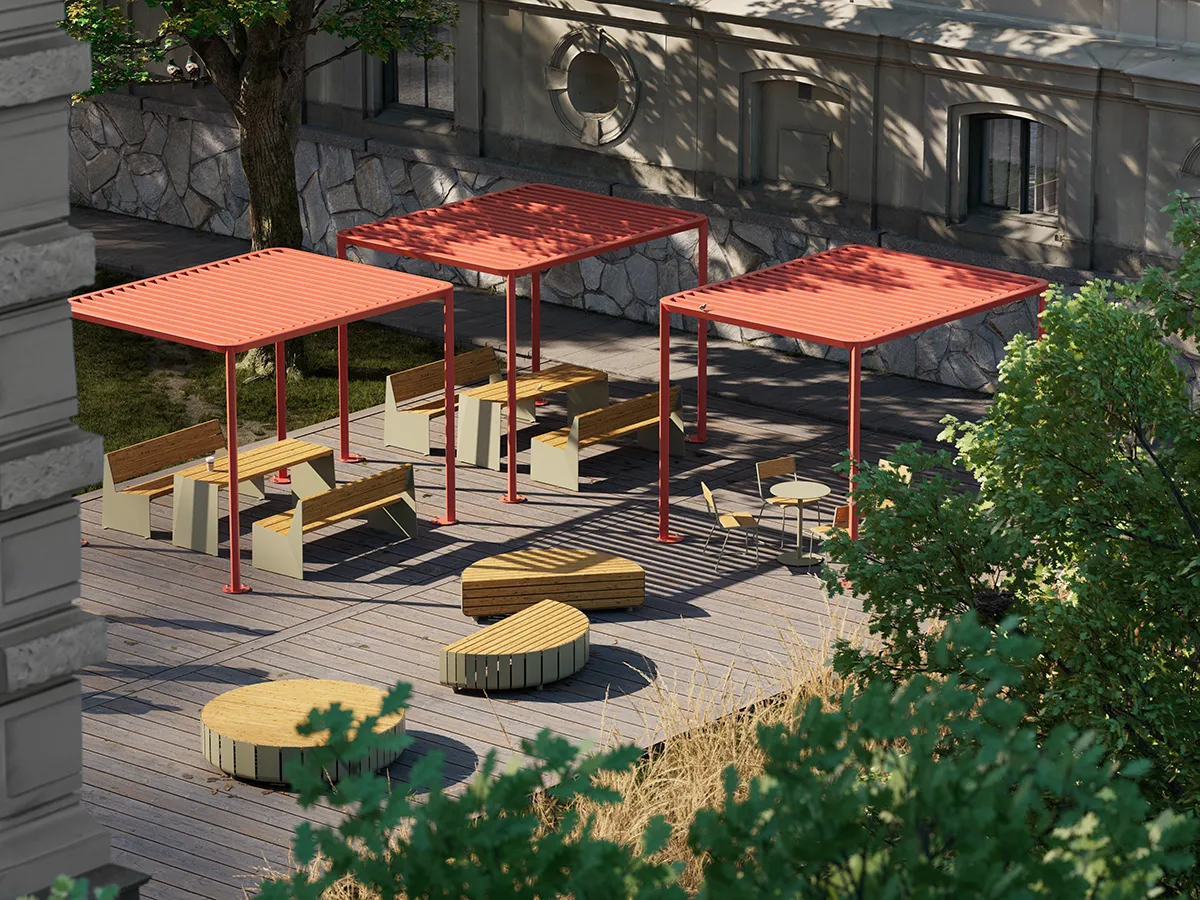
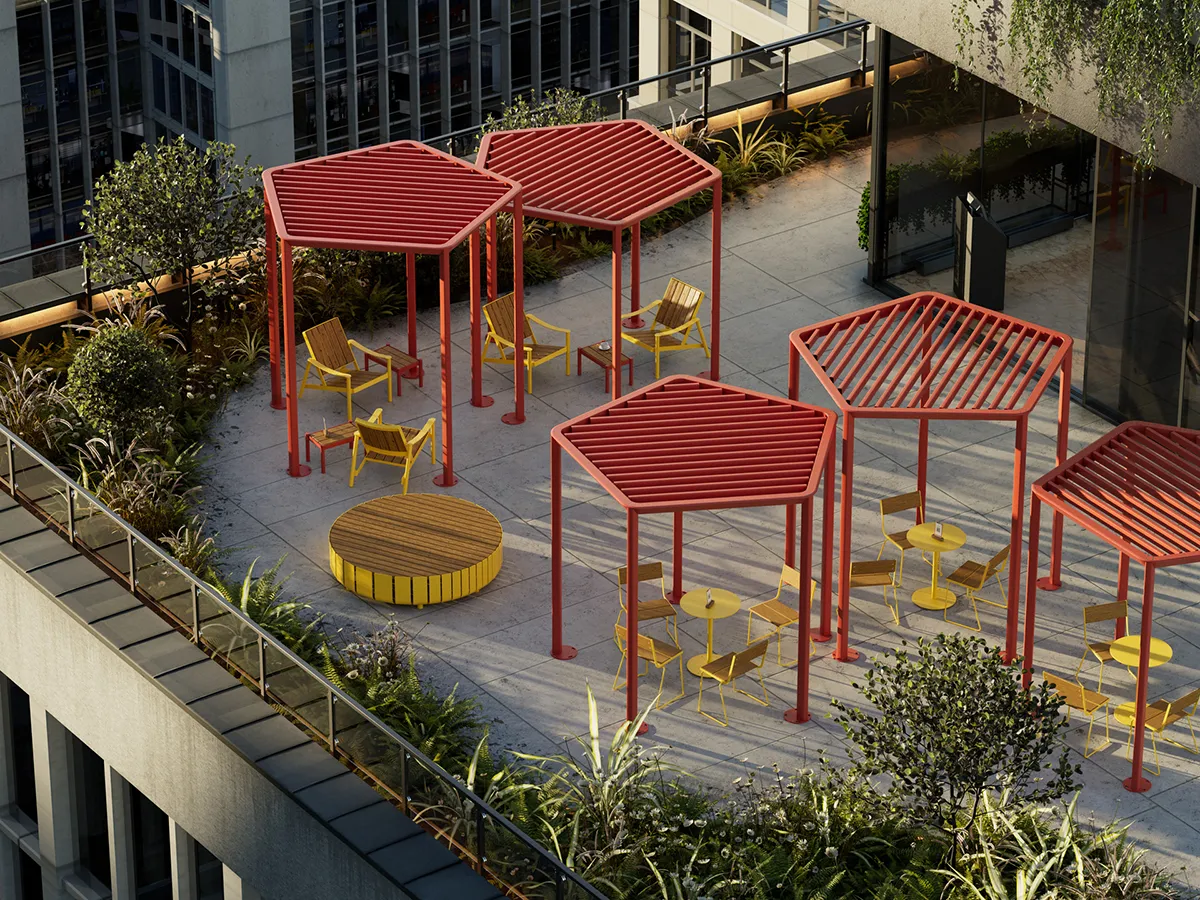
Shade is increasingly recognized as an important part of the public realm, alongside trees, vegetation and other strategies for addressing urban heat. GLADE approaches shade as a permanent part of the built environment. Its open structure provides protection from direct sunlight while maintaining visibility and movement through the space. Large plazas, parks, campuses and other public environments can often feel exposed at a human scale; GLADE creates an open frame that helps divide larger spaces into more inviting areas without creating an enclosed room. Within the structure, benches, tables and other furniture can be arranged to support different ways of meeting, eating, working, playing or simply spending time outdoors.
Designing the shadow
In this sense, designing GLADE has been as much about designing a shadow as designing an object.
The spacing of the overhead slats was carefully considered to balance effective shade and openness, dense enough to provide meaningful shade, but never so dense that it becomes a solid roof. Rather than blocking the sky, GLADE filters sunlight, so daylight and views remain part of the experience.
The system is available in two main geometries: a rectangular form designed to cover larger areas and follow existing site lines and edges, suited to larger seating groups and multi-use furniture; and a pentagonal form that creates a more centered gathering space with a stronger sense of a central gathering point. The pentagon never quite resolves into a fixed grid when multiple units are combined, allowing looser, more organic configurations, and comes in two heights for added variation. It works well in a plaza or open urban space, functioning as both a destination and a landmark.
Combining the Vestre design language with a new material
GLADE introduces a new product category for Vestre and is the company’s first larger product that can be produced entirely using extruded and cast recycled aluminum. For Hagerup, this created a design challenge: how to give the structure a clear identity of its own while making sure it still feels at home alongside Vestre’s existing furniture.
“Vestre has a strong design identity, even though the collection has been developed by many different designers,” says Allan Hagerup. “For me, the challenge was to create something that feels like a Vestre product, but with a completely different starting point in material and production.”
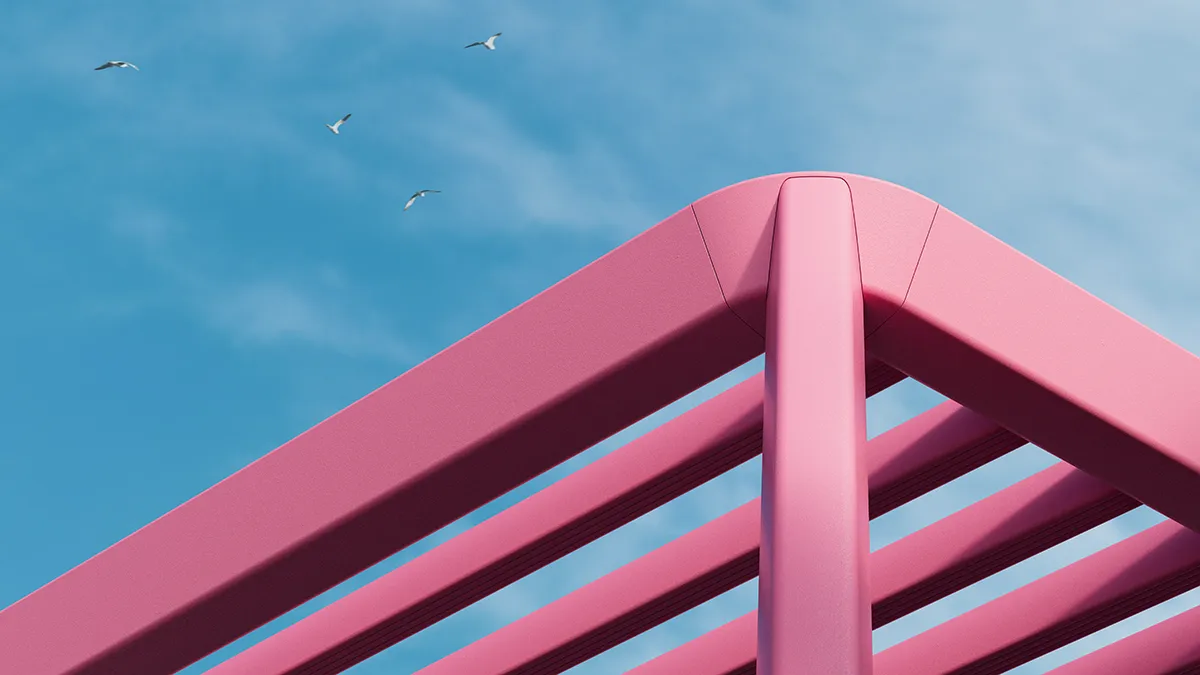
The design carries forward elements of Vestre’s clear, flat-based design language, while the use of extruded aluminum makes it possible to introduce softer curves and transitions. This is particularly visible in the posts, the parts of GLADE that people come closest to and can physically touch.
The roof slats can also be supplied in wood, adding a warmer, more natural expression and allowing wood and aluminum slats to be combined when several GLADE structures are used together.
The relationship with the furniture beneath and around GLADE was equally important. The structure is deliberately kept clear and restrained so that it defines the space without competing with the furniture. Its different sizes have been tested against Vestre’s furniture collection to explore how the elements can be combined to create social outdoor spaces.
Engineered through collaboration
Behind GLADE’s simple expression is a highly developed aluminum system created in close collaboration with Vestre’s industrial partners. Both the extruded and cast components were developed specifically for the product, based on requirements for structural strength, precision, assembly, transportation and repair.
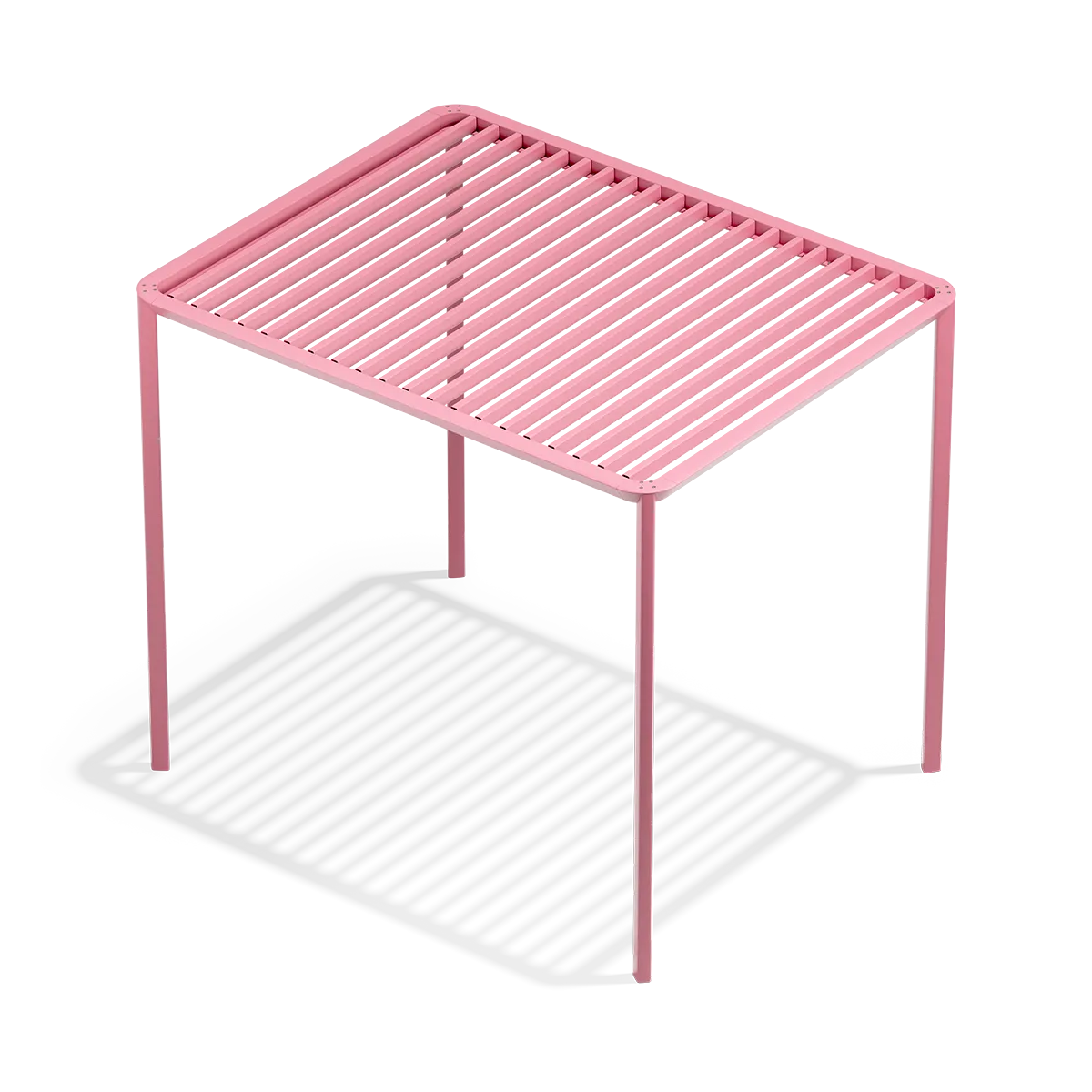
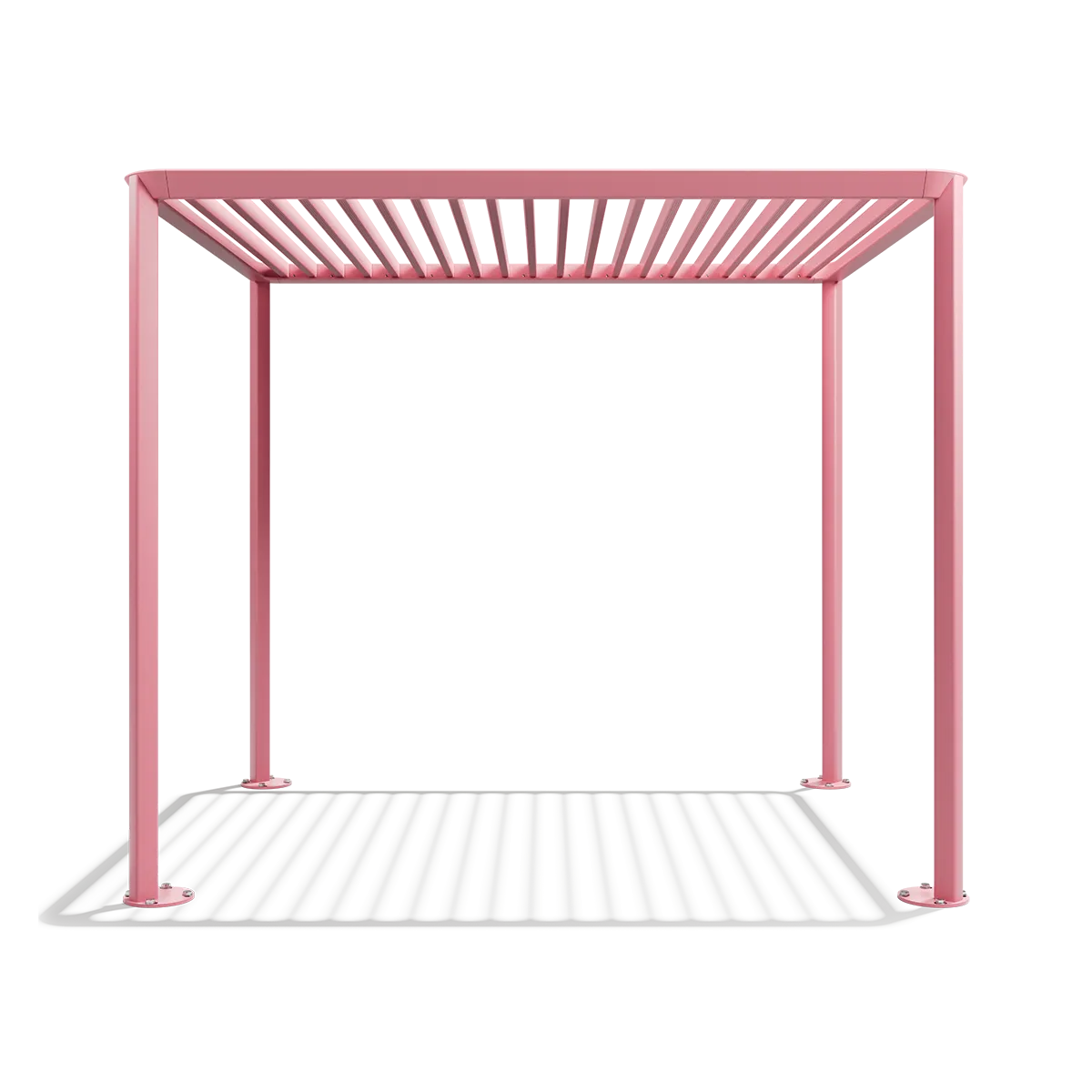
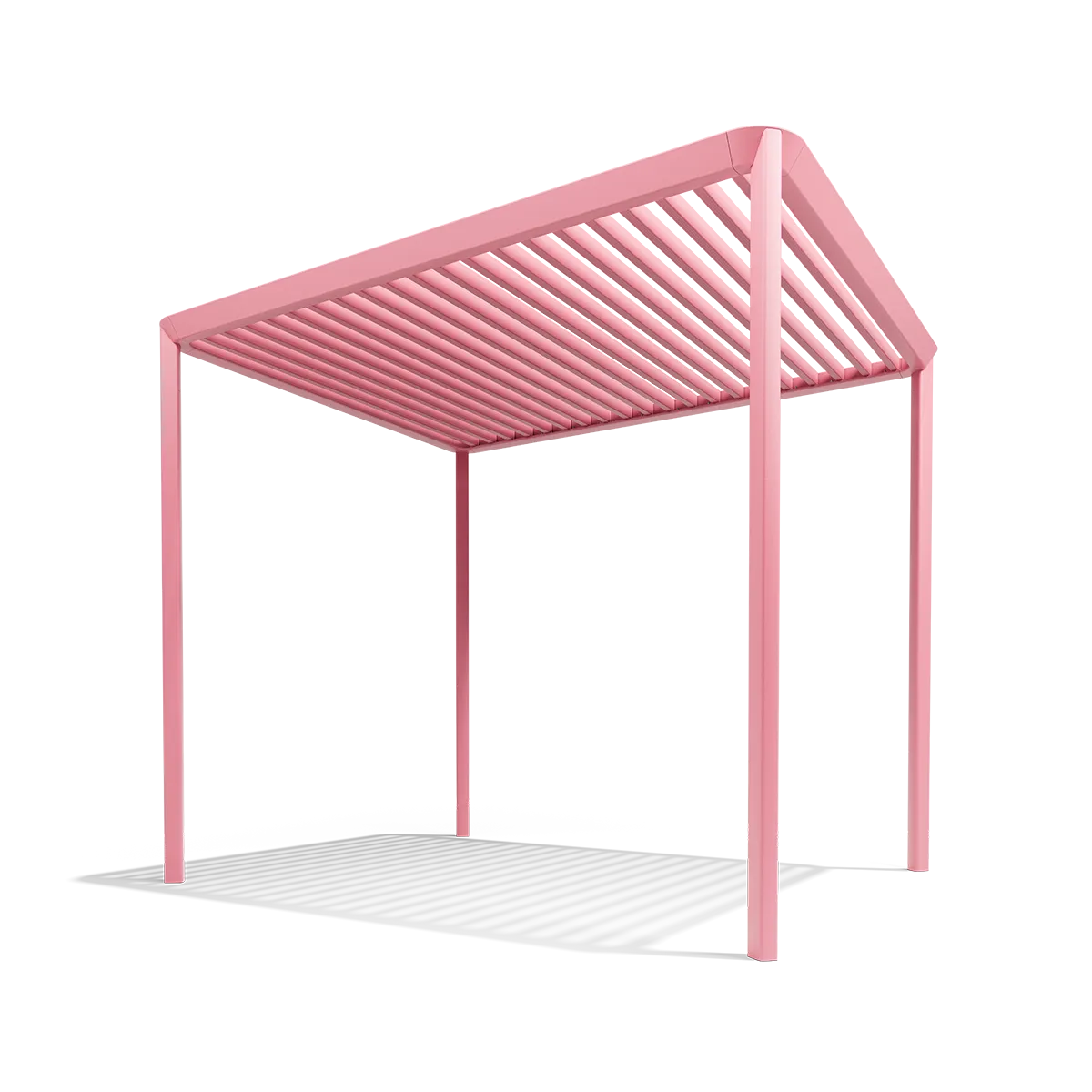
Vestre developed the extruded profiles in collaboration with Hydro Extrusion. Rather than adapting standard parts, Vestre developed the aluminum profiles from scratch, integrating structural strength, connection points and assembly logic directly into the extrusion. The cast components were developed in collaboration with Østlandske Lettmetall, allowing the casting process to be adapted specifically to GLADE’s form, function and connections. “Working closely with both partners has allowed us to combine different production methods and adapt them to the construction of GLADE. This has helped us create a lighter, more precise system that is also simpler to assemble, transport and repair,” says Nicolai Gulliksen, industrial designer and project manager at Vestre.
Industrial sustainability
GLADE was developed with its entire lifecycle in mind from the start. Production, packing, transportation, assembly, repair and eventual material circulation informed both its construction and material choices. The custom extruded profiles use Hydro CIRCAL 75 recycled aluminum, while the cast components are made from 100% recycled aluminum. The roof slats can also be supplied in wood, allowing the material expression to adapt to different settings — and creating opportunities to combine wood and aluminum when multiple GLADE structures are used together. Sustainability is therefore built into GLADE’s industrial logic, rather than added to the finished product.
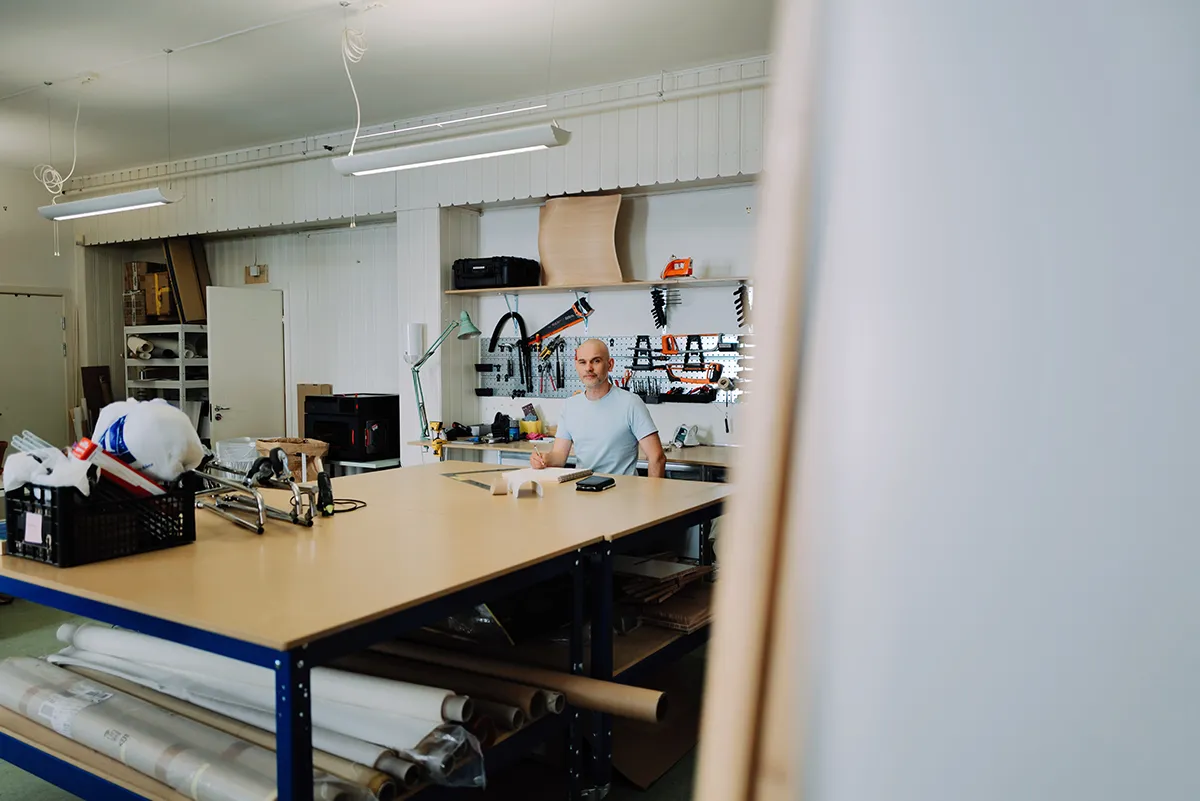
Allan Hagerup designed GLADE, and Vestre now offers it. https://www.vestre.com/products/pergola/glade-pergola