
Recently, WLA Editor Damian Holmes asked Niels de Bruin to be part of our WLA profile series about his career and his role as a juror in the 2026 WLA Awards, and in a different take on a profile, he responded with the letter below. Enjoy.
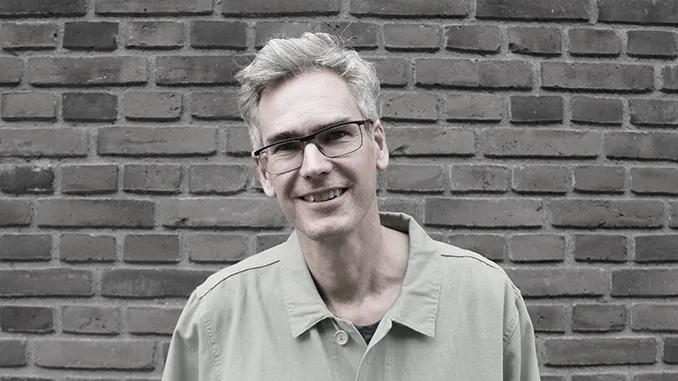
Hi Damian,
This week I’m turning 50, so a profile seems perfectly timed.
I have now spent the majority of my life as a landscape architect, which is in itself mind-blowing. For more than a decade I was a partner at White, one of the industry’s largest firms, and one of the people who helped establish landscape architecture as an important discipline within what was otherwise a building-focused practice. I was fortunate to help lead the firm’s renewed international ambitions, working on projects beyond Scandinavia and overseas. I loved being part of a large organisation, ensuring that the perspective of landscape architects was heard and that landscape played an integral role in shaping design outcomes.
I am based in Malmö, part of the Greater Copenhagen region. For the last five years, I have worked at the small but influential practice Kragh-Berglund. The office was founded by people connected to SLA and was very much part of the Danish design culture that has achieved international recognition over the past decades. It was a place where strong design and nature-based thinking went hand in hand, deeply rooted in Danish craft and design traditions.
As the firm gradually scaled back, I decided to establish my own practice together with my wife, Nevena Krilic, a graduate of the University of Waterloo School of Architecture. MMX YYZ combines references to our respective cities, Malmö and Toronto.

The practice is conceived as a boutique studio that will pursue the full scope of work undertaken by landscape architects and architects. We have found an ideal location overlooking my favourite square in Malmö, Drottningtorget. It will serve both as a design studio and as a gallery, showcasing exhibitions focused on landscape, nature and architecture.
Through years of involvement with editorial boards such as Landskab magazine and various professional organisations, I have built up a wide network of contacts. It feels like the right time to invite professionals to exhibit their work and demonstrate to the public the remarkable things happening within our profession. Unlike WLA’s global online platform, the ambition here is something much smaller and more local: a physical place for conversation, exhibitions and exchange in the heart of the Greater Copenhagen region.
WLA | What did you learn about landscape architecture from judging the 2026 WLA Awards?
NdB | I think WLA performs an important role by bringing together perspectives from different parts of the world. While judging, it became clear that different regions have developed distinct traditions within the profession. The challenges we face are often similar, but the responses vary greatly depending on local culture, geography and professional history.
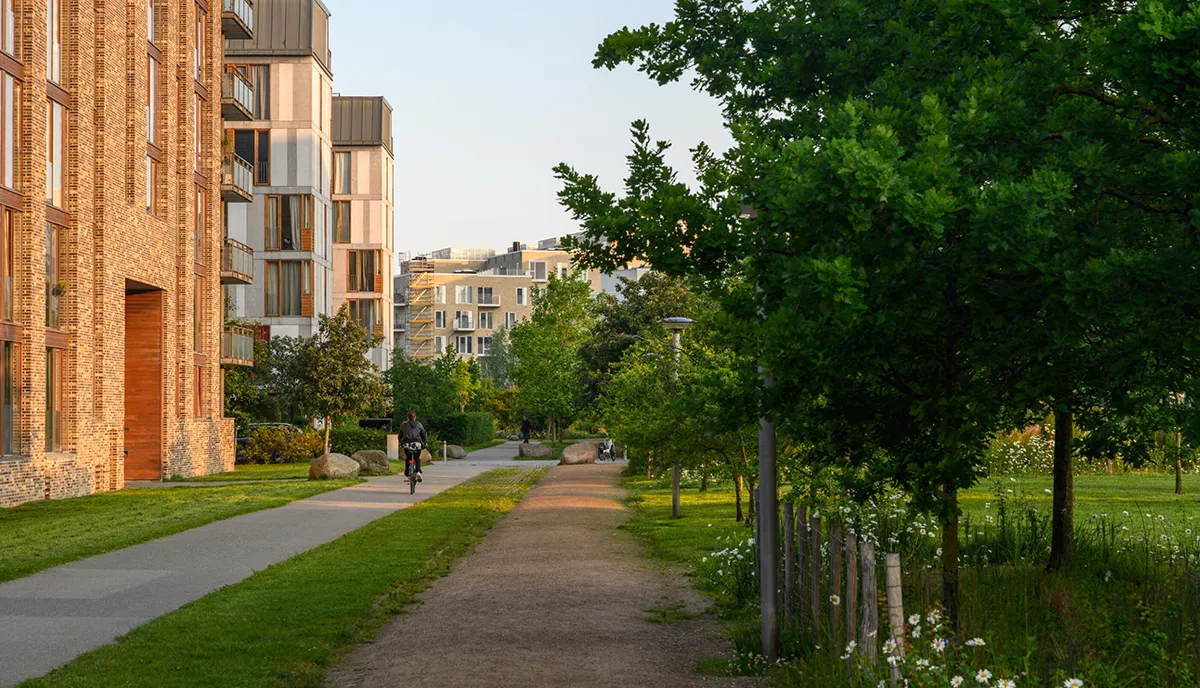
North America remains particularly strong in understanding landscape at a territorial scale, rooted in traditions of surveying, conservation and environmental stewardship. Various Asian regions demonstrate both remarkable precision in small-scale projects and extraordinary ambition in large-scale interventions. Meanwhile, Scandinavia and Northern Europe continue to excel in placemaking and innovative approaches to integrating nature into everyday urban environments. Take the SLA project, The Social Spine, as an example.

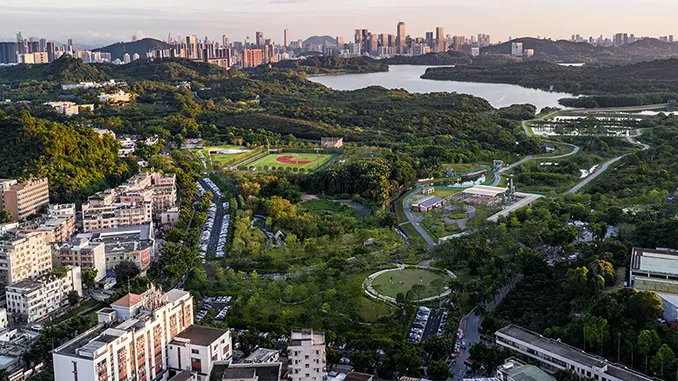
What I learned most clearly is that landscape architects are involved in some incredibly important projects and processes. When you see the scale of ecological restoration projects being delivered in China, for example, it makes you wish we were undertaking similar initiatives here. Like the SWA project Xili Lake Greenway. Of course, land ownership, governance, and planning create very different conditions, but it is difficult not to be inspired.
At the same time, some trends become universal solutions, detached from context. Using colour as a substitute for placemaking or allowing catalogues of standardised products to define public space, is not really landscape architecture. Landscape architecture should always be rooted in place, ecology and human experience rather than fashion or product specification.
WLA | You have served on various landscape professional organisations and Landskab magazine. What do you think is the most important issue that landscape architecture is dealing with?
NdB | In Europe today, nature restoration is becoming one of the most important topics of discussion. From my perspective in the Copenhagen region, we sit at the meeting point between large agricultural landscapes and Sweden’s vast forested territories.
Agriculture’s dominance in Denmark has produced severe environmental consequences. Biodiversity has collapsed in many areas, water systems are under pressure, and natural habitats have largely disappeared from the landscape. To say Denmark has struggled with biodiversity would be an understatement.
The positive development is that this situation has finally created political momentum. We are now seeing unprecedented ambitions for forest planting, wetland restoration and large-scale ecological recovery. Denmark is genuinely trying to address some of these issues.
What is interesting is that landscape architects have, for many years, helped shape the cultural conditions that make this possible. From the avant-garde work of C.Th. Sørensen to Stig L. Andersson, SLA and their successors, Danish landscape architecture has maintained a strong design tradition. However, the content of that design tradition has changed.
Where formal compositions, clipped hedges and modernist sculptures once dominated, ecological processes, biodiversity and natural succession are increasingly becoming the central themes. During my years at Kragh-Berglund I experienced this shift first-hand, with projects gradually moving towards richer, wilder and more ecologically diverse environments.
At the same time, the discussions taking place in Landskab magazine often push these conversations even further. Here the questions become more radical. Should we retreat from coastlines rather than defend them against rising seas? How much land should be returned to nature? Should we intervene less and let natural succession play a greater role in shaping landscapes? What would a truly post-human approach to landscape architecture look like?
If these ideas continue to develop, Scandinavian landscape architecture may increasingly move beyond an anthropocentric perspective altogether.
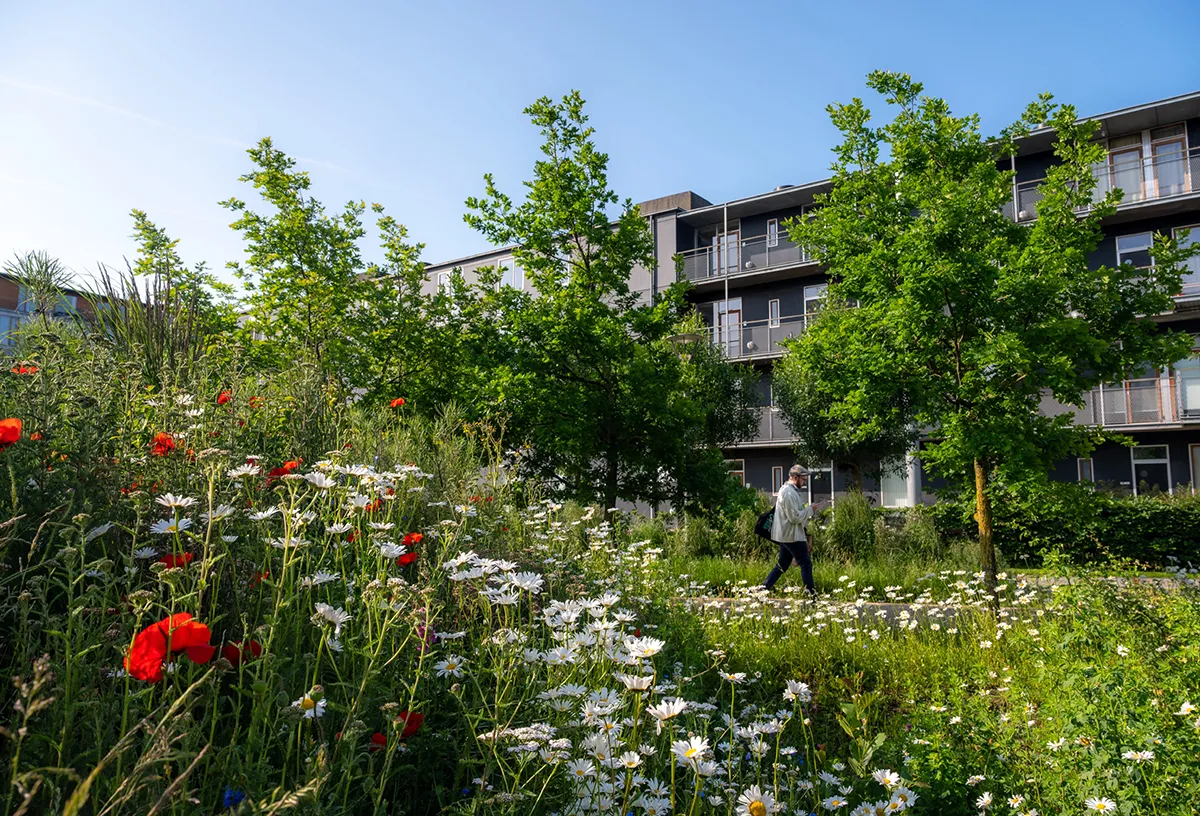
I would argue that Danish landscape architects have played a significant role in creating public support for biodiversity, forest planting and ecological restoration. This has happened partly through advocacy, but also because the projects themselves have captured the public imagination. Urban residents have increasingly embraced biodiversity in cities, whether through meadows, climate adaptation projects or innovative stormwater landscapes. Art promotes ecology.
Sometimes, however, the success of these projects can encourage experimentation that goes a little too far.
One of the most influential public-space projects in Copenhagen in recent years is the Karen Minde Axis, which beautifully integrates climate adaptation into an existing urban landscape. The project demonstrates how technical infrastructure and public life can become part of the same design language. A great example of art leading way for engineers by Schönherr.
Its success has encouraged new ways of thinking throughout the profession. Today even cemeteries are occasionally discussed as potential sites for stormwater detention. This is where questions of cultural heritage become particularly important. While wetlands and burial traditions have a long and intertwined history in Scandinavia, we are perhaps not yet ready to bury our loved ones in a bog.
Then again, maybe that is exactly the kind of conversation landscape architecture will be having in the future.
Thank you to Niels for sending us this letter and sharing his thoughts on the WLA Awards and current topics of landscape architecture. We wish him well with the new landscape practice, MMX YYZ.
Be the first to comment