
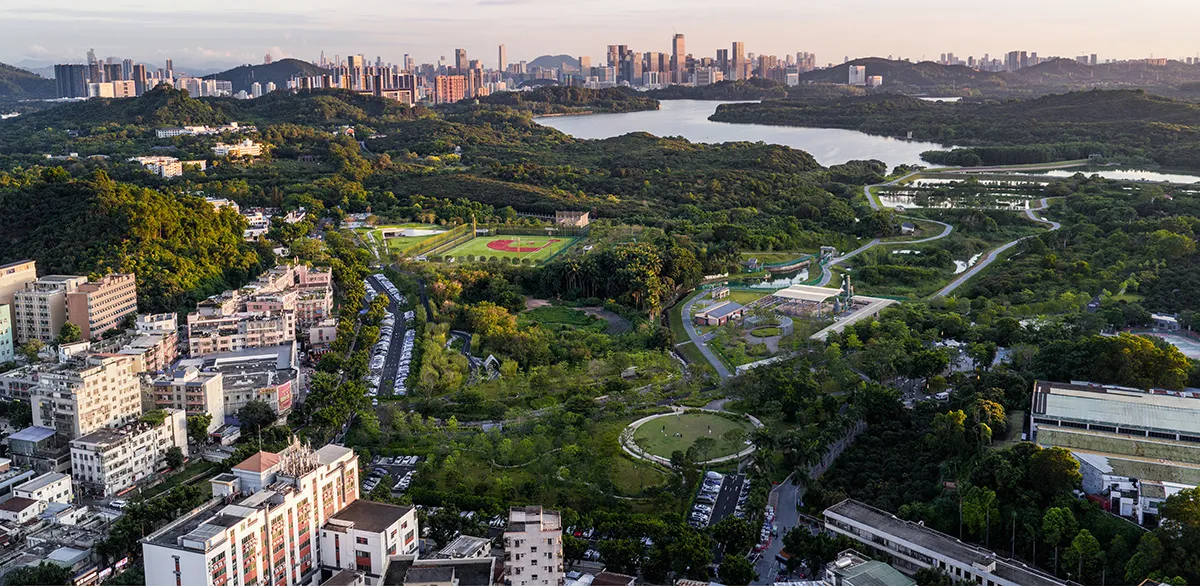
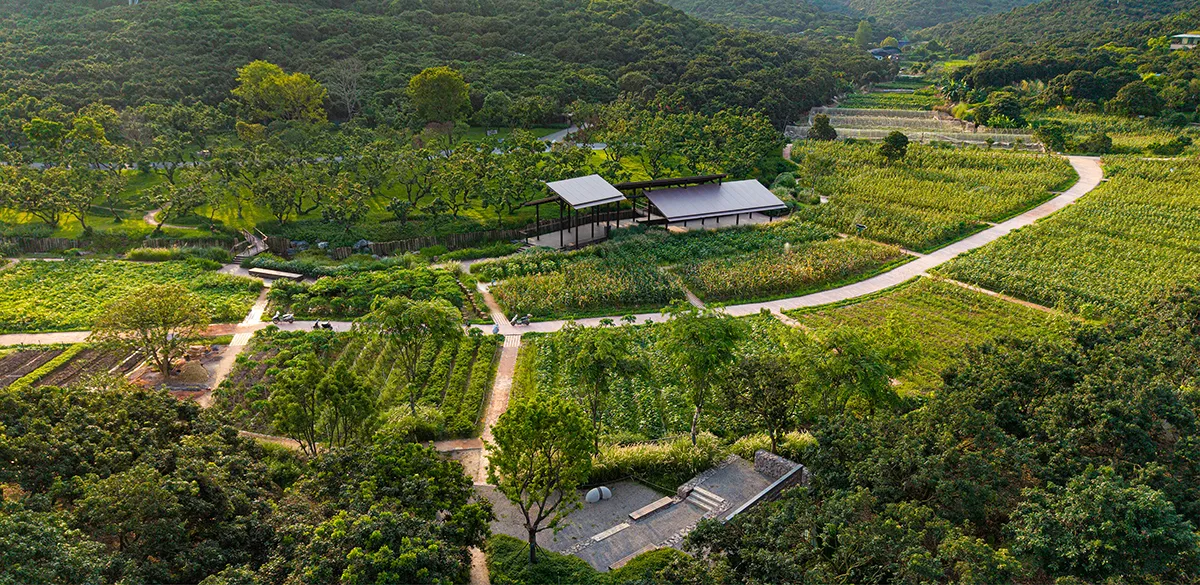
Nestled between Shenzhen’s most innovative district and the critical Xili Reservoir protection zone, this project confronts a systemic challenge: reconciling water protection with ecological restoration, community development, and social integration. Decades of strict conservation policies constrained local village infrastructure, leaving them dependent on monoculture lychee farming—which accelerated erosion, pollution, and biodiversity loss—while fragmenting these communities from the emerging International Science and Education City.
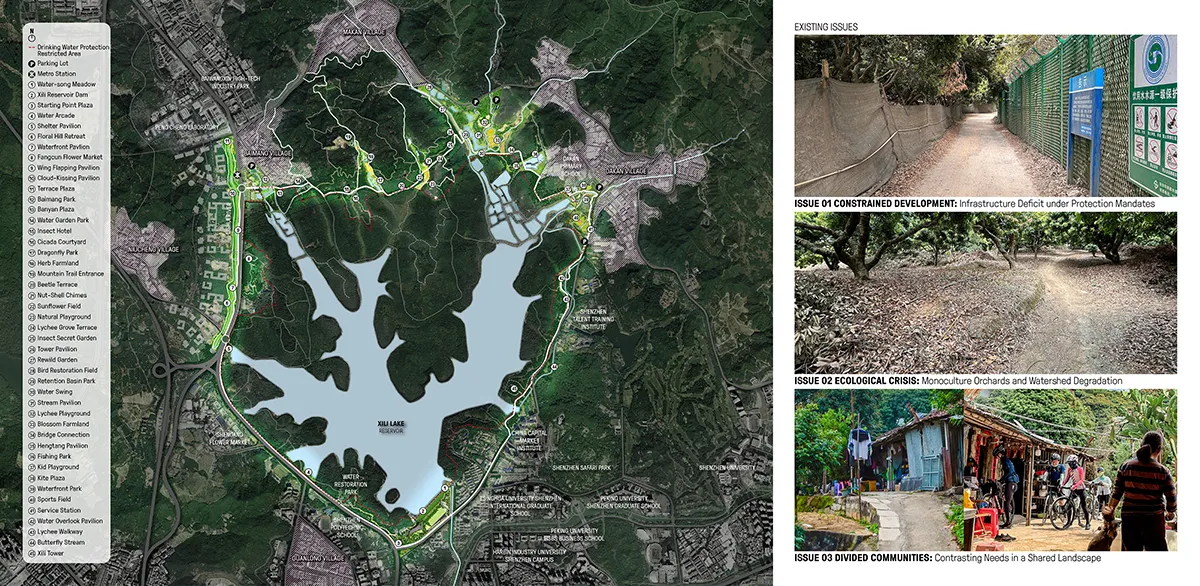
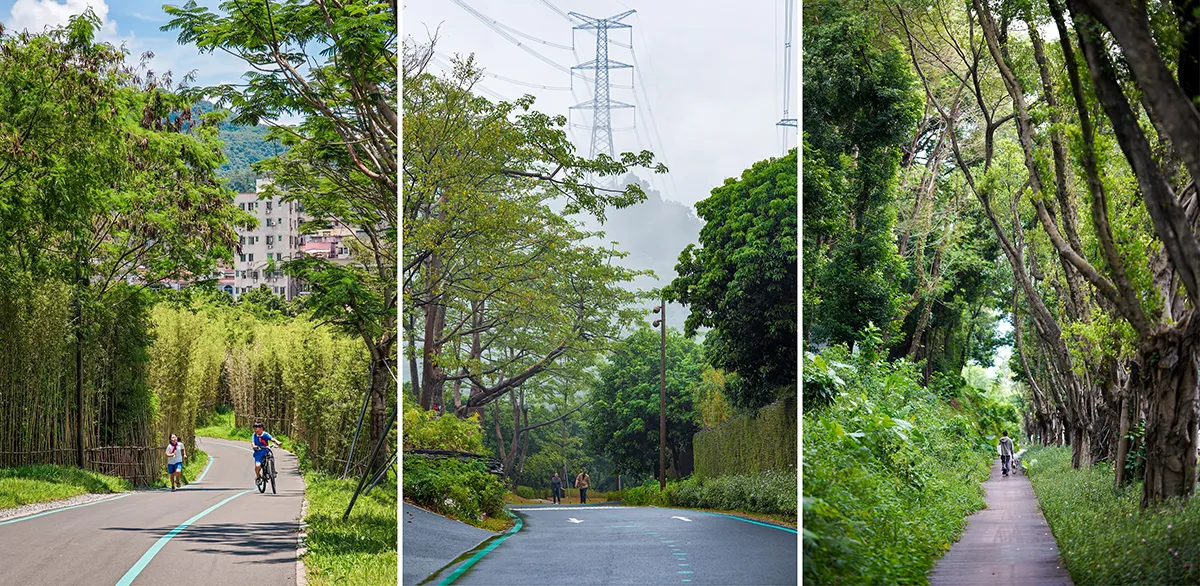
The 16.2-km Xili Lake Greenway is positioned as a “low-intervention, high-benefit” ecological and social restoration infrastructure. Reclaiming inaccessible buffer zones, utility lands, and vacant plots, it delivers nine themed natural parks and establishes over 1.2 million square meters of shared green core. Its sustainability strategies unfold across three dimensions: systemic watershed restoration, biodiversity enhancement through Nature-based Solutions (NbS), and low-carbon circularity.
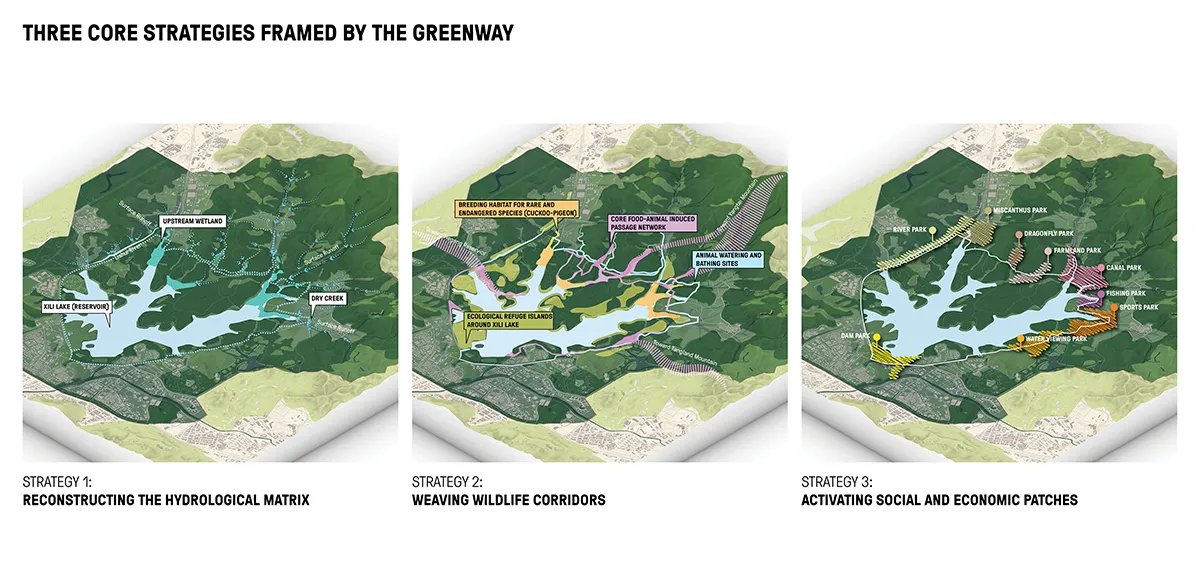
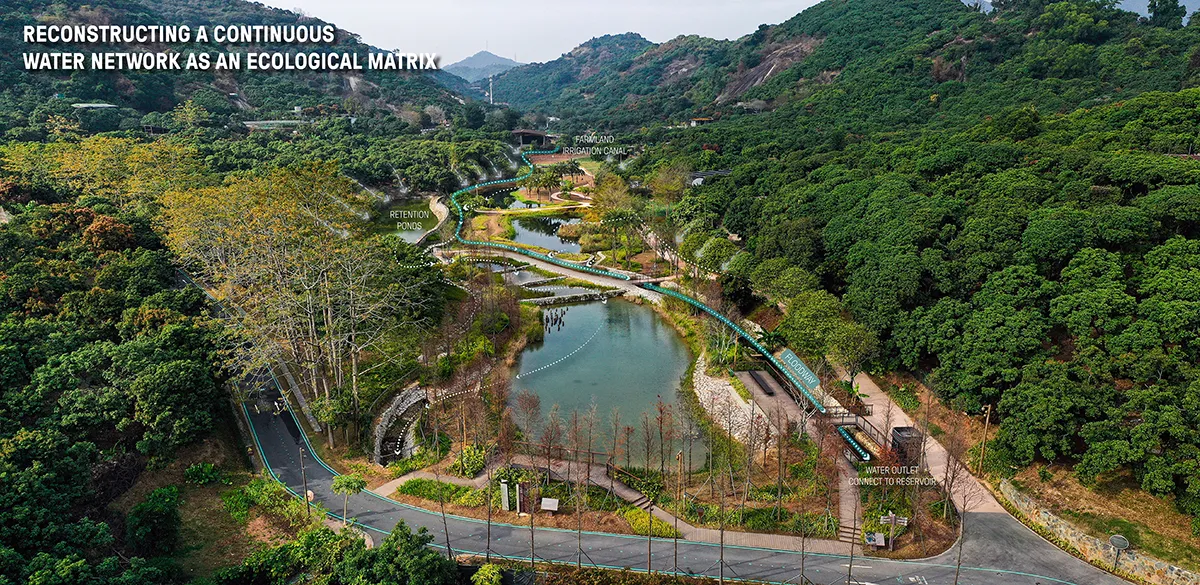
Strategy 1: Reconstructing a Continuous Water Network
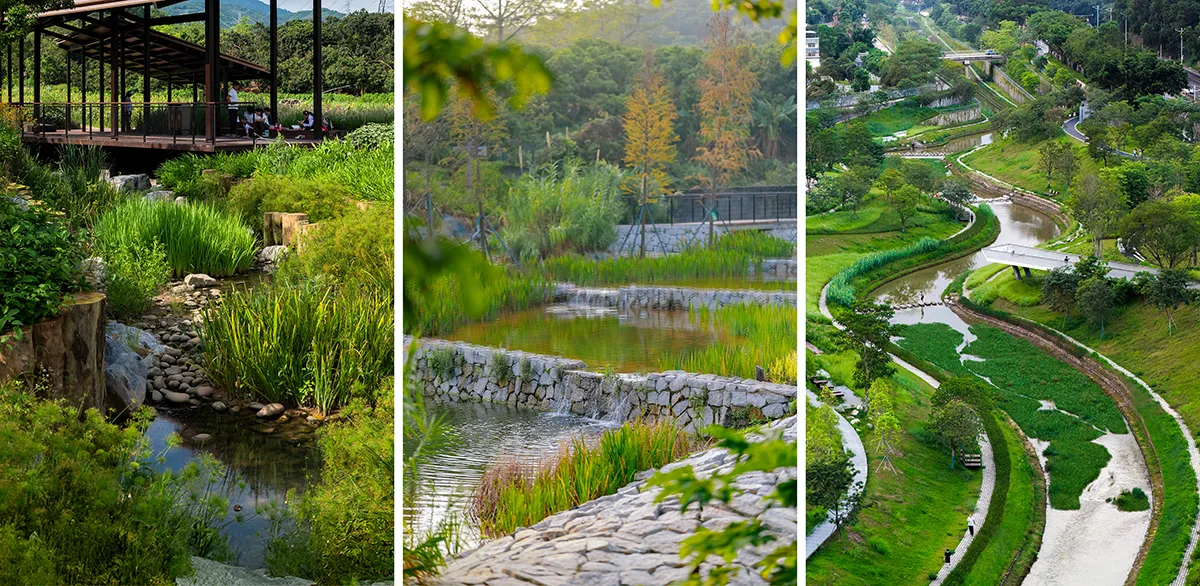
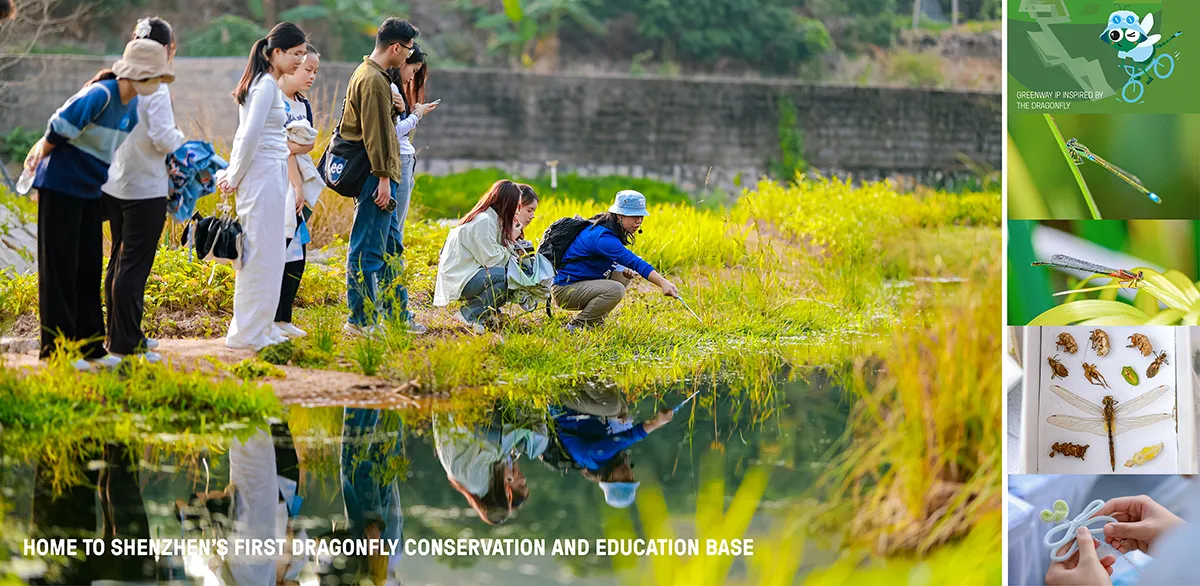
Leveraging the greenway as a catalyst, we reconfigured the 1.195 million sqm upstream catchment while safeguarding reservoir quality. Through strategic interventions, we constructed a stormwater network of ecological bioswales, cleansing ponds, seasonal wetlands, and streams. This shifts from conventional drainage to interconnected “living” water system serving reservoir regulation, irrigation, and recreation while enhancing purification and flood resilience against extreme rainfall. It provides diverse habitats, enabling city’s first dragonfly and damselfly conservation base (39,600m2) and a Guangdong Provincial micro-wetland demonstration area (187,000m2)—converting grey infrastructure into ecological assets.
Strategy 2: Cultivating Bio-friendly Habitat Corridors
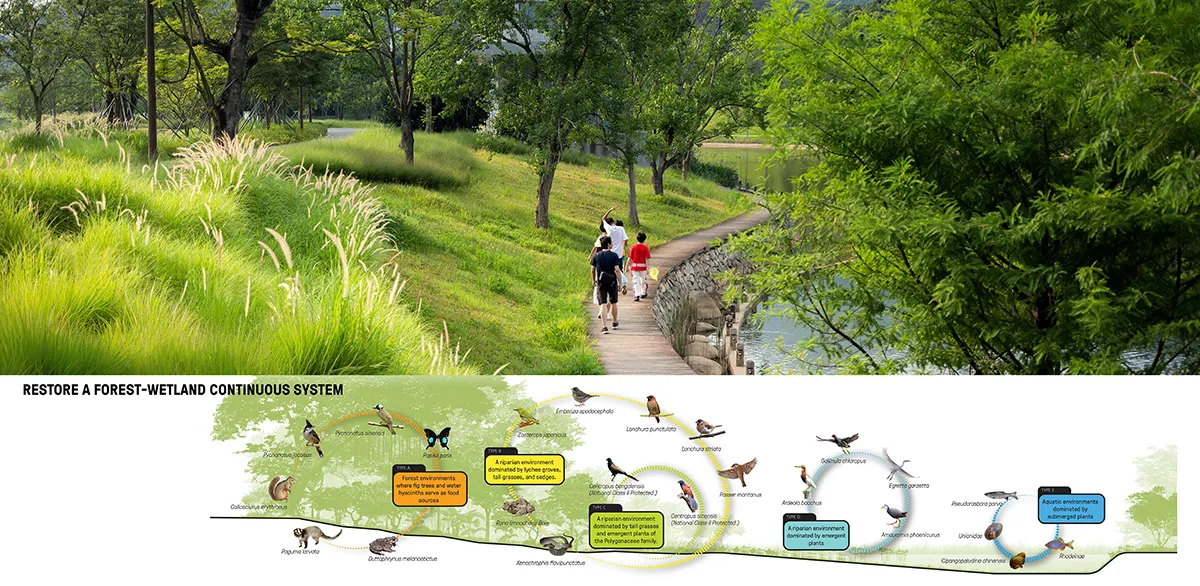
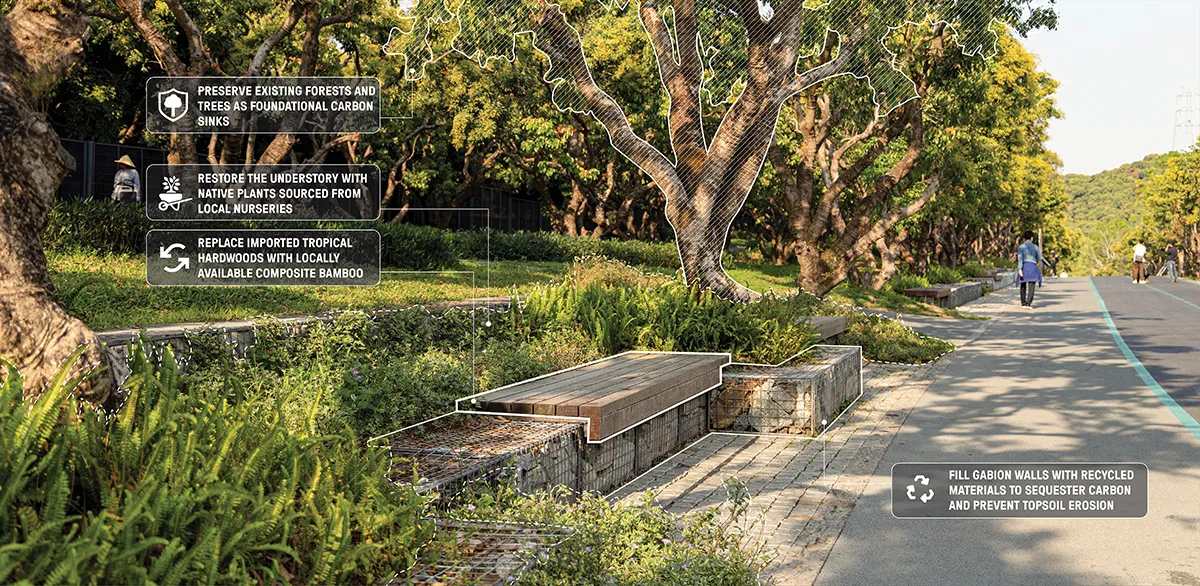
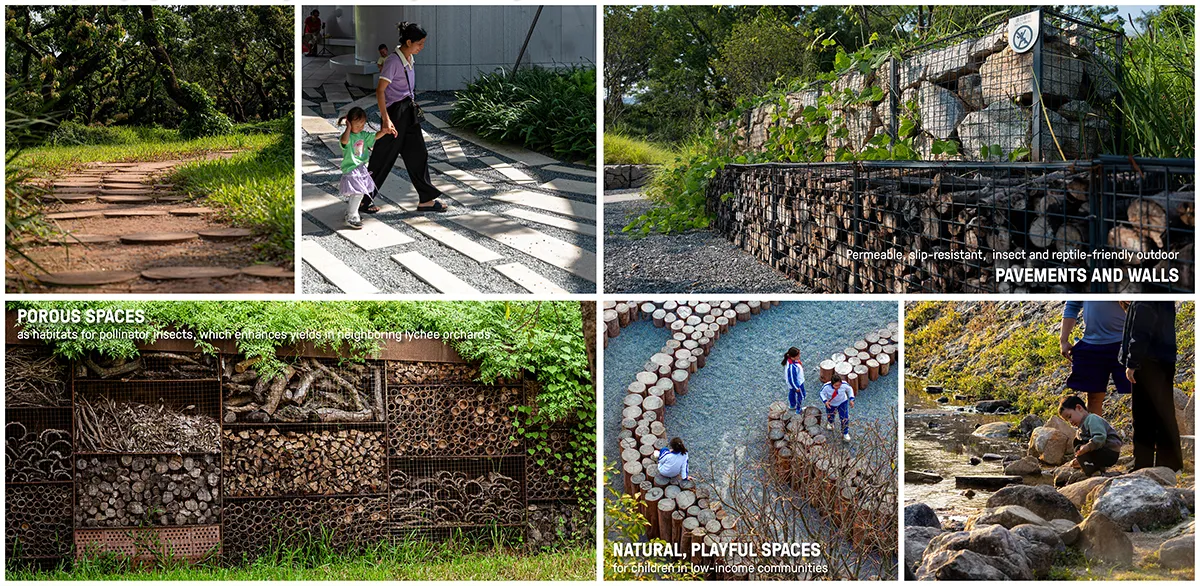
Confronting bare, monoculture lychee forests vulnerable to invasive species, we leveraged the linear space to introduce wildlife food sources. We implemented chemical-free management within a 10-meter buffer, underplanted native species, and planted fruiting trees in every open space. By introducing 108 native species (80 high-carbon-storage varieties) with multi-layered vegetation, we optimized forest structure across 75,000 sqm. This NbS enhances biodiversity and boosts carbon sequestration through increased biomass and soil organic matter. Ecological facilities—insect hotels and porous walls filled with collected debris—have enriched insect, amphibian, reptile, and bird diversity while indirectly improving lychee pollination, achieving a win-win for ecology and agriculture.
Strategy 3: Embedding Circularity and Carbon Reduction
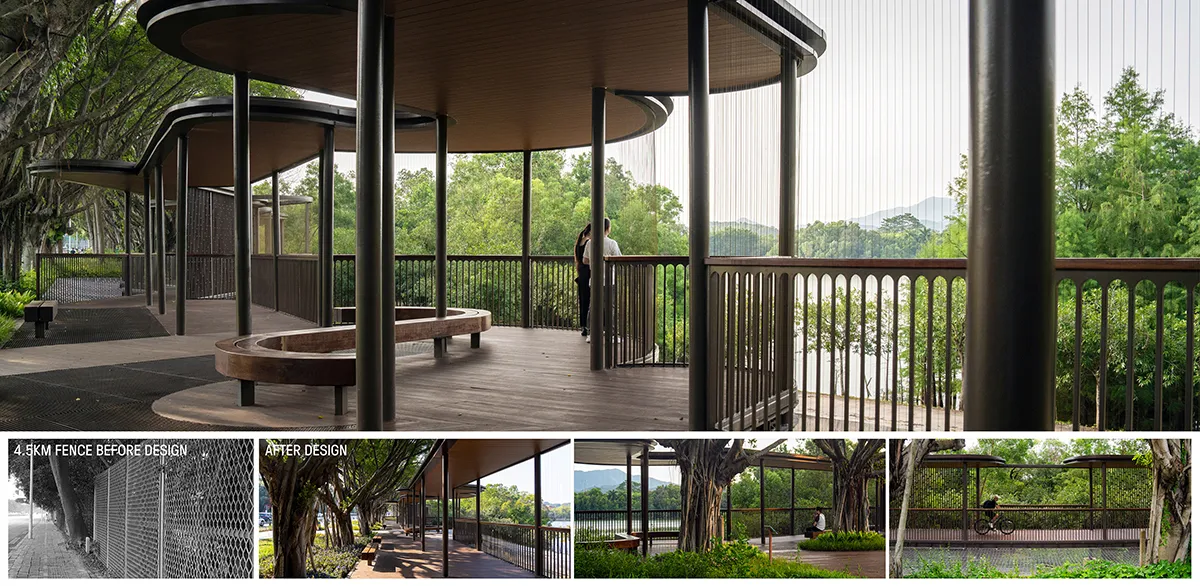
Construction maximized preservation of mature trees and respected original topography. 100% of materials and plant stock were sourced within 160 km; earthwork was balanced on-site, minimizing embodied carbon. Observing farmers’ annual lychee pruning generating “waste” branches, we transformed these on-site into gabion fill, anti-slip trail surfacing, and children’s play elements. This closed-loop system achieved dual carbon benefits: permanently sequestering 671.6 tons CO2e while avoiding 383 tons CO2e from waste incineration and reduced transport—equivalent to protecting 60 hectares of subtropical forest for one year.
In its first year, the greenway welcomed over two million visitors. It has hosted 13 nature education programs, 9 cultural carnivals, over 680 student visits, and 1,150 workshop participants. Lychee-picking visitors increased eightfold. A publicly subsidized nature education system now offers six free monthly programs, particularly benefiting local village children lacking quality resources. This project demonstrates that design rooted in ecological reverence, systemic thinking, and community collaboration can transcend recreation to become strategic infrastructure driving ecological restoration, social integration, and economic vitality—offering a replicable blueprint for high-density cities navigating development under ecological constraints.
Xili Lake Greenway
Landscape Architect: SWA Group
Ecological Consultancy: Shenzhen Yisen Ecotech Co., Ltd.
Caojian Pavilion Architecture design: Atelier XLarge
Weifeng Pavilion Architecture Design: hang cheng studio (hcs), Shenzhen, China
Landscape Construction Drawing Development and General Design Coordination: Shenzhen Urban Transport Planning Center Co., Ltd.
Architecture Construction Drawing Development: PT International Design Consultants Limited
Lighting Design: Shenzhen Light&Shade Rhythm Originality and Technology Co., Ltd.
Functional Signage Design: updesign
Ecological Interpretation Signage Design: Funsome Ecology
Hengtang Node and Baimang Node Design: Original Design Studio/TJAD
Client: Agent Construction Entity, China Resources Land Limited
Image Credits: SWA Group, Chill Shine, Greenway Around Xili Lake(Blueway), Jim+ Photography, Wechat Official Account Xixichen, Wechat Official Account ShenzhenLOOK, CR Land;