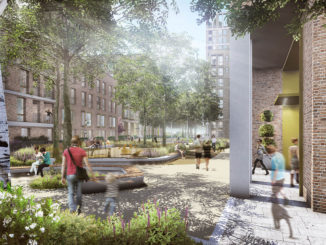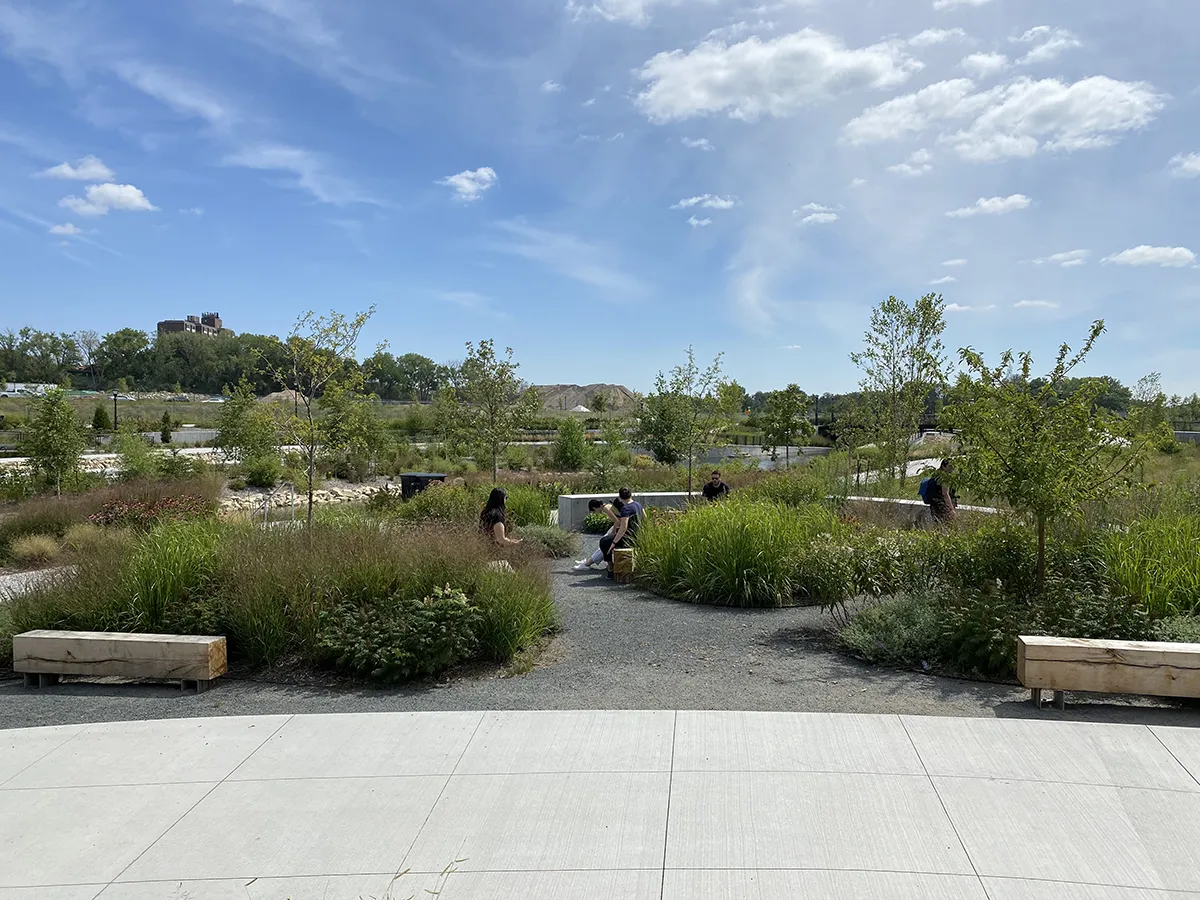
Highland Bridge heals through hydrology, rebuilding a riverfront district from a former industrial brownfield along the Mississippi River in Saint Paul, Minnesota, around public space and clean water. Fifty-five acres of parks and gathering spaces and 10+ miles of bike and pedestrian routes support about 3,800 homes, including 20% affordable housing. In 1925 the creek to Hidden Falls was buried and stormwater was sent downstream untreated; today a district-scale green system treats about 64 million gallons a year before returning water to the river in public view. This landscape-led approach offers a replicable model for river cities, positioning public space as civic infrastructure that advances equitable growth and environmental repair.
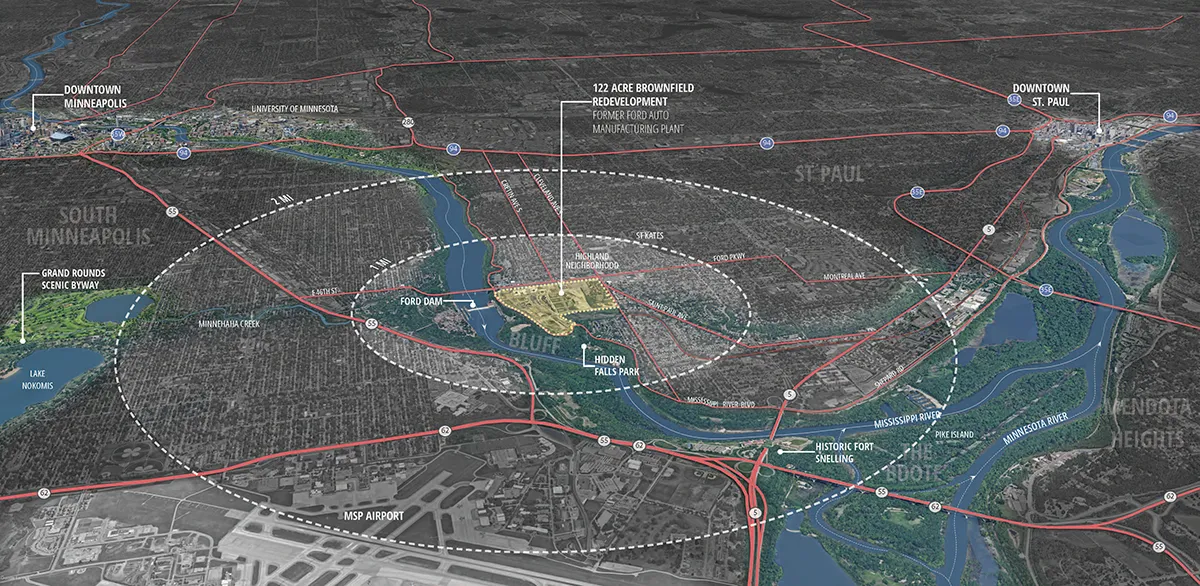
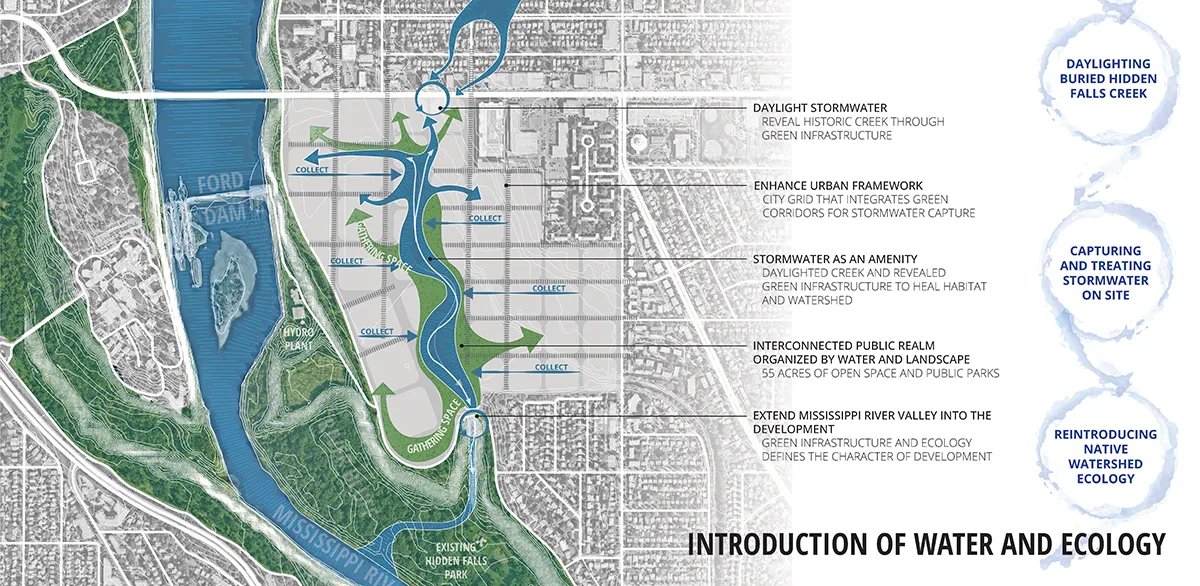
Highland Bridge transforms the former Ford Assembly Plant brownfield site beside the Mississippi River in Saint Paul, Minnesota, into a connected, mixed-income neighborhood organized by public space and water. More than 55 acres of parks and gathering spaces, together with more than 10 miles of bike and pedestrian routes, establish a continuous public-realm network that connects daily life to the river and supports about 3,800 homes, including 20% affordable housing. This landscape-led approach offers a replicable model for river cities, positioning public space as civic infrastructure that advances equitable growth and environmental repair.
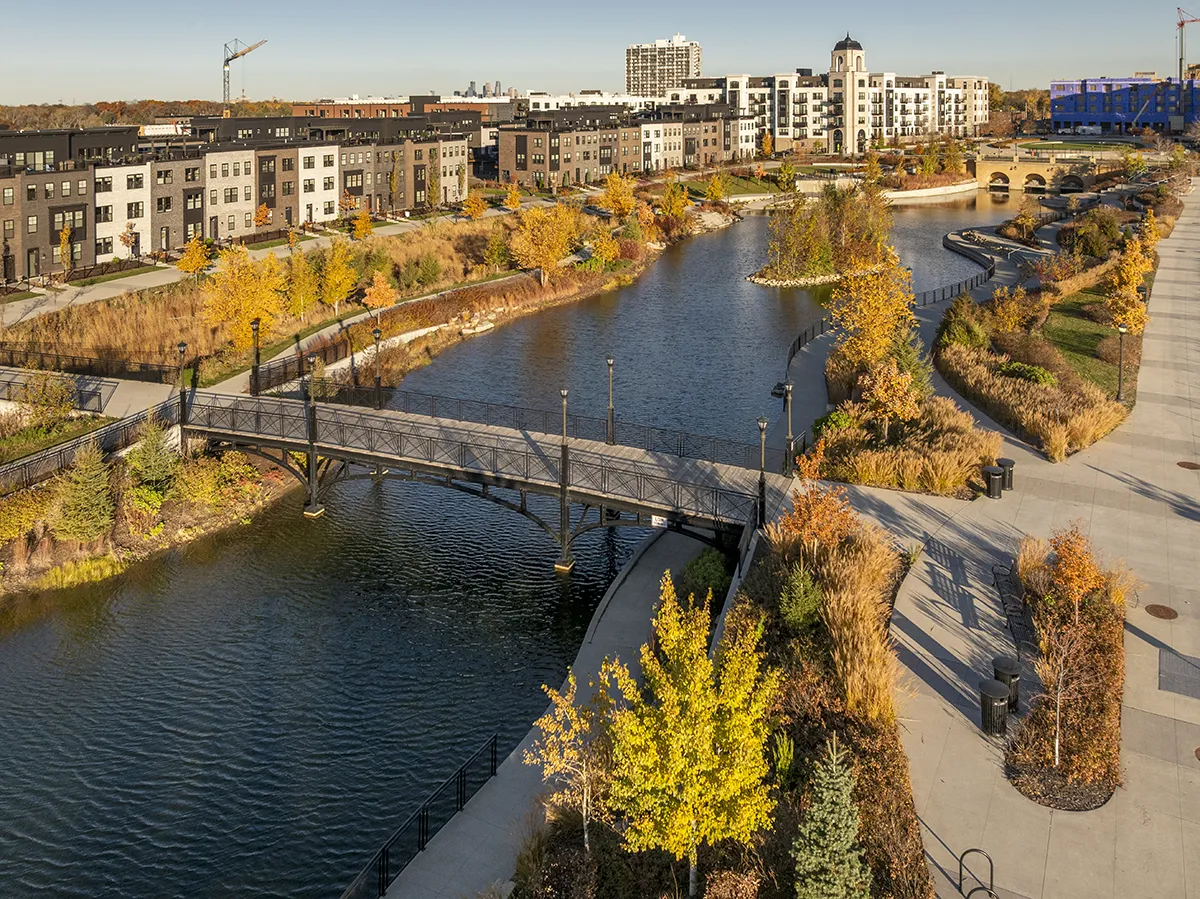
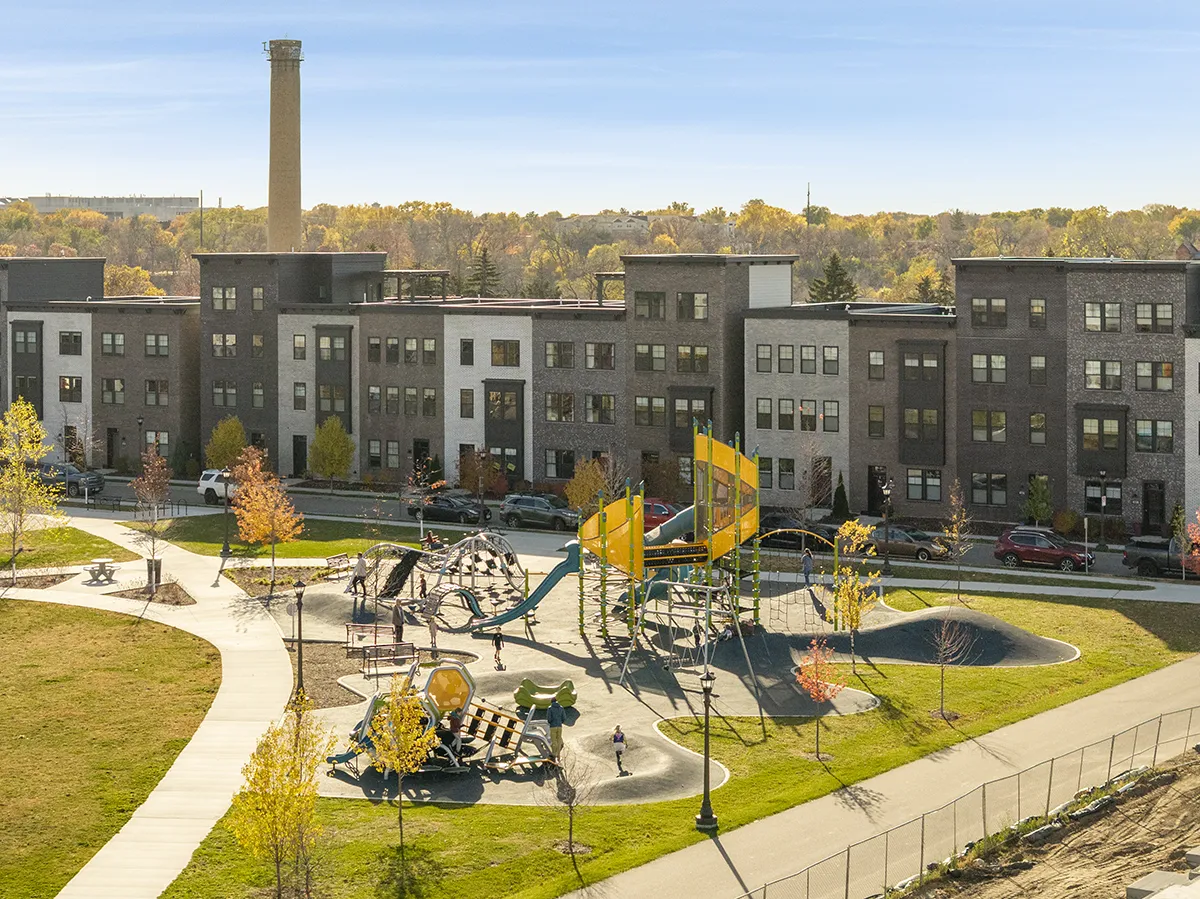
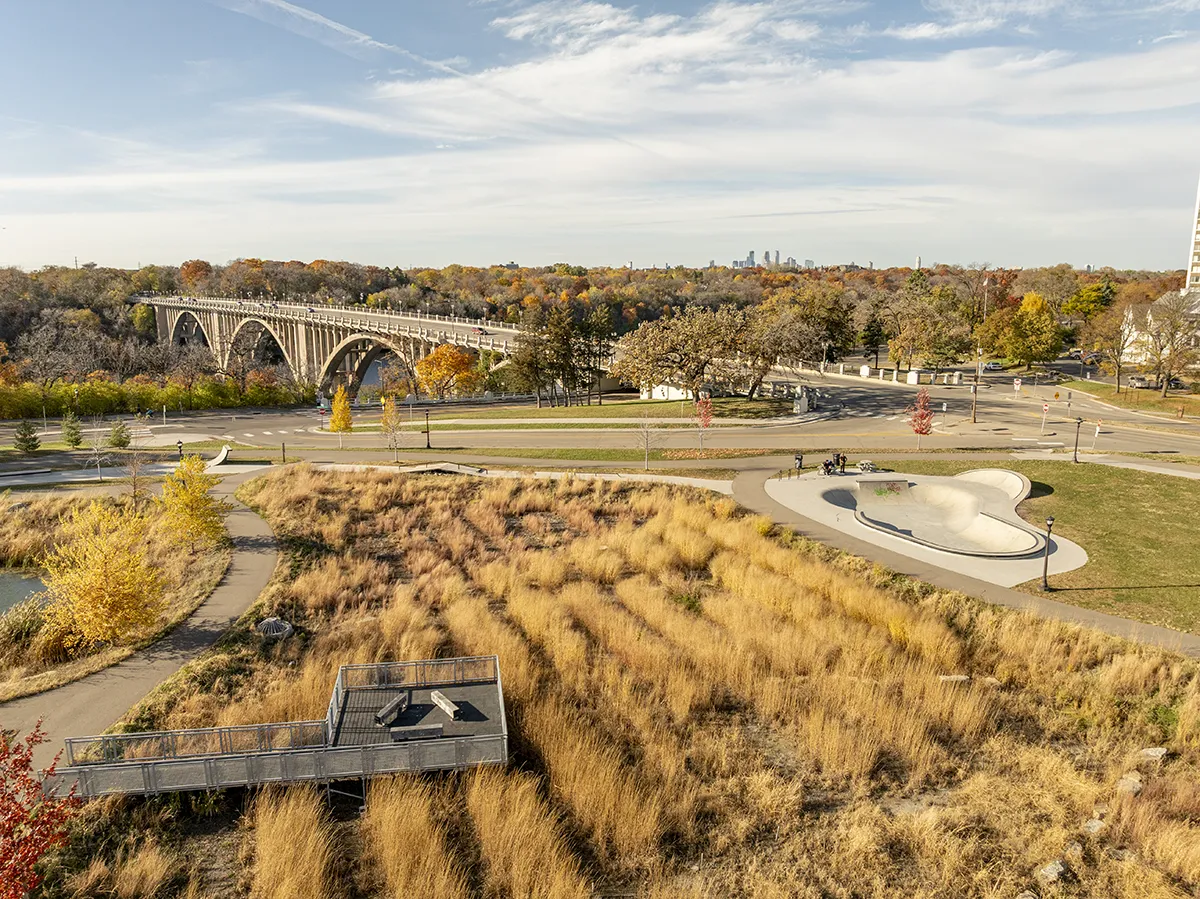
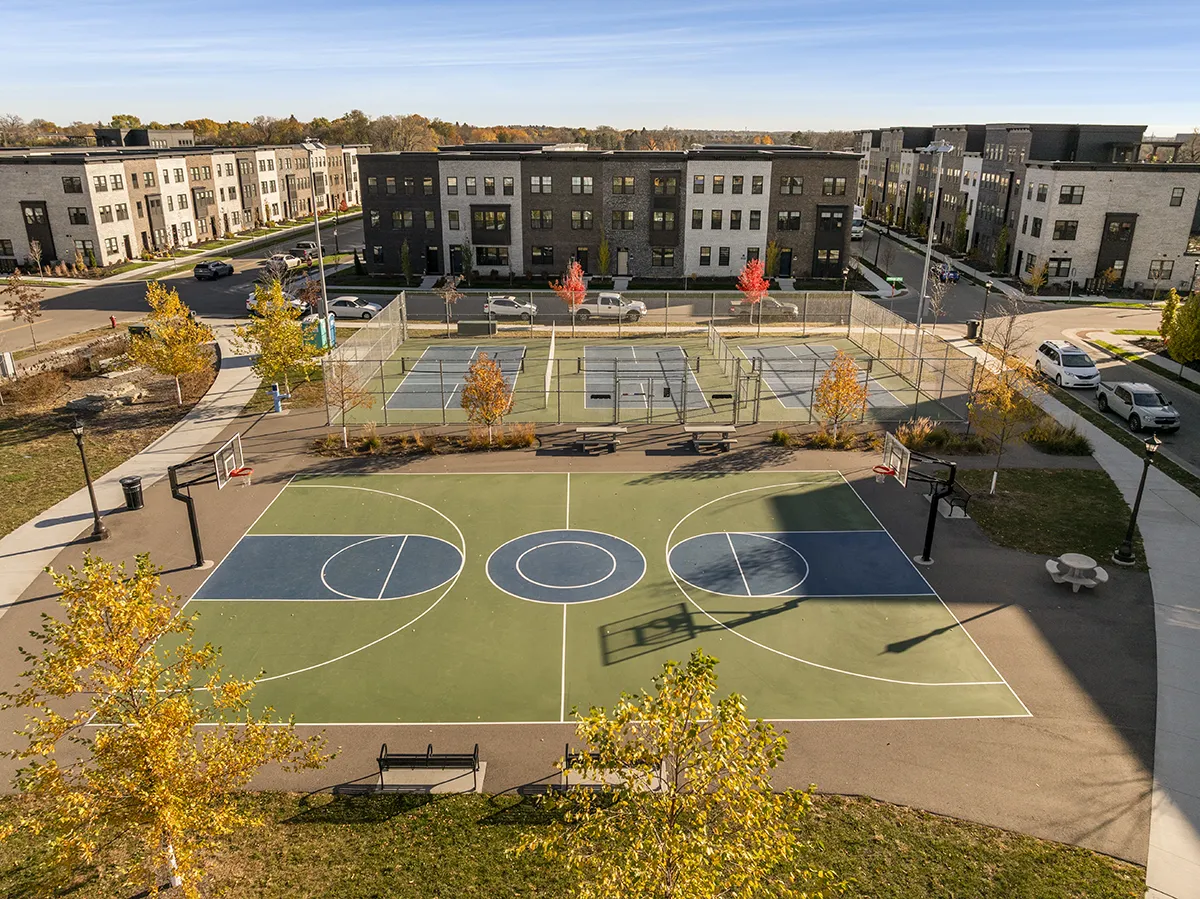
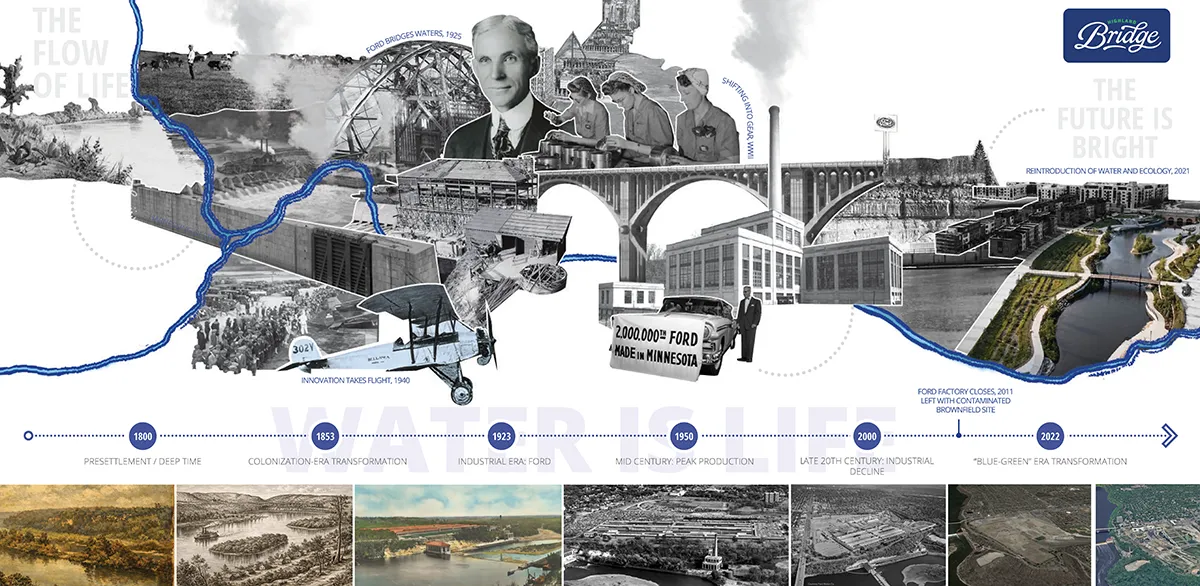
Highland Bridge is a healing story, and the medium is water. Long before the Ford plant rose on this site, the indigenous Dakota understood the nearby confluence of the Mississippi and Minnesota Rivers as sacred; water carried meaning as well as flow. With the Ford plant’s construction in 1925, Hidden Falls Creek was routed underground through a storm sewer. For decades, stormwater from the industrial landscape was conveyed downstream without treatment.
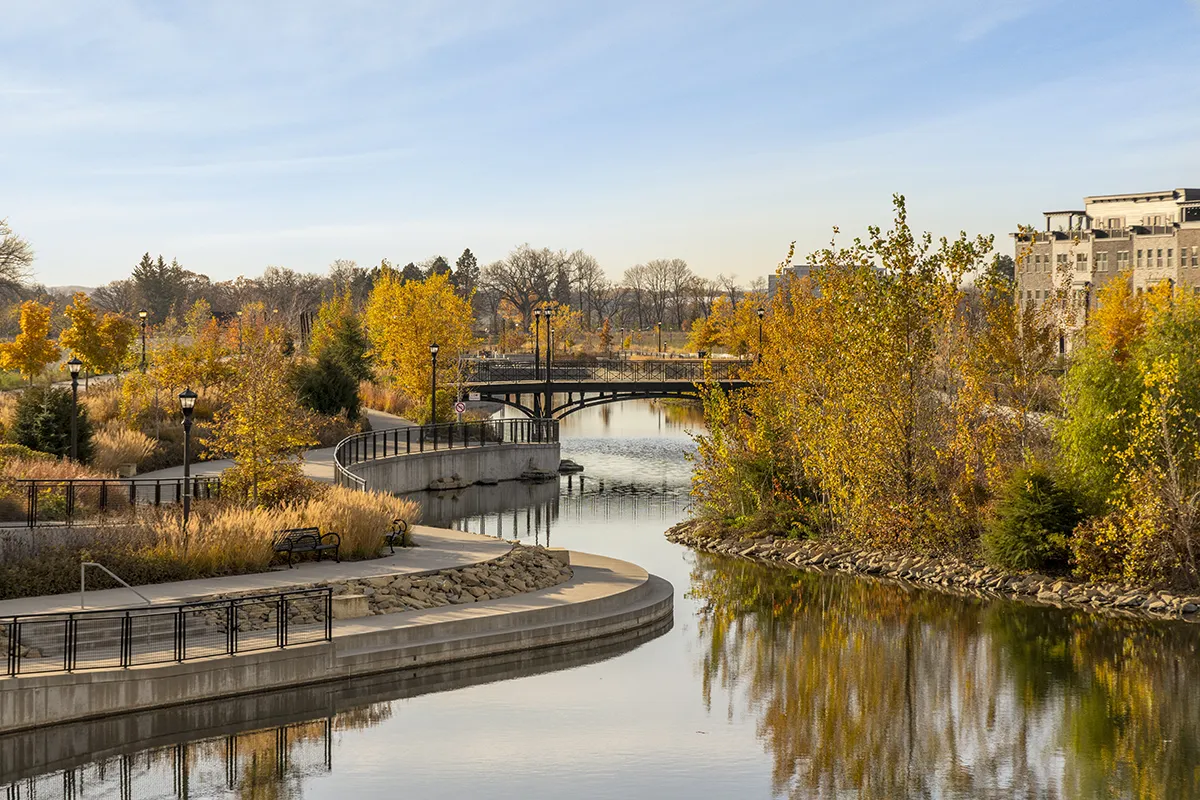
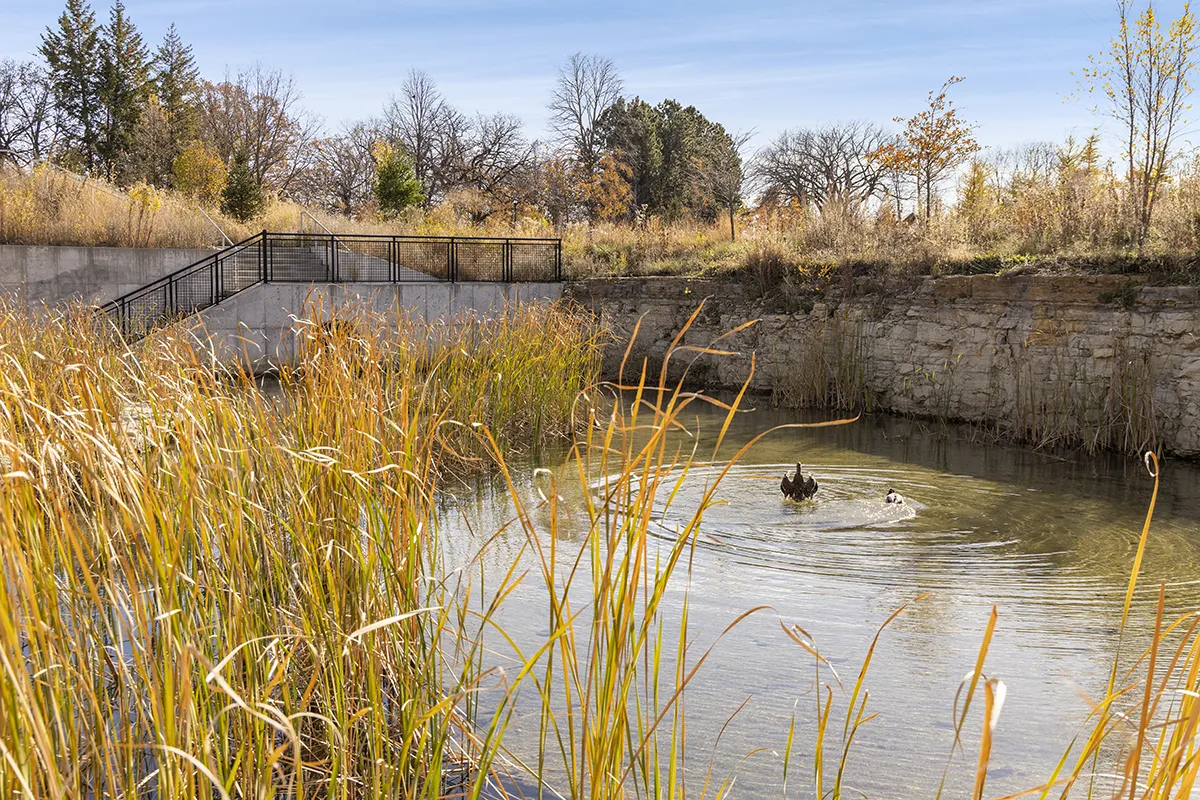
Cleanup came first. More than 440,000 cubic yards of contaminated soil were removed and properly managed, dismantling an industrial barrier that had severed the site’s connection to the river and surrounding neighborhoods. The redevelopment then made a deliberate choice: water and the public realm would organize the district.
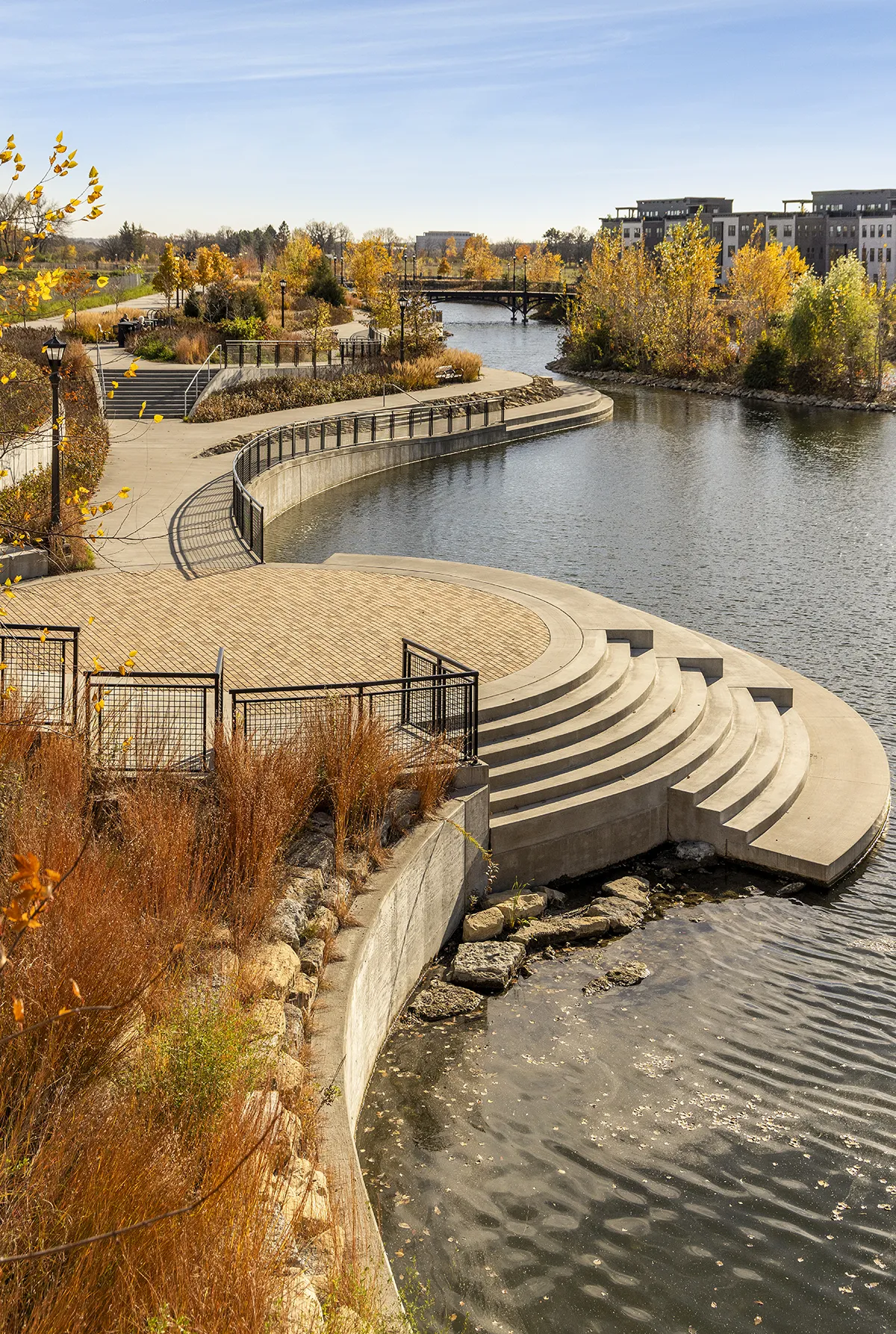
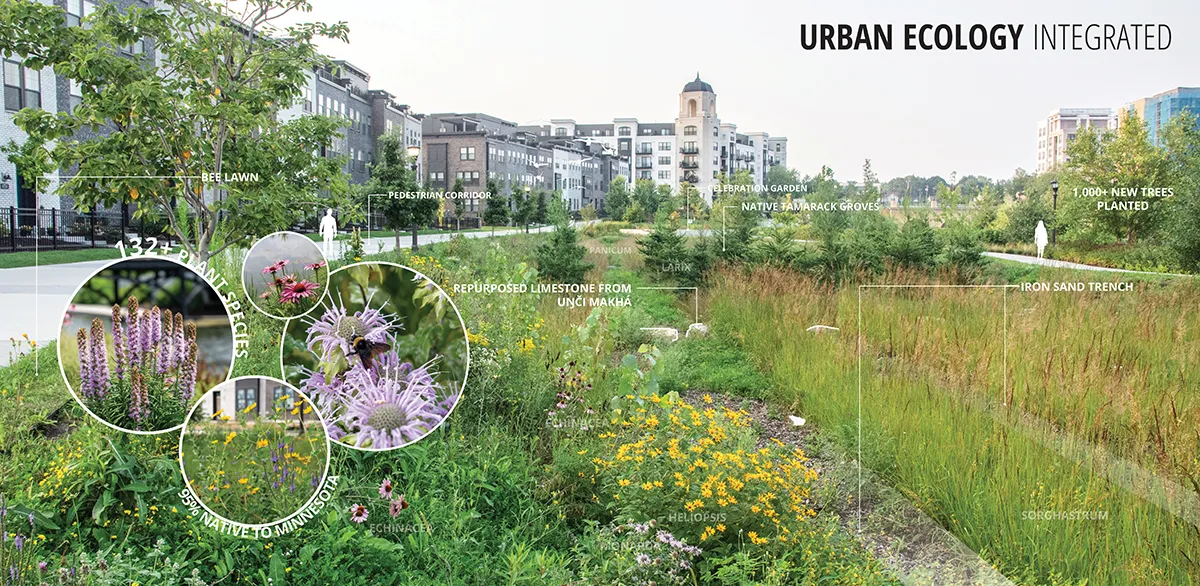
Instead of sending runoff directly into pipes, a centralized green-infrastructure system treats stormwater as a civic utility and a visible public amenity. Five biofiltration basins, two rate-control ponds, and five underground storage and filtration systems reduce peak flows and meter discharge. Engineered media, including iron-enhanced sand, binds dissolved pollutants, including phosphorus. Treated water fills the central water feature, then flows through a daylighted creek corridor that serves as a social-ecological connection designed for normal conditions and storm events before returning to the Mississippi. Roughly 64 million gallons from on- and off-site sources are treated annually, with measured reductions in total suspended solids and phosphorus and a 98% reduction in peak discharge for the two-year design storm. In 2025, the Water Environment Federation recognized the system with a Project Excellence Award for district-scale water-quality performance.
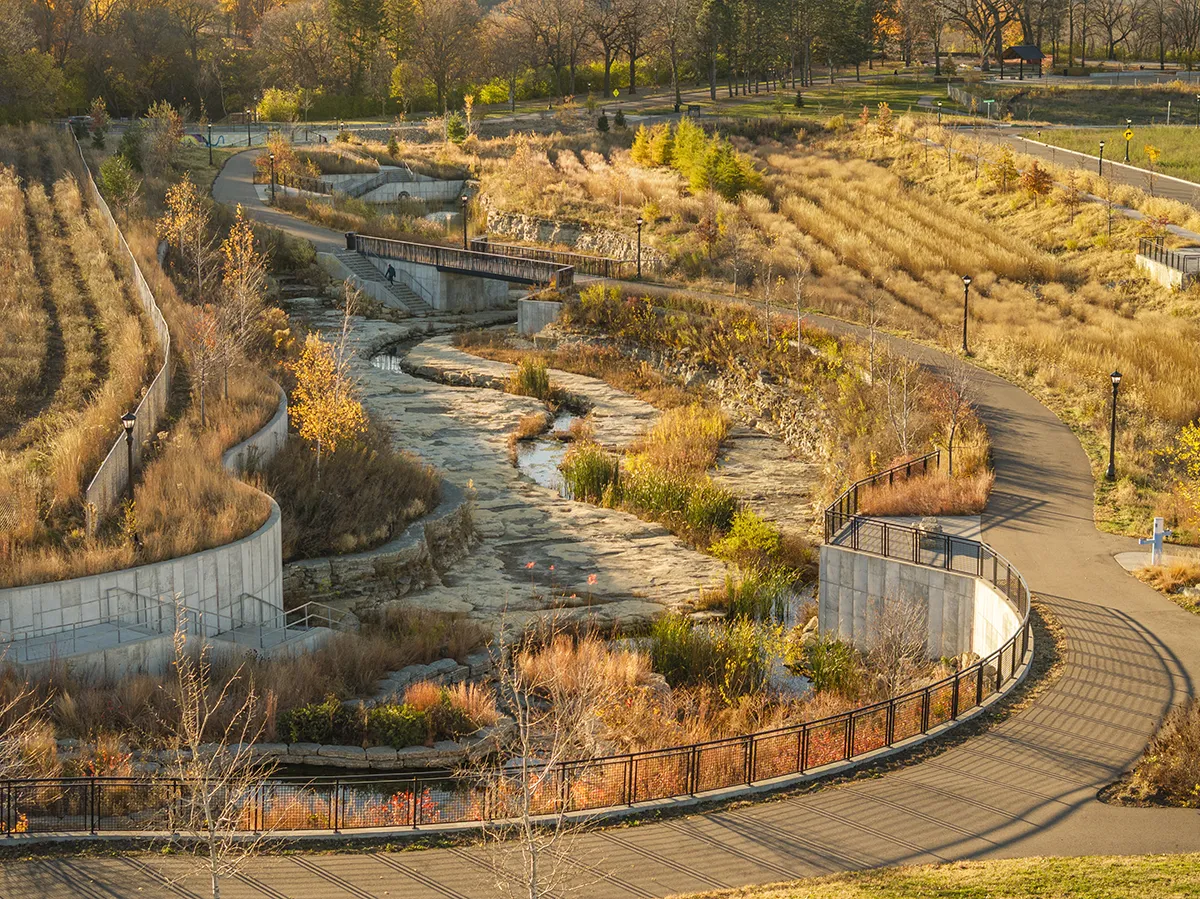
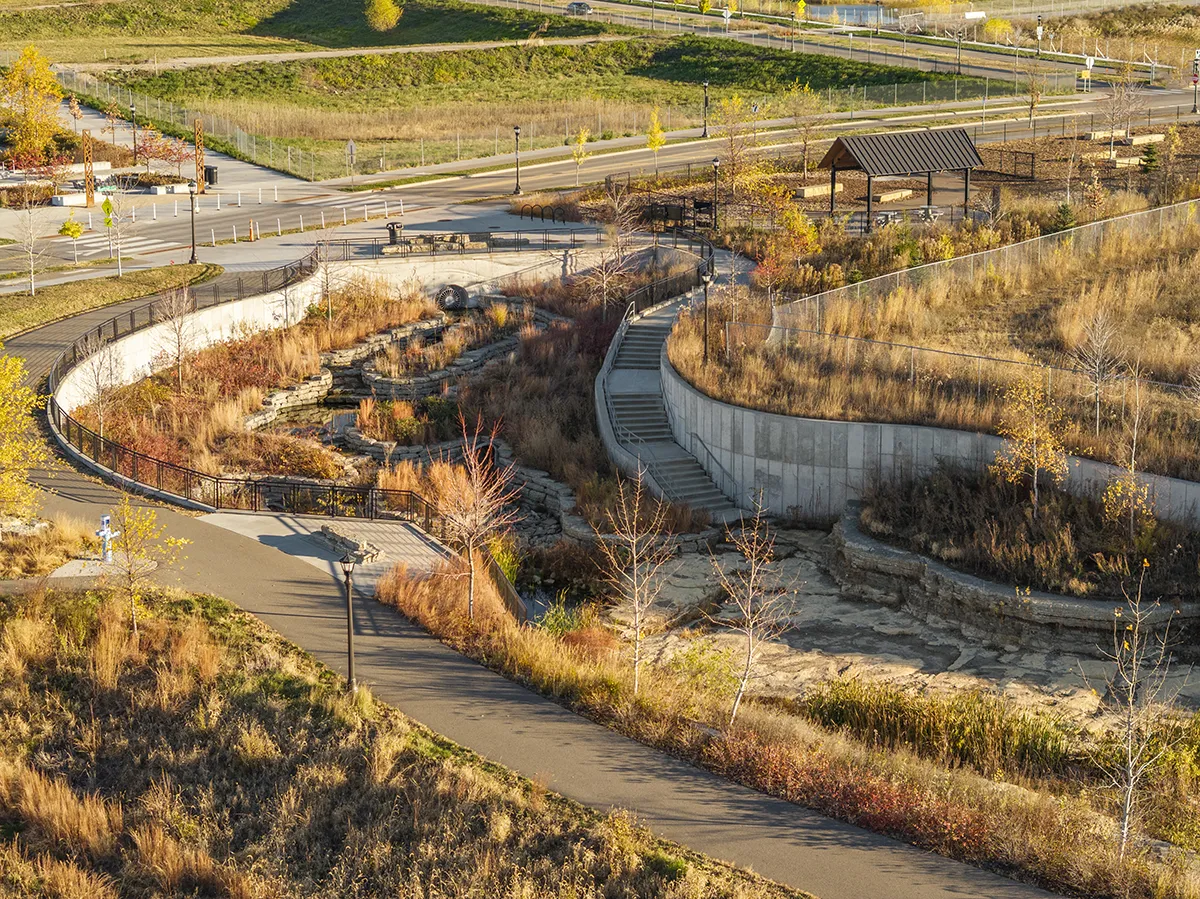
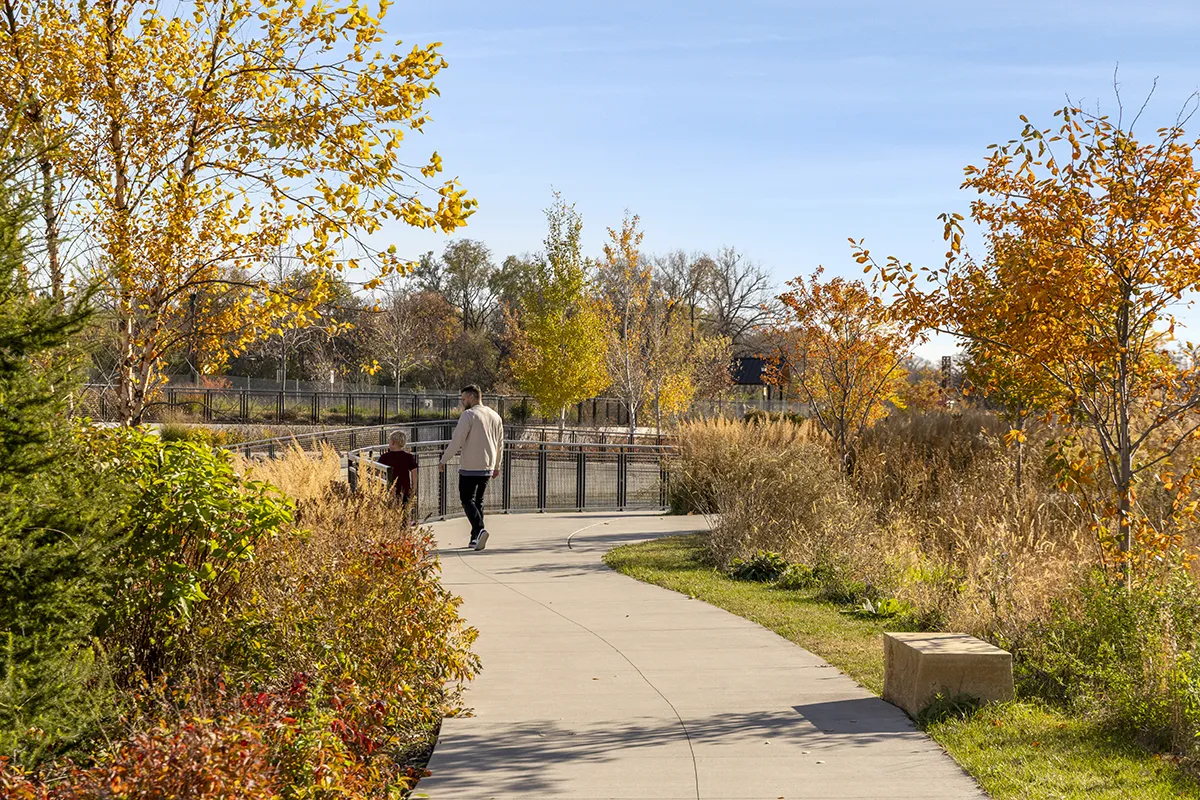
Stewardship is built into the ground plane as well as the water system. Remediation, testing, and soil rebuilding created a foundation for more than 1,000 new trees and 132 plant species, 95% native to Minnesota, strengthening habitat, shade, and seasonal identity while reducing irrigation demand and maintenance requirements. A decade-long public process with more than 200 community events shaped priorities for access, equity, and daily use, helping the public realm catalyze private investment and long-term neighborhood viability.
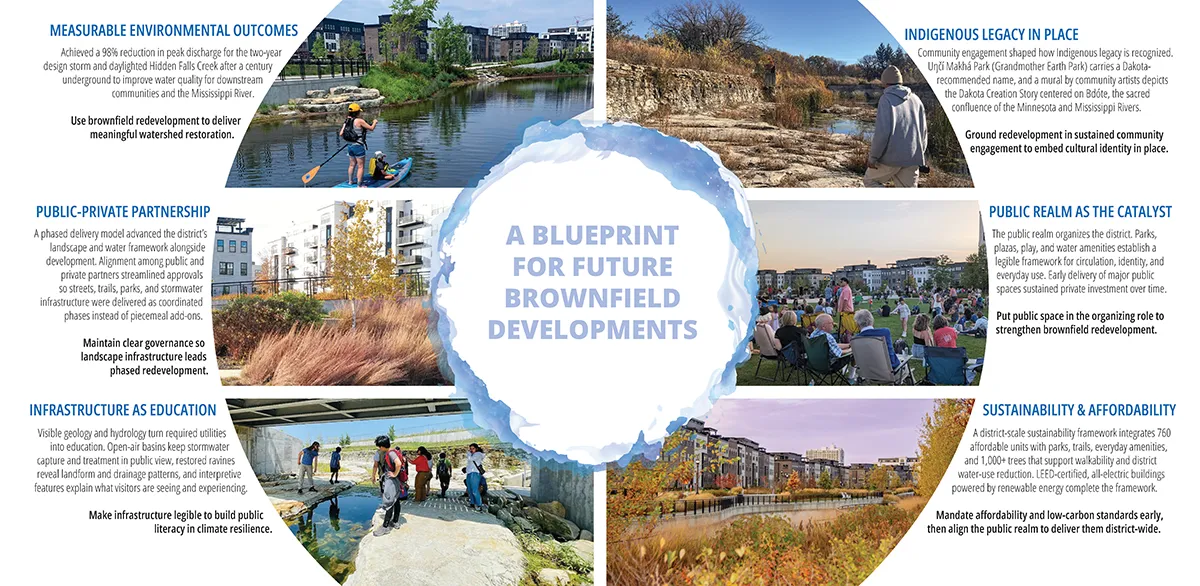
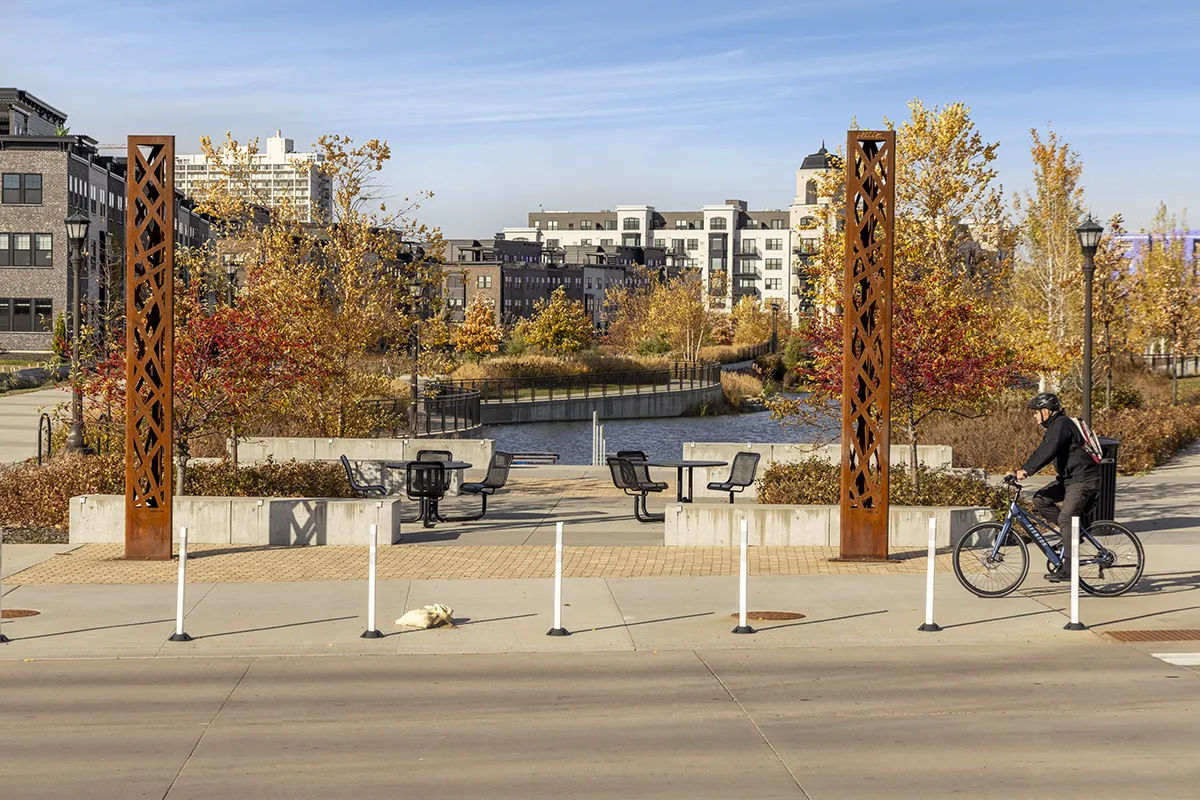
Highland Bridge’s public realm is conceived as a connected sequence rather than a set of isolated parks. Gateway Park, Central Plaza, Assembly Union Park, and Grandmother Earth Park form a linked system of public spaces for daily use across all ages and abilities while carrying the water story through the neighborhood, where water becomes a shared amenity and a visible act of repair. Delivering that integration required close coordination among the city, watershed and engineering partners, and the master developer to align remediation, streets and trails, public spaces, and the stormwater treatment system as one urban framework.
Highland Bridge – Ford Site Redevelopment
Location: Saint Paul, Minnesota, USA
Client: Ryan Companies
Landscape Architect: Confluence
Images: Courtesy of Confluence
Text: Confluence