
Xuzhou High-Speed Rail New City East Plaza redefines the role of a transportation forecourt as an integrated urban destination. Located at the intersection of two major national rail corridors, Xuzhou East Station serves 13.8 million passengers annually and connects 181 cities. While the original station efficiently organized vehicular movement, it lacked meaningful public space and civic identity.
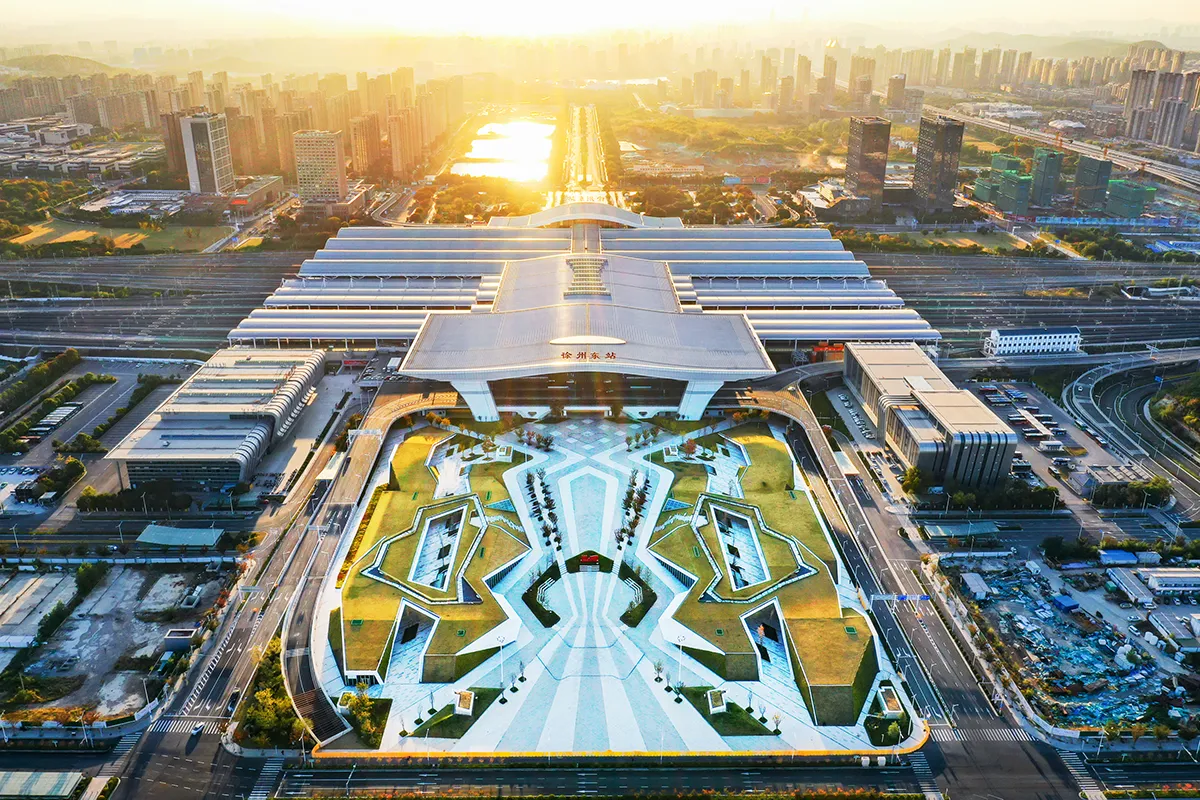
The project transforms a complex infrastructure platform—built above a multi-level parking facility and integrated with three metro lines—into a layered public realm. Rather than treating the station forecourt as residual transit space, the design repositions it as the terminal point of the city’s green corridor and a gateway to the High-Speed Rail New City.
Two commercial streets are embedded within the plaza structure, humanizing arrival and departure experiences while activating the site throughout the day. Above them, a three-dimensional landscape park integrates architecture and topography, creating ecological public space that connects to surrounding residential districts.
Through linear landform architecture, calibrated paving geometry, and a restructured urban block scale, the project establishes a cohesive station–city interface. The result is a built model of transit-oriented urbanism that reconciles infrastructure efficiency with civic identity and public life.
Station–City Integration as Urban Infrastructure
1. Context: Infrastructure Without Urban Interface
Xuzhou East Railway Station occupies a strategic position within China’s national high-speed rail network, located at the junction of the Beijing–Shanghai and Longhai rail corridors. Handling approximately 13.8 million passengers annually and connecting 181 cities, the station functions as a major mobility hub within the Huaihai Economic Zone.
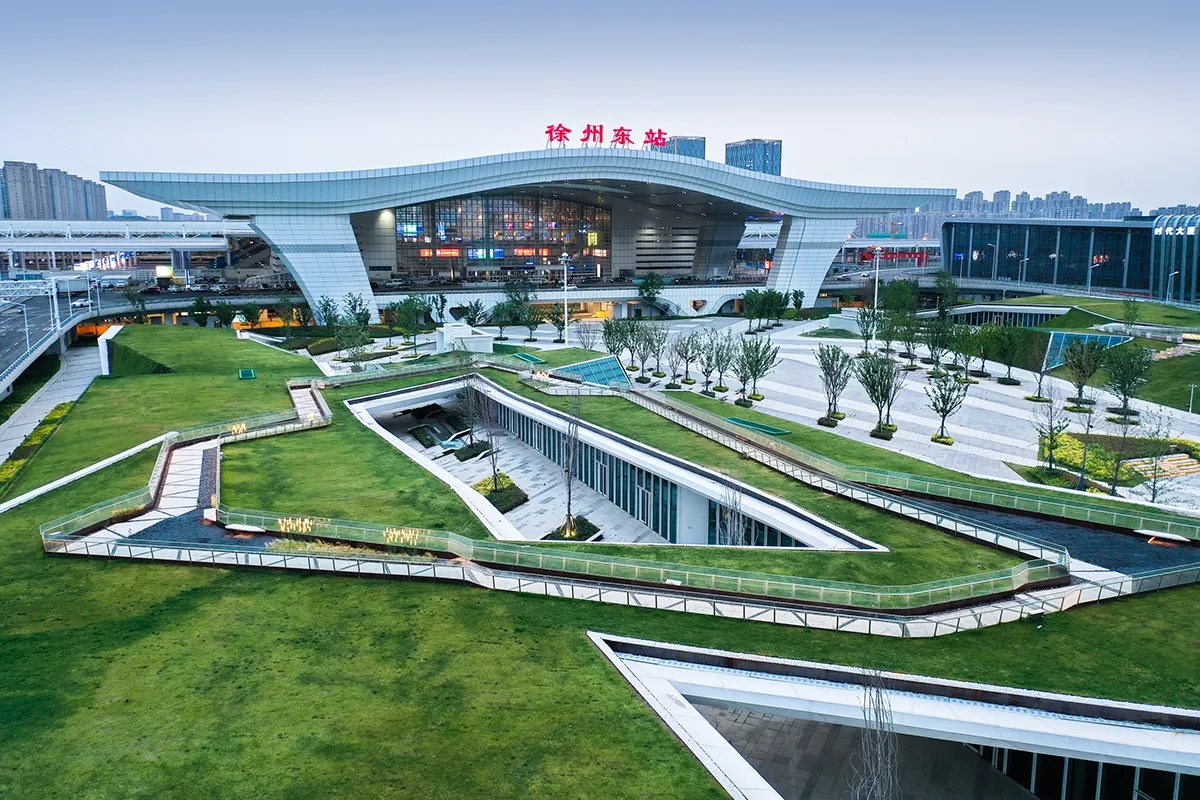
Despite its transportation efficiency, the original station forecourt reflected a common condition in early-generation high-speed rail developments across mainland China: infrastructure was optimized for traffic throughput but lacked meaningful integration with the surrounding urban fabric. Fragmented land administration and separated governance between national rail infrastructure and municipal development often resulted in oversized plazas, mono-functional parking platforms, and weak pedestrian environments.
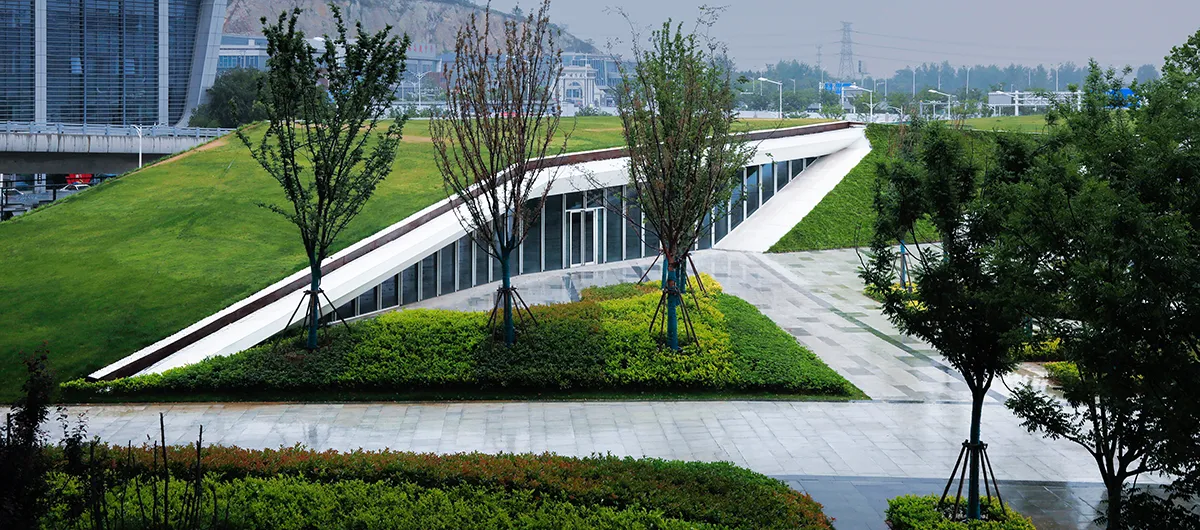
The East Plaza project emerged during the broader planning of the High-Speed Rail New City. Through a re-evaluation of the station’s spatial organization, the design team identified a critical opportunity: to transform a highly engineered infrastructure platform into a coherent urban place.
2. Design Challenge: Building on a Multi-Layered Transport System
The site is structurally complex. The plaza sits atop a large underground parking facility and coordinates with three metro lines, multiple station entrances, arrival halls, and an elevated vehicular departure deck. Circulation occurs simultaneously at several vertical layers.
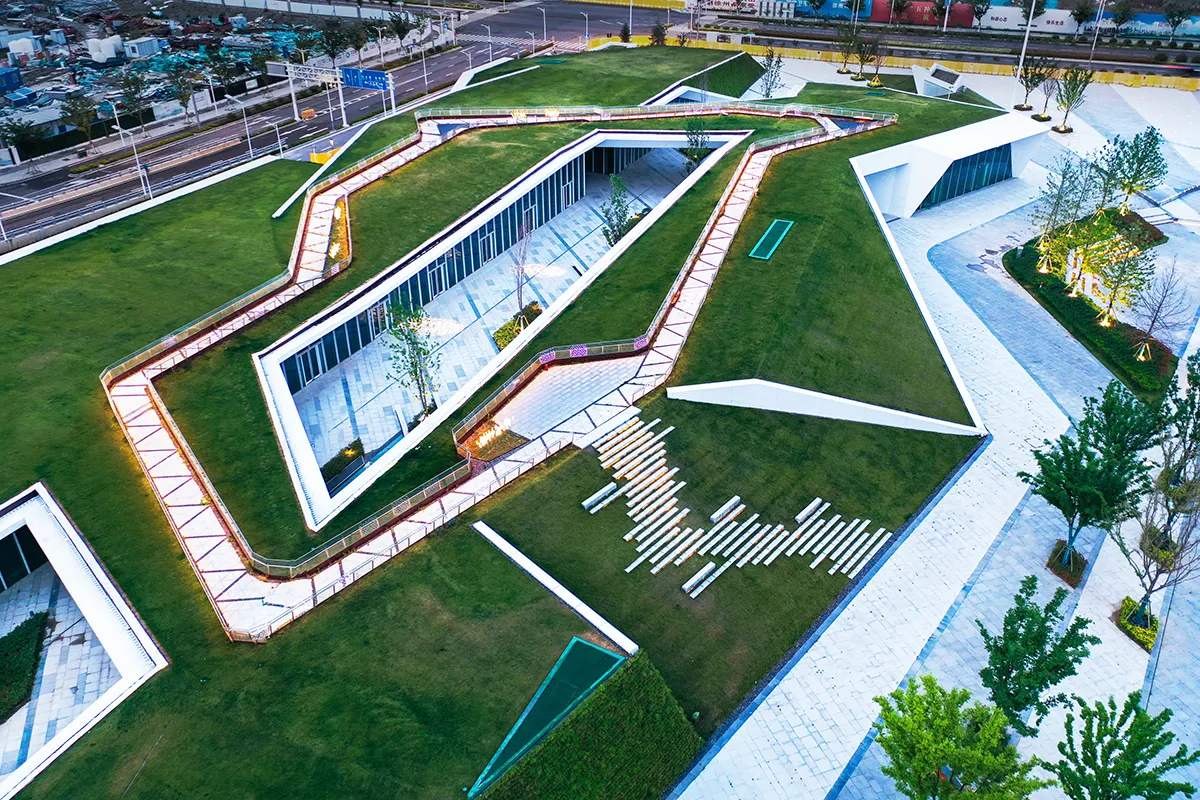
Rather than concealing this infrastructural complexity, the design leverages it as the foundation for a three-dimensional public realm. The project required close coordination between transportation engineering, architectural systems, structural grids, and landscape design, operating at the intersection of urban planning and built development.
3. Urban Strategy: From Residual Plaza to Civic Terminus
Within the master plan of the High-Speed Rail New City, a major green corridor extends toward the station. The East Plaza is positioned as the terminal point of this axis.
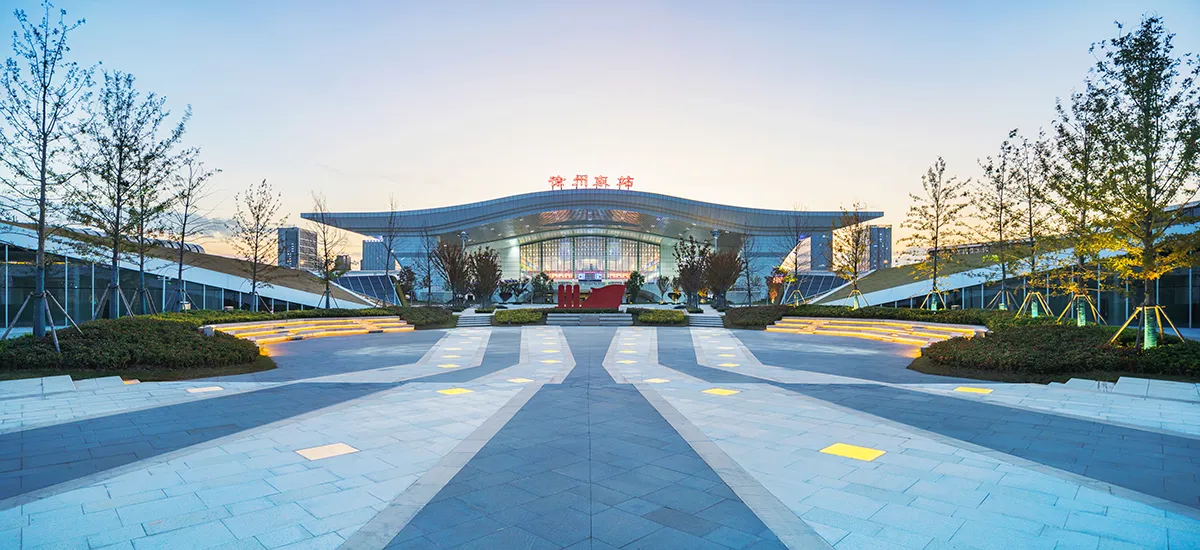
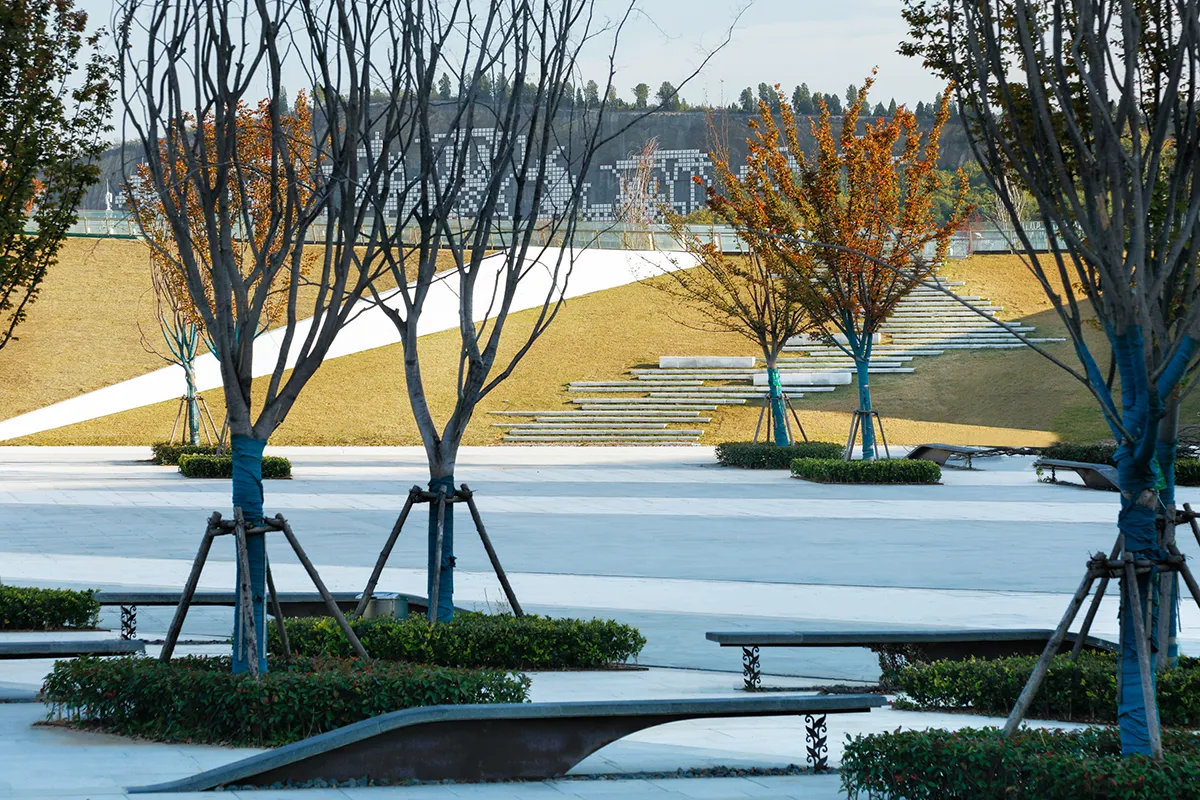
The design reorganizes the previously oversized urban blocks and reshapes the plaza into a structured spatial sequence. Linear landform architecture frames the station building, generating spatial depth and directional clarity. Paving geometries radiate and compress toward the station façade, reinforcing its role as a gateway.
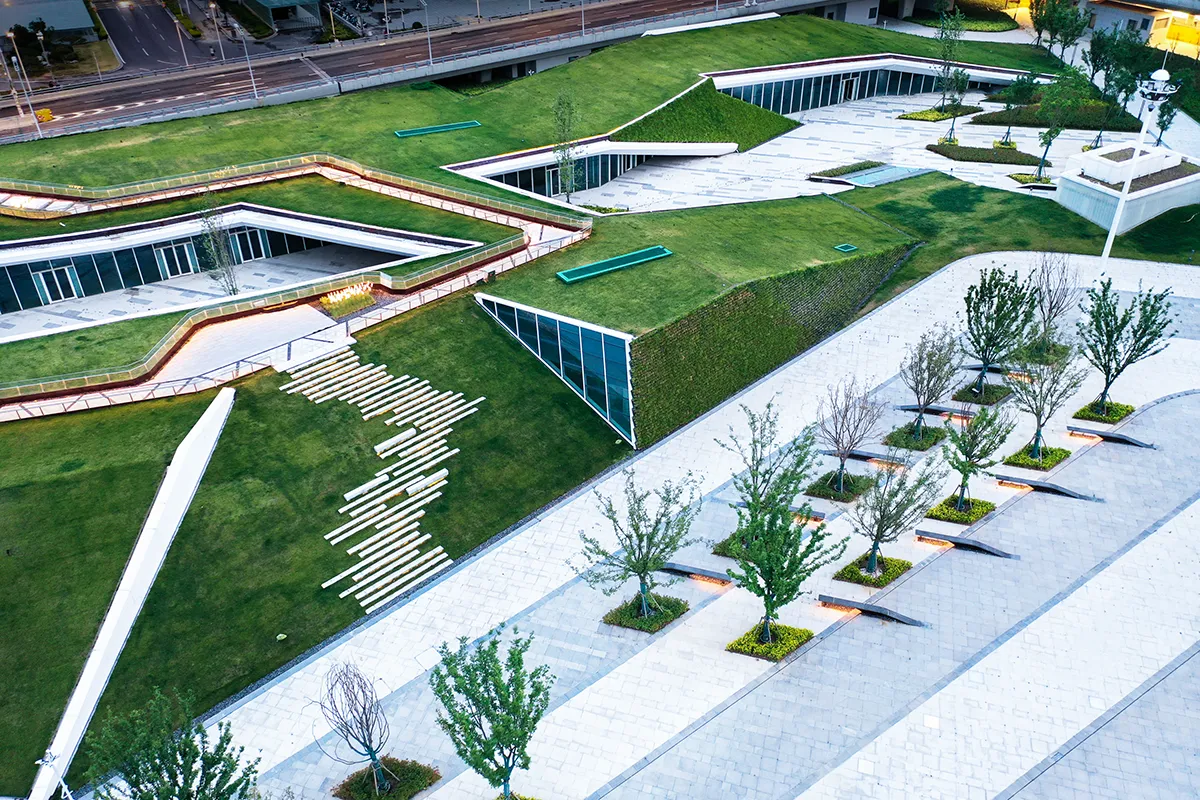
Symbolically referencing Xuzhou’s historic identity as the “thoroughfare of five provinces,” the paving lines extend outward, visually connecting the city to the broader national network. The forecourt thus becomes both an infrastructural node and a representational civic space.
4. Mixed-Use Integration: Humanizing Transit Space
To activate the site beyond peak transit hours, two commercial street blocks are embedded into the plaza. Their plan geometry adopts an hourglass configuration, symbolizing temporal flow while modulating the scale of the expansive forecourt.
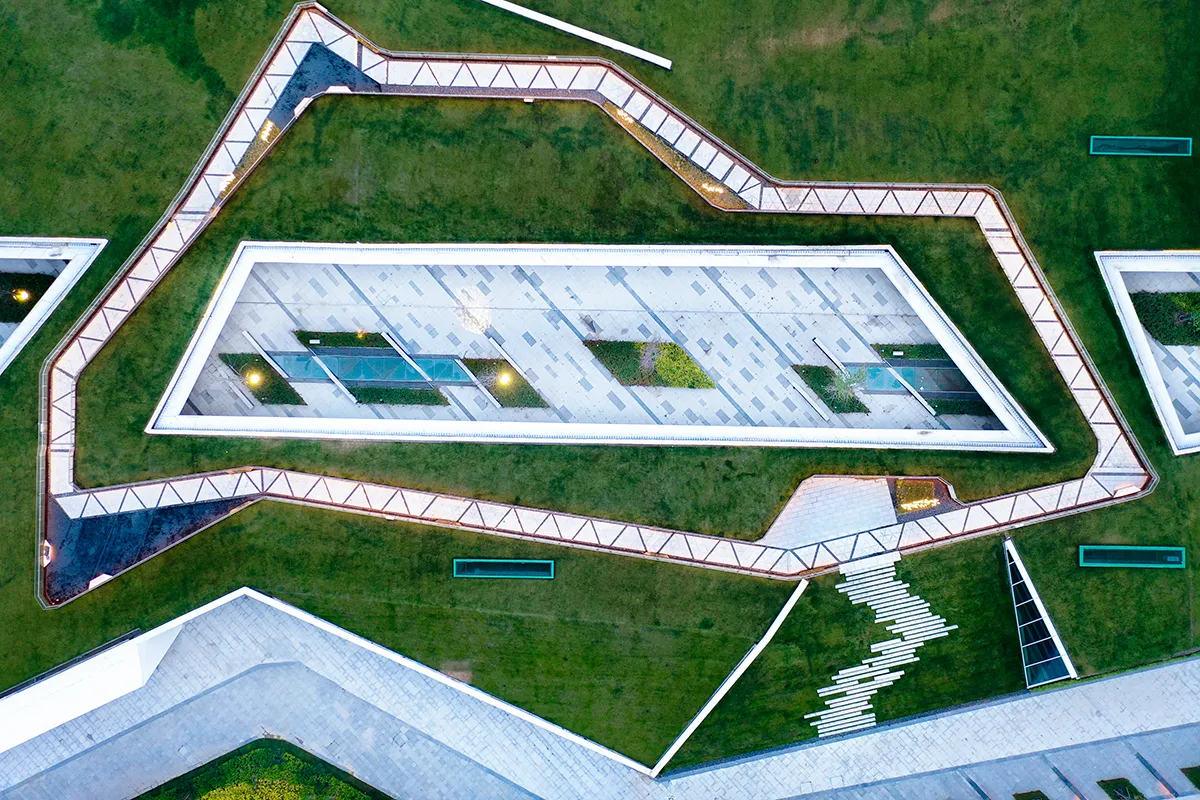
These commercial streets serve several urban functions:
- Providing daily amenities for commuters and residents
- Reducing perceived walking distances
- Creating sheltered pedestrian environments
- Establishing active edges along key urban frontages
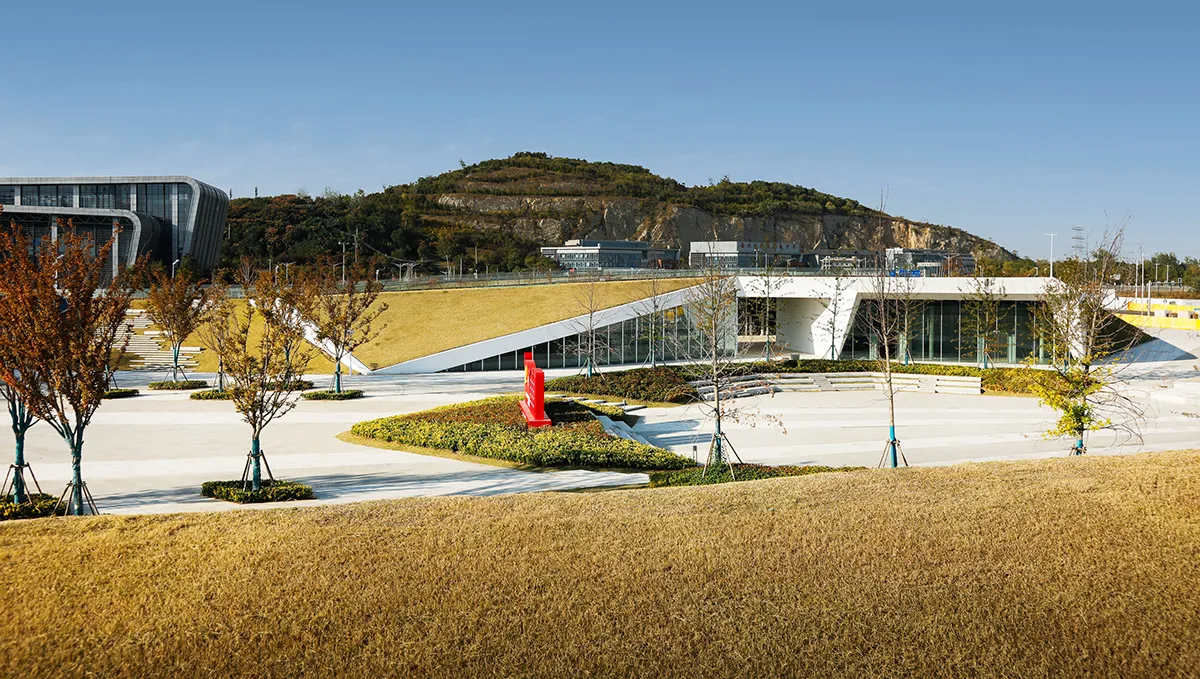
Above these commercial volumes, the design introduces a three-dimensional park. Rather than separating building and landscape, the commercial roofs become inhabitable green slopes that blend into the larger plaza topography.
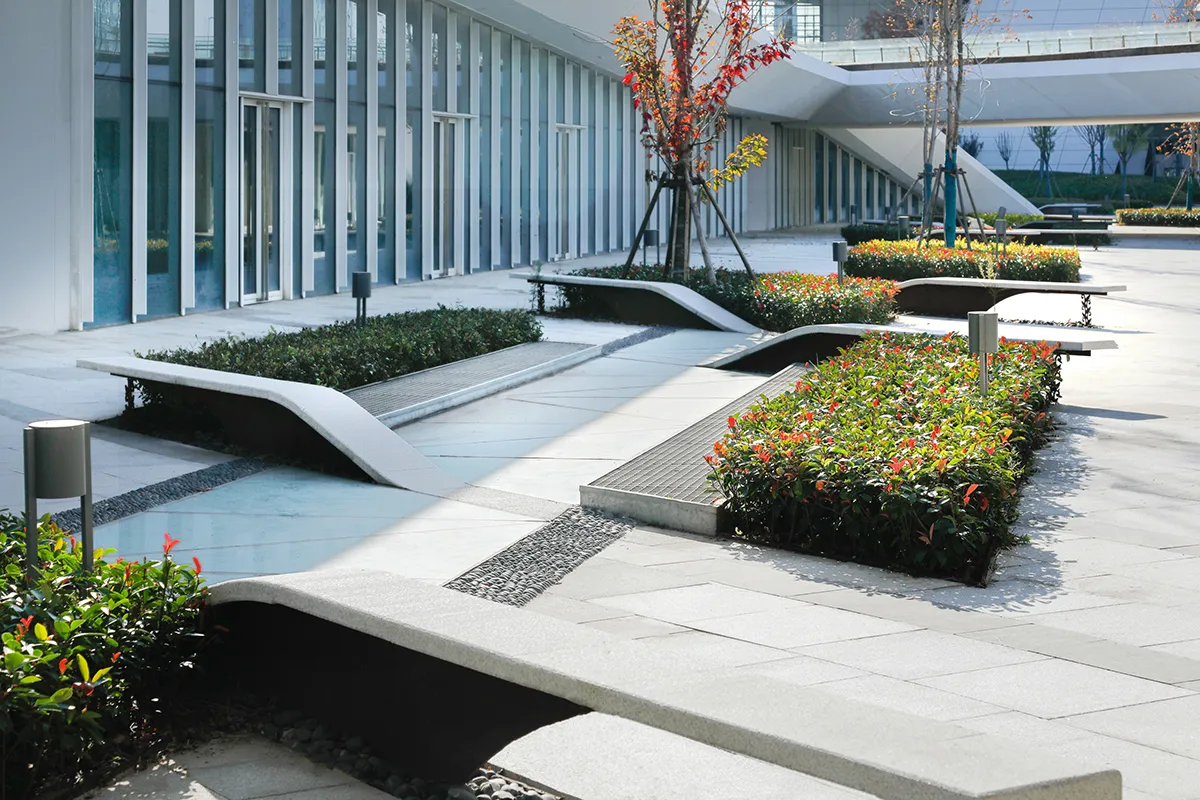
This approach dissolves architectural mass into landform, allowing commercial infrastructure to coexist with civic open space without visual dominance.
5. Three-Dimensional Garden City
The project embodies a contemporary interpretation of the “three-dimensional garden city.” Public space is not limited to ground level; it is layered across roofs, terraces, and slopes.
The elevated park:
- Provides ecological stormwater absorption
- Creates shaded seating and rest areas
- Connects to surrounding residential podium gardens
- Offers visual continuity toward adjacent districts
By transforming the roofscape into accessible green infrastructure, the project establishes environmental stability while enhancing experiential quality.
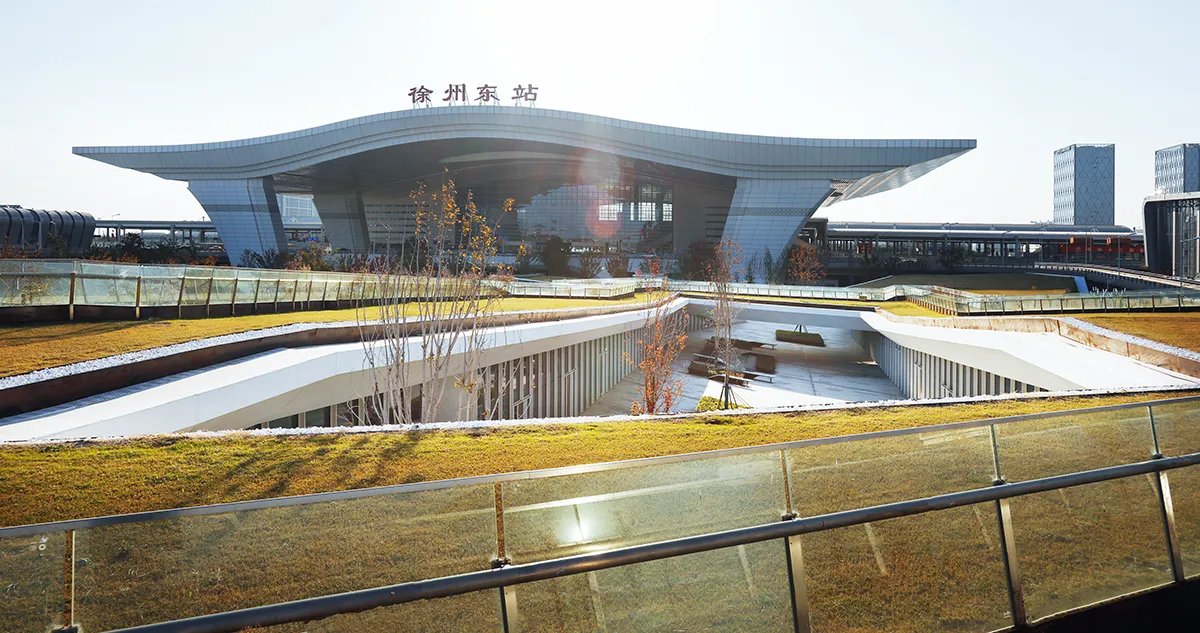
The station forecourt becomes a place where arrival, departure, leisure, and everyday urban life coexist.
6. Station–City Integration
A fundamental ambition of the project is station–city integration. Historically, high-speed rail stations in mainland China have functioned as isolated mobility enclaves. The East Plaza counters this condition through:
- Clear pedestrian connectivity to adjacent neighborhoods
- Integrated commercial programming
- Reduction of vehicular dominance at grade
- Structured spatial alignment with city planning axes
The project shifts the perception of the station from edge condition to urban center.
7. Built Outcome and Urban Impact
Completed between 2020 and 2022, the East Plaza now operates as both infrastructure and civic space. It supports daily commuter flows while accommodating informal social activities, public gathering, and urban leisure.
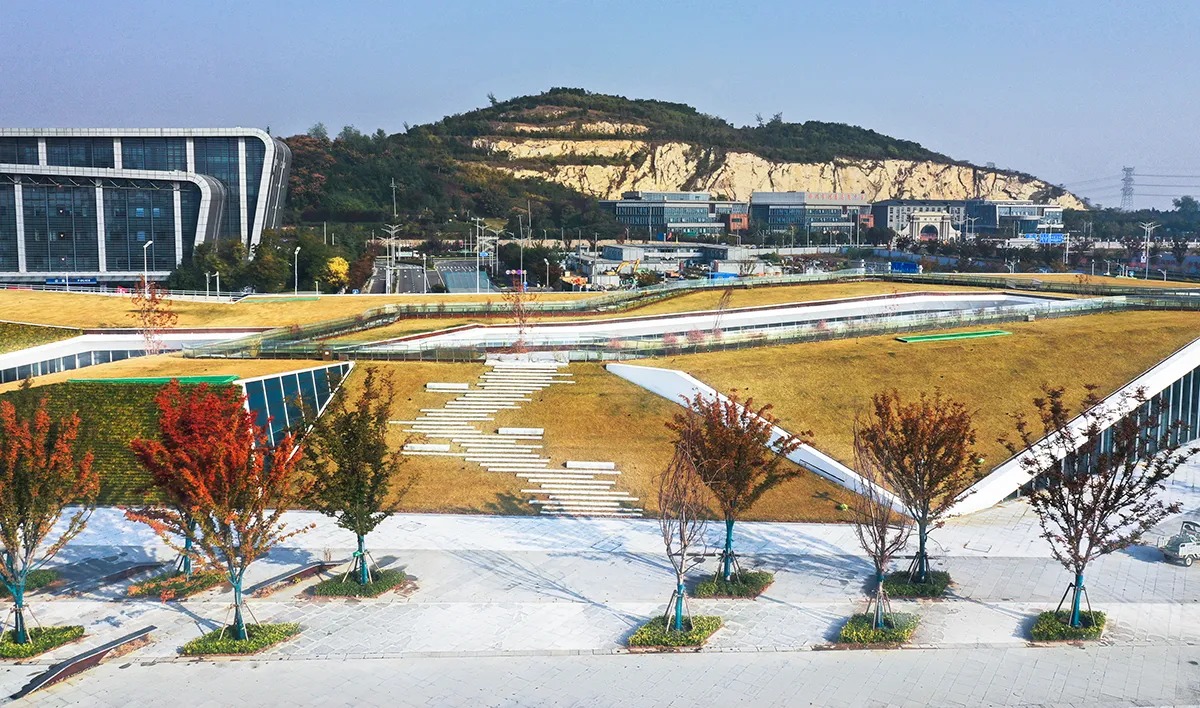
The project demonstrates that transit-oriented development can extend beyond density metrics. It shows how large-scale infrastructure platforms can be reinterpreted as public landscapes without sacrificing operational efficiency.
By reconciling engineering constraints with urban ambition, the East Plaza provides a built model for the next generation of Chinese high-speed rail urbanism — one in which infrastructure, architecture, and landscape form a continuous civic system.
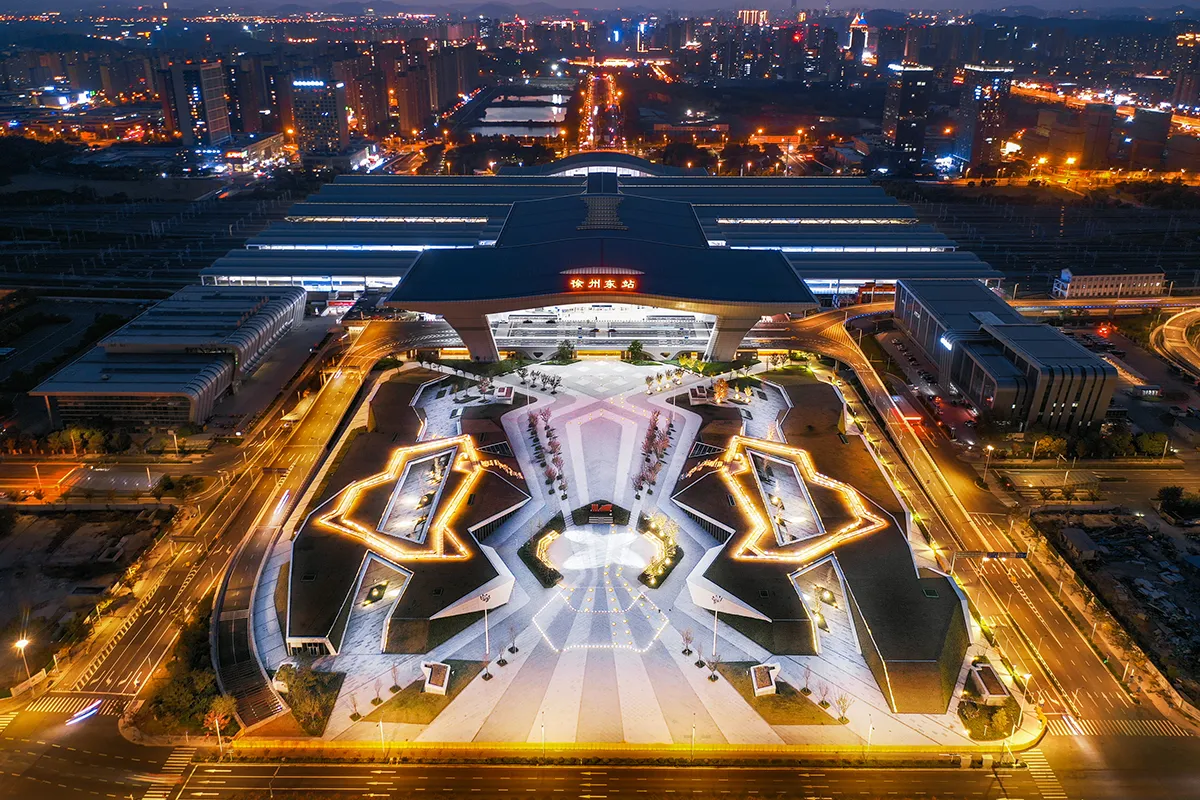
Xuzhou East Station Plaza Urban Gateway & Public Realm
Location: Xuzhou China
Architecture firm: ARTS GROUP
Principal architect: Weicheng Su
Landscape Architect: ARTS GROUP
Collaborators: Environmental Dimension Studios (EDS)
Photography: ARTS GROUP