
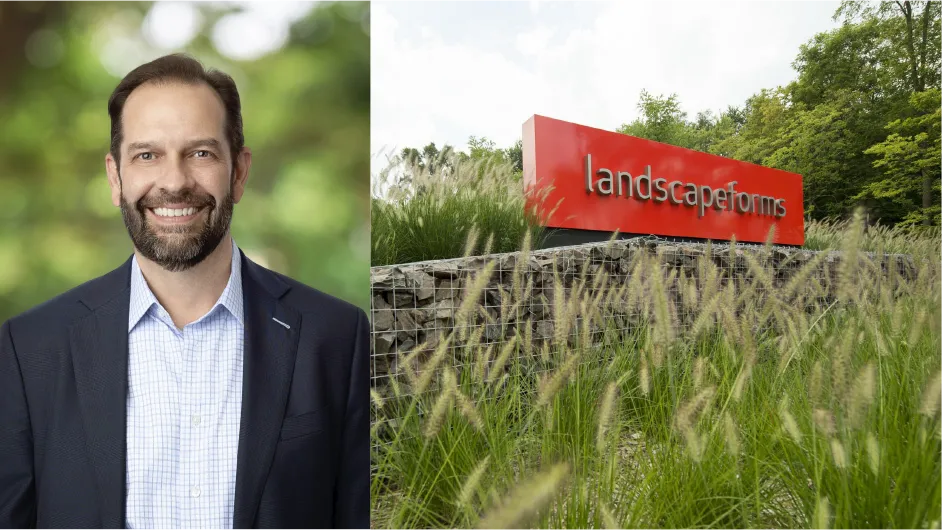
Damian Holmes, the Editor of WLA, recently interviewed David Jackson, President and CEO of Landscape Forms, about the company’s philosophy and future trends. Jackson was appointed President & CEO, effective July 1, 2025, while former CEO Marjorie K. Simmons was named Chair of the Board, effective November 1, 2025. Jackson previously served as CEO of M3 Glass Technologies and The Jobe’s Company. Currently, Landscape Forms is expanding its Kalamazoo headquarters with nearly 300,000 square feet of new manufacturing space, expected to open in 2027. In the interview, Jackson shares insights on the expansion, how the company is addressing emerging challenges, and his thoughts on upcoming trends in landscape architecture.
WLA | The Kalamazoo Campus expansion includes some sustainability features. What plans are there to improve the sustainability of the furniture and products offered by Landscape Forms?
At Landscape Forms, advancing sustainability is one of our core values, and we’re accelerating that work on multiple fronts. The new Kalamazoo campus is a great example. It has a solar-centric design, incorporates innovative low-impact materials in the building envelope, and leverages nature-based stormwater solutions. The new facility will deliver significant improvements to the efficiency of our manufacturing processes, giving us the ability to lower embodied and operational carbon at scale.
But equally important is how we embed sustainability into our products. We’re investing in more durable, higher-performance, lower-impact coatings and finishes, expanding our use of recycled materials and responsibly sourced modified wood alternatives, and increasing our transparency with powerful tools like EPDs and LCAs that few others in the industry currently provide. We’re also raising our already strong waste-diversion performance across our entire business portfolio. One of our business units, Loll Designs, sets an extraordinary benchmark at over 97 per cent. Our ambition is straightforward: Create beautiful solutions that stand the test of time while working continuously to reduce their footprint.
WLA | Over the past few years, Landscape Forms has acquired Loll Designs and Summit Furniture. Was this to increase your product offerings? Or to improve in-house skills and talent within Landscape Forms?
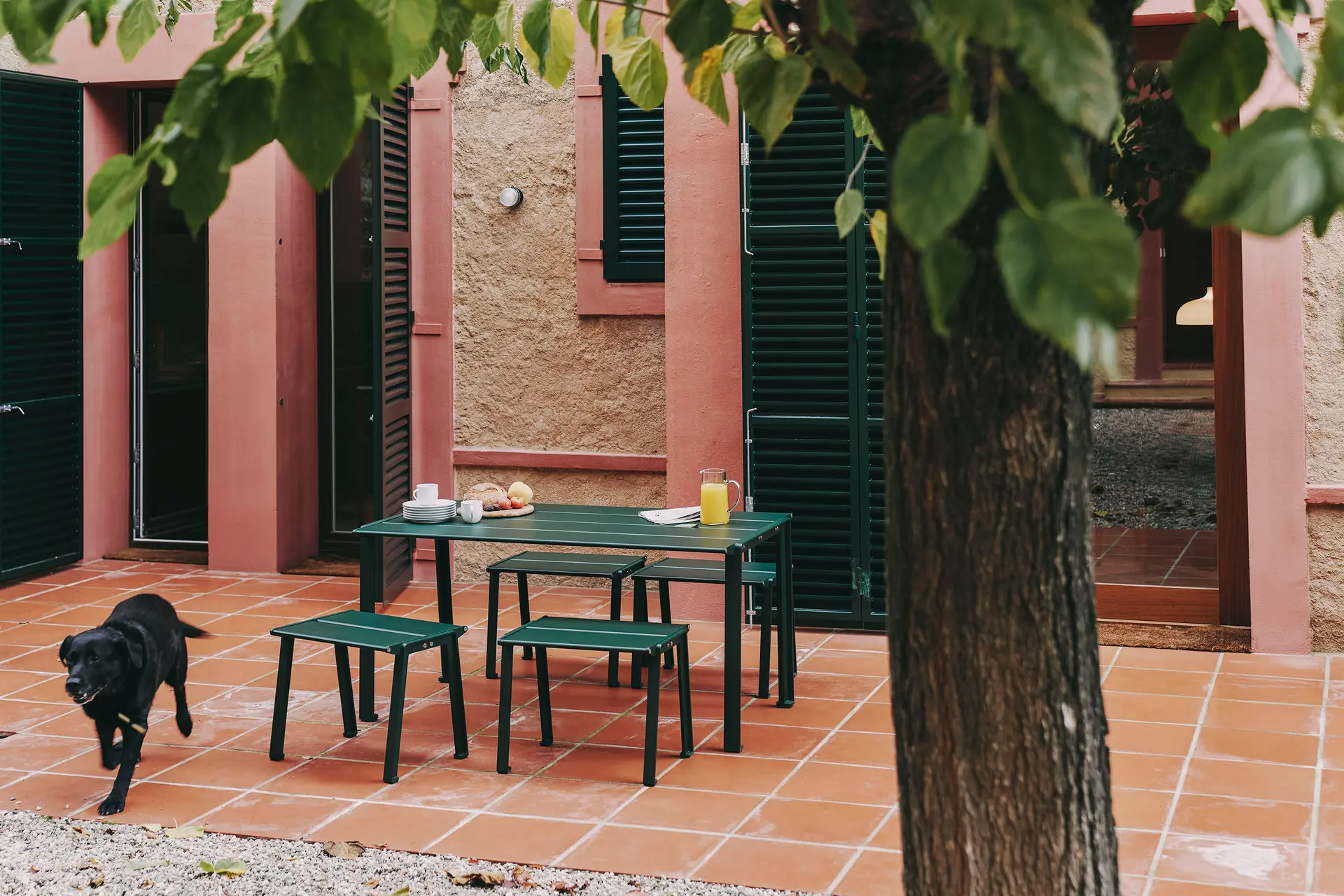
It was both, but with a clear strategic purpose. We saw an opportunity to expand thoughtfully into that transitional zone between interior and exterior spaces. In doing so, we’re broadening our portfolio in ways that serve a wider range of designers, from landscape architects to interior designers, architects and others who work at this intersection of inside and out. Loll and Summit extend our reach further into residential, hospitality and indoor-outdoor lifestyle markets with brands that share our values of design integrity, craftsmanship and a serious commitment to sustainability.
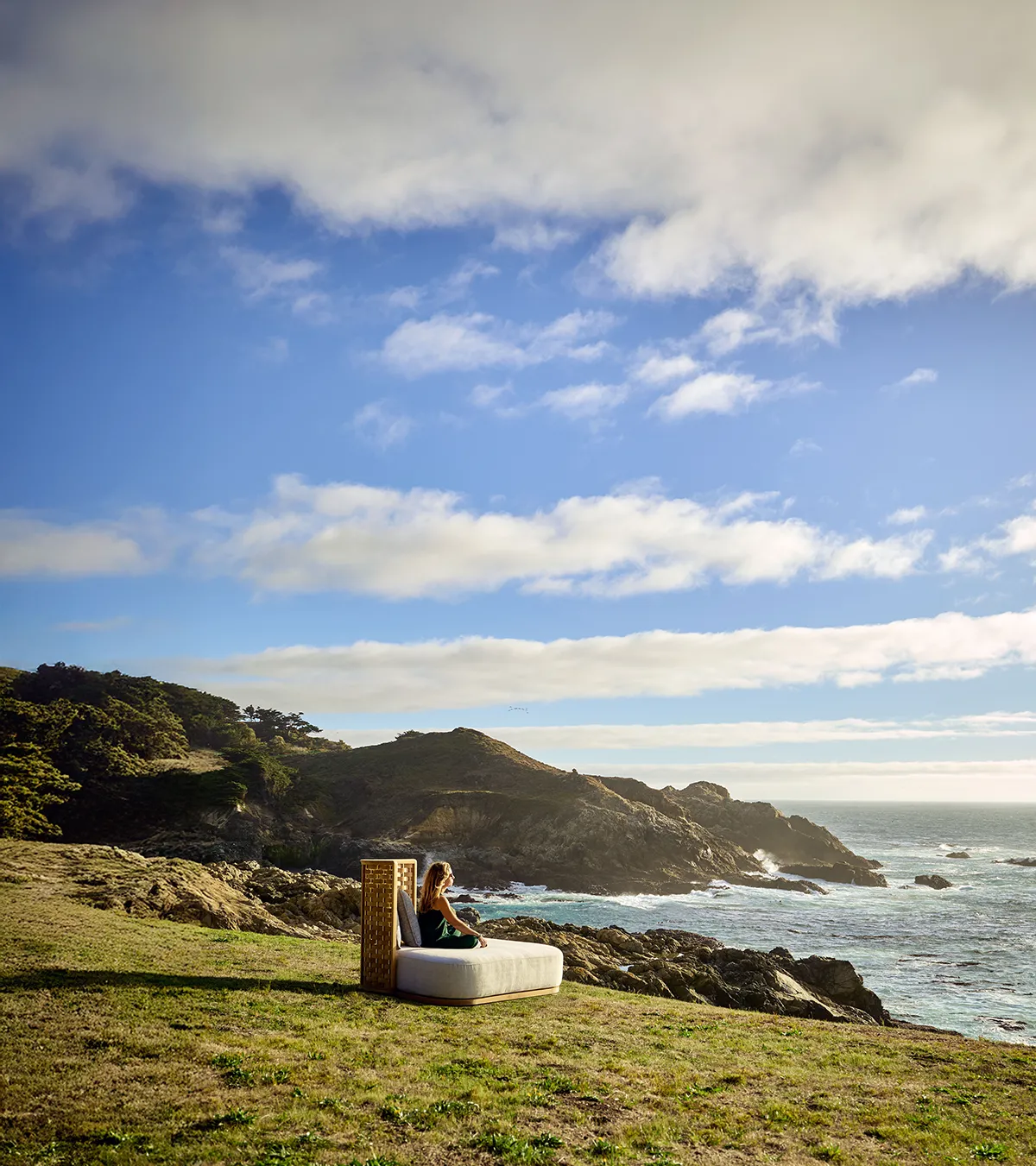
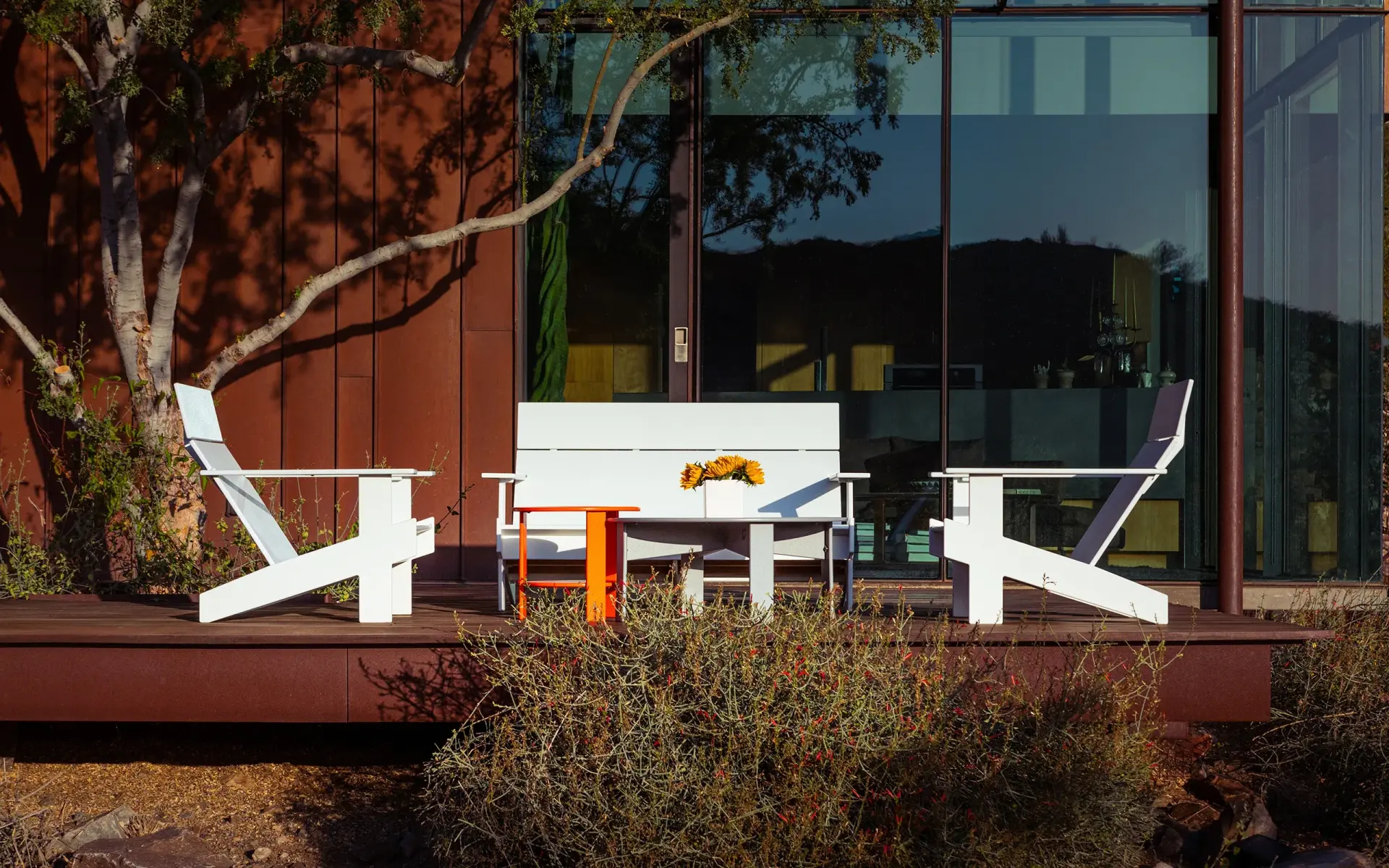
Summit (left) | Loll Designs (right)
At the same time, each brings new capabilities and talented teams that strengthen Landscape Forms. Loll’s extraordinary waste-diversion practices and expertise in durable recycled HDPE, and Summit’s deep heritage in handcrafted luxury teak furniture has improved our organizational knowledge and made us a stronger company.

WLA | Automation is a growing part of manufacturing. How do you think Landscape Forms can automate but still maintain the design aesthetic that you are known for?
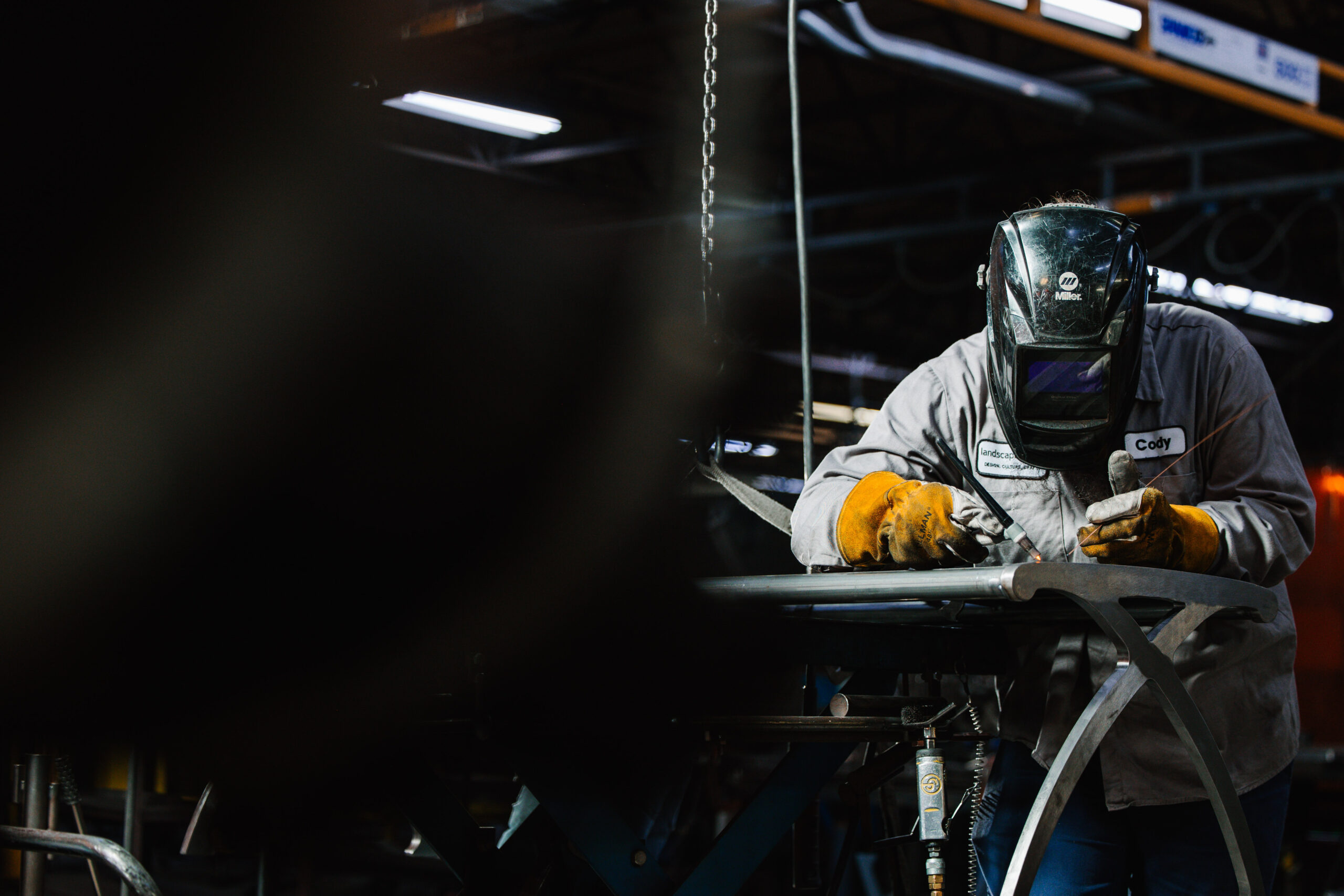
Automation for us isn’t about replacing craft—it’s about empowering it. The new manufacturing facility is designed to streamline processes, eliminate inefficiencies and create better environments for our teams. Automation can handle the repetitive, high-precision tasks that improve productivity and consistency, while freeing our craftspeople to focus on the nuanced details and exacting fit and finish that define Landscape Forms products.
Because we are a committed US manufacturer operating under one roof, we can integrate new technologies without compromising on the design intent. Our designers, engineers and fabricators work side by side, so automation becomes a tool that reinforces our aesthetic standards rather than diluting them. In my experience, when automation and craftsmanship are thoughtfully balanced, you actually strengthen your design identity while expanding what’s possible.
WLA | Landscape Forms has a long history. What part of that founding ethos resonated most with you as you took the helm?
What struck me immediately was how consistently the company has lived out the values John Chipman Sr. put in place from the very beginning: Design excellence, a people-centric culture, and true integrity of craft. As an outsider coming in, it was clear right away that we genuinely lead with design, and that we do something quite special—we blend the emotional and the rational better than anyone else. Our products have to be durable, comfortable and highly functional, but they also have to be beautiful, moving and deeply resonant with the people they serve. When I talk with customers about why they choose Landscape Forms, the conversation almost always starts with design.
Equally powerful is the culture that grows out of our ownership model. The fact that team members share in our collective success creates a company full of owners with an incredible degree of participation. You see it in the smallest gestures on the factory floor and in the willingness to go above and beyond for customers.
The third piece is our commitment to craft as a true U.S. manufacturer. We don’t simply assemble components—we fabricate, weld and woodwork in Kalamazoo, Michigan, USA and that commitment extends across our family of brands, including Loll’s manufacturing operations in Duluth, Minnesota, USA and Summit’s craftsmanship in Monterey, California, USA. We are continuing to invest heavily in these capabilities, including our 300,000-square-foot campus expansion. When you layer sustainability over all of this, it adds up to a very compelling ethos: Design that moves people, made by people who own the outcome, rooted in profound respect for our planet. That’s the part of the legacy I feel most responsible for protecting and advancing.
WLA | What is one trend in landscape design that you personally find most exciting or inspiring right now?
I’m inspired by the growing emphasis on high-quality outdoor environments as essential extensions of indoor space—whether on campuses, in corporate settings, in multifamily communities, or in hospitality destinations. This trend has long existed in the residential market, but now commercial designers and facility leaders are recognizing that the outdoors can function as workspace, social space and restorative space all at once. That shift is elevating expectations for comfort, materiality, versatility and artfulness in outdoor site furnishings and structures.
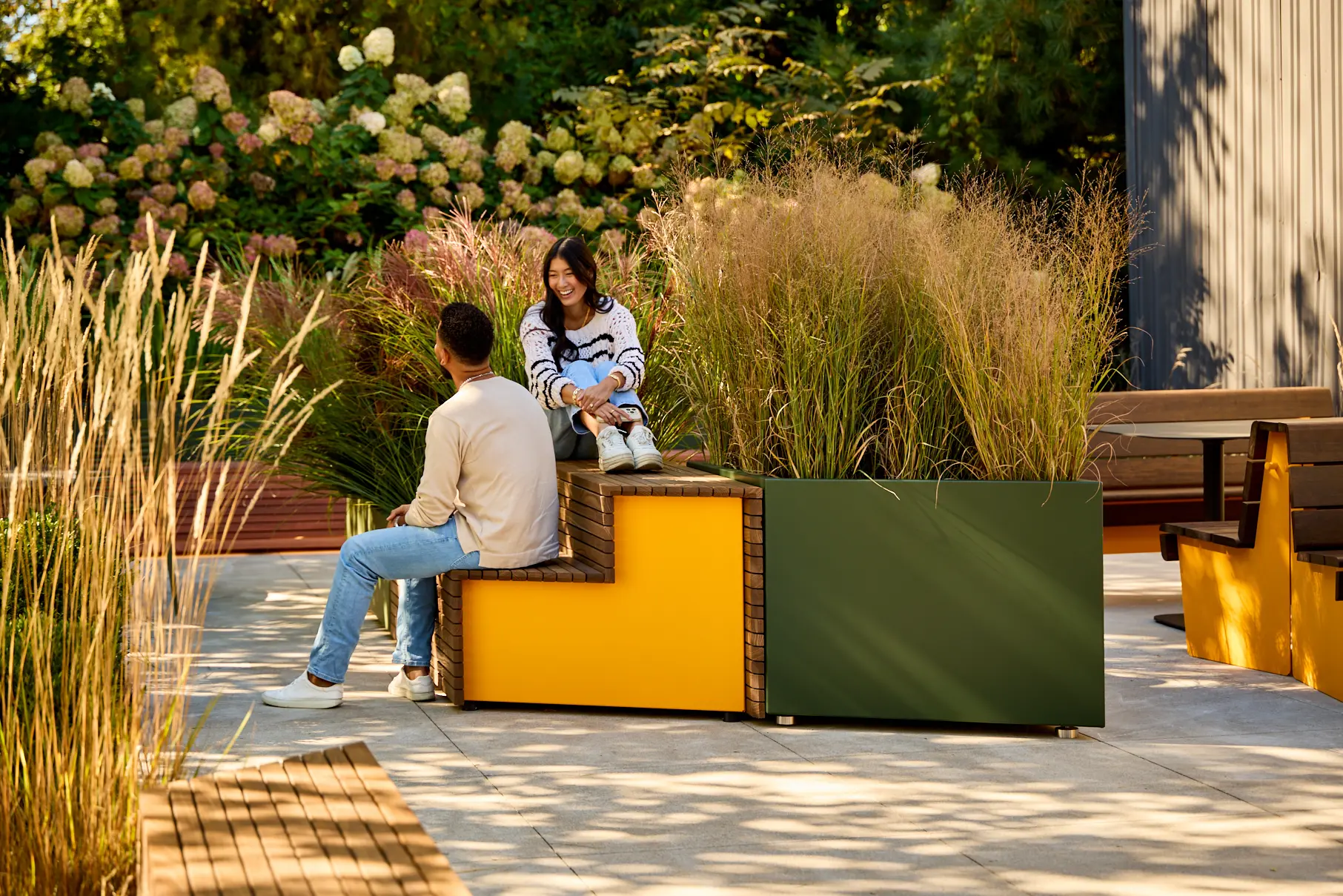
For me, the most exciting part is that this trend aligns perfectly with our mission. As more clients embrace this fundamental intertwining of indoor-outdoor living and working, the demand for thoughtful design—design that truly enriches daily experiences and enhances well-being—continues to grow. It’s a space where Landscape Forms can lead with real impact.
WLA would like to thank David for taking the time to sit down and provide insights into the future of Landscape Forms and future landscape trends.