
Winner of the Outstanding Award in the 2026 WLA Awards – University Studio category
Flows, Commons, and Shifting Grounds
Along the edges of the Sant Sarovar Dam and its adjoining riverbed, the terrain has been shaped through continuous cycles of sand extraction, large infrastructural projects such as the dam, and redirected water flows that carve new channels into the riverbed. The site reflects conditions increasingly visible across rapidly urbanizing Indian cities, where infrastructure, settlement, ecology, and public life remain in constant negotiation. The resulting terrain remains unstable, fragmented, and continuously contested and
challenging.
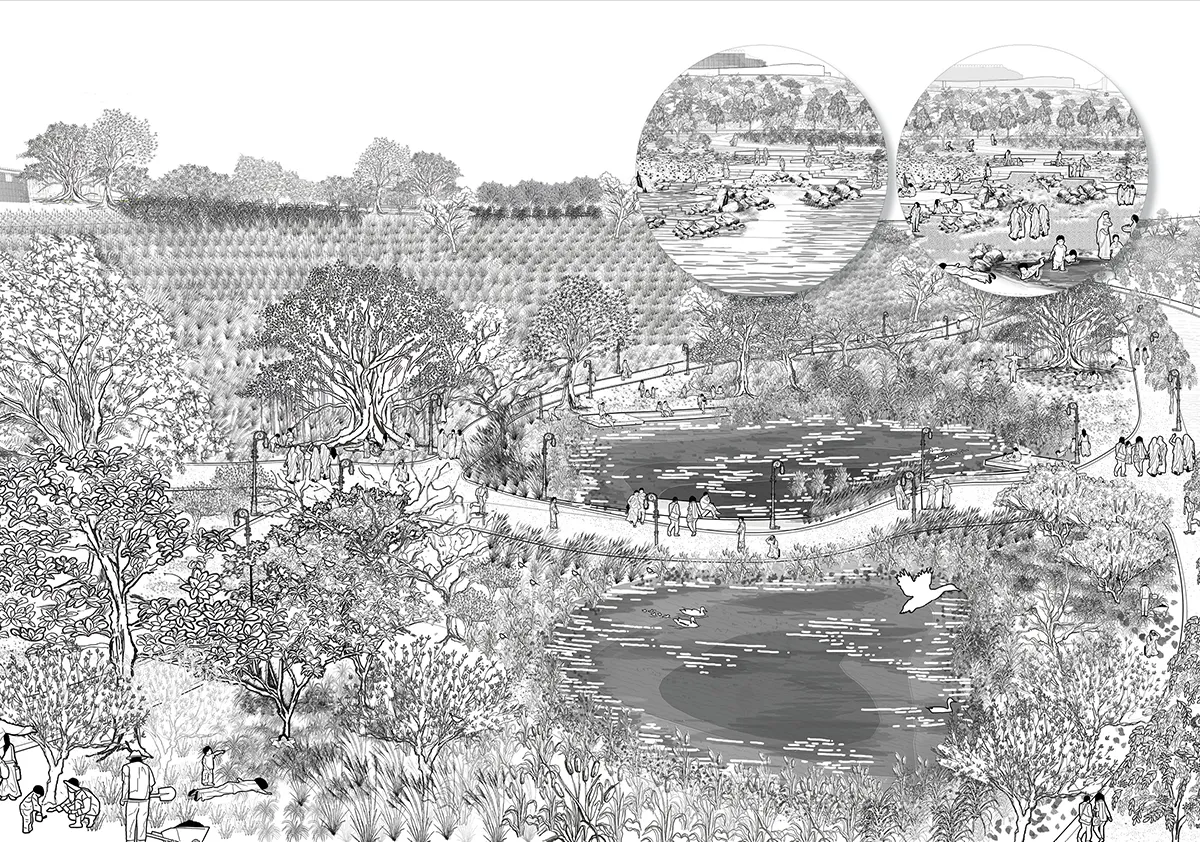
At the same time, the river edge is actively used by surrounding communities for gathering, fishing, birding, swimming, grazing, and informal recreation, despite the absence of adequate social and safe public infrastructure. Seasonal fluctuations continue to reshape the landscape, revealing dry riverbeds, unstable slopes and shifting commons that are repeatedly occupied, negotiated, and transformed through everyday use.
The studio emerges in response to contemporary approaches that engineer river landscapes through diverted water systems and hardened concrete embankments. Such interventions often reduce rivers to controlled corridors rather than dynamic systems that can absorb flux and shocks. Beyond the floodplain, the studio engages the broader terrain surrounding it, natural slopes, ravines, exposed grounds, and existing patterns of occupation. Semi-arid ecologies, seasonality, and fluctuating riverine conditions become central to rethinking the river corridor as an adaptive ecological and public realm.
Field Studies
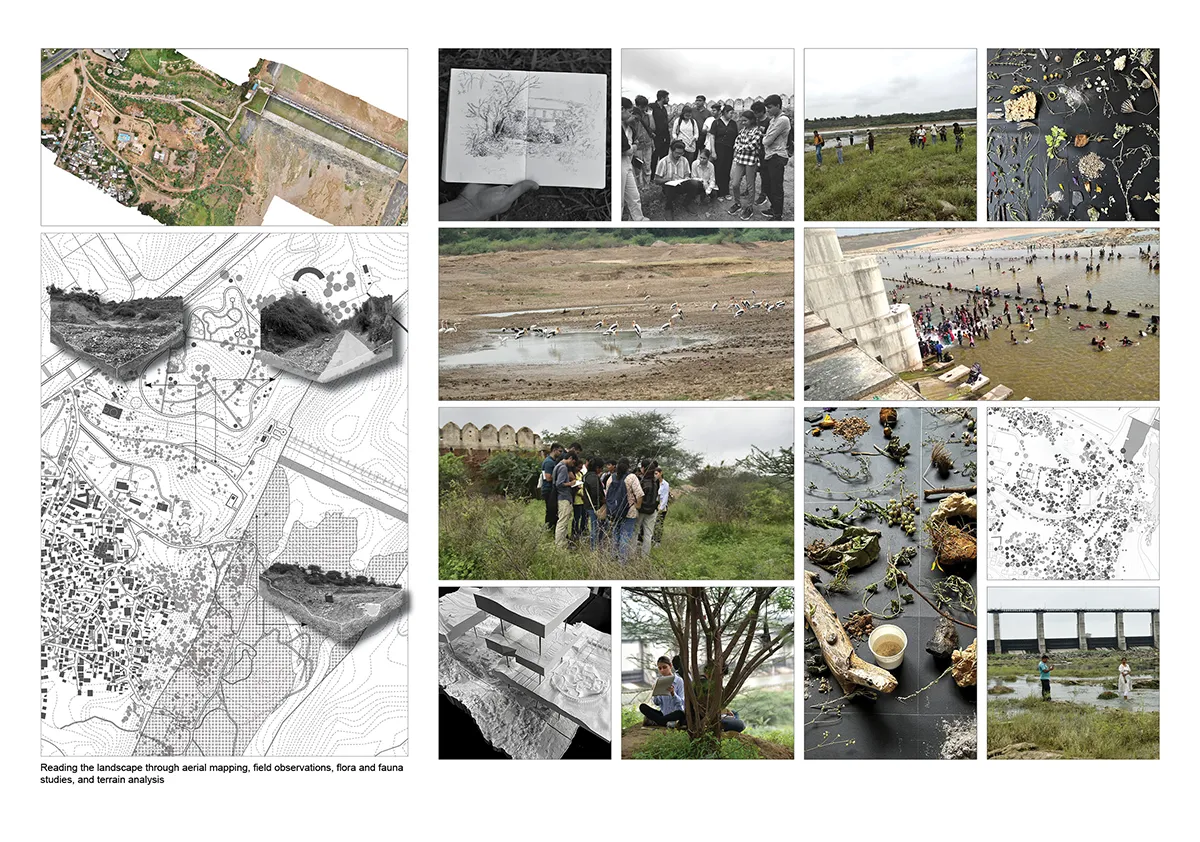
Students engage the site through field observation, mapping, walking, drawing, spatial analysis, and stakeholder interviews to understand how hydrological systems, soil conditions, vegetation patterns, and human occupation intersect over time. Particular emphasis is placed on reading thresholds, slopes, exposed grounds, abandoned edges, and negotiations between built and natural systems. Through this process, design emerges not as a predetermined solution, but as an inquiry grounded in deep observations and contextual knowledge.
Studio Structure:
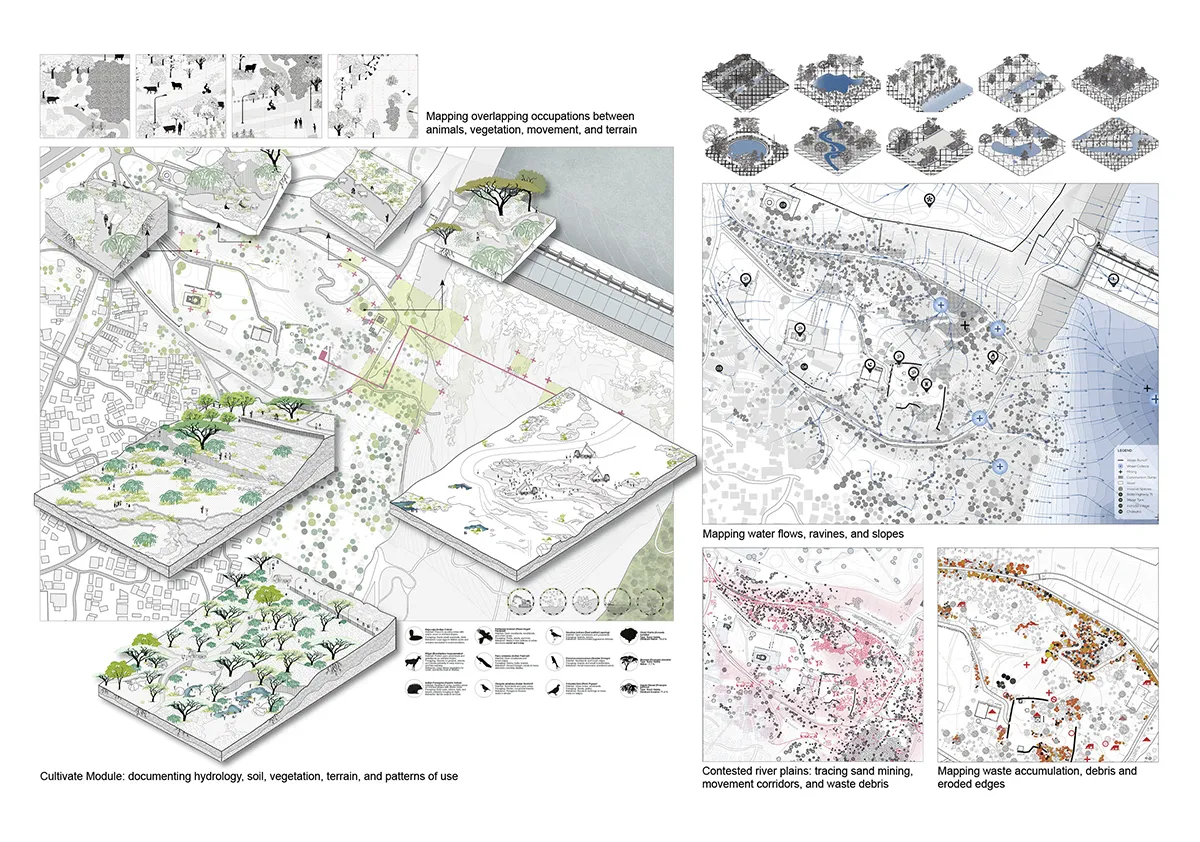
1) Cultivate: Reading Landscapes (Weeks 1–4)
– Develop methods of observing and documenting complex urban landscapes
– Map both visible and invisible processes shaping the site- hydrology, soil, vegetation, and
human use
2) Propagate: Propositions & Futures (Weeks 5–10)
– Develop site-responsive design strategies rooted in ecological processes
– Explore adaptive and incremental interventions rather than fixed designed plans
– Propose productive landscapes engaging water, soil, and community use
3) Demonstrate: Representation & Communication (Weeks 11-16)
– Translate ideas into clear visual and spatial narratives
– Develop drawings, models, and imagery to communicate proposals effectively
Outcomes and Impact
The studio equips students with methods to work within fragile and contested river landscapes through direct engagement with semi-arid ecologies, seasonal flux, hydrological systems, and different patterns of usages. Students develop an understanding of planting strategies responsive to local ground conditions, climate, riparian edges, fluctuating wetness, disturbed terrains, and eroded or contaminated soils.
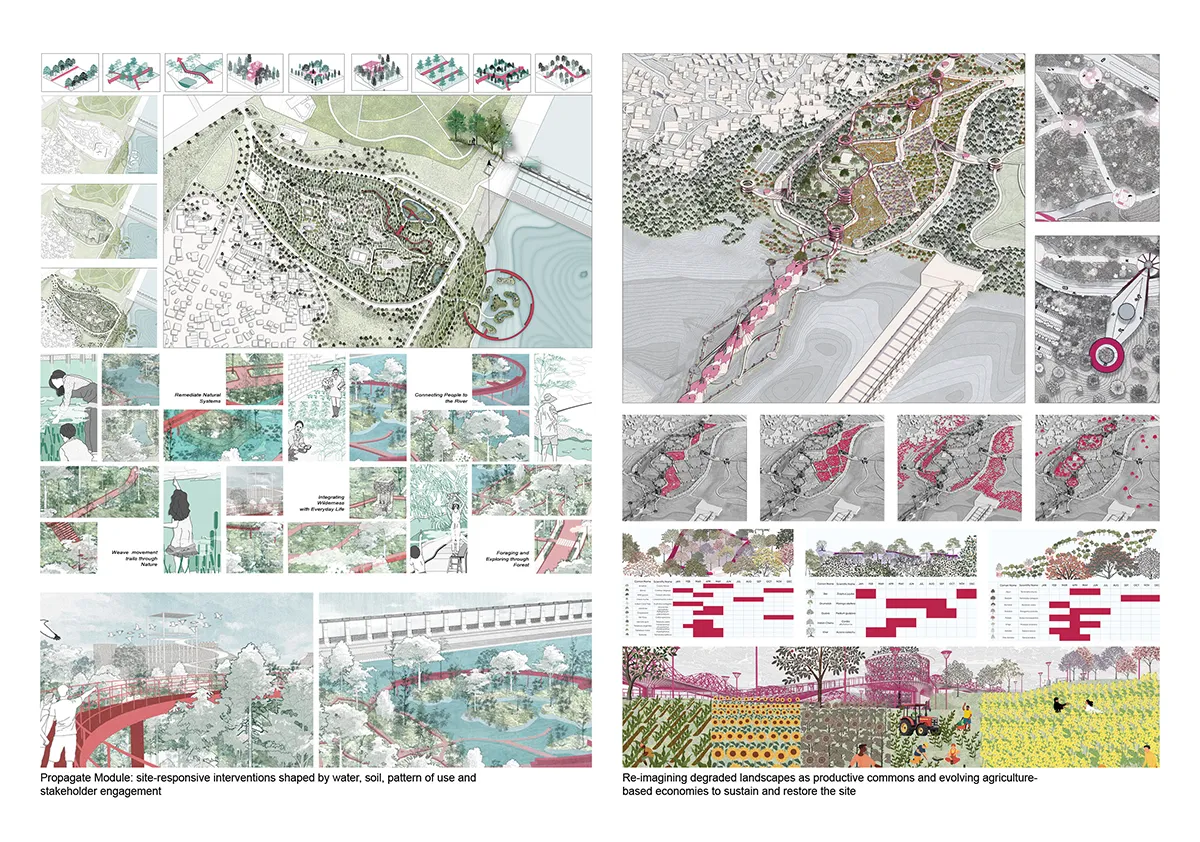
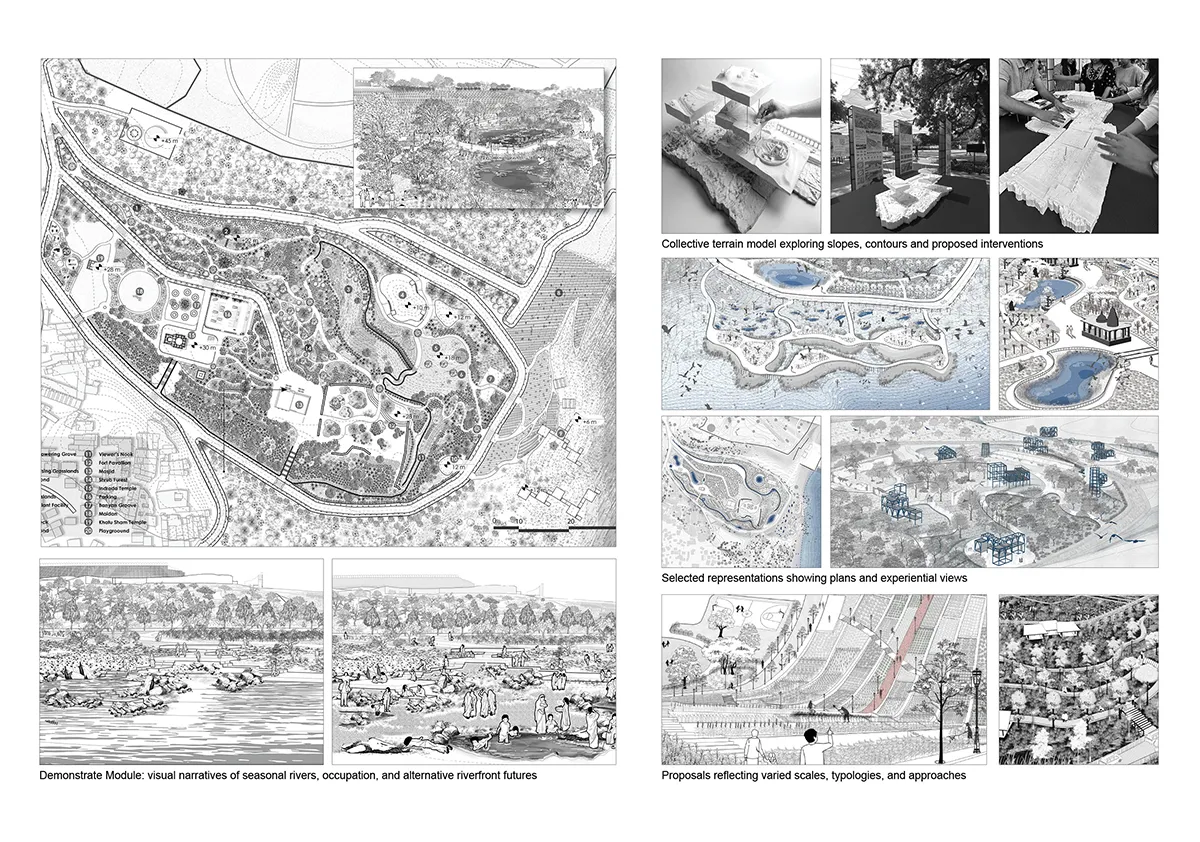
The studio generates a range of speculative and grounded proposals, ranging from landscape-led interventions to adaptive public infrastructures and productive ecological strategies tied to local economies. Several student works emerging from the studio have received recognition through exhibitions, publications, and academic awards, reflecting the studio’s emphasis on rigorous field engagement, critical inquiry, and ecology-first
design thinking.
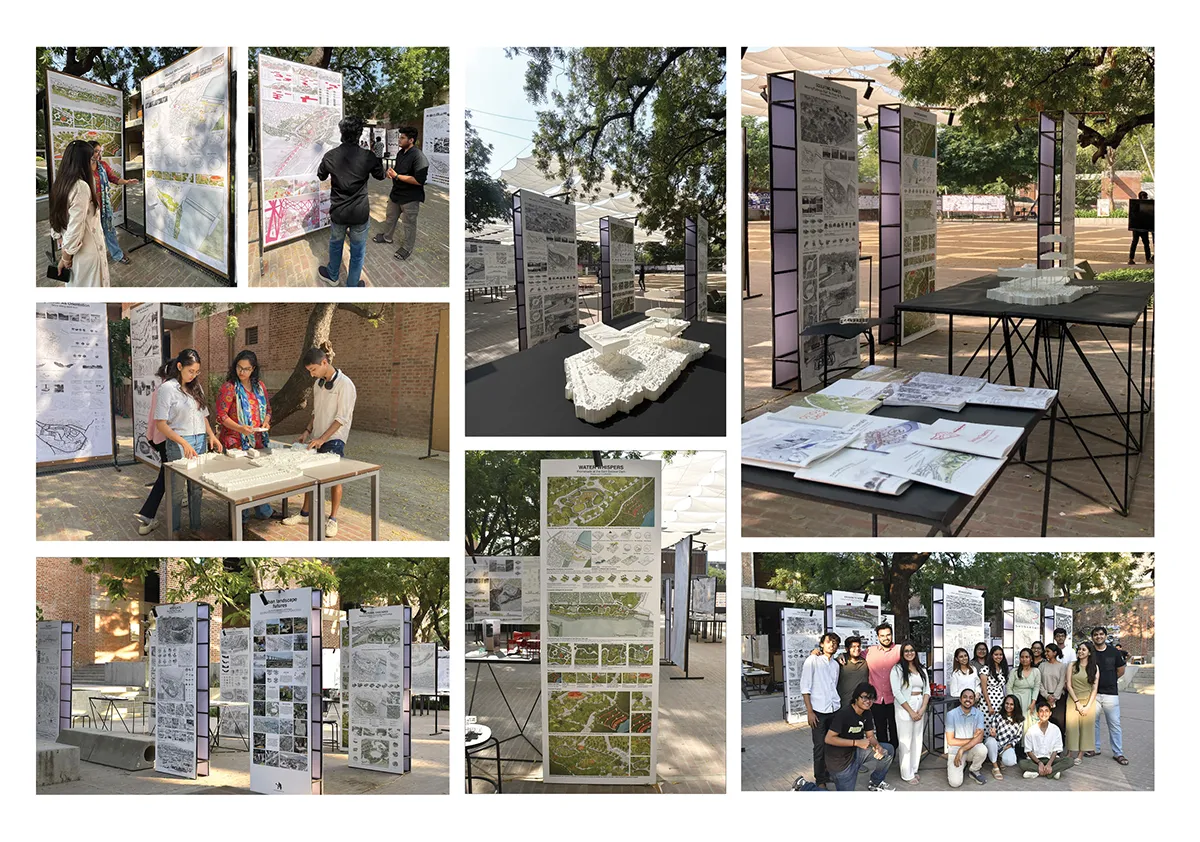
Urban Landscape Futures – CEPT University
Tutors: Mansi Shah and Vaishal Patel – CEPT University
Teaching Assistant: Lopamudra Baruah – CEPT University
Bachelor of Urban Design, Faculty of Planning, CEPT University, Ahmedabad
Students: Amil Surani, Dipasha Rathod, Karan Patel, Malay Mishra, Navonil Maji, Paryul Jain, Prachi Thakkar, Prayush Shah, Rishitha Aishwarya, Suhani Bakkannavar, Swayamsiddh Dash, Tanishi Soni, Udit Shah, Zenab Sabunwala