
Recently, UNEP released Sand and Sustainability: An Essential Resource for Nature and Development, calling on governments and industry to recognise sand’s essential value to development and nature and to fully integrate biodiversity considerations into sand governance.
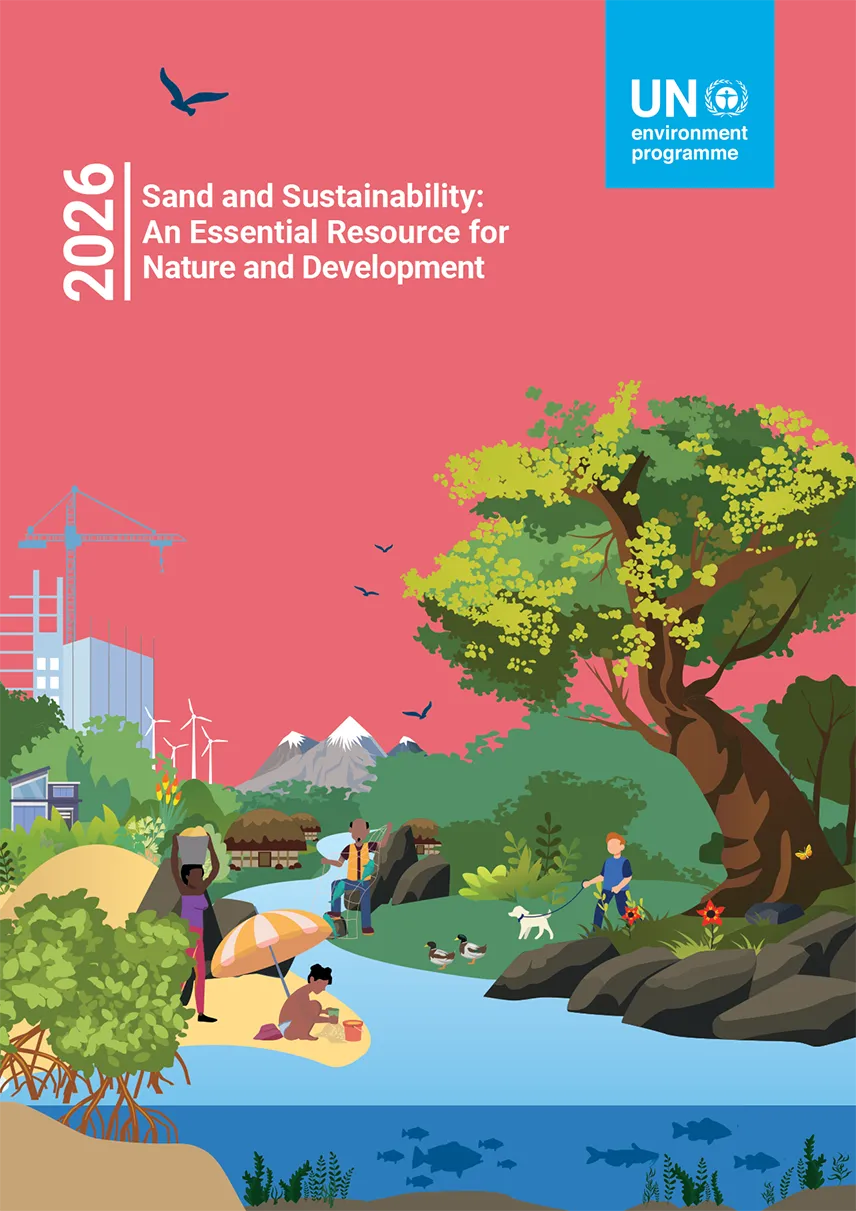
As demand for sand is rapidly increasing due to population growth and infrastructure development, the supply of sand is not keeping pace, threatening ecosystems and livelihoods. Sand extraction underpins modern development, but it took thousands of years to generate the sand, and due to increasing demand, which is expected to increase by 45 per cent by 2060[1], the world is facing a sand gap.
Sand provides critical habitat for fish, turtles, birds, crabs and other species, supporting biodiversity and ecological balance that is also key to tourism and fisheries. The report highlights a fundamental tension: once extracted and transformed into concrete, asphalt, glass, etc., sand is effectively lost from natural systems (“dead” sand). In contrast, sand in rivers, deltas, and coastal zones (“alive” sand) continues to sustain the stability of our landscape and essential ecosystem functions: filtering water, regulating river flows, protecting shorelines from erosion and storm surges, preventing salinization of coastal aquifers, and sustaining biodiversity. In nature, sand lasts [1].
Early and coordinated intervention on sand sustainability remains possible and cost-effective. As a globally used resource, addressing sand sustainability would require enhanced regional coordination and, possibly, global governance mechanisms. The report also calls on countries to develop national and sectoral roadmaps for responsible sand management, building on existing UNEP tools (Marine Sand Watch, Sand And Sustainability on-line tool, evaluation of sand national use methodology, all available here.
The report contains twenty-four actions for governments and reinforces the urgency and the availability of tools are available for decisive action.
The Sand and Sustainability: An Essential Resource for Nature and Development report is available for download from UNEP at https://wedocs.unep.org/items/b037d0d7-b899-4969-9b9a-b5c36dd32abe
Article by Damian Holmes – Founder & Editor of World Landscape Architecture
[1] Sand: Wanted dead and alive. Use it wisely, warns the UN – https://www.unep.org/news-and-stories/press-release/sand-wanted-dead-and-alive-use-it-wisely-warns-un
Cover Image: Kurnell Peninsula – sand mining | Flickr User Dietmar Downunder