
RIVUS is a groundbreaking urban regeneration project that brings programme, landscape, and river transformation into a single public framework. Developed for the IULIUS and Atterbury Europe companies and informed by public participation from residents of Cluj-Napoca, it will transform the former Carbochim industrial site into a mixed-use district organised around access to the Someș River. Rather than treating the waterfront as the edge of the city, Felixx Landscape Architects & Planners and UNS use the project to make it part of daily urban life, helping define Cluj-Napoca more clearly as a city along the Someș.
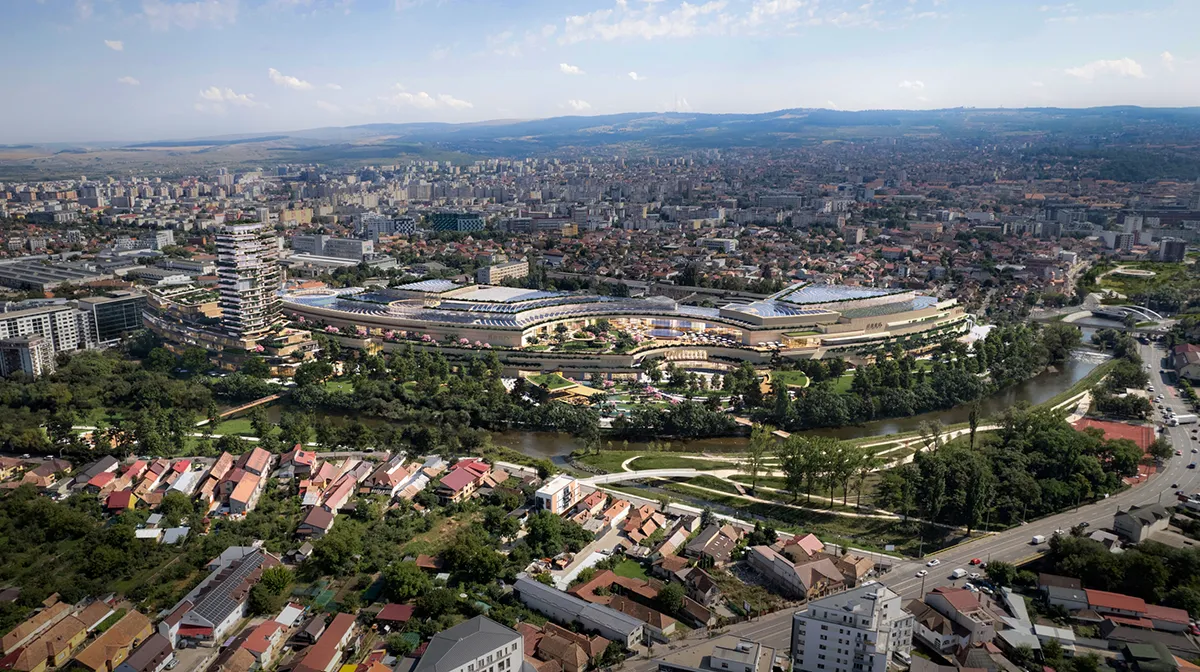
This transformation project will revitalise the area surrounding the former Carbochim factory. Originally known as the “Meadowland Garden”, the area later became an industrial centre that not only played an important role in the city’s growth, but also cut off this stretch of riverfront from public use. RIVUS reopens this industrial heart of the city, linking heritage reuse, public space, and a new programme in one connected landscape. While respecting the site’s history, the project reconnects the riverfront with the surrounding city and introduces retail, restaurants and cafés, coworking spaces, and platforms for local producers, creating a destination shaped as much by public life as by programme.
Forging New Connections To The Somes River
RIVUS will span more than 16 hectares and is designed to meet the highest sustainability standards, targeting LEED Platinum and EDGE Advanced certifications, as well as compliance with NZEB standards. More than a high-performance development, the project reopens a part of Cluj-Napoca once defined by industry and inaccessibility, turning the former Carbochim site into an active public destination with the Someș River at its core.
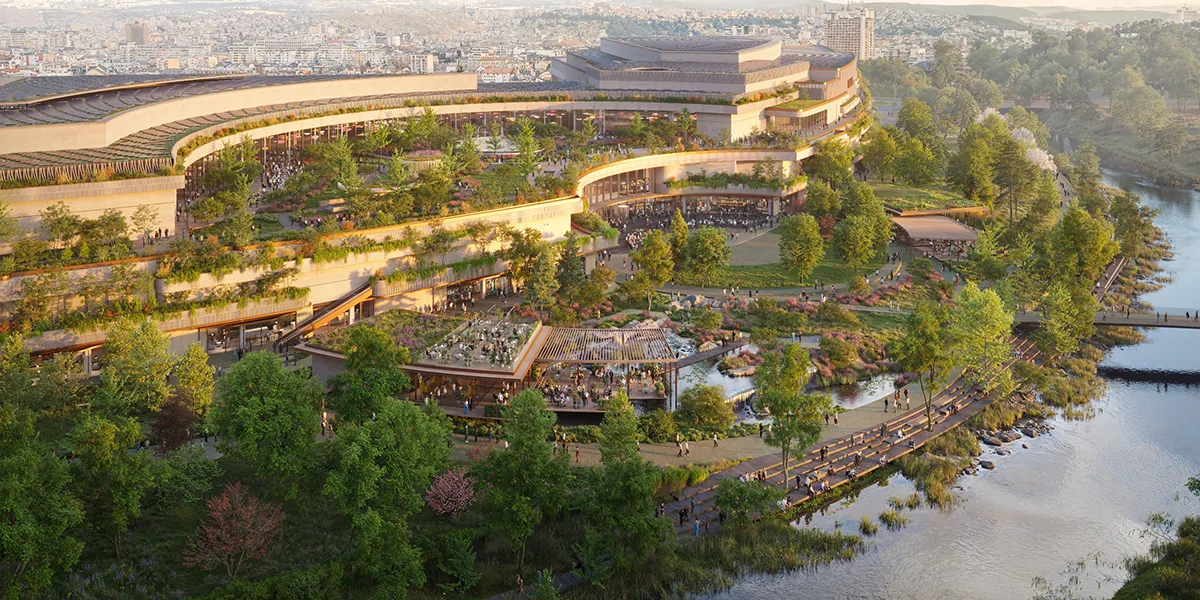
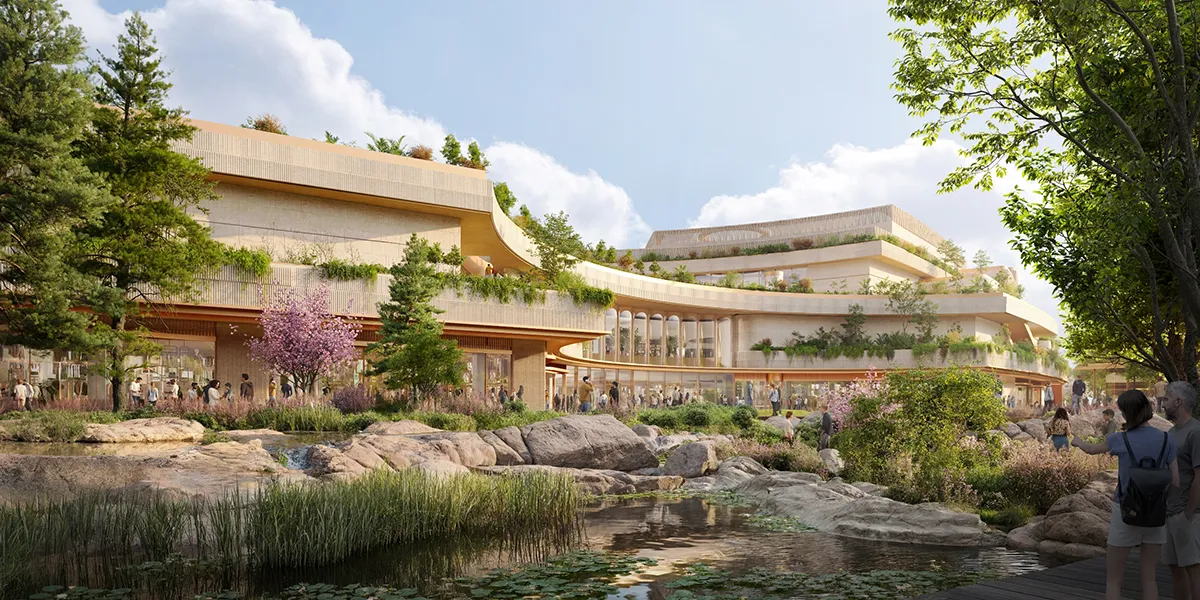
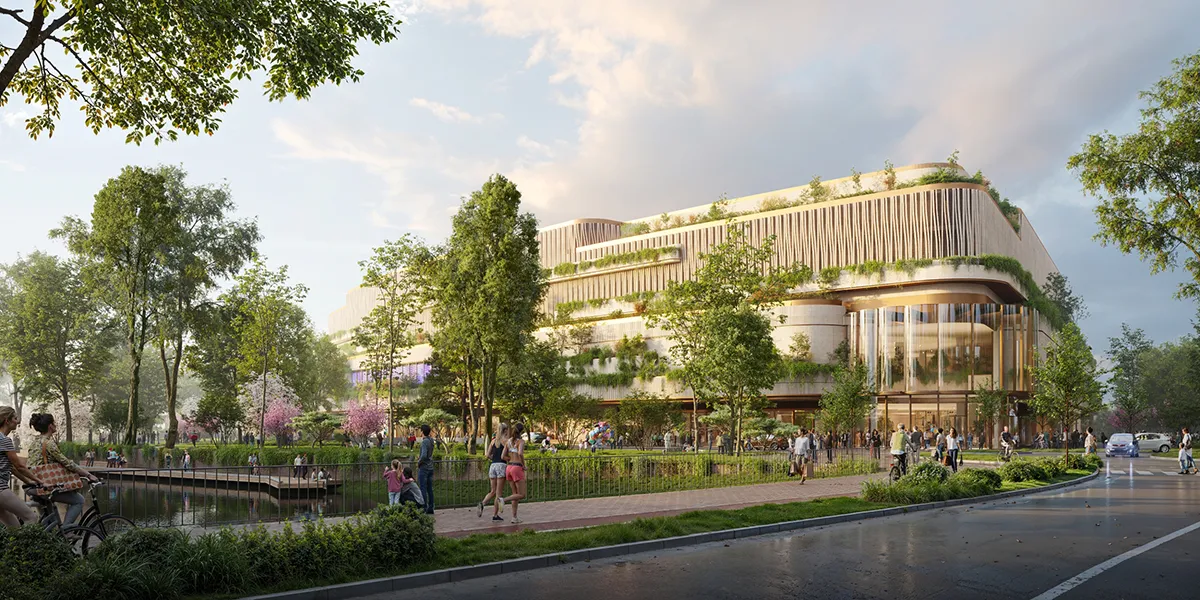
Through a terraced architectural form that steps towards the river, the project carries the riverside landscape into the site and onto the building, creating continuity between park, riverfront, and development. A network of pathways, squares, bridges, and planted spaces extends this approach into the wider city, drawing movement and activity towards the water while linking the retained industrial buildings to new public space.
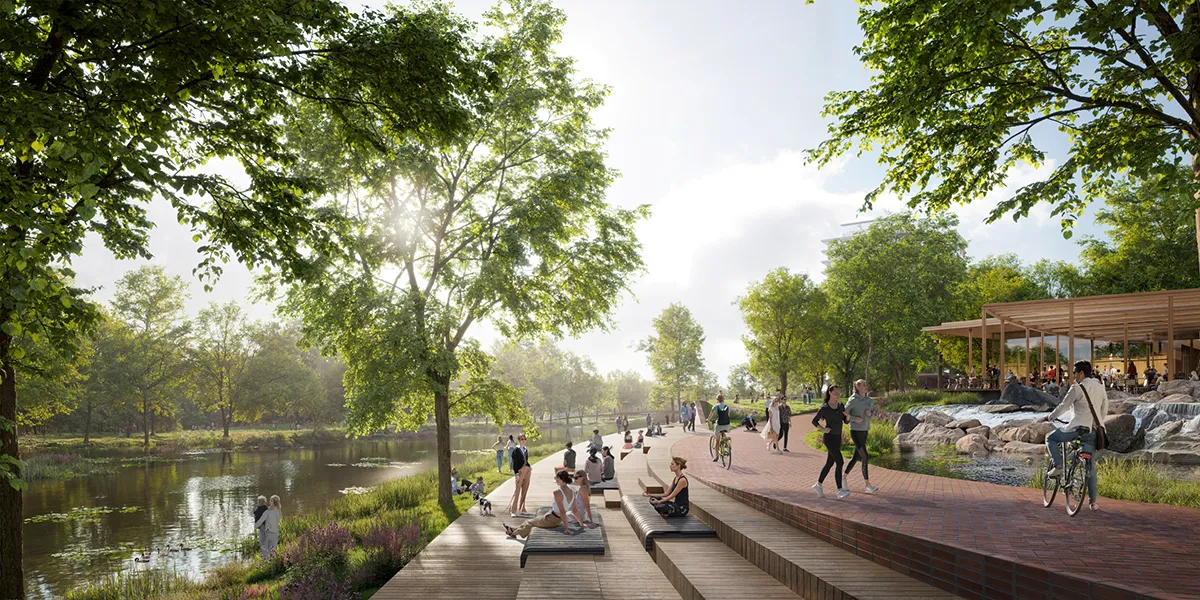
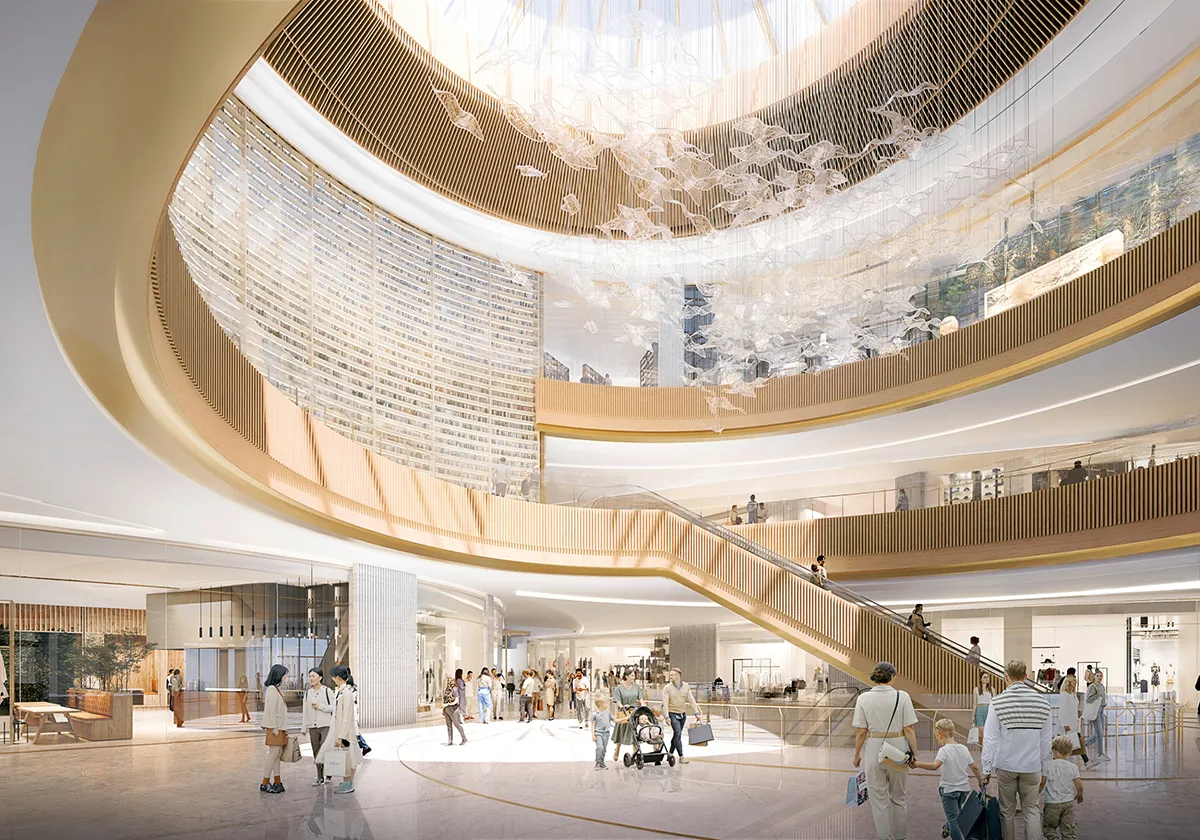
The project includes extensive road, pedestrian, and bicycle infrastructure, two pedestrian walkways across the Someș, the modernisation of adjacent streets, the construction of two roundabouts, and bicycle lanes along the perimeter of the site, including the riverfront, as requested by the community. These interventions are central to the spatial concept: surrounding streets and bridges continue into the building as an interior streetscape, maintaining the scale and rhythm of the city at ground level.
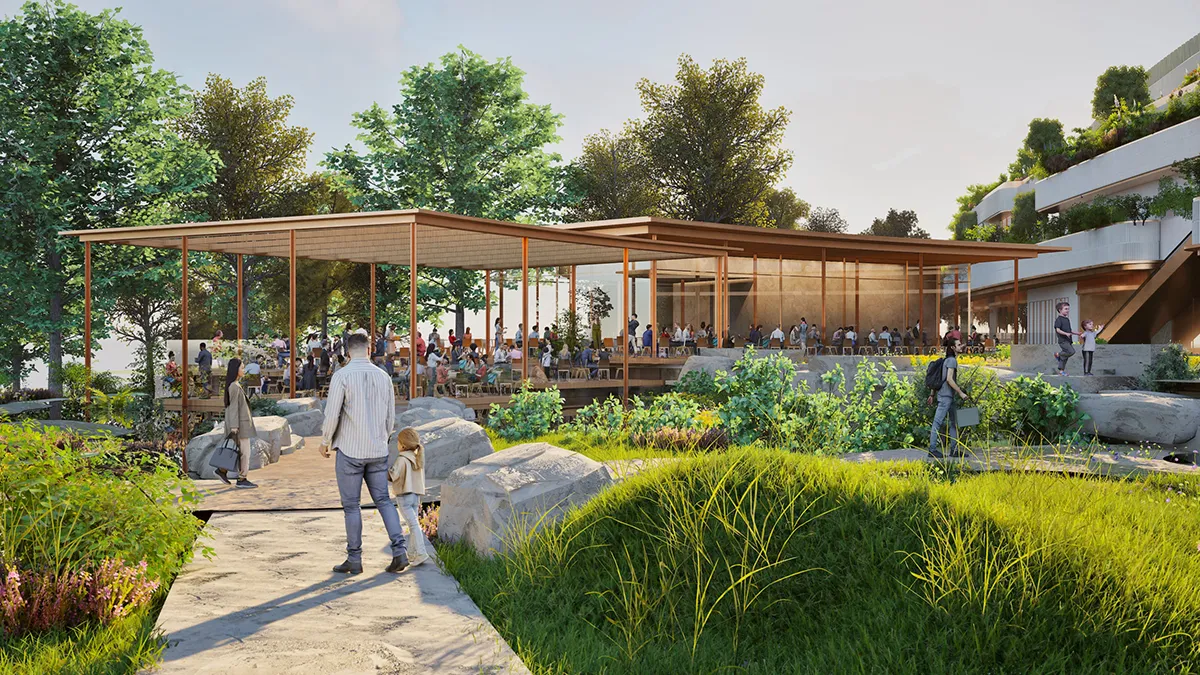
A new city park will also be integrated within the existing green spaces and will include a riverside boardwalk, terraces, and an amphitheatre. A roof terrace with a Japanese garden extends this landscape upwards, creating places for dining, leisure, and rest while reinforcing the relationship between built form and river setting.
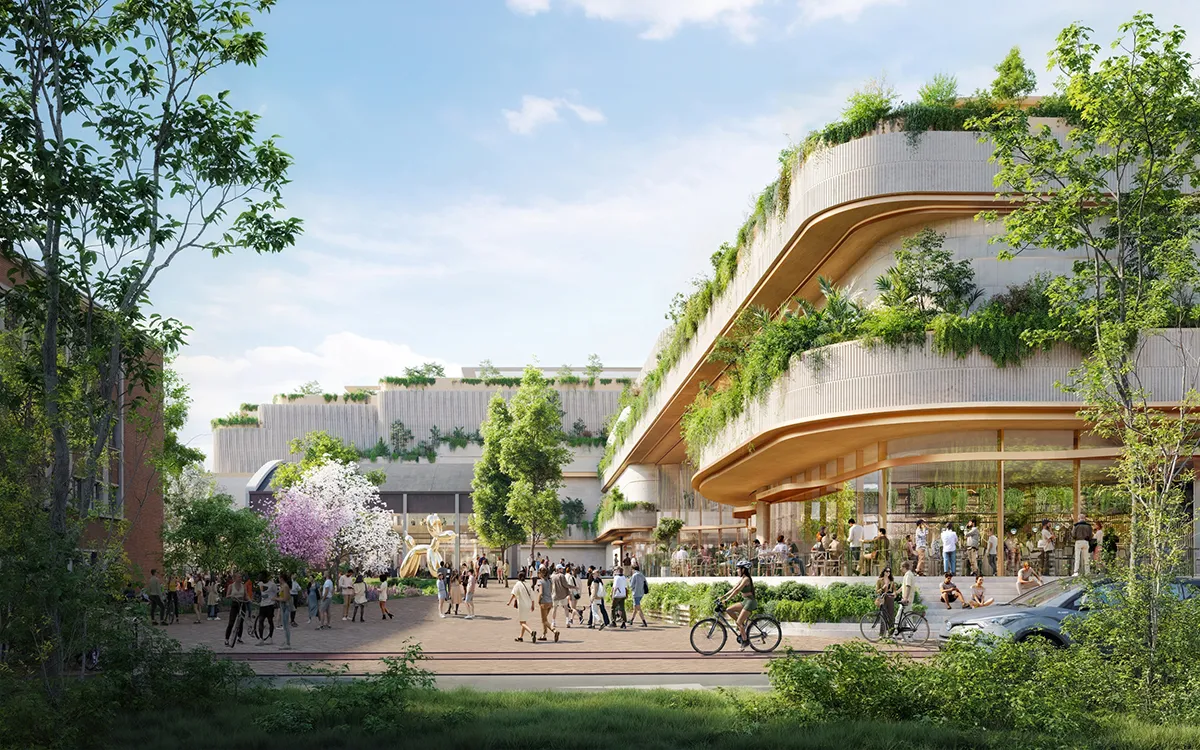
The project draws upon this relationship to nature, and is directly inspired by the river itself. A water-drop effect sets the foundation on which the development’s core geometry is based. The fluid river lines are also integrated in the exterior facade, while the development’s concentric circular patterns form the organisation of the light and landscaped public plazas.
By focusing on natural materials such as wood and stone, the development once again connects with its local surroundings. This approach also ensures the integration of indoor and outdoor spaces, bringing together this natural environment and the surrounding community in brand-new ways.
A Brand-New Mixed-Use Programme
RIVUS will host over 400 stores and more than 30 concept restaurants and coffee shops, but the development is conceived as part of the public realm rather than as an isolated retail destination. Its programme is arranged to feed activity into the park and riverfront, turning public space into a lived part of the city throughout the day and across seasons.
Cultural and entertainment spaces will be housed in two renovated industrial buildings from the former Carbochim factory, bringing the site’s history into the life of the new district. Established in 1949, Carbochim grew into Romania’s largest manufacturer of professional abrasives, and its surviving brick-and-arcade buildings remain important markers of Cluj-Napoca’s industrial past.
Felixx and UNS supported IULIUS’ initiative to reuse these two buildings as part of the site’s transformation. The former administrative brick building will be repurposed for coworking and entrepreneurial uses, while the arcade hall will become a cultural venue, linking the area’s industrial heritage with its future public life.
Alongside retail and hospitality, the project will also include coworking spaces, platforms for local producers, and outdoor areas for events and gatherings. Together, these uses give the riverfront a new civic role, making it a place for meeting, working, spending time, and everyday urban life.
Sustainability
RIVUS prioritises sustainability with green facades and a green roof. The design includes local, sustainable plant species to create natural habitats, while waterfront infrastructure will provide residents with spaces for leisure and relaxation. The park will also feature a diverse array of trees, selected to respect local biodiversity. These trees, with varying seasonal colours and shapes, support a dynamic and changing landscape throughout the year. Water is sustainably managed through storage and cascading systems that irrigate the park and ease rainwater runoff into the river.
In March 2026, the building permit was obtained, and construction officially started.
RIVUS
Location: Cluj-Napoca, Romania
Client: Rivus Investments S.R.L
Team: Felixx Landscape Architects & Planners, UNS, WSP, Werner Sobek, a.g. Licht, dezigntechnic, Architect Service, MIC-Hub, Blue Projects
Visuals: Vivid Vision, Marta