
Two design interventions in the last four years at Monticello, a UNESCO World Heritage site, reflect and commemorate the history of enslavement.
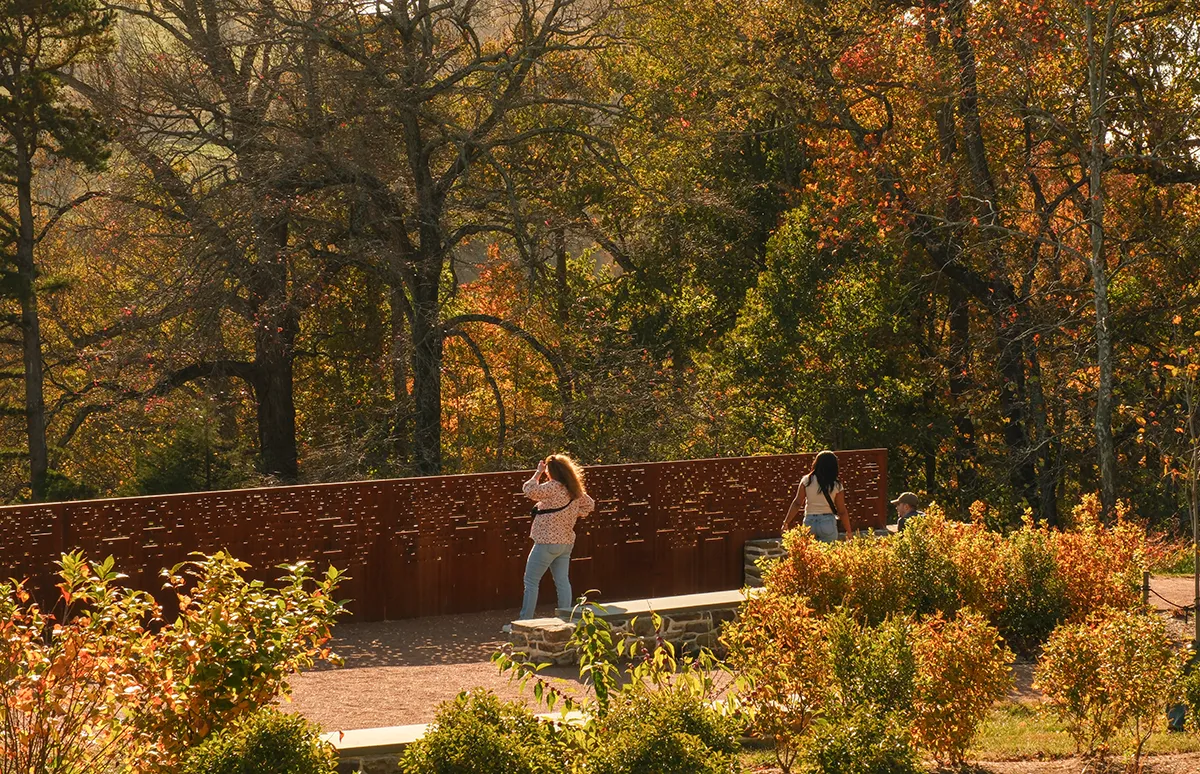
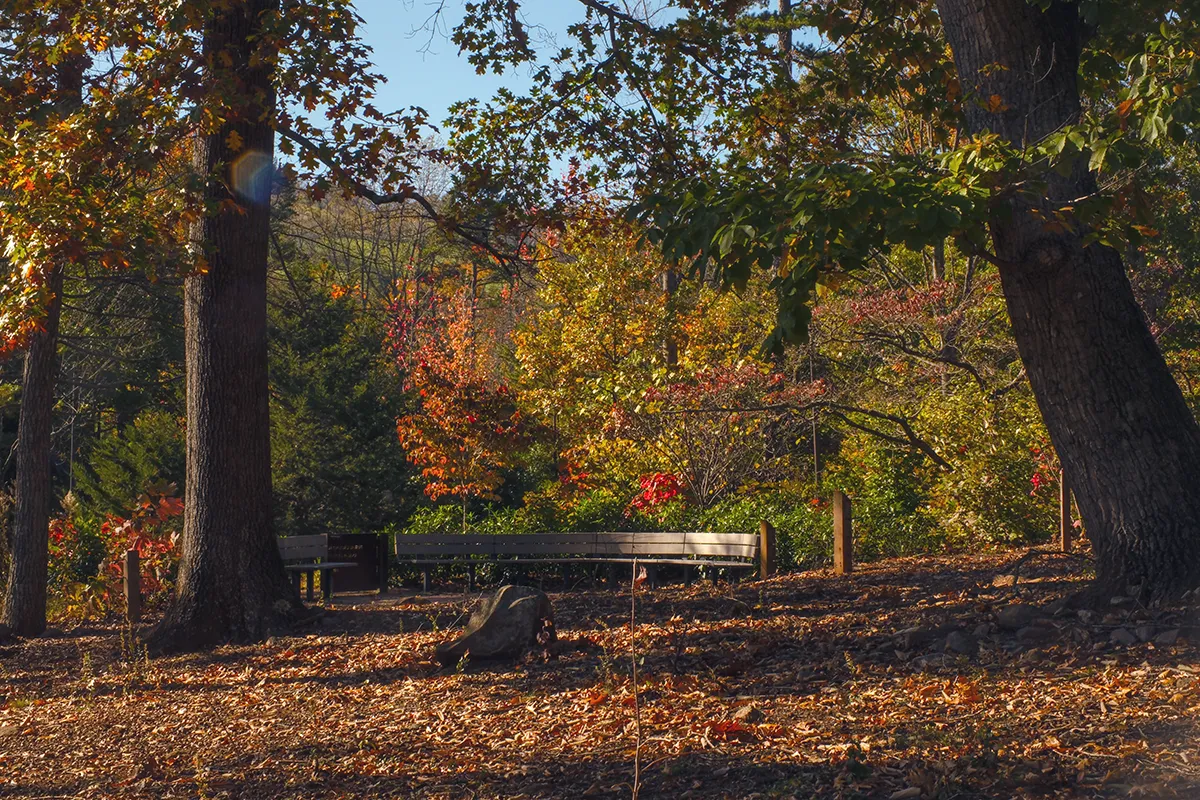
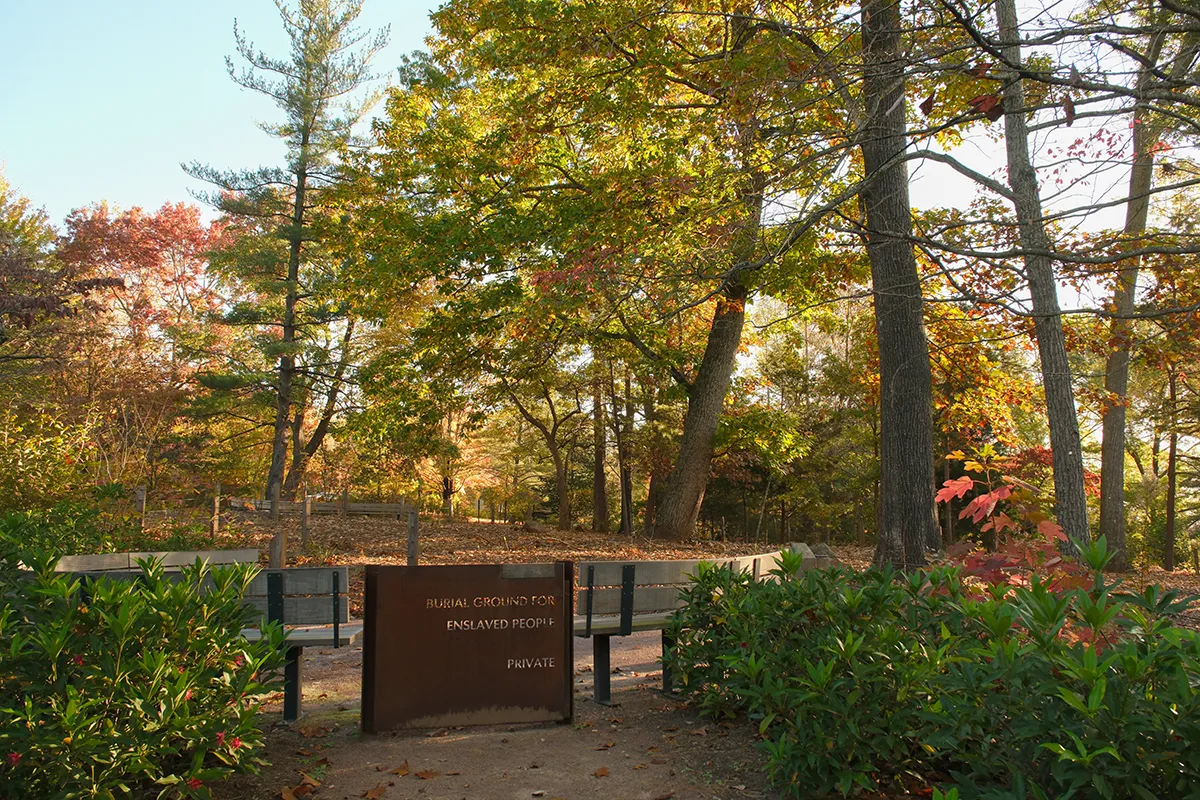
Dedicated on June 17th, 2022, the Burial Ground for Enslaved People at Monticello honors the final resting place of an estimated 40 enslaved people who lived and worked there. The Landscape Architect worked in close collaboration with members of Monticello’s descendant community, the Thomas Jefferson Foundation (TJF), and an architectural design partner throughout the process. The newly improved site honors and protects the sacred ground, providing a safe and peaceful place where the community of descendants can connect and reflect while offering interpretive to educate visitors about the history of enslavement at Monticello.
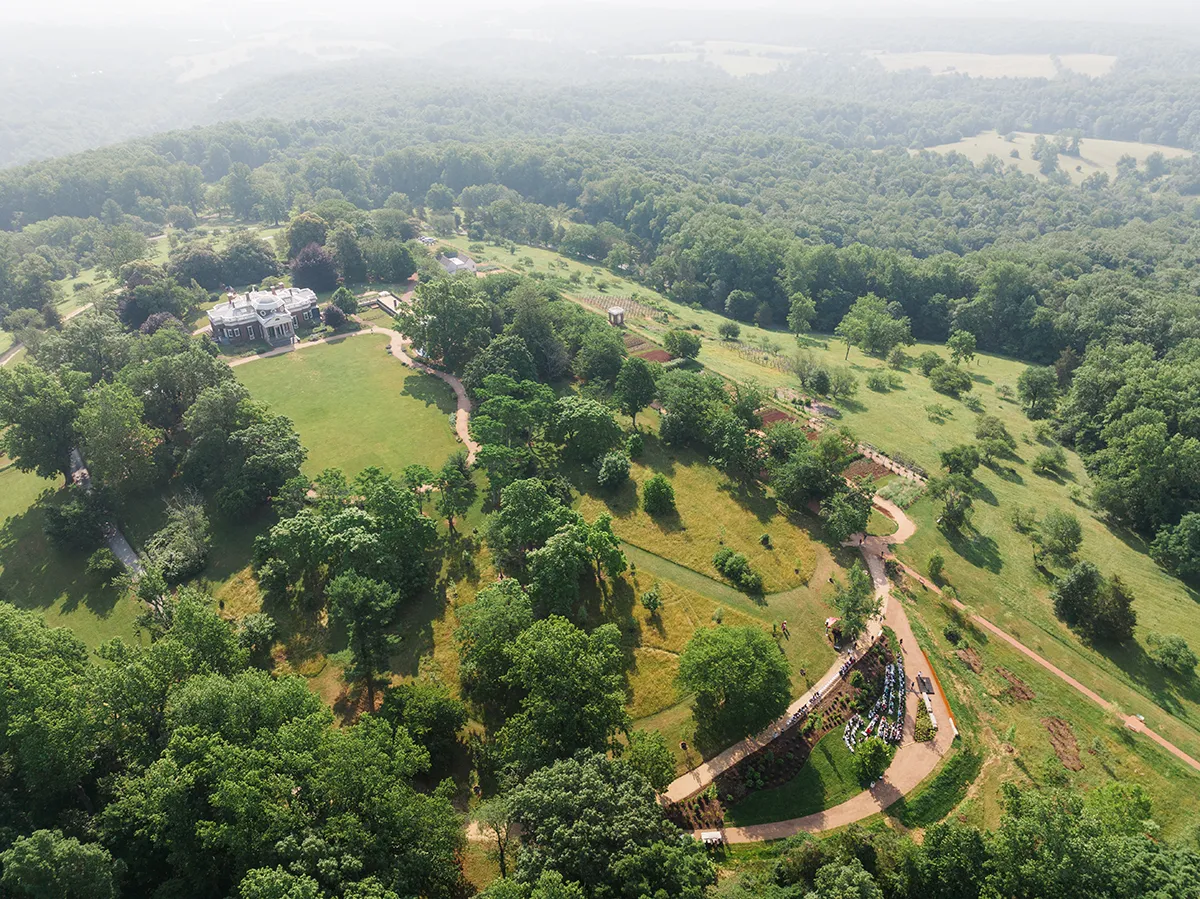
The design sensitively stitches the site into the larger Monticello landscape, exemplifying the local Piedmont ecology with the use of 100% native plantings and increasing the vegetative buffer from automobile traffic and parking. Pathways allow for universal access and a gradual and atmospheric approach from the visitor center, parking areas, or the Saunders-Monticello Trail. Circular benches are oriented in a subtly embracing pattern around the burial ground, keeping the focus on the sacred site. A gate leads members of the descendant community to another arcing bench within the cordoned site offering a private contemplative space designed for the exclusive use of descendant communities. The design amplifies the sanctity of the burial site while creating essential opportunities for remembrance and commemoration.
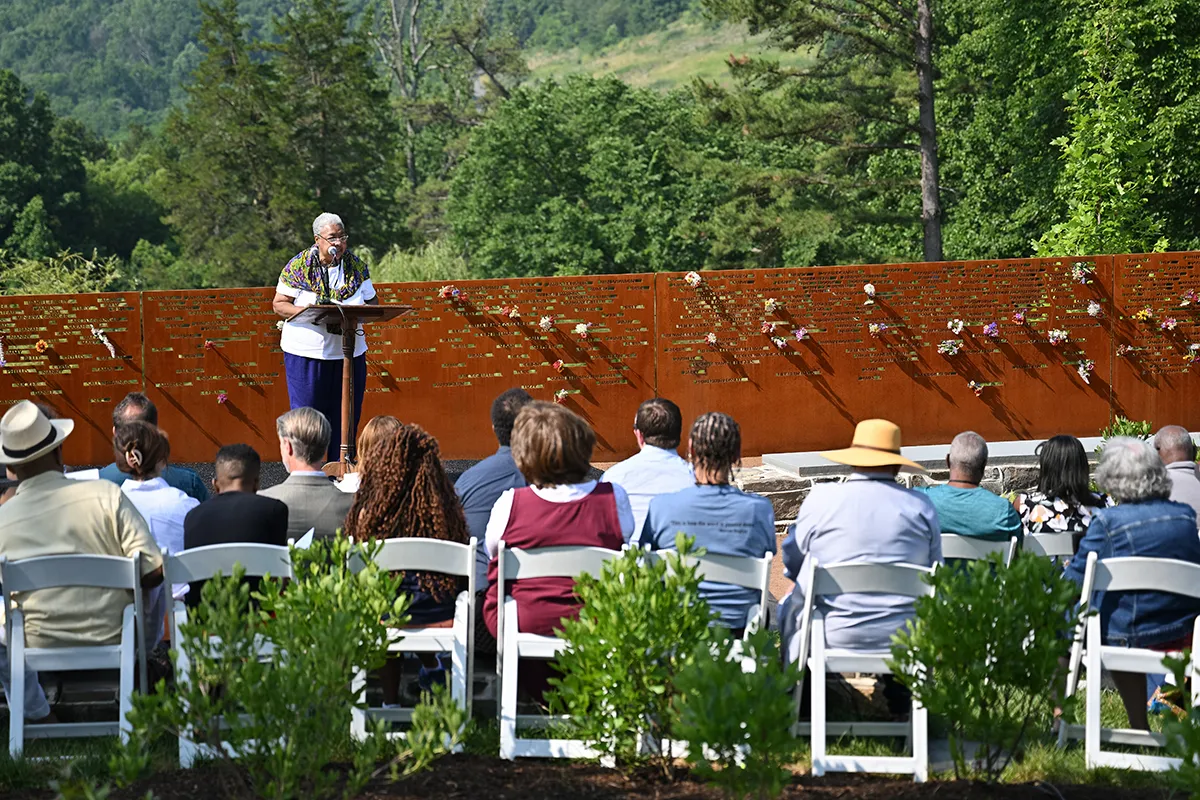
For the Contemplative Site, the Landscape Architect collaborated once again with the architect to design a new place of reflection at the end of Mulberry Row, the dynamic industrial hub of Thomas Jefferson’s 5,000-acre mountaintop plantation. Completed in 2023, the site honors the 607 enslaved men, women, and children enslaved by Jefferson during his lifetime, and offers an opportunity for greater understanding and healing.
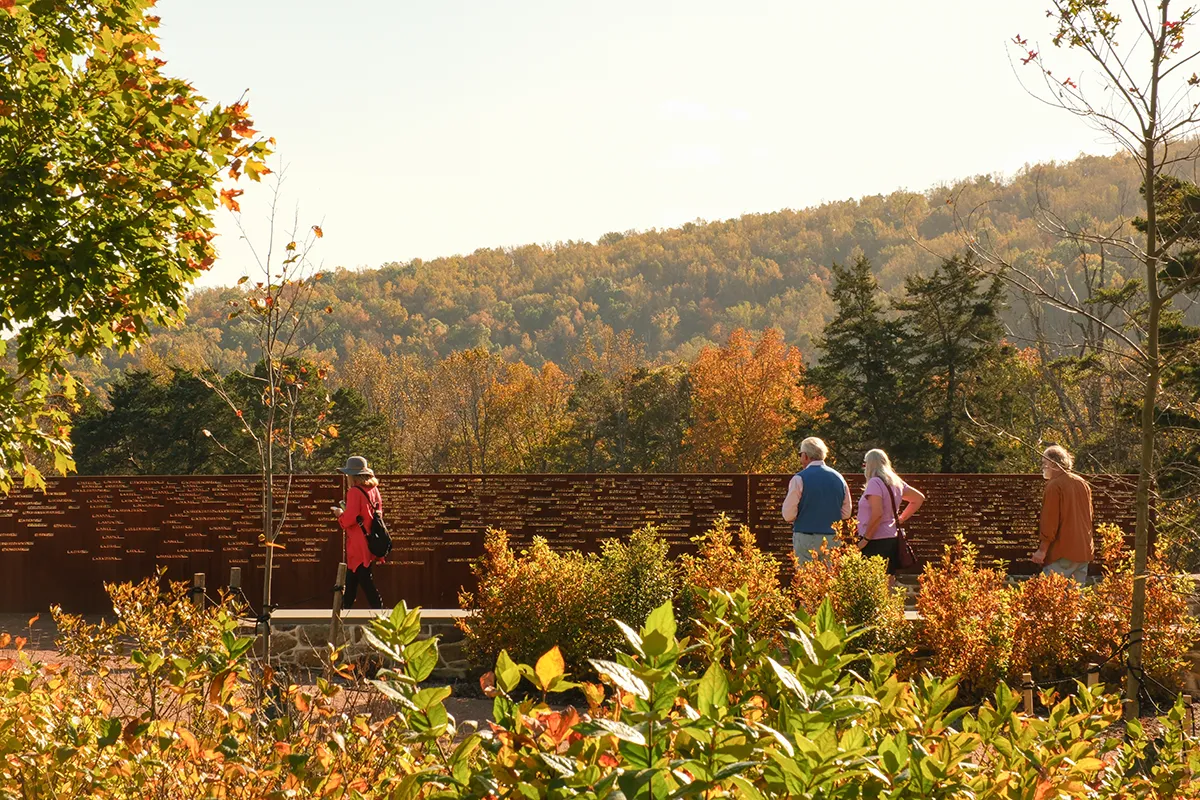
The design pays tribute to those who were enslaved by following one of the most frequently traveled labor paths. This historic route linked Mulberry Row at the mountaintop to the North Spring below, where water, essential to all, was carried up from. The subtly curved 60-foot-long wall of Corten steel traces this path and holds the names of the 607 and contains open spaces which allow new names to be added as they are discovered. These openings—inspired by Maya Angelou’s poem “Still I Rise”—increase as the wall rises from the ground that was once worked by the enslaved.
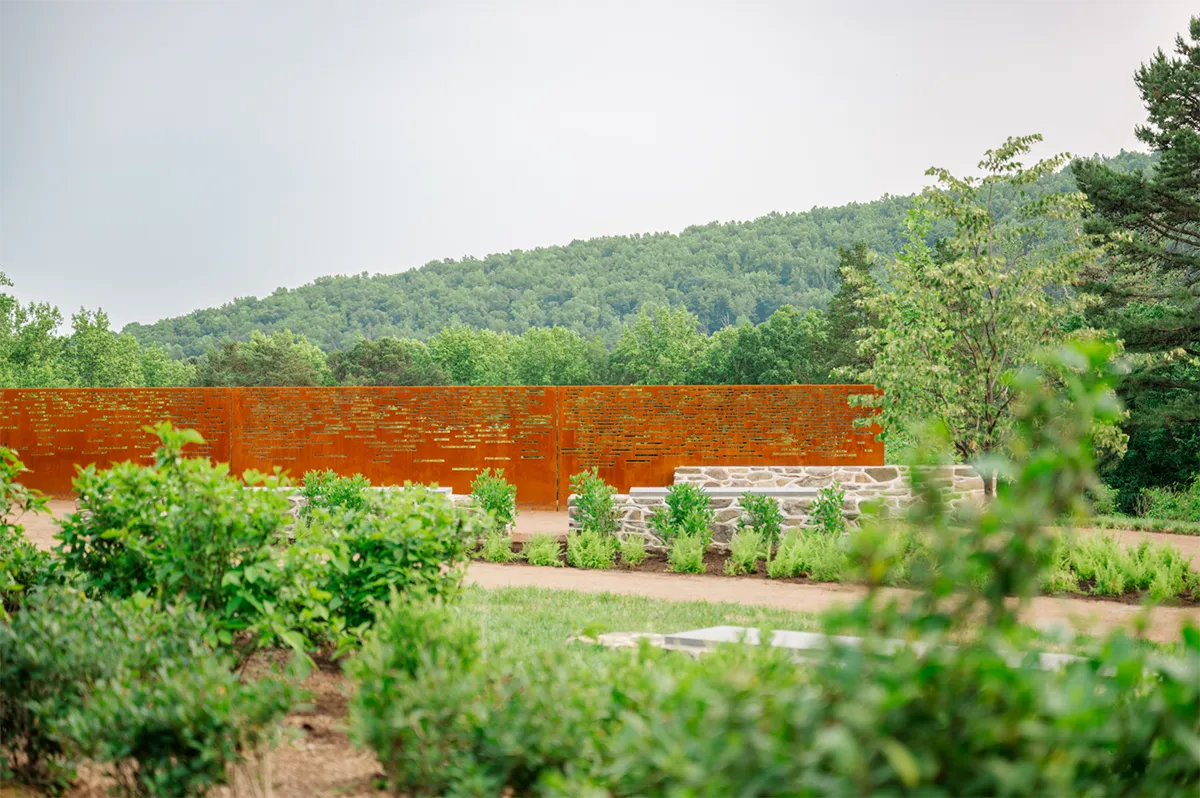

Designed in collaboration with descendants of the enslaved community and staff from the Thomas Jefferson Foundation, the Contemplative Site provides visitors with a place to reflect on the experience of slavery at Monticello, the people entangled in it, and its lasting impact on society today.
Along with the Burial Ground for Enslaved People, the Contemplative Site creates a strong connection between the sites of labor and final rest and offers a fuller perspective on Monticello’s story, told through planting pallets that are entirely native to the Piedmont region and found documented in Jefferson’s writings.
The Monticello Memorial
Location: Charlottesville, Virginia, USA
Designer Credit: Nelson Byrd Woltz Landscape Architects (Landscape Architects) HGA (Architects)
Client: The Thomas Jefferson Foundation
Collaborators/Other Consultants:
Architect: HGA
Civil Engineer: Timmons Group
Contractor: Kjellstrom + Lee
Steel Fabricator: Shickel Corporation
Images Credit: Nelson Byrd Woltz Landscape Architects; Thomas Jefferson Foundation;
Shortlisted in the 2025 WLA Awards – TCLF – Cultural Landscape Award – Design Excellence category