
Background
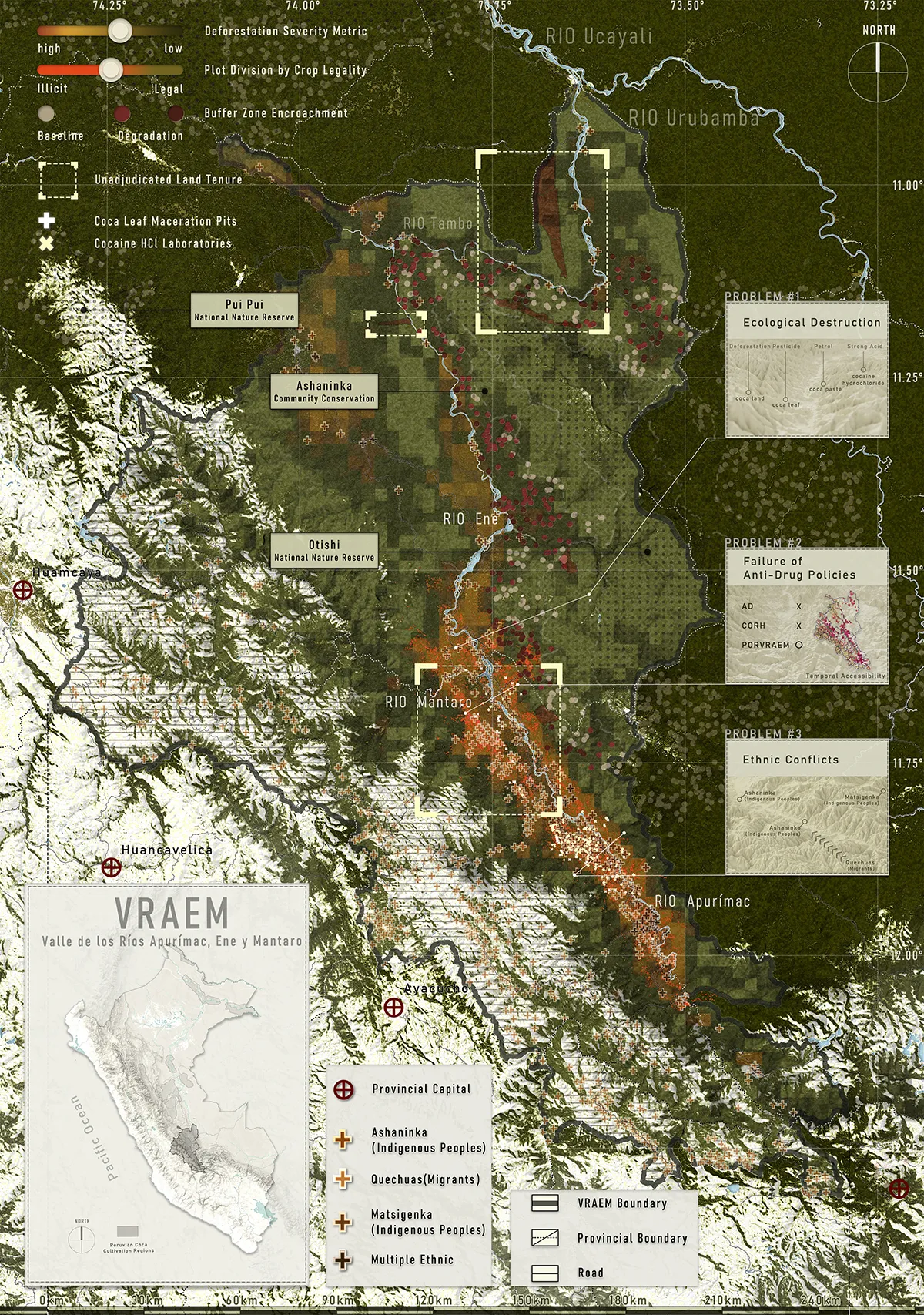
Coca is the raw material for cocaine. Peru is one of the world’s largest coca-cultivating countries, with the VRAEM region accounting for over 60% of national coca cultivation. The region has experienced three waves of Andean migration, leading to immigrants to the Amazonian land occupation and the proliferation of illicit coca economies. Farmers once used the coca economy to resist terrorist groups. creating a tripartite conflict between the government, terrorists, and Farmers’ Self-Defense groups. This history has entrenched emotional and economic dependence on coca among farmers, alongside distrust
toward government policies.
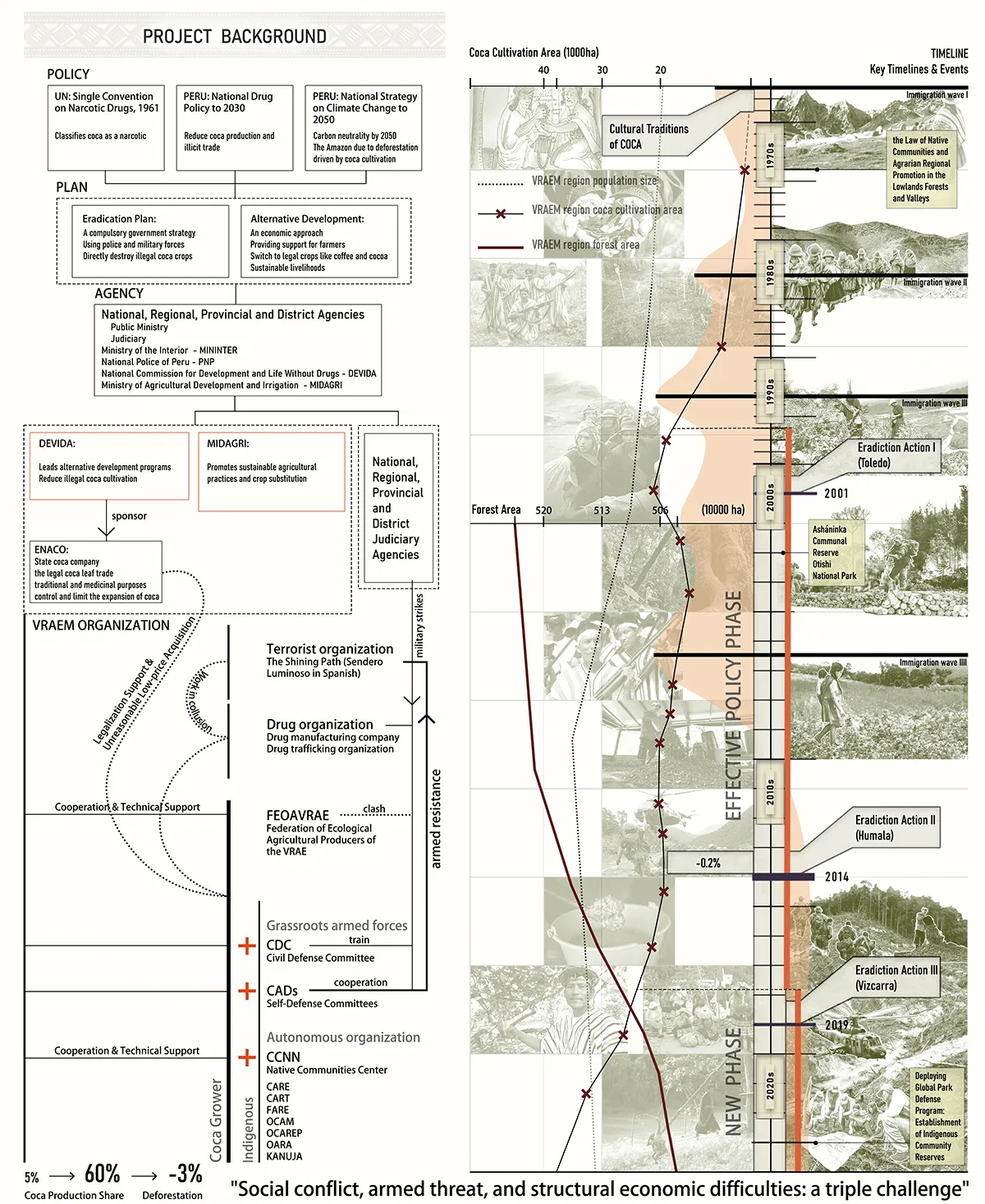
Coca cultivation has caused large-scale deforestation, soil degradation, and water pollution. Despite government efforts to enforce eradication and alternative development policies, short-term interventions, lack of trust. and supply-chain mismatches have failed to break the vicious cycle of environmental decline and illicit economic activity.
Vision
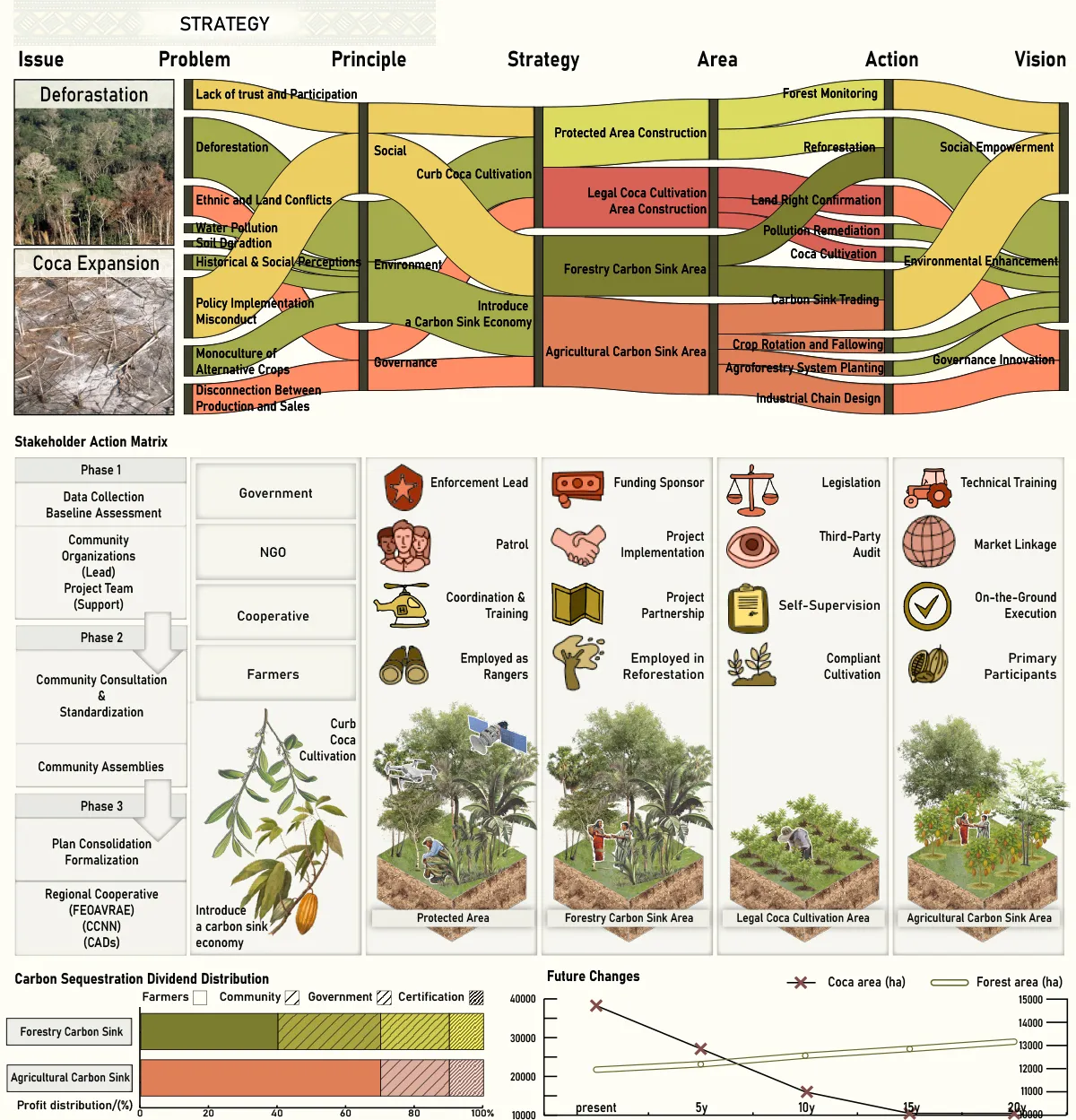
We propose that Reforestation itself can serve as a tool to curb the coca economy restoring forests. trading carbon sink. and generating income to replace illicit economic activities. Therefore, this design adopts ESG principles (Environmental. Social, Governance) as its principle, replacing the illicit coca economy with a carbon sink economy to achieve threefold goals:
Environmental Enhancement: Curb illicit cultivation, restore forest ecosystems, and advance climate action through carbon trading.
Social Empowerment: Improve farmers’ livelihoods and rebuild trust between the government and communities.
Governance Innovation: Establish a community co-governance model to enhance policy sustainability.
Planning Methods
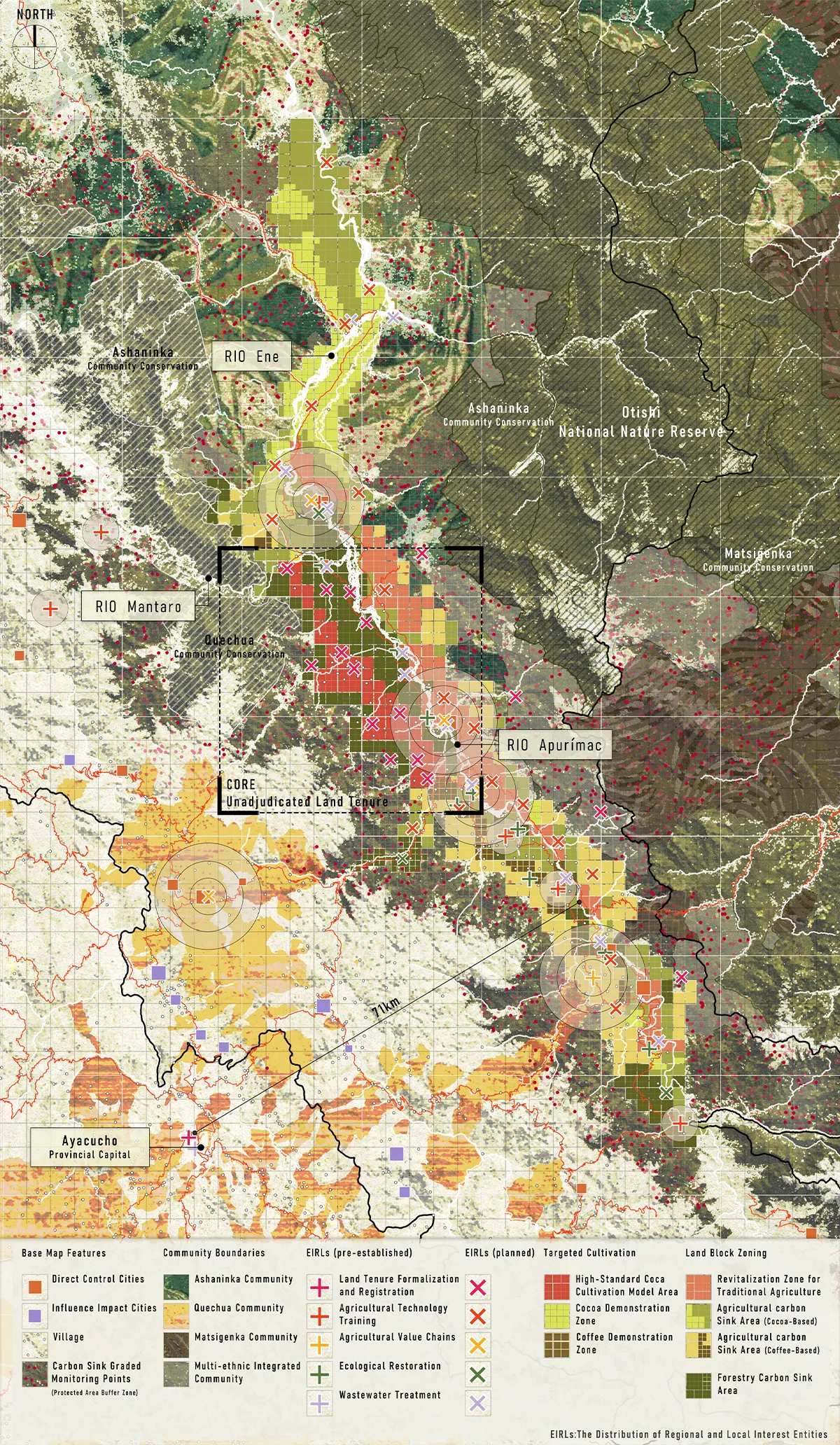
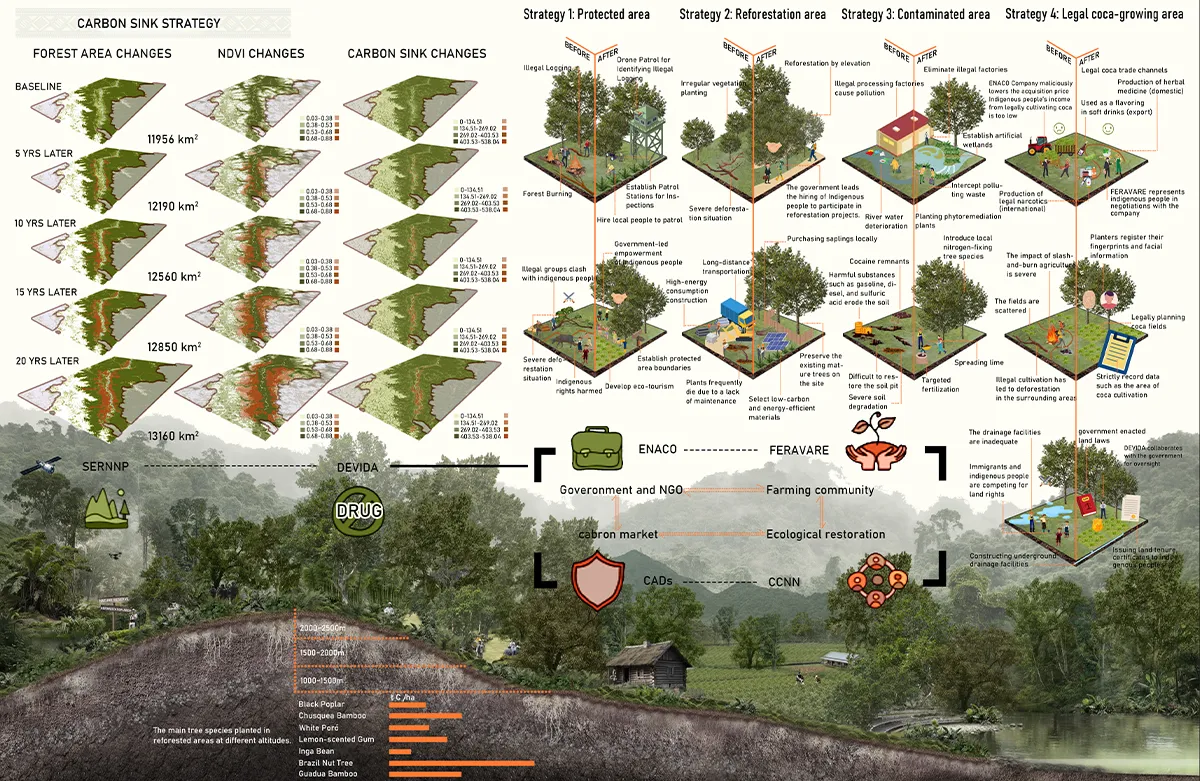
Use remote sensing data to delineate protected areas and reforestation zones, prioritizing native tree species with high carbon sink potential. Designate disputed lands as state-regulated legal coca cultivation zones, balancing farmers’ emotional ties to coca with anti-drug policies through scientific cultivation, pollution control, and land tenure registration.
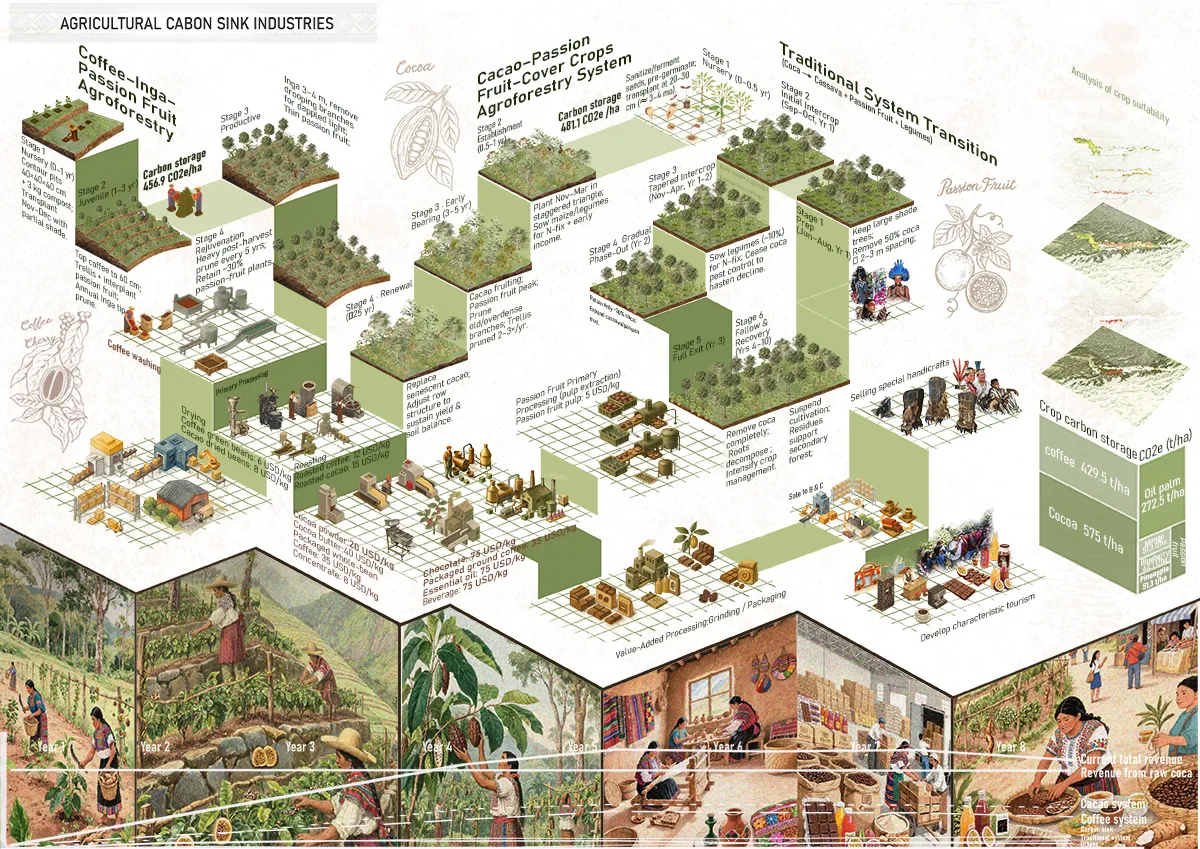
Allocate remaining coca zones to alternative crops (e.g .. cocoa, coffee, passion fruit) based on ecological suitability and historical farming experience.
Key Strategies
In Protected Areas:
– Clear illicit coca fields and restore vegetation, using drones and satellite monitoring to combat crime.
– Employ locals as forest rangers with skill training.
In Legal Coca Cultivation Zones:
– Rehabilitate soil fertility and treat water pollution through scientific farming practices.
– Register land ownership and establish market access mechanisms for legal coca leaf consumption and pharmaceutical markets.
In Agricultural Carbon Sink Areas:
– Gradually reduce coca cultivation per household to 0.25 hectares within 5 years, integrating traditional fallow systems for passion fruit and agroforestry models for coffee and passion fruit.
– Develop complete value chains for agricultural products and carbon trading.
In Forestry Carbon Sink Areas:
– Plant native tree species with high carbon sequestration capacity.
– Design carbon trading mechanisms where residents earn dividends by participating in forest
governance.
Significance
This design redefines the relationship between the government and farmers by leveraging the carbon economy, transforming them from adversaries into collaborative partners. Through an ESG framework, the project achieves triple goals of environmental restoration, livelihood improvement, and governance innovation. Over 10 years, it will reduce illicit coca cultivation by 60% (11 ,000 hectares), and over 20 years. restore 120,000 hectares afforests, offering a replicable sustainable development model for similar regions globally.
Students: Yuanjie Ning, Shiwei Yang, Wenru Zhao, Zhuoyuan Yu | Beijing University Of Civil Engineering And Architecture, Zhejiang University, Chinese Academy of Forestry, Huazhong Agricultural University.