

Louisville Parks and Recreation has unveiled the Strategic Jefferson Memorial Forest (JMF) Master Plan designed to guide the future of this beloved public reserve. Developed and led by MKSK, the plan focuses on creating a more accessible, inclusive, and ecologically sustainable environment while enhancing the visitor experience across the forest’s 7,000 acres. As part of this transformation, Olson Kundig was brought in to design a series of new structures for the Forest that further expand the vision for this Plan to transform this site into a world-class destination built to prioritize ecological restoration and community connectivity.
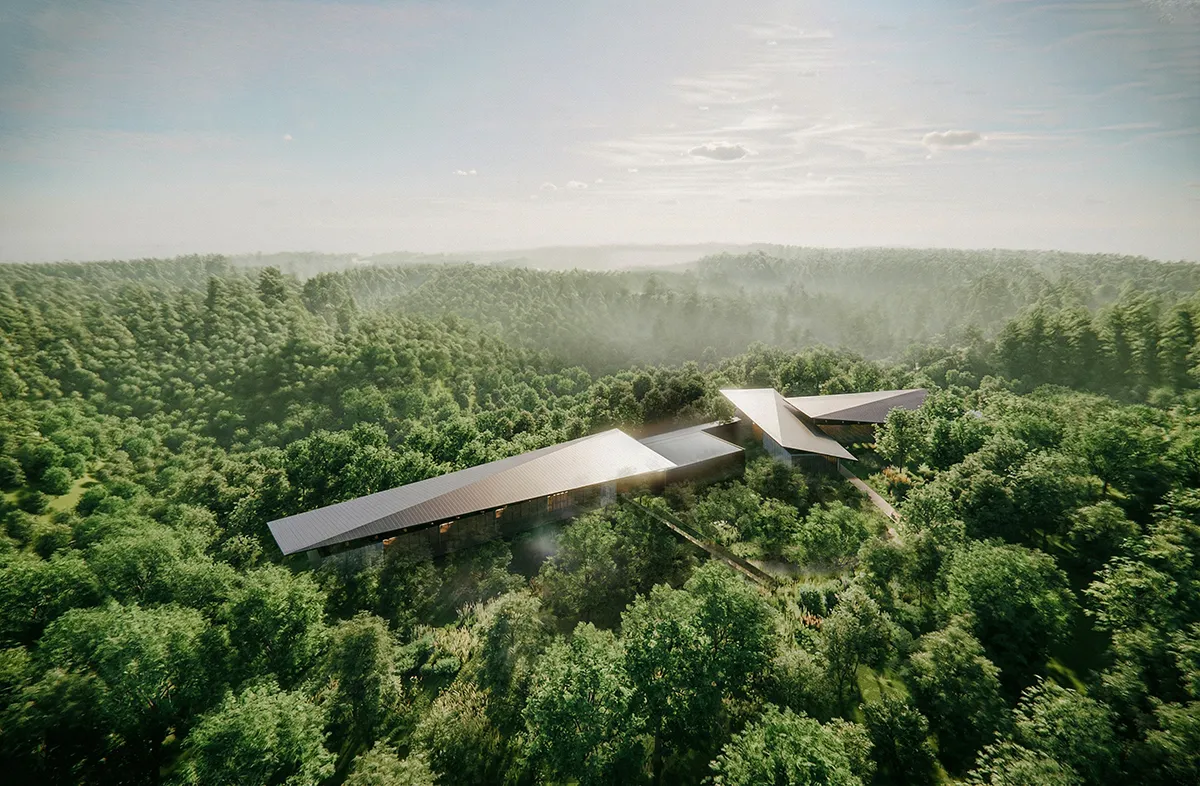
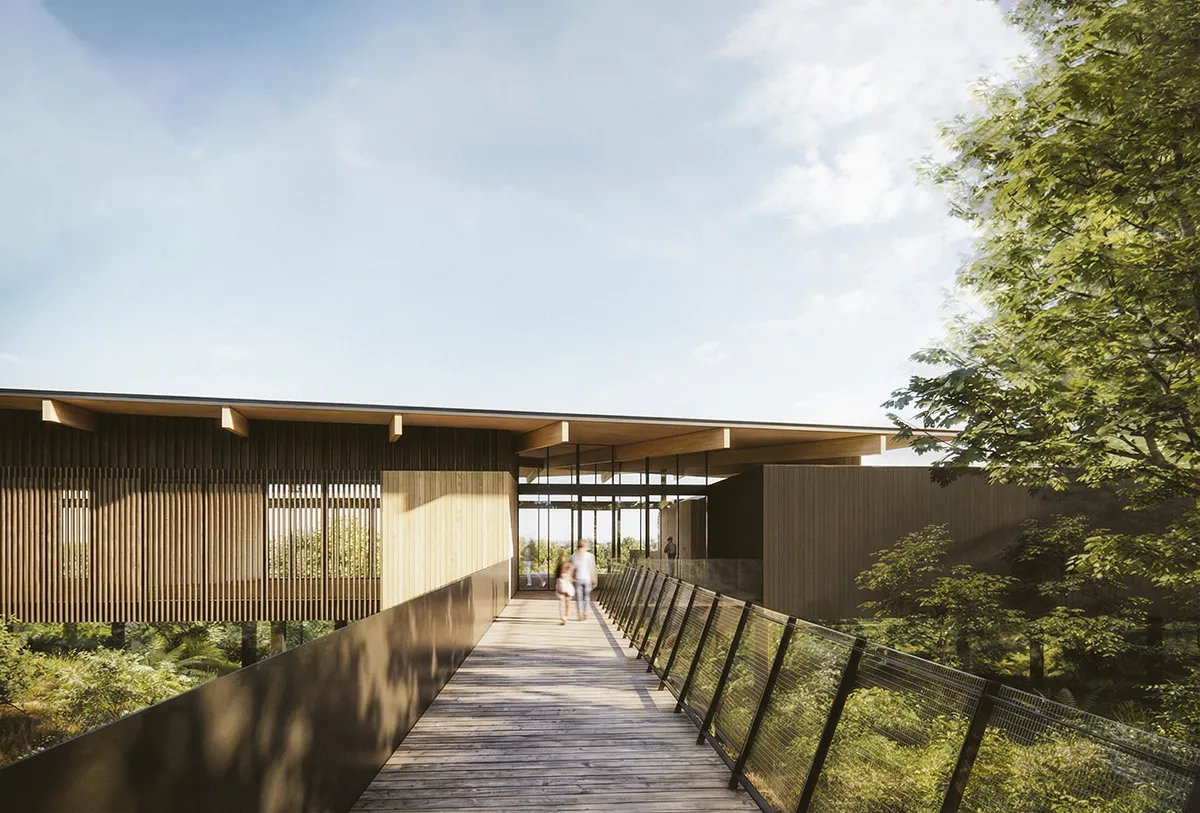
The Jefferson Memorial Forest, which opened in 1945 to honor military veterans, stands as the largest municipally owned urban forest in the United States. This expansive natural sanctuary stretches across Louisville and Bullitt County, offering a remarkable blend of urban accessibility and wilderness. MKSK’s Strategic Master Plan promises to further elevate its impact on the community and beyond while protecting the species that call this forest home.
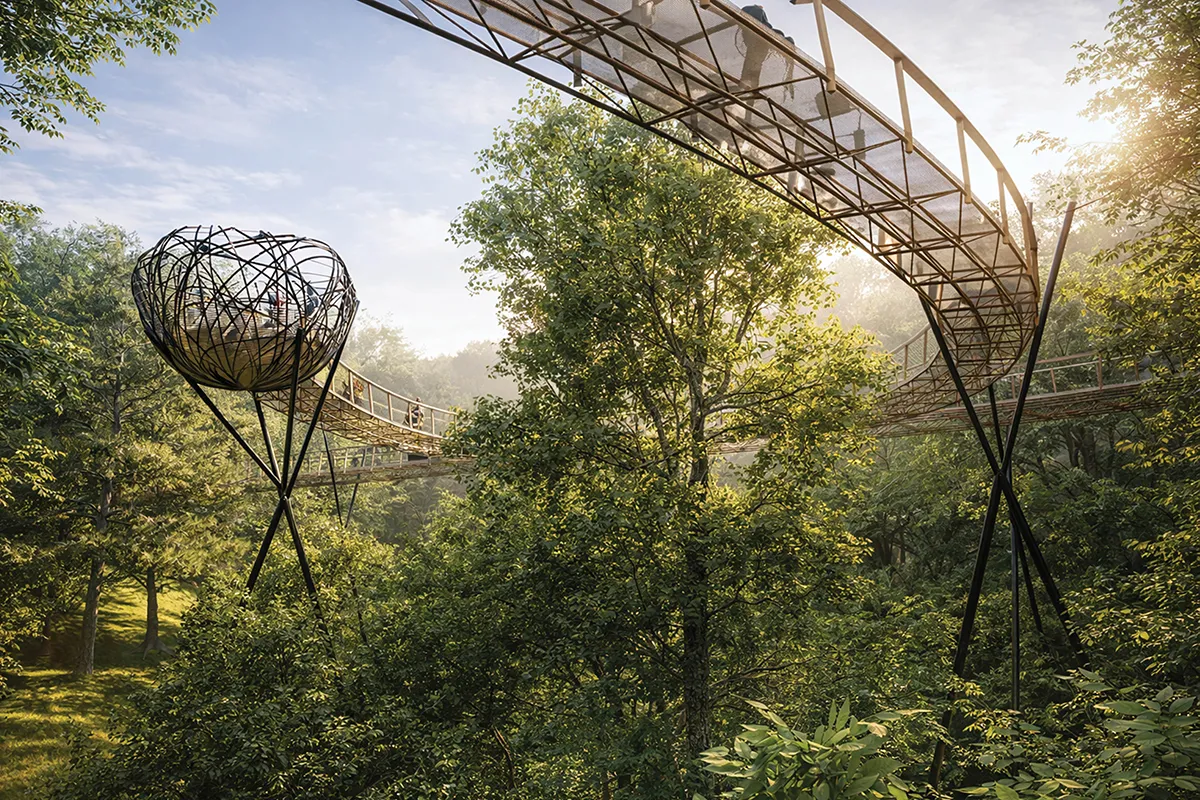
The diverse topography of Jefferson Memorial Forest — characterized by knob-like ridges, deep valleys, ridgelines, and winding streams — creates one of the most distinctive and breathtaking landscapes in the region where visitors can enjoy a wide range of experiences, from tranquil hikes to exhilarating outdoor adventures. While the scale and topography are among its most impressive features, they also present challenges to clarity and accessibility. The master plan envisions a clear framework with distinct zones to transform the forest into a cohesive, engaging environment where every visitor can easily explore the diverse recreational opportunities and foster a deeper connection with this remarkable landscape.
Built on the 2009 master plan, this updated vision for Jefferson Memorial Forest expands its identity by introducing new recreational and lodging opportunities, along with a dedicated environmental education center. At the same time, it prioritizes ecological restoration through practices such as reforestation and invasive species removal, ensuring a healthy and resilient habitat for both people and wildlife.
“The master planning approach was rooted in revealing what already makes Jefferson Memorial Forest extraordinary – its scale, its diversity, and its quiet power – while creating a framework that helps visitors truly understand and navigate the forest. Our goal was to deepen the connection between people and place – offering immersive experiences that engage the senses and reveal the forest’s rich ecological layers. Instead of creating something brand new, we’re magnifying what’s already there by bringing forward the stories, landscapes, and experiences that have always defined this unique urban forest,”
Principal at MKSK, Andy Knight.
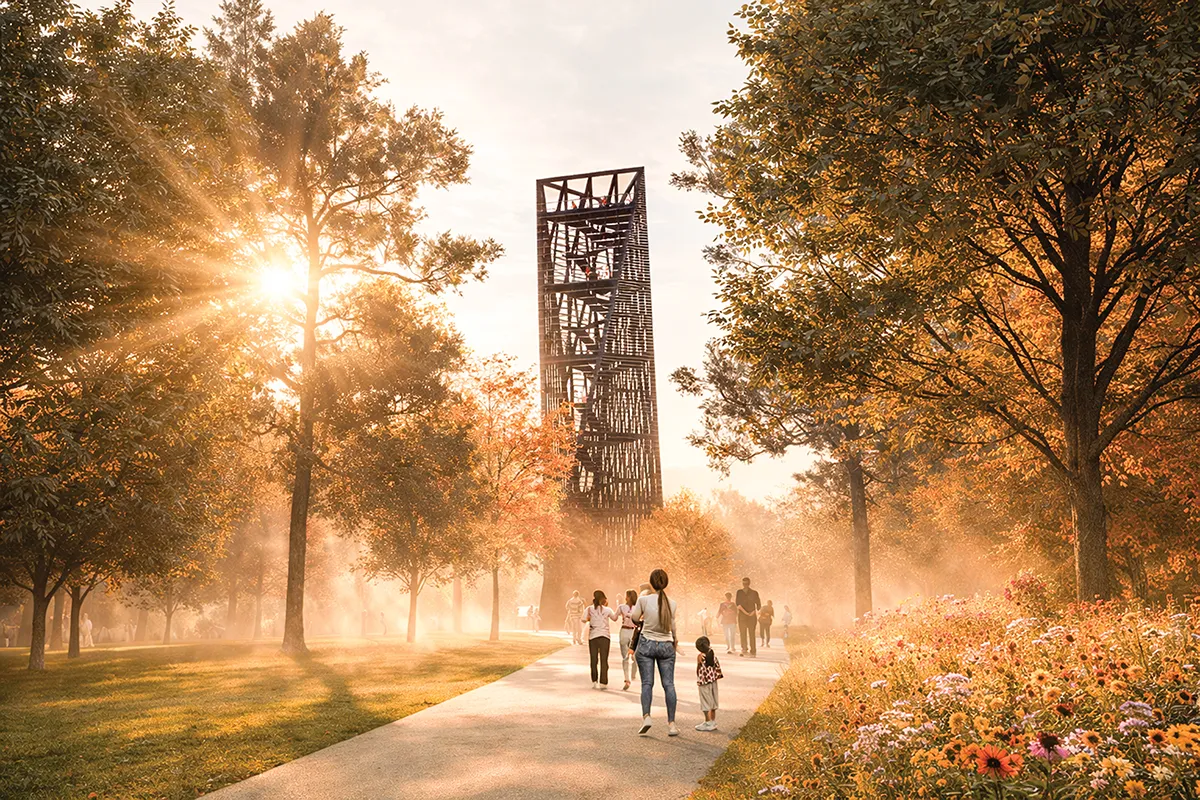
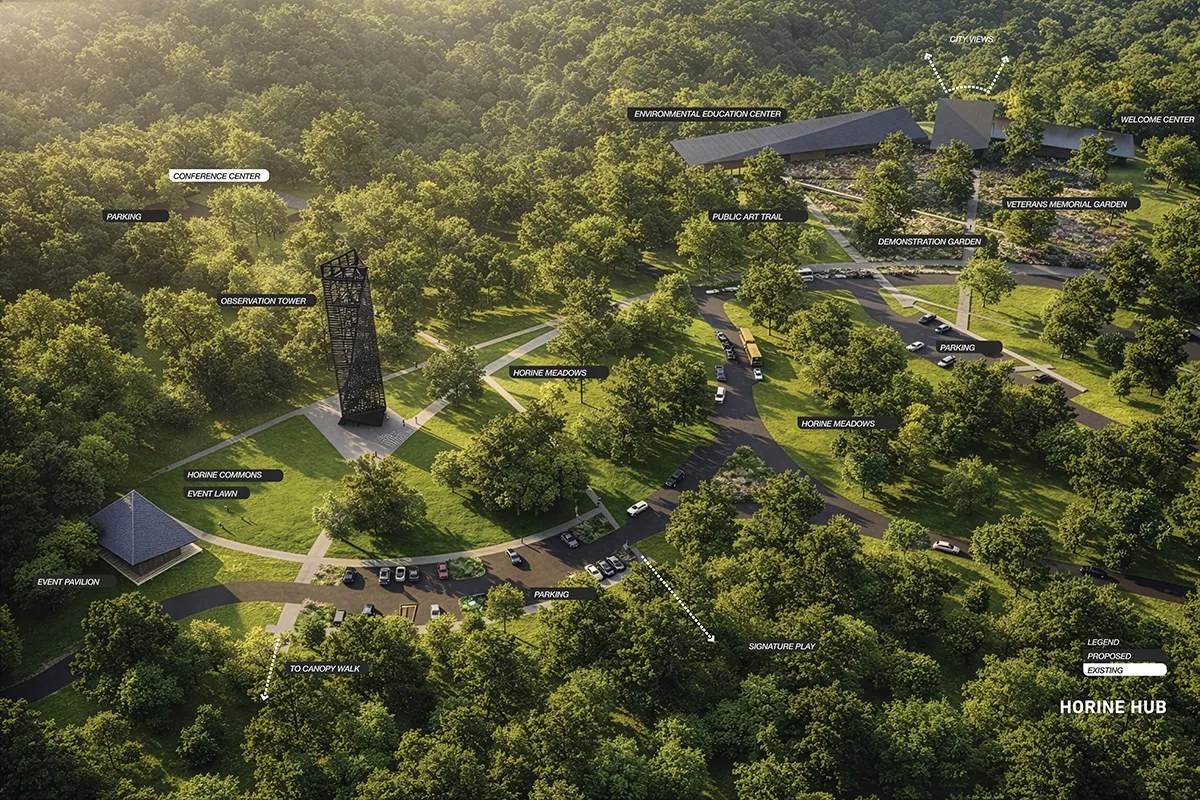
MKSK’s design plan is enforced through a framework of six distinct zones, each designed to host destination-oriented spaces while enhancing the existing patchwork of structures that define the forest. This strategy for improved accessibility and legibility is further developed through the creation of a cohesive, comprehensive signage and wayfinding system to guide visitors. Two focus areas were chosen for program development – The Horine Reservation and Moreman’s Hill. These hubs will serve as centers for ecological exploration and environmental education with a new learning center, a canopy walk and suspension bridge that immerses visitors in the trees, an observation tower offering panoramic views, a collection of event pavilions and a range of tree-house style lodgings. To further enhance the park experience, new and thoughtful signage will be developed to educate and orient visitors.
With Olson Kundig’s specialization in designs that blend seamlessly into nature, the team created a collection of lodgings that either nestle into the floor of the forest or float, suspended among the lush treetops. In addition to these accommodations, Olson Kundig envisioned the Horine Pavilion as a flexible space for events, relaxation, and performances, alongside a sweeping Environmental Education Center. Their thoughtful design response to the surrounding ecology informed the use of durable, natural materials, resulting in facilities that harmonize with the environment and feel fully integrated into the landscape.
The Moreman’s Hill zone represents a specialized opportunity to drive overnight stays through niche, experience-based demand—particularly within the mountain biking and adventure recreation market. The development of a tiered biking trail network through the forest will cater to riders of all skill levels. When combined with structured event programming and proximity to other adventure excursions like Red River Gorge, the area can generate concentrated visitation peaks that naturally translate into overnight stays.
Jefferson Memorial Forest is a remarkable ecological and natural resource that supports a rich diversity of habitats, rare, endangered species, and natural water systems. It lies at the intersection of two continental migratory bird flyways and two eco-regions with varied soil compositions. MKSK has established methods for reforestation and worked with biohabitat experts to identify where the plan could help heal part of the forest by removing invasive species, implementing a prescribed fire strategy, and relocating hiking trails that were increasing erosion to protect the habitat and help maintain soil stability. For water system restoration, the team envisioned vegetated riparian buffers on both sides of park wetlands to preserve water quality and protect the wildlife that rely on these water sources.
Over the first three months of the project, MKSK led numerous engagement opportunities, allowing the community to share their priorities and concerns for the forest. With an understanding of the community’s vision for a forest that balances enhanced nature experiences with ecological stewardship, they proposed a plan that supports this balance by proposing sustainable park infrastructure and expanded educational and recreational opportunities.
For more information about the Jefferson Memorial Forest and the upcoming master plan, please visit https://www.jmfmasterplan.com/
Image Credit: Courtesy of MKSK (unless otherwise captioned)