
This thesis examines the development potential of a peri-urban park system in the western fringe of Milan, focusing specifically on the Baggio neighborhood and the surrounding municipalities of Quinto Romano, Muggiano, Settimo Milanese, Seguro, Cesano Boscone, and Cusago. These historically independent settlements, now integrated into the Milan metropolitan area, maintain distinct identities within a complex landscape.
At the heart of this research are the spring water systems dating back to the Middle Ages, which shaped the agricultural landscape of the Po Valley but are now suffering from degradation due to urbanization and human intervention. These shallow-water systems, once essential for irrigation, are now declining due to climate change and pollution. The study explores how these biodiversity-rich areas can be interconnected into a cohesive park system to prevent further loss.
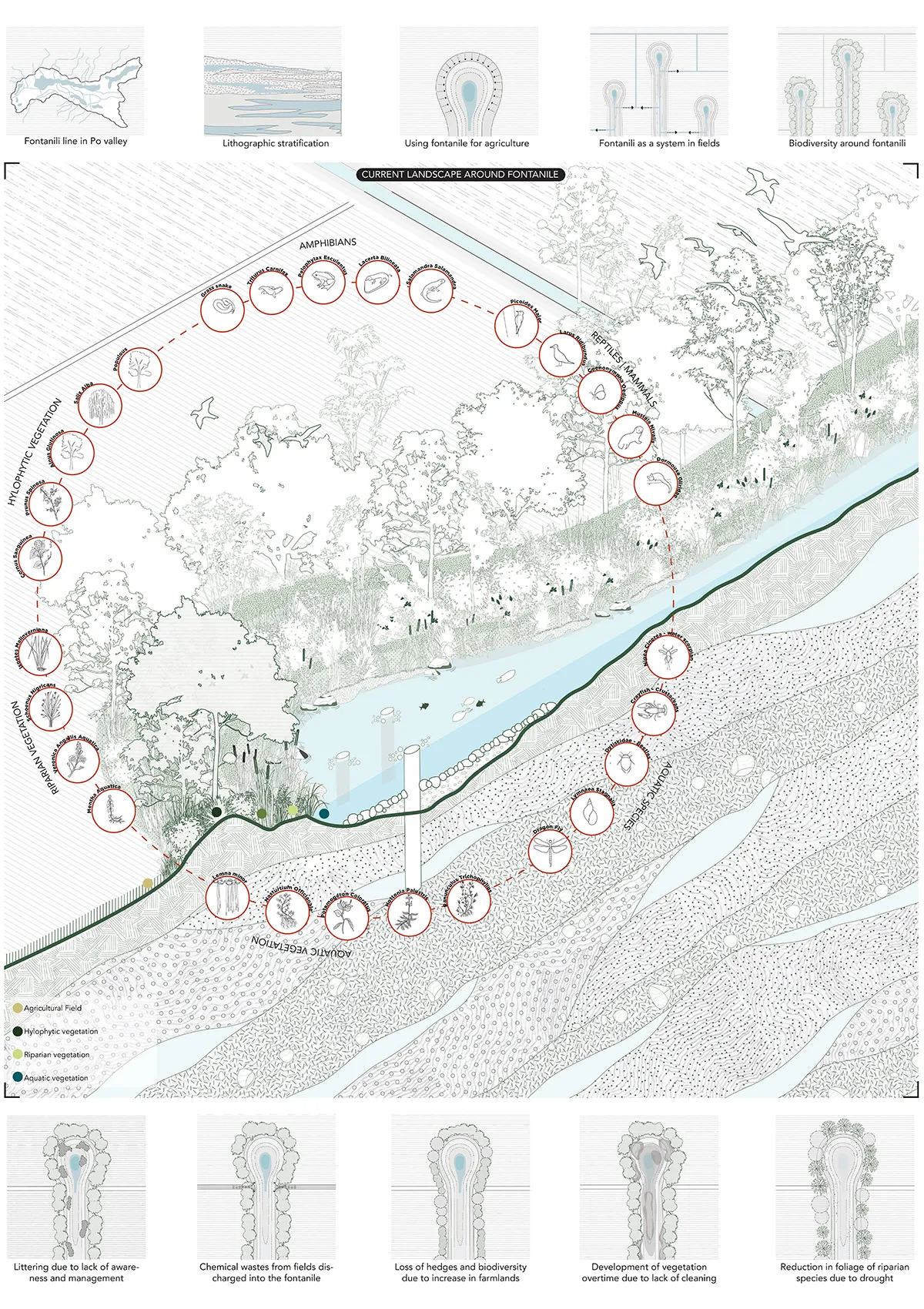
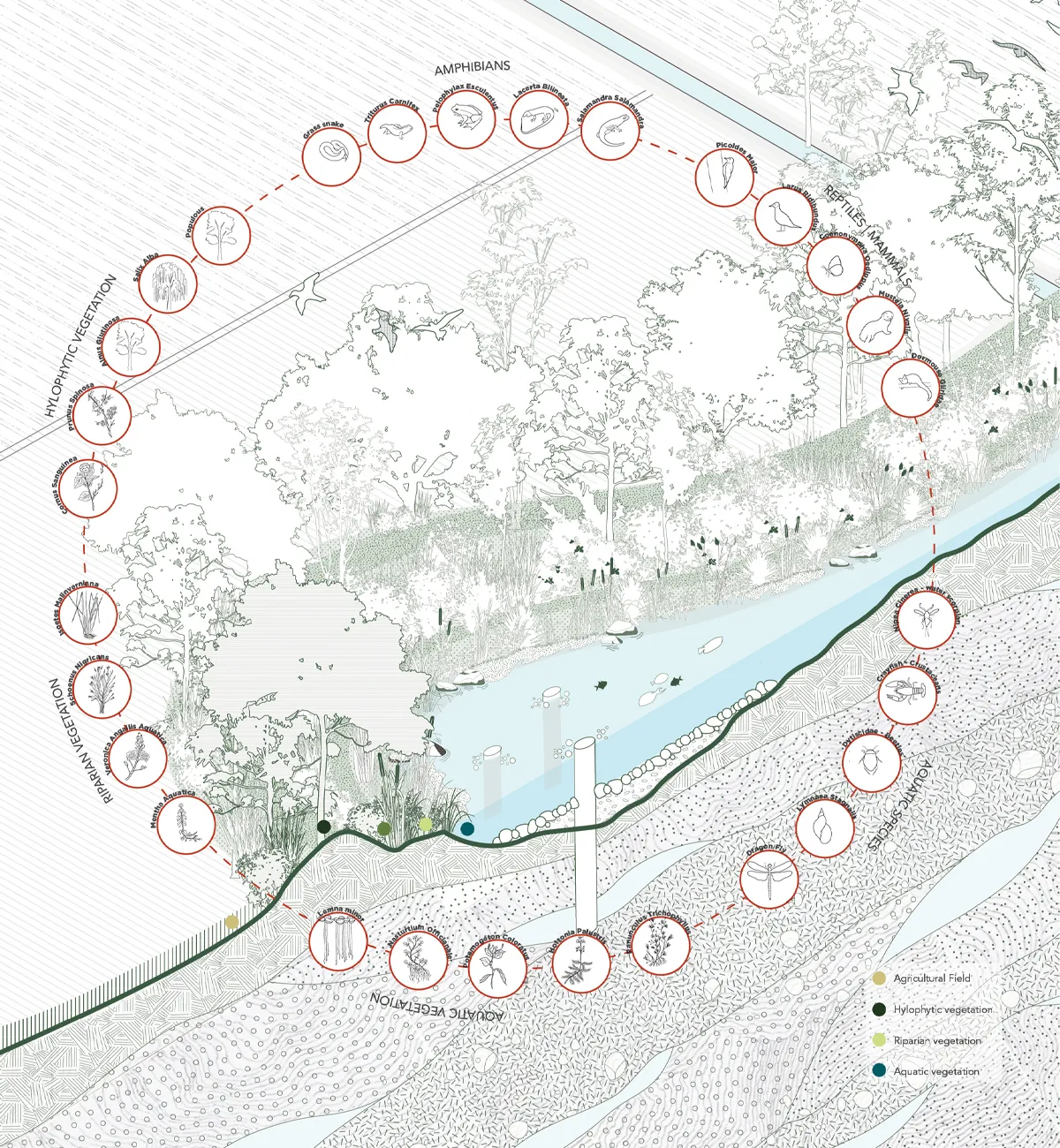
The analysis reveals key insights into the current landscape. The area is characterized by an imbalance in green infrastructure, the isolation of fountains from a larger water network, underdeveloped historic settlements, and infrastructure that disrupts the landscape and impedes movement between neighborhoods. The primary design strategy aims to bridge peri-urban boundaries by connecting historic routes to park systems, expanding public spaces, improving accessibility, and creating networks.
The goal is to strengthen connections between cities, create green corridors, and revitalize the fountains, thus forming a more integrated and accessible landscape.
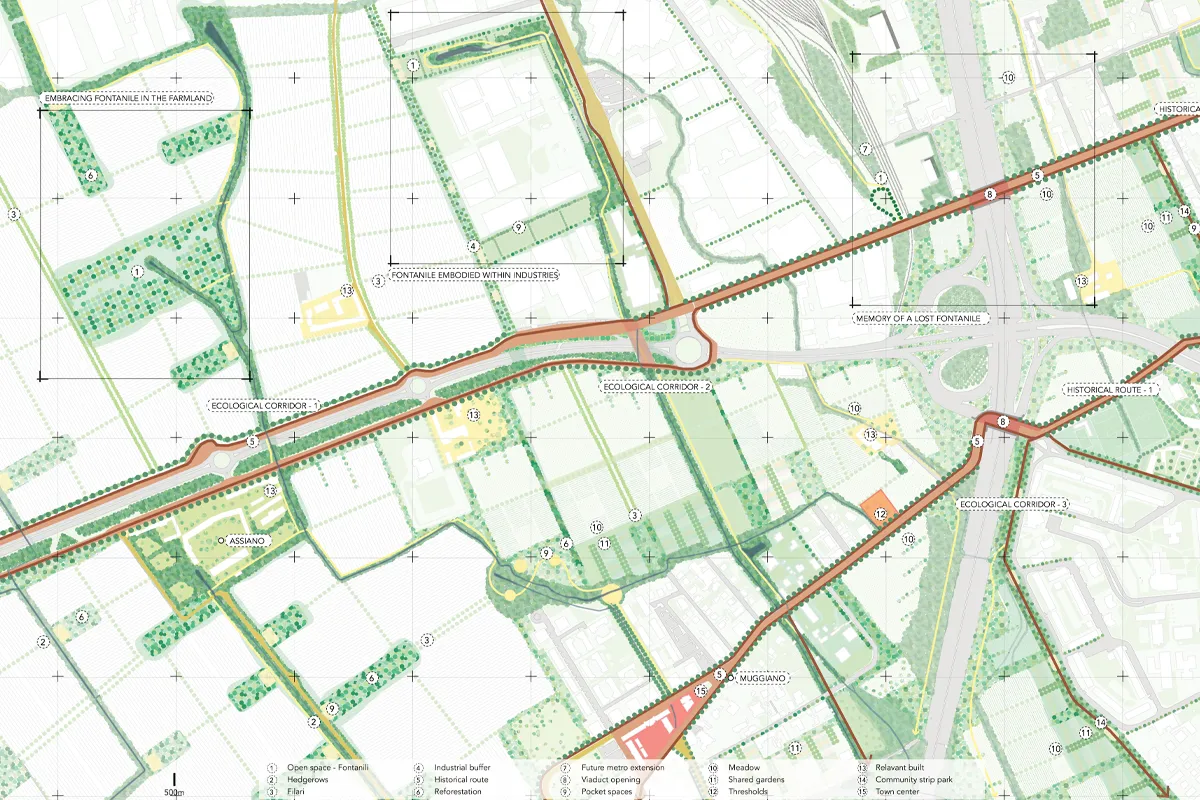
A study of the historic Baggio-Cusago route highlights the transition from the metropolitan edge to the fields. The system of fountains, which once thrived across the fields, represents an opportunity to reconnect these areas through ecological corridors.
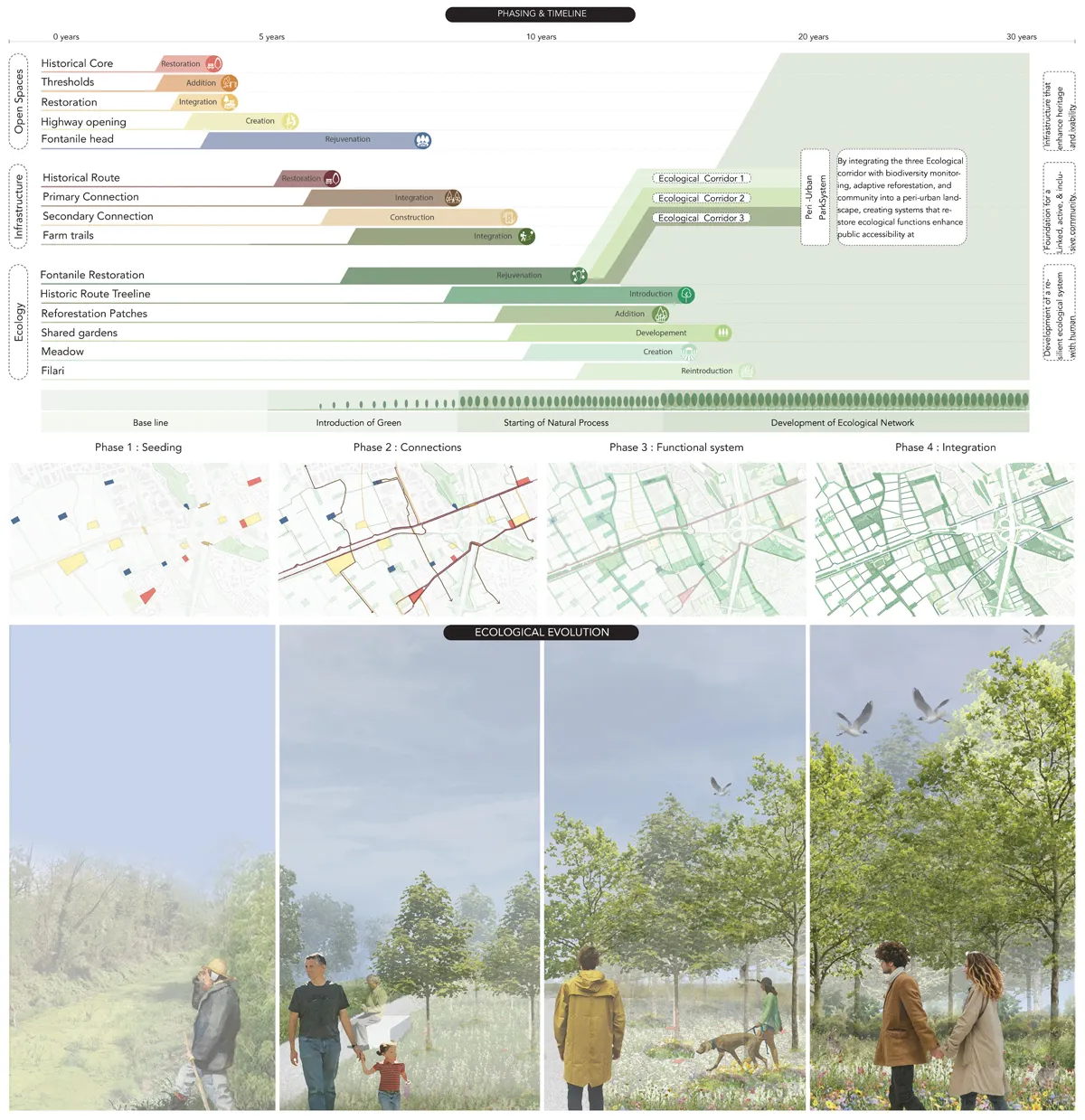
The project proposes a hierarchical structure with the central historic route serving as the backbone, intersected by ecological corridors along agricultural lands, residential-industrial zones, and peri-urban systems. Each corridor includes targeted interventions to restore the ecological network through the fountains. Furthermore, a system of parks is created, comprising public spaces, community gardens, and reforestation areas, forming a multifunctional landscape.
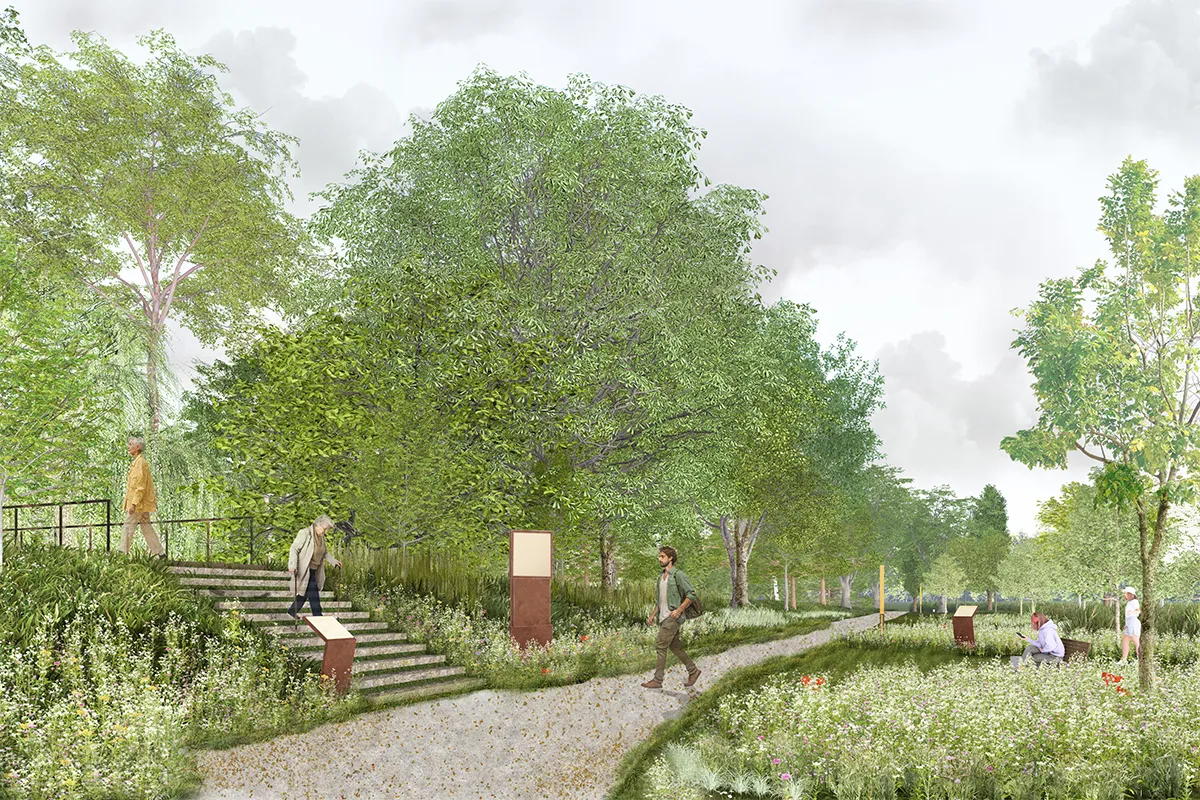
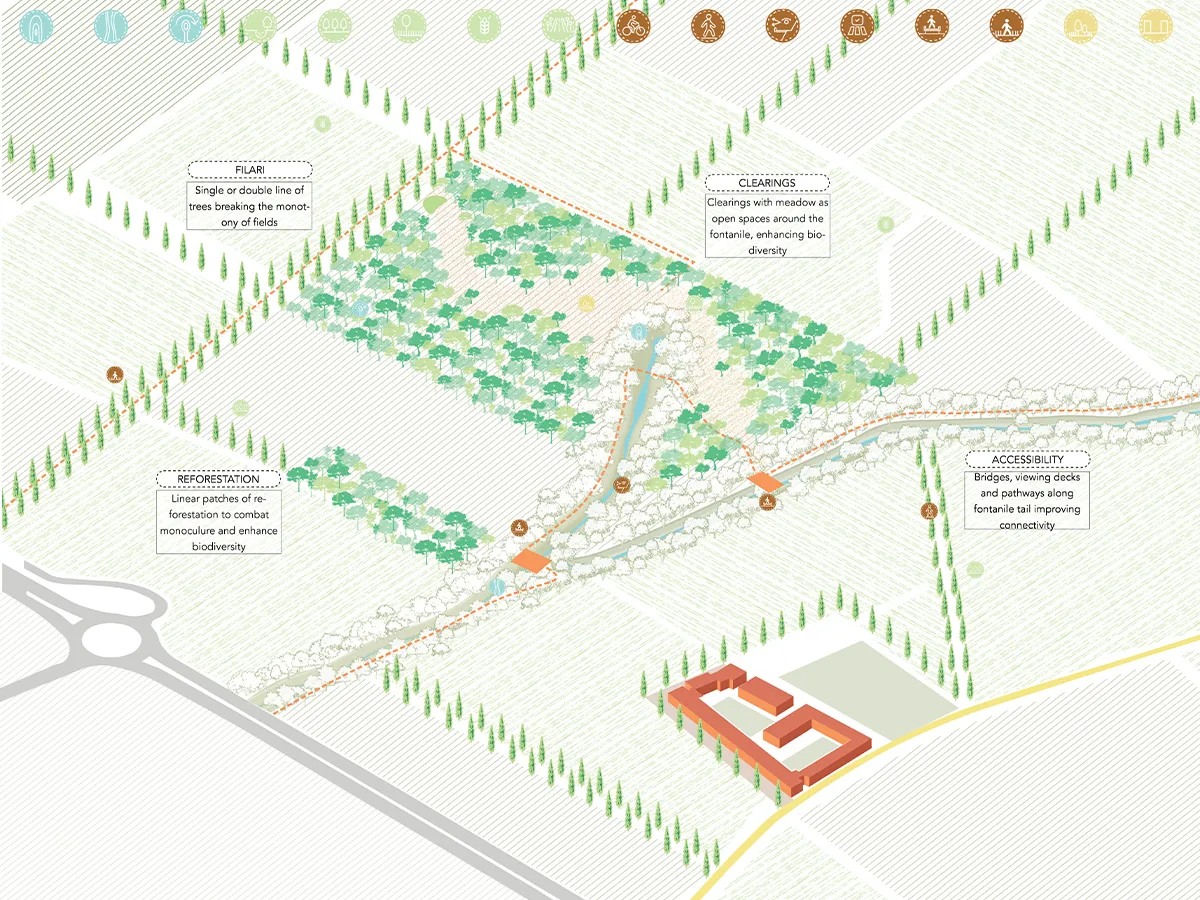
The project comprises three components. The first includes a landscaped path along the fountain, opening into a clearing with a lawn that respects and embraces it. The second revitalizes the green corridor of the fountain, connecting it to the industrial buffer and creating a continuous landscape. The public spaces around the fountain offer recreational opportunities and engage adjacent settlements and workers. The third transforms the inactive fountain into an urban park, integrating it into a broader ecological corridor. The site is treated as a reminiscence of a lost fountain, enhancing its historical significance.
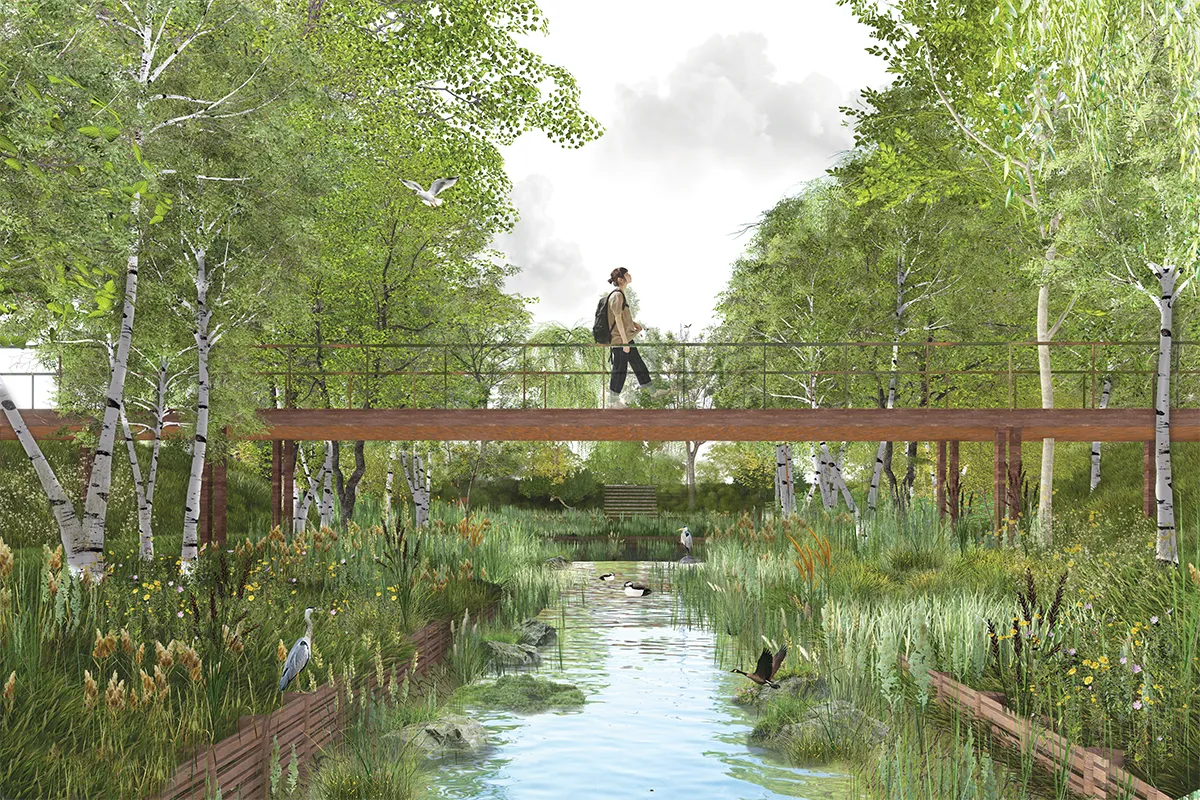
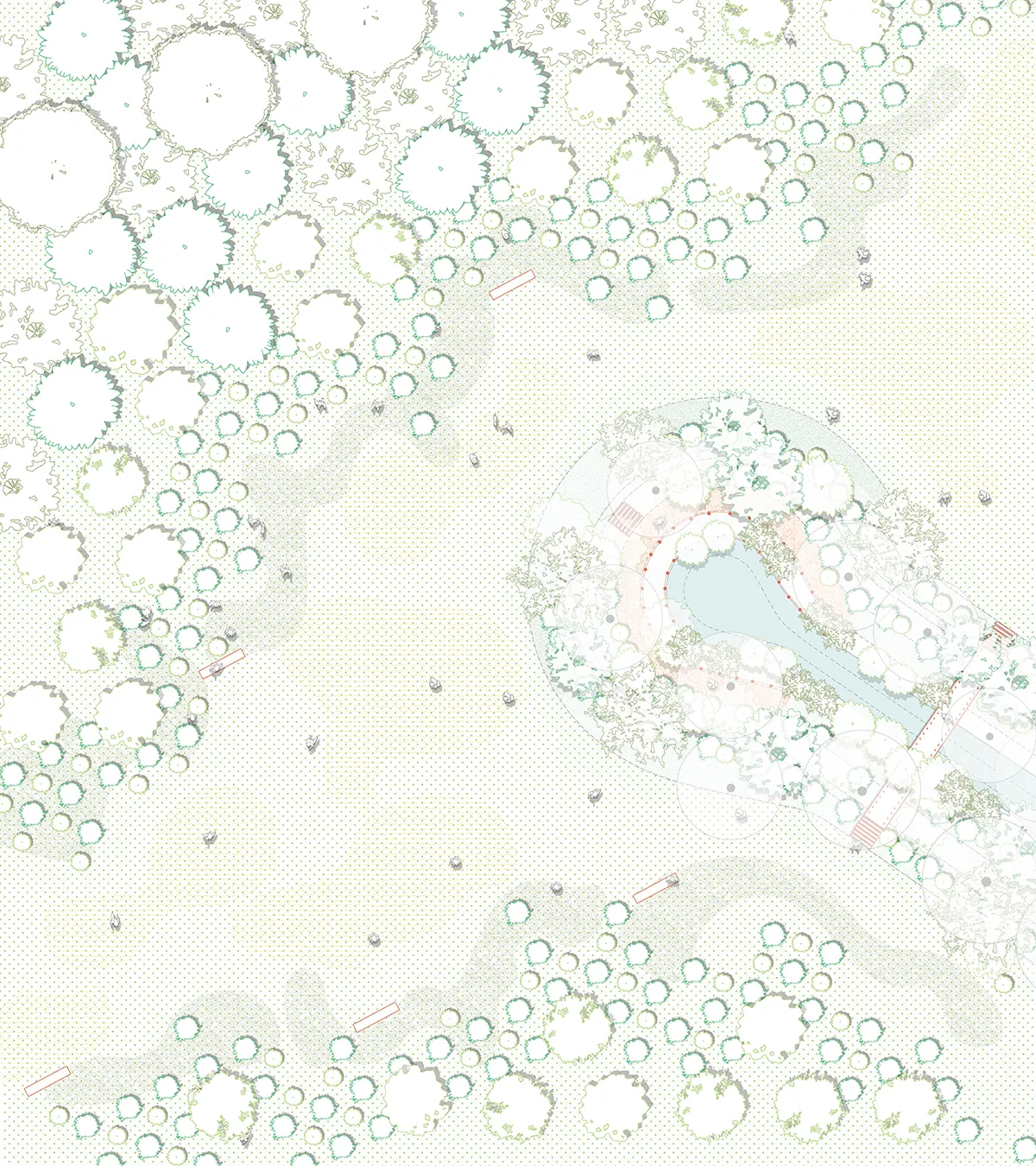
Focusing on the fountain in the open field, the project introduces reforested patches that provide spatial organization without compromising ecological integrity, offering access points to engage with these historic features. The central clearing highlights the fountain, with lawns and paths guiding users through the landscape.
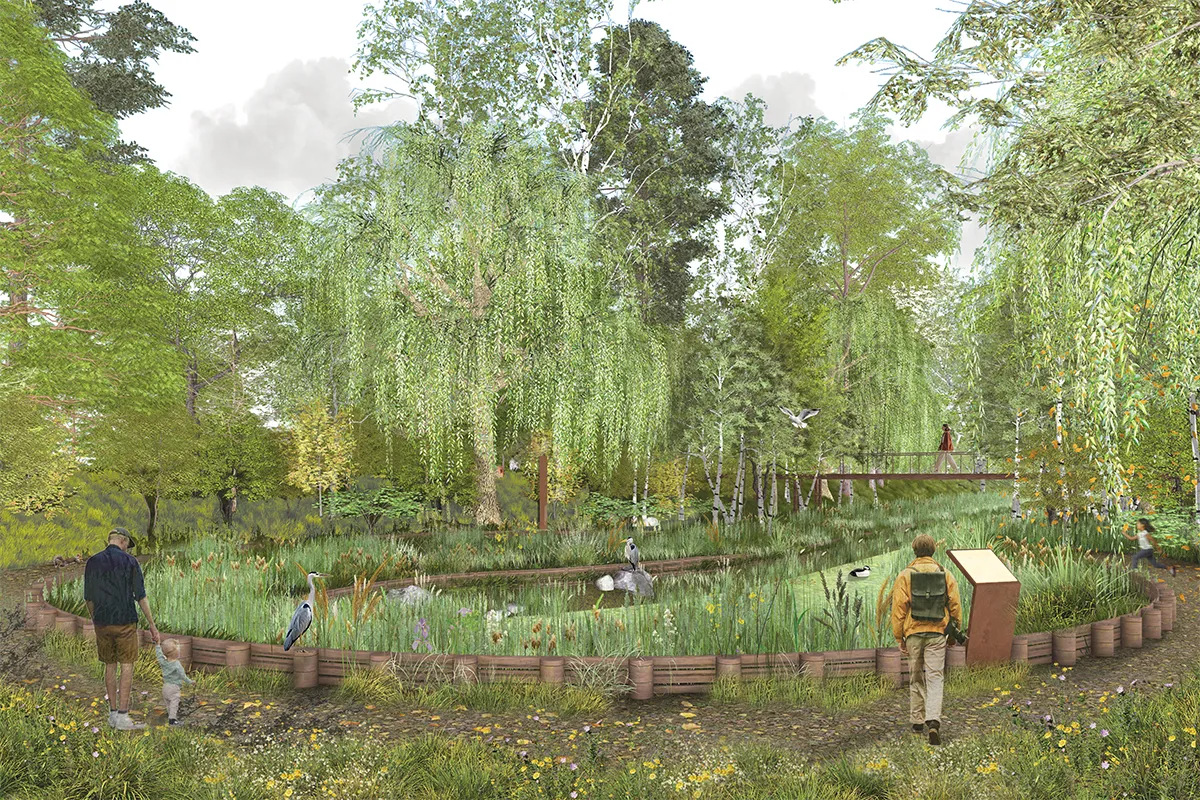
This design project demonstrates how the fountain, a historic landscape element, can inform contemporary approaches to peri-urban landscapes, creating systems that restore ecological function, preserve cultural identity, and improve public accessibility on the edges of Milan.
Beyond the Threshold: Shaping a Park System in Baggio’s Peri-Urban Landscape, Milan, Italy
Students: Abhinand Krishnakumar Menon & Arya Arun – Politecnico Di Milano;
Supervisor: Andrea Oldani