
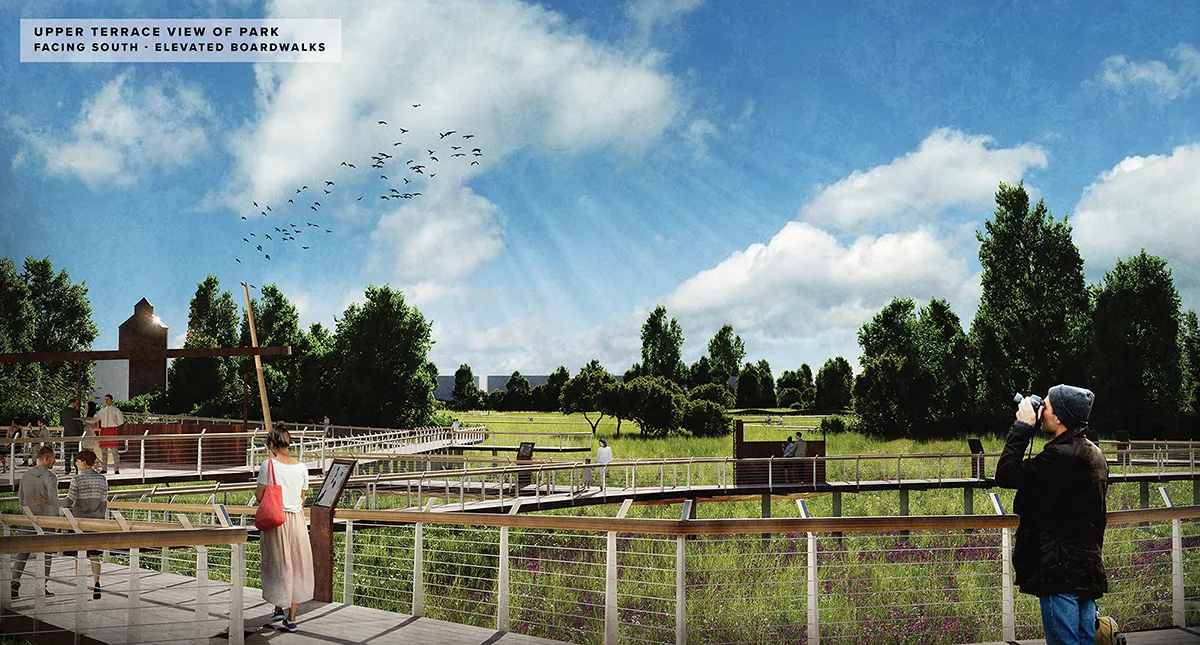
The future 63-acre Thomas Marcuccilli Nature Park (TMNP) in Carmel, Indiana, is envisioned as both a natural sanctuary and cultural landmark, forming a key part of the Hamilton County South River District. The park will connect at least three neighboring parks to Conner Prairie—a nationally renowned living history museum and Smithsonian affiliate—via the White River Greenway, expanding public access to nature, heritage, and recreation across the region.
In partnership with Carmel Clay Parks & Recreation (CCPR), the landscape architect led a master planning process rooted in environmental stewardship, historical understanding, and inclusive community engagement. The plan was shaped through extensive research—including historical maps, aerial photographs, folk stories, and local archives—as well as feedback from focus groups and the Carmel Clay Historical Society. This process ensured the park’s design honors both the site’s geologic evolution and human history.
TMNP’s landscape is shaped by glacial activity, defined by its low-lying, lung-shaped depressions—likely the remnants of ancient kettle lakes and fen wetlands. These features, paired with gravel outwash soils, reflect the region’s prehistoric past. The master plan proposes restoring this ecosystem, reintroducing native fen plant communities that align with the site’s soil and hydrology.
The land also holds deep cultural significance. Artifacts discovered on-site, including prehistoric mammal remains and stone tools, reflect thousands of years of human activity. The Lenape (Delaware) people, some of the earliest recorded inhabitants, were invited by the Miami Tribe to settle along the White River before being displaced by American expansion in the 19th century. A former Lenape village, once located near the park, was abandoned and destroyed during the War of 1812.
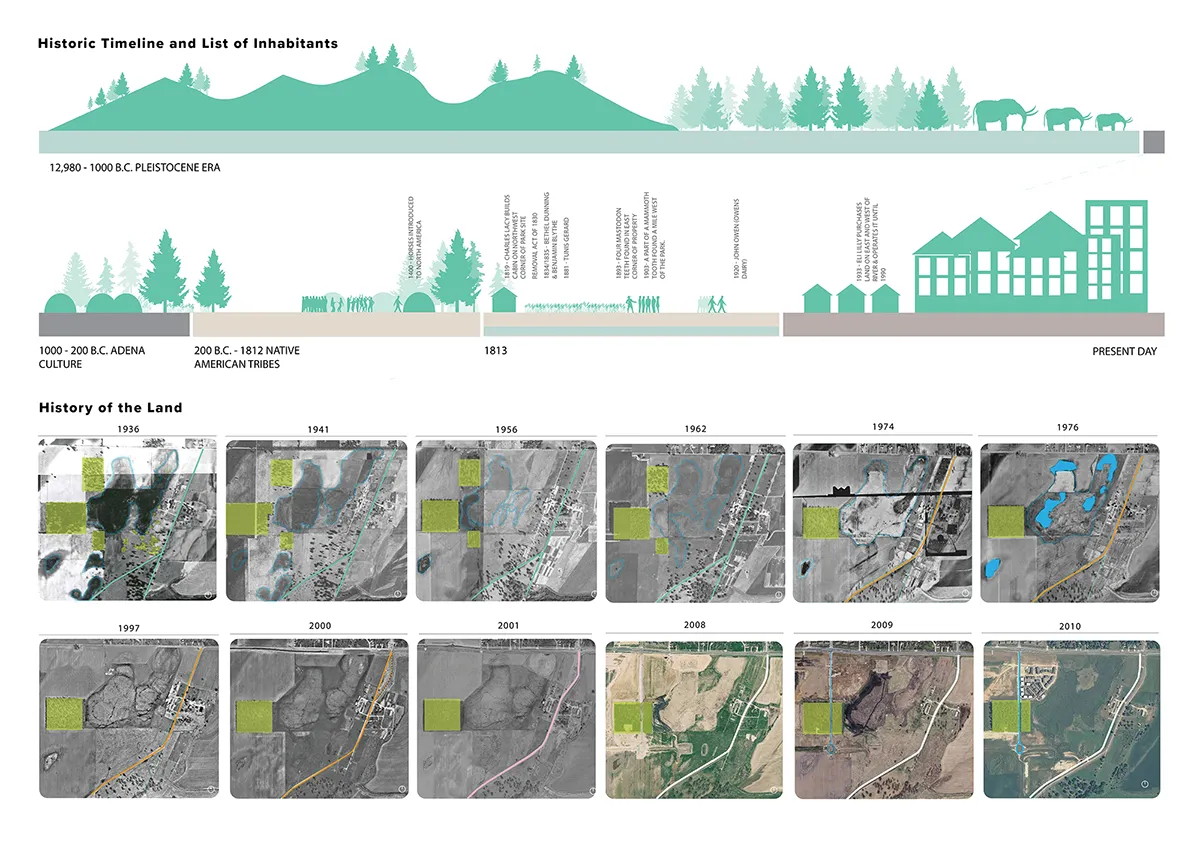
Given this rich heritage, the planning process prioritized meaningful collaboration with Native Tribes who maintain ancestral ties to the area. Of 55 federally recognized Tribes identified, the Delaware Nation and Delaware Tribe of Indians were actively engaged in the master plan’s development, shaping both the vision and interpretive themes for the site.
TMNP’s design celebrates cultural heritage and ecological restoration through interpretive elements inspired by Indigenous ethnobotany, land stewardship practices, and Native American art. Features such as bridges, shade structures, seating, and signage will reflect the materials, forms, and craft traditions of the region’s earliest inhabitants, offering visitors an authentic connection to both nature and history.
Planned as a passive park, TMNP will offer immersive nature experiences, observation areas, and seasonal programming that encourage exploration, education, and stewardship. Themes of ancient ecology, Tribal collaboration, sustainable land management, and rural history will guide future activities and interpretation. Accessibility is also central to the plan, ensuring trails and amenities are welcoming to all visitors.
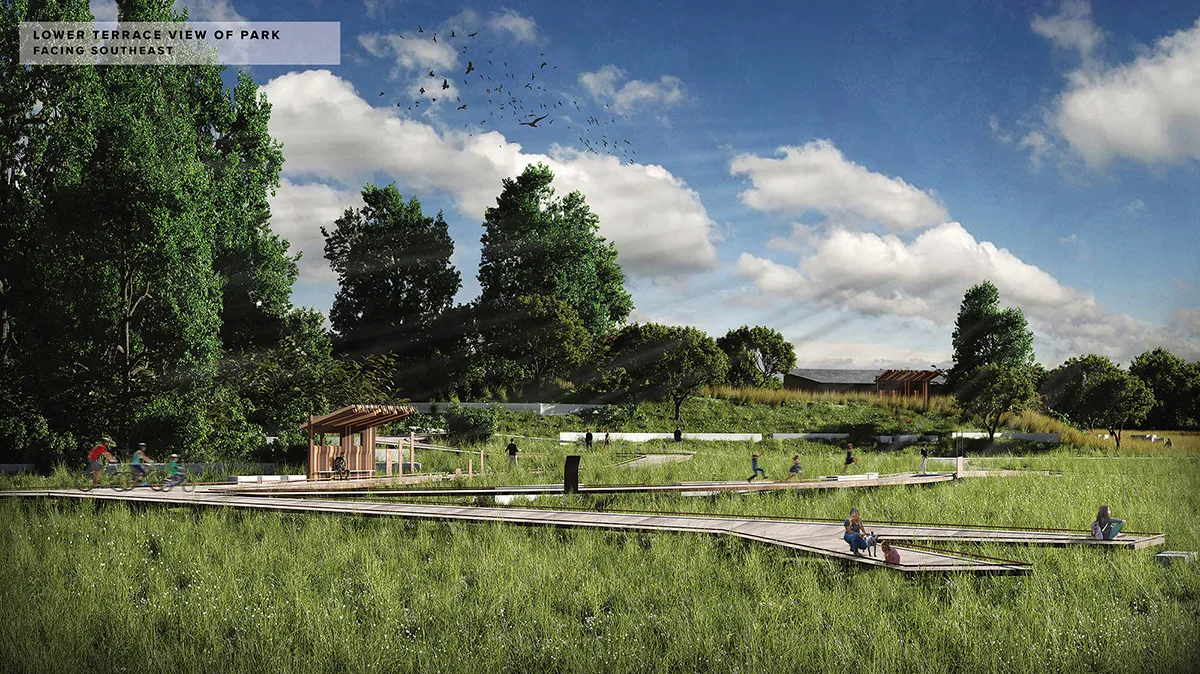
Through this thoughtful and collaborative process, Thomas Marcuccilli Nature Park will become a lasting cultural and ecological asset for Carmel—offering future generations a place to connect with the land, its layered stories, and its enduring beauty.
Thomas Marcuccilli Nature Park
Designer Name: MKSK, Inc.
Collaborators:
Client: Carmel Clay Parks & Recreation
Civil Engineer: CBBEL
Applied Anthropology Lab at Ball State University
Image Credits: MKSK, Inc.