
Winner of the Outstanding Award in the 2025 WLA Student Awards – University Studio category
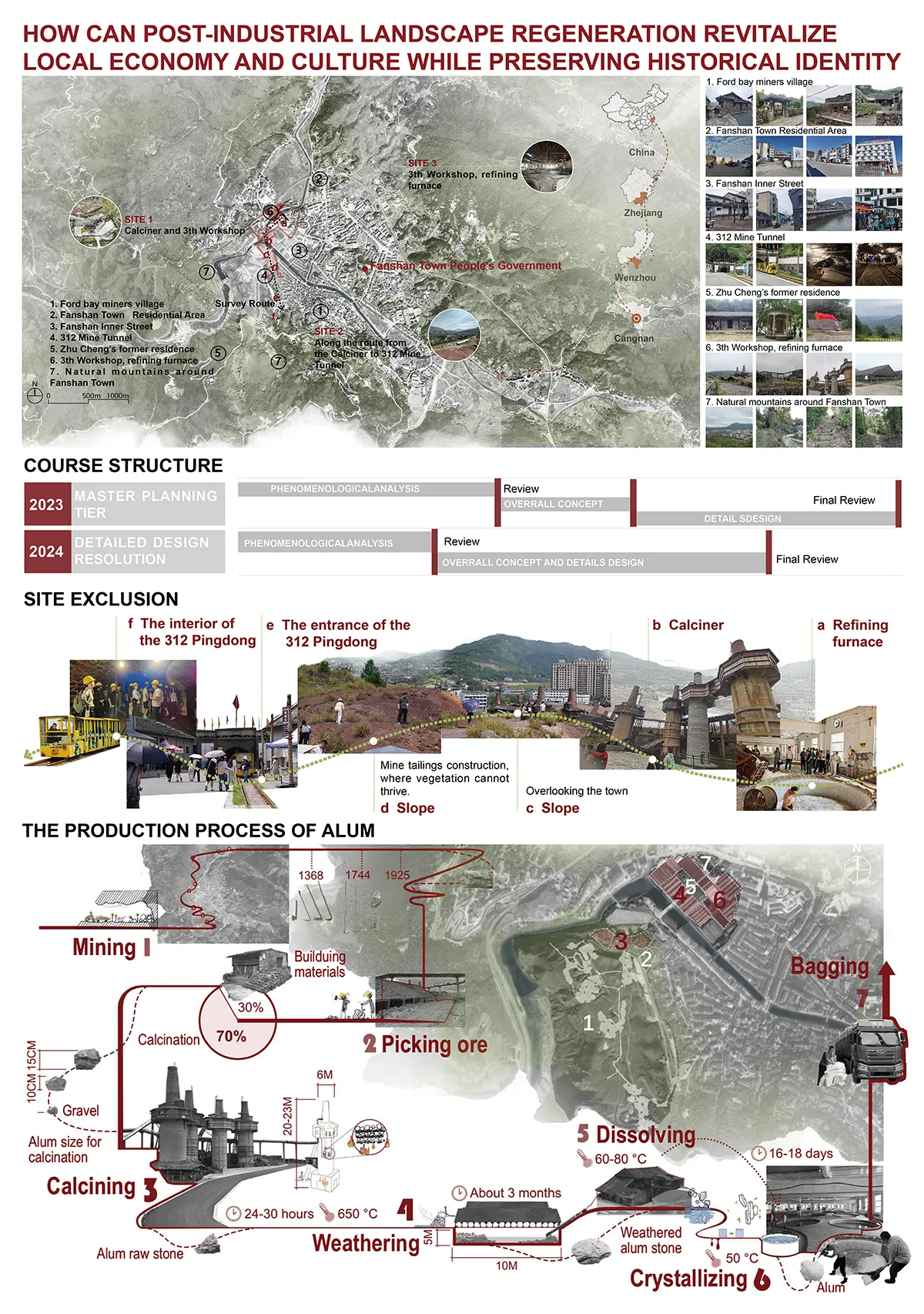
Against the global backdrop of resource-based towns facing industrial decline and loss of historical identity, the transformation of Fanshan, Cangnan, and Wenzhou, known as the “World Alunite Capital”,—holds significance. This mining area with a millennium-long history of alum extraction and refining exemplifies how post-industrial landscape regeneration can preserve historical identity, including miner culture and mining heritage, while revitalizing the local economy and culture after industrial decline. This is not only a practical challenge for Fanshan but also a shared issue for resource-based towns worldwide.
To address this, we adopted a core approach of “tracing history, grounding in site conditions, and employing strategies.” We began with a phenomenological analysis of the rise and fall of Fanshan’s alum industry, combined with field surveys to identify key site conflicts: the tension between abandoned industrial remains and their historical value, the segregation between industrial and residential zones, service gaps in an aging community, and ecological risks of brownfields like slag piles. The project emphasizes regenerative design integrating ecological restoration, cultural tourism, community empowerment, and artistic intervention.
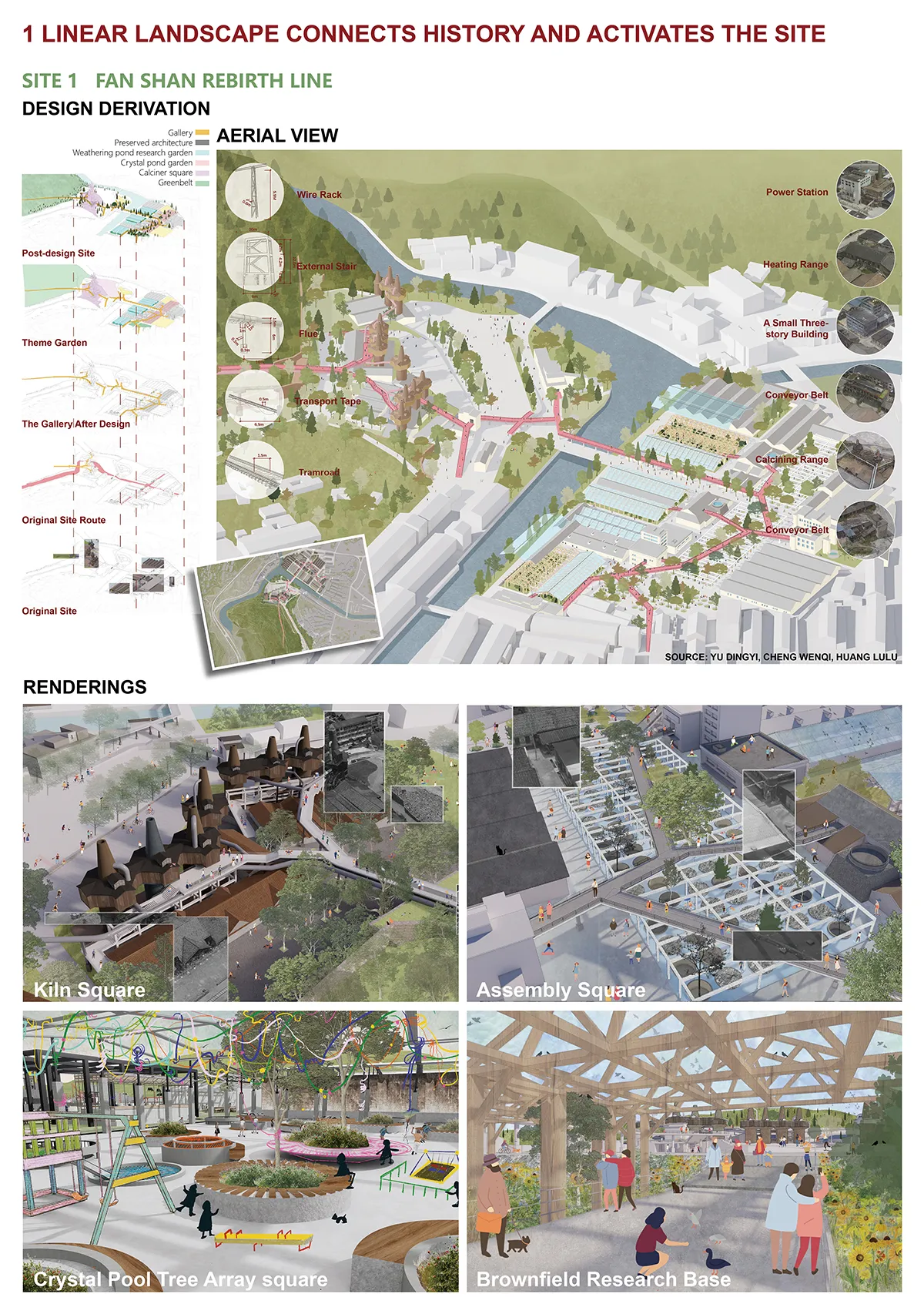
Specific strategies:
1. Artistic intervention to activate industrial relics: Translating alum-refining processes into artistic language, transforming linear remains (e.g.,conveyor belts, smokestacks, mine cart tracks) into “art corridors, ”turning industrial symbols into carriers of cultural dissemination.
2. Cultural heritage integrated into industrial tourism: Creating a linear landscape axis connecting nodes like calciner squares, Shaft 312, and crystallization pool workshops, developing an “alum mining and refining experience tour.”Repurposing factory buildings into exhibition spaces to incorporate mining history and miners’ stories into tourism, forming a new economic engine driven by cultural tourism.
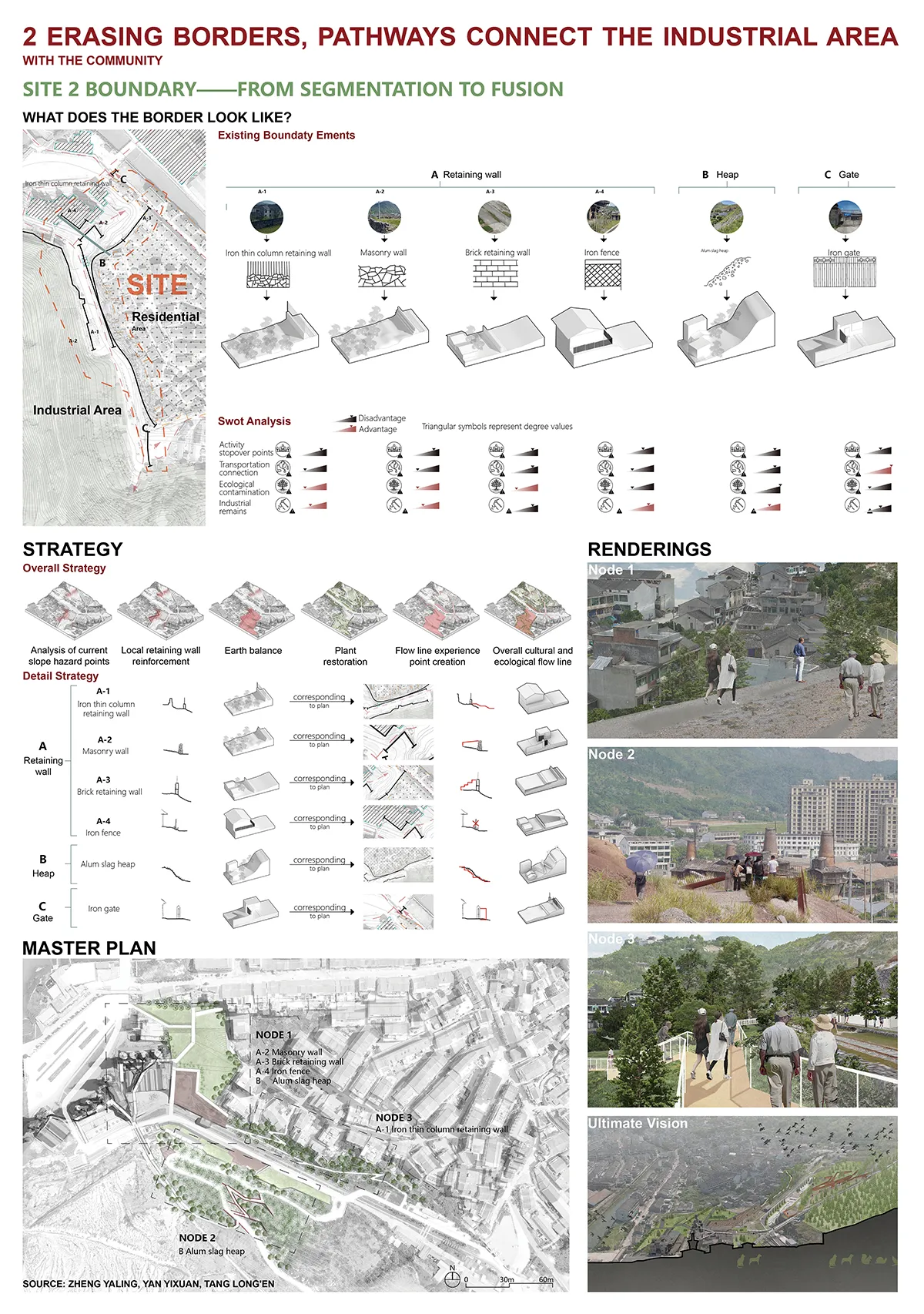
3. Ecological restoration of brownfield risks: Addressing vegetation-deficient slag pile slopes through terraced ecological buffer zones. These zones incorporate trails and viewing platforms, mitigating safety hazards while providing nodes for “industrial eco-tourism,” transforming brownfields into multifunctional ecological-recreational spaces.
4. Boundary dissolution and community integration: Removing physical barriers (e.g., iron fences, retaining walls) between industrial and residential areas, reinforcing and converting retaining walls into community interaction nodes to foster functional and cultural exchange between zones.
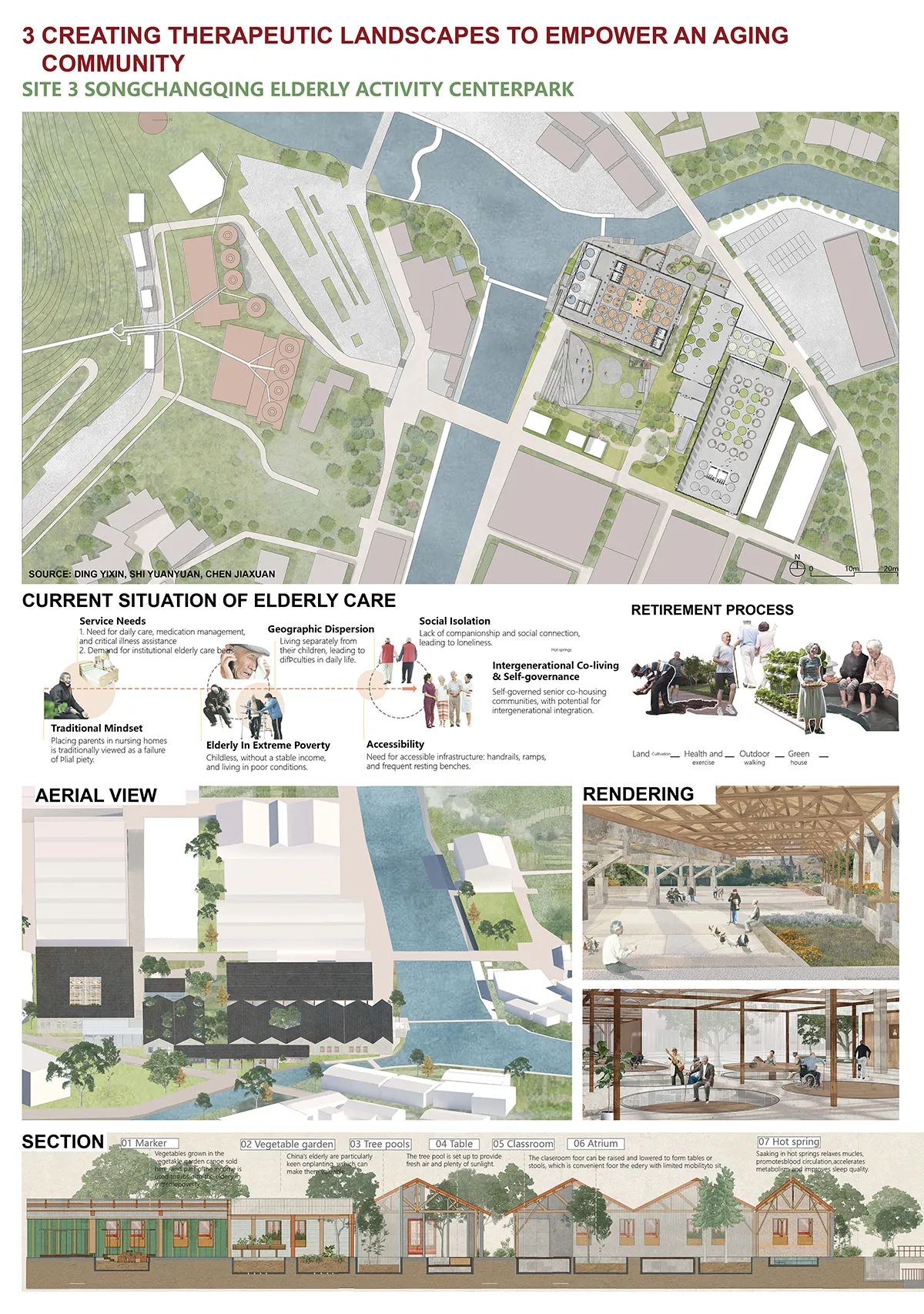
5. Addressing aging population needs: Promoting intergenerational co-living and community self-governance to bridge social alienation caused by industrial decline. Designing friendly spaces for older people that foster cultural identity and emotional belonging, serving as core drivers for activating aging communities.
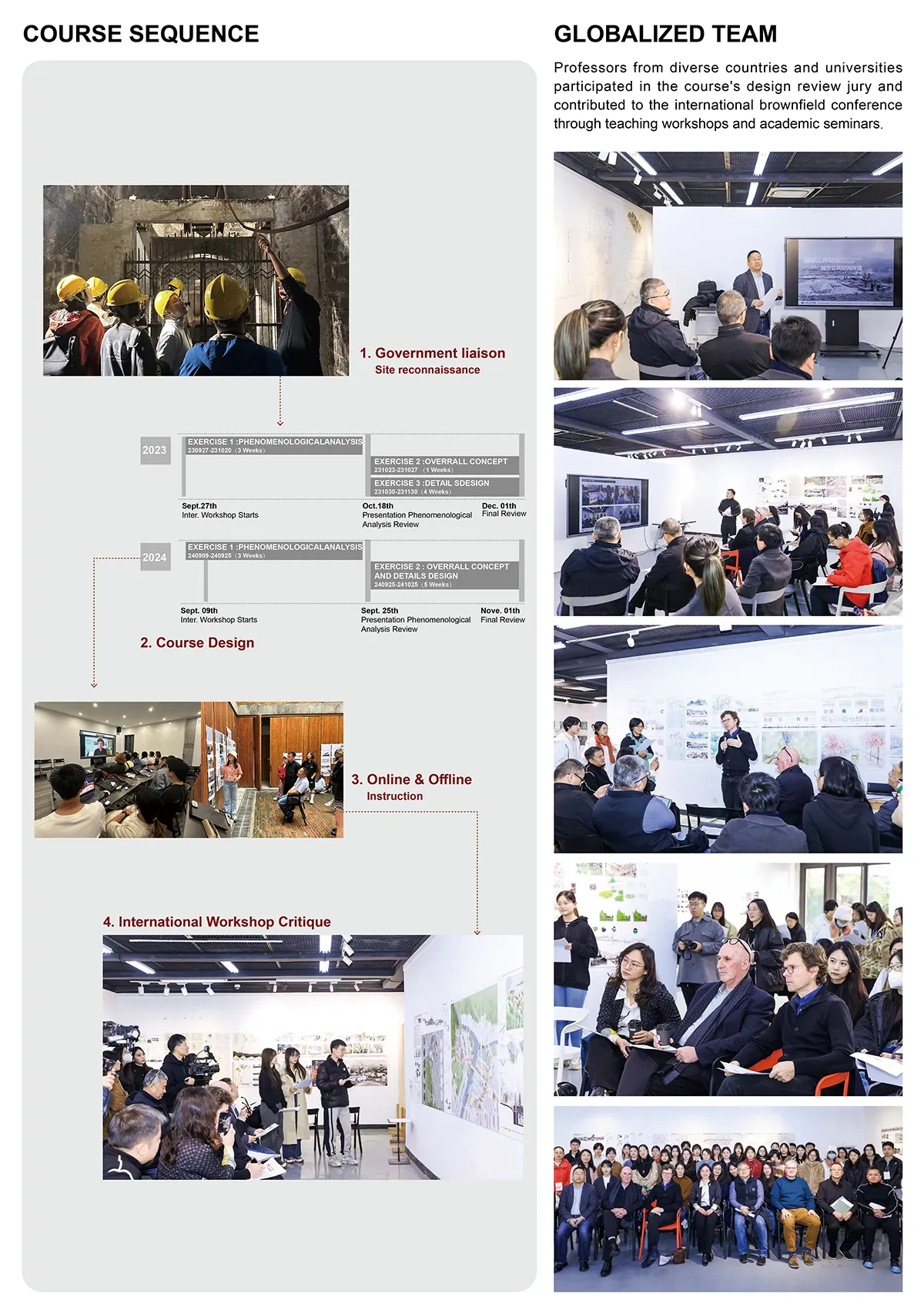
The course, based on an international workshop platform targeted senior undergraduates and postgraduates, combining online and offline instruction. Professors from various countries and universities participated in course reviews and teaching seminars. Activities such as school and local exhibitions, student presentations, and the International Brownfield Conference enabled deep between design and local needs.
As a brownfield regeneration practice, this project goes beyond mere ecological restoration, transforming Fanshan’s industrial “liabilities” into new engines for community culture and economy—preserving the historical roots of the “World Alunite Capital” while offering a replicable model for the socio-economic and cultural revitalization of resource-based towns.
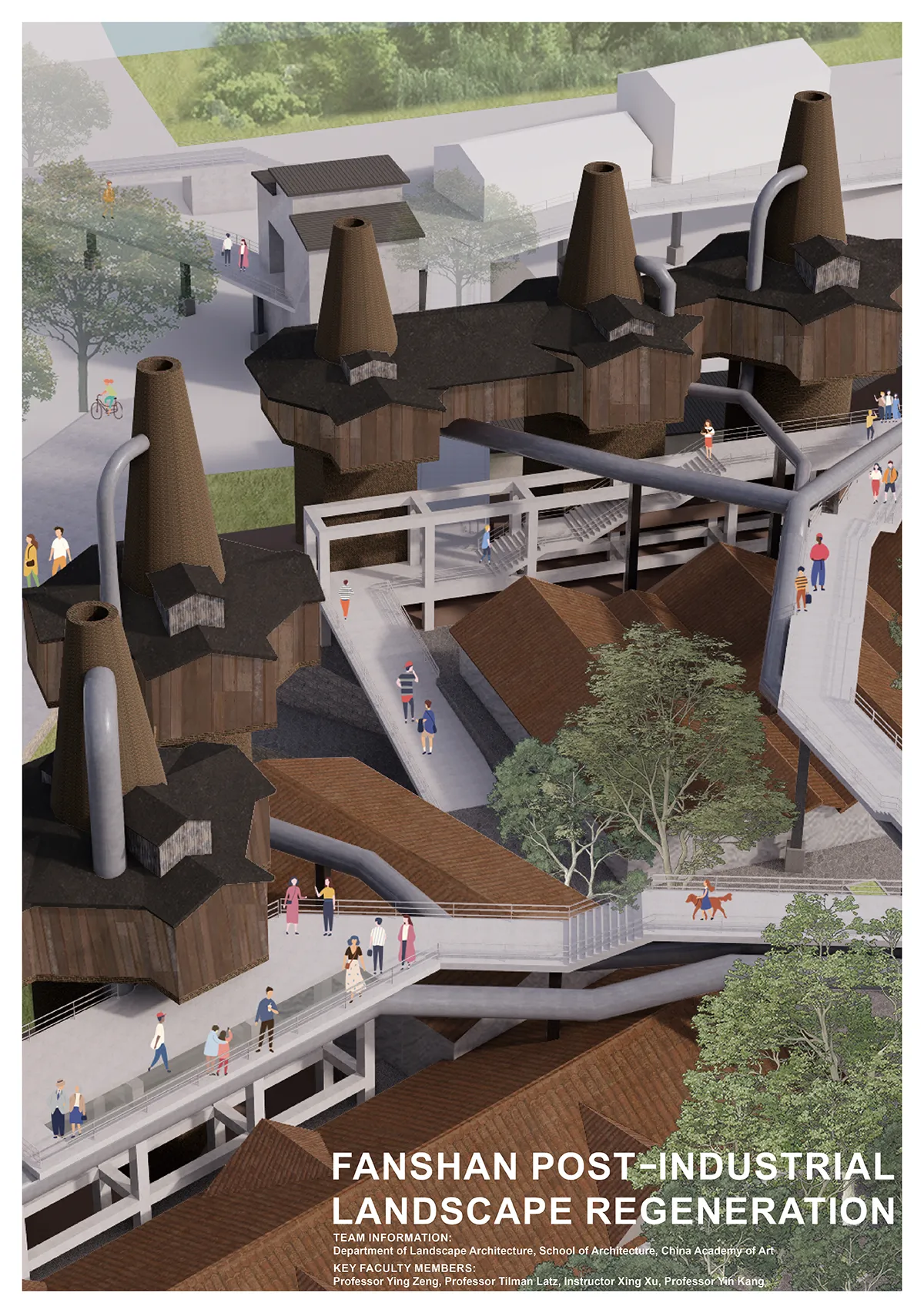
University Team Information: Department of Landscape Architecture, School of Architecture, China Academy of Art
Key Faculty Members: Professor Ying Zeng, Professor Tilman Latz, Instructor Xing Xu, Professor Yin Kang