
Winner of the Outstanding Award in the 2026 WLA Student Awards – Graduate category
“To build is to remember; to preserve is to invite the past to coexist with the present, allowing spaces to breathe with the depth of time.” – Peter Zumthor.
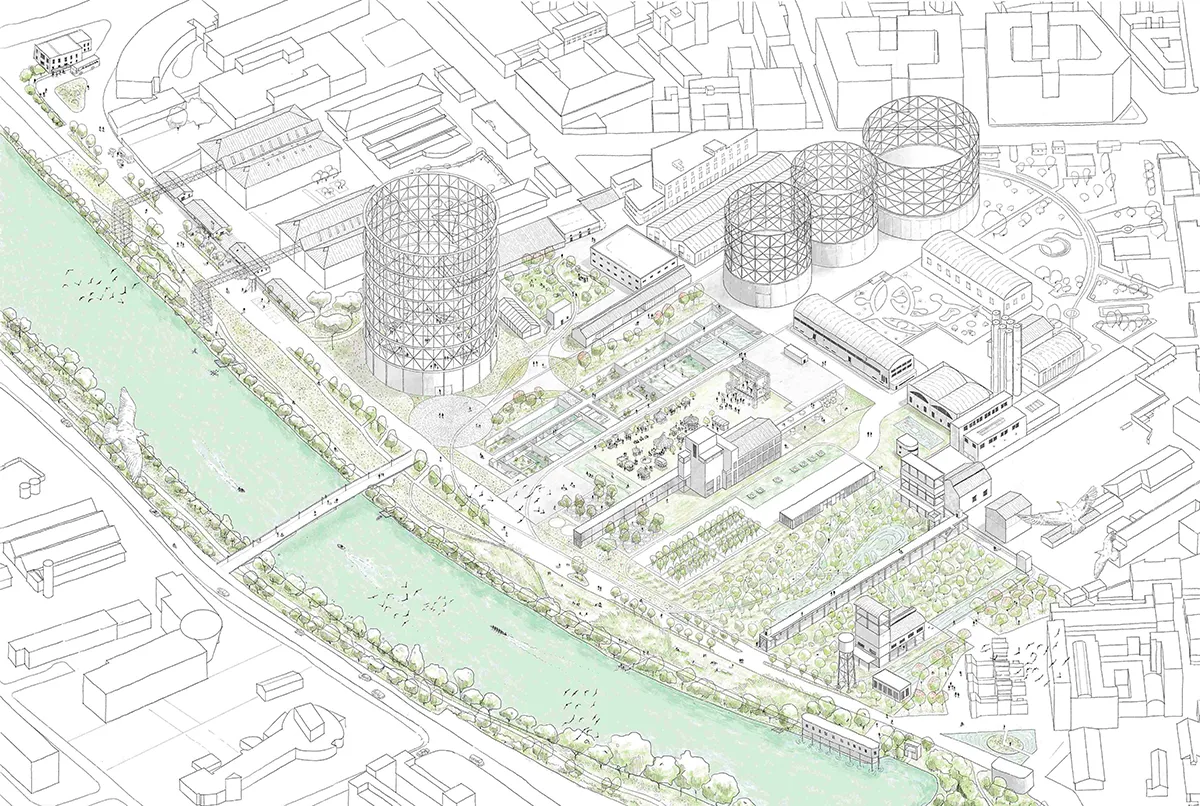
Rome’s layers, a story spanning many periods, define the city. Even as it progressively fades from view, the industrial era of the 19th and 20th centuries stands out as a brief but significant chapter of hope and progress. The Gasometro, a striking reminder of this revolutionary period, rises as a 90-meter iron monument in the center of the Ostiense area. Once a thriving center of energy, it today faces the difficulty of regeneration in the face of environmental degradation and neglect.
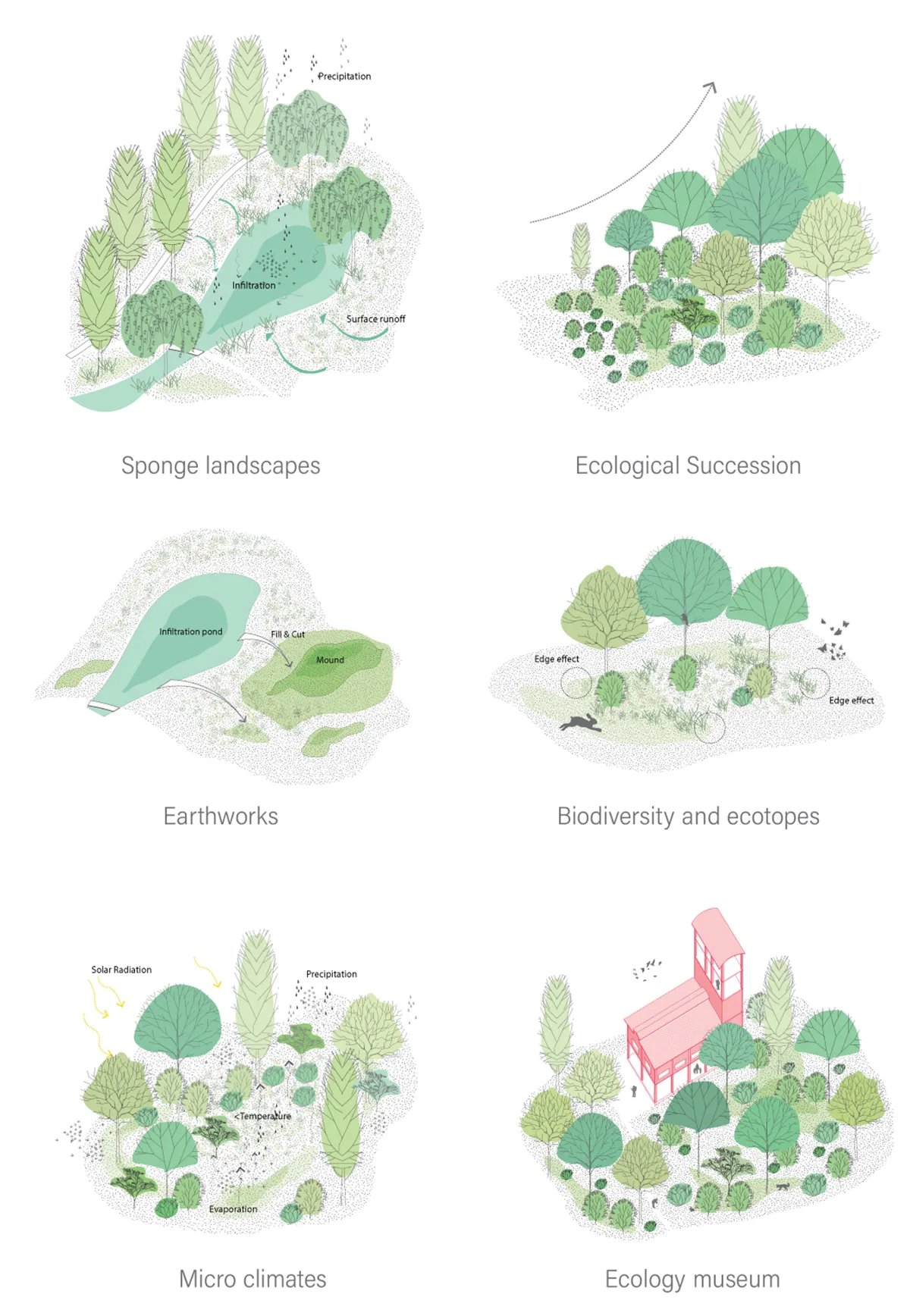
“Between Utopia and Rust” seizes the opportunity to transform the Gasometro area into a dynamic public place that respects its industrial heritage while promoting ecological health and community ties. Adopting a “designing for time” approach, our proposal recognizes the site’s intricate ruins as a vibrant backdrop for inclusive green spaces where young flora thrives alongside rusting beams rather than as eyesores. Instead of viewing these industrial remnants as mere artifacts, the project transforms the area into a thriving park that connects the southern edge of Rome to the Tiber River, fostering social interaction and providing a haven for wildlife.
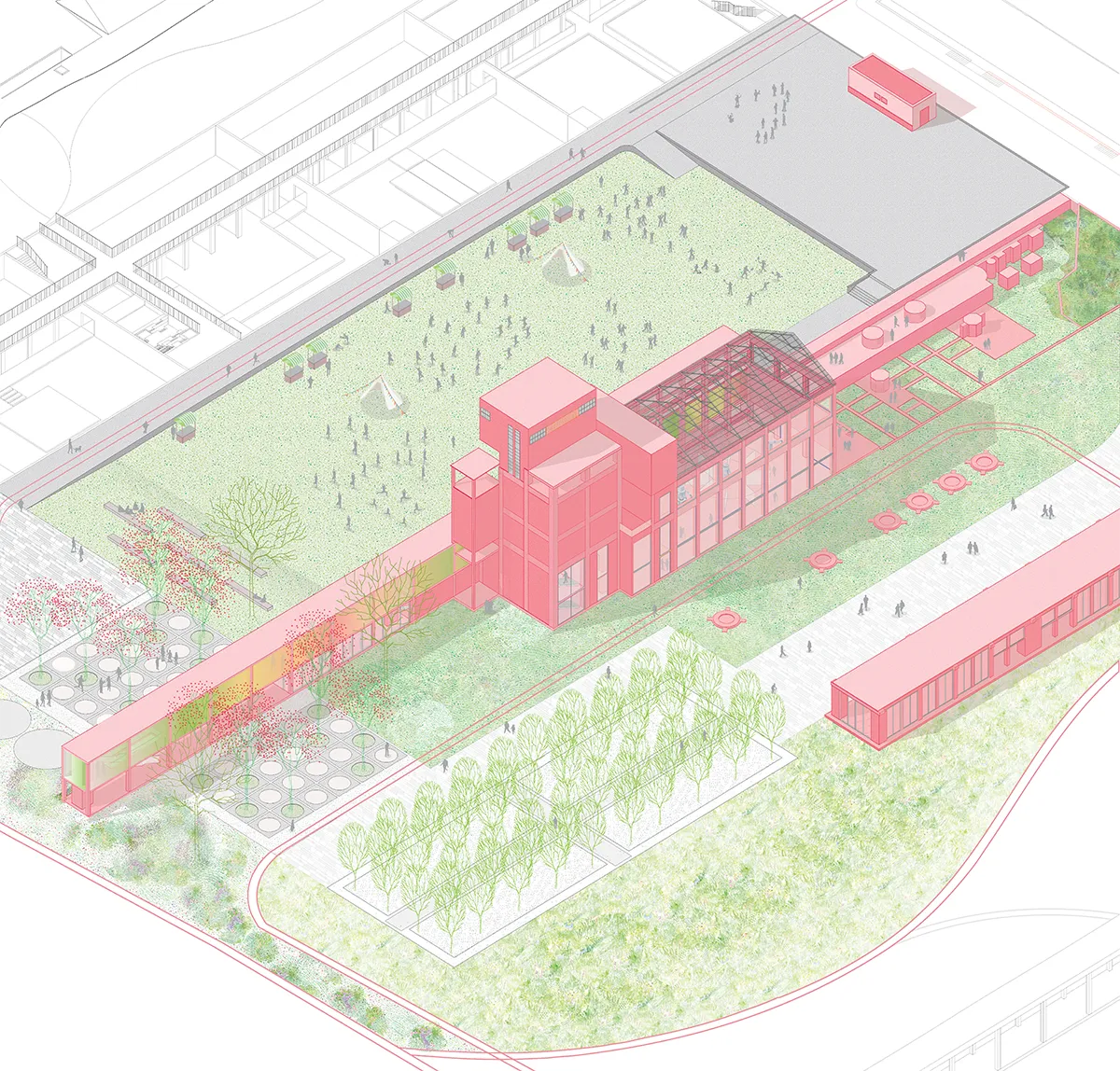
Decades of neglect have rendered Ostiense a transient zone rather than a destination. This project aims to redefine the area by establishing spaces that encourage visitors to pause, engage, and experience their environment. Key interventions include repurposing the Gasometro, often referred to as Rome’s “industrial Colosseum,” into a versatile open-air event venue. The adjacent buildings are adapted to create a community courtyard housing a library and cafés. The former coal storage basins are converted into a contemplative water garden, while the central distillation columns are transformed into a Museum of Industry to commemorate the neighborhood’s industrial heritage.
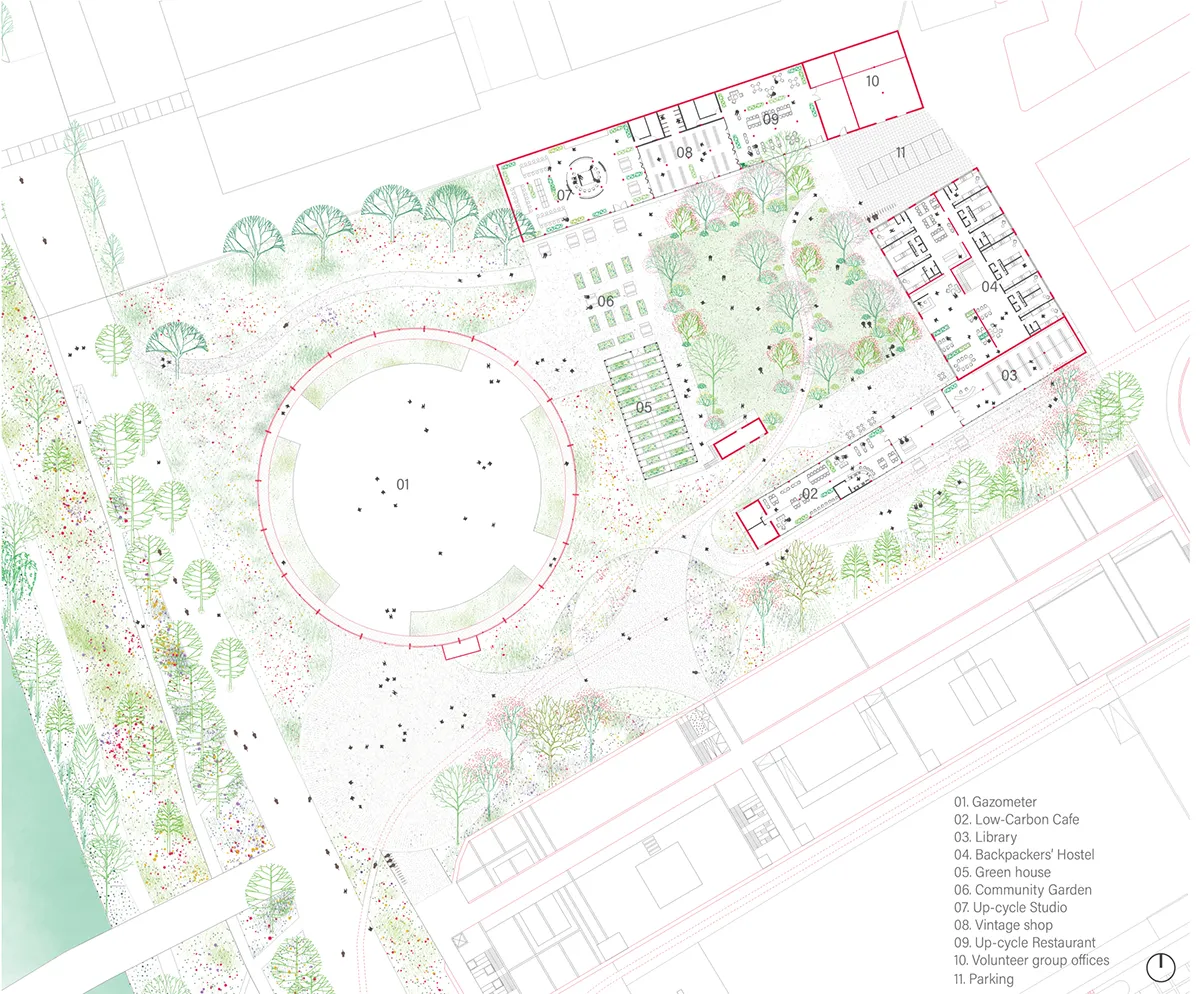
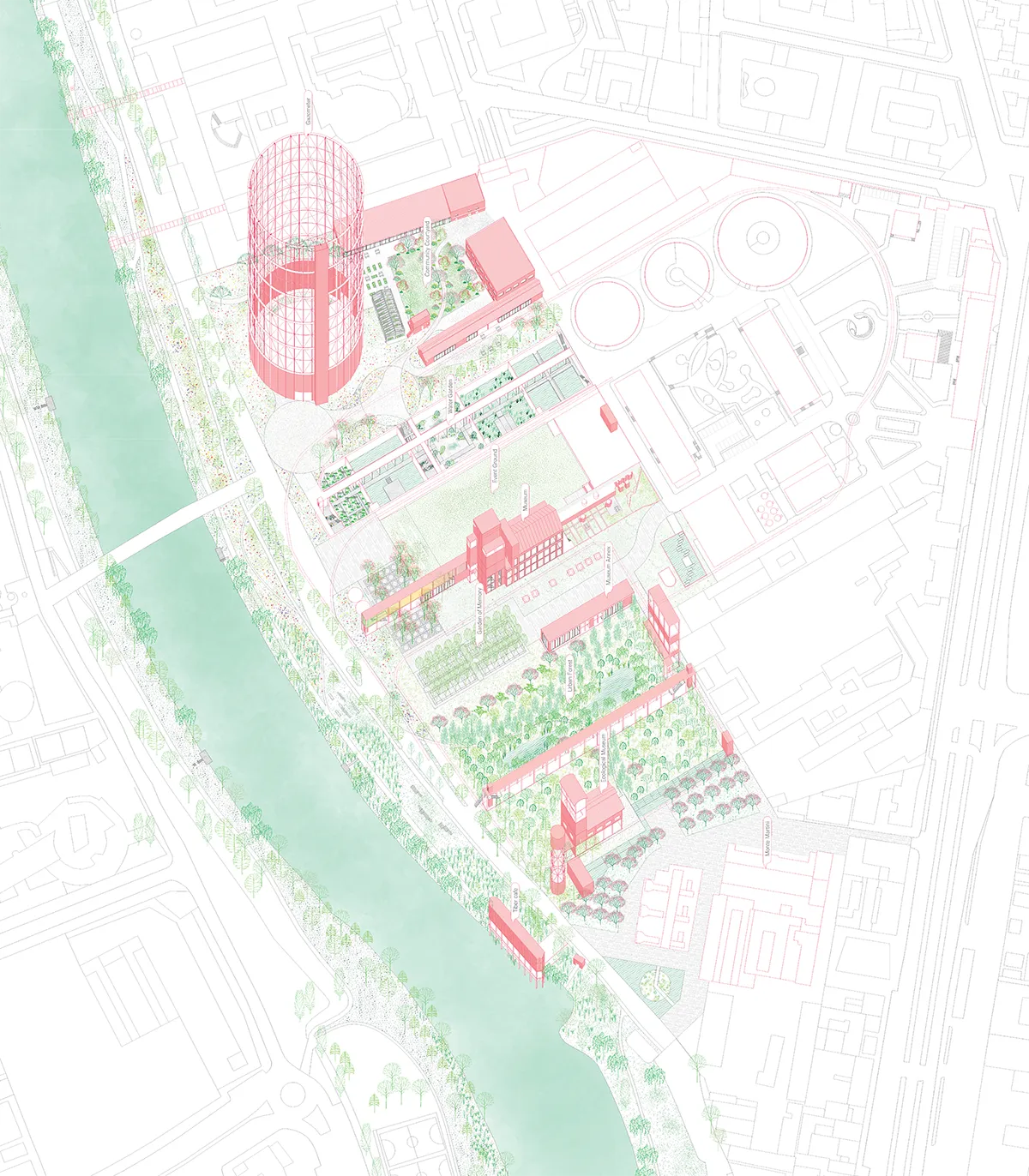
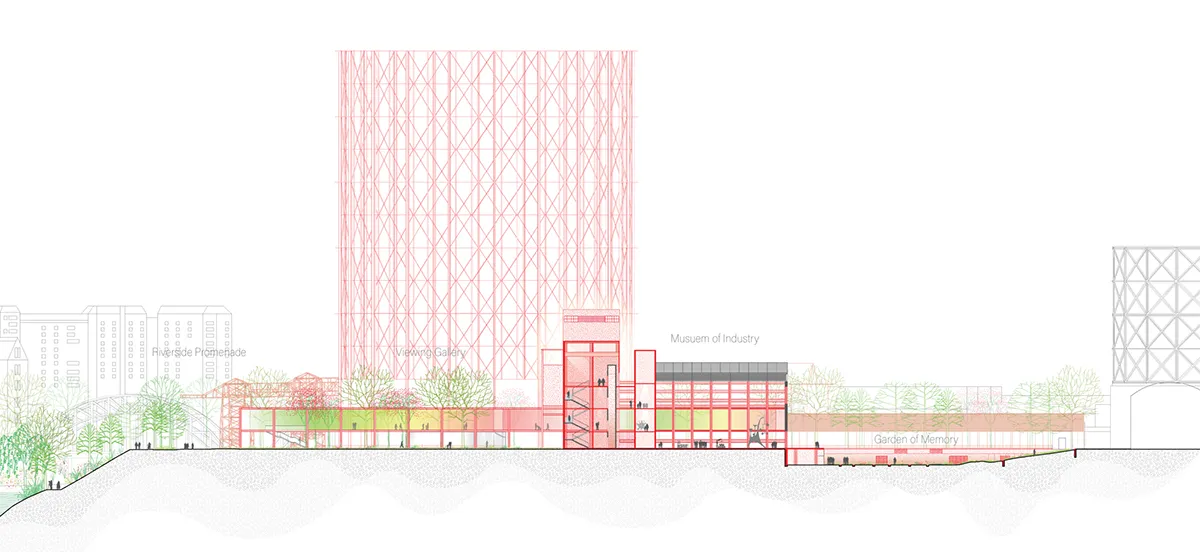
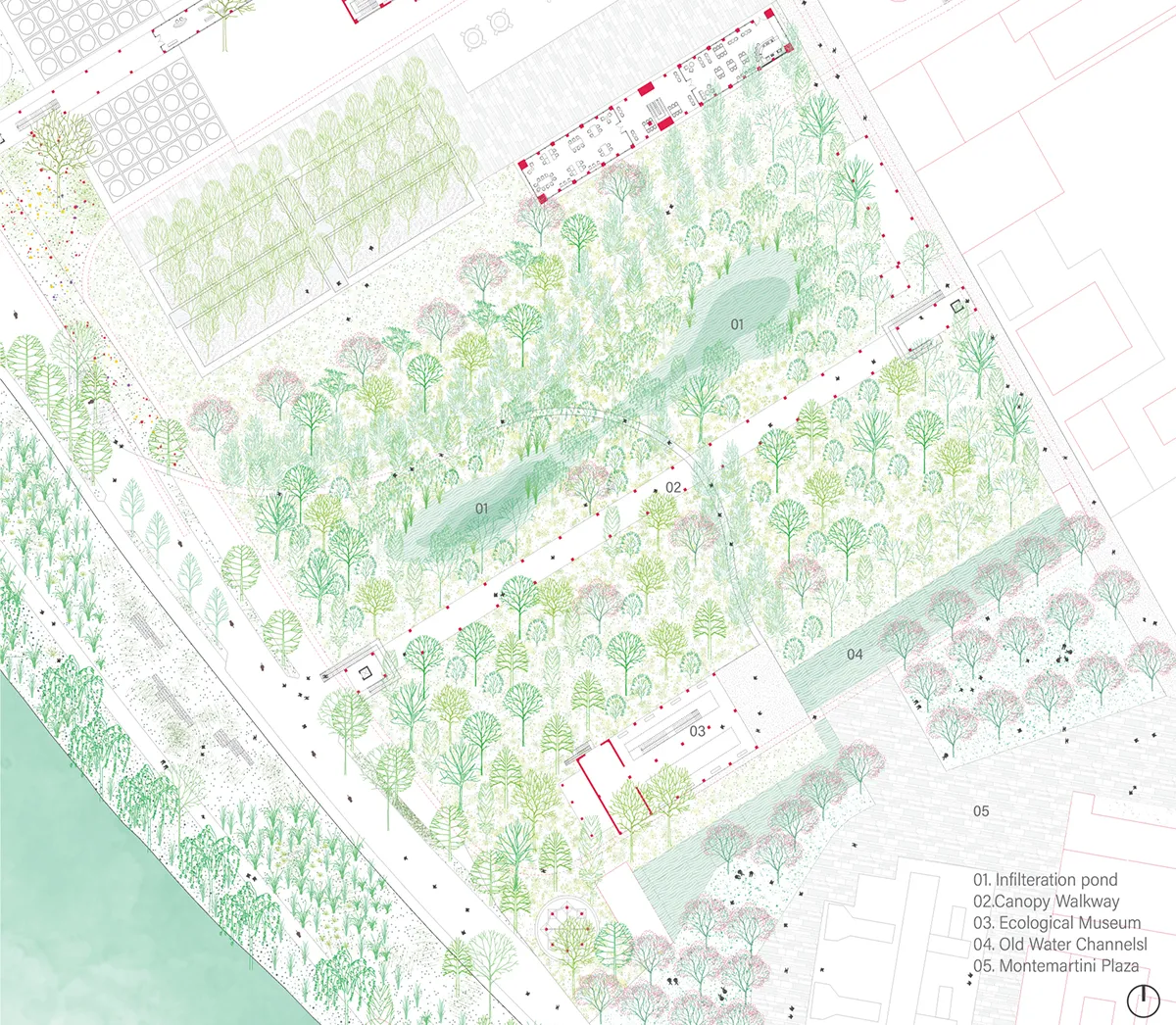
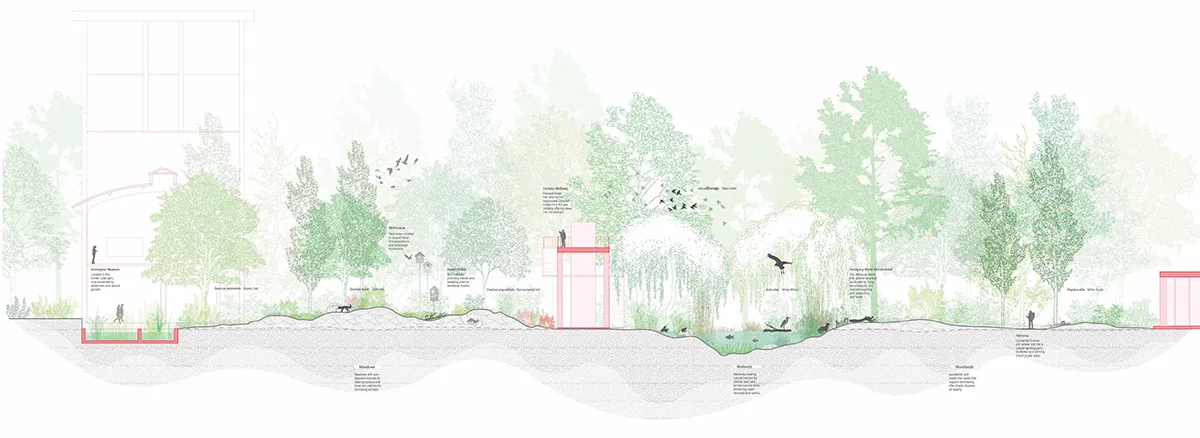
Furthermore, the project leverages the Tiber’s existing riparian vegetation to create a small urban forest, utilizing old coke transport structures as viewing bridges. In areas where furnaces were destroyed during wartime, a memorial garden is planted for quiet reflection. These preserved elements become narrative threads, weaving the past and present together and inviting visitors to reflect on the journey from industry to renewal. By converting neglected land into dynamic cultural venues, the project encourages community participation in fostering a resilient ecosystem. Through this vision, the echoes of industrial history become the foundation for a vibrant, inclusive future
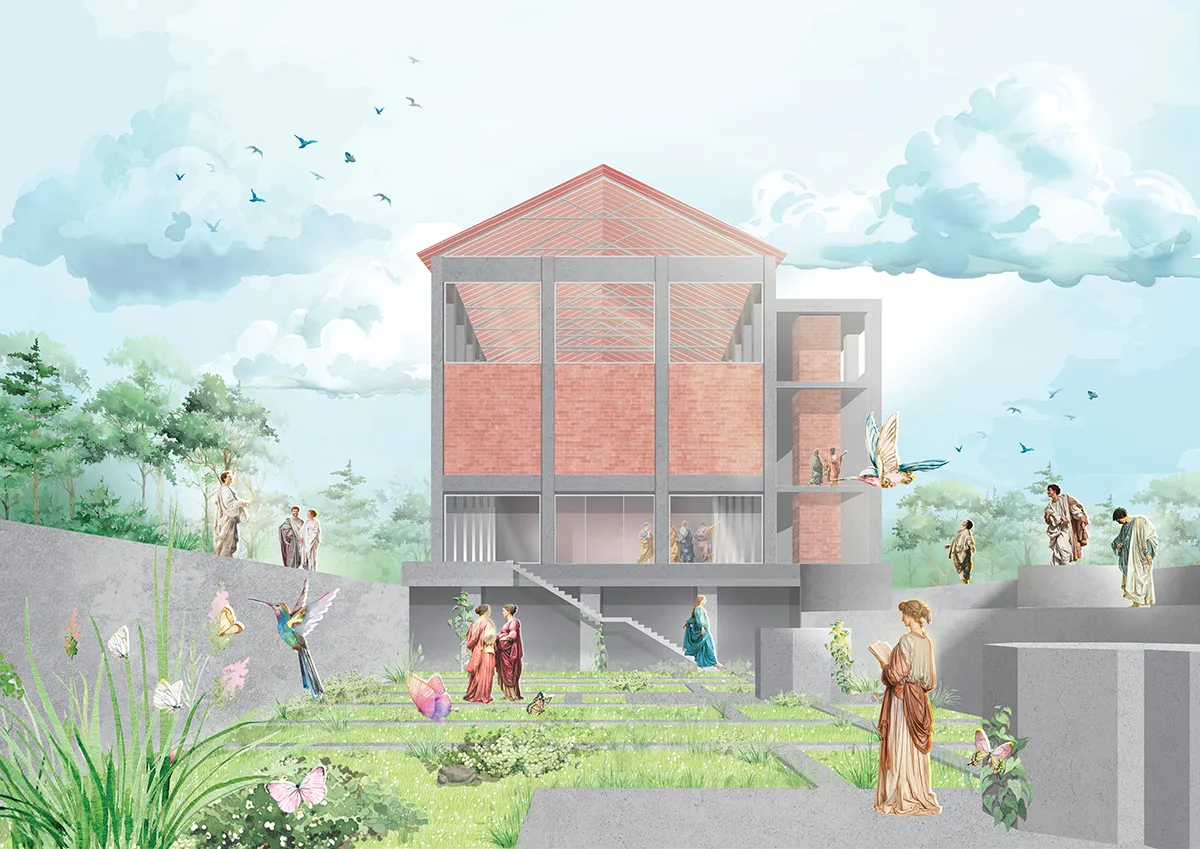
Between Utopia and Rust: A Post-Industrial Vision for the Gas Factory of Ostiense, Rome
Students: Ammu Anitha Muraleedharan, Vidula Dinesh – Politecnico di Milano
Supervisor: Sara Protasoni – Politecnico di Milano