
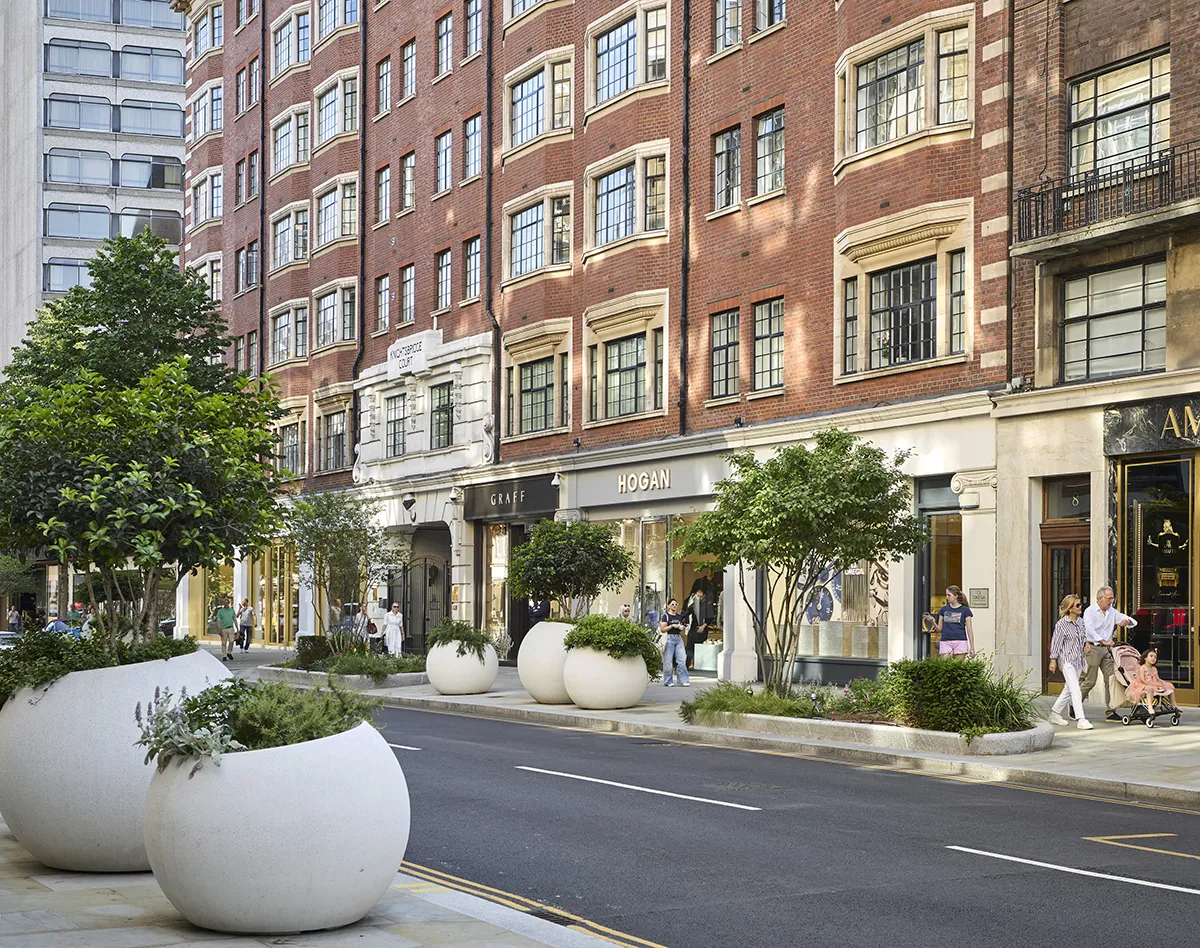
Sloane Street, a high-end retail and residential destination linking Knightsbridge (London, UK) with Sloane Square in the Royal Borough of Kensington and Chelsea, has seen a major upgrade to its public spaces. Originally established by the 1st Earl Cadogan in the 18th century, the revitalised streetscape now reaffirms its status as a premier shopping district – comparable to Paris’s Avenue Montaigne and Rome’s Via Condotti.
A collaborative approach
The scheme by John McAslan + Partners and Andy Sturgeon Design enhances the street’s identity, character, and pedestrian experience, emphasising health and wellbeing, sustainability, heritage, and craftsmanship. It promotes foot traffic and ‘dwell time’ to create a more welcoming, people-centred environment.
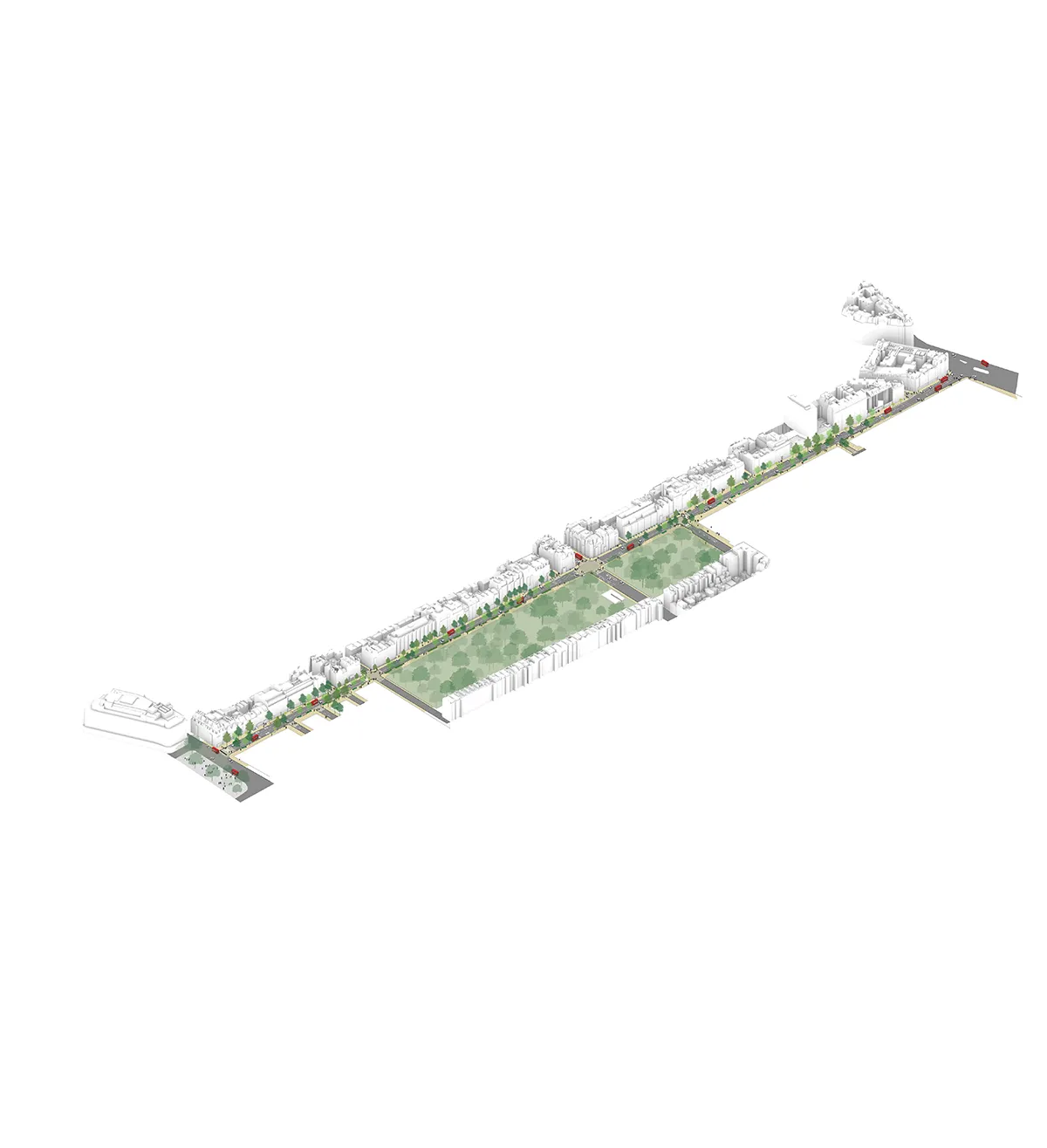
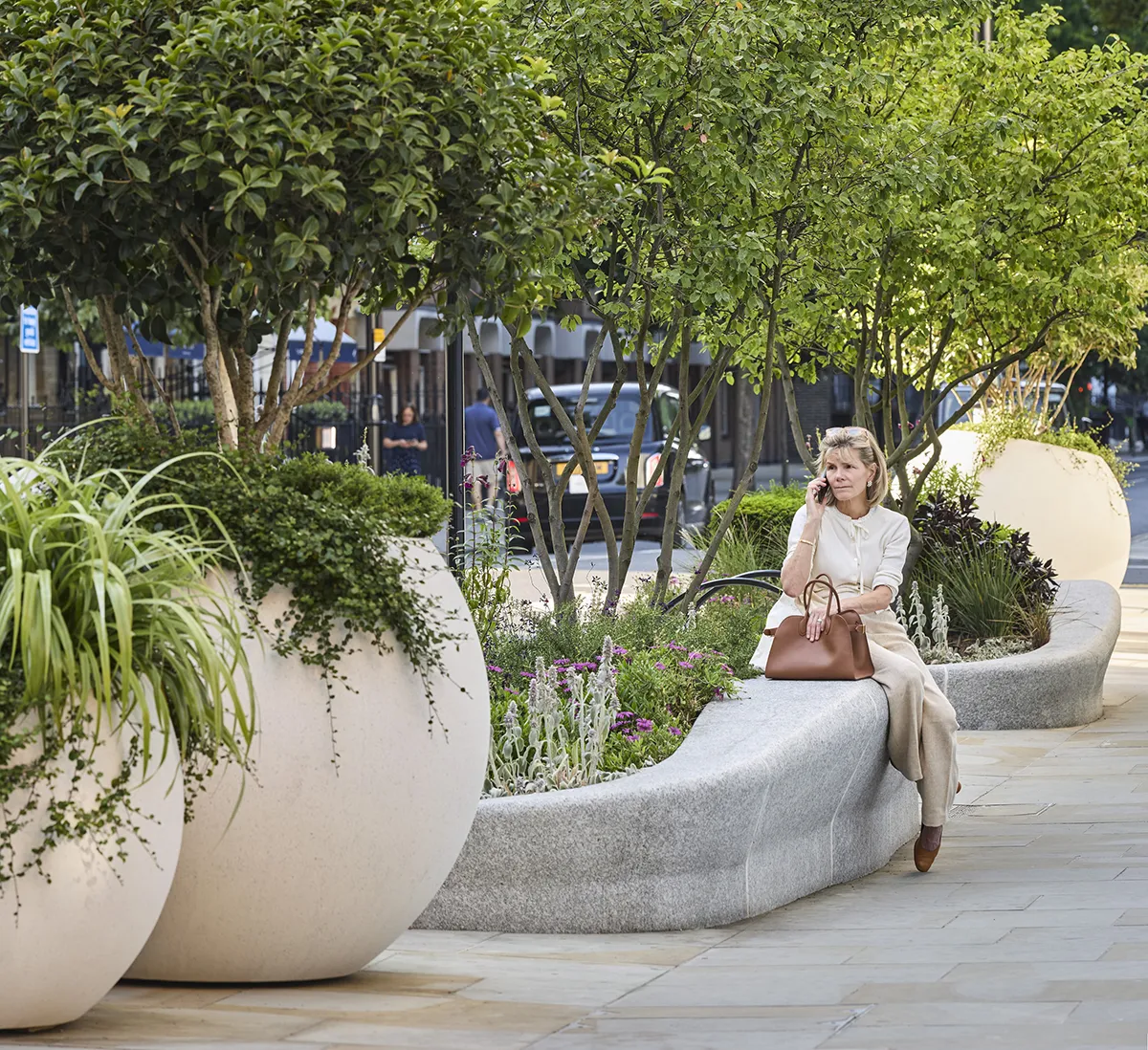
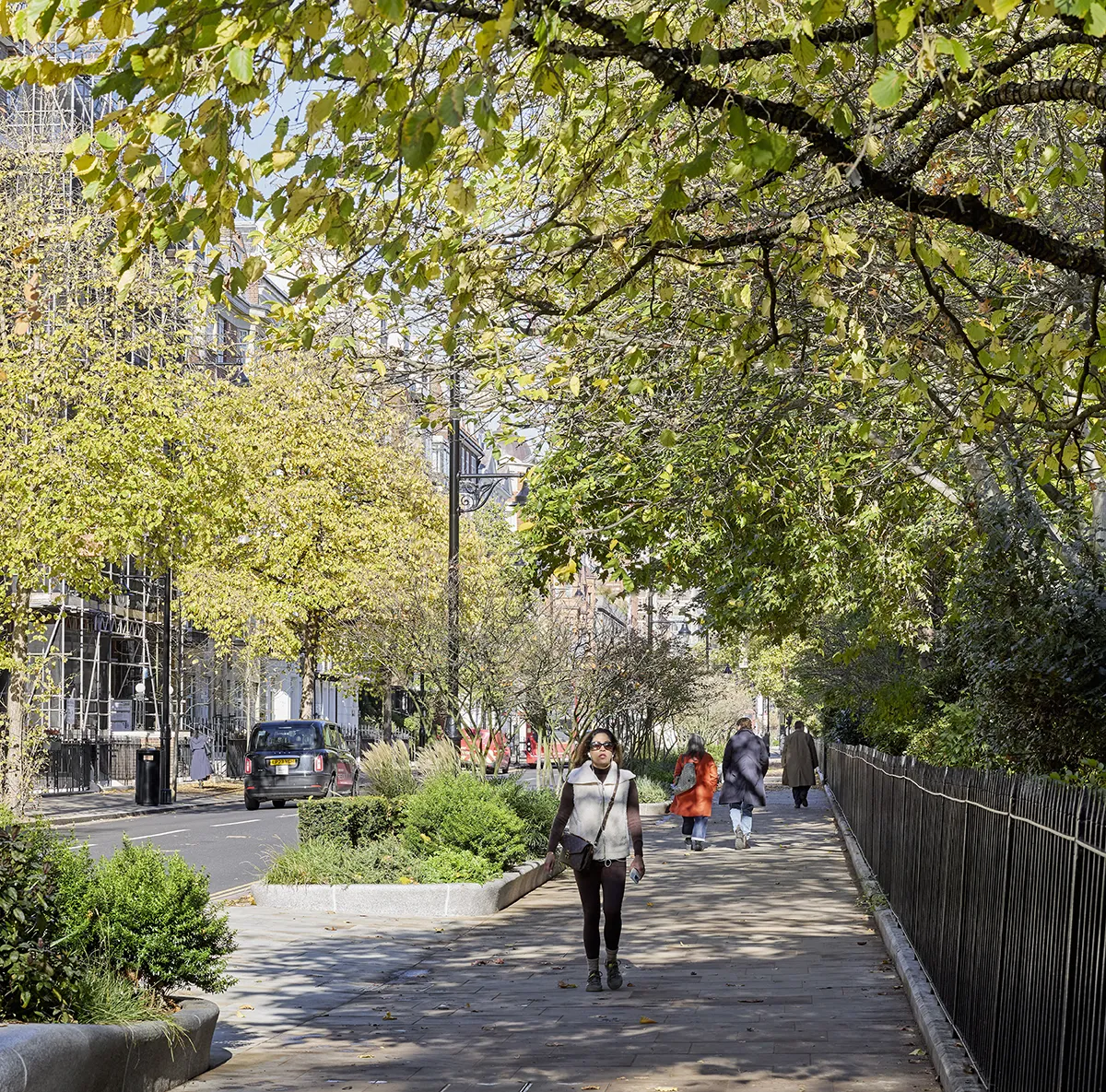
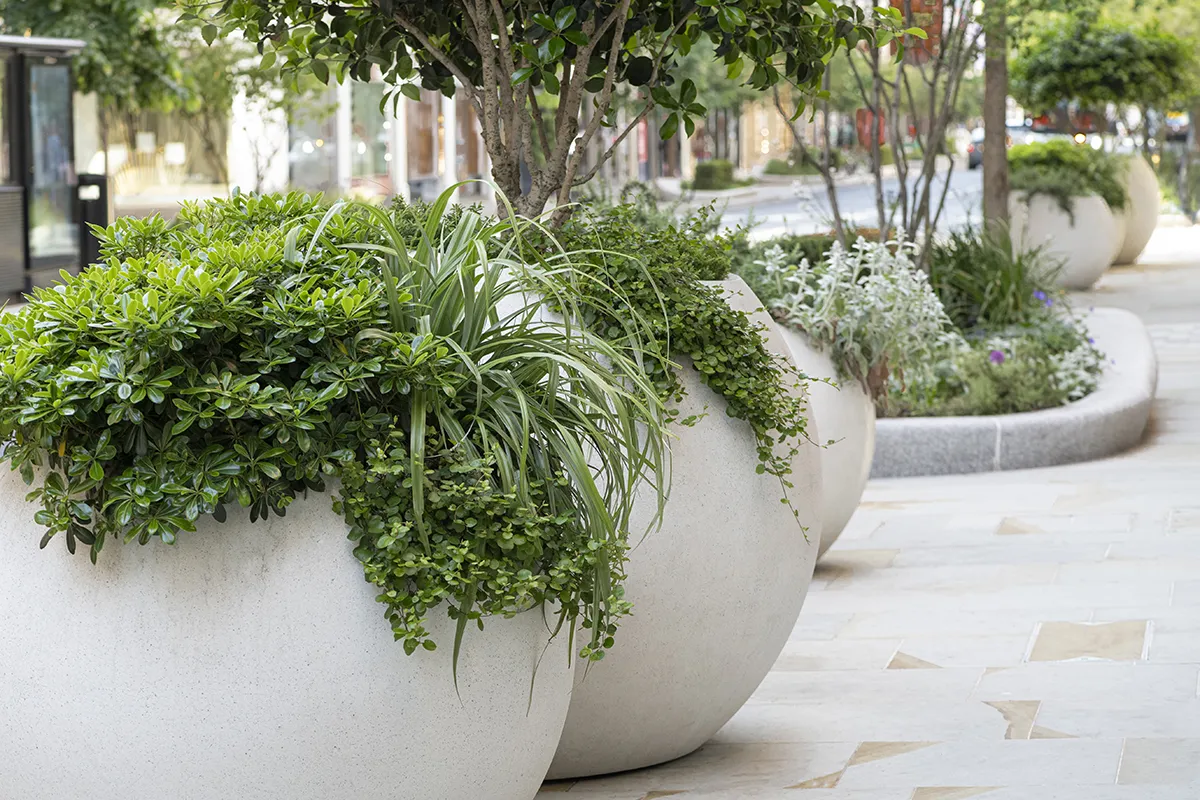
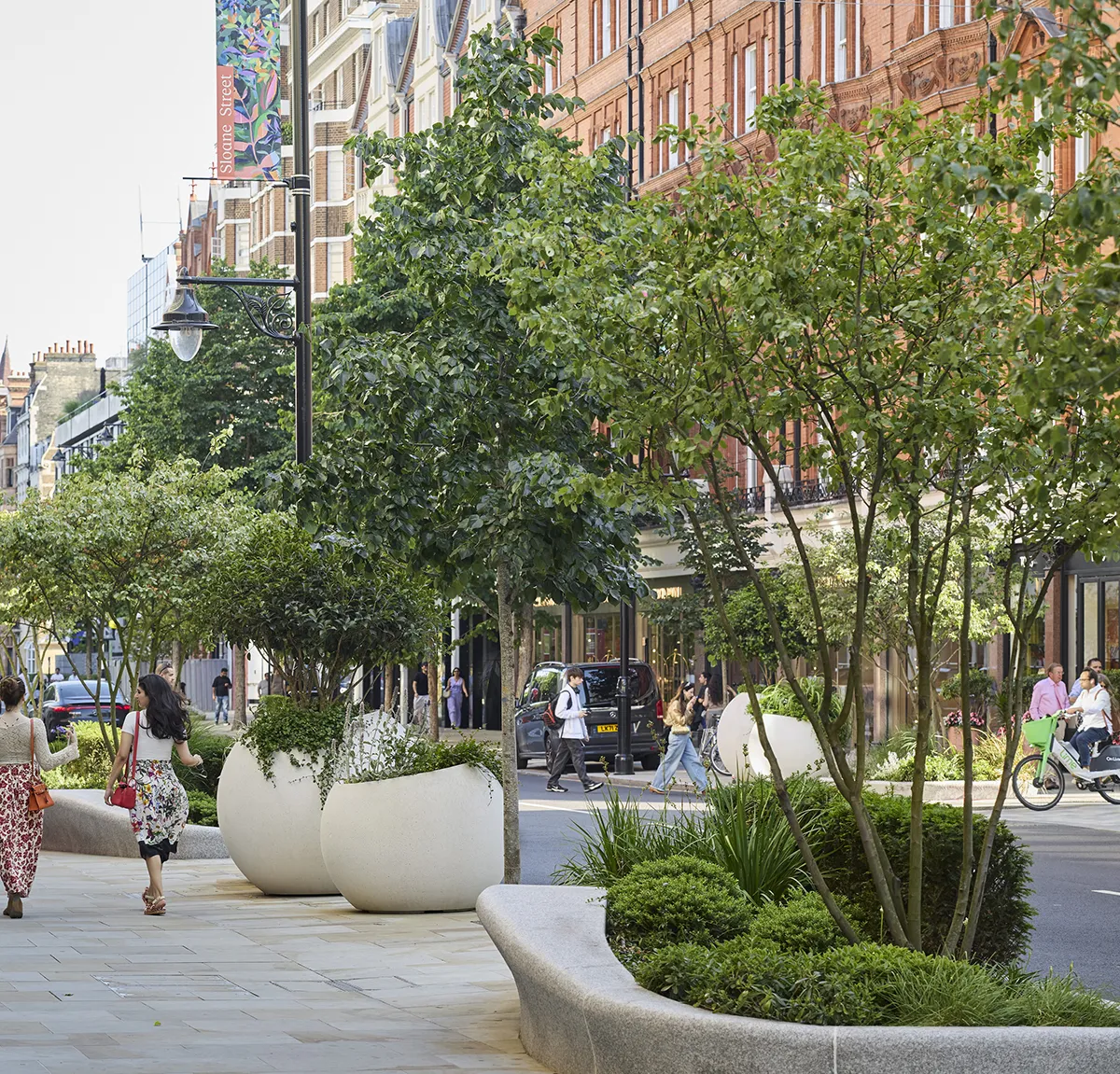
Drawing on the horticultural history of central Cadogan Place Gardens, John McAslan + Partners developed a masterplan and public realm design that enhances the space through a comprehensive greening strategy. This results in a 17% rise in Urban Greening Factor* and a 175% increase in biodiversity net gain**. Achieved through a collaborative process with Andy Sturgeon Design, the planting scheme includes over 100 Lime, Juneberry, and Osmanthus trees, along with more than 60 planters filled with carefully chosen, diverse mixes of climate-resilient shrubs, flowers, and ornamental perennials in a rich palette of maroons, reds, purples, and blues. The planting also draws inspiration from the Chelsea Physic Garden, creating a year-round sensory experience with seasonal colour and texture.
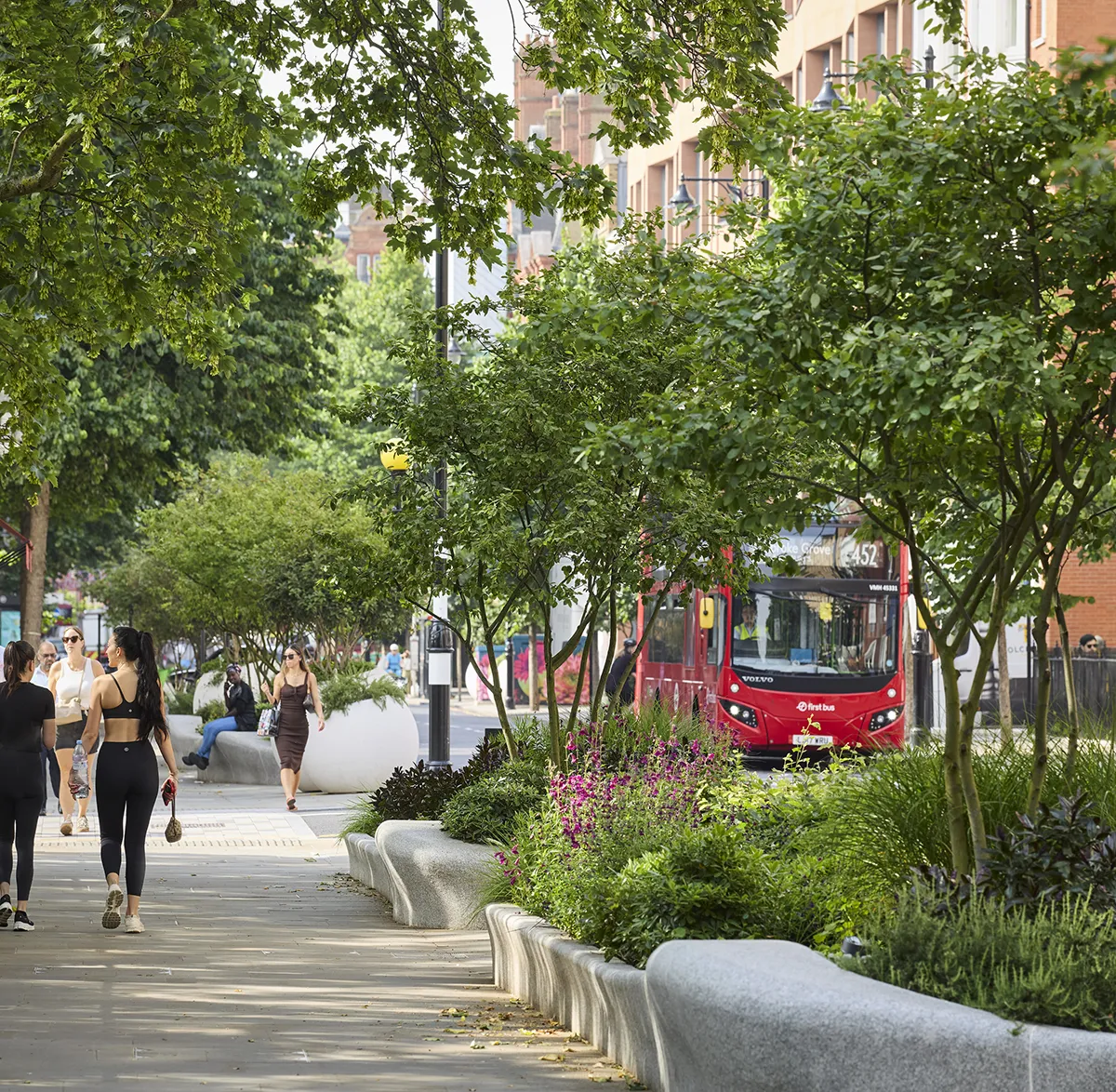
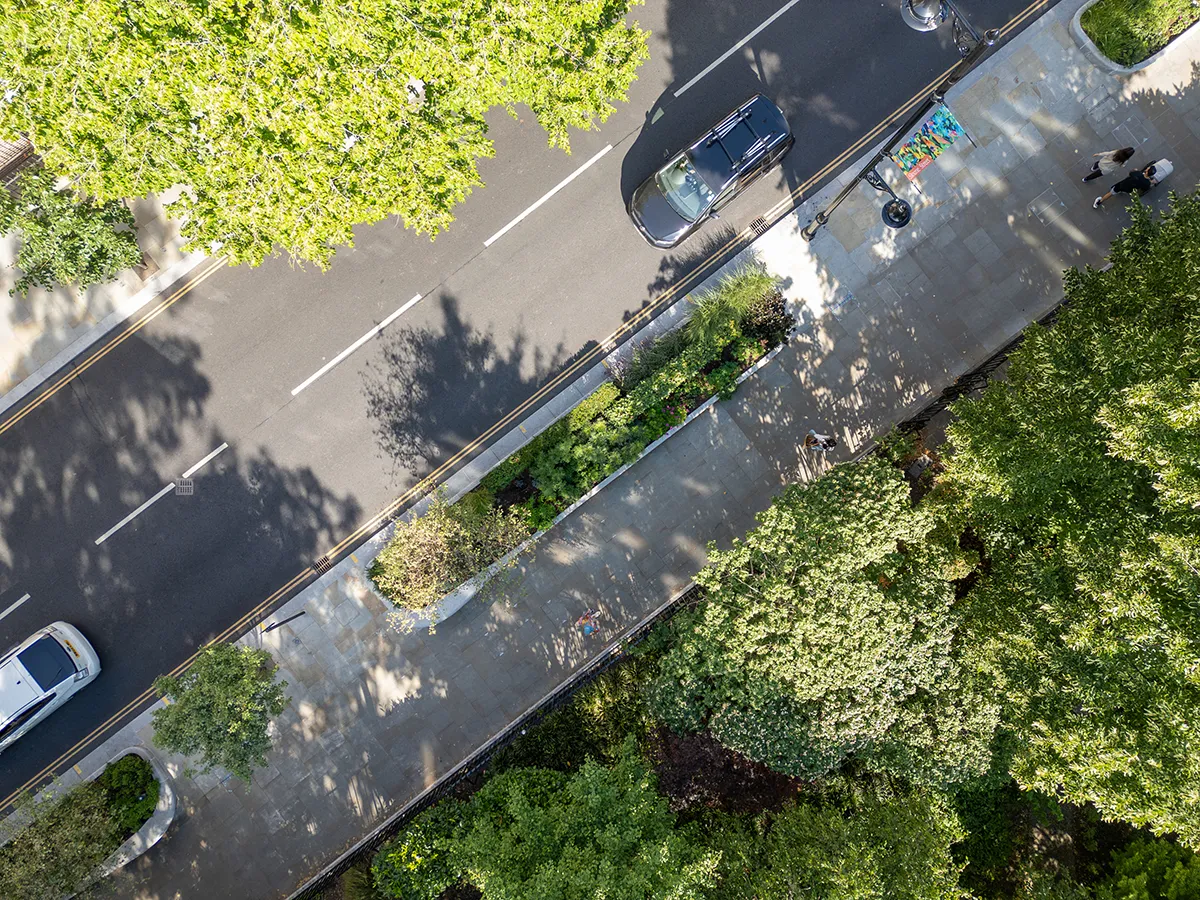
The greening strategy has been made possible through a reduction in the carriageway width and a corresponding increase in pavement widths of more than 20%. This fundamental change has significantly enhanced shoppers’ and other pedestrians’ experience, with planting and street furniture offering both physical and psychological protection from the adjacent traffic. The widened pavements also provide a platform for events and outdoor activities, including new pavement cafés, Christmas festivities and the annual Chelsea in Bloom event.
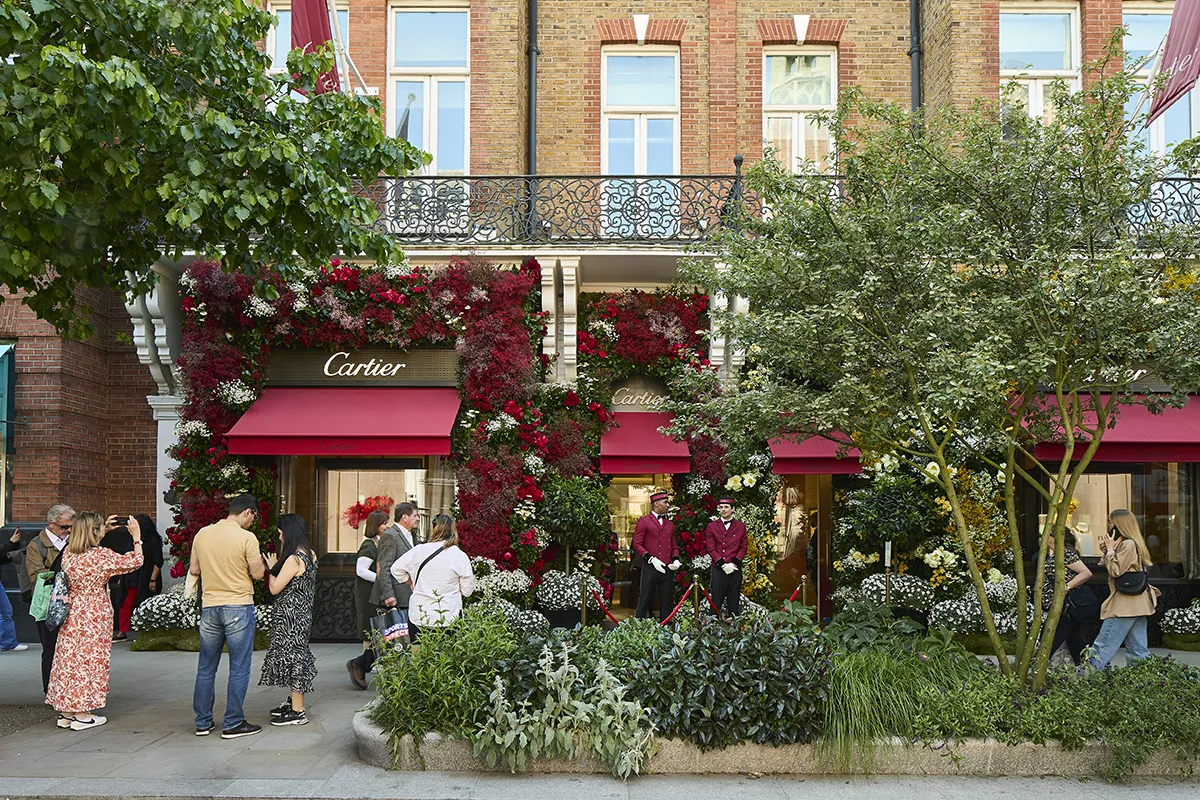
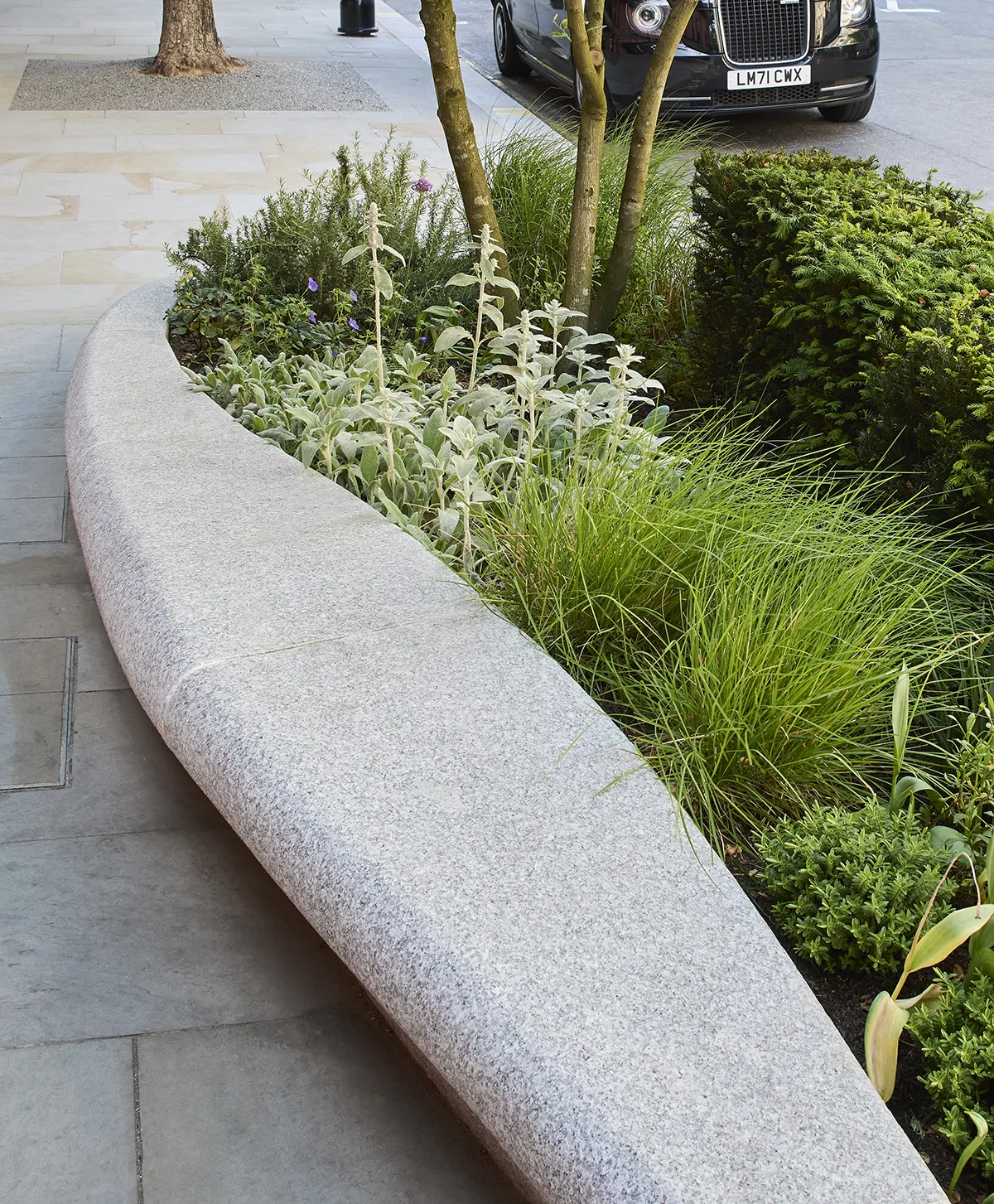
Alongside the planting, a bespoke palette of materials provides the street with a unified identity. Dual-height lighting columns, with details handcrafted by artisan ironworkers, feature intricate cast-iron horticultural style embellishments inspired by the nearby Arts and Crafts masterpiece, Holy Trinity Church. Traditional Yorkstone is used in pedestrian areas, with custom-designed brass pavement studs, and silver-grey granite demarcating reconfigured parking and loading bays. As well as offering informal integrated seating, robust handcrafted granite planters act as a physical buffer between traffic and pedestrians while also serving as a discreet security measure.
Environmental factors
Sustainability has been at the heart of the design development process, with UK-sourced stone providing most hardscape materials, and a palette of drought-tolerant plants used in the greening strategy, boosting biodiversity. Embodied carbon emissions have been reduced by 13% through the use of alternative materials, and LED lighting technology will reduce future energy costs whilst simultaneously creating a safer night-time environment for residents and pedestrians.
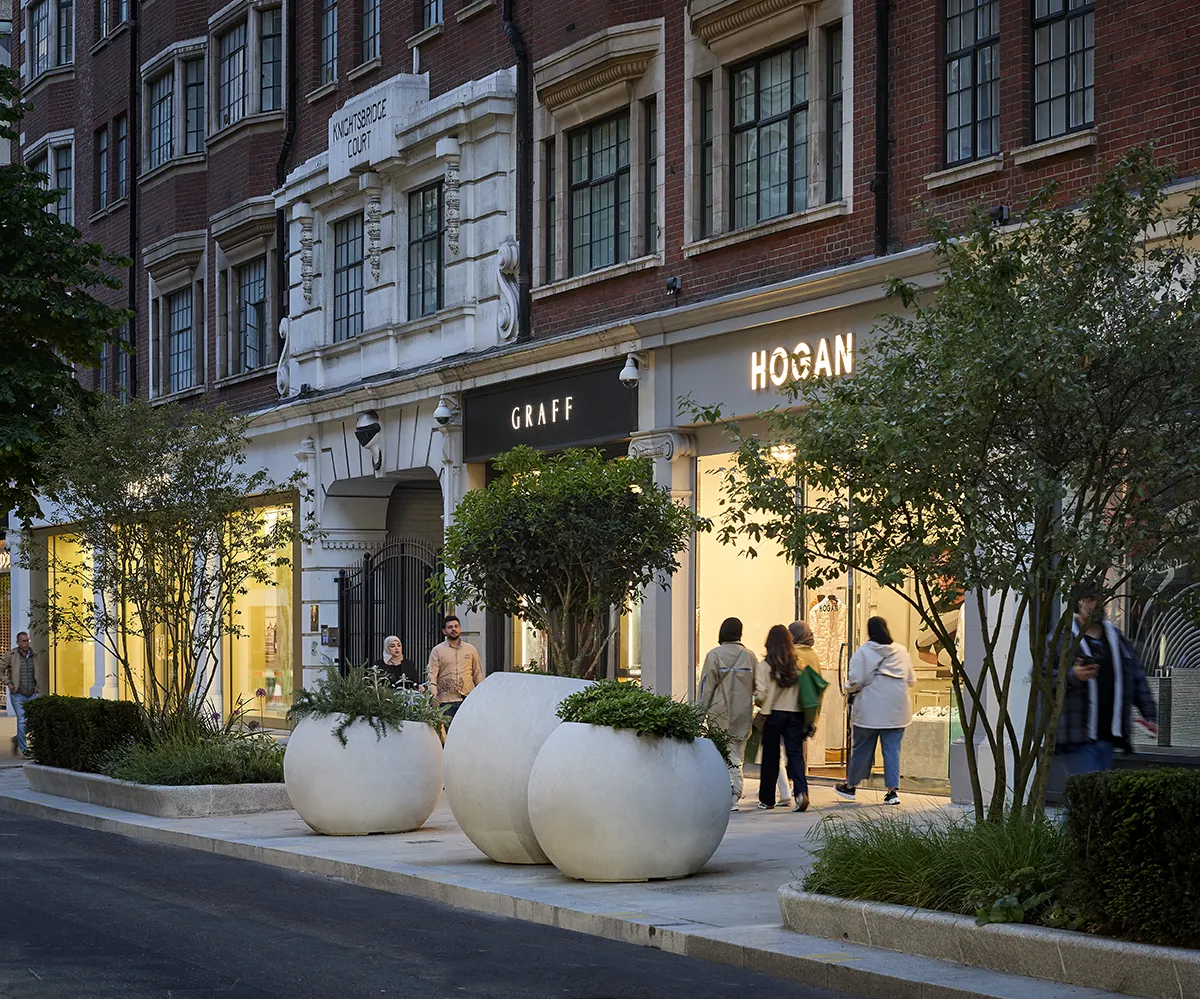
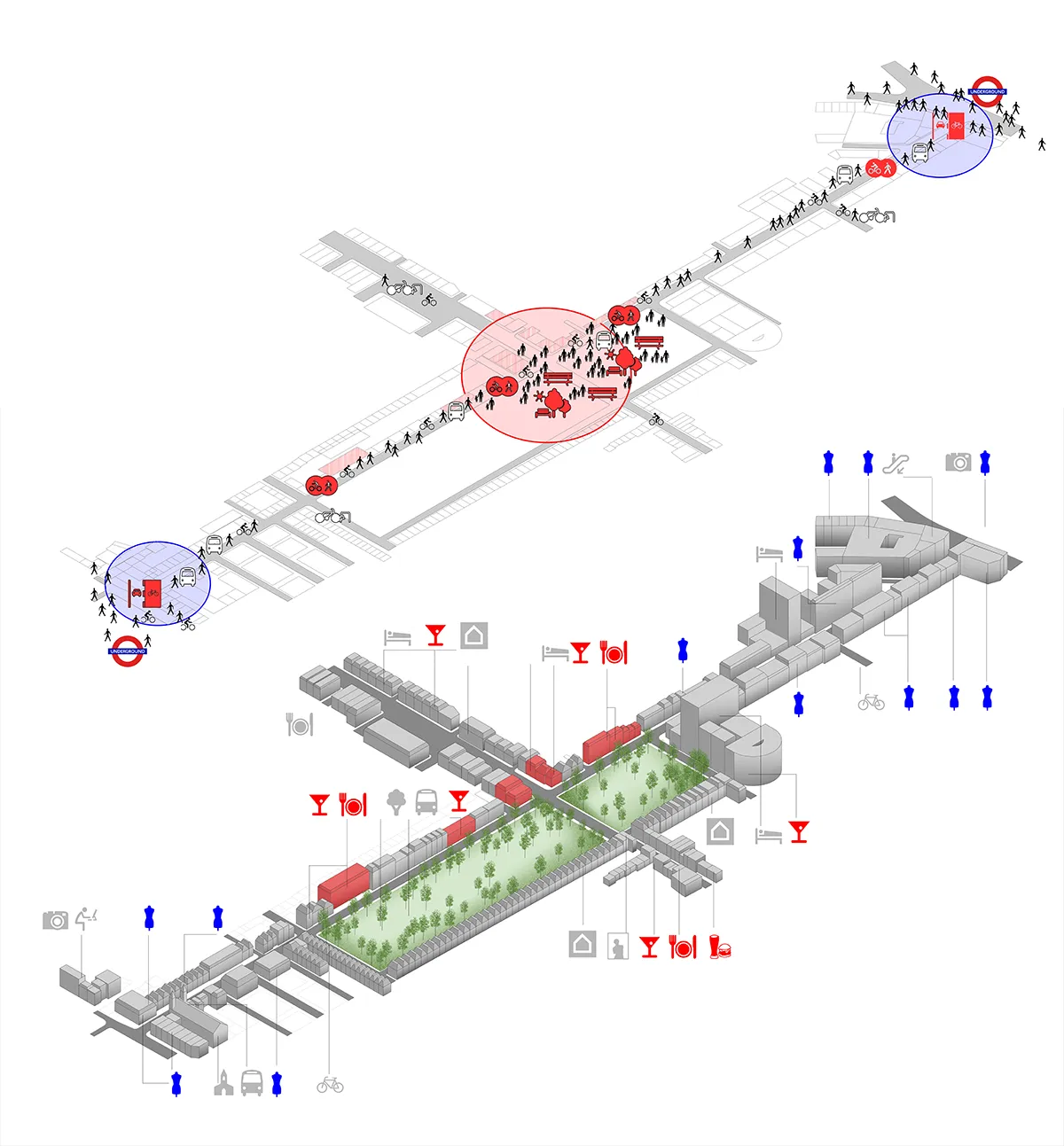
Active travel is supported through the reduction of on-street parking and the implementation of widened pavements and raised tables at side streets, which improves north-south pedestrian movement. The private, public collaboration between Cadogan and the Royal Borough of Kensington and Chelsea allowed for the introduction of traffic calming measures, wayfinding and increased crossing points, introduced to help visitors navigate the area.
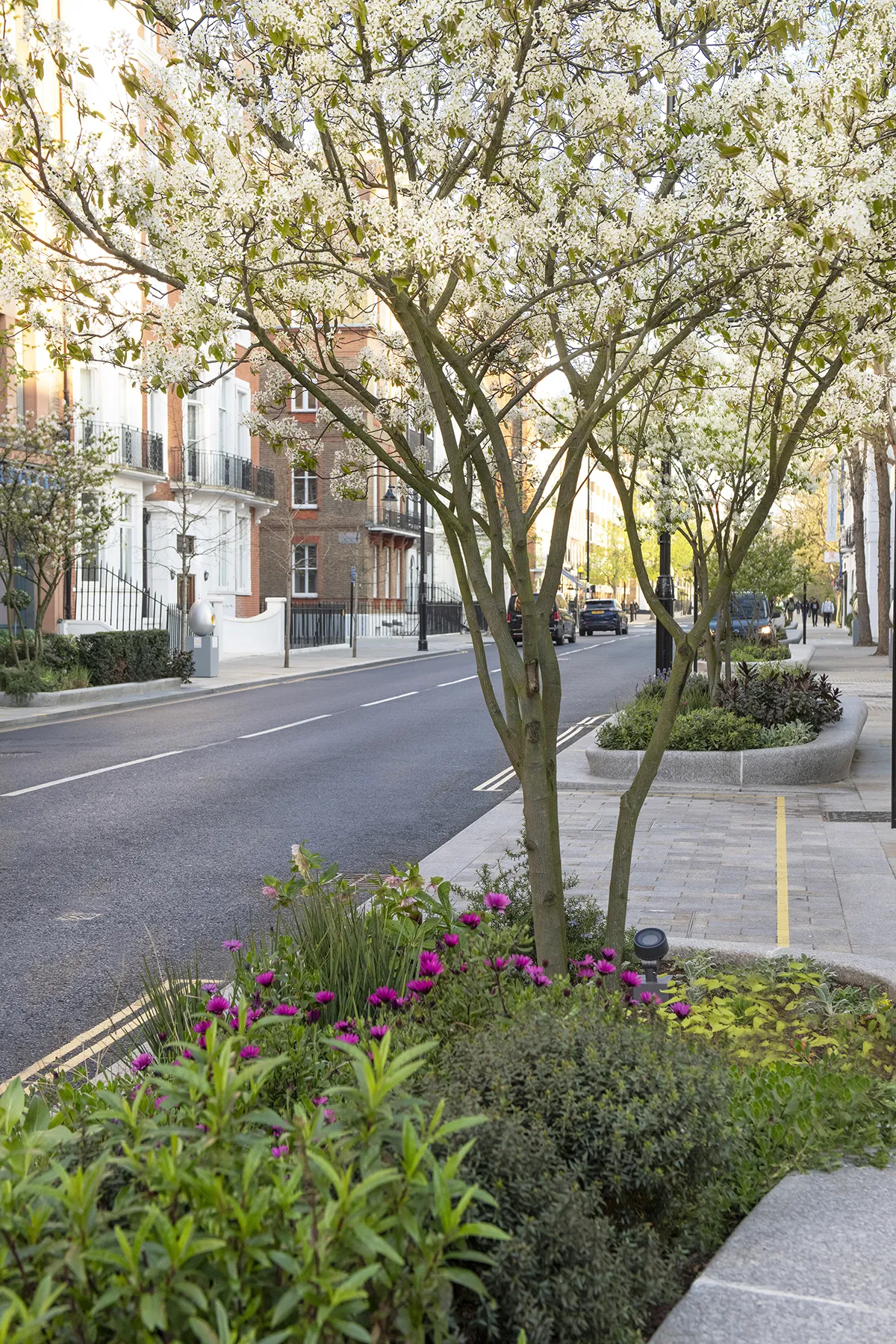
Substantial new below-ground infrastructure has been installed to improve and future-proof digital connectivity for the area, with a significant proportion of the £46m budget spent on ‘invisible’ improvements to divert and unify utilities, whilst managing hundreds of underground coal cellars and the 19th century Bazelgette sewerage infrastructure.
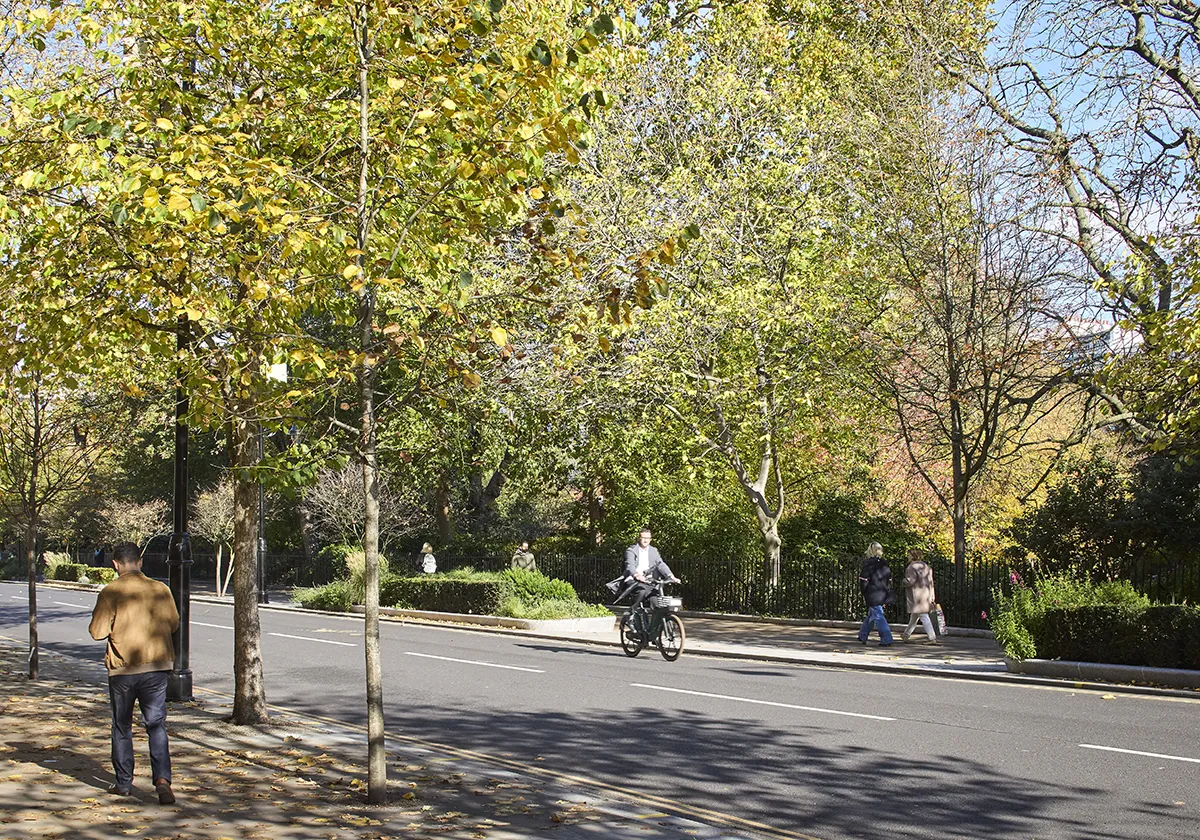
Significant consultation was undertaken with local stakeholders, residents and retailers to understand their concerns and ideas, with a responsive design concept that prioritises people, improves health and wellbeing, encourages footfall and dwell time, increases security, reduces traffic impacts, and creates a welcoming streetscape for all.
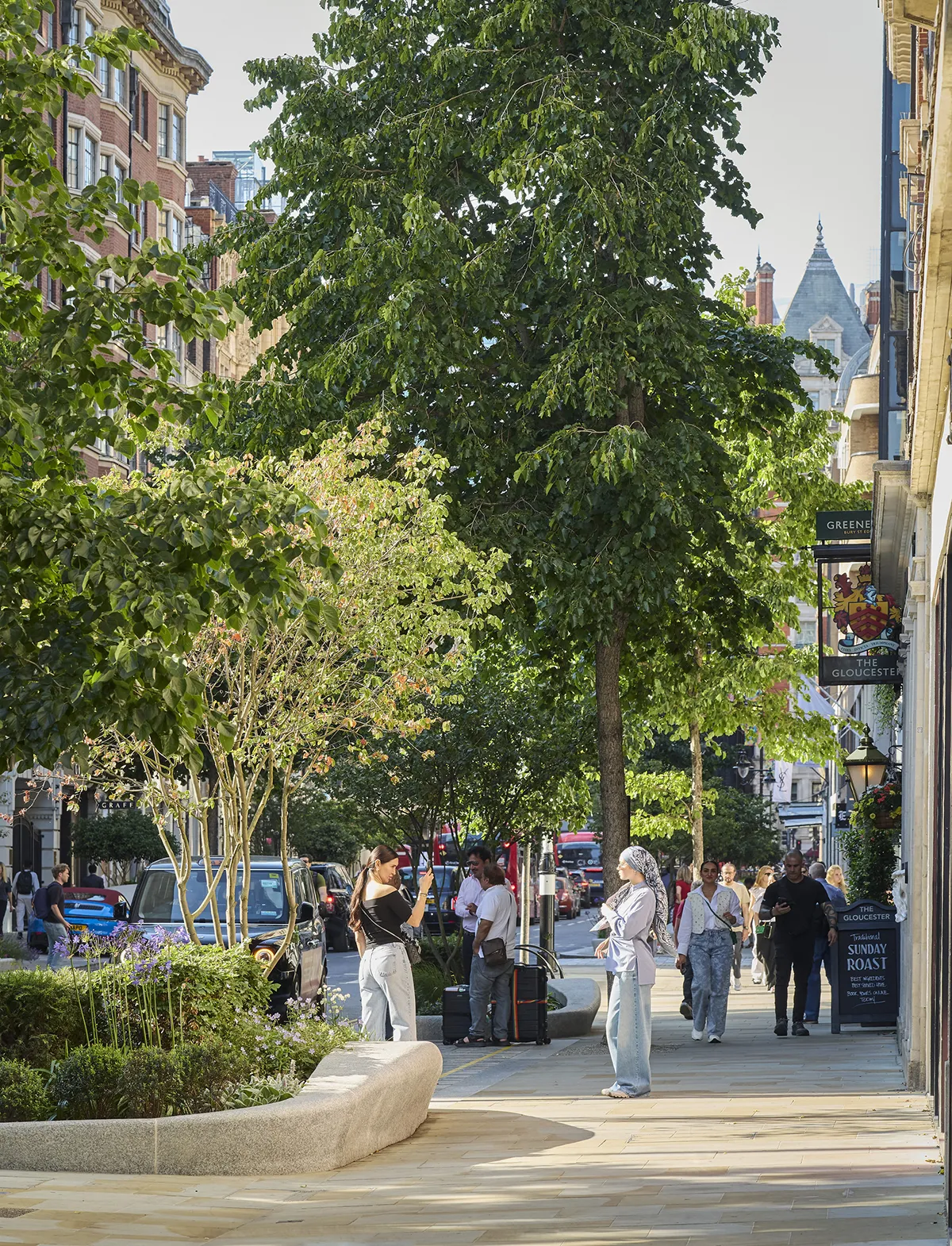
The final scheme has been widely praised. Several existing retailers are now looking to upsize their stores, and Cadogan has received strong interest from new luxury brands.
The project investment by Cadogan, led by masterplanners and landscape architects John McAslan + Partners, working in close collaboration with landscape architect and garden designer Andy Sturgeon Design.
Project credits
Client – Cadogan Estates
Masterplan – John McAslan + Partners
Landscape – John McAslan + Partners in collaboration with Andy Sturgeon Design
Planting – Andy Sturgeon Design
Engineering – WSP
Project Management/ Cost – Gardiner and Theobold
Lighting Design – LAPD