
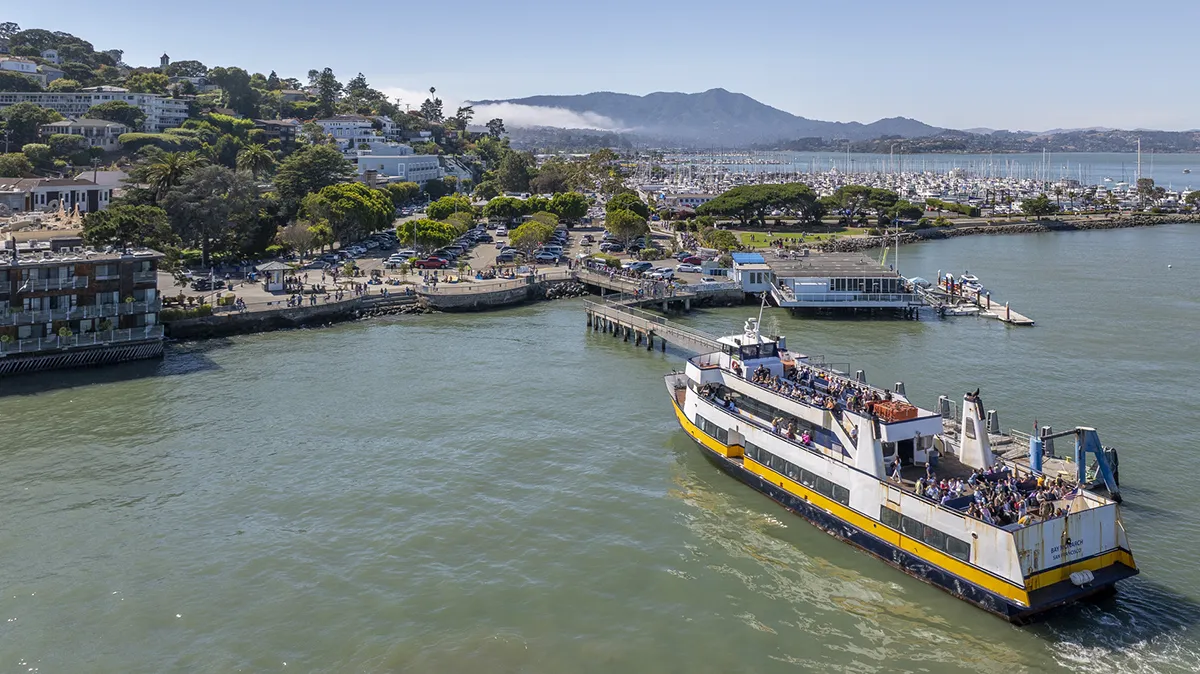
Situated on a protected inlet between the Golden Gate and Richardson Bay, the Sausalito waterfront has occupied an outsized place in the cultural and environmental identity of the Bay Area since the mid-1800s, defined by a muddy mosaic of tidal flats and eelgrass beds sheltered by forested hills. For about a third of that time, SWA has quietly designed parks and urban spaces across the globe, from a low wooden building just a few blocks north of downtown, along with a range of local projects across Marin that engage questions of access, ecology, and public space.
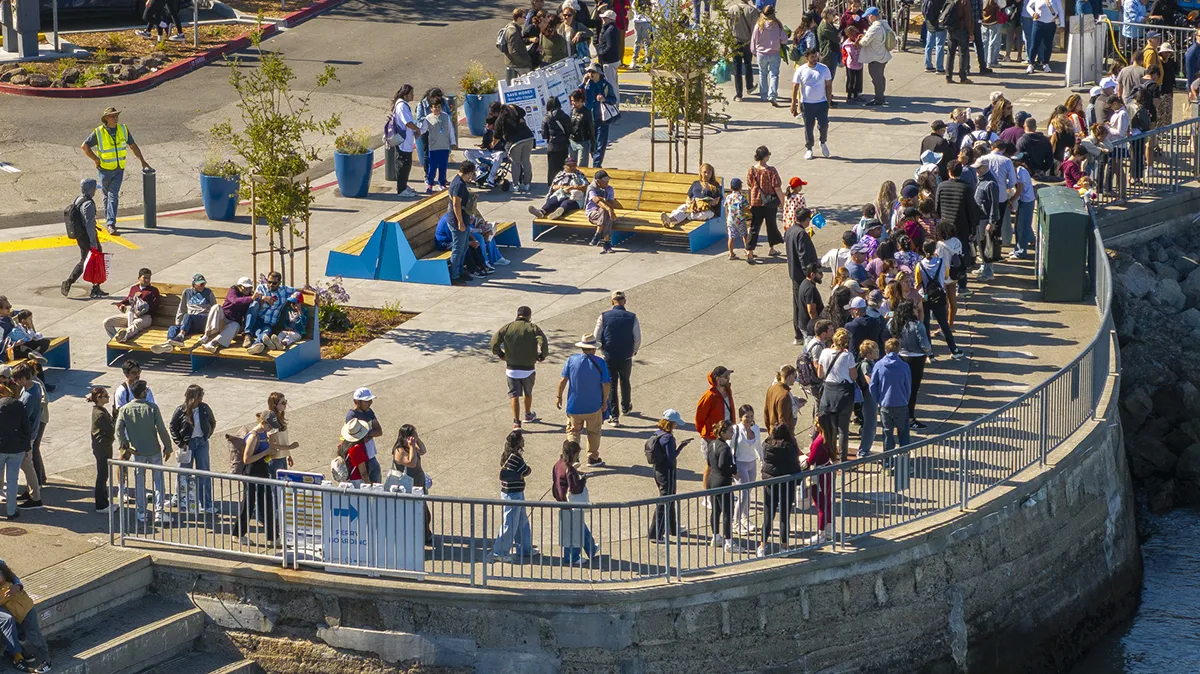
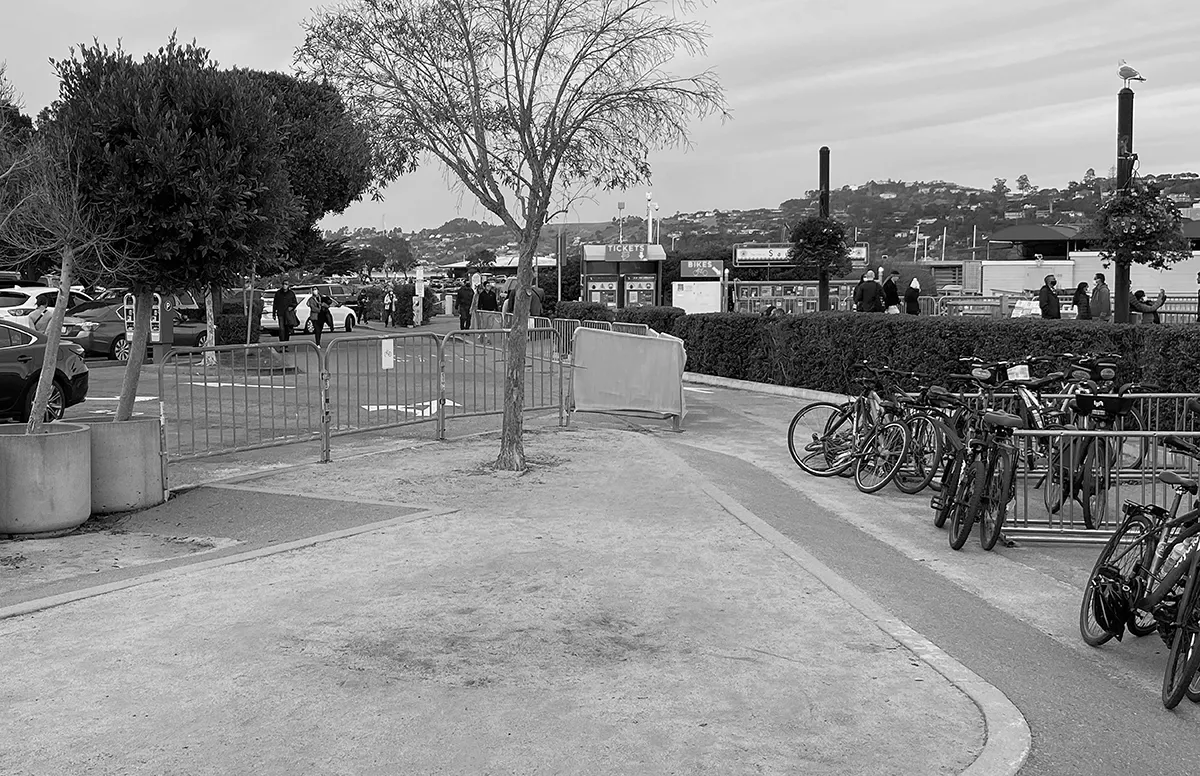
The most recent iteration of the city’s ferry landing, a modest hub dating to the 1950s, served generations of commuters and tourists on the Blue & Gold routes but gradually bottlenecked over time. Conditions deteriorated in predictable ways. Tracy Way, a short street functioning as downtown’s de facto bike corral, became chronically overcrowded, blocking waterfront views. Roughly 91% of downtown Sausalito is paved, much of which drained unfiltered into the bay over surface parking. At peak hours, queues of pedestrians and cyclists compressed along the waterfront, the cumulative result of a decades-long pattern in which temporary shoreline fixes—parking, circulation workarounds, bits of fill—became permanent and now needed to be undone.
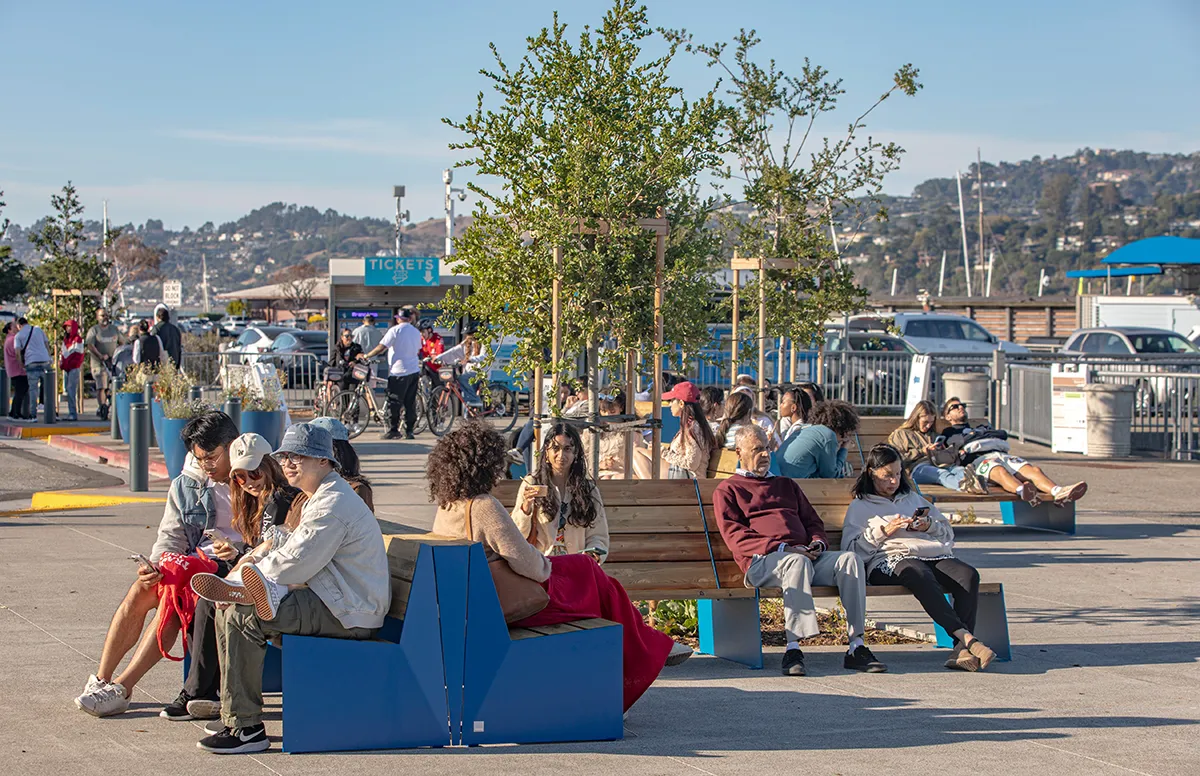
In 2020, $2.5 million in federal transit funding was allocated to deconflict and improve the landing experience, with the city initially enlisting BKF Engineers and RHAA Landscape Architects as designers of record. Soon after, SWA Principal Bill Hynes joined the project through a local advisory group to help steer the design, finding political momentum through joint agency coordination and City Council’s advocacy. The city later retained SWA to complete the vision and support final design, cost estimation, and furniture selection, expanding the project to include the full pedestrianization of Tracy Way.
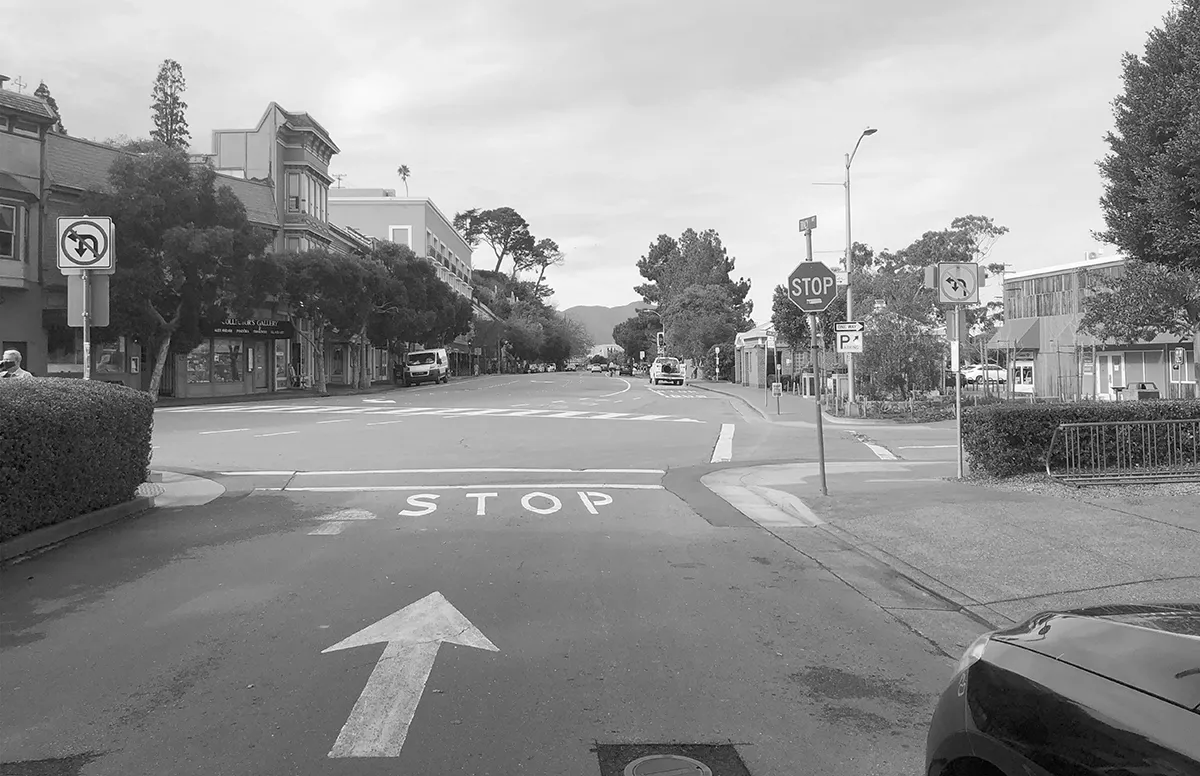
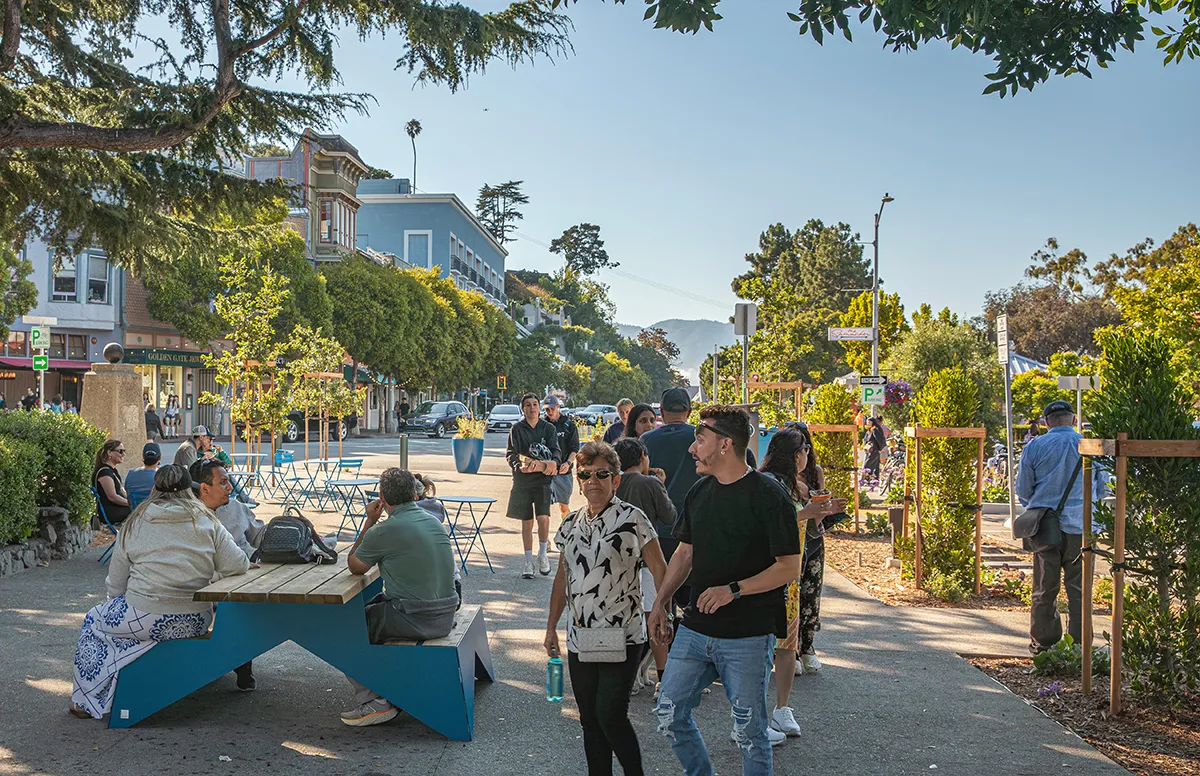
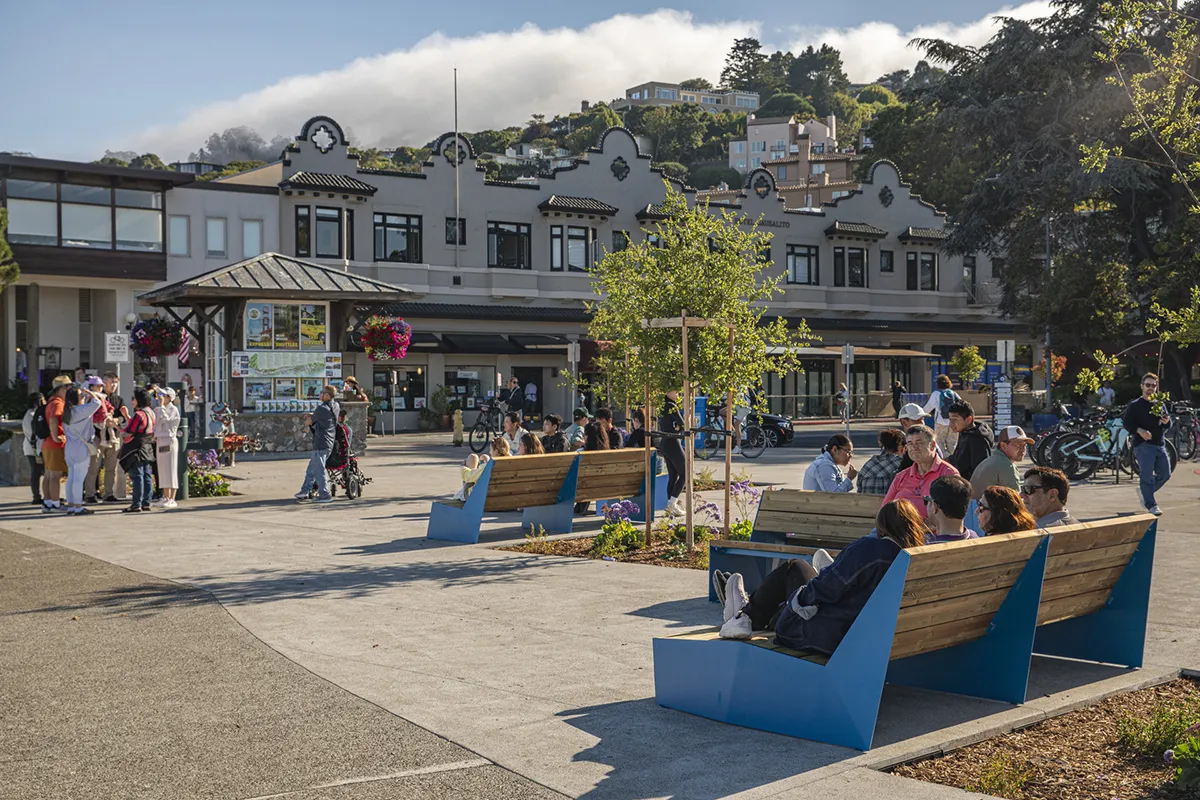
Separating bike and pedestrian flows to enlarge the landing area, the resulting project disentangles queuing areas, bike parking, and connections to both the ferry and Vina Del Mar, one of downtown’s most beloved parks, creating space for new programming by the local Business Improvement District. More than 20 new trees and bioretention areas along the east side of the parking lot now capture an estimated two-thirds of stormwater formerly draining into the bay. New furniture by Vestre, a Norwegian leader in sustainable urban furniture, references the sky-blue ferry hull, establishing a more coherent site identity across a sequence of new lounge spaces along the waterfront and former Tracy Way. Vestre’s chairs, benches, sun loungers, and picnic tables infuse the Bay Area landmark with fresh vibrancy, inviting ferry riders, locals, and visitors alike to pause and take in the sweeping waterfront views.
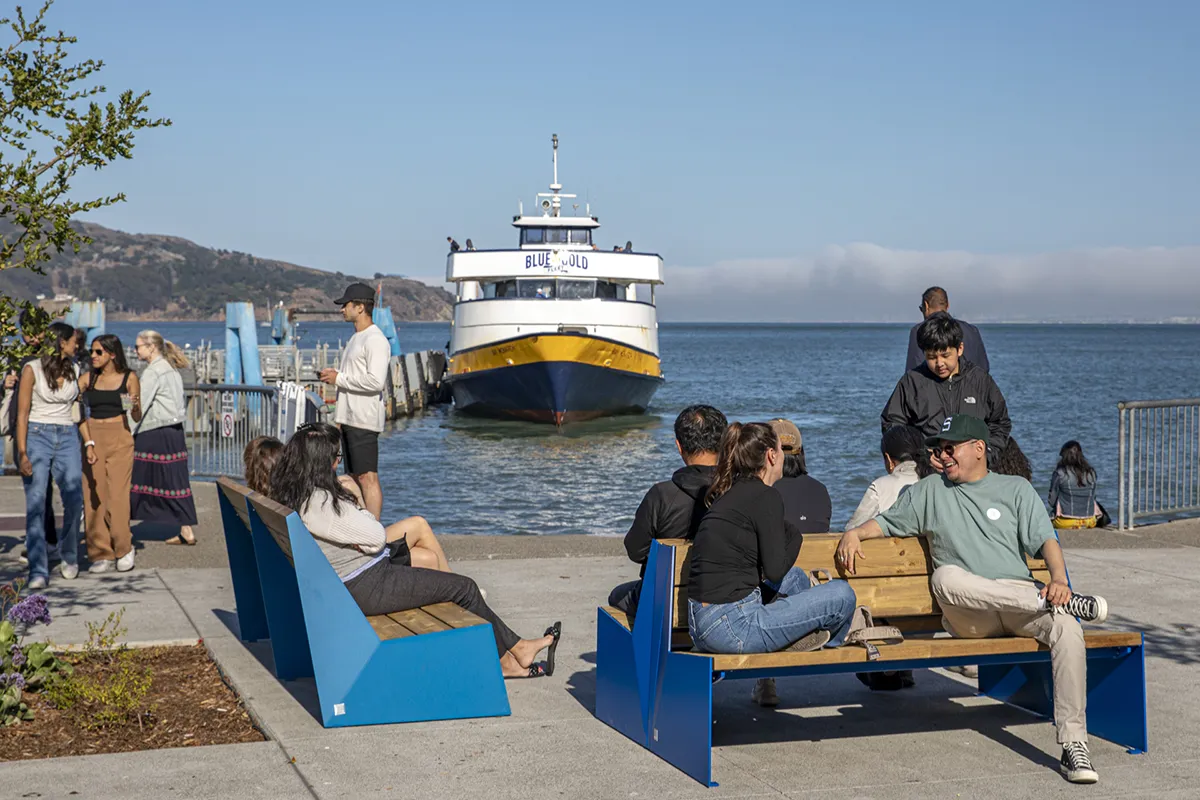
The installation showcases two of Vestre’s most forward-thinking design collections. The versatile, modular BLOC series introduces both function and flair, with durable forms suited to high-traffic community spaces. Complementing it, the STOOP series—rooted in the universal gesture of sitting on shared steps—encourages casual gathering and spontaneous interaction, perfectly aligned with Sausalito’s walkable, friendly coastal rhythm.
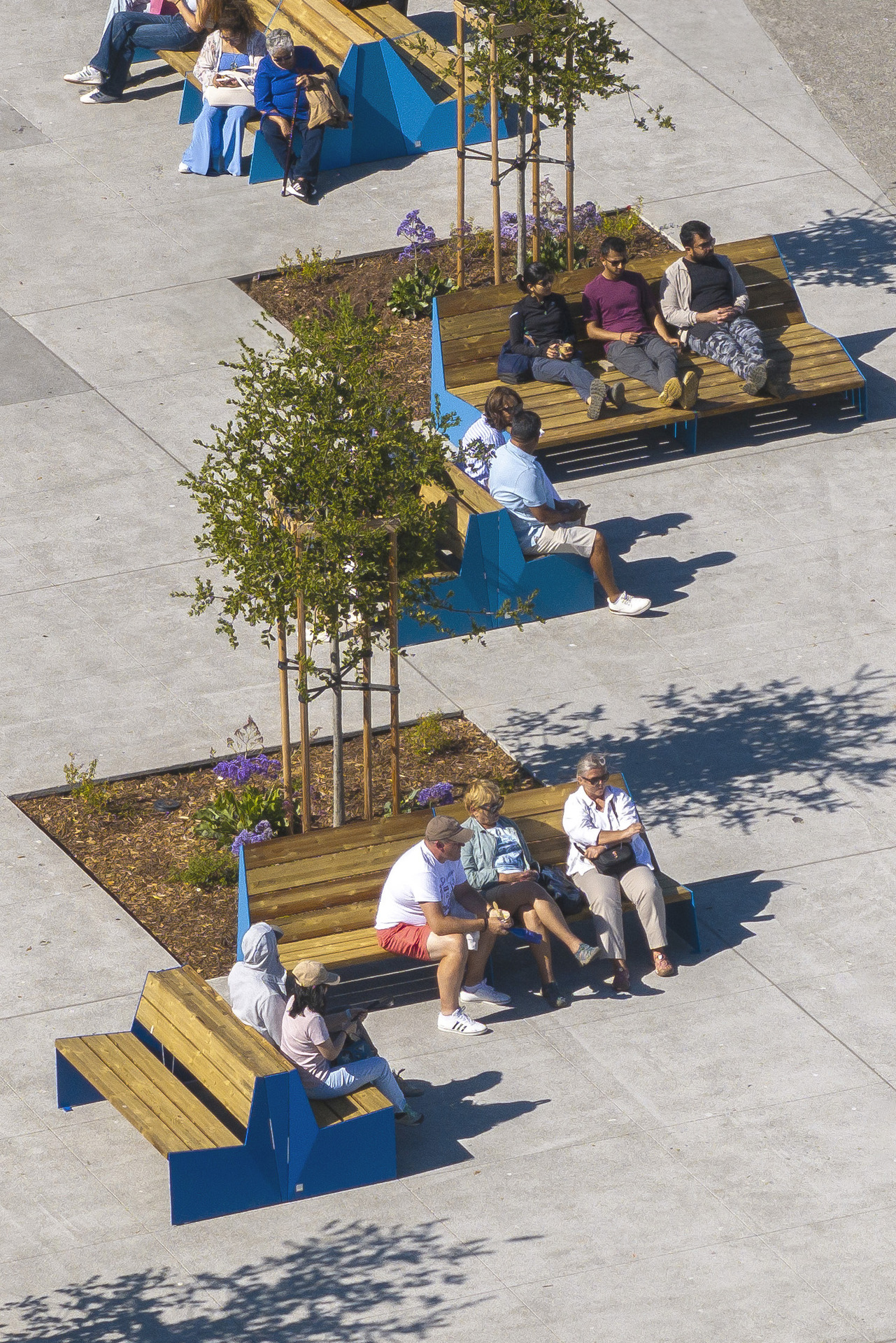
While modest in footprint, the new ferry landing sets a precedent for future city capital projects—pairing ecological, social, and operational improvements to strengthen the shoreline and give Sausalito a more coherent, welcoming, and recognizable front door.”
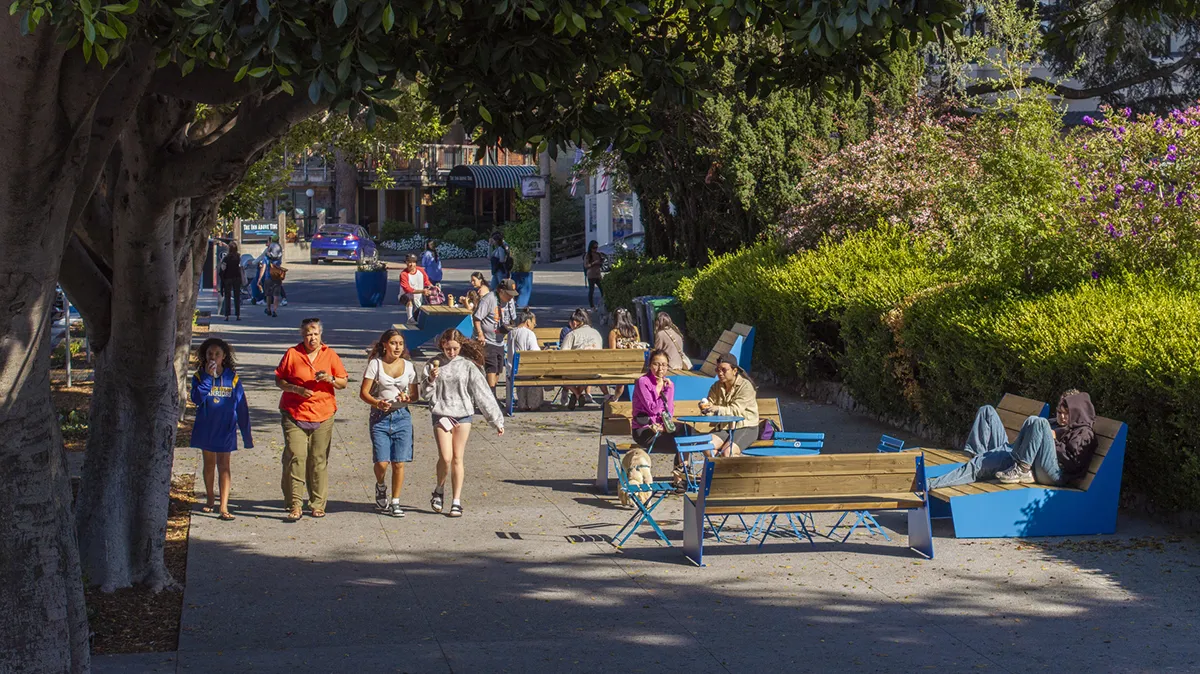
Sausalito Ferry Landing
Design: SWA
Images: SWA/Bill Tatham
Vestre is a proud World Landscape Architecture sponsor