
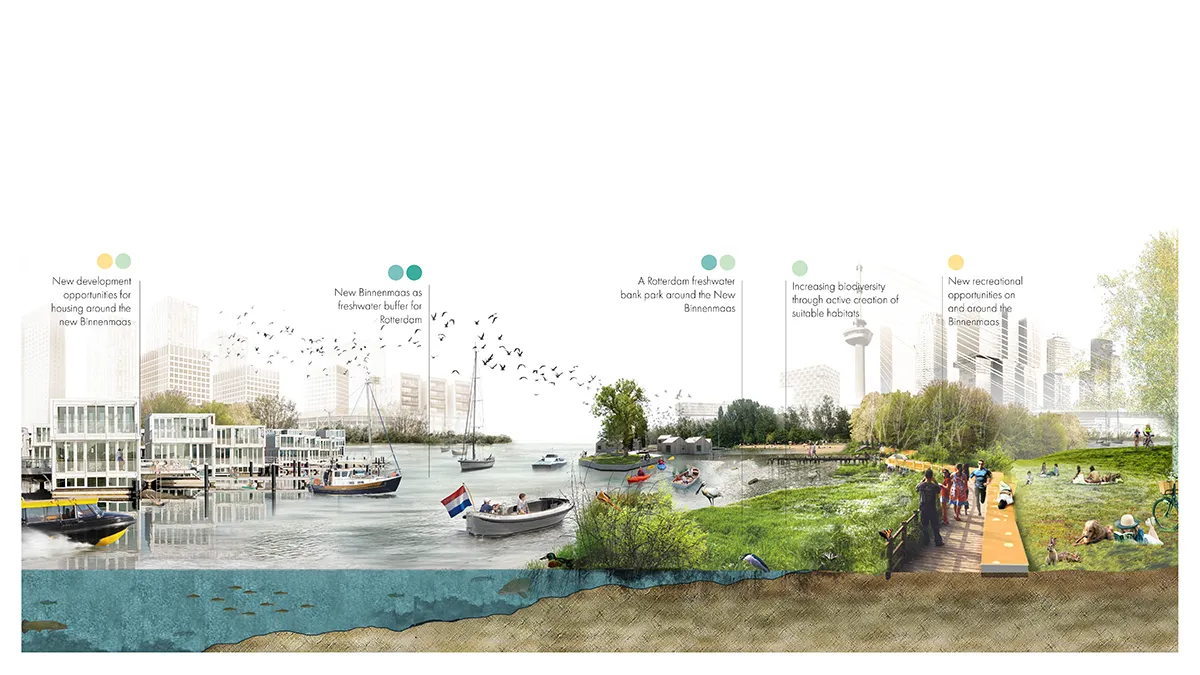
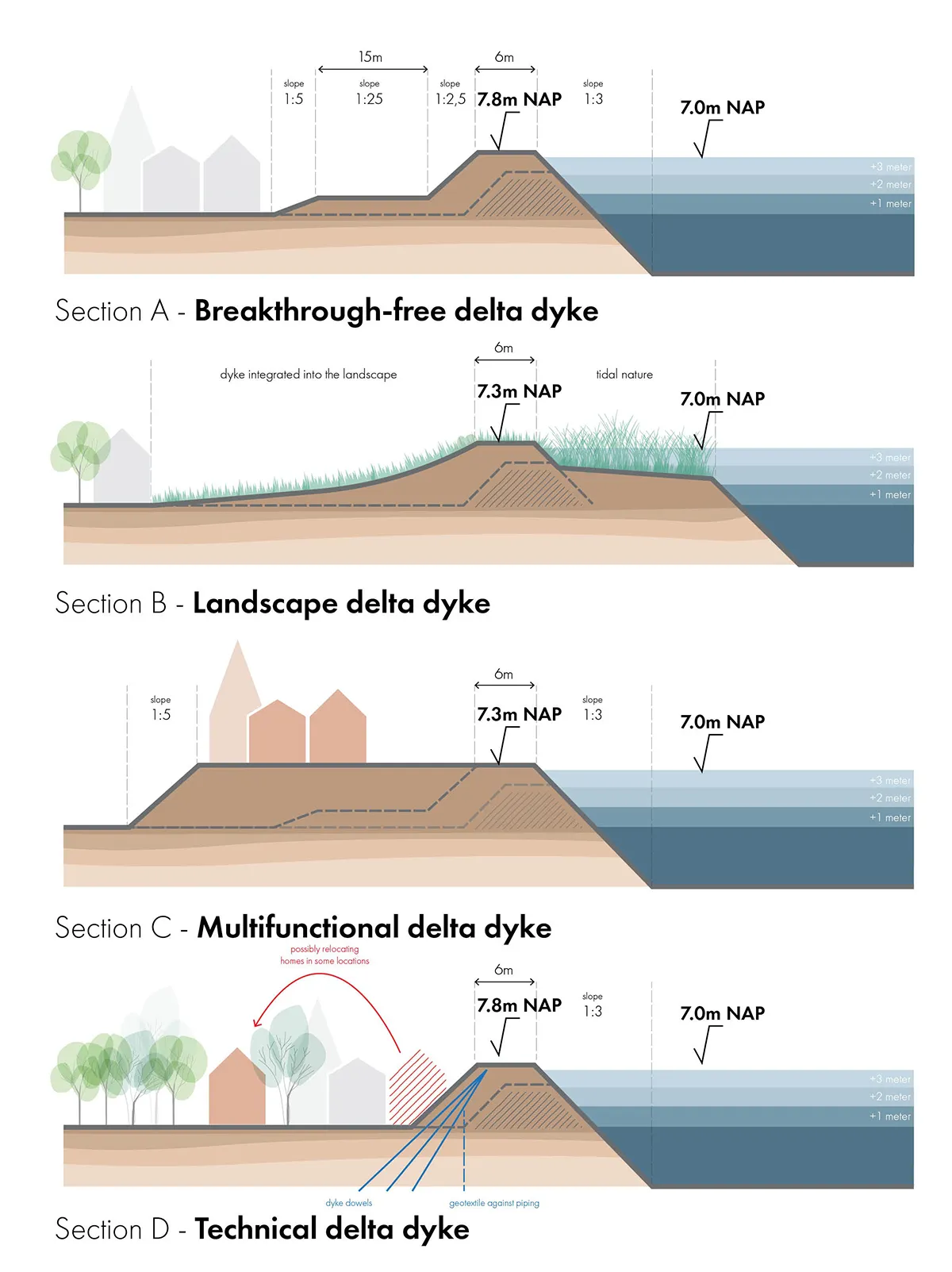
‘Rotterdam Watercity 2100’ is based on the premise that we will not abandon the city of Rotterdam and its surrounding region, even in an extreme climate change scenario. The central intervention in our holistic vision is the implementation of a new dike system that will protect Rotterdam from flooding, even with a sea-level rise of 3 meters. Safe behind new or reinforced dikes and sea locks, Rotterdam will become a sponge city, capable of managing its own water. Outside the dikes, a dynamic tidal landscape will emerge. The outer port areas of Rotterdam will be gradually raised to remain floodproof.
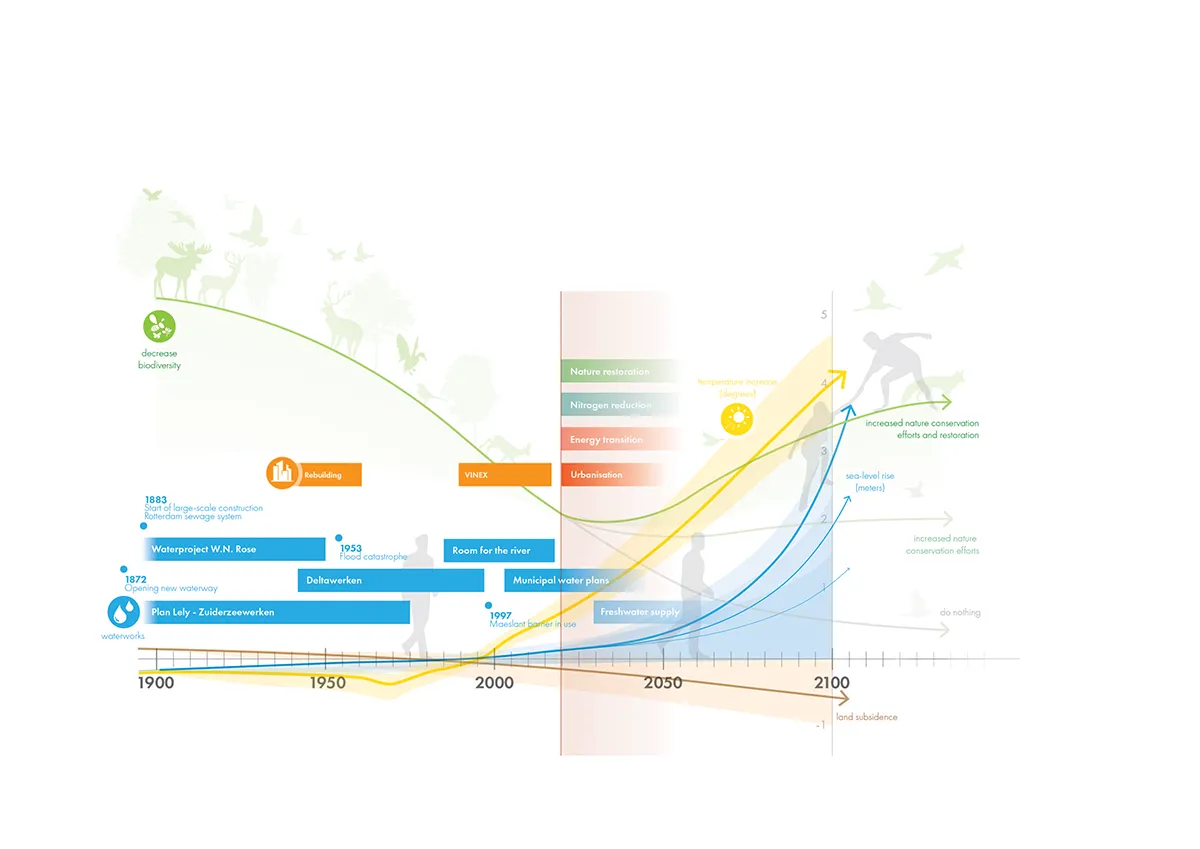
Floodproofing Rotterdam
By 2100, Rotterdam will be secured against floods from the sea and rivers through an enhanced Delta dike system. This system will be reinforced as a landscape feature where possible, with part of it diverted to the south. New sea locks on the Meuse River will keep rising salty seawater out of the city, transforming the river into a freshwater buffer without tides. The southern part of the region will adopt a strategy in which towns can grow behind smaller dike rings, creating ample space for tidal nature and wetland agriculture
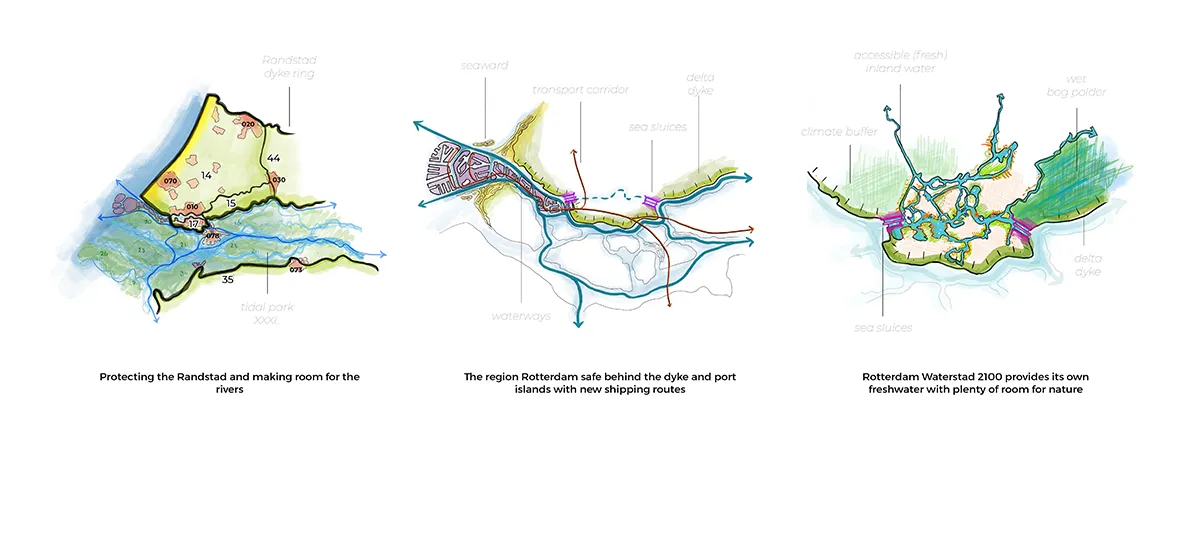
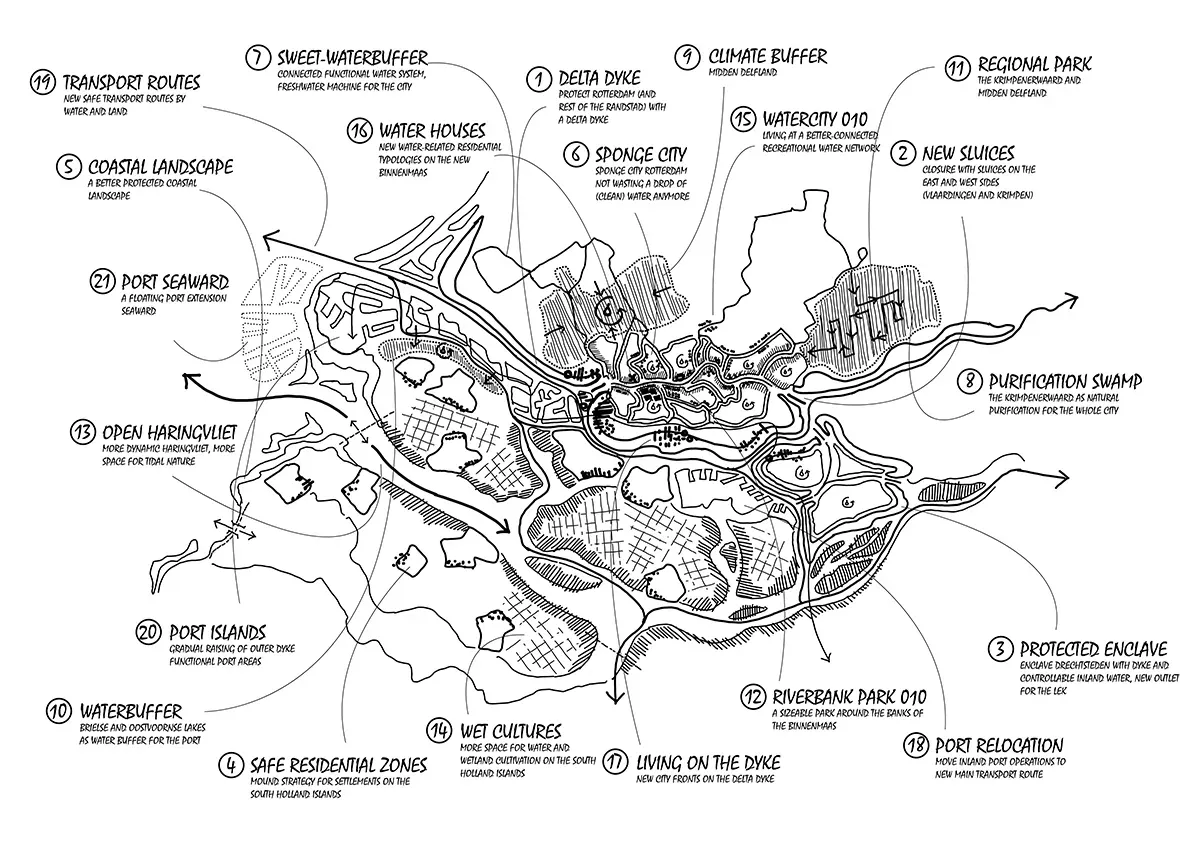
Sponge City
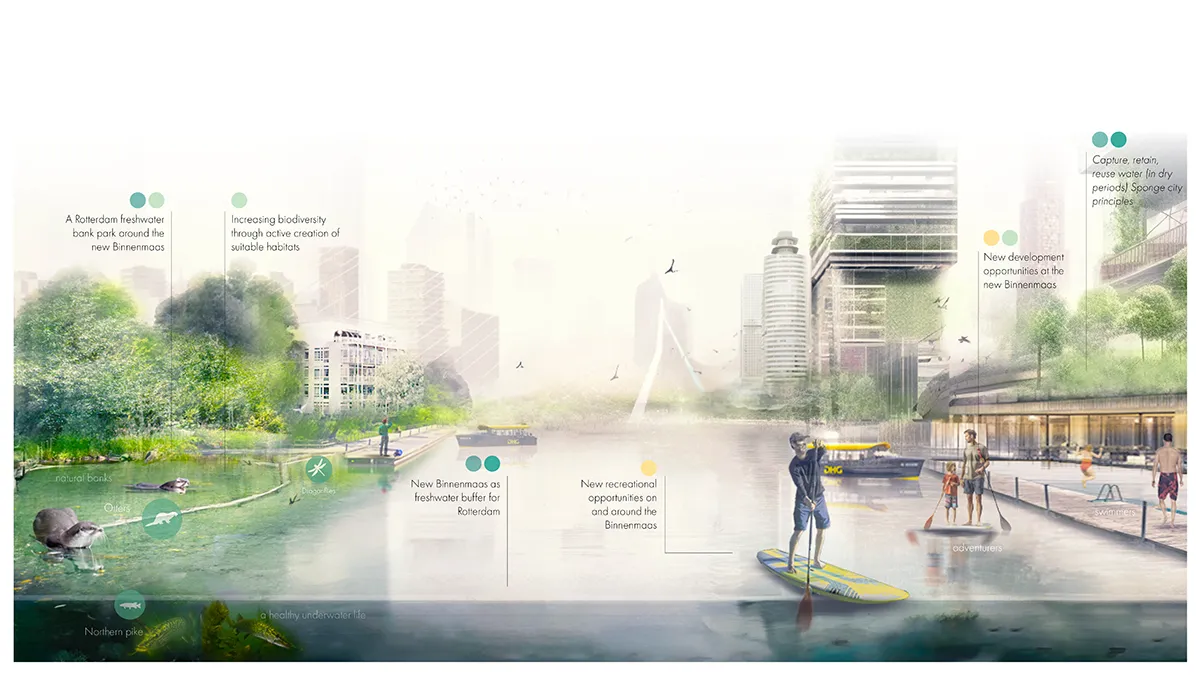
Transforming Rotterdam into a sponge city is essential for ensuring a sustainable supply of fresh water. By closing off the Meuse from the sea, we can combine the city’s various water systems into one large freshwater system that can also serve as a buffer for rainwater. Deep polders around the city could be converted into purification wetlands. By integrating the water network and improving water quality, new recreational opportunities will emerge within this sponge city.
New Nature
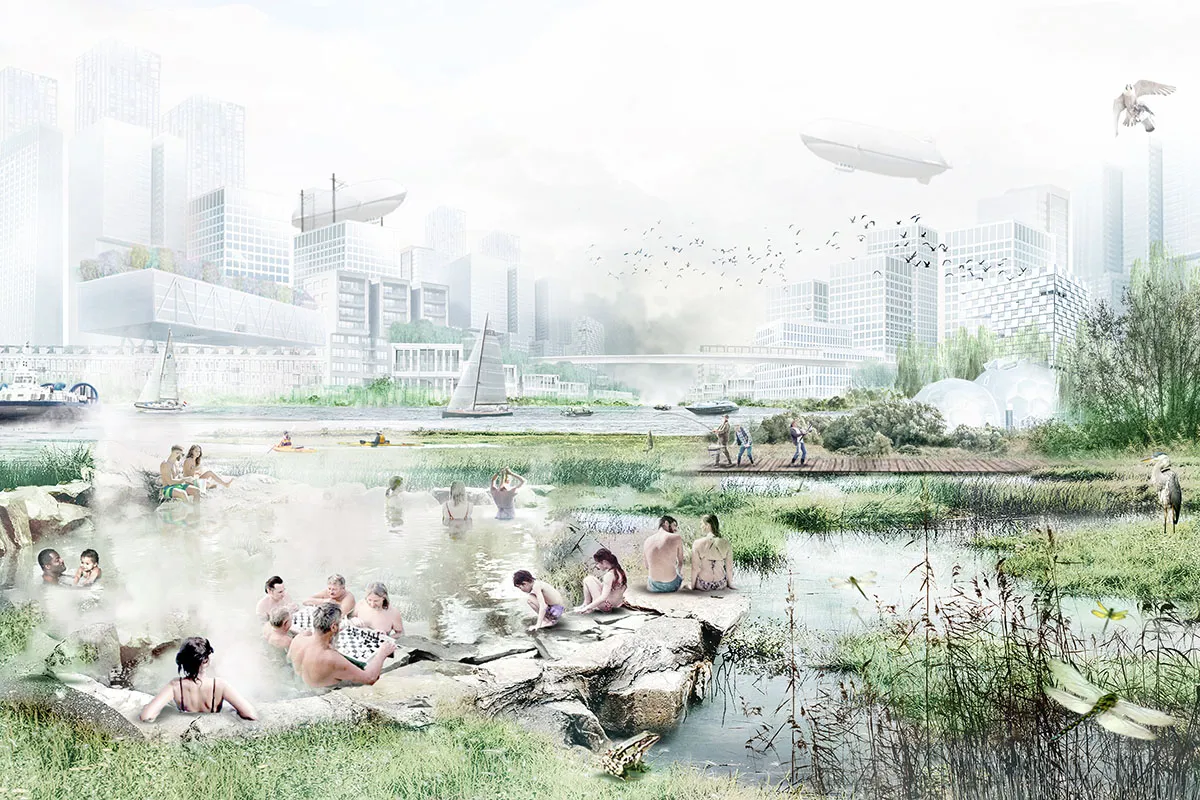
Watercity 2100 envisions the creation of a 40-kilometer-long riverside park. This waterfront park would stretch the entire length of the Binnenmaas River, providing space for new natural areas and recreational activities. The polder landscapes surrounding Rotterdam would become wetter and evolve into large regional parks. The flood barrier in Haringvliet would be opened to the sea, allowing for the development of a regional tidal park that extends into the Biesbosch National Park.
Urban Development
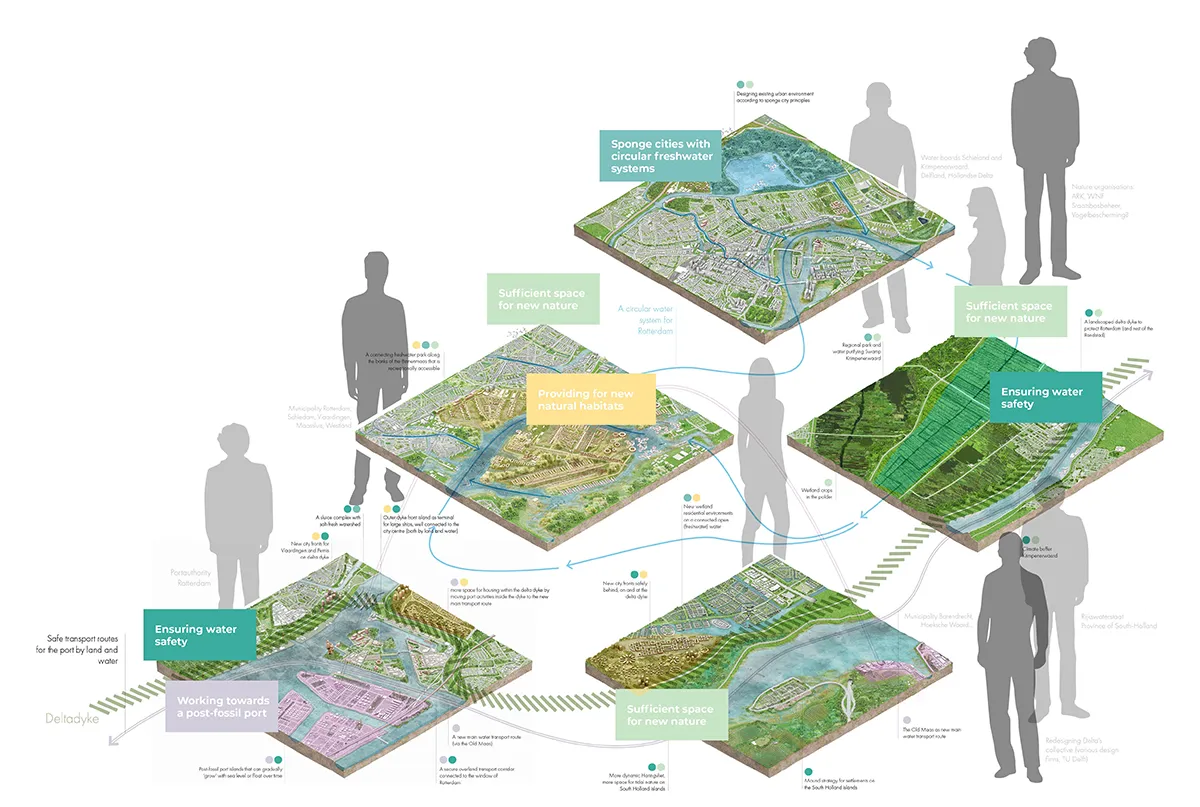
By relocating some existing port areas and the main water transport routes further south, a significant amount of space will be freed up for urban development in Rotterdam. The controlled water levels will offer opportunities for water-sensitive housing and recreational spaces on and in the water. There will also be room for new floodproof urban areas behind the newly reinforced dikes.
‘Rotterdam Watercity 2100’ is a speculative, water-sensitive vision for the Rotterdam region. The plan was an entry for the Eo Wijers Design Competition, a biennial competition for regional planning and design in the Netherlands.
Rotterdam Watercity 2100
Location: Rotterdam, The Netherlands
Designer Credit: De Urbanisten
Client: EO Wijers association, Municipality of Rotterdam, Deltaprogramma Rijnmond-Drechtsteden, Port of Rotterdam, Provincie Zuid-Holland
Image Credit: De Urbanisten