The New York Economic Development Corporation (NYCEDC), NYC Parks and Prospect Park Alliance recently broke ground on the restoration of the Vale, in the northeast corner of Prospect Park. The result of a multi-year outreach and design process that engaged thousands of local community members, this $37.5 million, 8-acre project is the largest capital allocation in the history of Prospect Park Alliance, which has overseen the park’s restoration since the 1990s. The Alliance’s in-house team of architects and landscape architects designed a space for nature exploration, intergenerational gathering and quiet reflection.
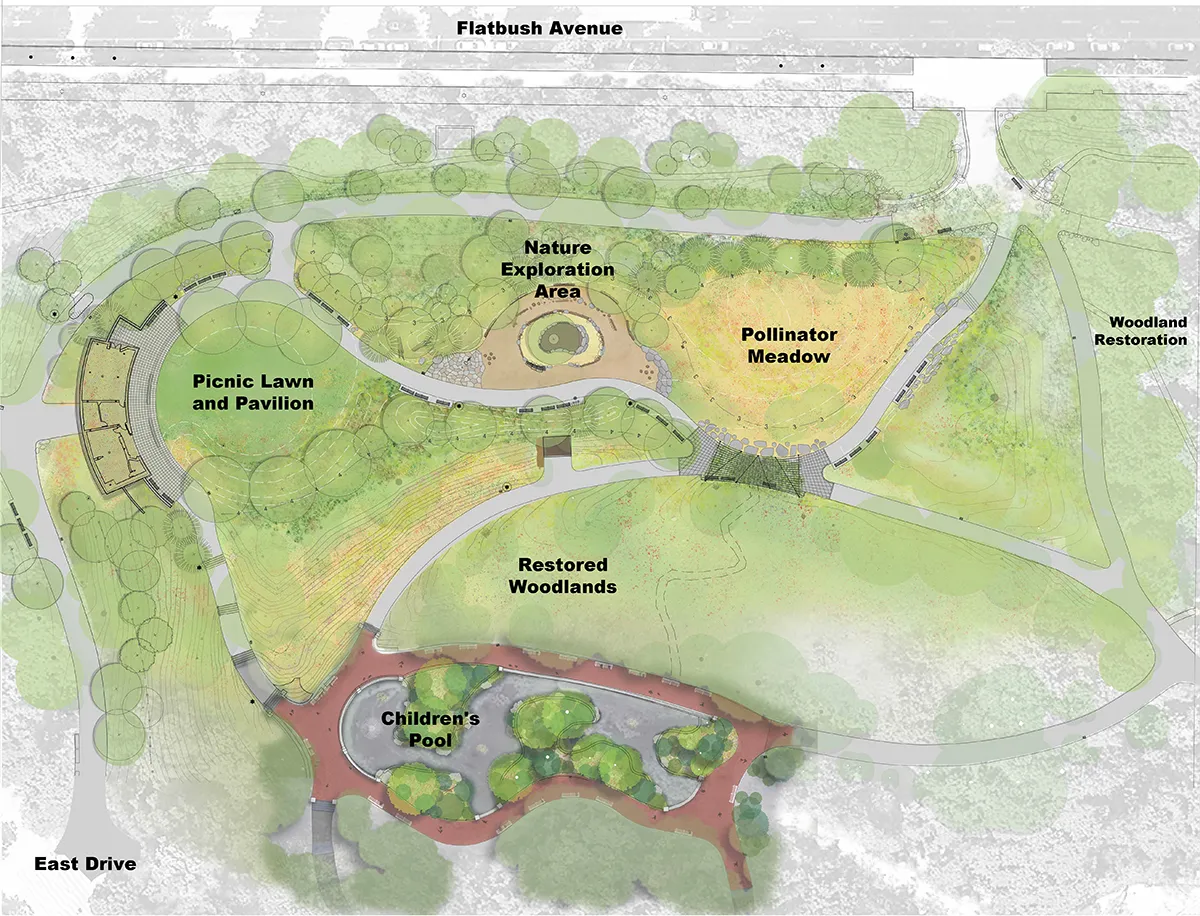
The Vale restoration, the first in more than 50 years, transforms two key landscapes: the historic Children’s Pool (a decorative water feature), a former Rose Garden, and also encompasses an additional three acres of woodland restoration that will continue an important pollinator corridor across the park. The restoration of the Children’s Pool will bring back historic details while improving wildlife habitat through new plantings and bird-friendly features. The former Rose Garden, which features three disused concrete basins, will be transformed into three connected landscapes that respect the park’s historic design while restoring the woodland landscape and adding new amenities, including: a pollinator garden and planted arbor; a children’s nature exploration area; a picnicking lawn; a small pavilion with composting restrooms and a sheltered viewing terrace.
The restoration of the Vale is the centerpiece of several capital improvements that have been achieved in recent years in this corner of the park. This includes the Flatbush Avenue Perimeter restoration and the creation of two new entrances to this area of the park, the first new entrance since the 1940s; the restoration of surrounding woodland areas severely impacted by Hurricane Sandy and other recent storms; the restoration of the pathways and lighting to the area; the award-winning restoration of Endale Arch, and the award-winning restoration of the Grand Army Plaza Berms and Memorial Arch.
The Upper Vale, the former rose garden, features three interconnected landscapes:
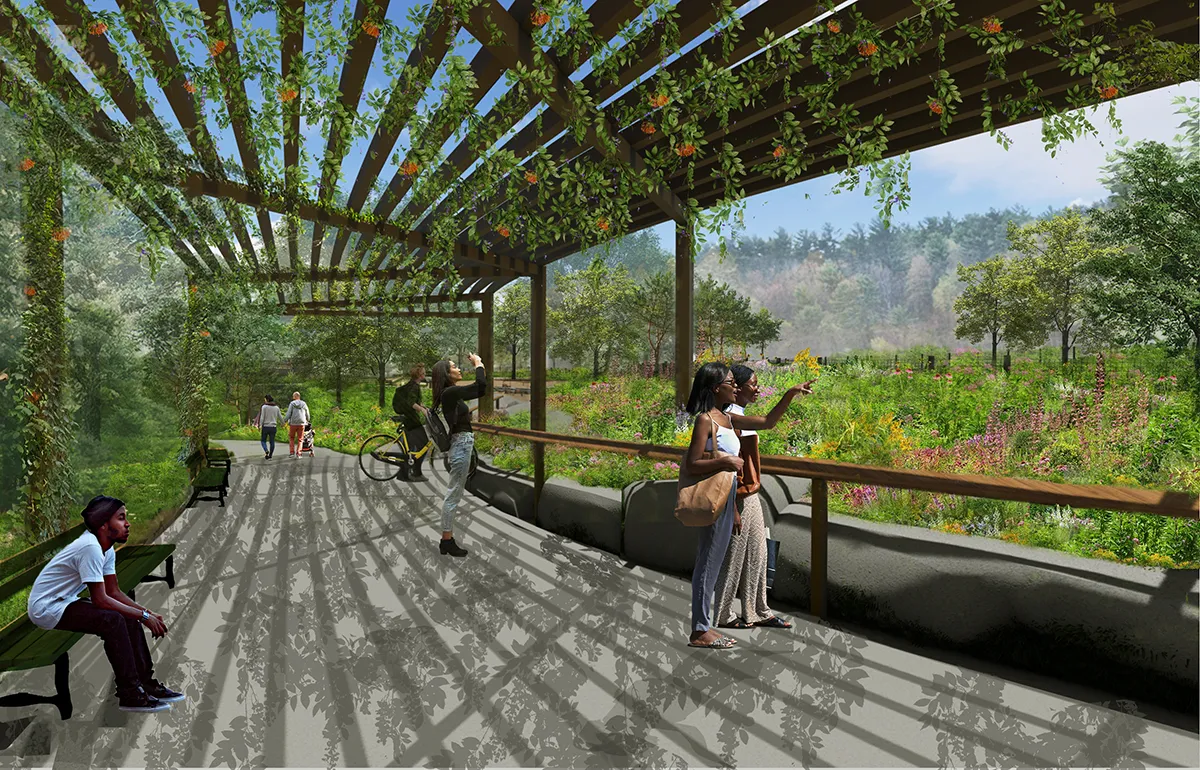
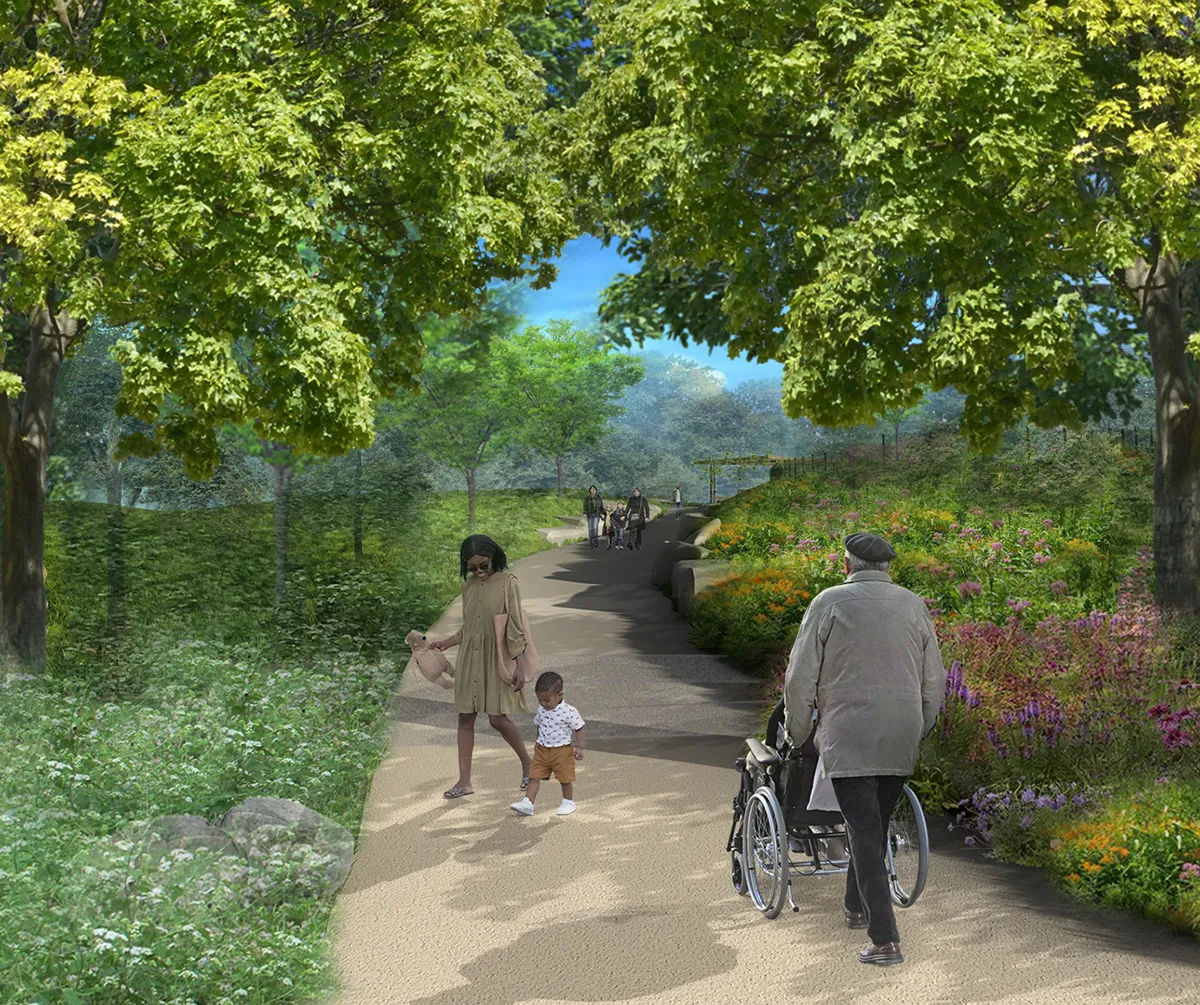
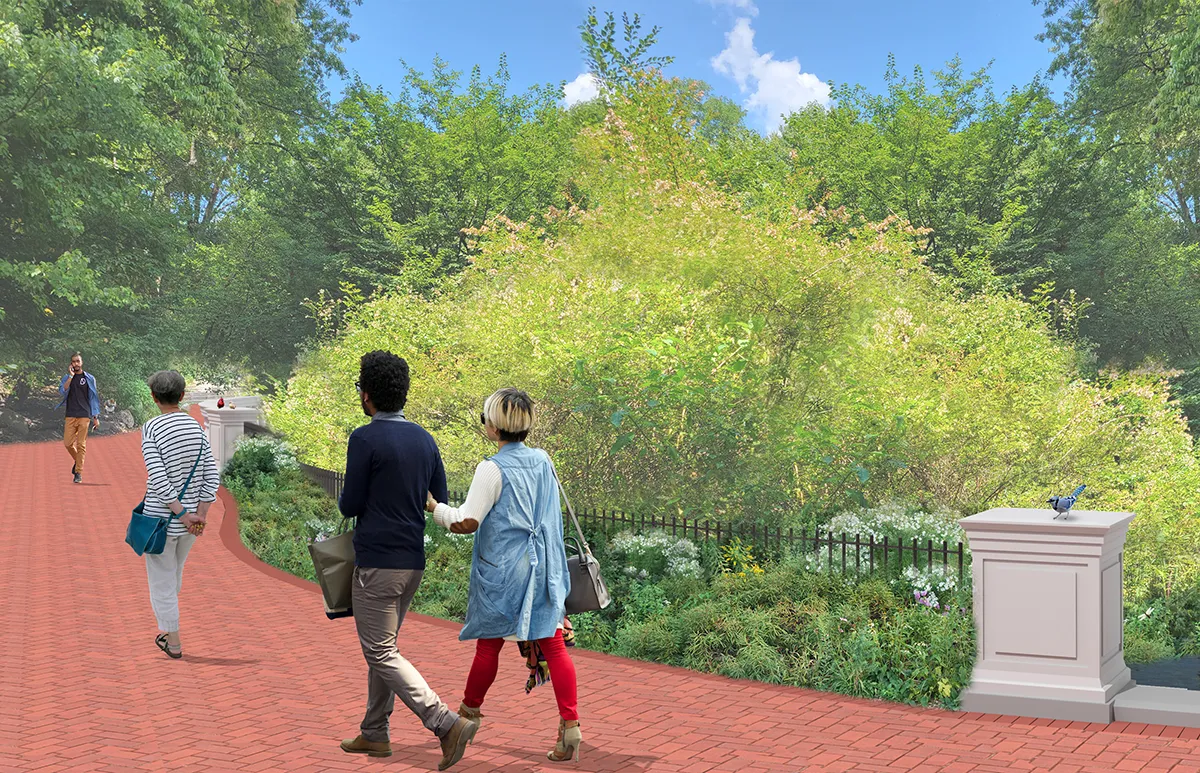
Pollinator Meadow: at the south end of the Vale, a pollinator meadow features insect and bird-friendly species such as Wild Bergamot (Monarda fistulosa), Yarrow (Achillea millefolium), and Pale Purple Coneflower (Echinacea purpurea pallida ). An accessible pathway leads to an arbor planted with Coral Honeysuckle (Lonicera sempervirens) for shade and beauty, and features a viewing area with a leaning rail. Historic benches line the rear of the arbor, along with companion seating for those in wheelchairs. Subtle fencing protects the meadow and surrounding woodland areas, which serve as wildlife habitat.
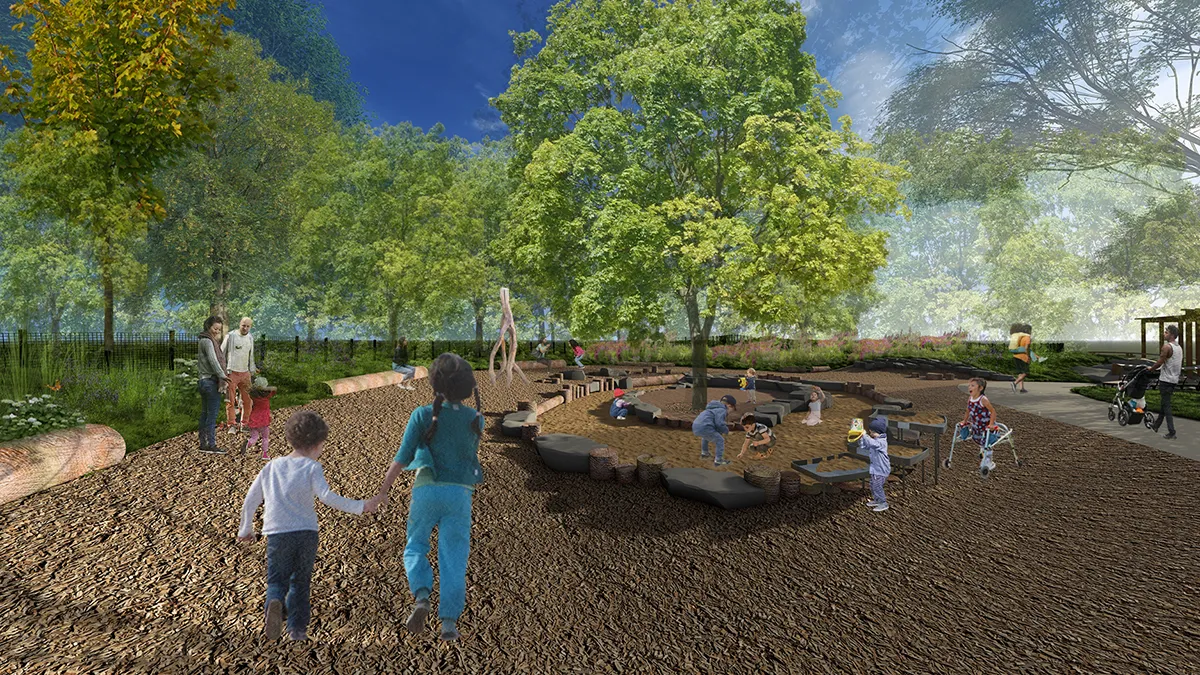
Nature Exploration Area: in the center of the Vale, a nature-based play area is defined by additional pollinator plantings, and native trees and shrubs that provide habitat for birds and pollinators. The shrubs are thickly planted to serve as a natural border, separating the wooded edges from the primary play spaces: a variety of tree stumps, logs, and boulders configured for walking, jumping, balancing, sitting and playing; an accessible hand pump, and a sand area for children of all ages and abilities. Accessible seating is dotted along the edges of the play area with a central, native red maple tree to provide shade.
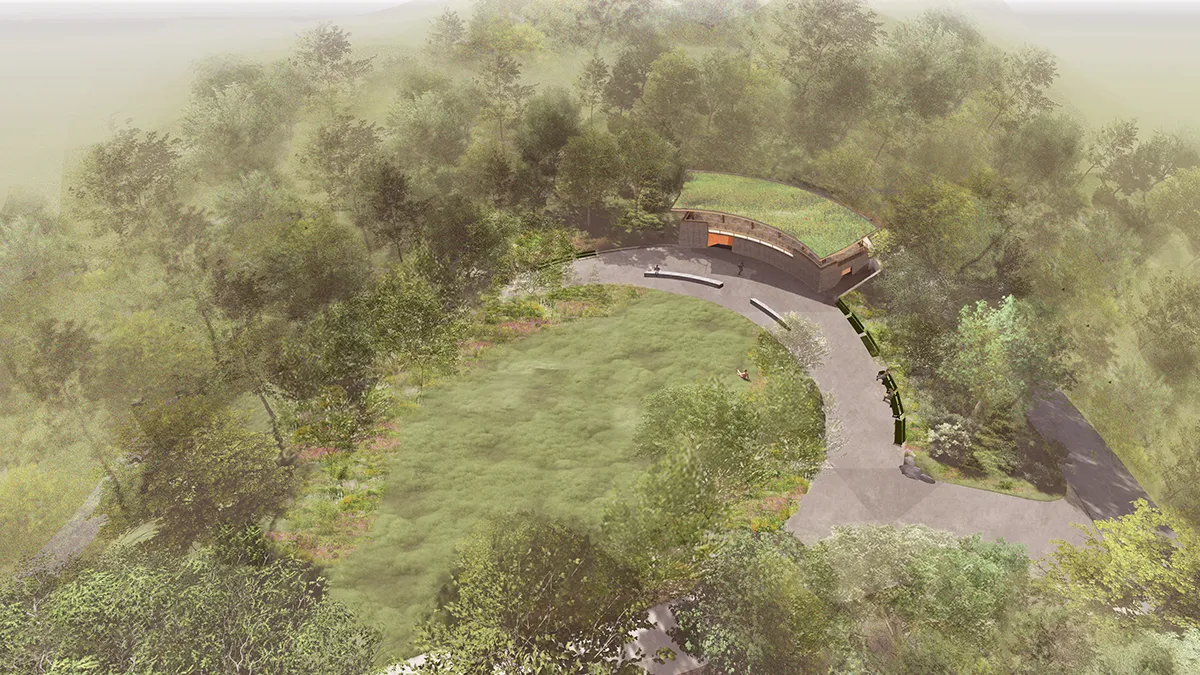
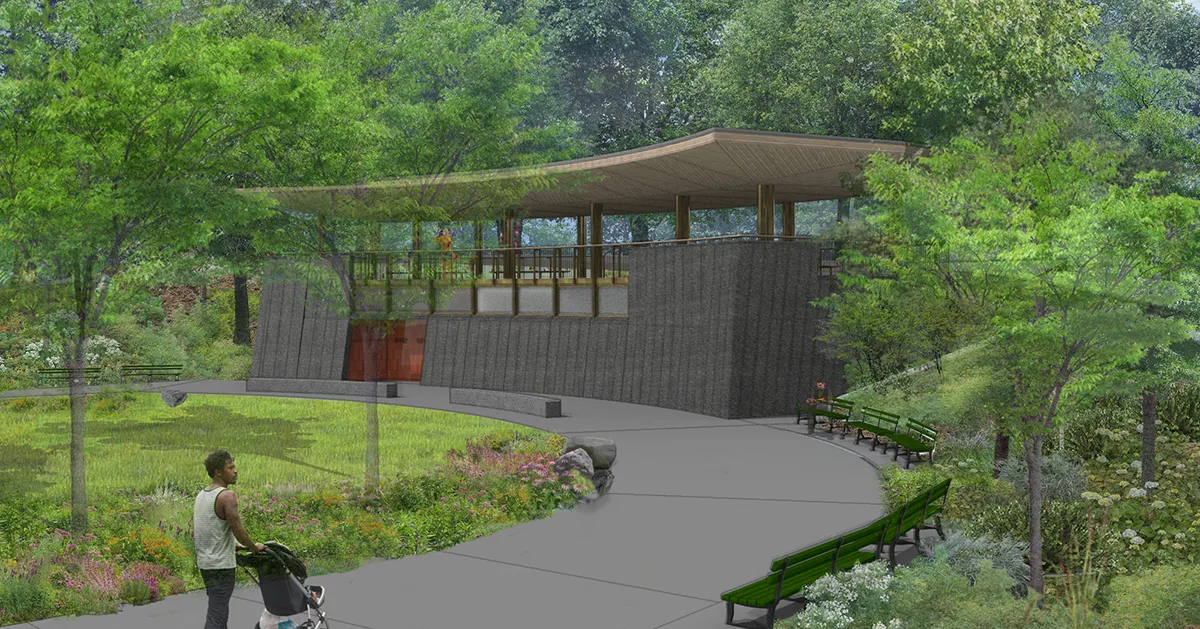
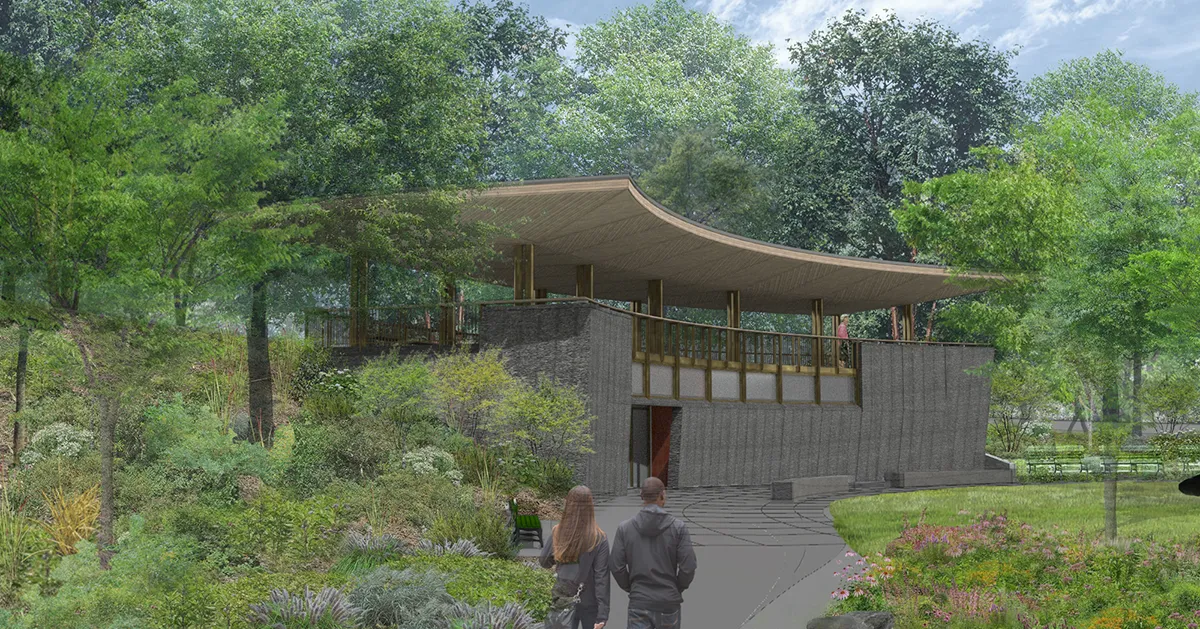
Picnic Lawn and Northeast Pavilion: at the north end of the Vale, the landscape opens to a picnic lawn and small pavilion. A mix of native oaks frame the open lawn, creating an inviting, shady and flexible open space. The perimeter is lined with historic benches and companion seating, and a new drinking fountain. The pavilion is built into the hillside at the northern end of the site, with a green roof that becomes an extension of the pollinator meadow. The pavilion is LEED certified and constructed of stone and wood finishes that are evocative of the park, with bird-friendly fritted windows. The ground floor, accessible from the lawn, features 8 all-gender composting restroom stalls, 2 of which are ADA accessible, which are similar to those found at the Wellhouse at the park’s Peninsula and avoid draining into the city’s sewer system. In addition, a grey water garden recycles sink water to reduce waste. An upper level terrace provides shaded seating to enjoy the views of the landscape.
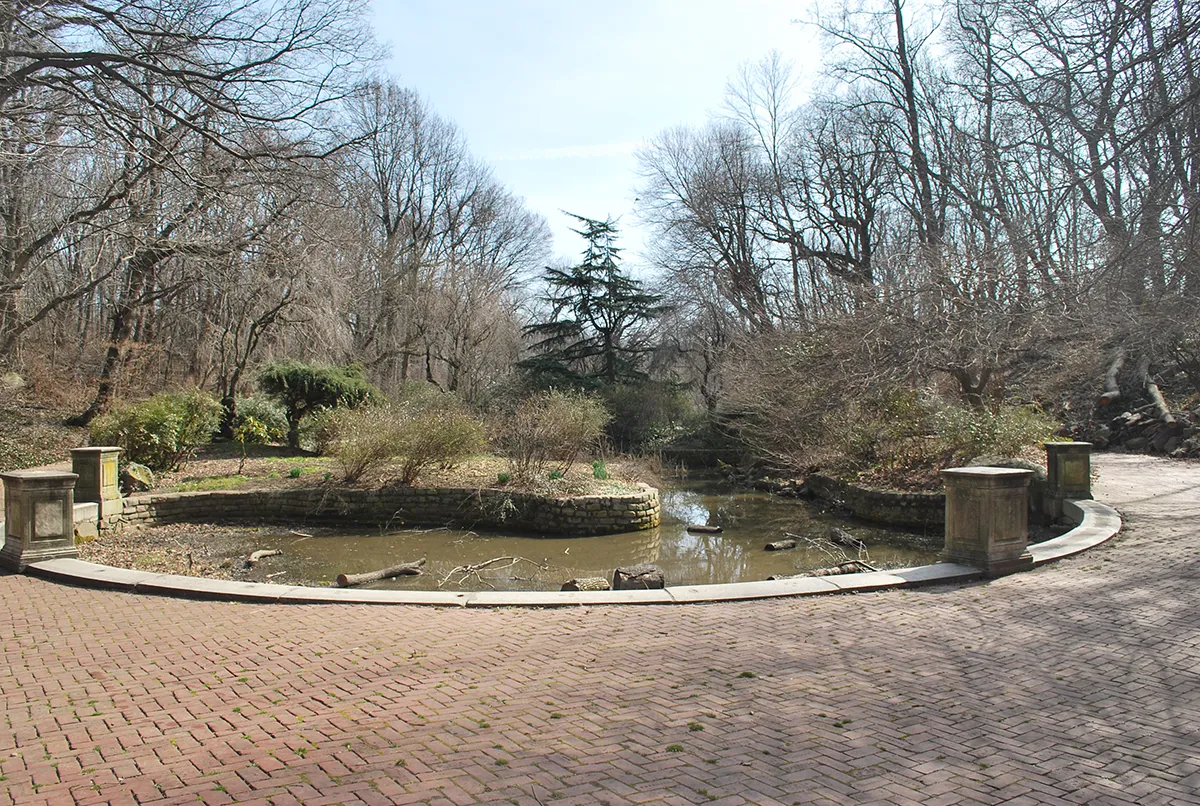
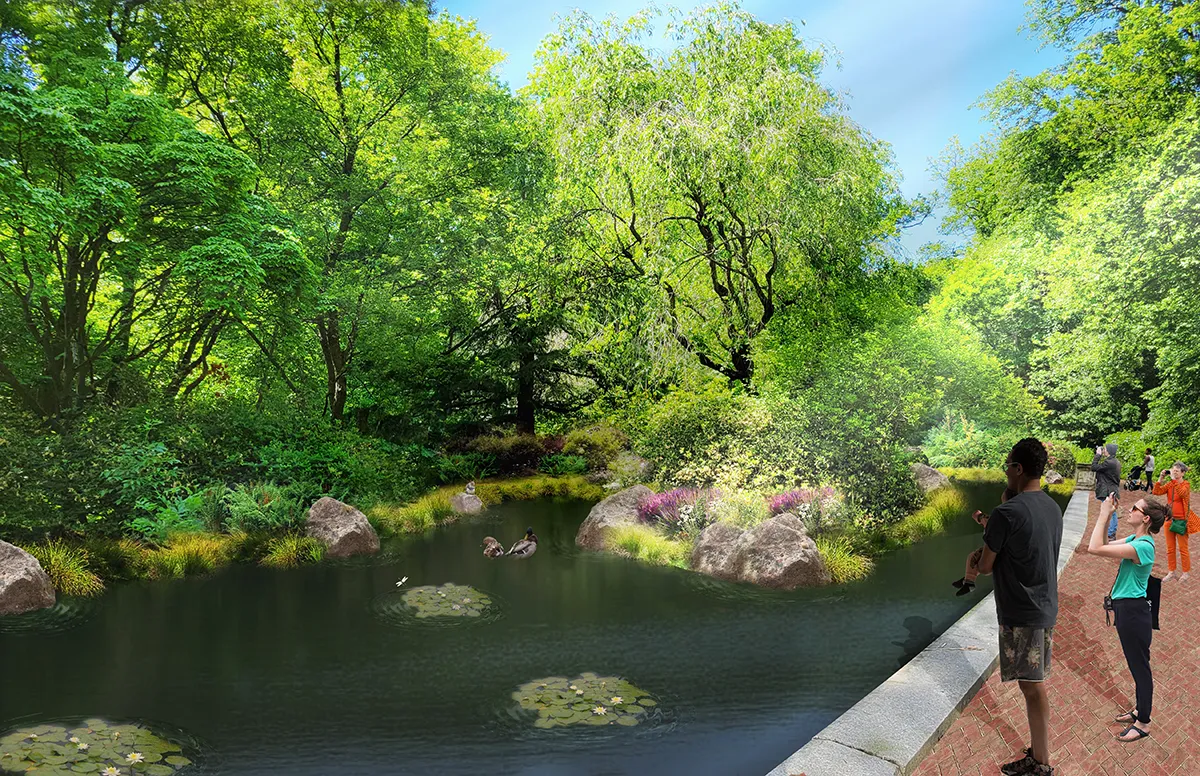
The Lower Vale is the site of the historic Children’s Pool: Dating back to the park’s creation in the mid-1800s, the Children’s Pool also is a habitat for birds and other wildlife. Its design features several layers of history: the original Olmsted and Vaux design; McKim, Mead and White updates that introduced formal elements including a marble balustrade; and additional changes made during the WPA era in the 1930s. The restoration brings back the pool’s shoreline and historic architectural elements; replaces invasive plants with new native plants; makes pathways ADA accessible; and installs discreet bubblers to circulate the water and prevent stagnation. The restoration will also add bird-friendly features, including bird baths just below the water’s surface, along with aquatic plantings and mudflats. The landscape is surrounded by woodland areas that were restored in recent years after being devastated by severe storms including Hurricane Sandy.
Prospect Park Alliance and Parks staff maintained the area, and its restoration has begun, improving its accessibility, infrastructure, and habitat value. It is slated to reopen to the public in 2027.
Find out more at the Restoration of the Vale in Prospect Park website
Images: Prospect Park Alliance