
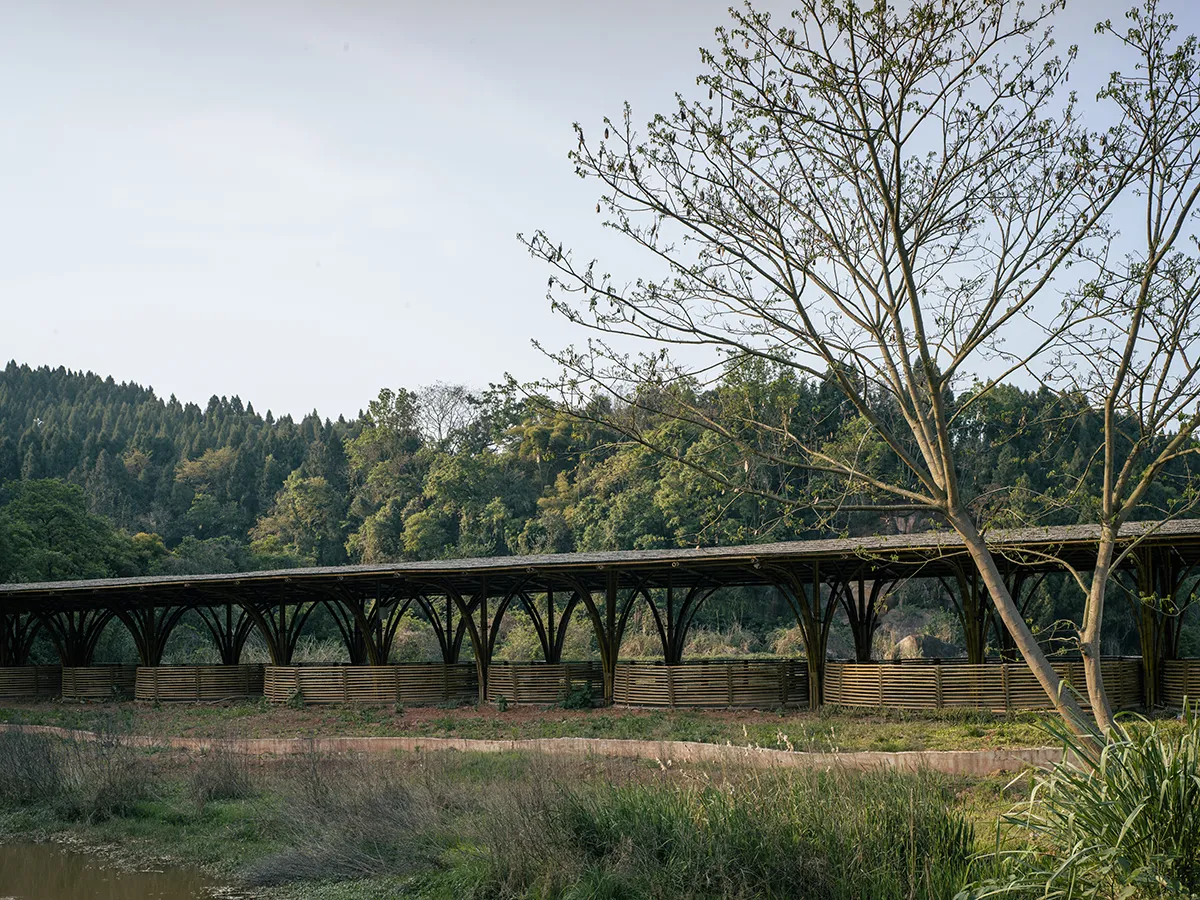
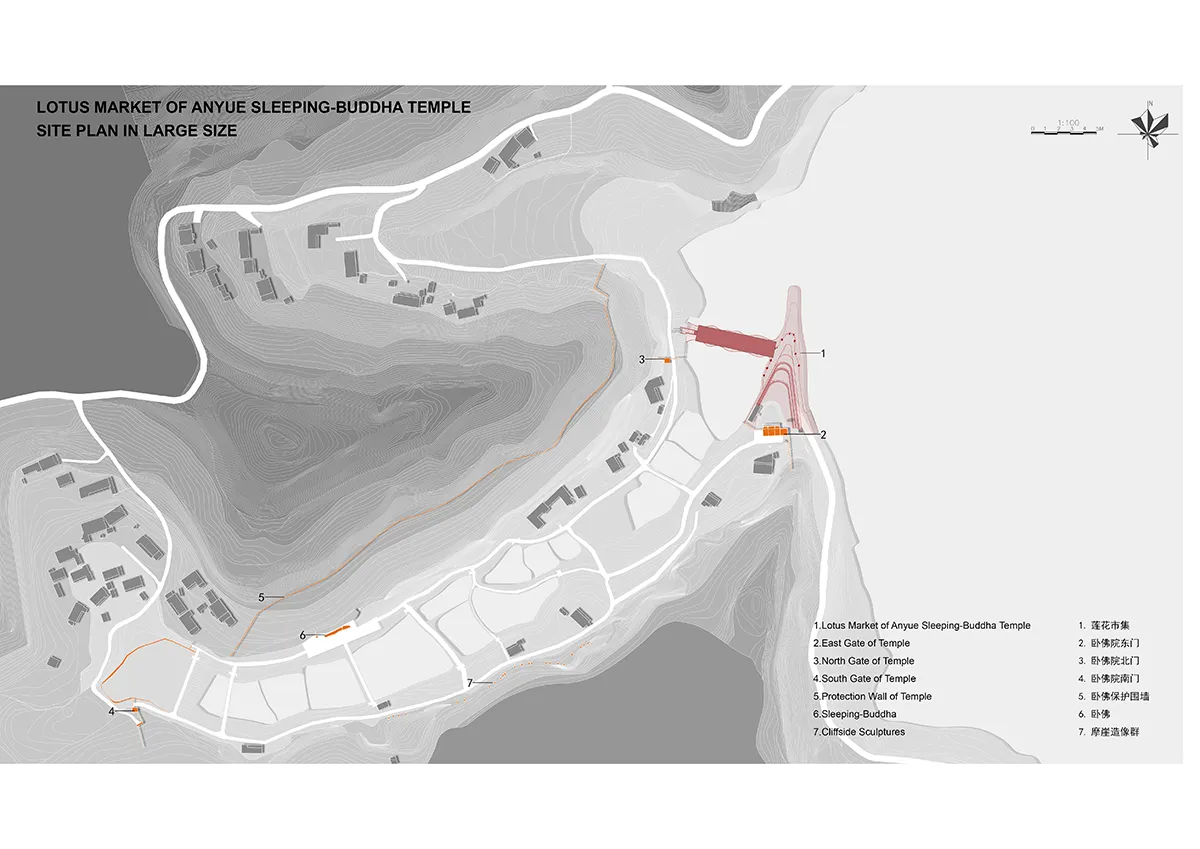
The Lotus Market is located beside the plaza in front of Anyue Sleeping-Buddha Temple, Wofuo Village, Anyue County, Ziyang City, Sichuan Province, China. The project aims to address two main issues: the broken visitor circulation in the scenic area and the need for a community market space.
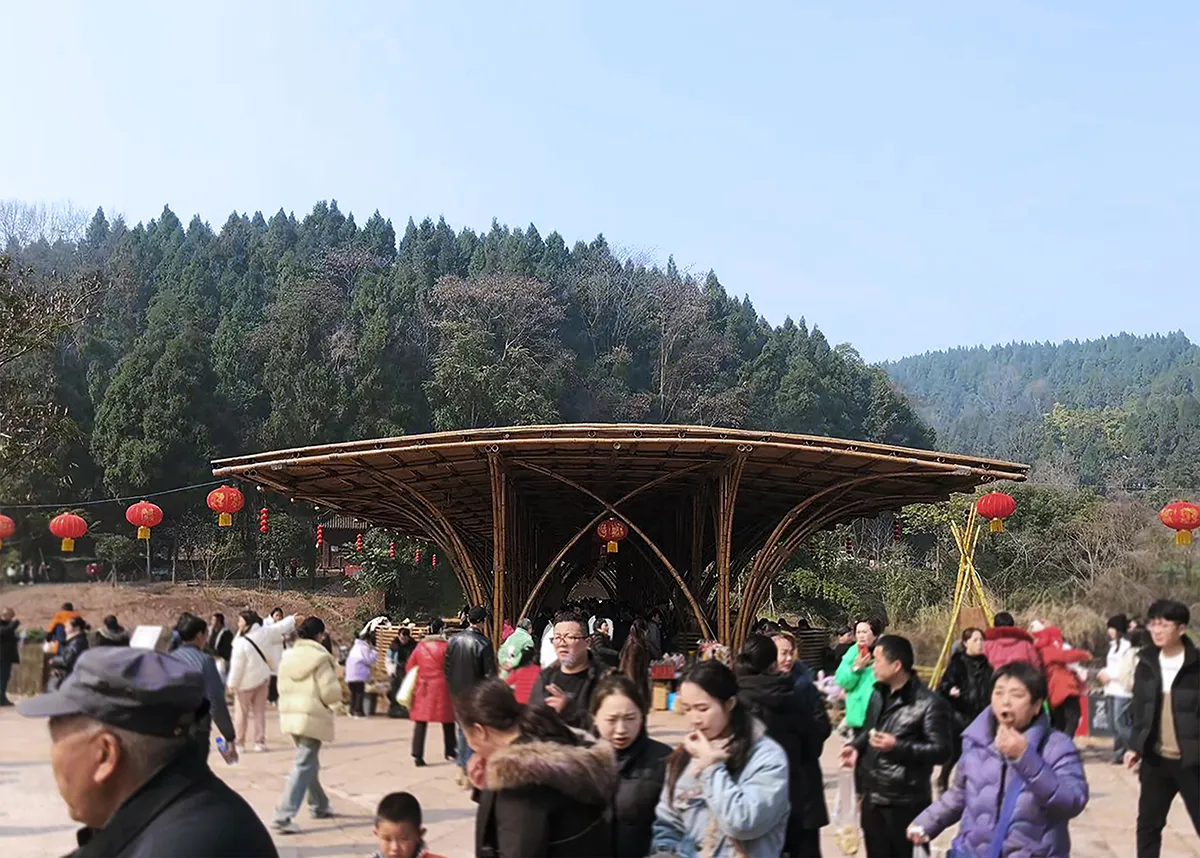
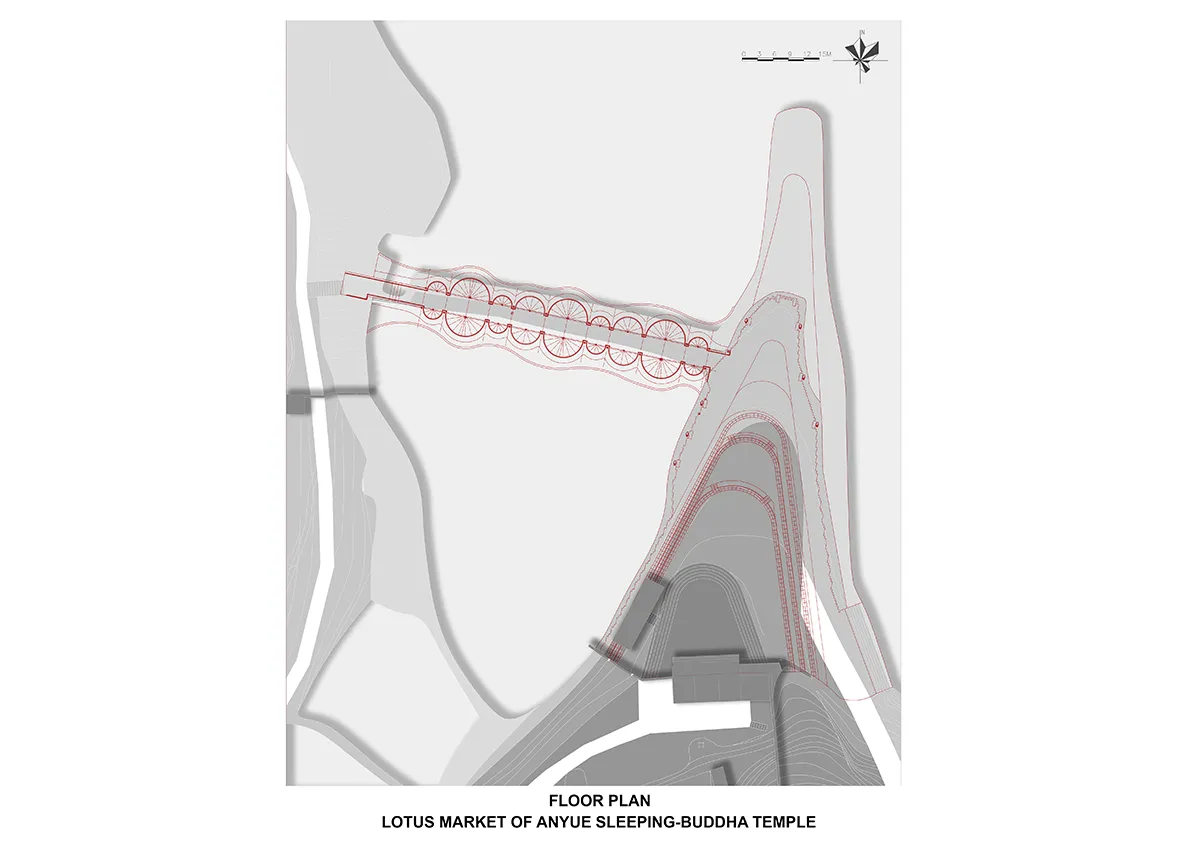
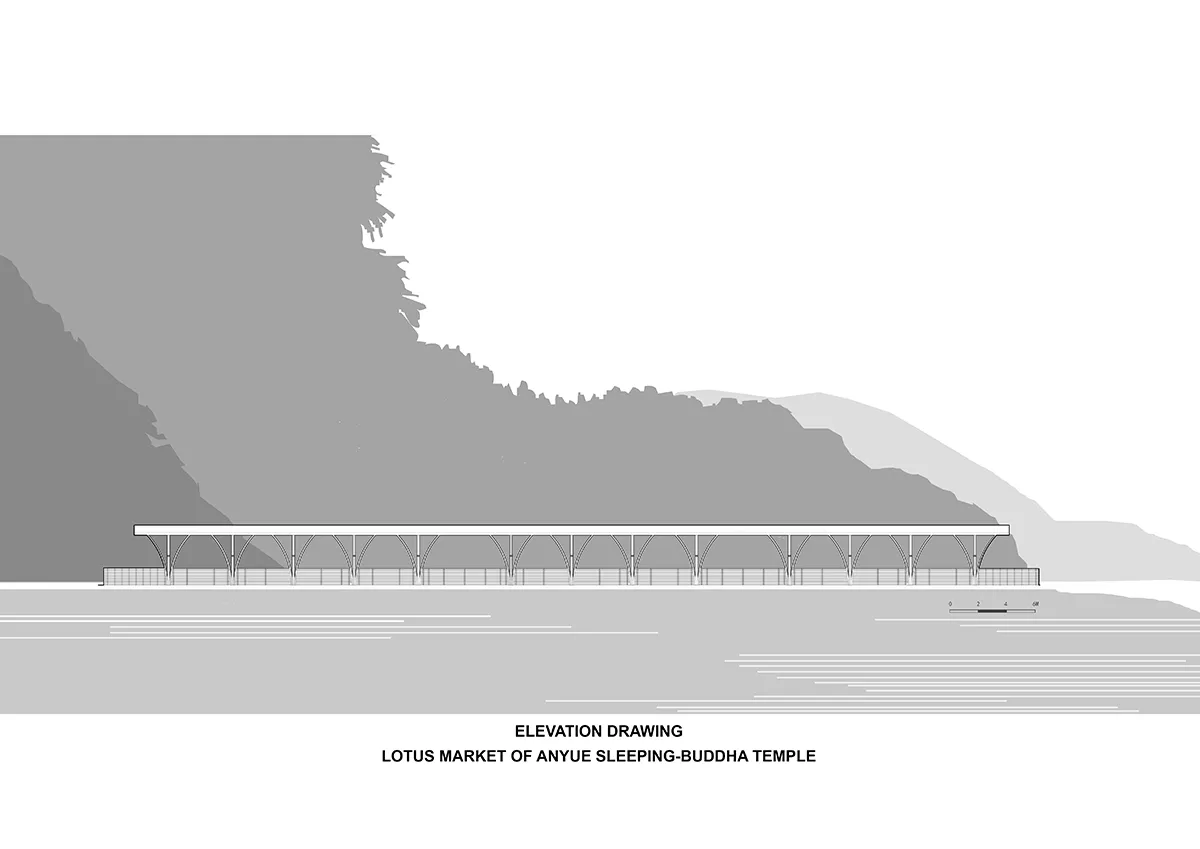
The site was originally a narrow field ridge, bordered by Paoma Mountain Reservoir on one side and a fish pond on the other, with lush green hills in the background, forming a natural landscape that integrates mountains, water, and the Buddhist courtyard. The project features an eco-innovative public space design, with a 60-meter-long, 3–11-meter-wide bamboo structural landscape building (covering 760.12 square meters) that connects the scenic area’s entrance and exit, creating a continuous visitor loop. At the same time, it provides villagers with a shaded and sheltered daily market space, serving as a link between cultural heritage and community life. The total construction cost was $100,000, using local bamboo and red sandstone, and was built with a low-intervention, lightweight construction approach to blend seamlessly with the natural environment.
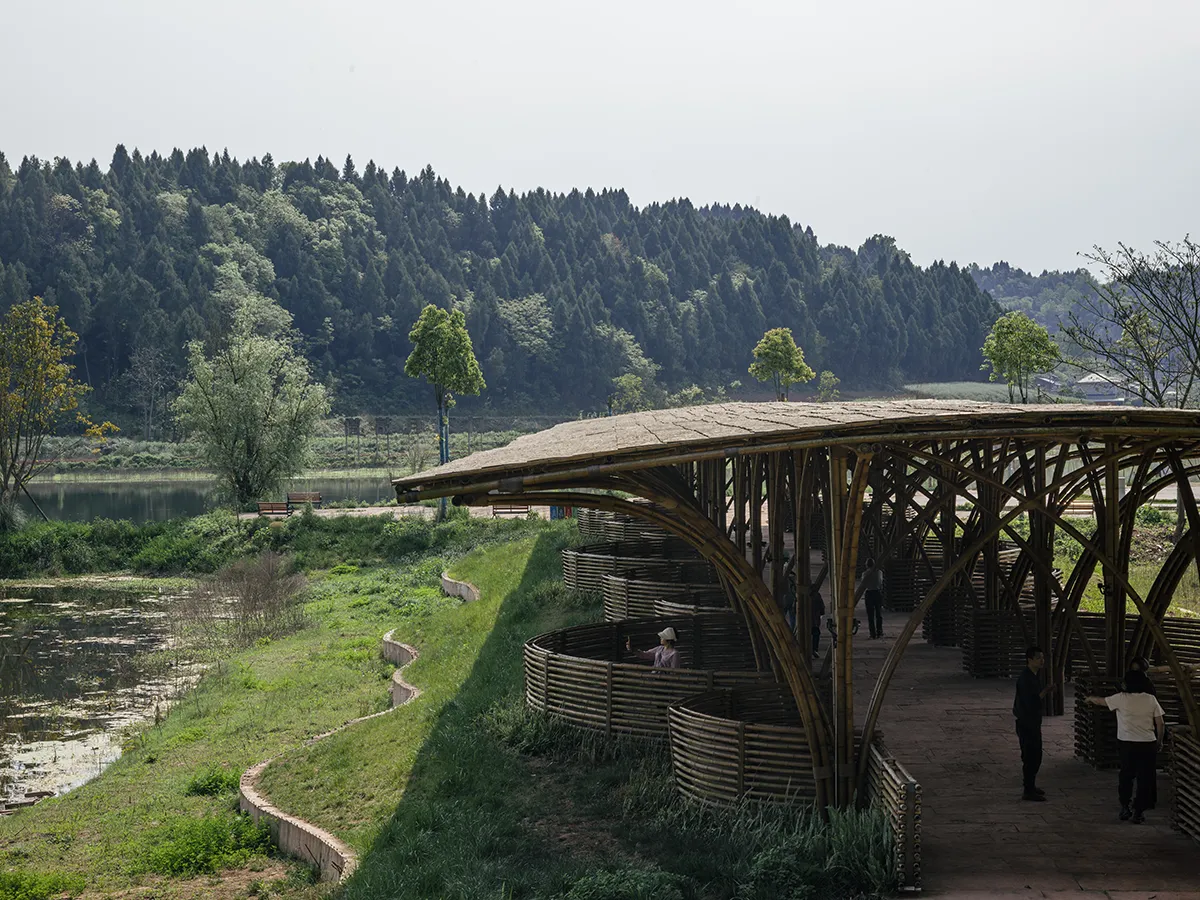
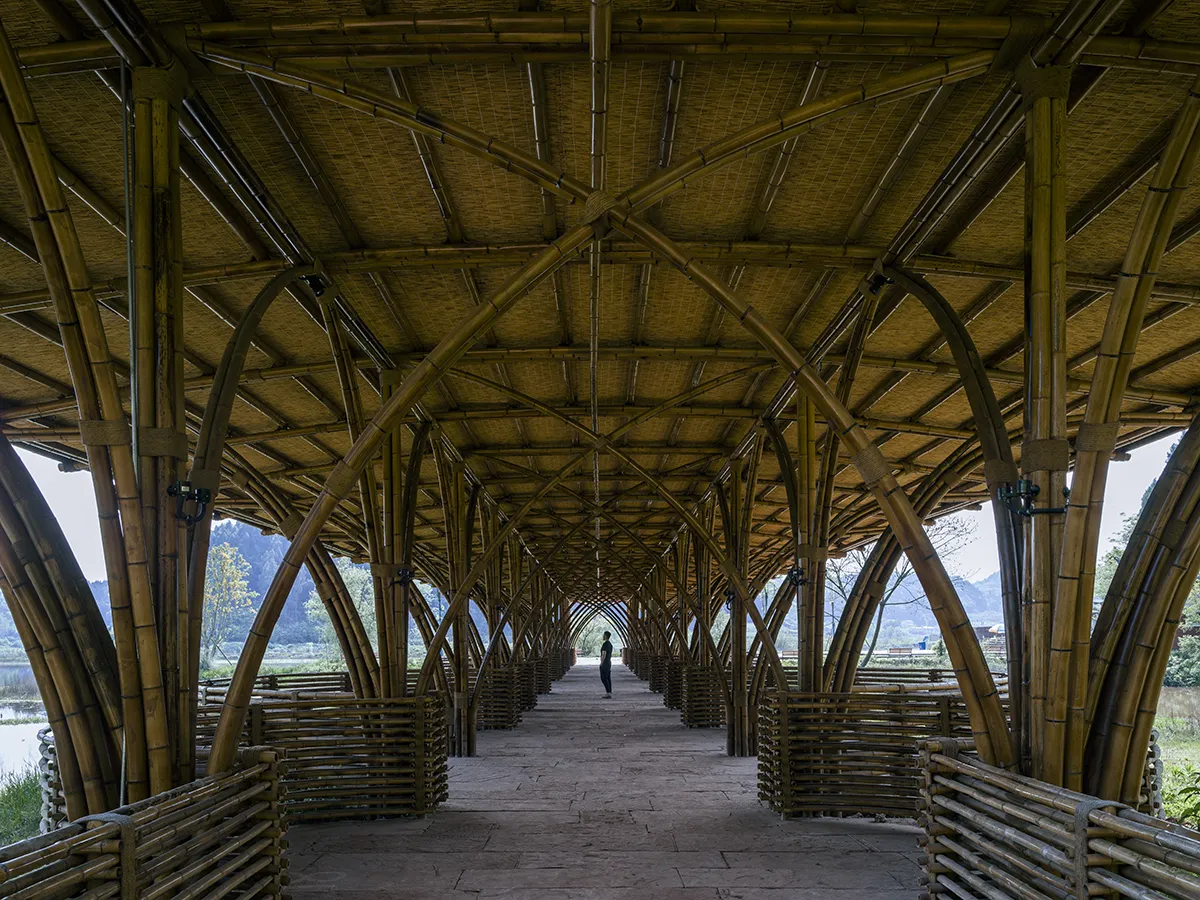
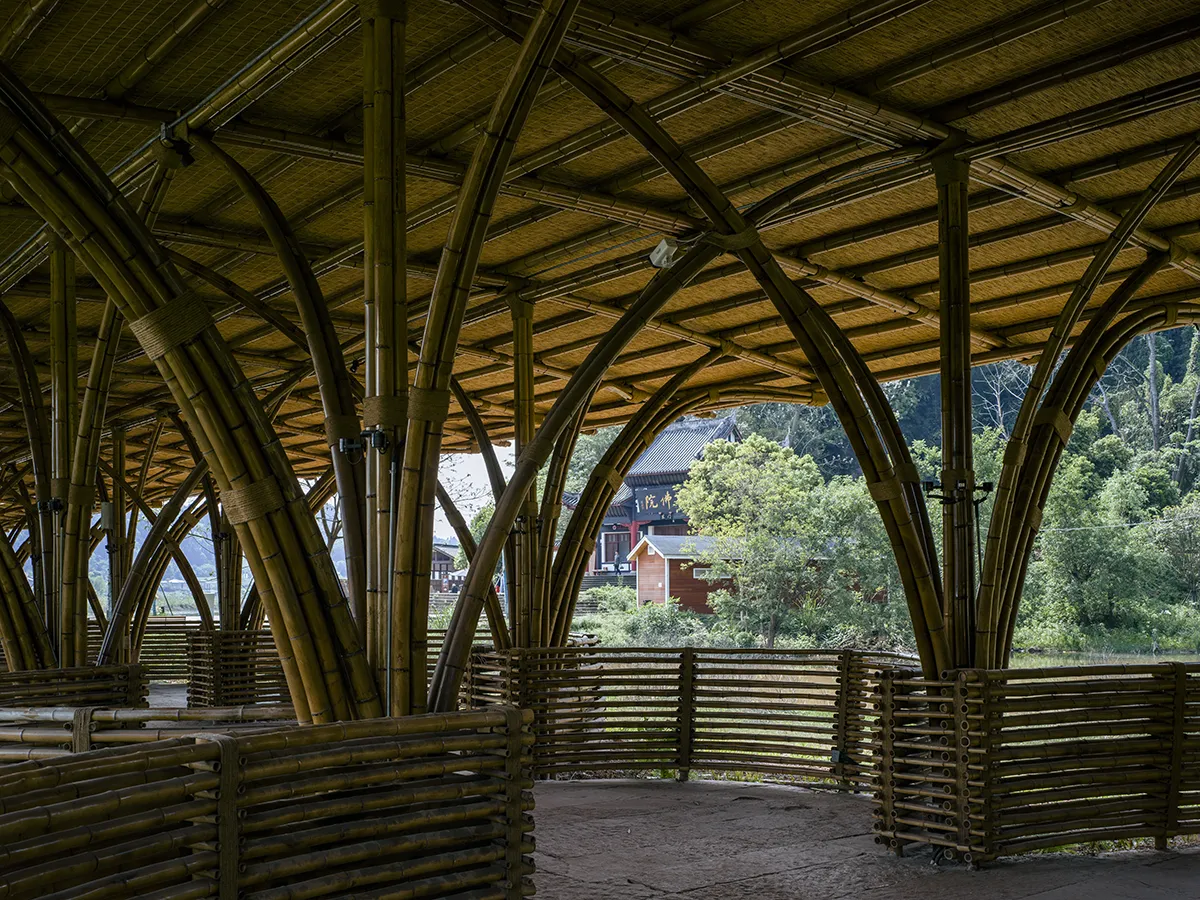
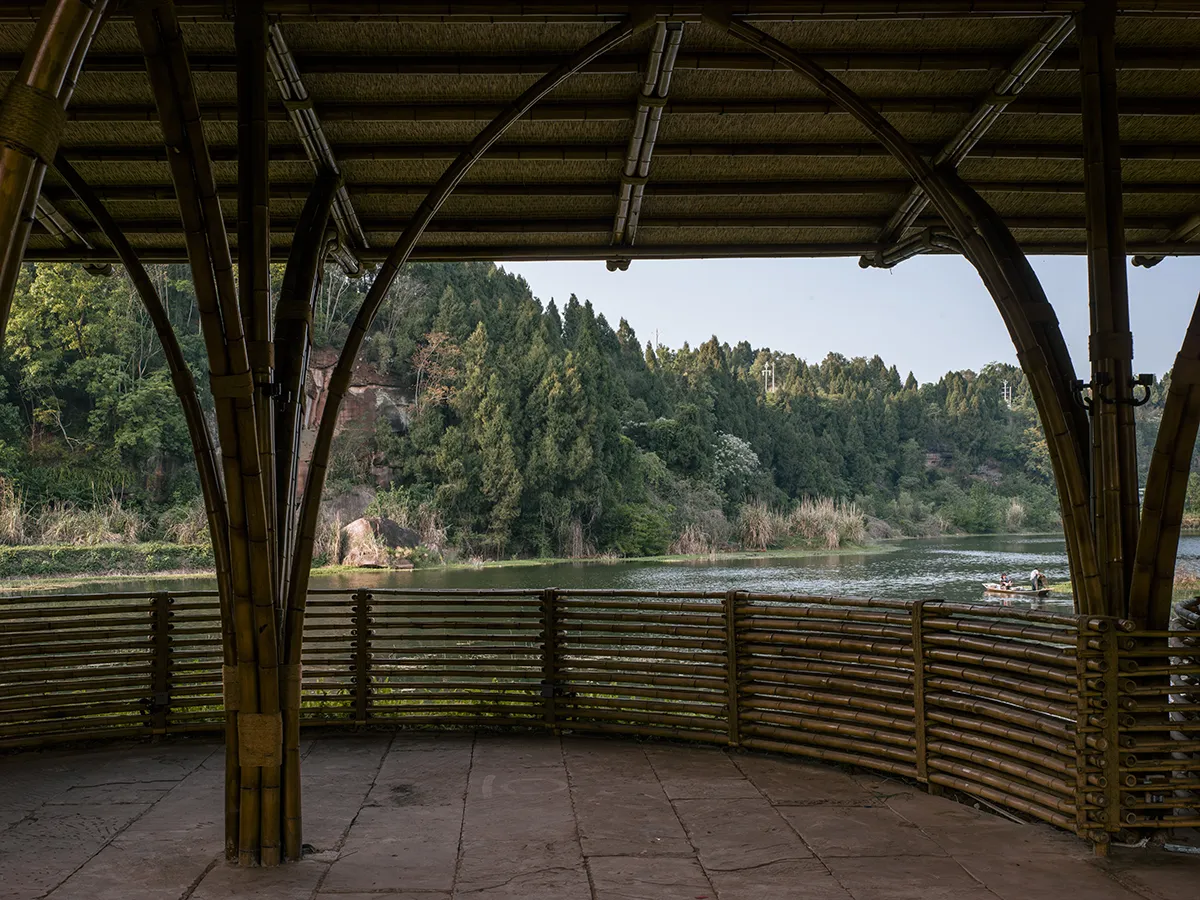
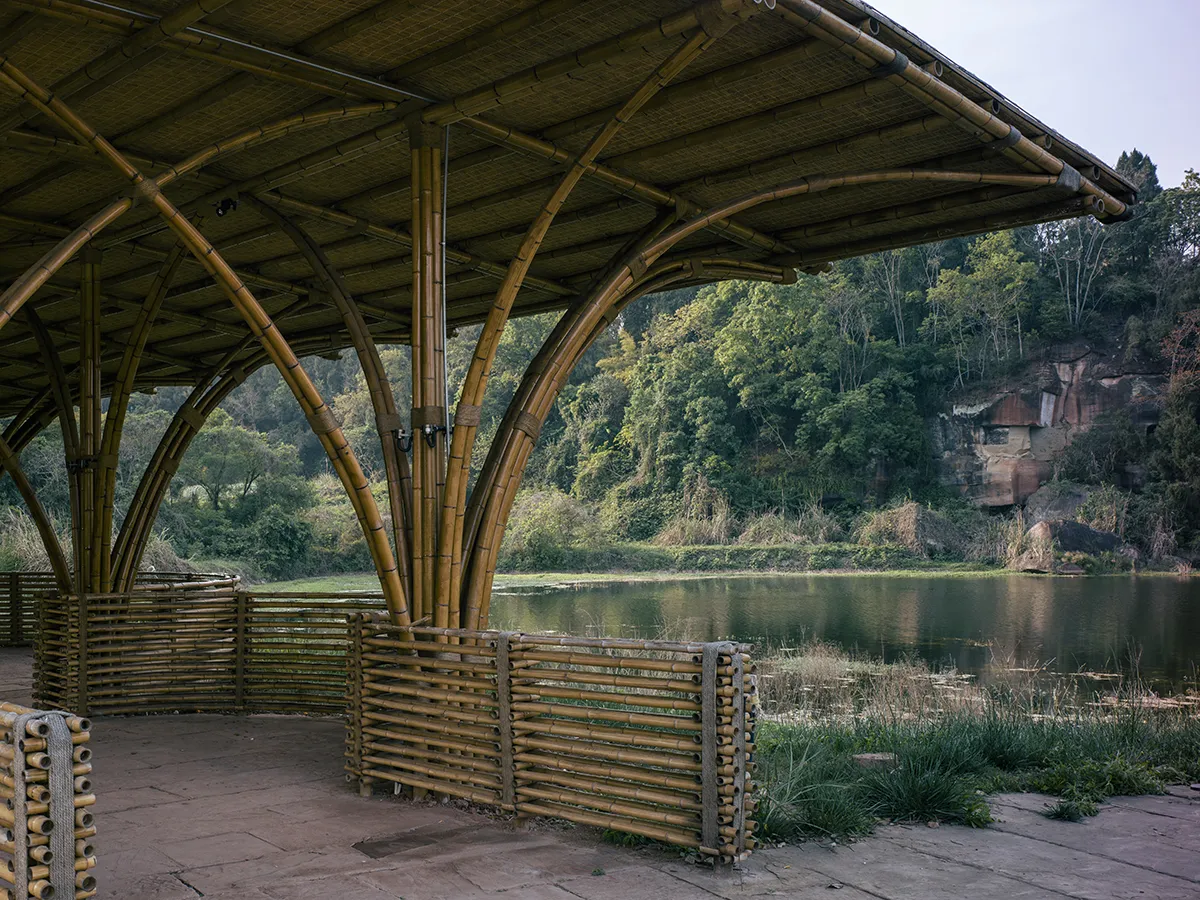
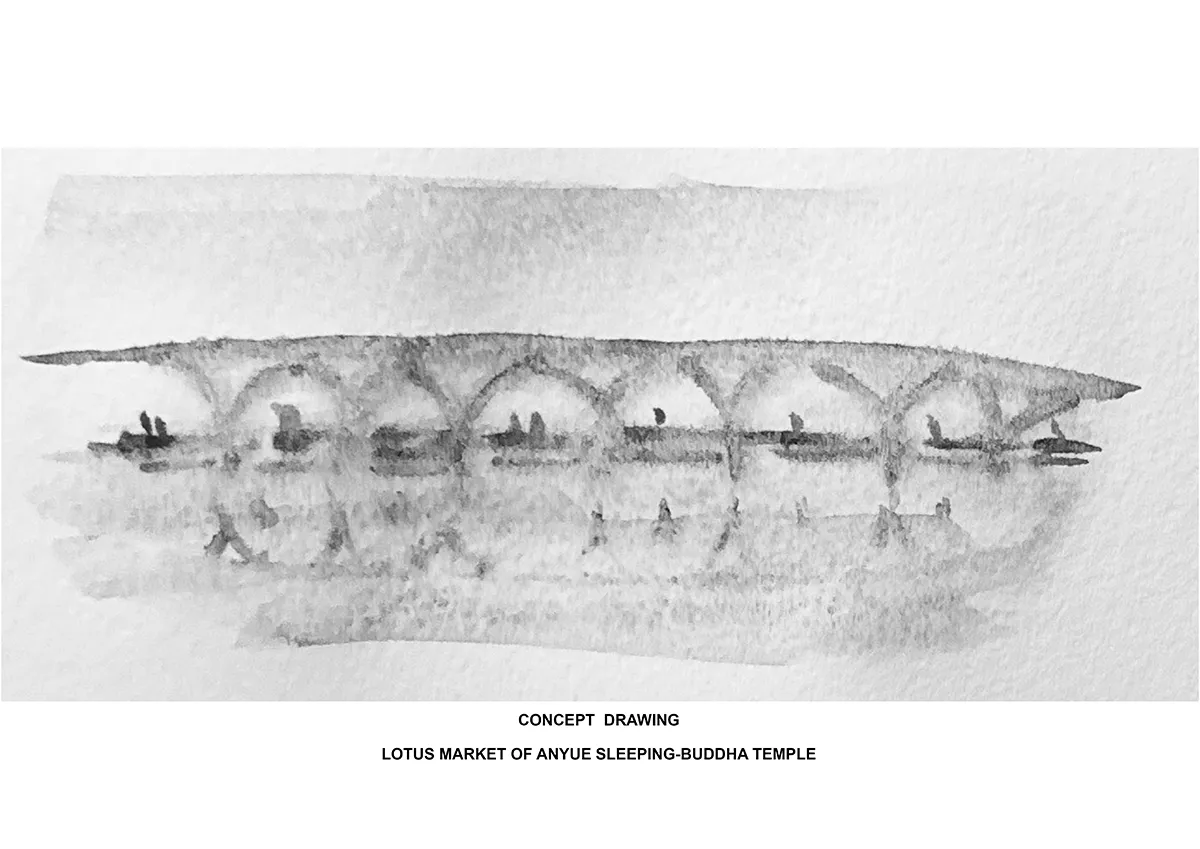
Sleeping-Buddha Temple, a Tang Dynasty treasure of cliff-carved Buddhist art, features 1,613 statues and precious-stone inscriptions carved into the mountain cliffs. For centuries, villagers’ lives have been intertwined with this cultural heritage, creating a unique rural landscape where agriculture and faith coexist. Drawing inspiration from the concept of “Lotus Steps,” the design features a lightweight bamboo corridor that unfolds like lotus petals. The bamboo structure, crafted using traditional bundling and interweaving techniques, creates a dynamic colonnade of bundled columns and intersecting arches, framing distant mountains in a serene backdrop. Recycled red sandstone from the area, echoing the texture of the cliff carvings, is used for pathways that carry the imprint of time, evoking a sense of ancient presence. The bamboo canopy filters sunlight into golden patterns, while arched bamboo frames capture the shifting light and landscape, transforming the natural scenery into a meditative “walking contemplation” experience.
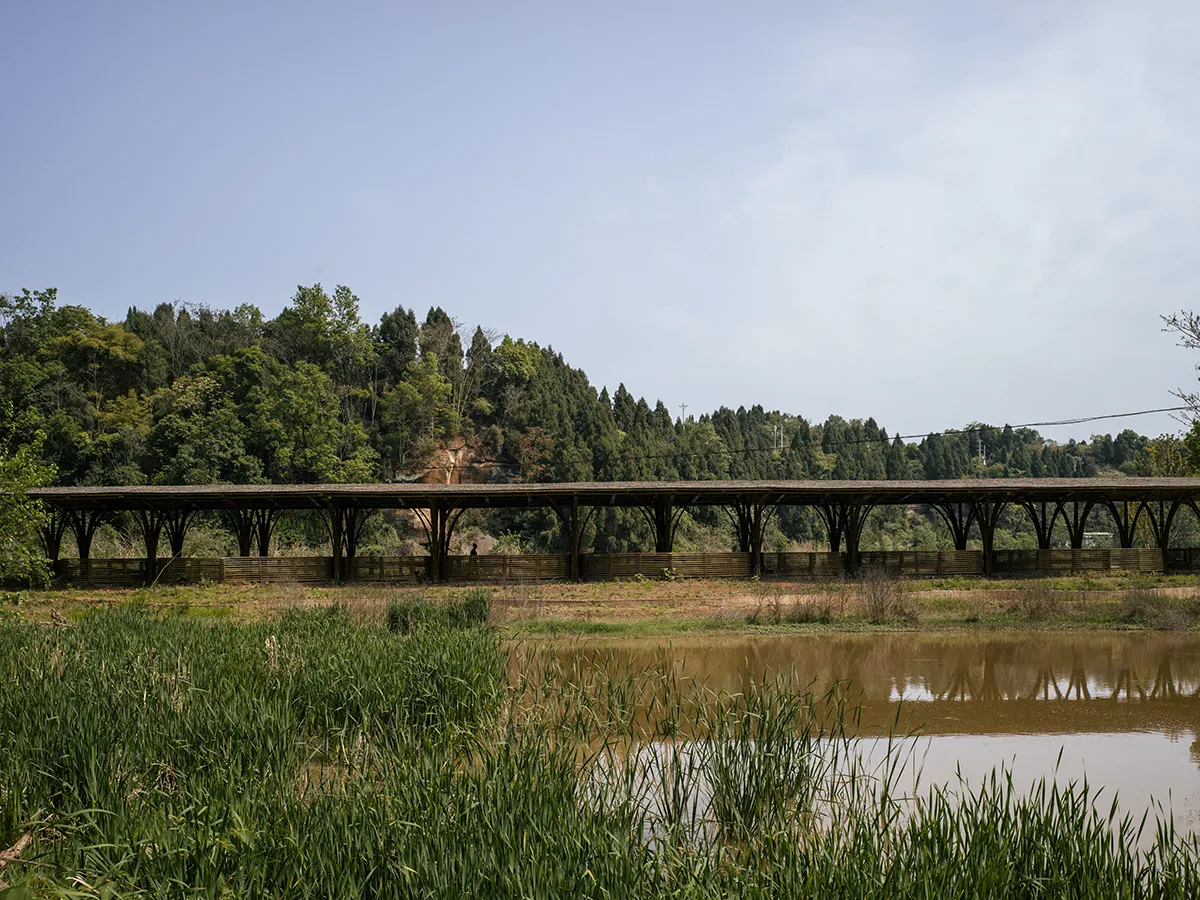
Functionally, the structure serves as a market, camping area, and visitor pathway, enhancing community vitality. Its low-maintenance and high-adaptability design has been praised by both the community and cultural heritage authorities. The project exemplifies sustainable rural public landscape design, demonstrating how landscape architecture can integrate cultural preservation with community development and rural revitalization.
Lotus Market of Anyue Sleeping-Buddha Temple
Location: Bamiao village, Sleeping-Buddha town, Anyue county, Ziyang city, Sichuan province, China
Client: Sichuan Puyuan Agricultural Development Co., Ltd.
Design Firm: XW Architects
Lead Architects: Jia Guo
Architect: Jia Guo, Yiran Li, Zi Chai, Hanfang Zhai, Yilin Chen, Yixuan Hu, Xuanzhou Li
Collaborators: Chengdu 3+2 Rural Innovation Culture Communication Co., Ltd.