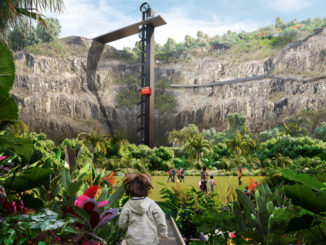
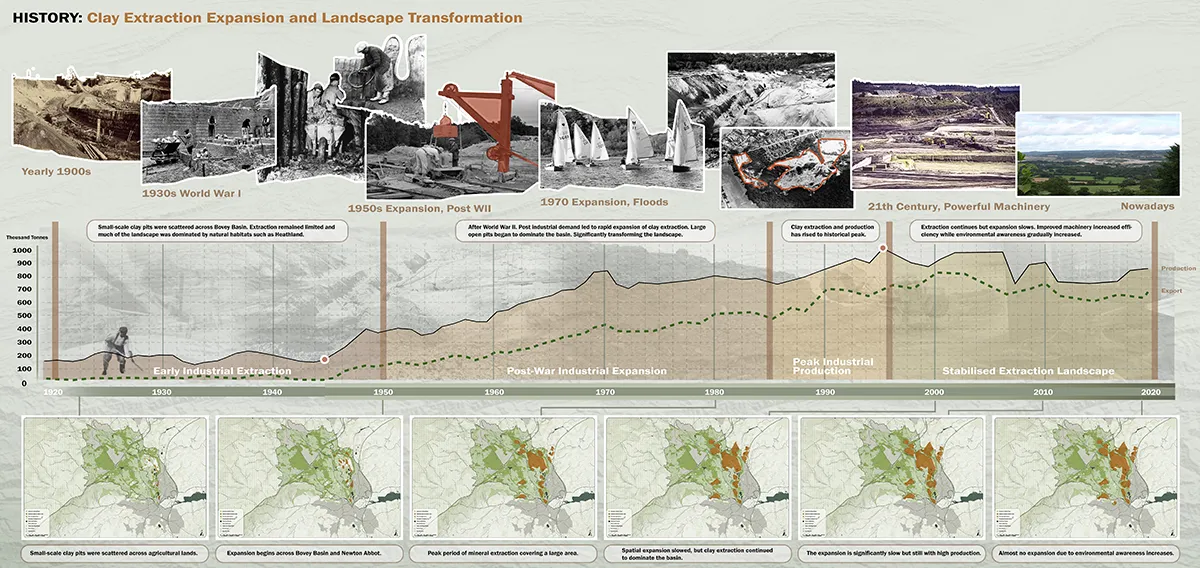
Mineral extraction has long played an important role in shaping the economy and landscape of the Bovey Basin, Devon. However, the environmental legacy of quarrying—including habitat fragmentation, modified hydrology, and disturbed landforms—also presents significant restoration challenges. Living Quarry explores how these post-industrial landscapes can move beyond conventional restoration by transforming Highweek Quarry into a resilient ecological landscape that supports biodiversity, climate adaptation, and meaningful public engagement.
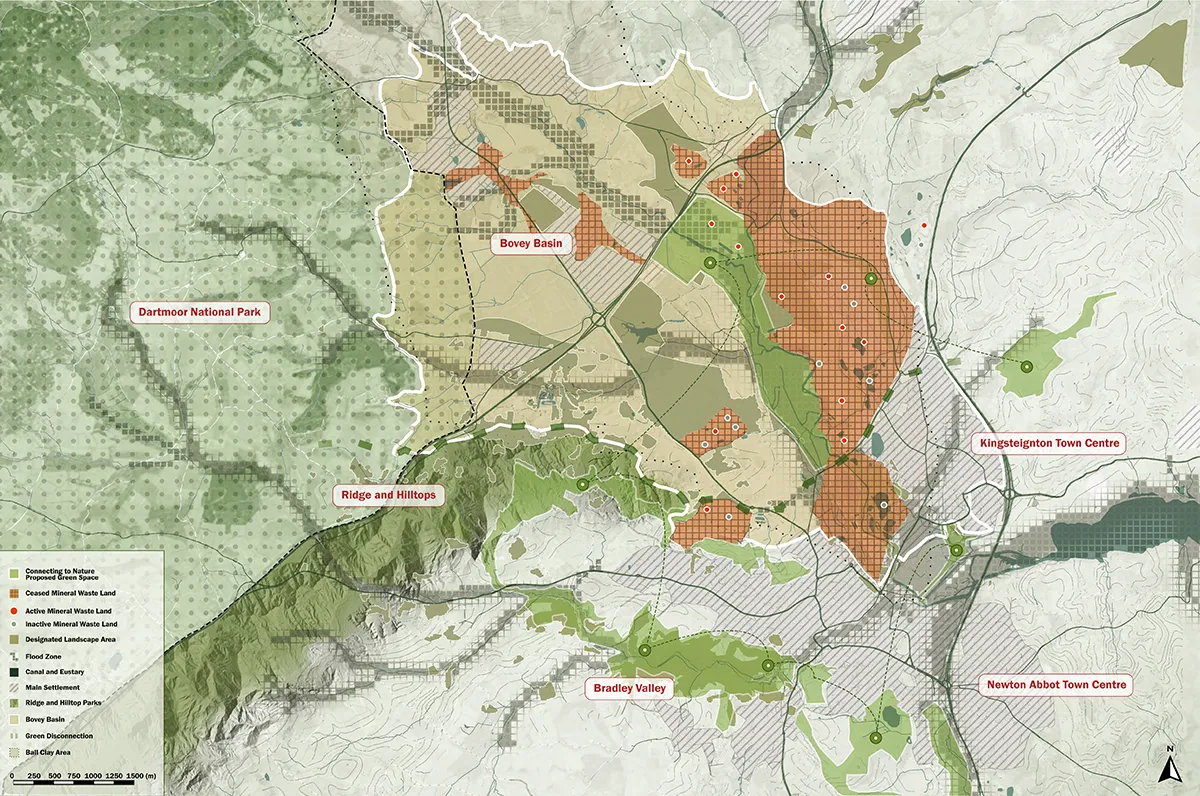
Developed as a strategic landscape framework, the proposal builds upon Teignbridge District Council’s Connecting to Nature program by exploring how Highweek Quarry could become a regional ecological destination within a wider Nature Recovery Network while identifying opportunities to strengthen woodland edges, habitat connectivity, ridge trails, and green infrastructure, Living Quarry extends the vision by demonstrating how the quarry itself can evolve into a multifunctional ecological landscape that contributes to biodiversity, public wellbeing, and long-term environmental resilience.
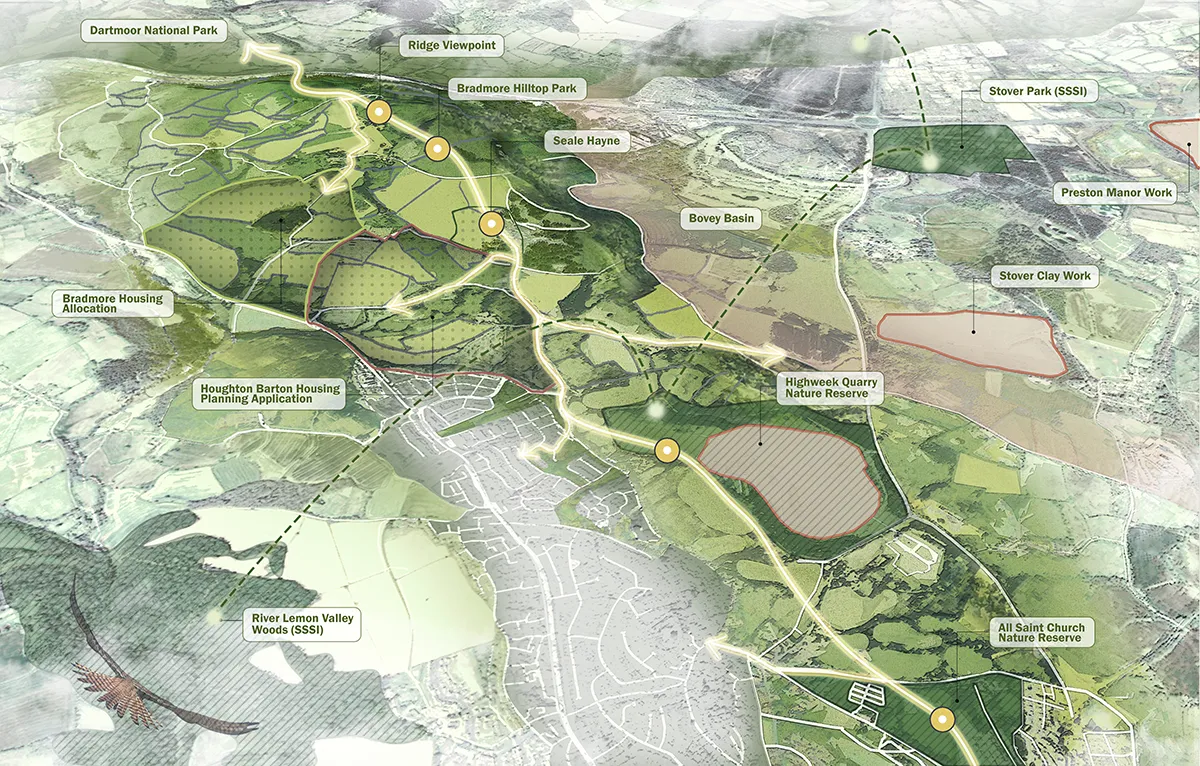
The project is guided by a simple question: how can an industrial landscape continue to evolve after extraction ends? Rather than proposing a fixed masterplan, Living Quarry embraces change as an essential characteristic of the landscape. Natural processes form the foundation of the design, allowing the site to adapt and mature over time rather than being restored to a single predetermined condition. This long-term perspective encourages landscapes that remain resilient to environmental change while supporting continuous ecological development.
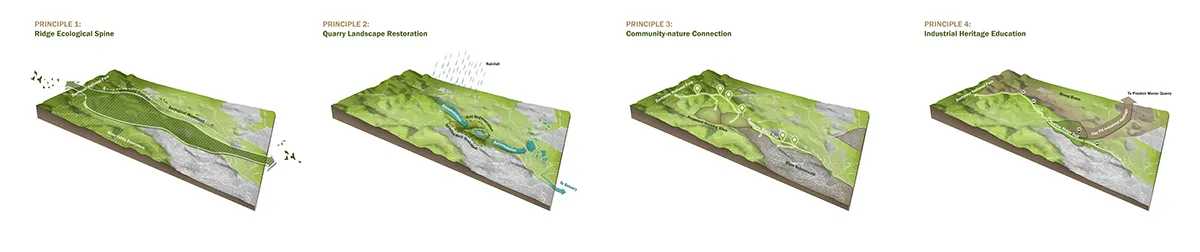
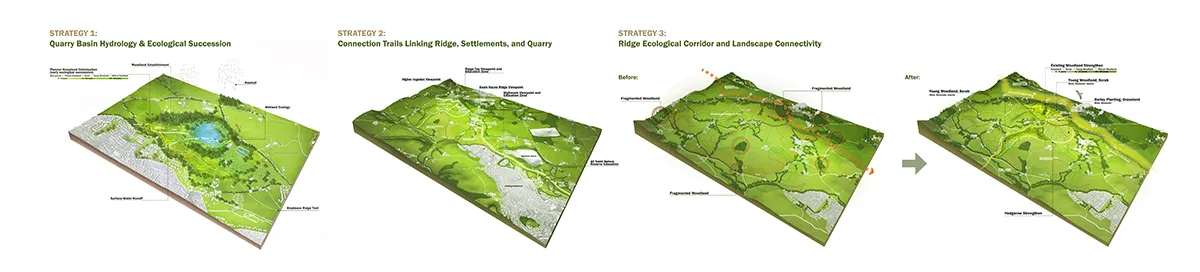
For generations, the quarry has been perceived as a working landscape separated from surrounding communities. The proposal also transforms this relationship by introducing opportunities for walking, wildlife observation, environmental education, and quiet recreation. The integrated trails, viewpoints, and interpretation spaces encourage visitors to experience ecological recovery firsthand while learning about the area’s geological history, industrial heritage, and evolving natural systems. In doing so, the project reframes the quarry not as a scar within the landscape, but as an educational and ecological asset for the wider community.
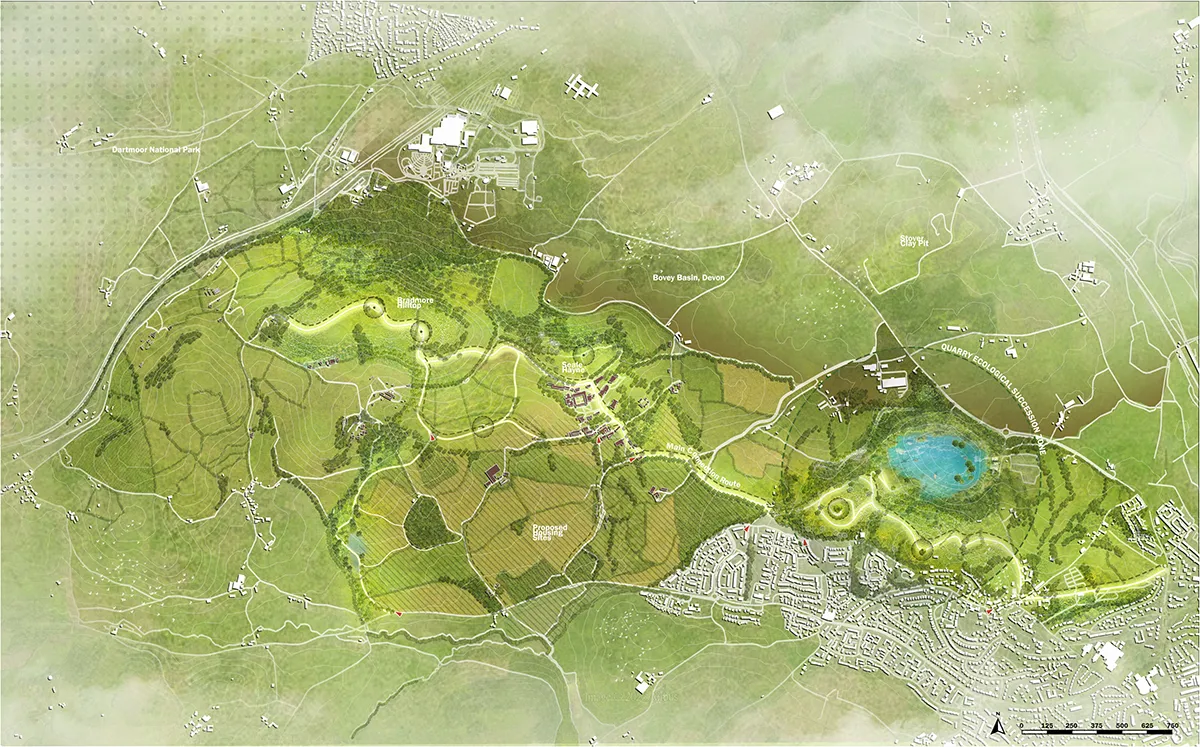
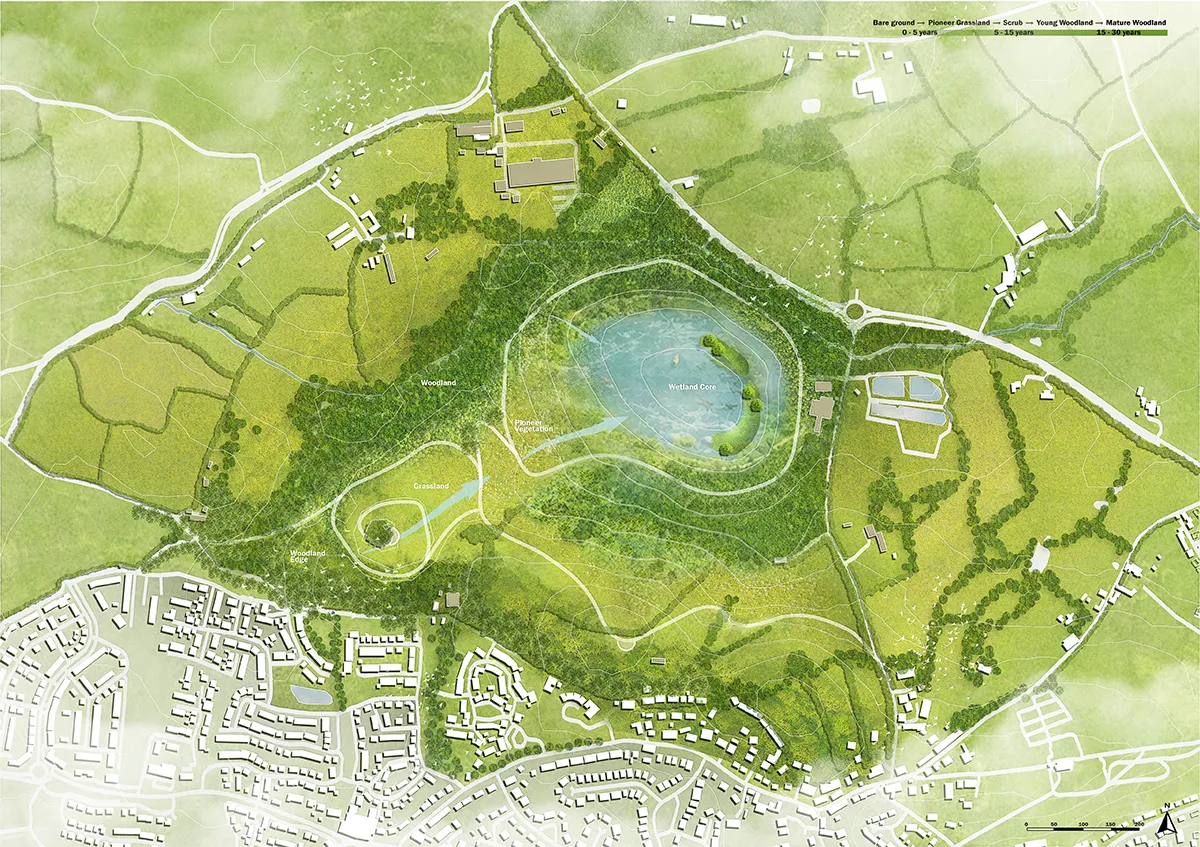
Inspired by the local landscape character, such as the distinctive mosaic of woodland, hedgerows, rolling farmland, and valleys that define the Bovey Basin, the proposal reinforces existing ecological patterns rather than imposing a contrasting landscape. Strengthening connections among surrounding habitats enables the restored quarry to function as part of a larger living landscape, supporting both wildlife movement and community access across the wider area.
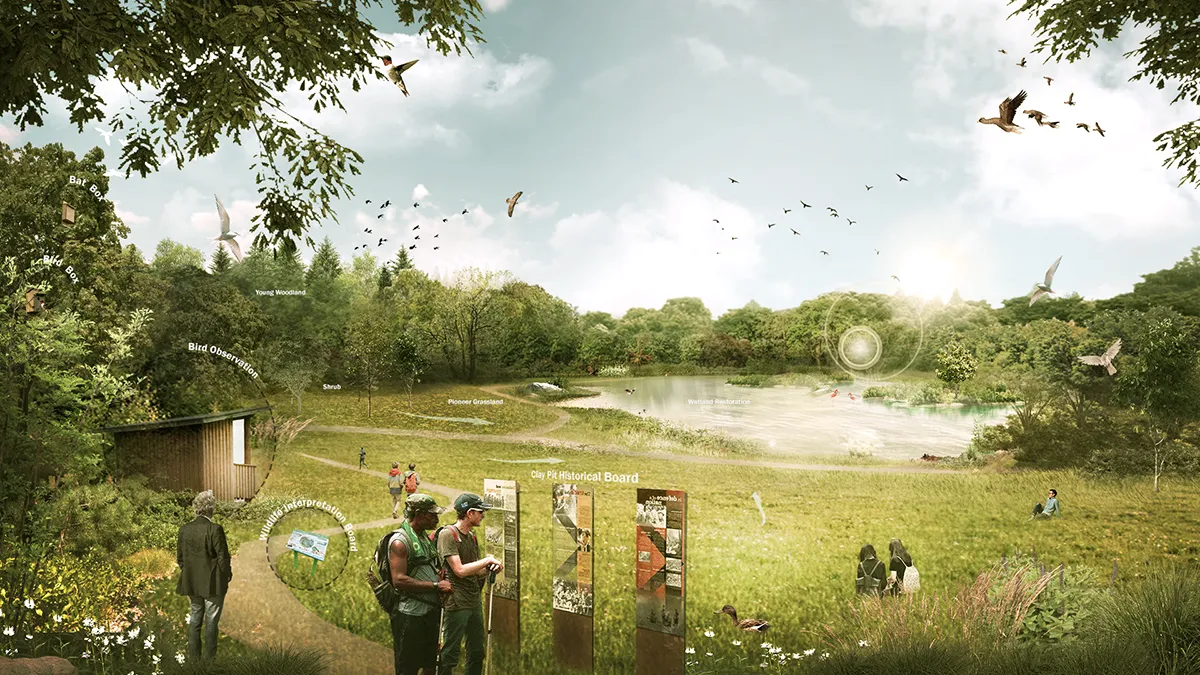
The framework reflects contemporary policy approaches to nature recovery, quarry restoration, and landscape-led planning. It demonstrates how strategic landscape architecture can bridge environmental policy with spatial design, illustrating the potential for post-industrial sites to contribute to climate adaptation, biodiversity recovery, and healthier communities. By treating restoration as an ongoing process rather than a completed outcome, Living Quarry presents a transferable vision for regenerative landscapes that extends well beyond the boundaries of a single quarry.
Technical Information
Living Quarry proposes a landscape-led restoration framework for Highweek Quarry that integrates landform modification, ecological succession, hydrological restoration, and public access within a long-term adaptive management strategy.
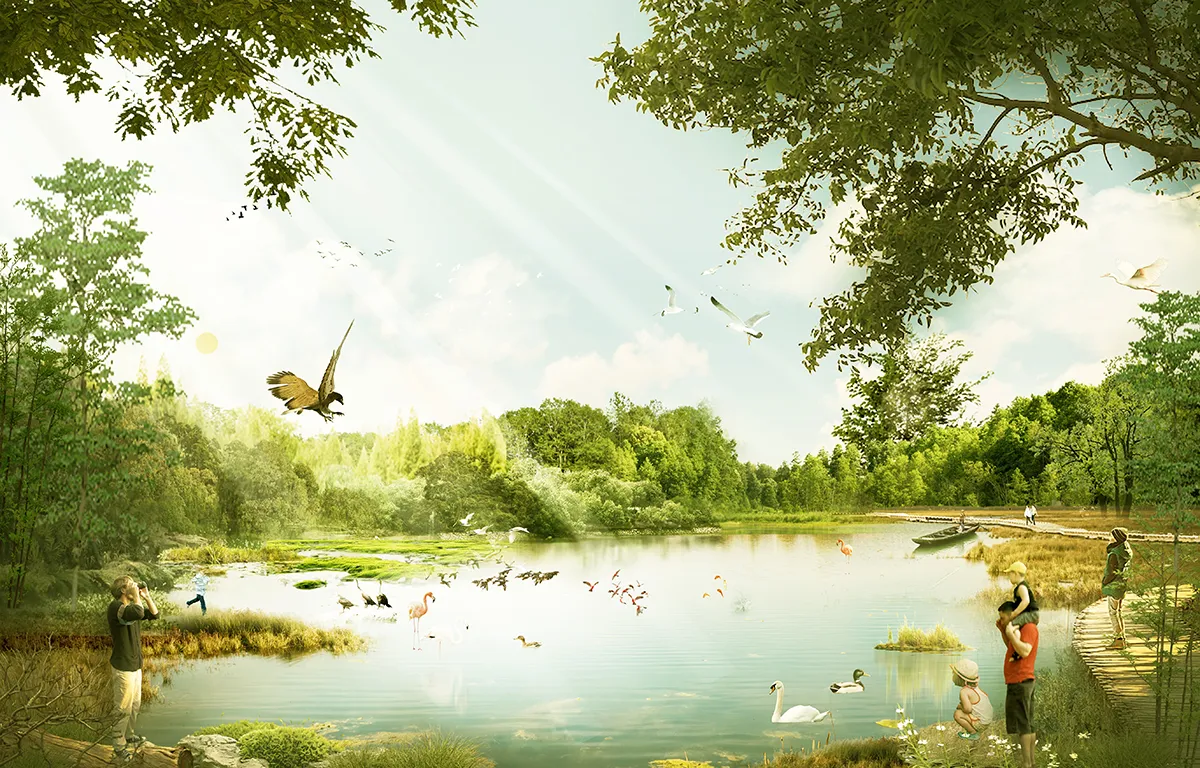
The proposed landform strategy reshapes the quarry through phased cut-and-fill operations and slope regrading to improve stability while creating varied topography capable of supporting diverse habitats. The restored basin functions as a natural water system, capturing rainfall and surface runoff to encourage infiltration, groundwater recharge, wetland formation, and seasonal water storage. Wetland edge planting provides natural filtration, improving water quality while supporting aquatic biodiversity.
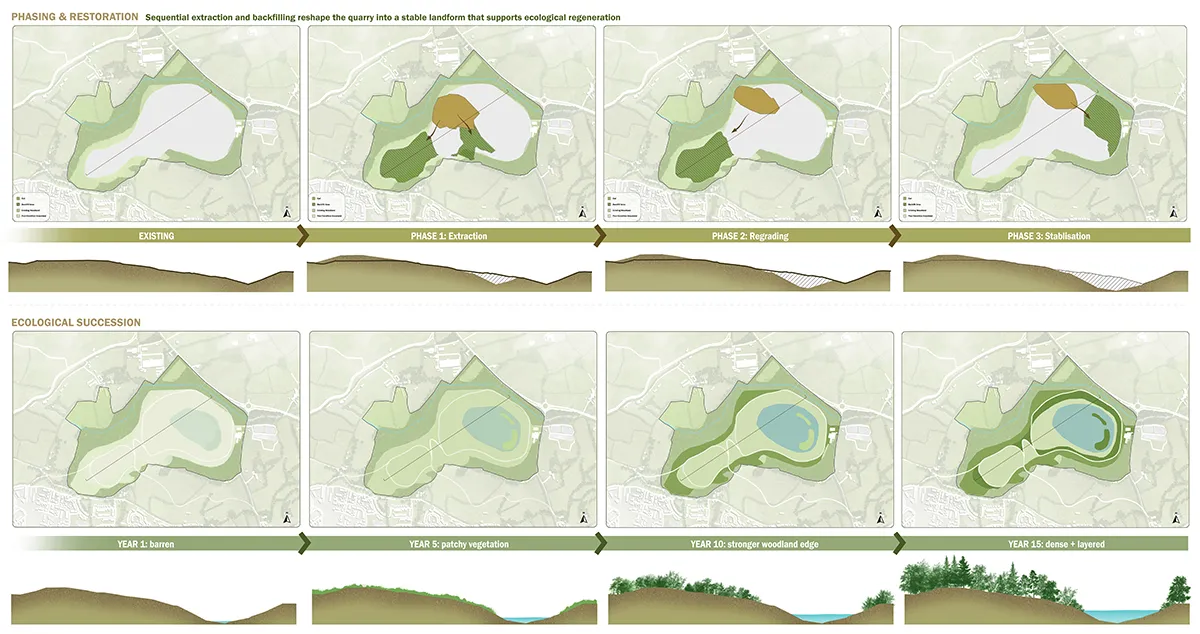
Planting follows a succession-based methodology rather than conventional ornamental landscape design. Initial establishment is based on pioneer grassland communities capable of colonizing disturbed substrates, gradually transitioning into native shrub mosaics, species-rich grassland, woodland edge habitats, and mature mixed woodland. Native wetland and marginal planting define the quarry lake, strengthening ecological resilience while enhancing habitat diversity for birds, amphibians, invertebrates, and pollinators.
Public access is designed to minimize ecological disturbance while encouraging landscape exploration. Primary ridge routes utilize permeable compacted gravel paths that respond to the rural character of the Bovey Basin, while secondary woodland trails and timber boardwalks provide access across wetter habitats. Small-scale visitor infrastructure includes a bird-observation pavilion, wildlife-viewing points, interpretation boards explaining the site’s industrial heritage and ecological succession, bat and bird boxes integrated into woodland habitats, and simple wayfinding signage.
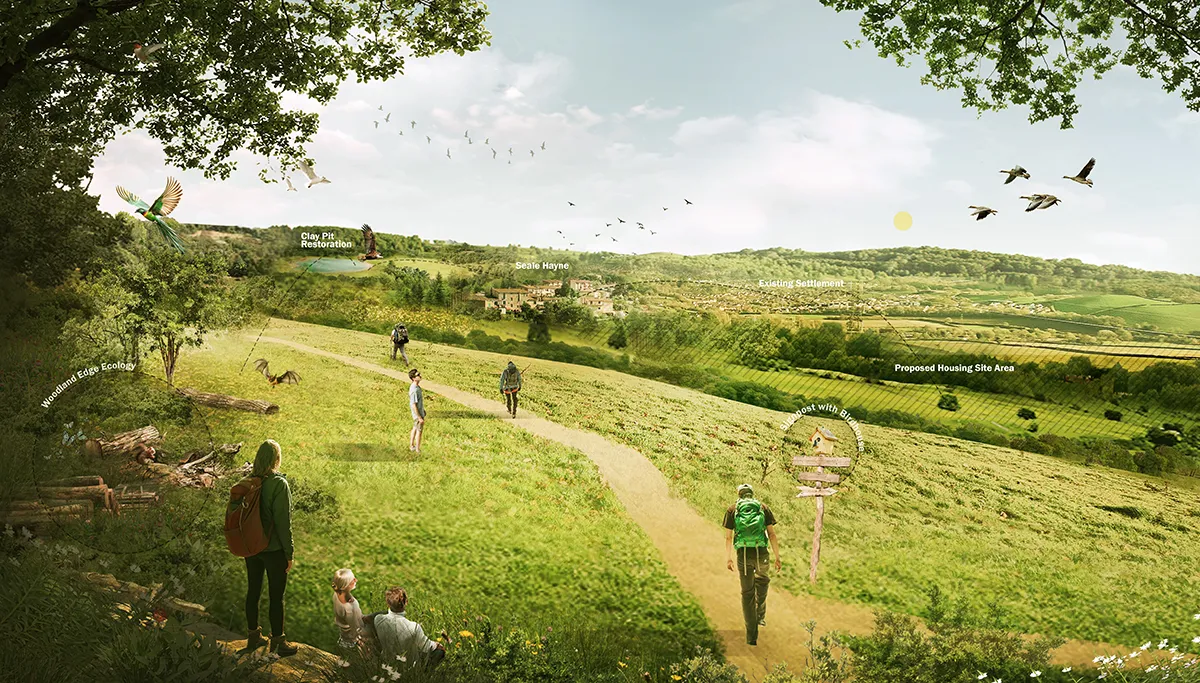
Materials are intentionally low-impact and locally appropriate. Natural timber, untreated hardwood boardwalks, locally sourced stone, gravel surfacing, and reused quarry timber logs are proposed for informal seating and habitat creation, encouraging deadwood ecology alongside public use. Furniture and landscape interventions are deliberately restrained to reinforce the site’s natural character rather than compete with it.
The framework aligns with UK quarry restoration principles by demonstrating how ecological processes, adaptive landscape management, and nature-based solutions can guide the long-term transformation of mineral extraction sites into resilient ecological infrastructure and connected public landscapes.
Living Quarry
Location: Newton Abbot, Devonshire, United Kingdom
Design Practice: epd Landscape
Lead Designer: Yuwei Chen
Client: Teignbridge District Council
Images: epd Landscape