
The 2026 Conference on Landscape Architecture was recently held (Sep 16-18) in Los Angeles over three days. The American Society of Landscape Architects’ annual conference draws thousands of landscape architects and industry professionals. The conference includes the annual ASLA Awards, education sessions, site tours, an industry expo and external fundraising events.
I attended as the Editor of World Landscape Architecture and have a few key takeaways and themes from the event, based on the presentations and conversations I had over the 3 days. The conference’s strength is its wide range of topics and speakers, which lets you focus on a particular interest or weakness.
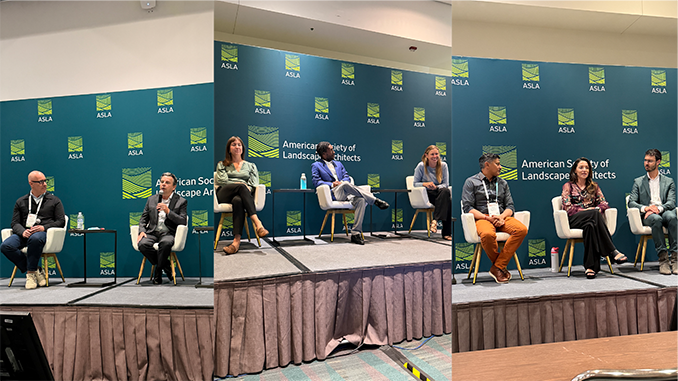
For this conference, I focused on different panels, including practitioners from smaller firms and presentations featuring allied professionals, government employees or academics. This gave me a broader perspective on a variety of topics. Other topics (that I didn’t attend) included Artificial Intelligence, National and Local standards, approaches to fundraising, business, and more.
The following is a summary of points from the sessions I attended and conversations I had over the three days. The video above offers a similar summary of the applicable sessions.
Storytelling
The importance of storytelling. Whether you tell stories through physical design, narrative, or interpretation, you need engagement and time to let the story evolve, leaving loose ends so people can make their own stories.
Biodiversity
When designing for biodiversity, tension exists between engineering and ecology. Many factors matter when designing ecological landscapes, including pollinators, agents, and plant seasons and growth.
Planting Design
Planting design requires understanding what the site can provide, plant cultivation, landscape ecology and succession, and the need to design for changing conditions.
Evaluating Landscapes
Evaluating landscapes can be hard because of different standards, data sources, differing terms, and a lack of data to establish the benefits of landscapes for cities, health, job creation, and economic benefits.
Heat Mapping
Heat mapping can provide important data for decision-making; however, climate data is often regional, and local data is needed to understand climate impacts. Citizen scientists and low-cost data loggers can provide valuable climate data on the block scale. This data, mapping, and information are essential to advocating for improved health (physical and mental) within communities.
Maintenance
Maintenance came up in several presentations, including the need to educate the industry and clients on maintenance budgeting, create practical maintenance manuals, increase horticultural knowledge within the profession, and address the lack of skilled workers to provide the care needed to sustain landscapes.
Conversations
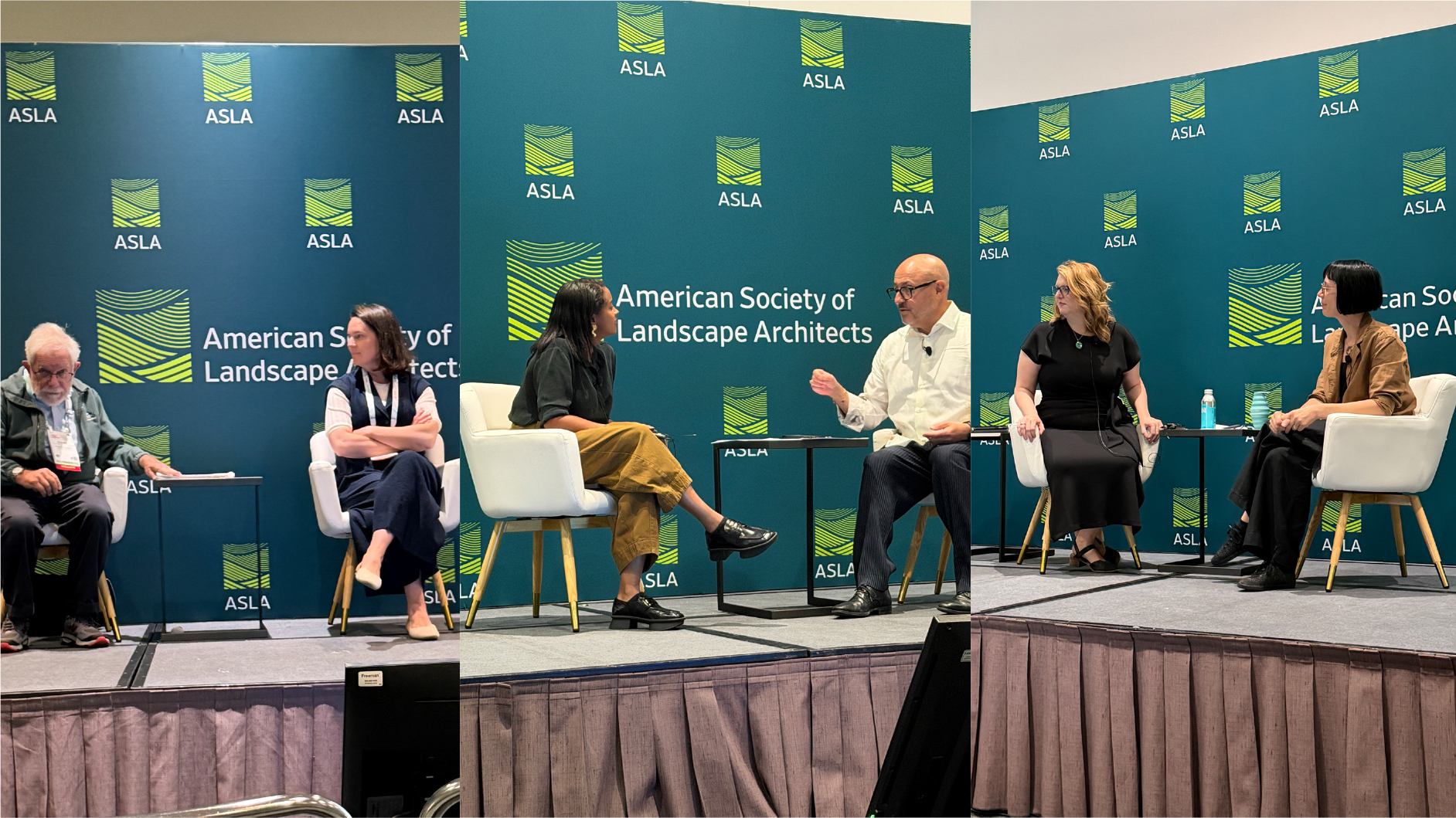
ASLA included two in-conversation sessions: one between David Rubin and Sara Zewde, and another between Gina Ford and Michelle Delk. These sessions were a new conference format and offered interesting conversations about origin stories, mentorships, friendships, careers, and influences. Both sessions reinforced the idea that landscape architecture careers are messy and non-linear, with periods of stress, joy, and growth.
Future of Landscape Architecture
The Executive Forum offered many takeaways, but the key one for me was that the future of landscape architecture is helping clients understand that they are stewards of the place. This sentiment creates a need to educate clients beyond site constraints and opportunities and to broaden the conversation beyond the site to the project’s impacts on the wider community.
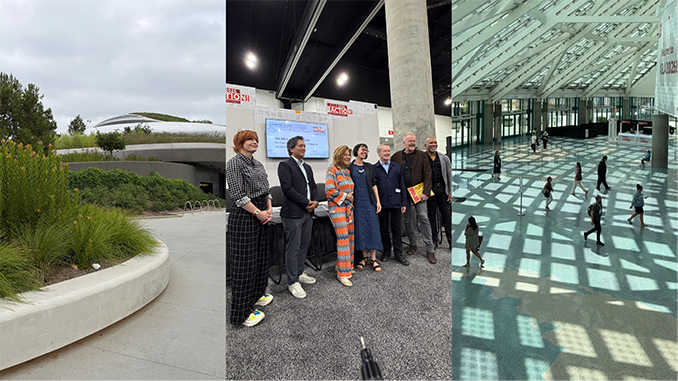
Overall, the ASLA event in Los Angeles was rewarding, from listening to good presentations to meeting readers and WLA sponsors and having great conversations about landscape architecture. I am looking forward to my next event, the IFLA World Congress in Hong Kong in late October.
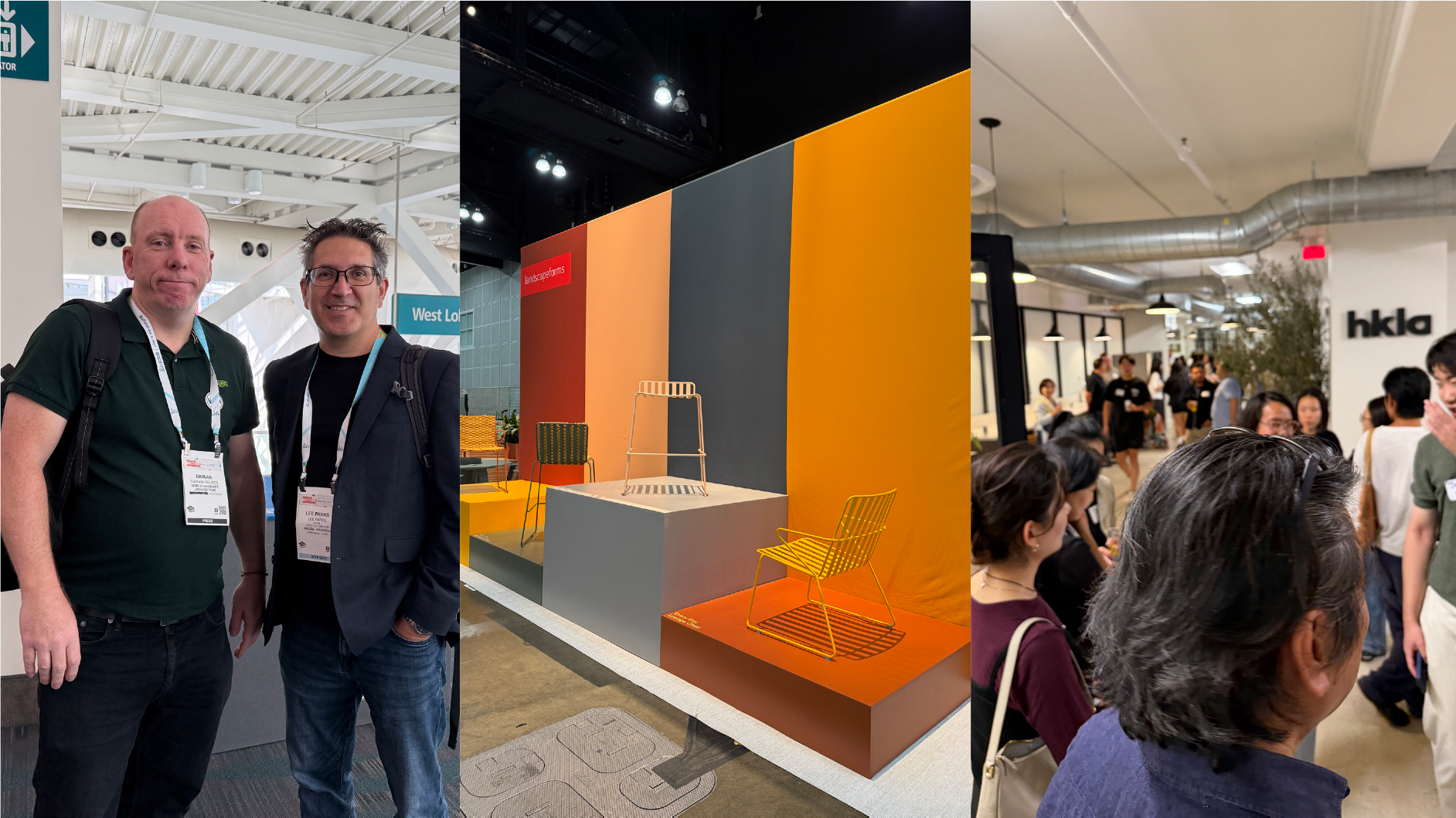
Article by Damian Holmes – Editor of World Landscape Architecture