
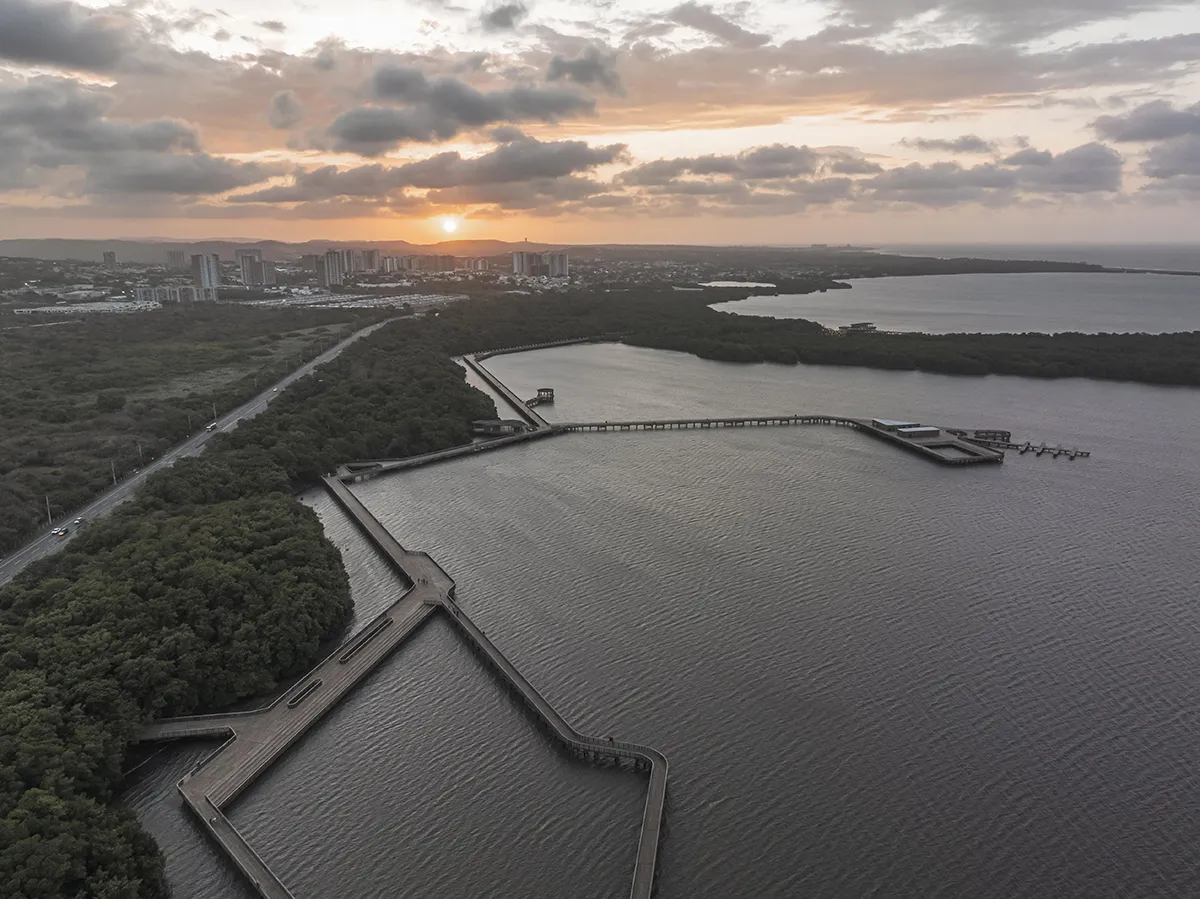
Located in Barranquilla, Colombia, at the meeting point of the Atlantic Ocean and the Magdalena River, the Ecoparque Ciénaga de Mallorquín redefines the relationship between city and nature through an environmental regeneration and public-space intervention. Designed by DEB Architecture and El Equipo Mazzanti, the project transforms one of the most significant ecosystems of the Colombian Caribbean into an accessible landscape infrastructure that promotes conservation, environmental education, and civic engagement.
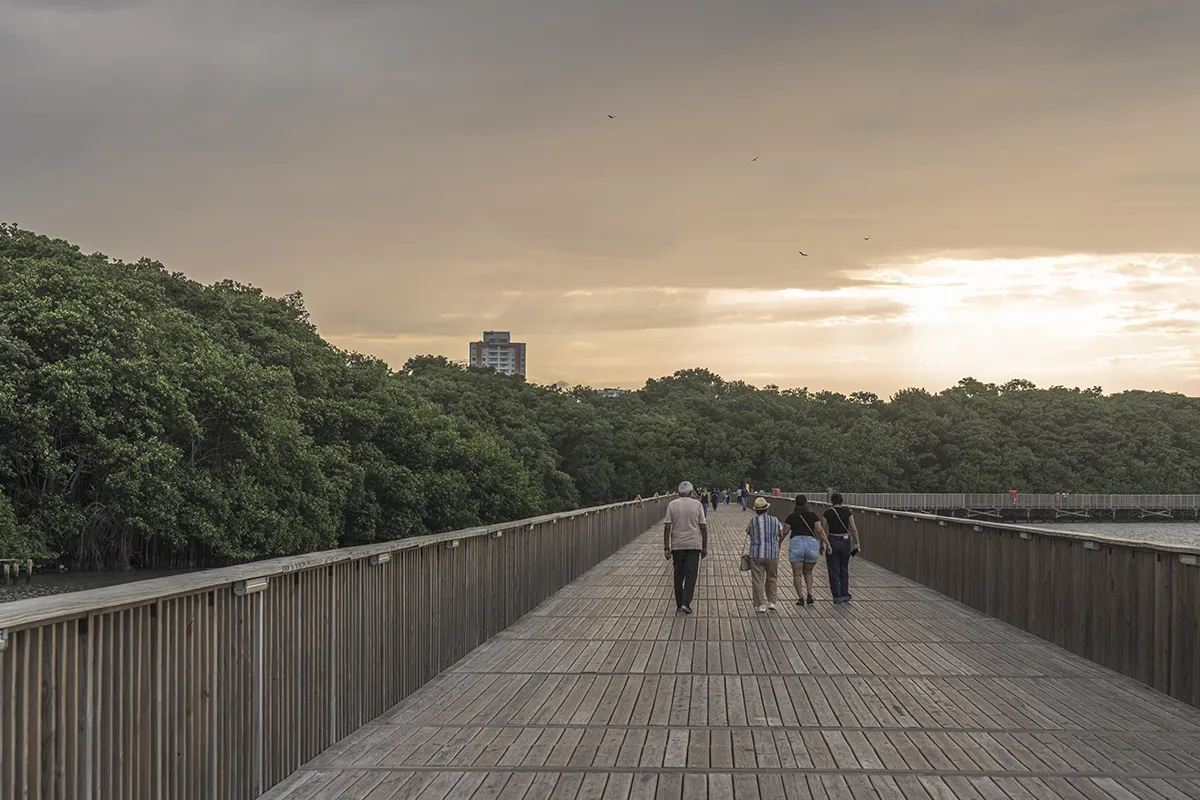
The Ciénaga de Mallorquín is one of the most important lagoon systems in the region. Its mangrove network and the presence of more than 200 resident and migratory bird species make it a site of high ecological and cultural value. However, territorial transformations over the last century—particularly those related to the construction of Bocas de Ceniza and other urbanisation processes—have altered its natural dynamics, leading to environmental degradation and a progressive disconnection from the city.
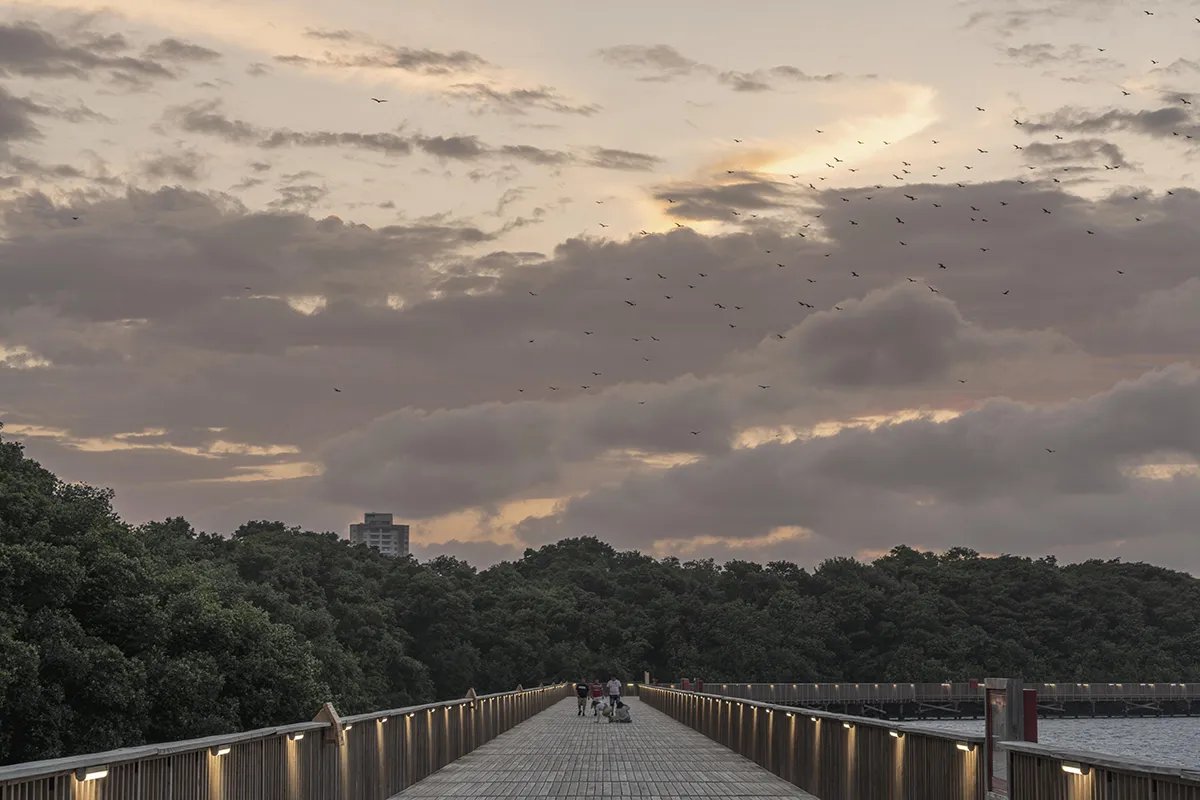
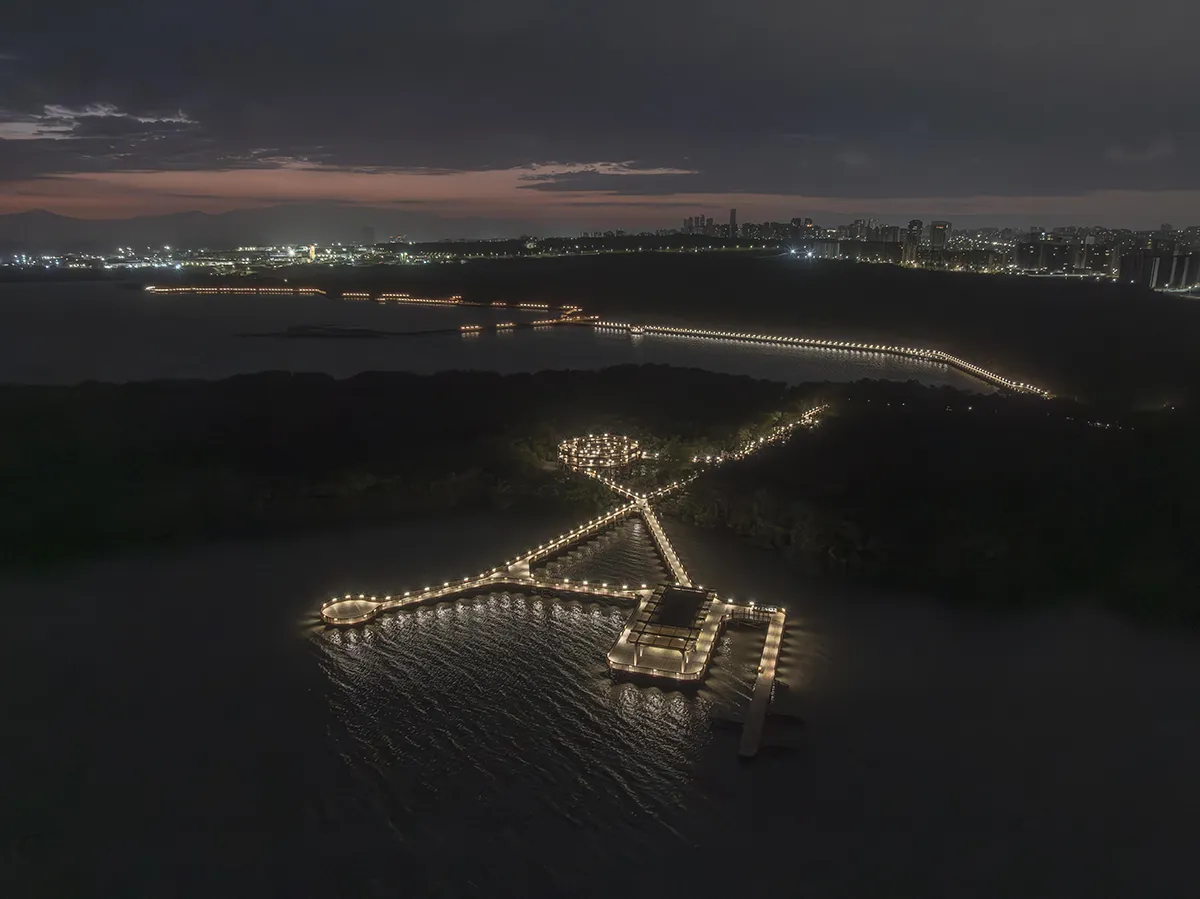
In this context, the Ecoparque is conceived as a territorial infrastructure that mediates between urban expansion and ecological preservation. Rather than imposing a new form on the landscape, the project establishes a “living edge”: an active band that protects the ecosystem while allowing public access through minimal intervention.
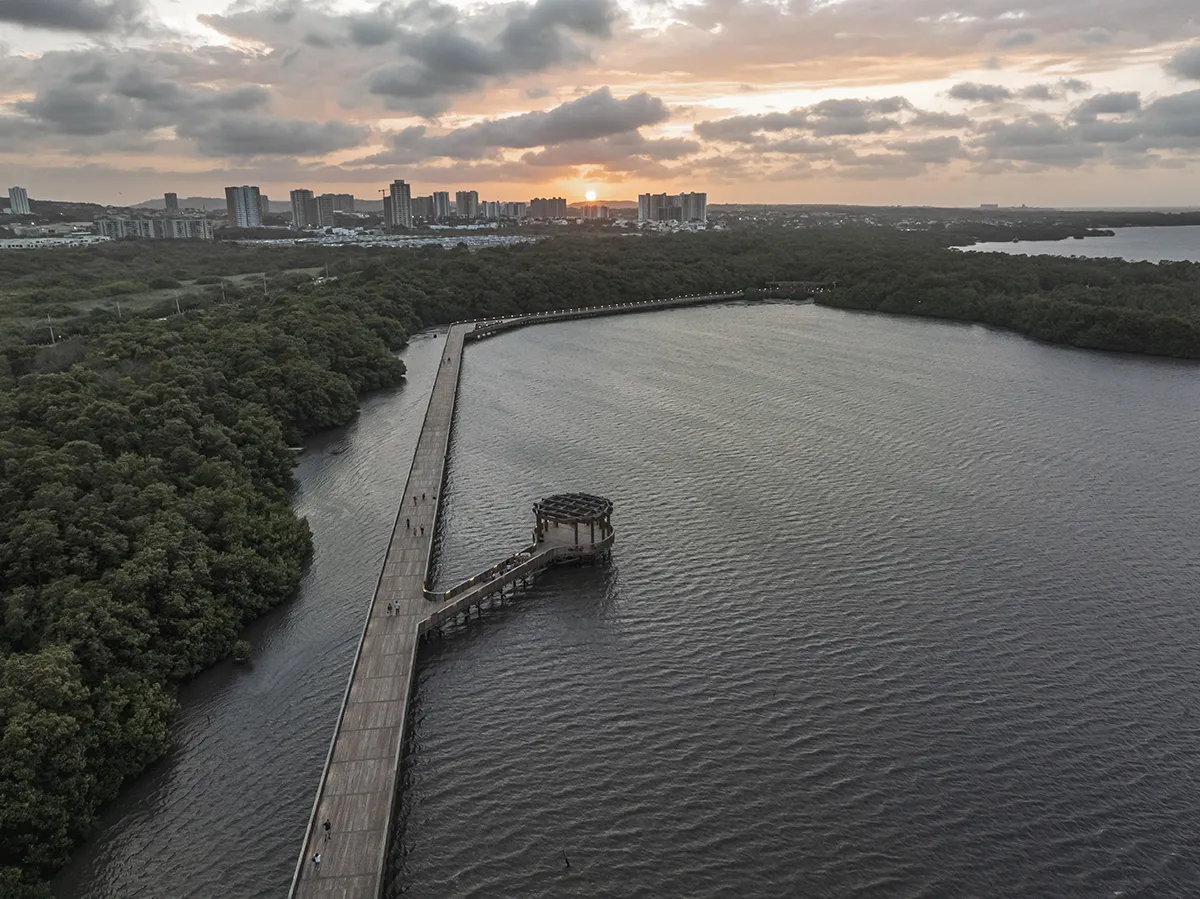
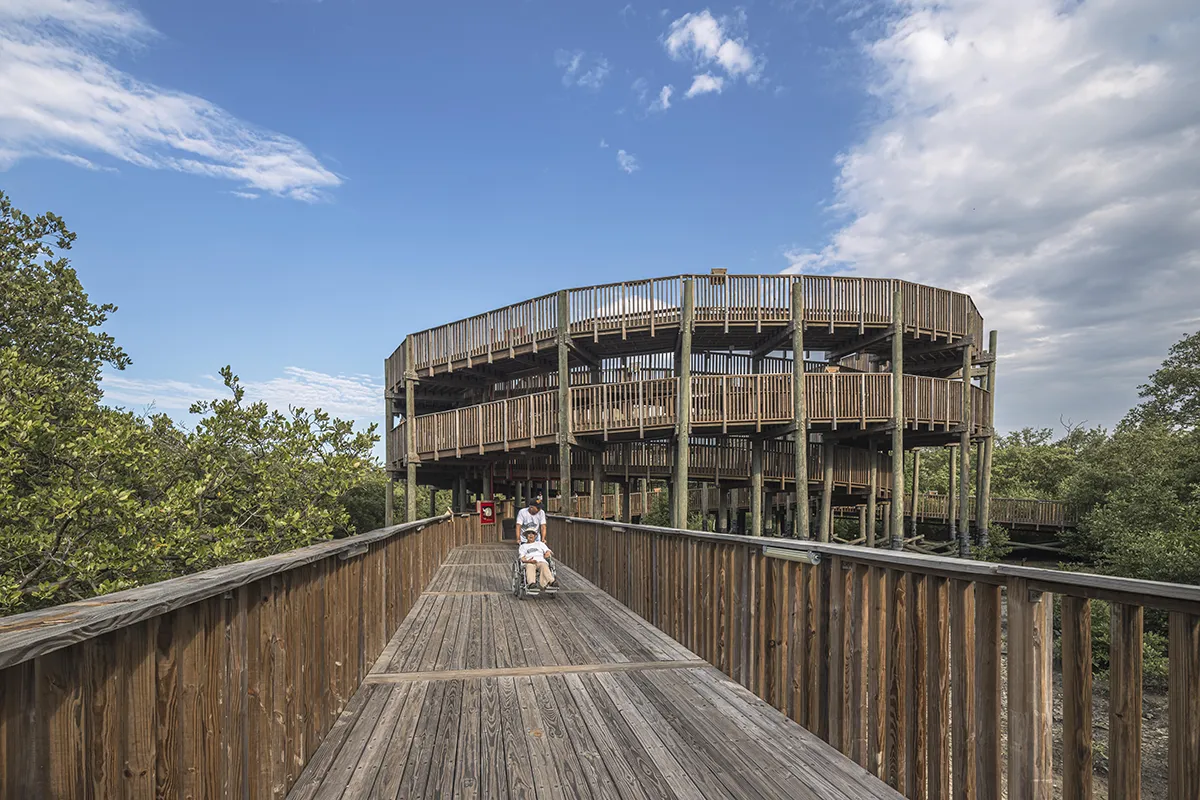
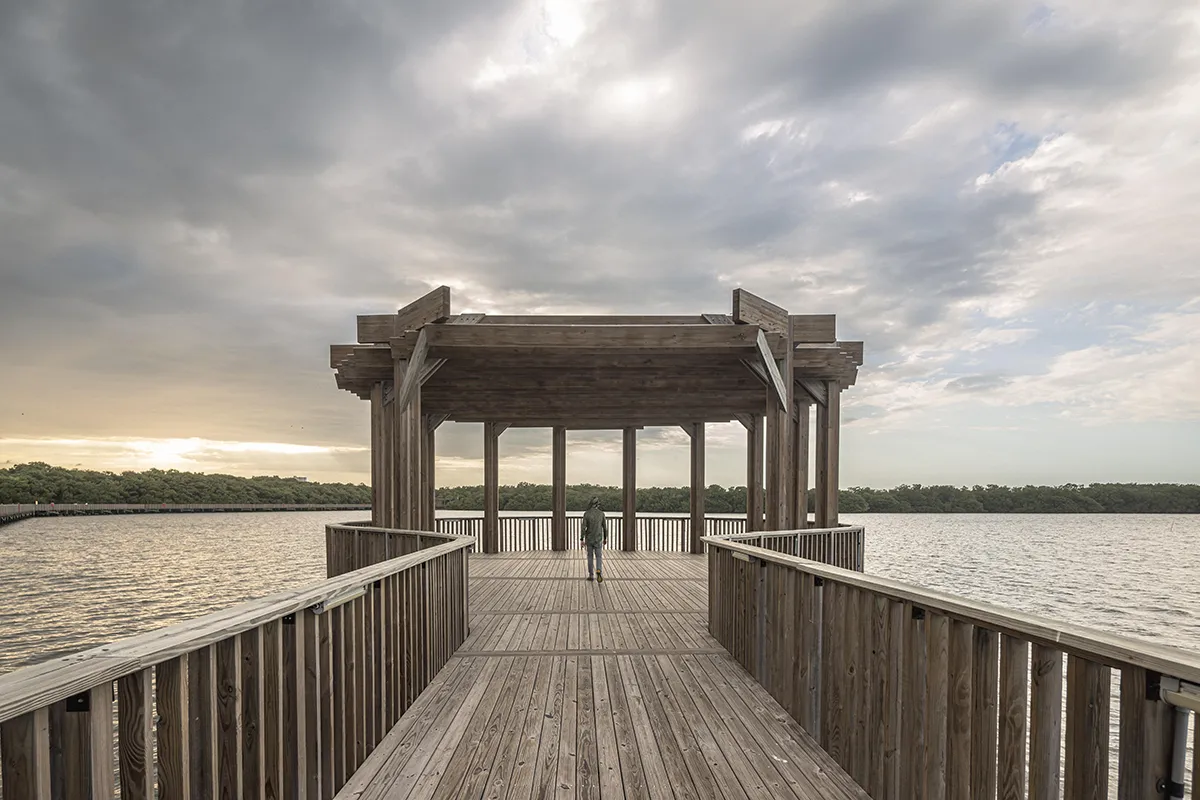
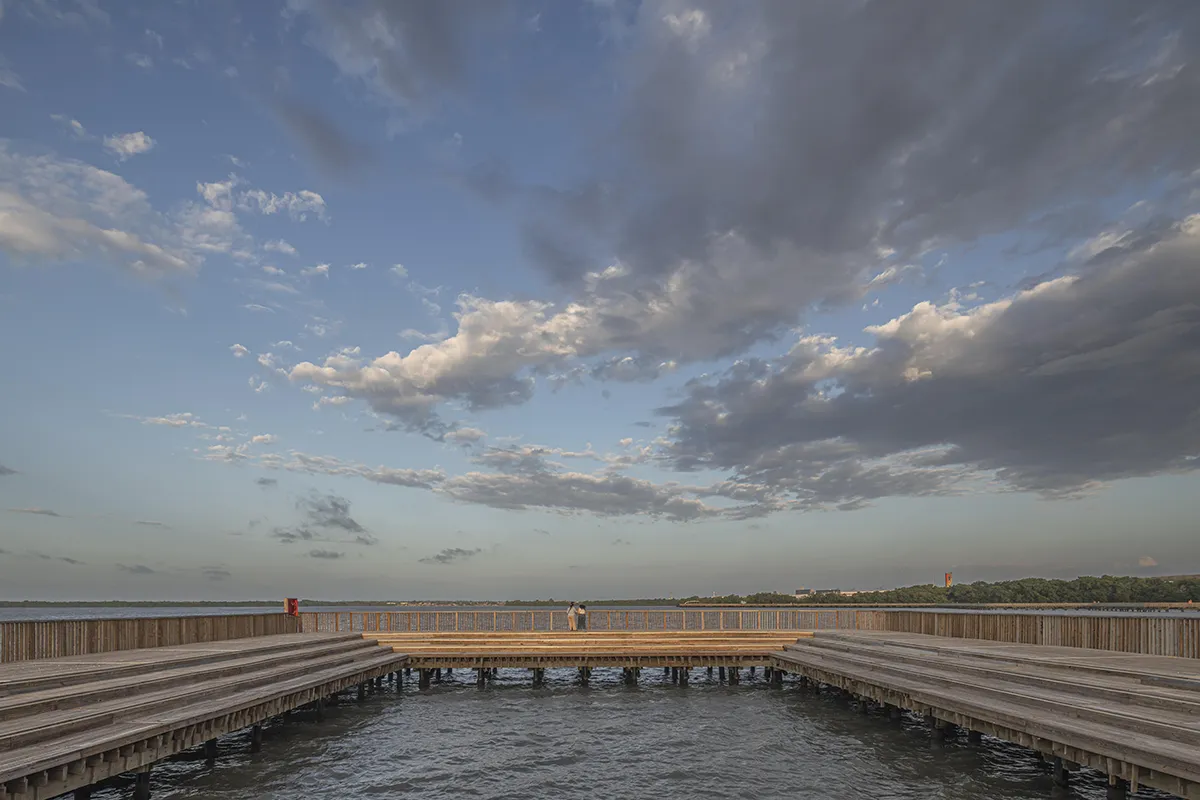
Covering an area of 61,834 square meters, the project is developed around a network of elevated walkways, observation platforms, resting areas, and gathering spaces that allow visitors to experience the wetland without disrupting its biological and hydrological processes. This strategy reduces direct occupation of the territory and ensures the continuity of the natural cycles that sustain local biodiversity.
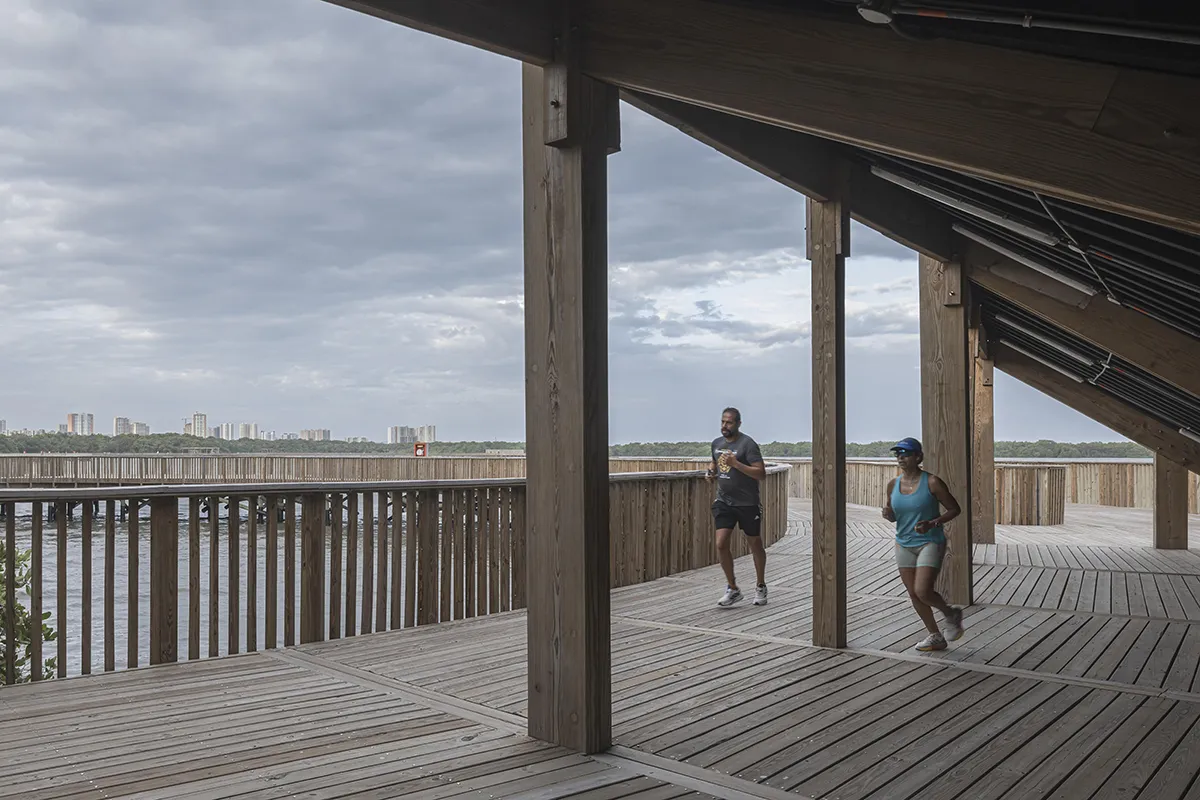
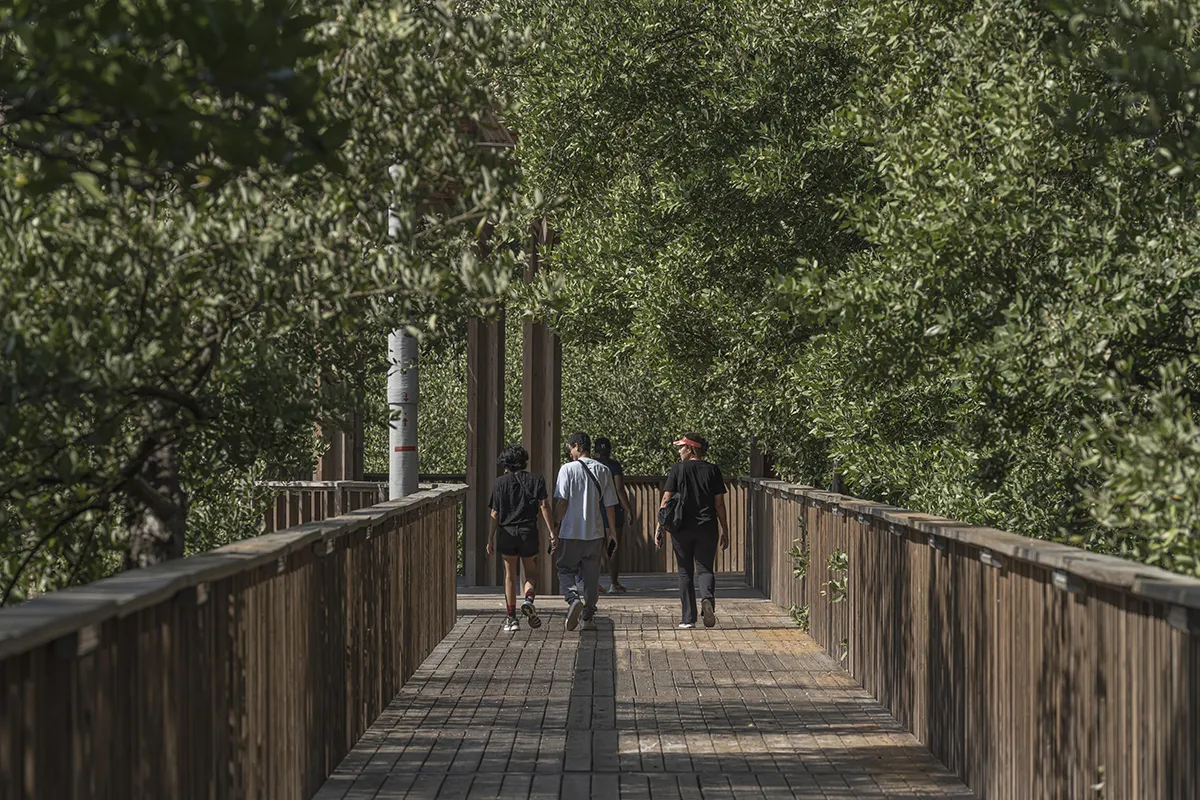
The elevated pathways offer new ways to experience the landscape and provide access to previously inaccessible areas, transforming the mangrove into a space for learning, contemplation, and environmental awareness. Observation platforms become key points for ecosystem interpretation, supporting scientific, educational, and recreational activities.
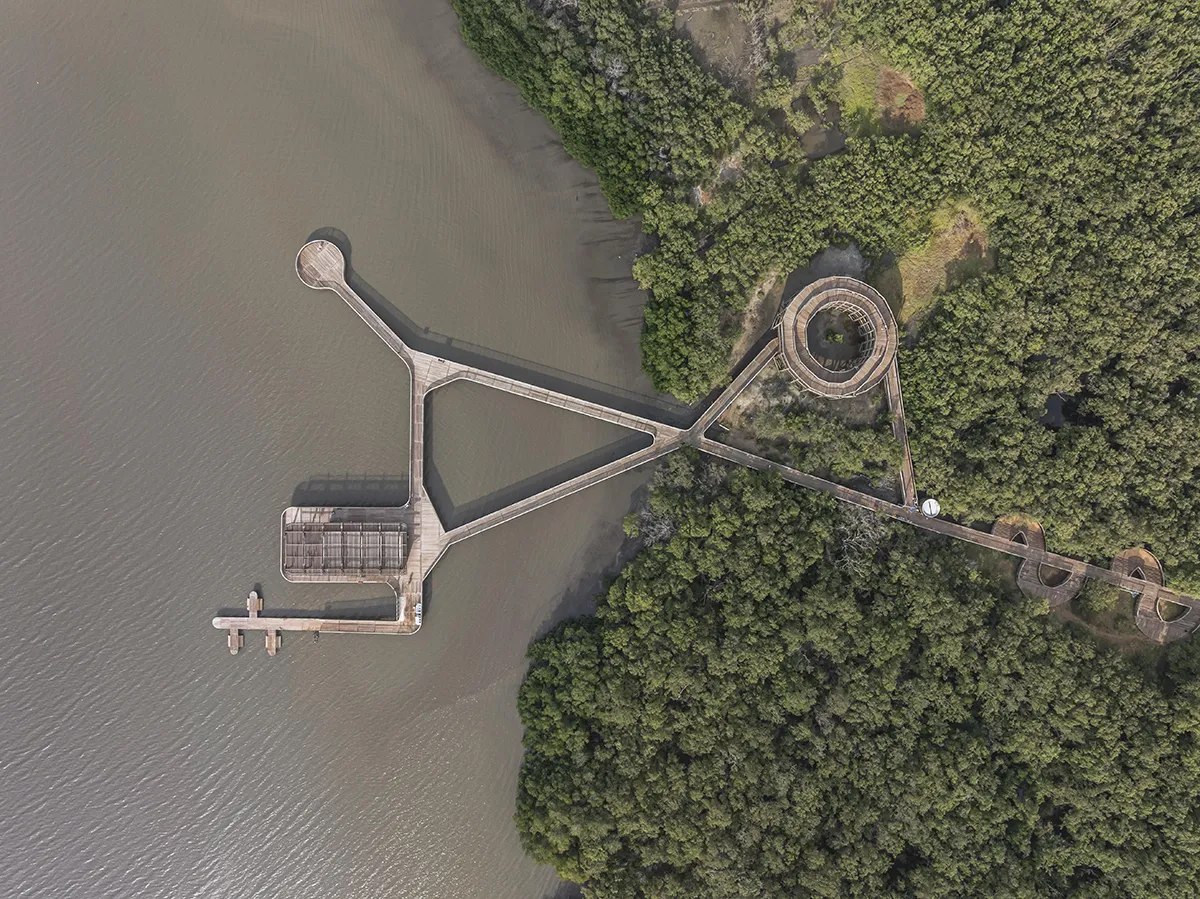
The project is organised through different districts that structure various forms of use and appropriation. In its first phase, two main areas are developed: the Contemplation District and the Family District. The first is focused on biodiversity observation and environmental education, while the second promotes recreational and social gathering activities, strengthening the relationship between the community and the landscape.
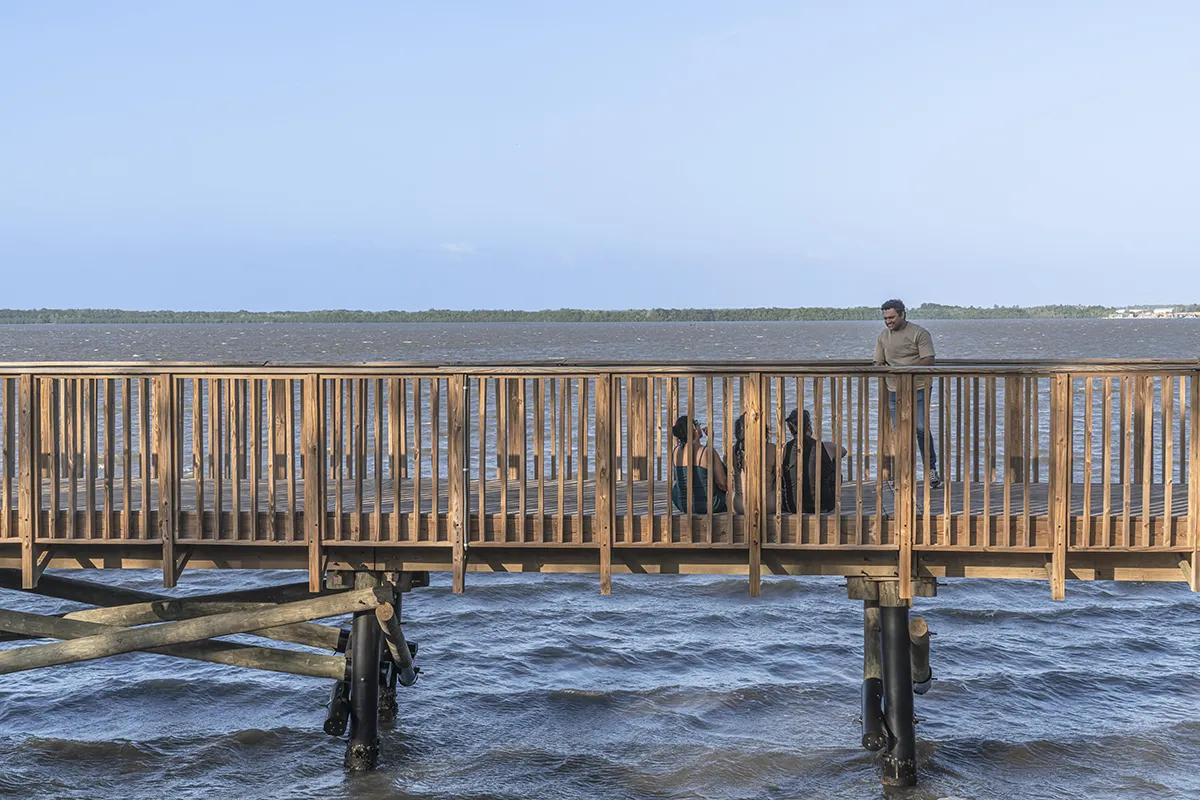
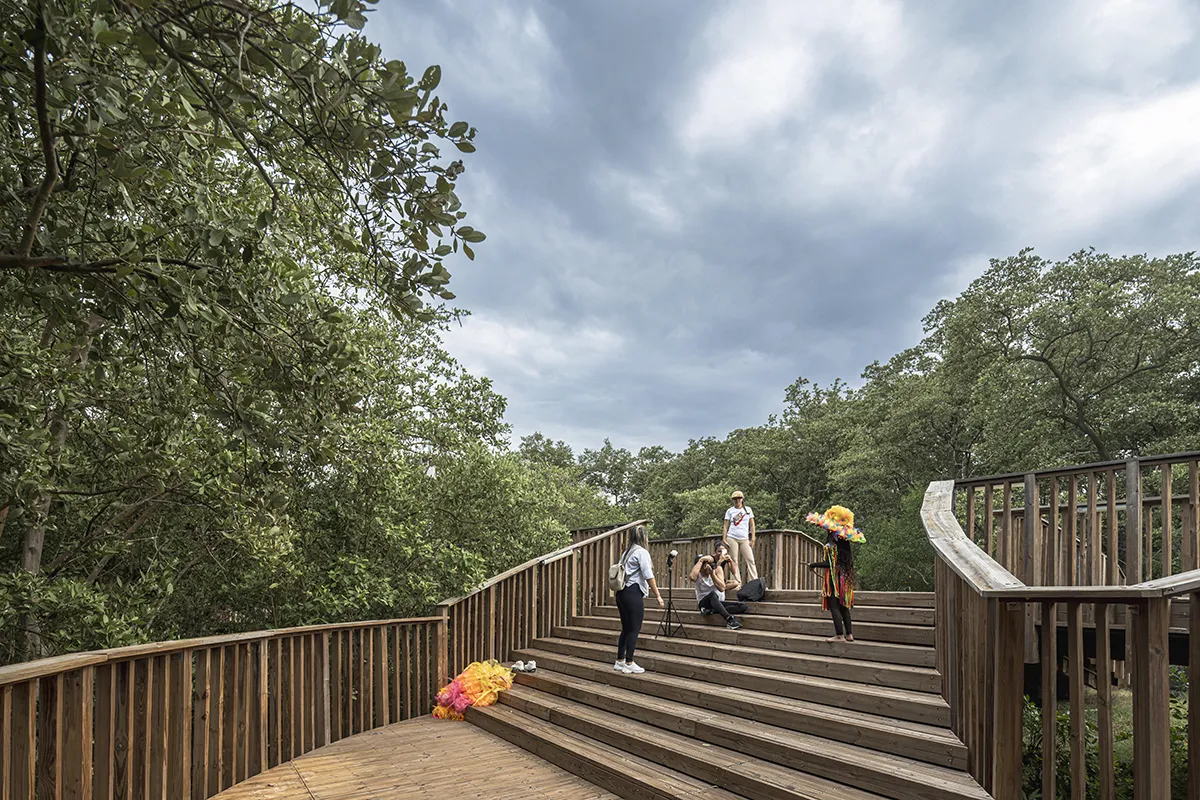
One of the key aspects of the project is integrating existing local practices, particularly artisanal fishing, a traditional activity integral to the wetland’s cultural identity. The Ecoparque recognises these dynamics and incorporates them into its spatial structure, promoting a balanced coexistence between conservation, community use, and local development.
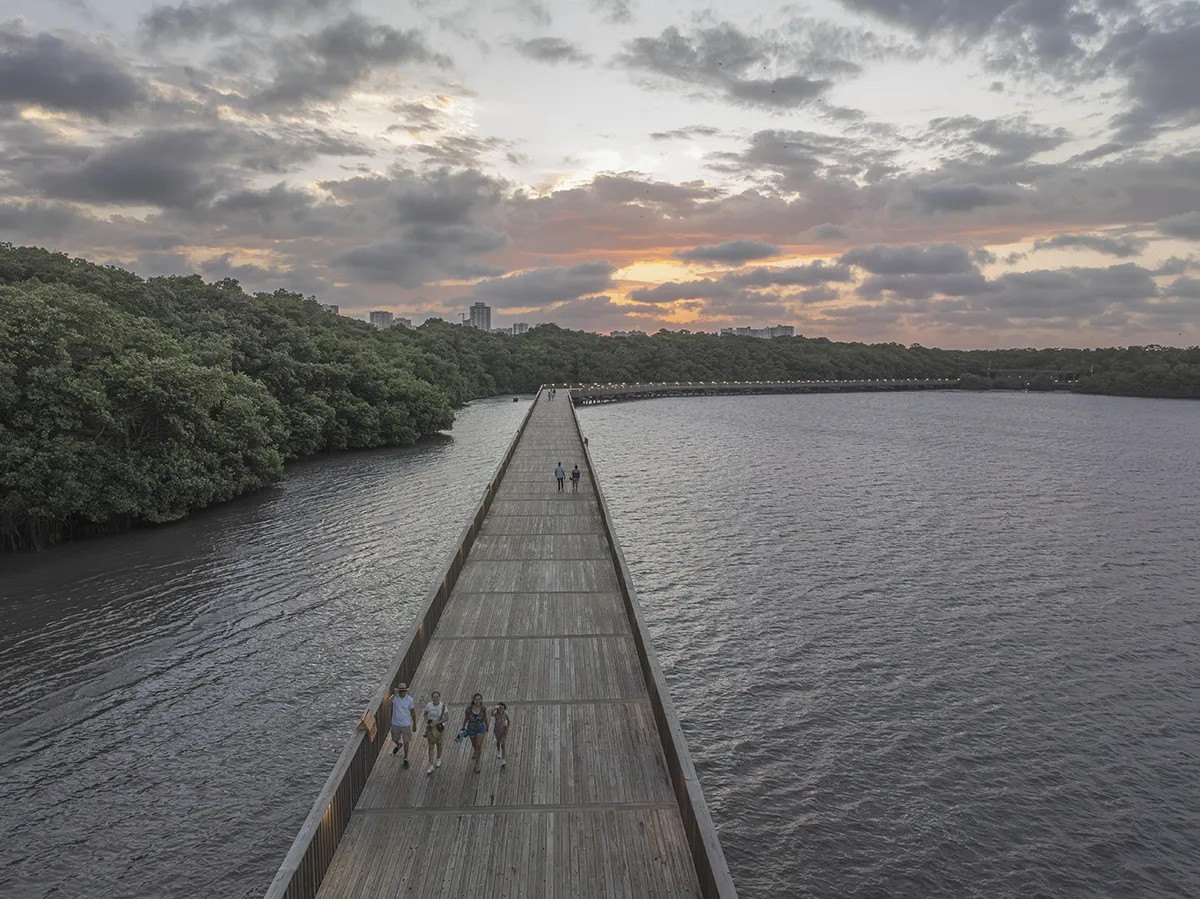
Landscape strategies play a fundamental role in articulating the relationship between city and nature. Vegetation, public space, and ecological restoration actions function as continuous elements that blur the traditional boundaries between the built environment and the ecosystem, creating a gradual transition that enhances both urban experience and environmental resilience.
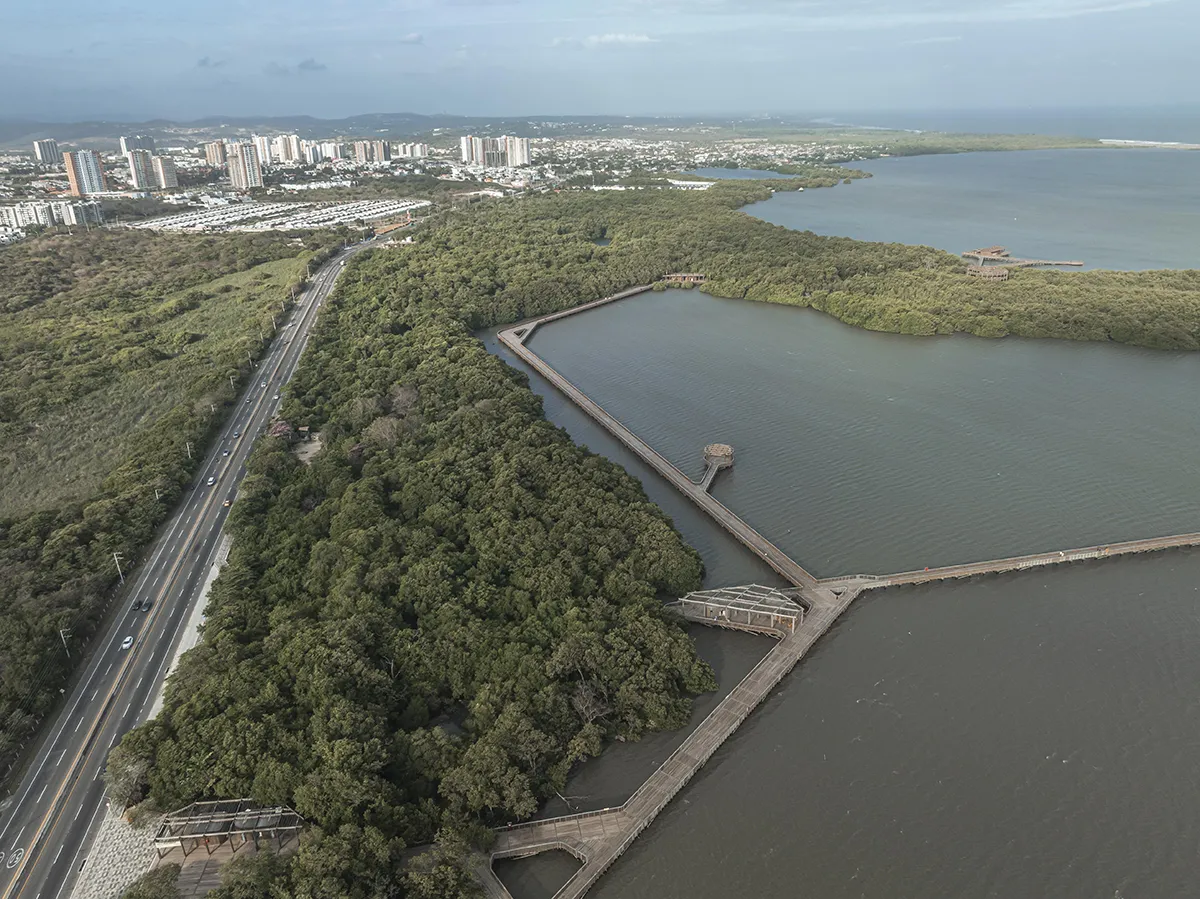
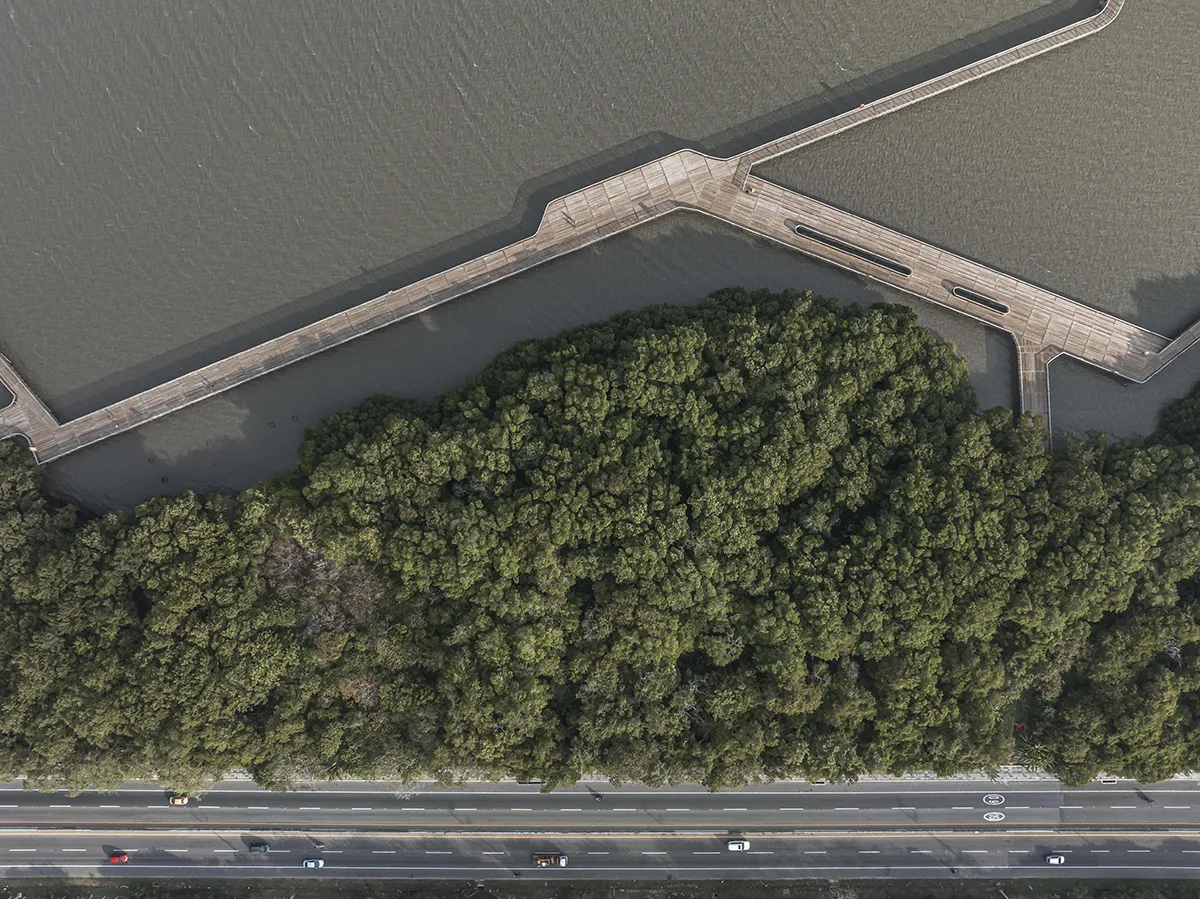
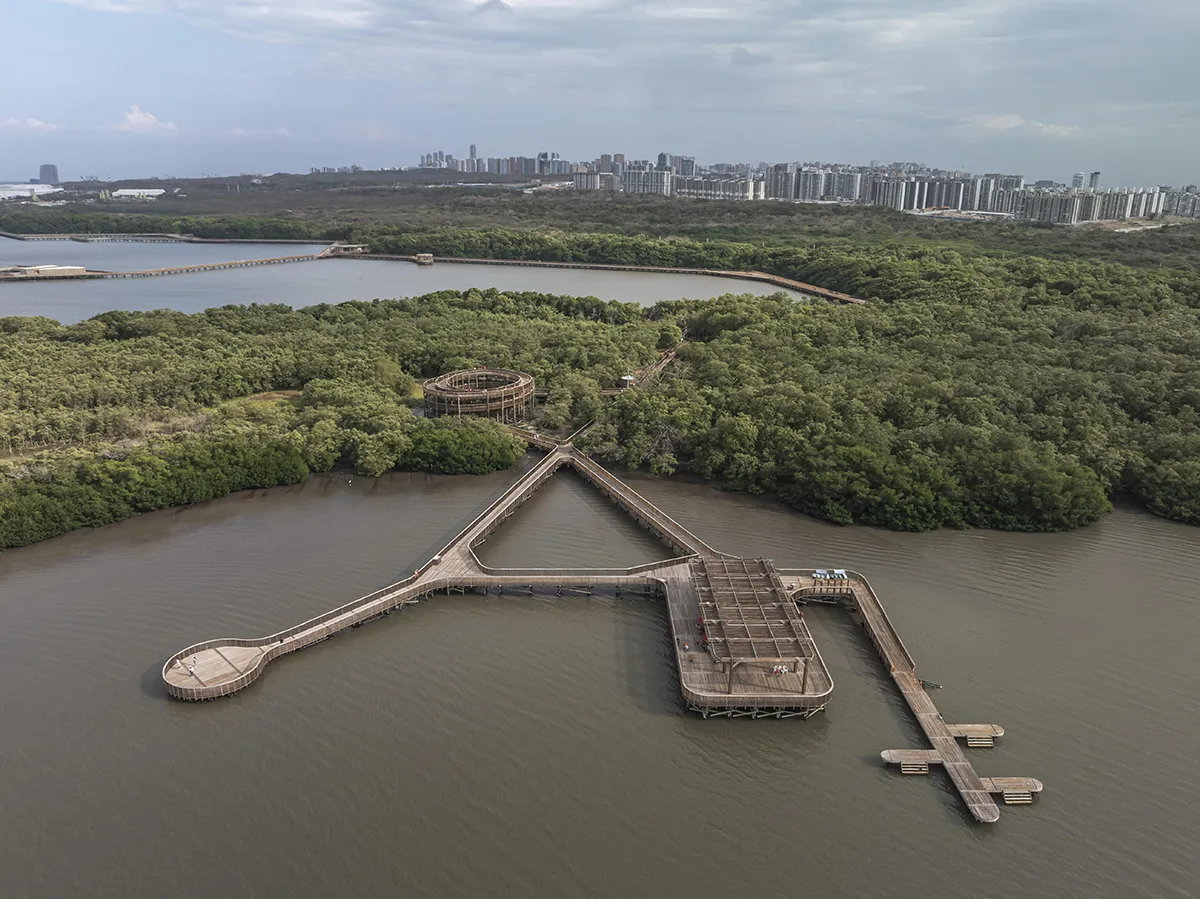
Rather than an architectural object, the Ecoparque Ciénaga de Mallorquín is conceived as an open, flexible, and constantly evolving system. Its goal is not only to restore a degraded ecosystem, but to propose a new way of understanding the relationship between cities and their natural environments, based on balance, respect, and coexistence.
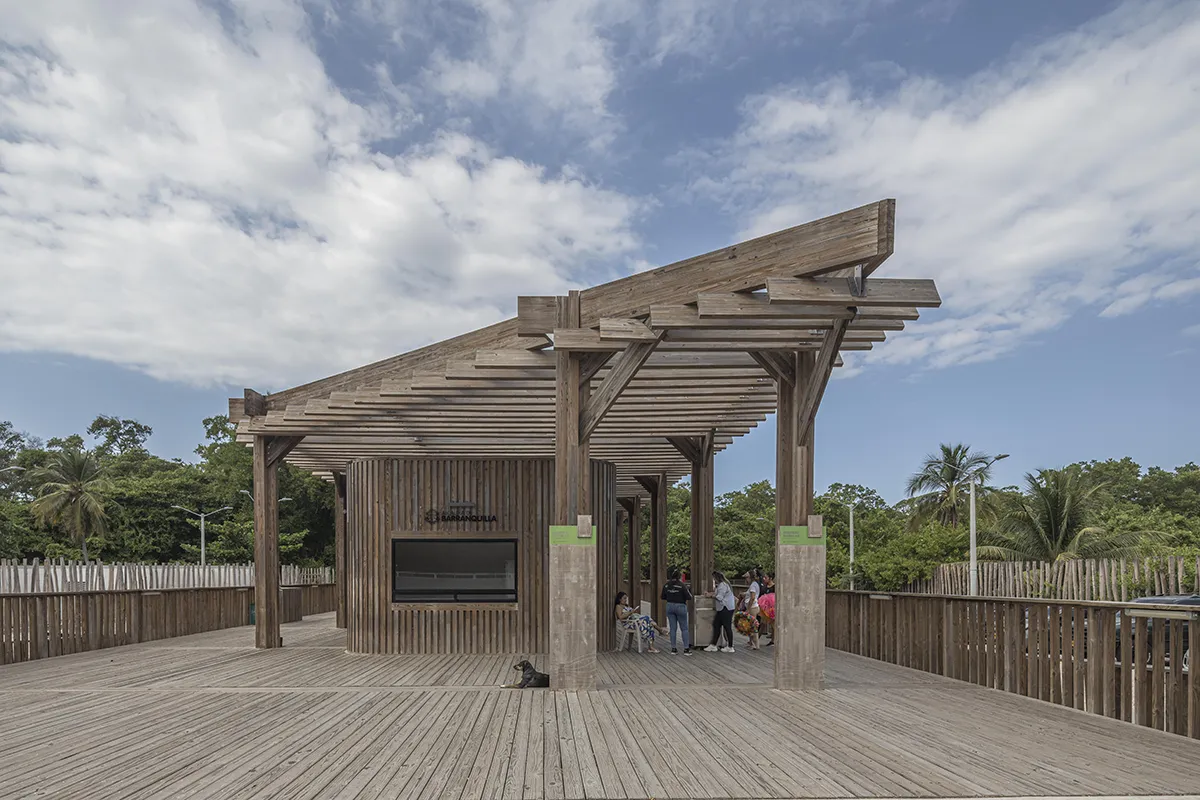
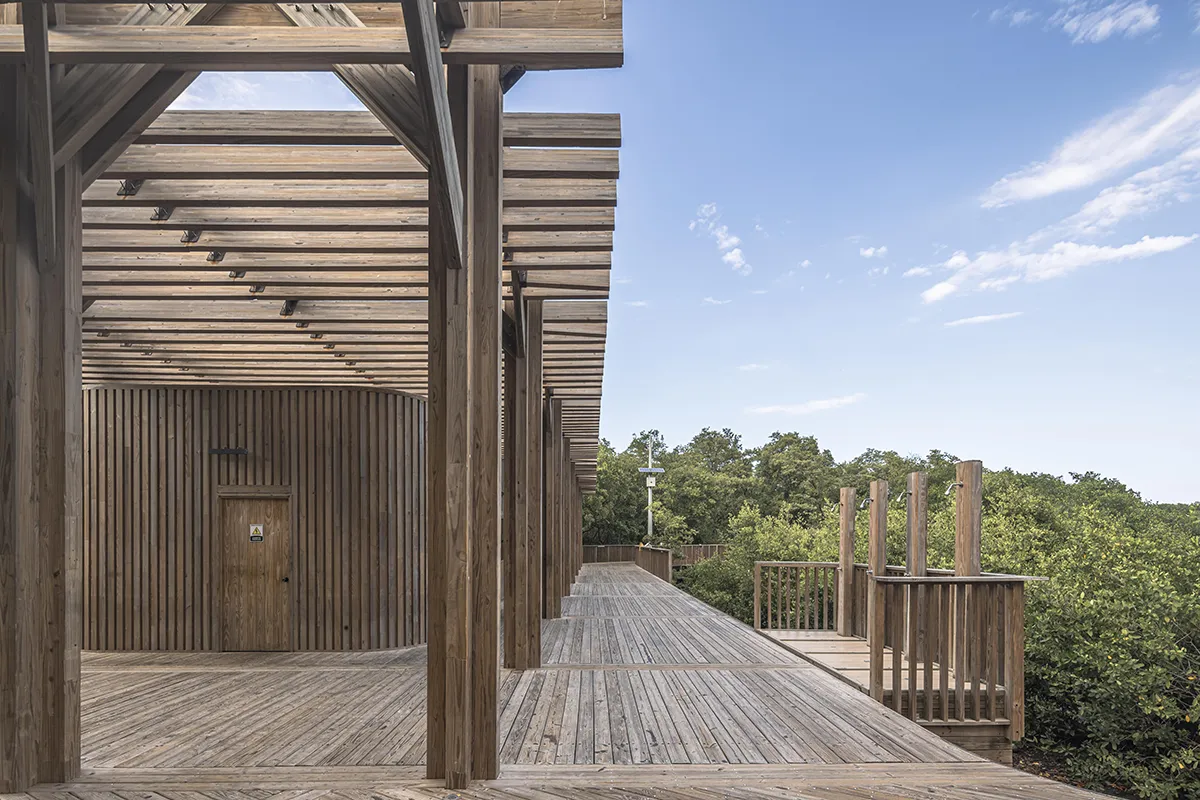
By conceiving landscape as living infrastructure and public space as an active mediator between urban and ecological systems, the project establishes a replicable intervention model for vulnerable coastal territories. Its approach demonstrates how architecture, urbanism, and ecology can work together to regenerate strategic ecosystems while creating new opportunities for interaction, education, and civic appropriation.
Location: Barranquilla, Colombia
Design: DEB ARCHITECTURE and EL EQUIPO MAZZANTI
Project Director: Francisco Ricardo Marino
Client: Puerta de Oro Barranquilla
President and Project Structurer: Ricardo Vives
Team: Luis Guillermo Barrera, Jorge Robledo Manco, Natalia Gamez, Jose Daniel Rosado, Juan Sebastian Perez
Consultants:
Topography and Bathymetry – SINTH Ingeniería
Structural Engineering – Estructuras Sostenibles
HVAC Design – Ing. José Solano Pérez Design and HVAC Consulting
Electrical Design – RPB
Telecommunications Design – AP Ingeniería
Hydrosanitary Design – SINTH Ingeniería
Traffic Study – M Ingeniería y Planeación
Environmental Impact Assessment (EIA) – PIMAS
Life Safety – AGR
Road Geometry – M Ingeniería y Planeación
Cost Estimation – MB Ingeniería Vial
Bioclimatic Study – Oleb Arquitectura Bioclimática & Sostenibilidad
Image Credit: Alejandro Arango