
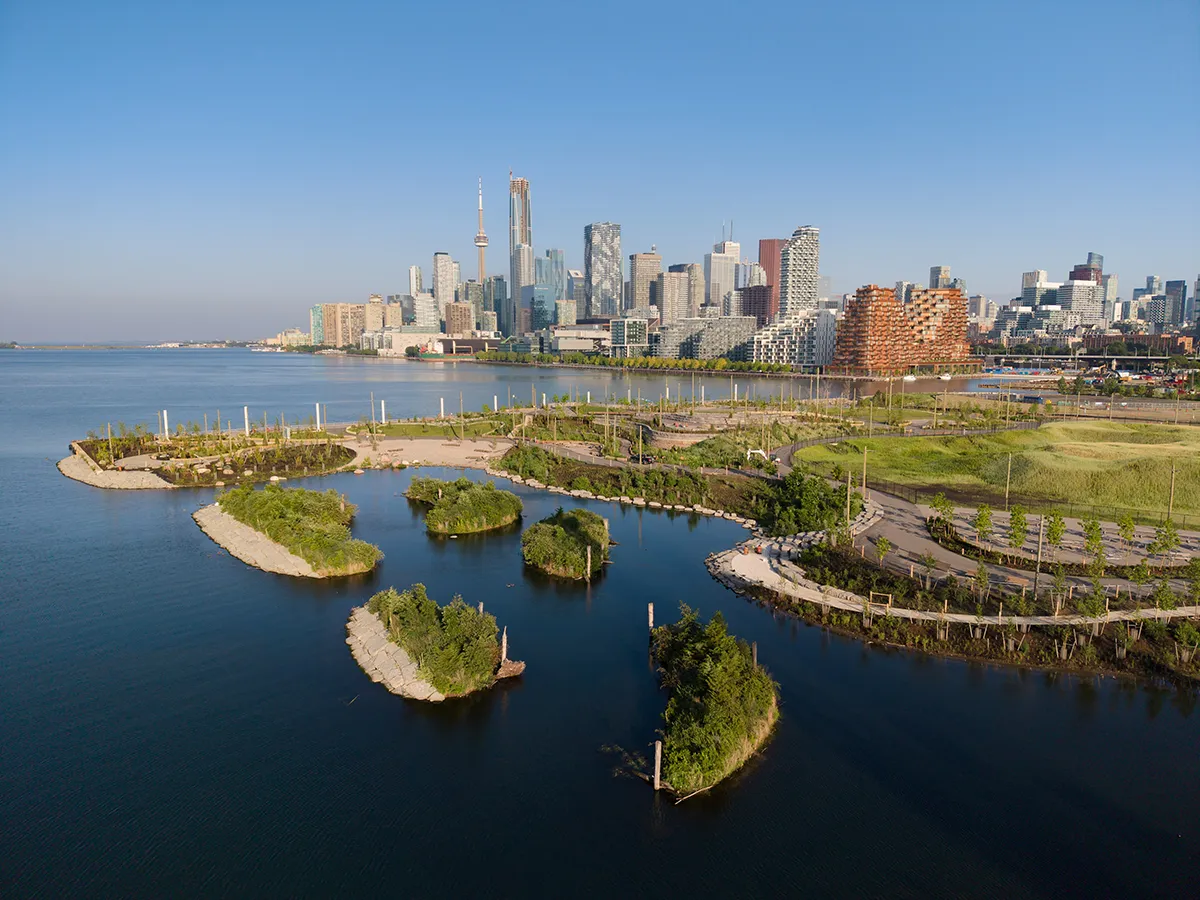
Toronto’s largest park just got bigger with the opening of an additional 10 new acres in Biidaasige Park. The opening was attended by members of the provincial and local government, along with First Nations people and members of the public, officially marking the completion of another significant chapter in the transformation of the Port Lands.
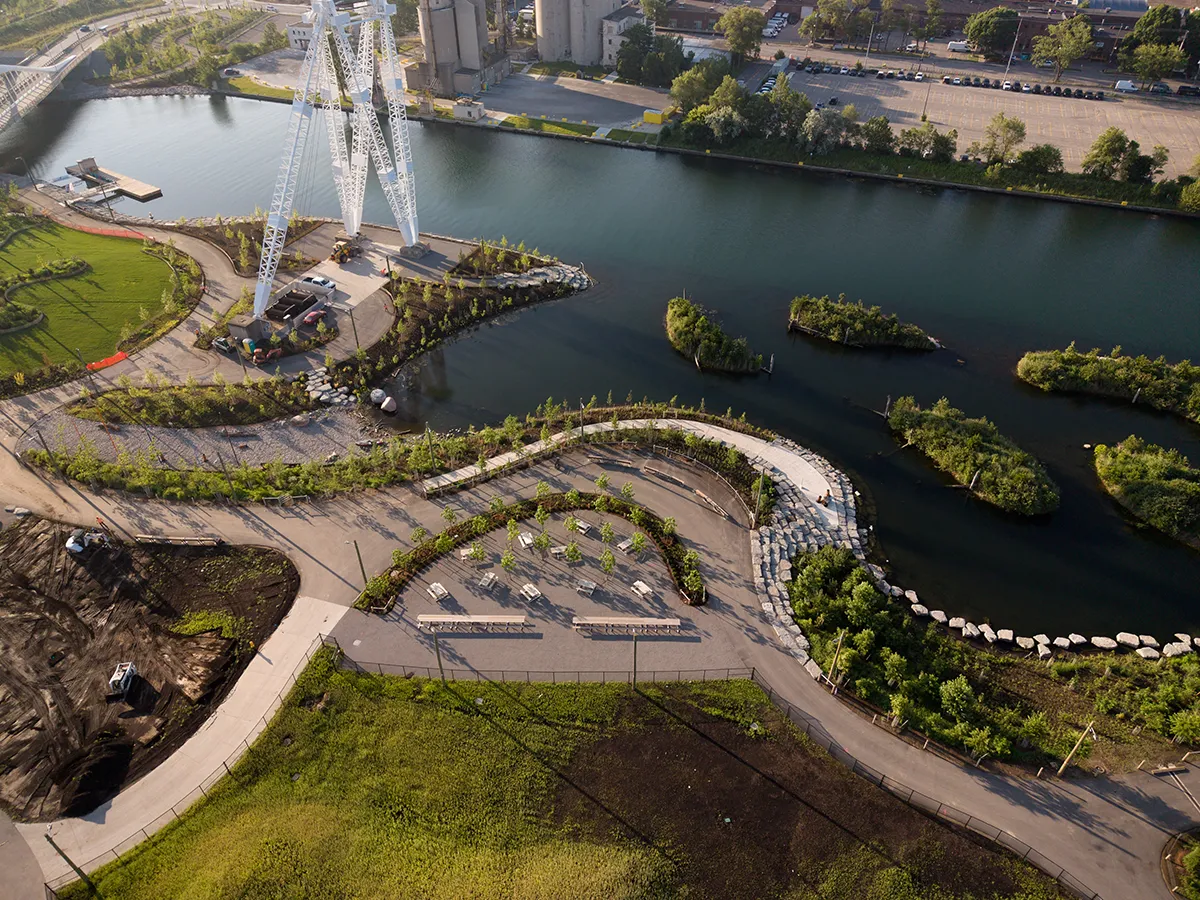
The opening of the new western section of Biidaasige Park expands public access to a reimagined section of Toronto’s shoreline and reconnects people to both Lake Ontario and a new one-kilometre stretch of the Don River through nature, recreation, culture and public gathering spaces. It represents a shared commitment by partners to creating new public spaces, advancing waterfront revitalisation and expanding Toronto’s largest park in a generation.
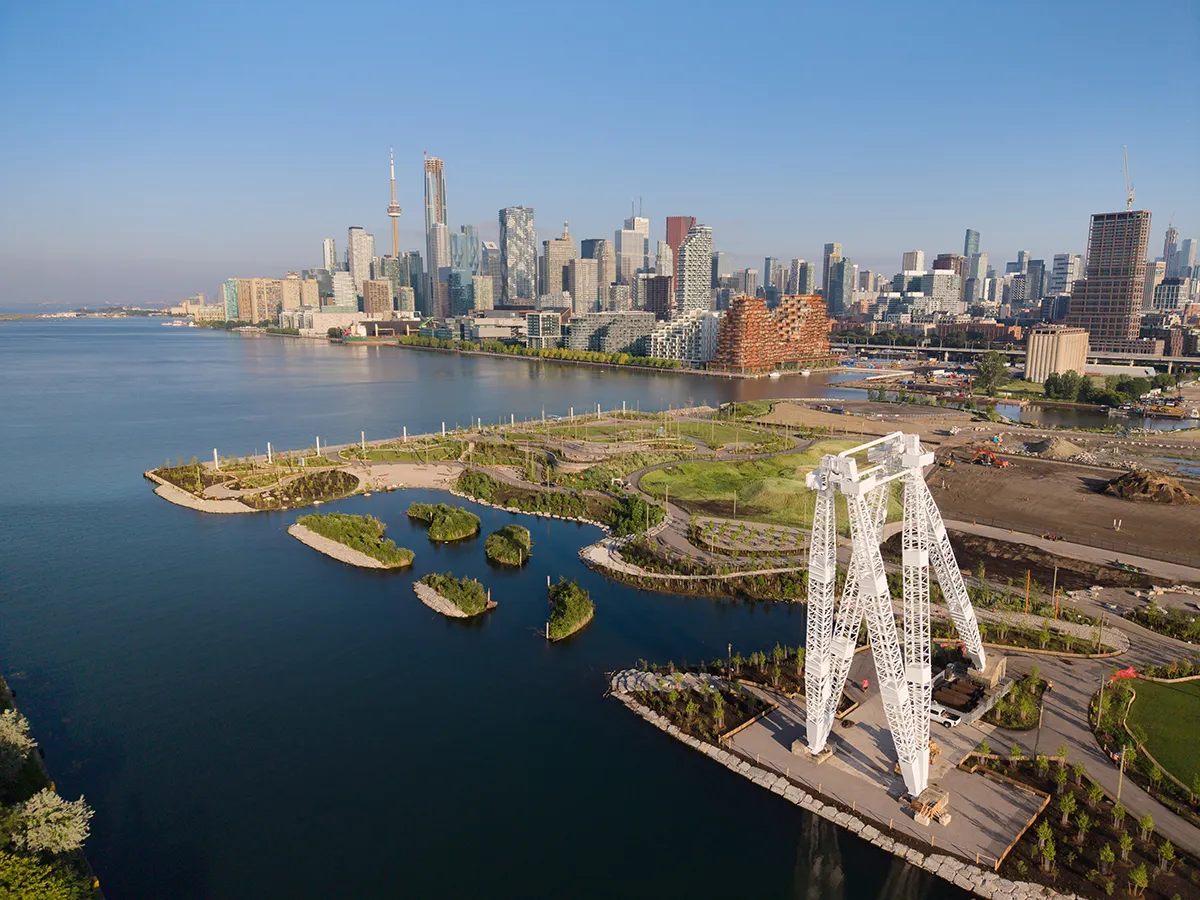
The lead design was conducted by Michael Van Valkenburgh Associates Inc, who spent almost two decades leading the planning and execution of the Biidaasige Park project. The landscape also includes plantings developed in consultation with Indigenous partners, ceremonial and interpretive elements, marker trees, The Drum and other features that contribute to a deeper sense of meaning, identity and connection throughout the site.
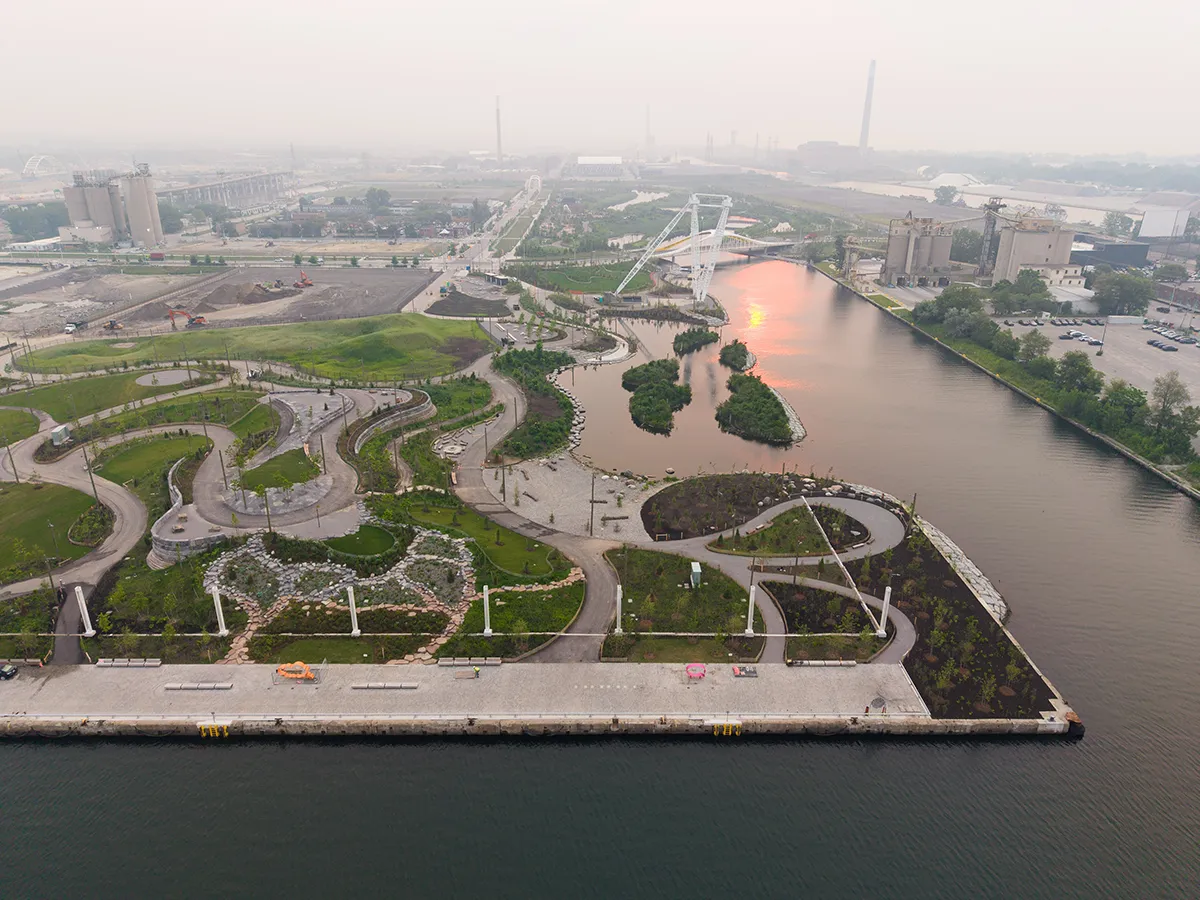
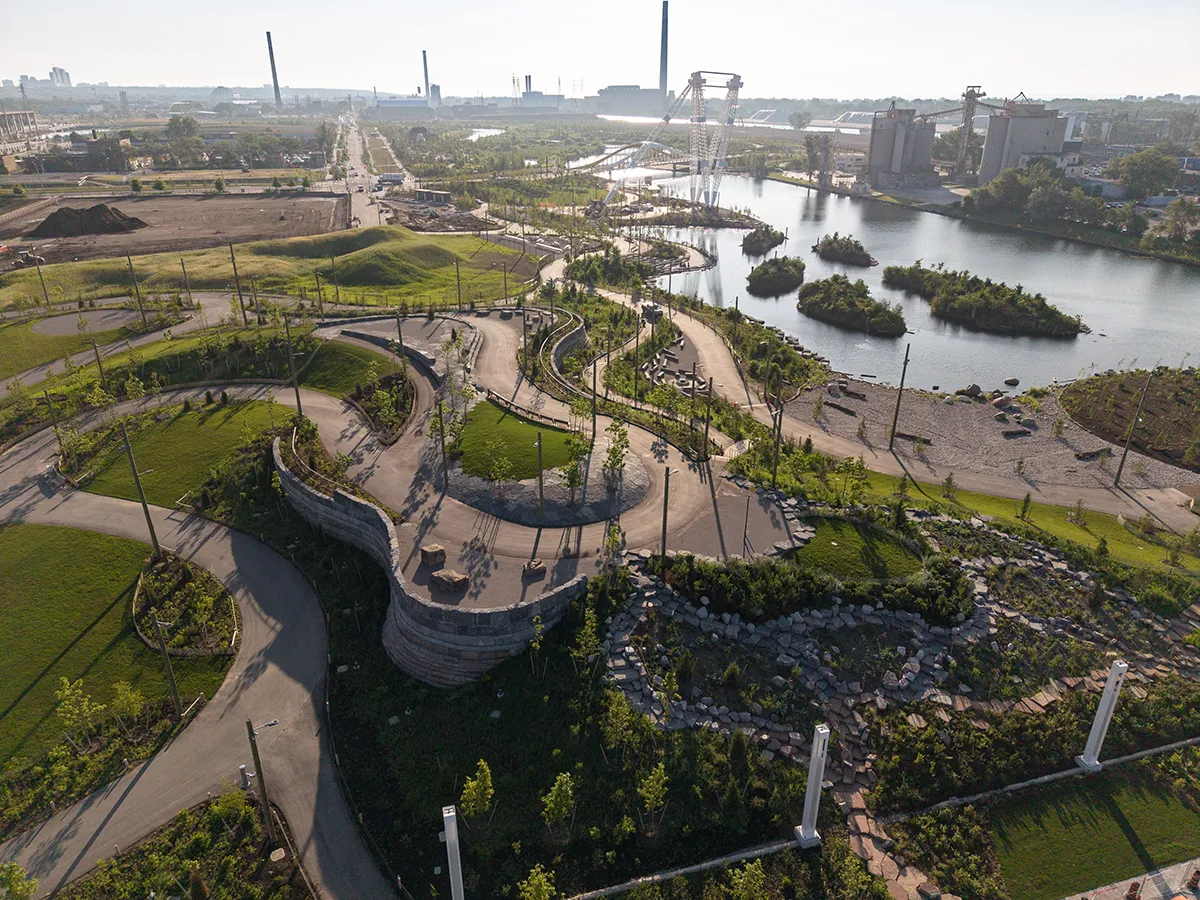
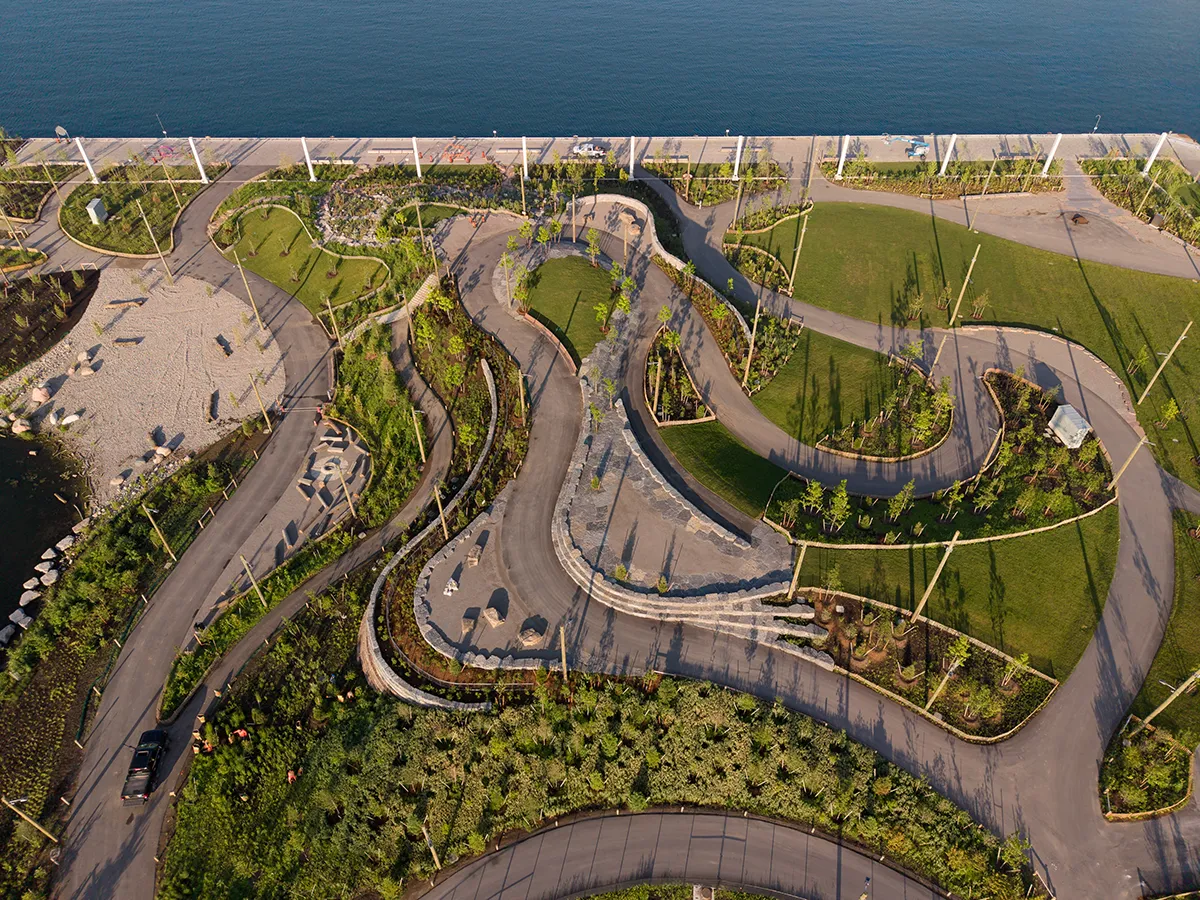
The 10-acre expansion adds parkland that is five times the size of Toronto’s Sugar Beach into the already expansive park opened last summer. The portions of Biidaasige Park opened in 2025 and 2026 total approximately 60 acres, with an additional five acres of parkland still to come. When complete, Biidaasige Park will be more than twice the size of Chicago’s Millennium Park, which redefined that city’s modern identity by transforming a former rail yard and parking lot into an architectural and artistic tourist destination that now generates billions in economic revenue.
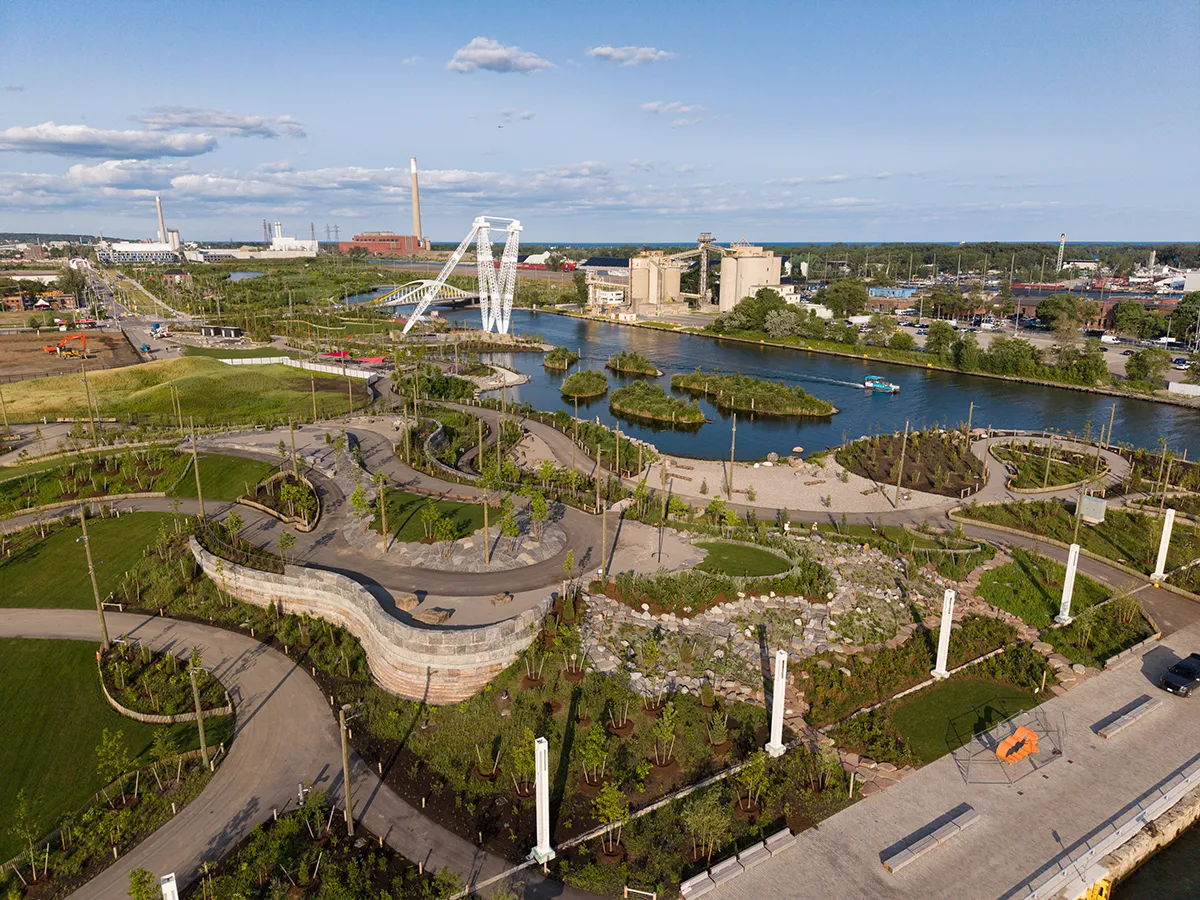
The Biidaasige Park opening represents far more than the addition of new parkland. It is also the continuation of one of the largest ecological restoration efforts ever undertaken on Toronto’s waterfront.
“Today marks another major milestone in the transformation of Toronto’s waterfront. What was once industrial land is now becoming one of the most ambitious waterfront revitalization projects in North America. People can paddle along the shoreline, enjoy public art, connect with nature and experience the city from an entirely new perspective. Together with our federal, provincial and Indigenous partners, we are building not only a world-class park, but complete communities with new homes, jobs and public spaces that will benefit generations to come.”
Olivia Chow, Mayor of Toronto
Long before industrialization and city development, this waterfront held deep significance for Indigenous Peoples. Today, Indigenous placekeeping is embedded throughout the park experience, reflecting longstanding relationships between land, water and community while helping restore Indigenous presence, language and ways of understanding place within the public realm.
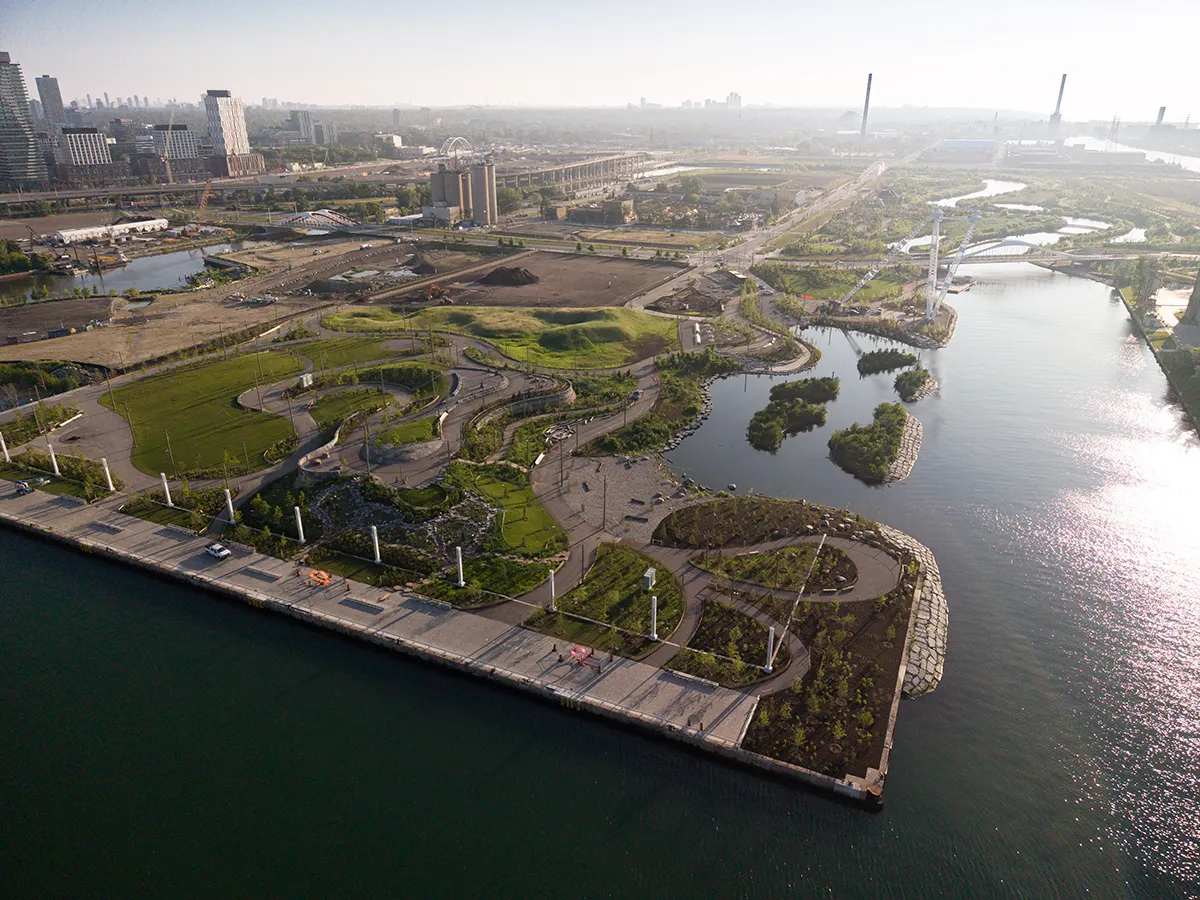
Biidaasige, pronounced “Bee-daw-si-geh,” means “sunlight shining toward us,” while Ookwemin Minising, pronounced “Oh-kway-min Min-ih-sing,” means “place of the black cherry trees” in Anishinaabewomin. Both names were gifted through an Indigenous-led naming circle convened by the City of Toronto.
“Biidaasige Park is more than a beautiful new gathering place, it is a reflection of what can be achieved when we work together to honour our Treaties, the land, the water, and the stories that have always belonged here. This park is located on Toronto Purchase Treaty lands of the Mississaugas of the Credit. We are proud to have contributed our knowledge, history, and teachings throughout the development of Biidaasige Park, and we hope that everyone who visits will gain a deeper appreciation for the history of this place and the importance of protecting and restoring the natural world for future generations.”
Margaret Sault, Chief of the Mississaugas of the Credit First Nation
Located at the heart of Toronto’s redeveloped eastern waterfront, the newest section of Biidaasige Park offers visitors a new experience of the city.
New public features include:
- Canoe Cove, a paddling course and pebble landing for non-motorized watercraft
- A 3,000-person event lawn
- More than 250 metres of extended Water’s Edge Promenade
- A promontory, or elevated viewpoint, offering panoramic sightlines across the inner harbour and city skyline
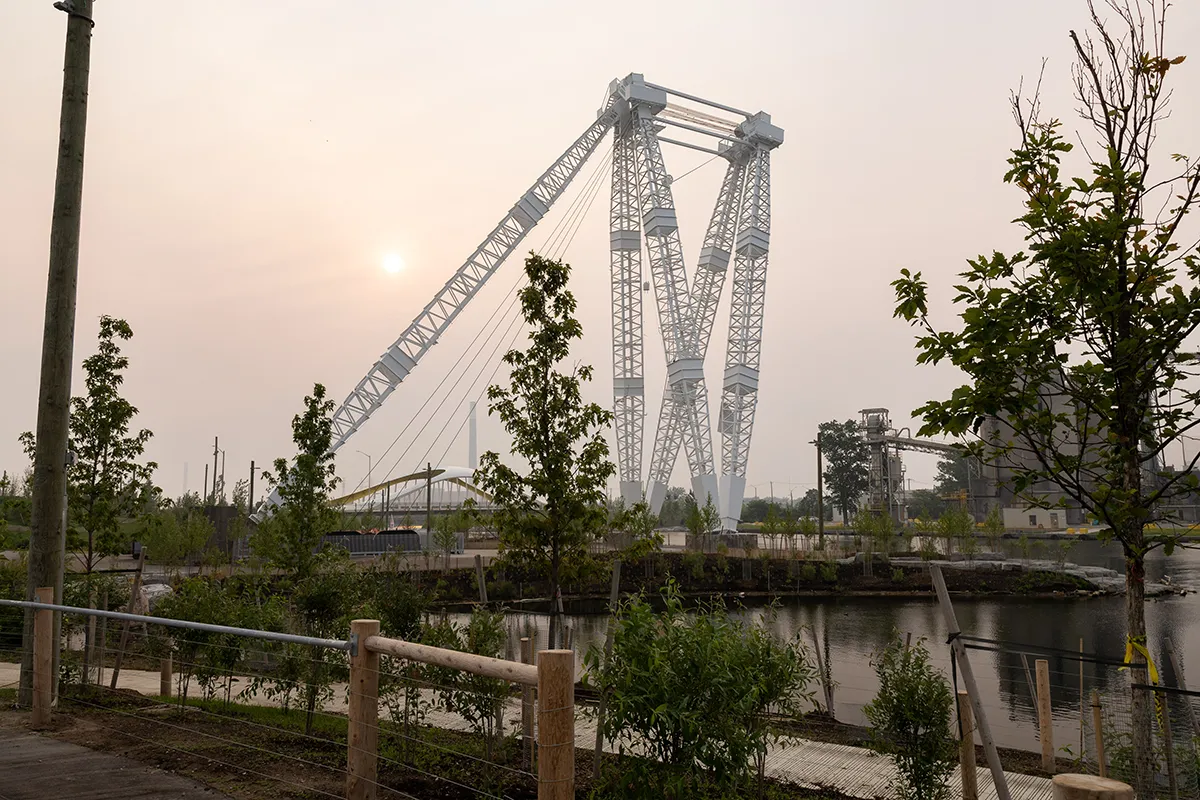
- The Atlas Crane, a preserved 300-ton marine cargo crane, installed in 1961 and decommissioned in the 2000s, and elements of the Marine Terminal 35 building celebrate the area’s industrial heritage
- Existing and planned Indigenous design features, including a Fire Holder feature and Teaching Signifier Sturgeon Stones – both designed by Solomon King and Brook McIllroy. It also includes Directional Compasses/Marker Trees designed by Two Row Architect, and Interpretive Signage by NVision Insight Group, celebrating the area’s Indigenous past and present
- The western expansion of the four-kilometre Lassonde Art Trail, featuring 7 public art installations by artists Ryan Gander, Alexa Kumiko Hatanaka, Lisa Hirmer, Virginia Overton, and Hank Willis Thomas; with another two highly anticipated sculptures by Kent Monkman and Monira Al Qadiri to come this fall
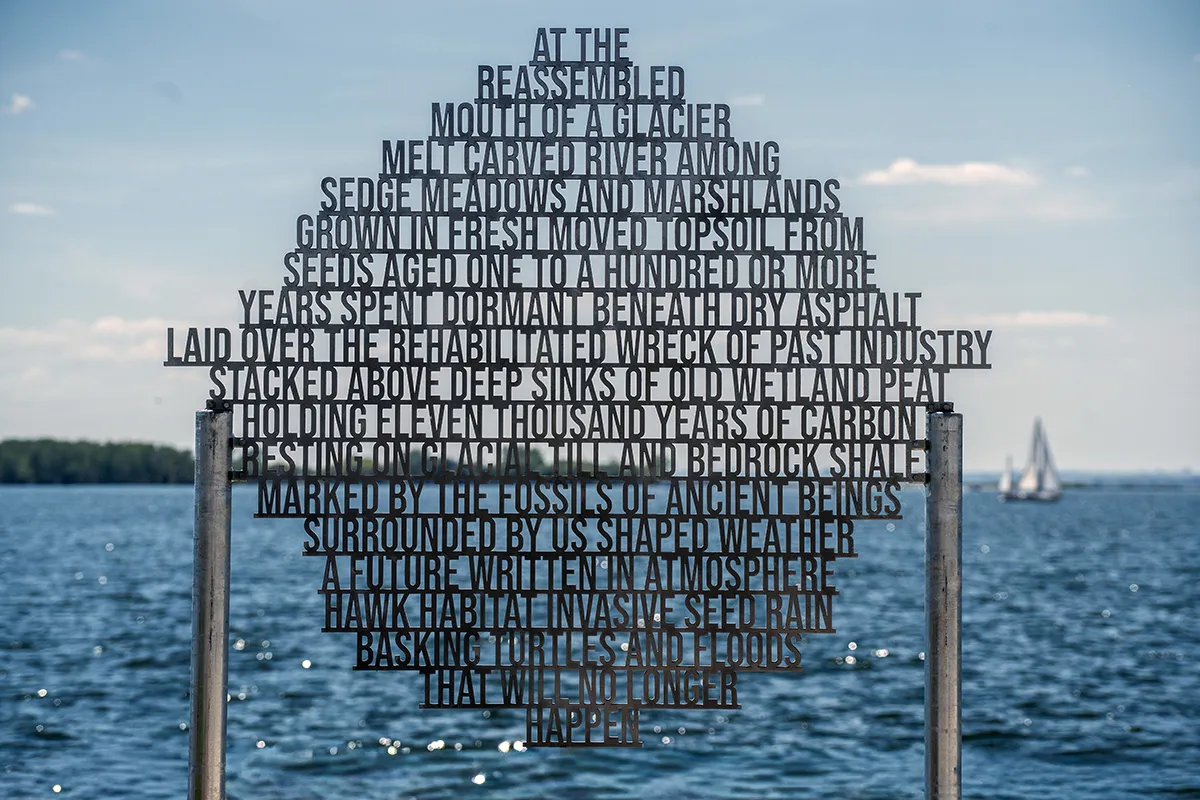
Photo Vid Ingelevics and Ryan Walker. Courtesy the artist and Lassonde Art Trail.
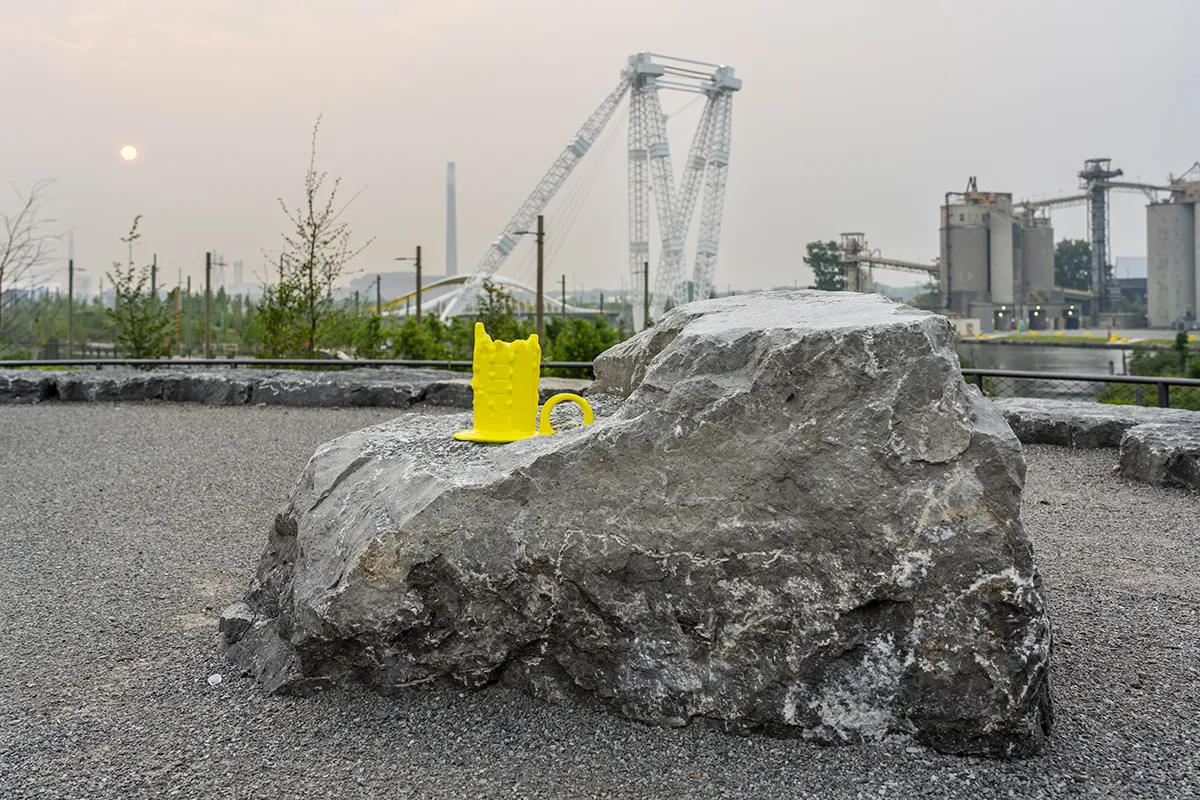
Photo Vid Ingelevics and Ryan Walker. Courtesy the artist and Lassonde Art Trail.
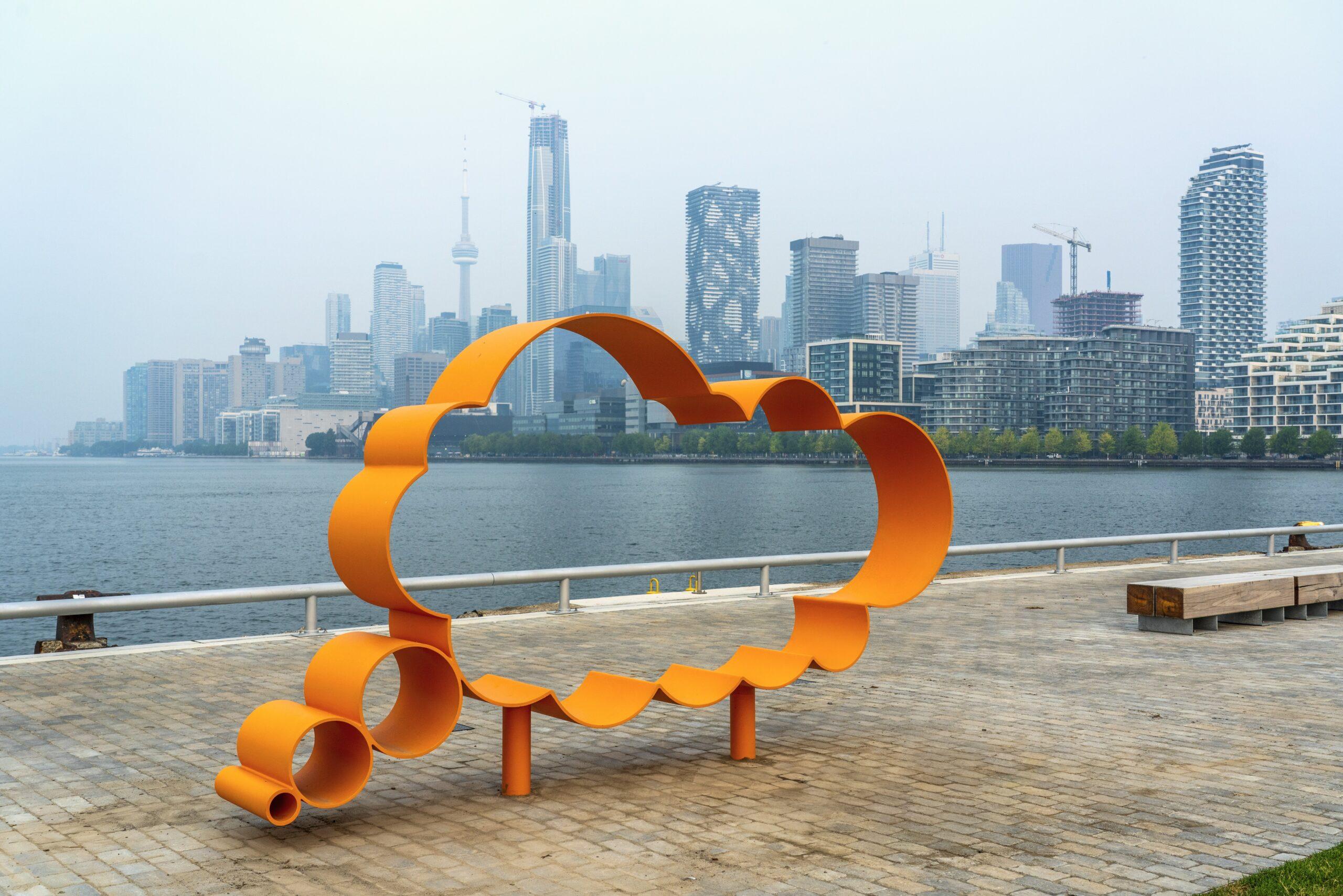
Photo: Vid Ingelevics and Ryan Walker. Courtesy the artist and Lassonde Art Trail.
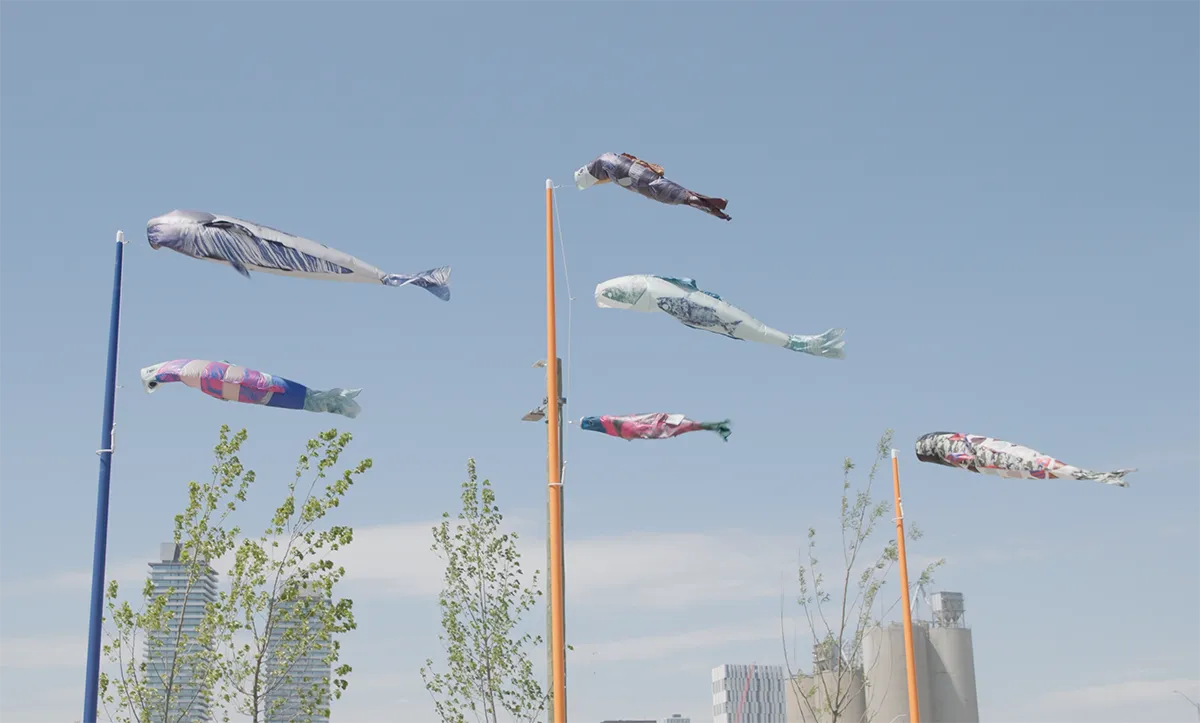
Still from video by David Hartman. Courtesy the artist and Lassonde Art Trail.
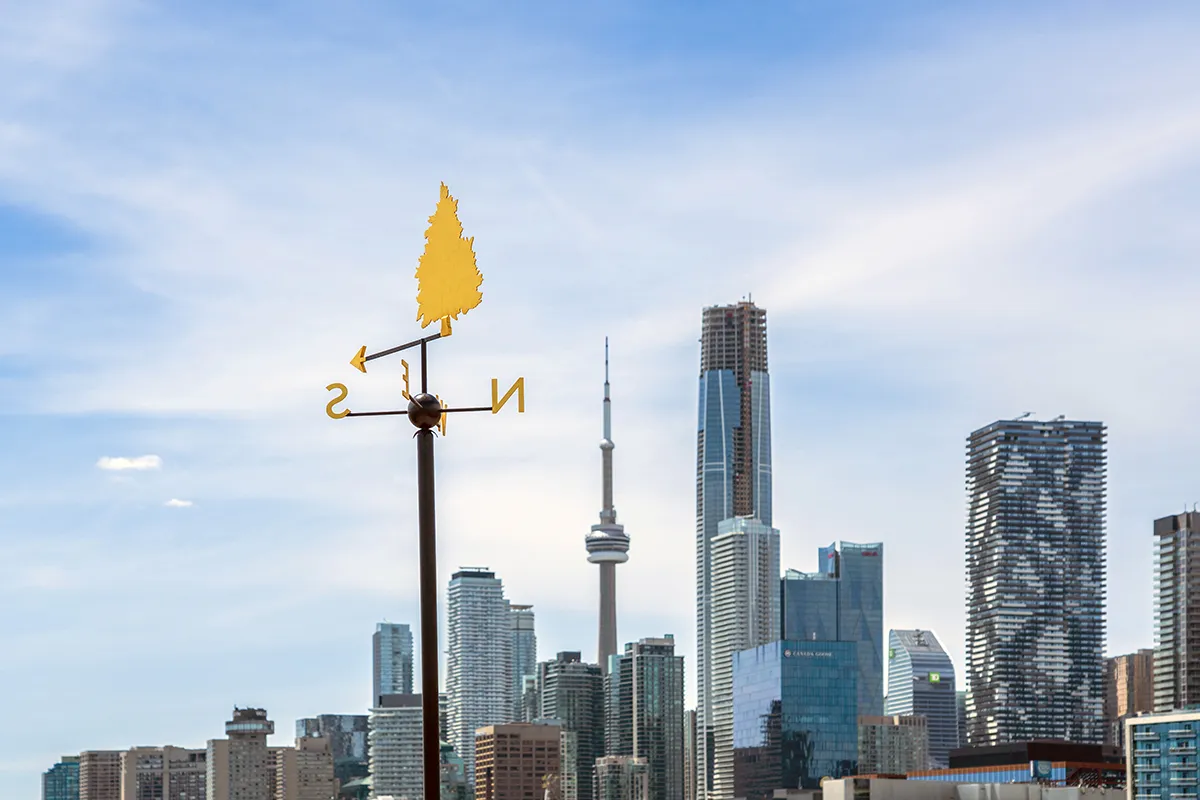
Visitors can access the park through multiple public transportation options, including TTC buses and the East-West Water Shuttle, a seasonal water shuttle that docks just east of Canoe Cove on Ookwemin Minising, at the Yonge Slip, and Portland Slip.
Images: Courtesy of Waterfront Toronto