
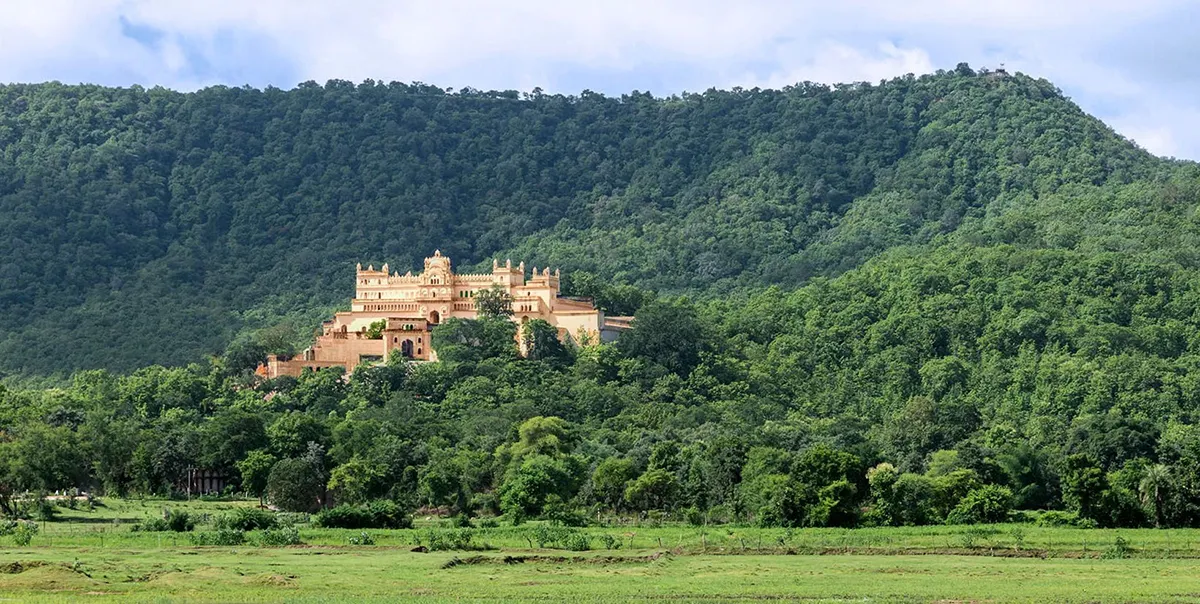
Setting the Landscape Within a Historic Terrain
Located within the forested slopes of the Maniyagarh Hills in Madhya Pradesh, India, the landscape for the heritage-led luxury resort, The Oberoi Rajgarh Palace, reinterprets historic garden traditions through a contemporary hospitality framework. At the center of the site stands Rajgarh Palace, a meticulously restored Bundela-era structure dating back to the late 17th century.
Completed in late 2025 and spanning approximately 200,000 square meters, the project transforms the surrounding terrain into a layered experiential landscape that respects the site’s cultural legacy while introducing a refined resort environment.
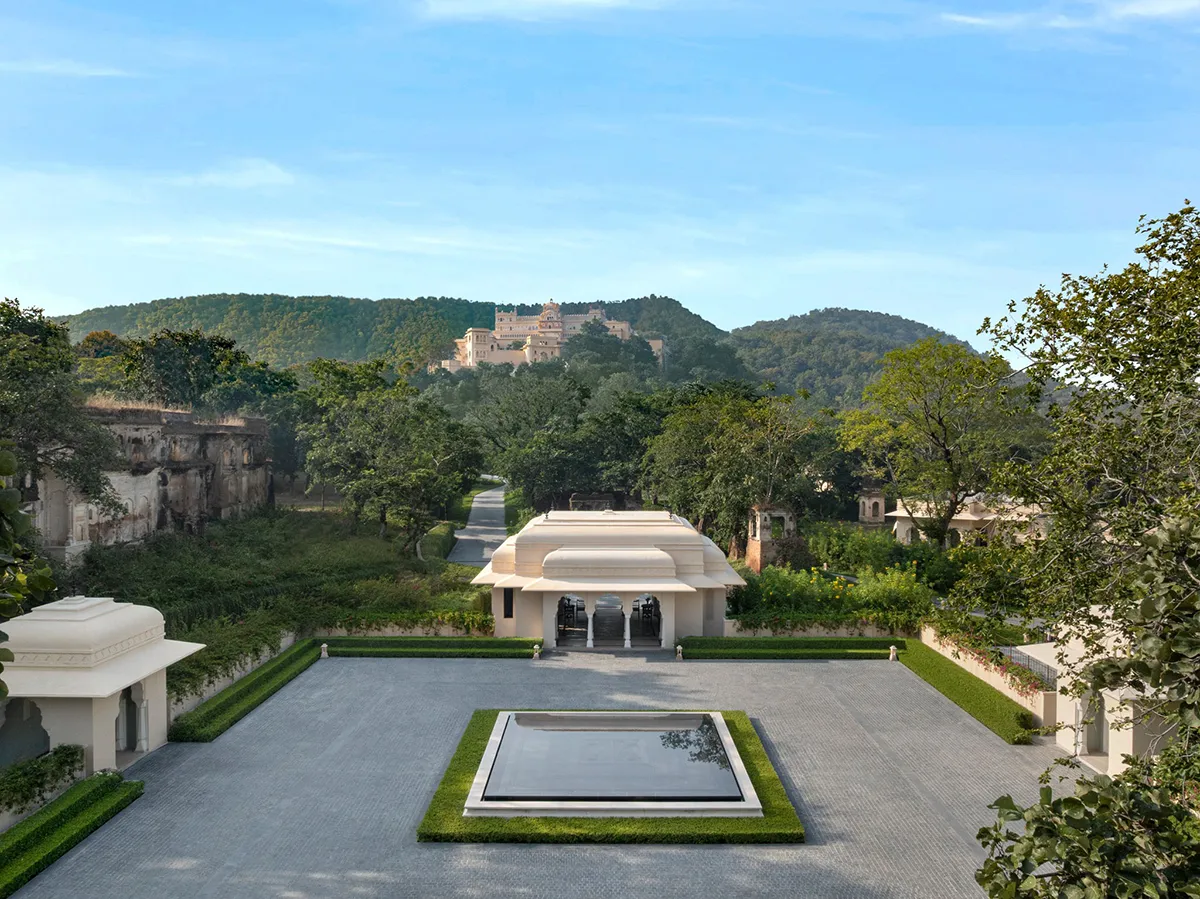
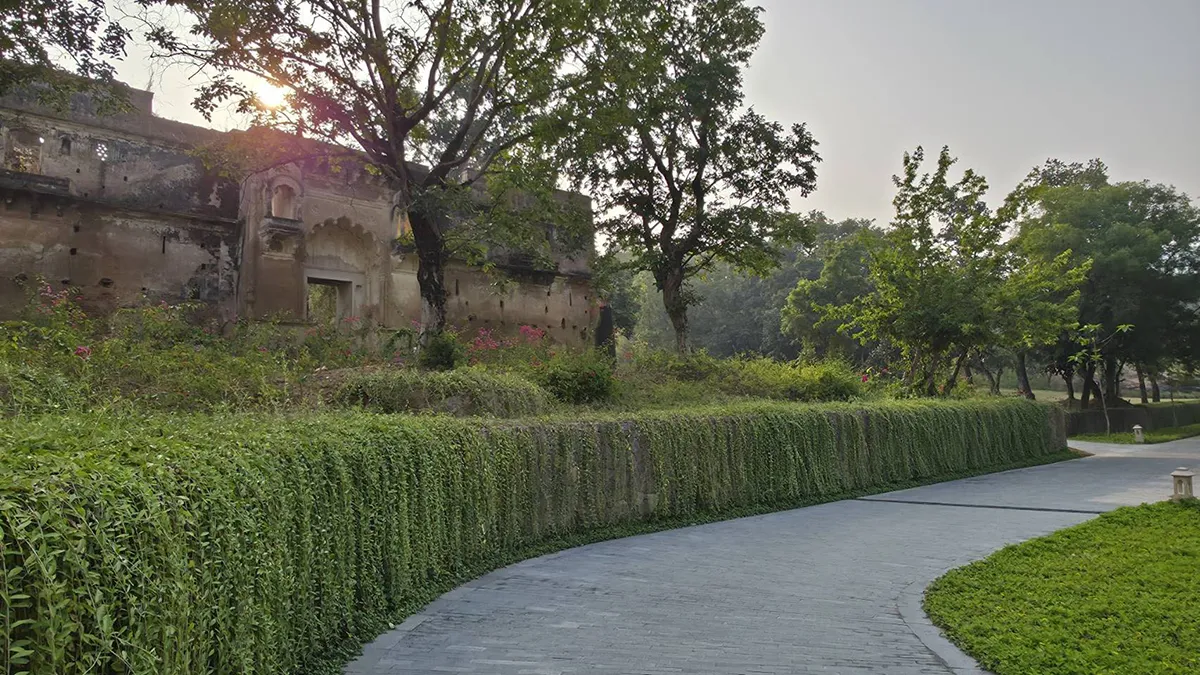
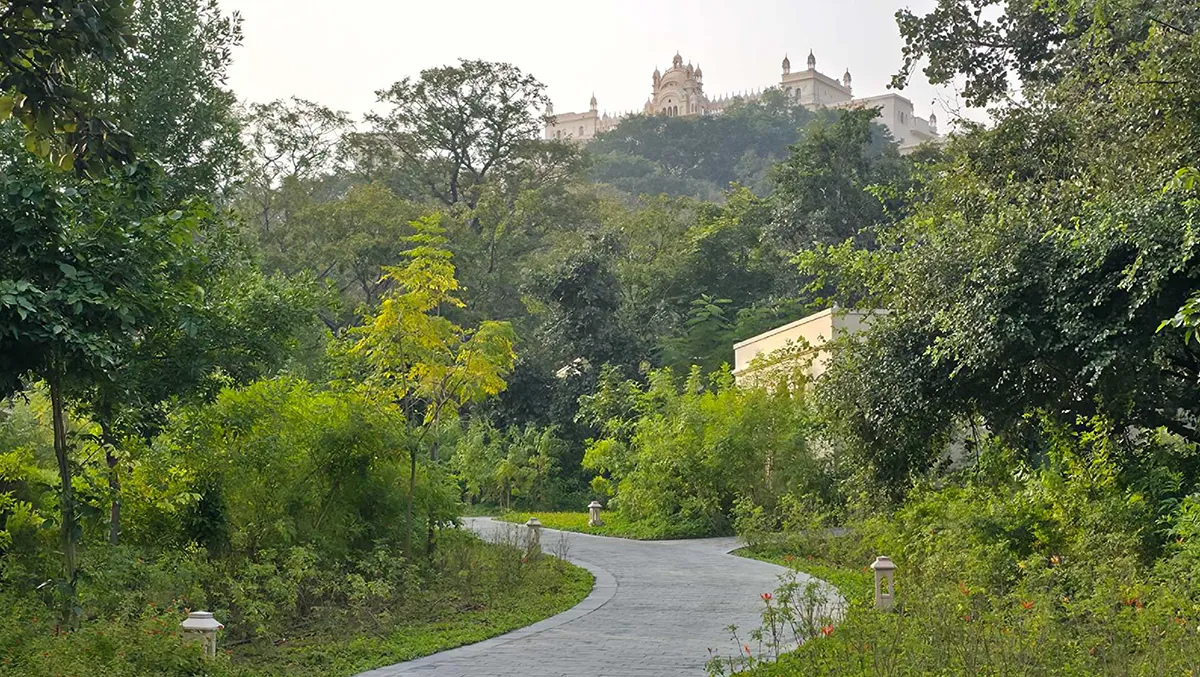
Movement Through Courtyards and Villa
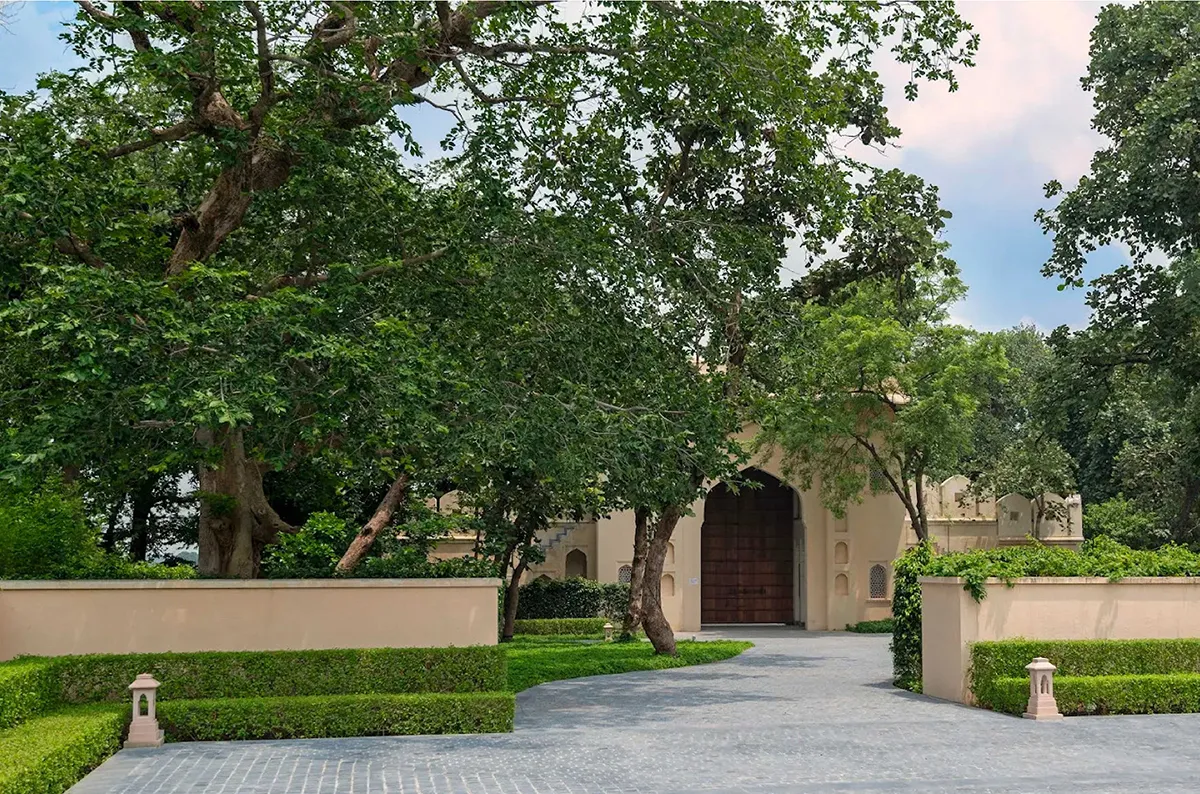
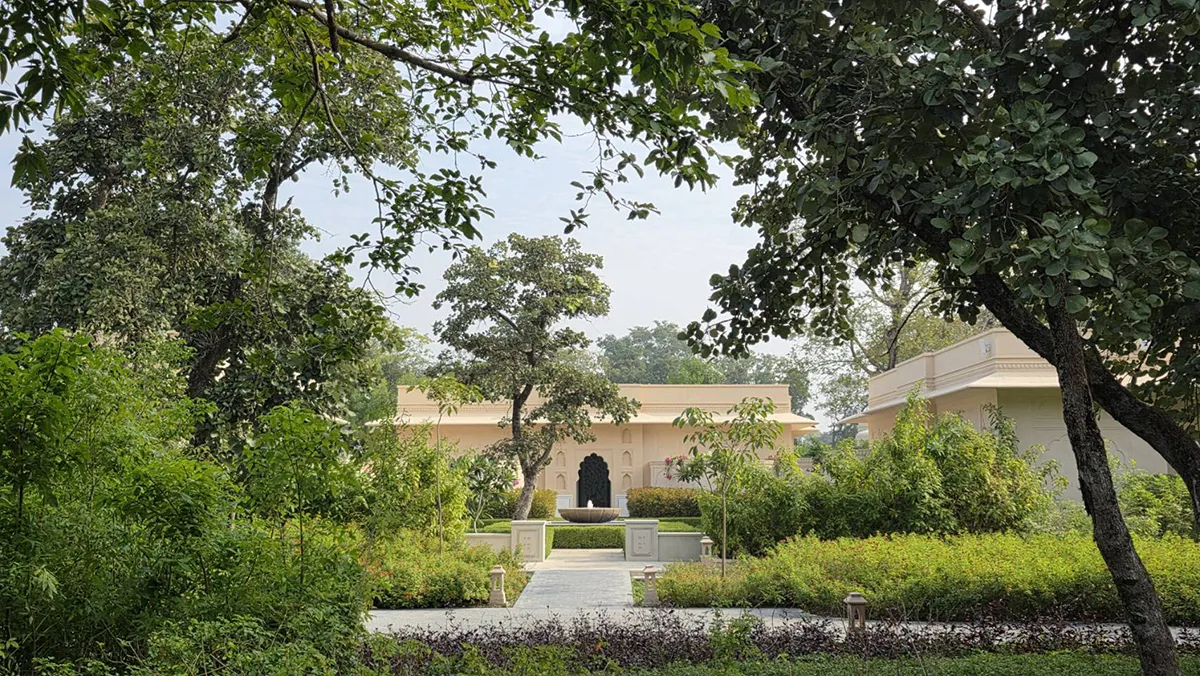
Courtyards and villas guide movement across the site, drawing from Indian architectural traditions to slow circulation and create moments of pause. Responding to the elevated topography, the landscape organizes a sequence of courtyards, gardens, and pathways that gradually reveal the palace. Rather than competing with the restored structure, the landscape acts as a quiet mediator between past and present, establishing a clear spatial sequence rooted in cultural continuity.
Climate-Responsive Planting and Wildlife Coexist
The planting pallete reclaims the dried hillscape through an adaptive approach inspired by Mughal garden principles. Native and climate-resilient species are prioritized, with existing trees such as Butea carefully integrated into the design. Seasonal change, particularly the March bloom is conceived as a subtle reward rather than a visual spectacle.
Within the grounds, an active Hanuman temple anchors everyday local life, while wildlife and monkeys move freely across the site. These encounters blur the boundary between built and natural, reinforcing the landscape as a living, evolving environment.

Craftmanship, Materiality, and Design Expression
Elements reinterpret traditional Indian craft techniques, including perforated façade screens inspired by jali patterns, geometric latticework, and carved stone detailing. Floral motifs, textured masonry walls, and intricately patterned stone paving further enrich the material expression. Locally sourced stone and natural materials are used with restraint, creating a tactile palette that reflects both regional authenticity and understated elegance.
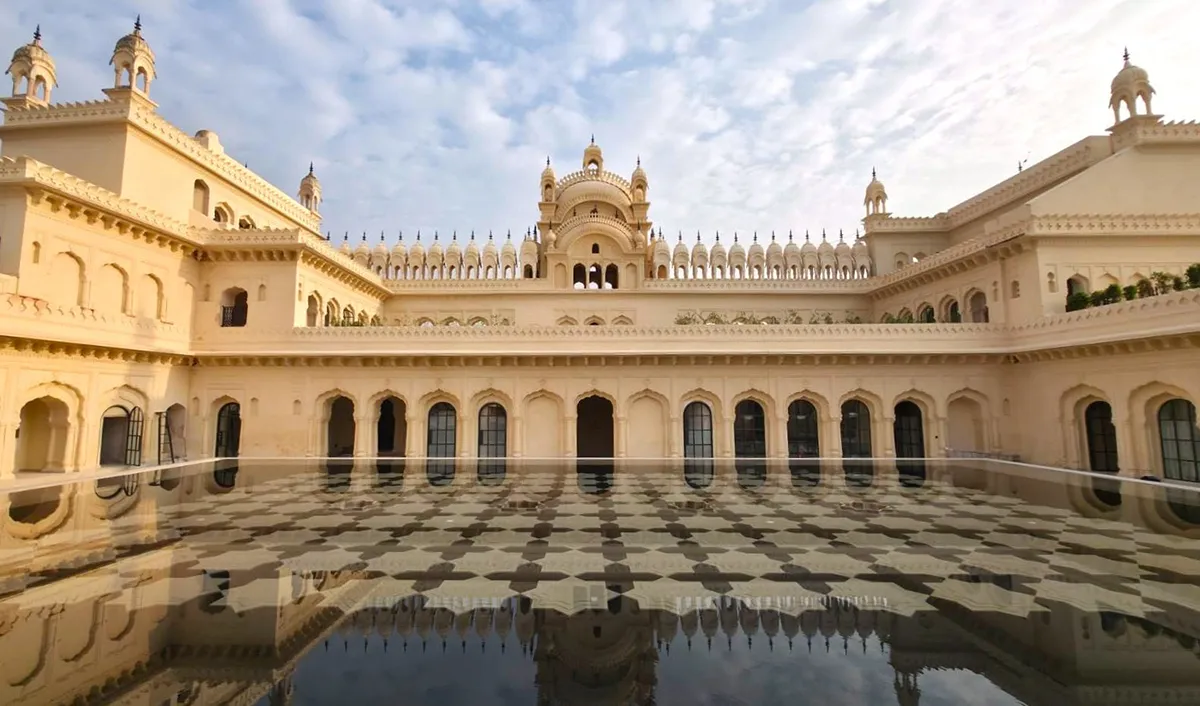

Water, a historically significant element within Indian garden traditions, introduces movement and cooling microclimates throughout the landscape. Reflecting pools and narrow water channels guide visitors through the site, culminating in the Water Courtyard at the Palace, also referred to as the Courtyard of Silence, where still water, filtered light, and historic architecture converge to create a contemplative spatial experience.
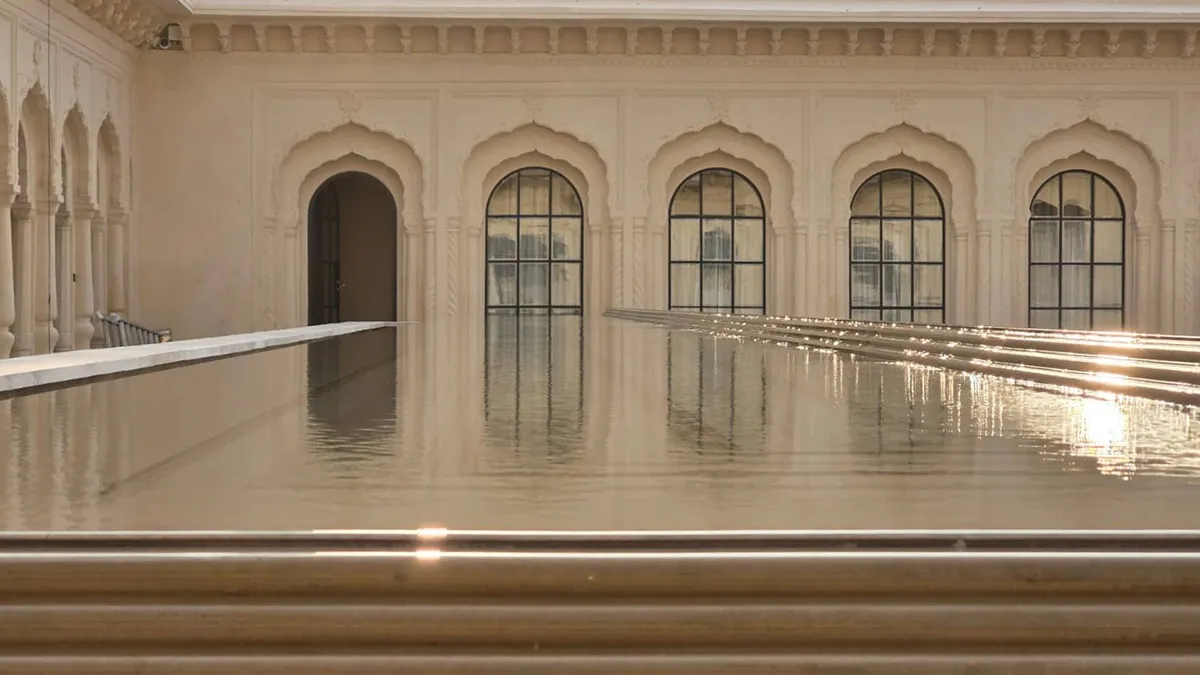
The resort respects historical layers rather than erasing them, carefully integrating circulation, water systems, and infrastructure to support long-term sustainability, where historical memory and contemporary luxury are held in equilibrium.
The Oberoi Rajgarh Palace
Location: Madhya Pradesh, India
Landscape Architect: P Landscape
Architect: Ravi Kumar Gupta
Interior Designer: Designwilkes
Client: The Oberoi Group
Photography: The Oberoi Group; Chatchai Petcharad;