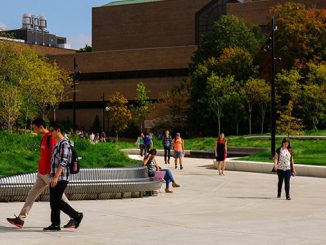
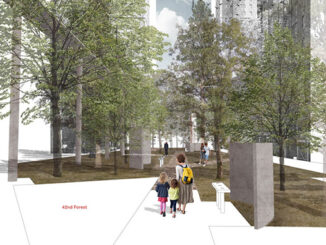
The Plaza occupies a difficult site in Cambridge, at the seam between Harvard’s historic Yard and its North Campus, and in a public right-of-way atop a roadway tunnel laden with city and University utilities. The site was a busy cross-roads for students and faculty moving between classes and residences, for city residents walking to nearby subway and bus stations, and for visitors touring the campus or visiting one of the University’s museums. Continue reading The Plaza at Harvard University | Cambridge USA | Stoss
“shifting grounds – rethinking the residential public spaces in singapore”. The project focused on enhancing social interaction within the community through landscape interventions in and around void decks in Singapore’s urban residential estates.
Singapore is densely populated, thus majority of its residents live in public residential estates where the landscape is typified by “void decks”. 90% Of Singapore’s population live in public housing, which in singapore is referred to as mass housing. This is in contrast to Melbourne, where only 10% of the population live in public housing.
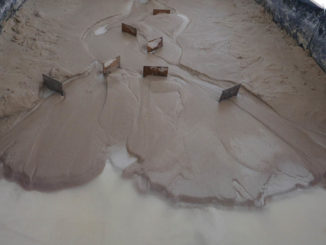
During times of low flow the central area becomes an active recreation area
Grounded Structuration investigates a process for amplifying the potential relationship between the design of the public realm and the politics of community. The design explores how site specific meaning and meaningful experiences can be associated with the retrofitting of infrastructure in New Orleans’ St. Roch community. St. Roch is named after the patron Saint of Good Health, memorializing the community’s auspicious beginning. Ironically, a fragmented drainage network, contaminated soils and blighted properties now threaten the vitality of the once thriving community. Reimagining the community from the ground up is an opportunity to reinvigorate the health of St. Roch.
Context: From the scale of the Mississippi Delta region to a block in St. Roch.
Q | Santa consists of an integral project that seeks to generate a vision of a city that doesn’t deny its context or itself, where its systems and functions are integrated and overlapped, trying to find the most appropriate way to combine the urban artificial systems with the natural systems, through the generation of relationships of dependency that have been tested in other latitudes, where both systems benefit and become optimized.
It’s based on the thought that the city is written, erased and rewritten by itself continuously according to its changing context, new demands, and its new operating systems.
The increments of the urban complexity are dictated by the increase in the amount of information that each city stores, the cultural hybridization, the evolution of knowledge, the demand for new activities and programs, and the awareness of resource management. The innate human need to enhance and form new relationships, new connections, has been the determining factor in the process of shaping a new perspective of the outside, of a dynamic and contemporary city, but above all, human.
This project is developed under the theory of the topological behavior of the contemporary city: the new cities, complex, flexible, dynamic, fluid, in constant change; and the various relationships of dependency and interaction generated among its many layers and systems. It pays special attention to the relationships between natural and artificial urban systems; pathological problem that is present in basically every city in the countries of Latin America, and the implementation of these theories in the case of the Quebradas River’s waterfront, within the city limits of San Isidro del General, Perez Zeledon.
The international competition for the SLANT AWARDS is being held this year for the first time and on this occasion is aimed exclusively at students of Landscape Architecture and Landscape Design.
The central idea behind this challenge is that the project in question is a “virtual project”, one that has been created specifically for this competition. What you are being invited to do is to create a concept design for a public park, one which will not only serve the needs of the citizens of this city, but which will also aim to achieve iconic status and in so doing will enhance the international reputation of the city.
You will see from the brief that we are looking here at urban renewal, with the project being set on a vacant site in a riverside location. This competition has been designed to offer students an interesting challenge with what we believe are interesting rewards, and we have tried to keep it as simple as possible.
You can enter as often as you like, either as an individual, or as a team of 2 or 3, and an entry fee will be charged accordingly.
Registration Deadline: 22 April
Deadline for submissions: 10 June 2011
First Prize Euro 3,000
Second Prize Euro 1,500
Third Prize Euro 750
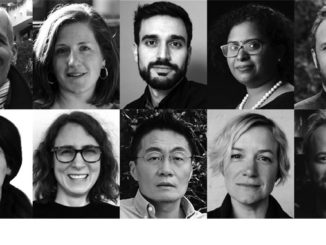
Jury Members:
John Brookes (UK),
Ulf Nordfjell (Sweden)
Paolo L. Bürgi (Switzerland)