
A landscape architect’s vision doesn’t always fit neatly into a vendor’s product catalogue.
Site furniture is often selected from established collections, and for good reason. Standard products are designed, engineered, tested, and manufactured to perform reliably across a wide range of environments. But sometimes a project calls for a specific dimension, material, configuration, or visual expression – or an element that simply doesn’t exist yet.
That’s when product selection can become collaboration.
The question shifts from Which product fits this project? to What does this project require, and how can the right solution be developed?
The answer isn’t always a new product. Sometimes an existing design can be adapted to meet a project’s particular requirements. Other times, the design intent calls for something entirely new. Knowing which approach makes sense—and involving the manufacturer early enough to influence the process—can have a significant impact on what is ultimately possible.
Two projects show how differently that can play out. At the University of Guelph, Lang Plaza, completed in 2021, transformed a vehicular-focused roundabout in front of the university’s historic Macdonald Hall into a pedestrian-focused social space.
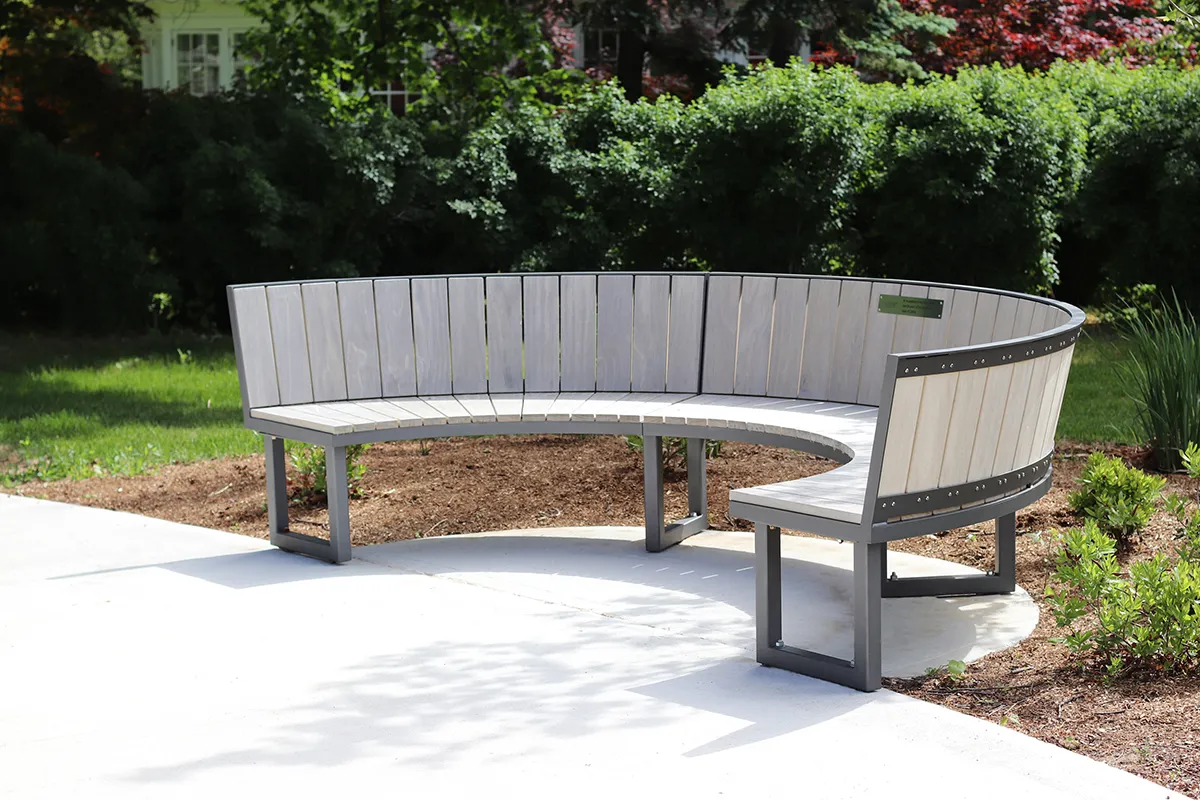
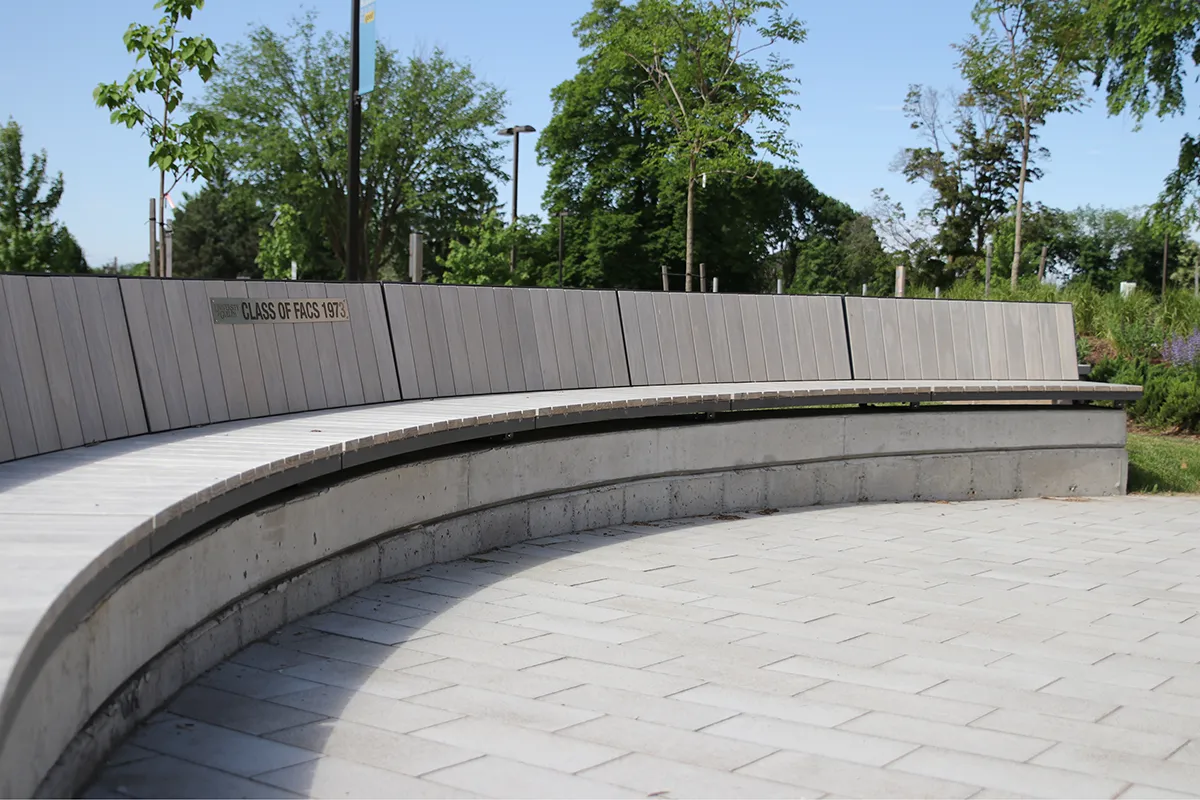
The design team, including Kendall Flower of KFLA and architects Barry Bryan Associates selected Maglin‘s modular Ogden Collection curved benches to create seating clusters throughout the plaza. The collection provided the right framework for the seating design, but two project-specific requirements meant the standard product needed to evolve.
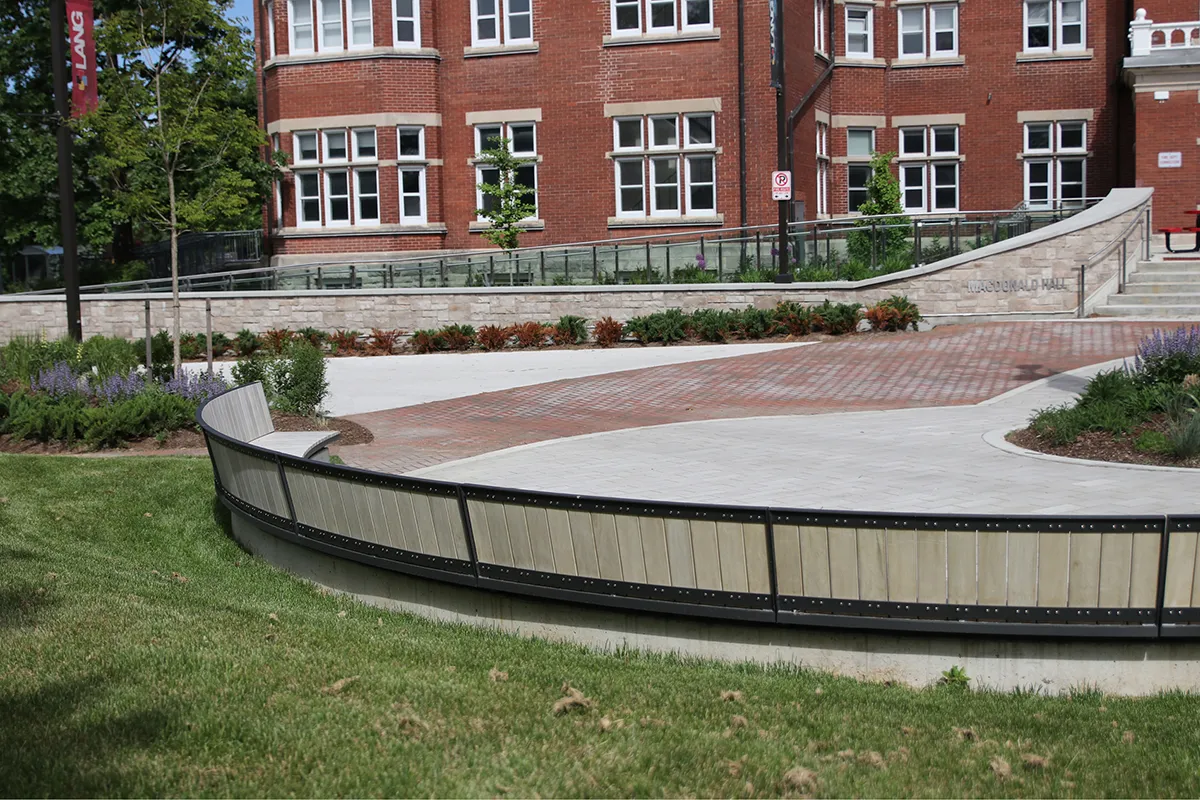
The University of Guelph’s design standards called for Accoya wood for campus site furnishings. The landscape architecture team wanted slightly deeper seating, requiring modifications to the cantilever bench slats and seat pans.
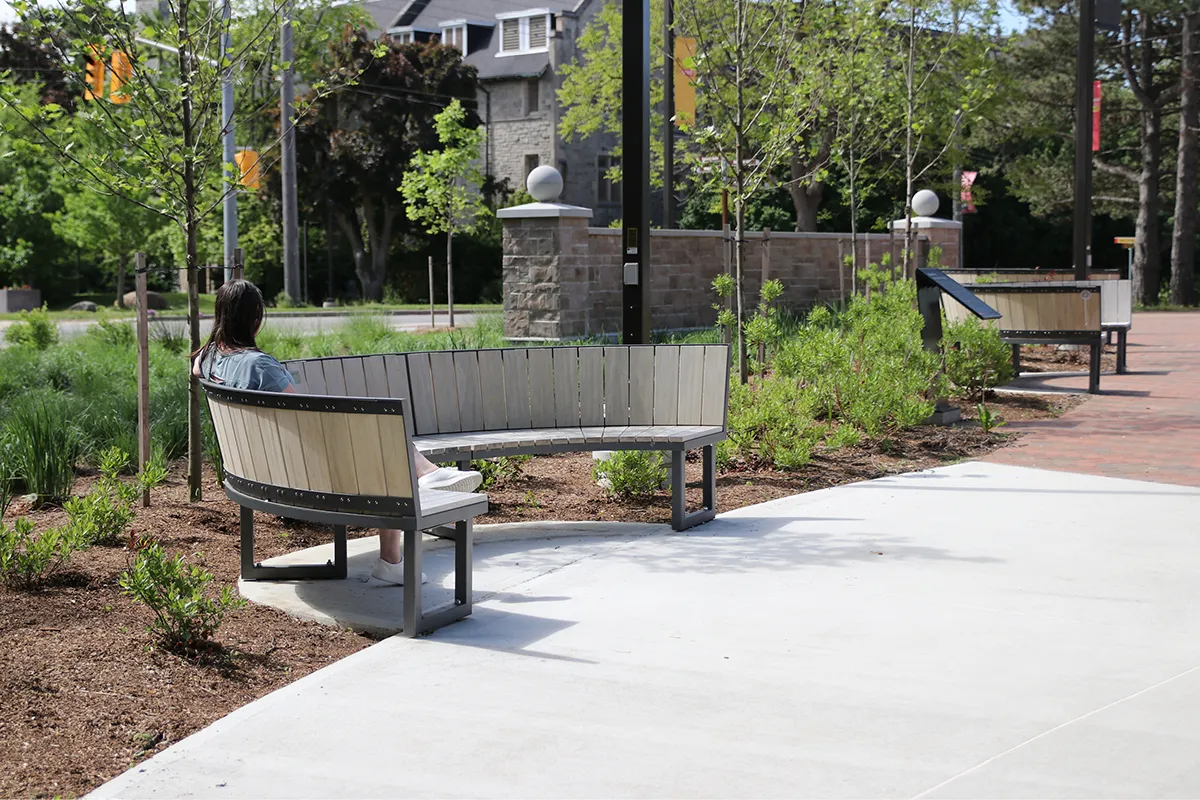
Rather than move to an entirely different product, the design and project team worked with Maglin‘s sales and engineering to determine how the existing Ogden benches could be adapted. Maglin sourced the non-standard Accoya material and incorporated it into the benches, while engineering developed the production and assembly drawings required for the modified seat components.
The result retained the character and functionality of the Ogden Collection while responding to the specific requirements of the project.
At the other end of the spectrum is Battery Playscape at The Battery in New York City.
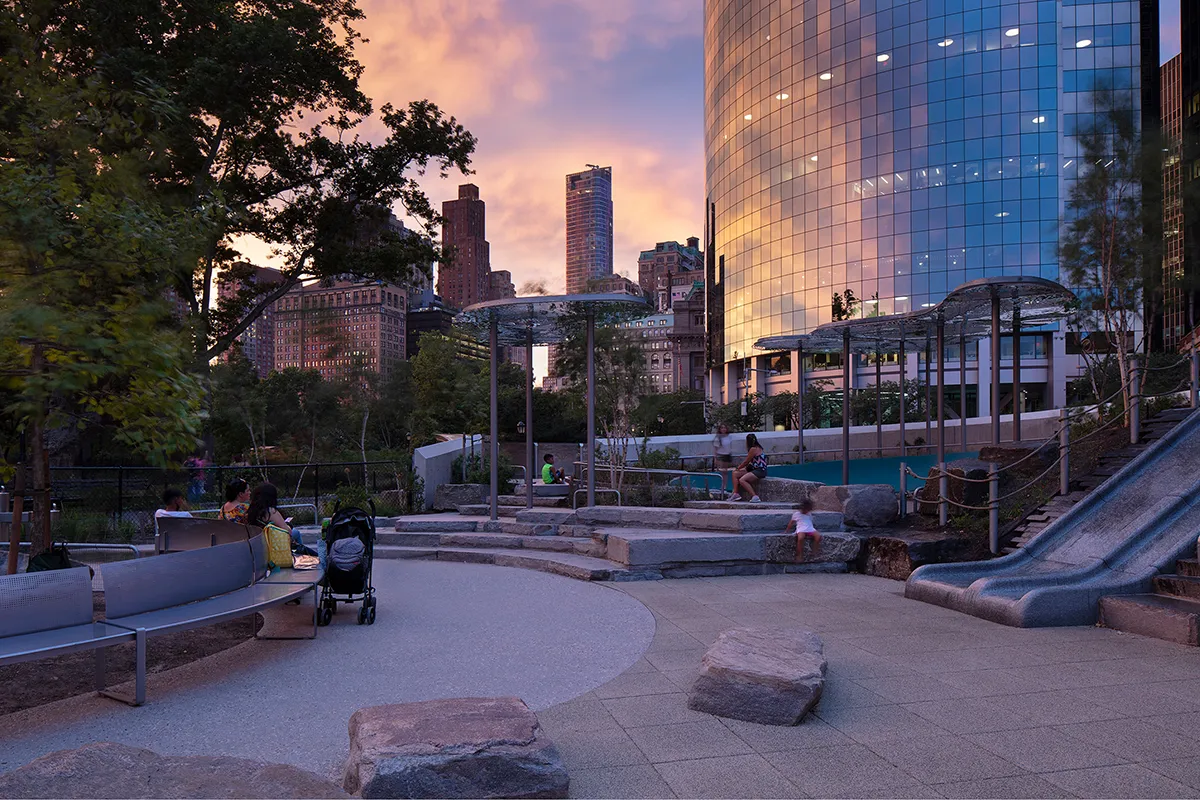
Opened in 2021, the playscape transformed a long-underused corner of the park at the southern tip of Manhattan into a richly layered play environment for children and families. Developed by the Battery Conservancy in partnership with the City of New York, with architecture by BKSK Architects and landscape architecture by Starr Whitehouse Landscape Architects and Planners PLLC, the project drew inspiration from its waterfront setting, including the harbor, sky, and geology of Lower Manhattan.
Among the site’s most recognizable elements are a series of large custom shade structures shaped like clouds.
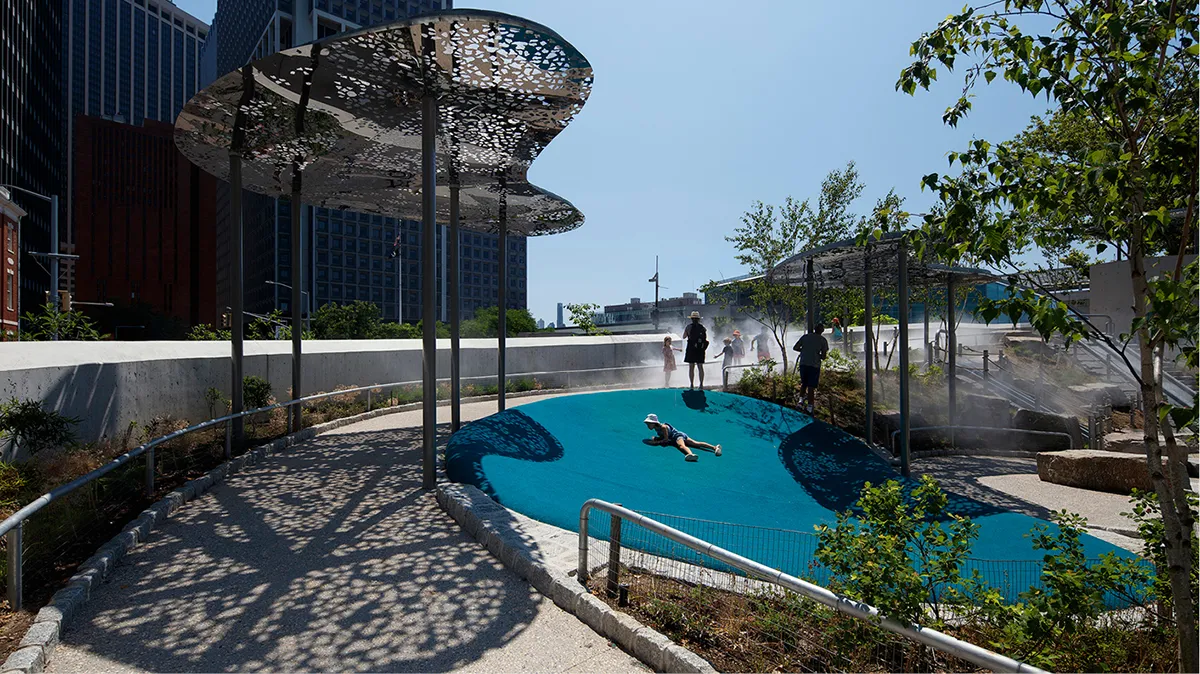
The concept was deliberately different from a conventional canopy. The structures needed to provide meaningful shade while reading as part of the landscape rather than as furniture placed on top of it. They needed to be visually compelling from across the park and from beneath, while also performing as permanent public infrastructure in an exposed coastal environment.
Turning the concept into a buildable structure meant bringing Maglin in early, well before the design was finalized. Early conversations focused on feasibility: span and height, wind exposure, snow and ice loading, coastal durability, finish systems, budget, and installation requirements. From there, geometry, engineering, and fabrication developed together.
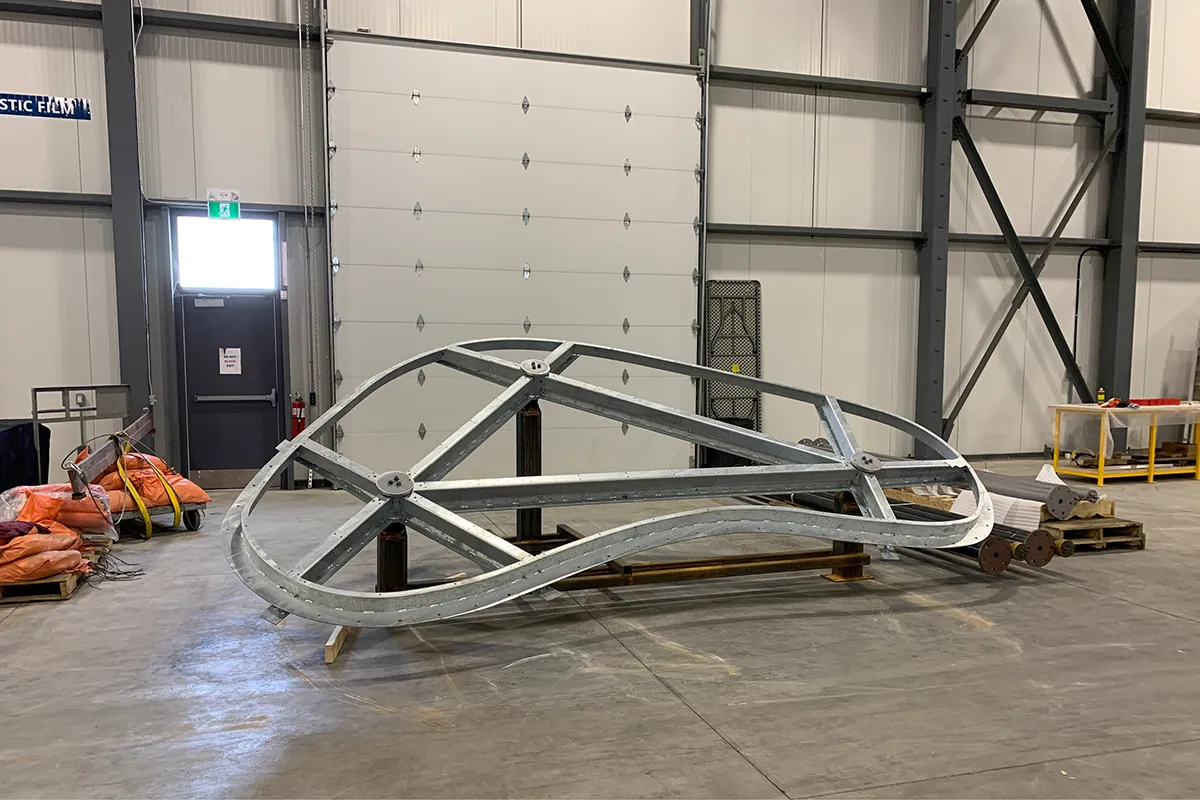
The irregular cloud forms created structural challenges a conventional shade structure wouldn’t face, so Maglin‘s engineering team modeled the entire assembly in three dimensions and ran it through finite element analysis for wind, snow, and ice loading. Galvanized steel formed the structural framework; mirrored stainless-steel panels reflected the sky and water, reinforcing the impression that the clouds were floating above the playscape.
Rather than fabricate the structures in the field, Maglin engineered the clouds as transportable components and assembled and test-fitted them in house, verifying dimensions, connections, and alignment before shipment and protecting the finished stainless-steel surfaces during field installation.
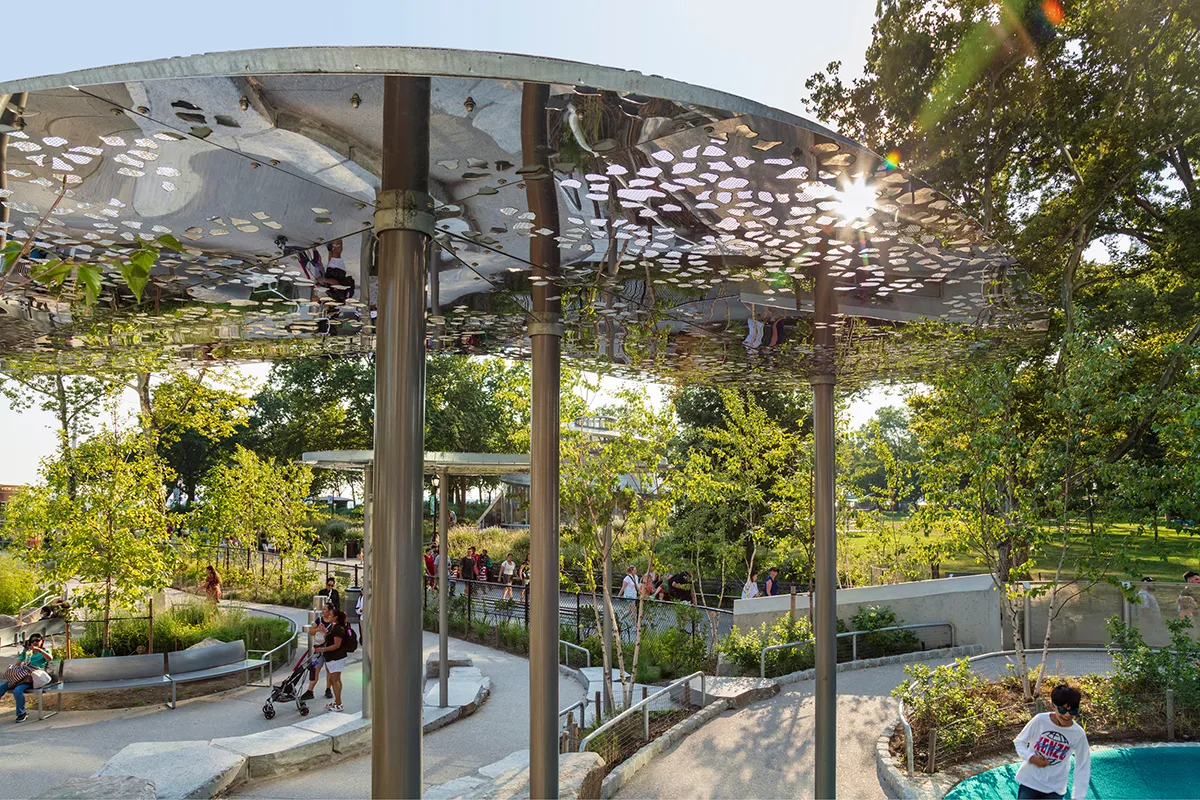
By the time the structures arrived at The Battery, much of the problem-solving had already happened.
Different scale, different material, same underlying lesson: the most successful custom projects rarely move in a straight line from sketch to finished product.
They involve revisions, testing, engineering decisions, and adjustments. The earlier those conversations start, the more room there is to solve problems while the design is still flexible.
For landscape architects considering a nonstandard site-furniture solution, the first conversation with a manufacturer can be surprisingly simple: Which design choices are fixed, and which are flexible? What environmental conditions will the product need to withstand? What are the budget and schedule?
Maglin’s experience across standard, modified, and custom production can help answer those questions before a project becomes locked into a particular approach.
The goal is finding the level of customization that preserves the design intent, meets the project’s functional and environmental requirements, and fits the realities of budget and schedule.
Sometimes that means modifying a proven product, as at Lang Plaza. And sometimes, as at Battery Playscape, it means creating something that didn’t exist before.
These questions of when to specify standard, when to modify, and when to start from scratch are also at the heart of a new continuing education course from Maglin, available soon on AEC Daily. The course explores how early collaboration between landscape architects and manufacturers can help turn site-specific design intent into practical, buildable solutions.
Maglin is a proud sponsor of World Landscape Architecture