
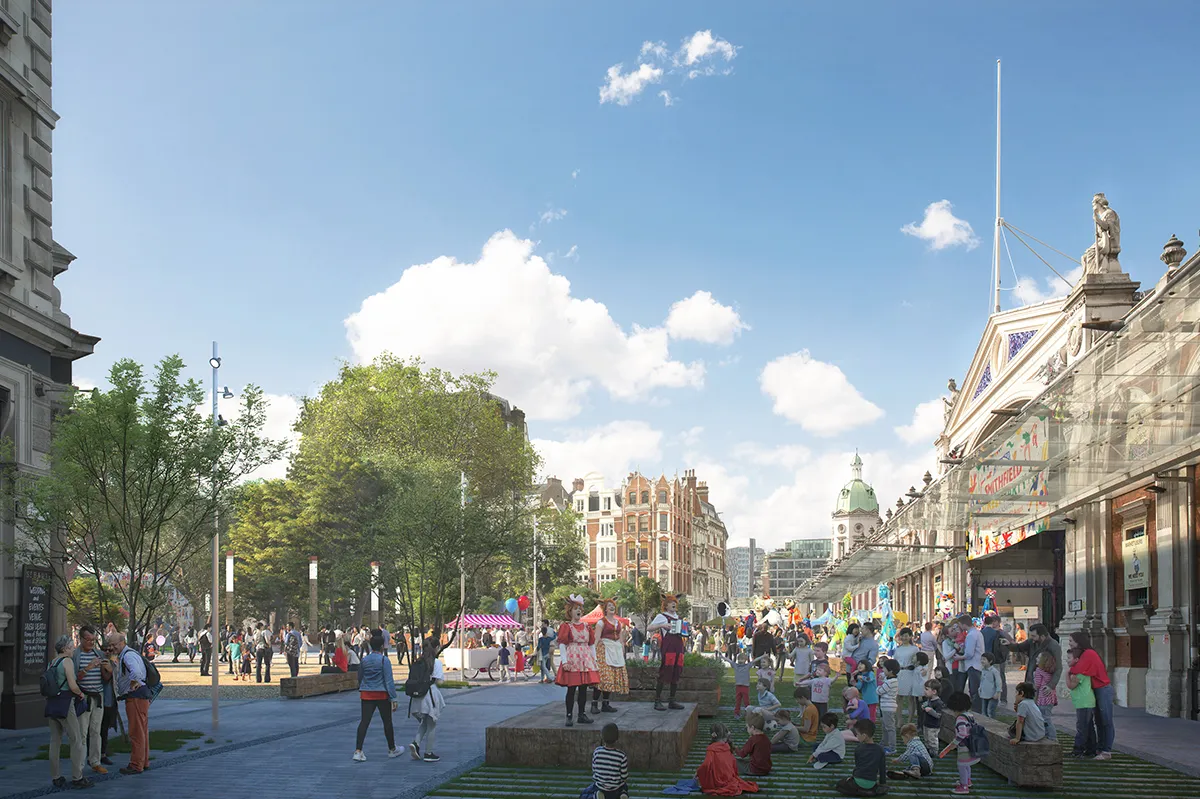
Anchored by the new London Museum move into the iconic Poultry and General Markets, along with the opening of the Queen Elizabeth Line at Farringdon and the relocation of market functions, Smithfield will experience radical transformation over the coming years, evolving from its historic identity as a meat trading hub into a world-class, 24-hour cultural destination. OKRA in collaboration with Hawkins\Brown, we are working on an ambitious public realm scheme that aims to create a unified, pedestrian-friendly and multi-functional public realm where Smithfield’s multiple histories and contemporary cultures intermingle.
A legacy of layers
Smithfield’s story begins as a field outside the Roman city walls, later evolving alongside the city’s growth to host priories, the meat trade, industry, and more recently a working commercial district. These layers have manifested in the built fabric of the area, demonstrating multiple, fragmented, and often overlapping histories.
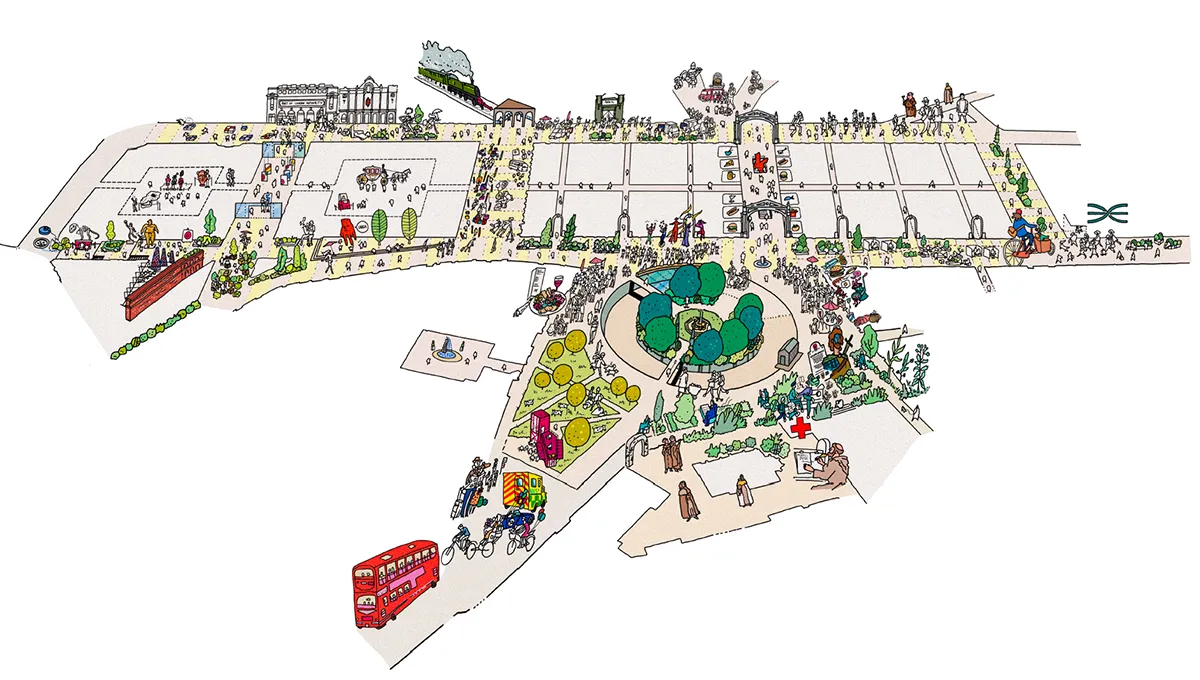
Our narrative-based heritage approach preserves, reinterprets and reveals key elements such as the market façades, Rotunda ramp, medieval urban fabric or underground structures, while reviving lost stories through spatial design and future cultural programming, engaging diverse audiences in Smithfield’s evolving identity.
Climate resilience as a design driver
Smithfield’s transformation is grounded in climate resilience. The project responds directly to the City of London’s Climate Action strategy, embedding adaptive design into every element of the public realm.
Green infrastructure is central to our design, with additional tree canopies providing shade and reducing heat stress. A sustainable urban drainage network manages surface water, improving permeability and reducing flood risk. Layered planting supports biodiversity and the creation of microhabitats across the site.
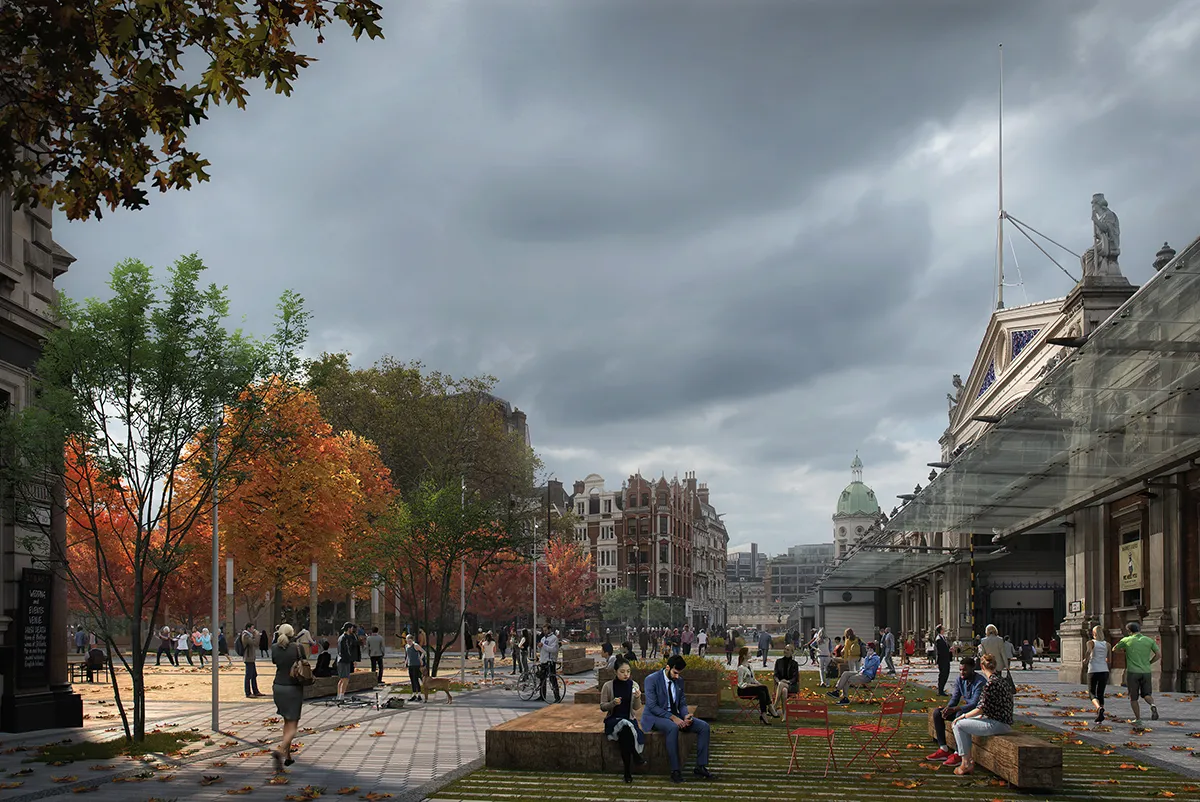
Existing materials, such as granite sets and Yorkstone, are carefully retained or repurposed, reducing environmental impact while preserving local character. New materials are chosen for low embodied carbon and high albedo.
Overall, we aim to contribute to a more resilient cityscape that improves public comfort while enriching the sensory and ecological value of the public realm.
Streets for people
Dominated by car traffic and service vehicles, the area is being redefined as a network of streets where walking, cycling and public life take precedence. Guided by the Healthy Streets approach, we reduce through-traffic and on-street parking, maximise car-free areas, expand footways and improve cycle infrastructure to create a permeable, people-first environment.
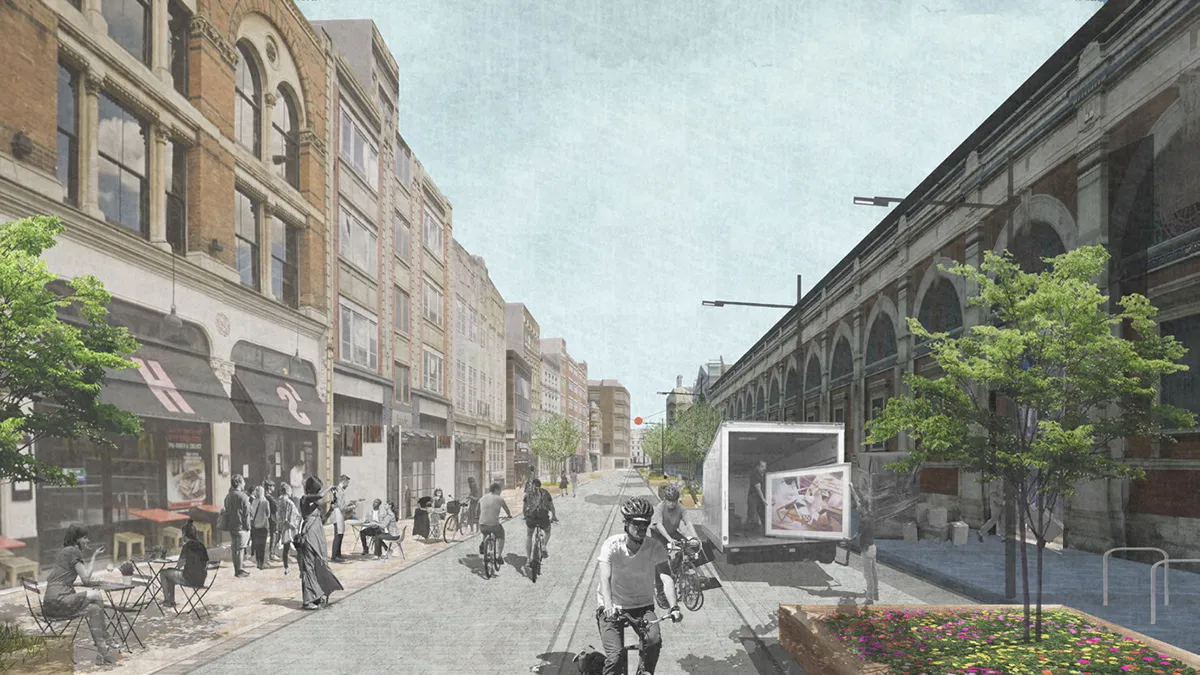
Our design supports a slower pace of life and makes space for cultural encounters, greenery, and moments of pause.
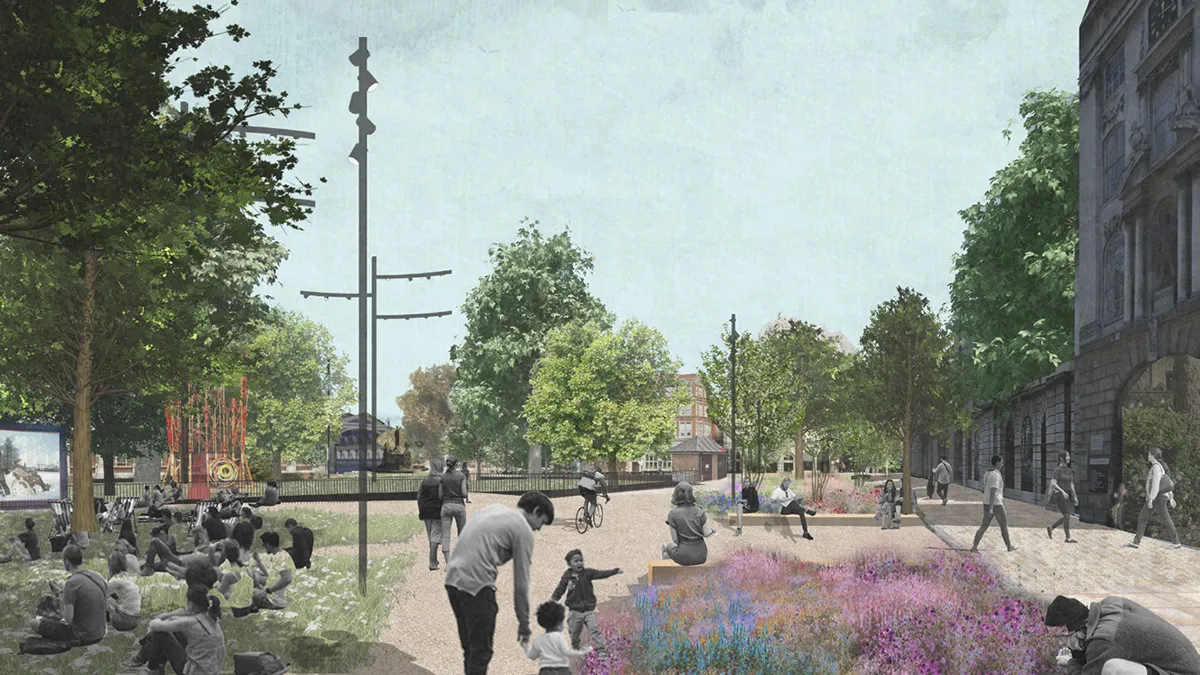
Civic spaces for a 24-hour city
Smithfield’s unique circadian rhythm, from night traders to early commuters, is amplified. We create adaptable public spaces that support cultural events, informal gatherings, and daily life across all hours. New urban rooms, terraced landscapes, and spill-out zones invite informal gatherings, performances, and play throughout the day and night. Street furniture and raised planters provide both comfort and spatial structure, while key surfaces are designed to host temporary cultural events and markets.
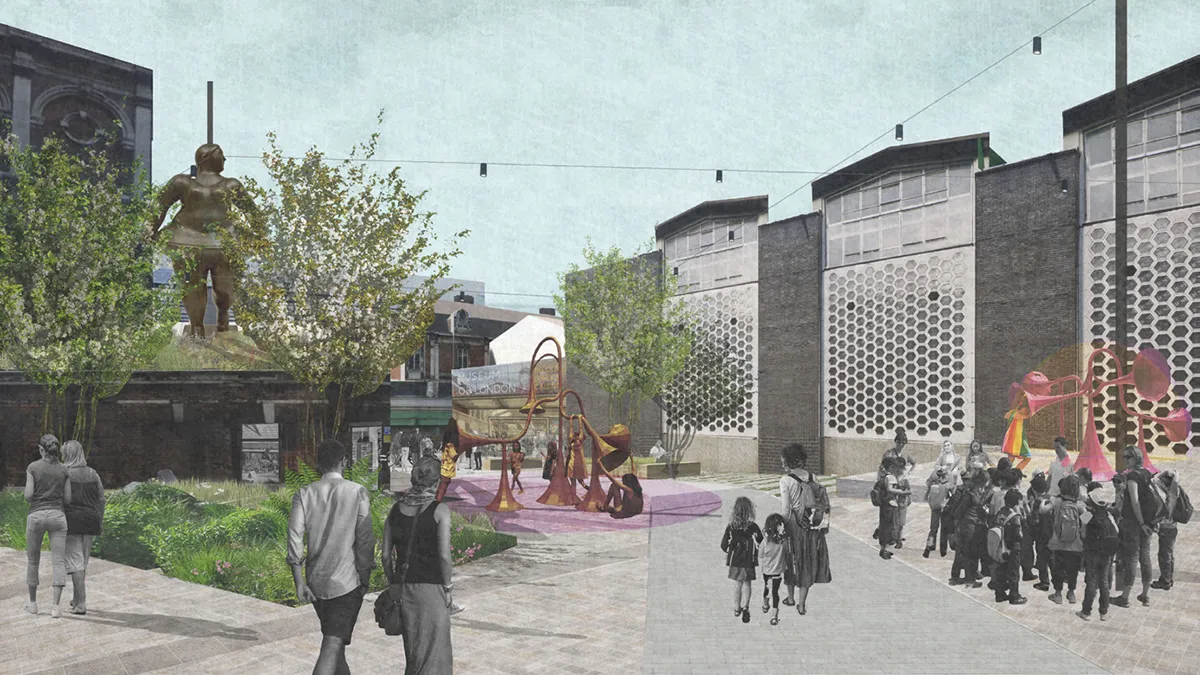
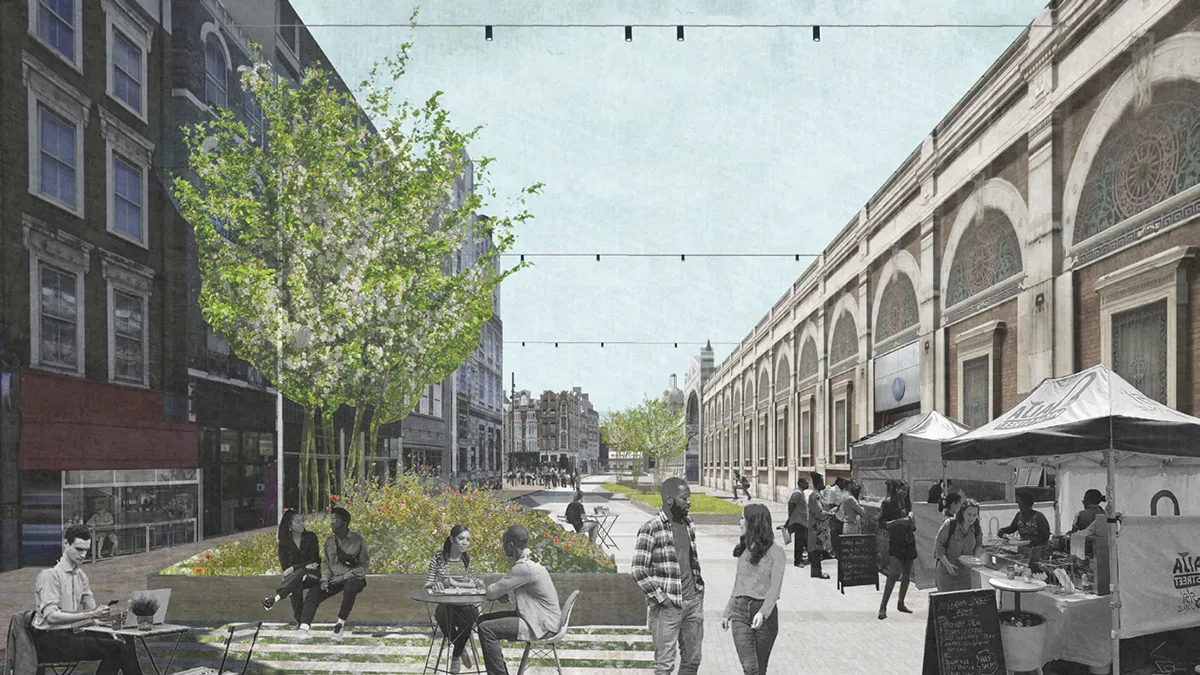
The ever-changing civic and cultural activity is celebrated through the flexibility of Smithfield’s streets and spaces, aiming to reflect its social and spatial legacy as the ‘Field’.
Smithfield
Location: London, UK
Landscape architect: OKRA
Client: City of London
Collaborators:
Architecture: Hawkins\Brown
Lighting design: Studio Dekka
Transport & movement: Momentum
Cultural placemaking: Contemporary Art Society
Text Credit: OKRA
Images Credit: OKRA & Hawkins\Brown