

The Super Forest project reimagines landscape architecture as a proactive agent in climate adaptation, biodiversity enhancement, and community enrichment. Situated adjacent to 19 UNESCO World Heritage Gardens, this regional initiative leverages advanced digital climate modeling to transform a sensitive environmental zone into a resilient, multifunctional forest ecosystem.
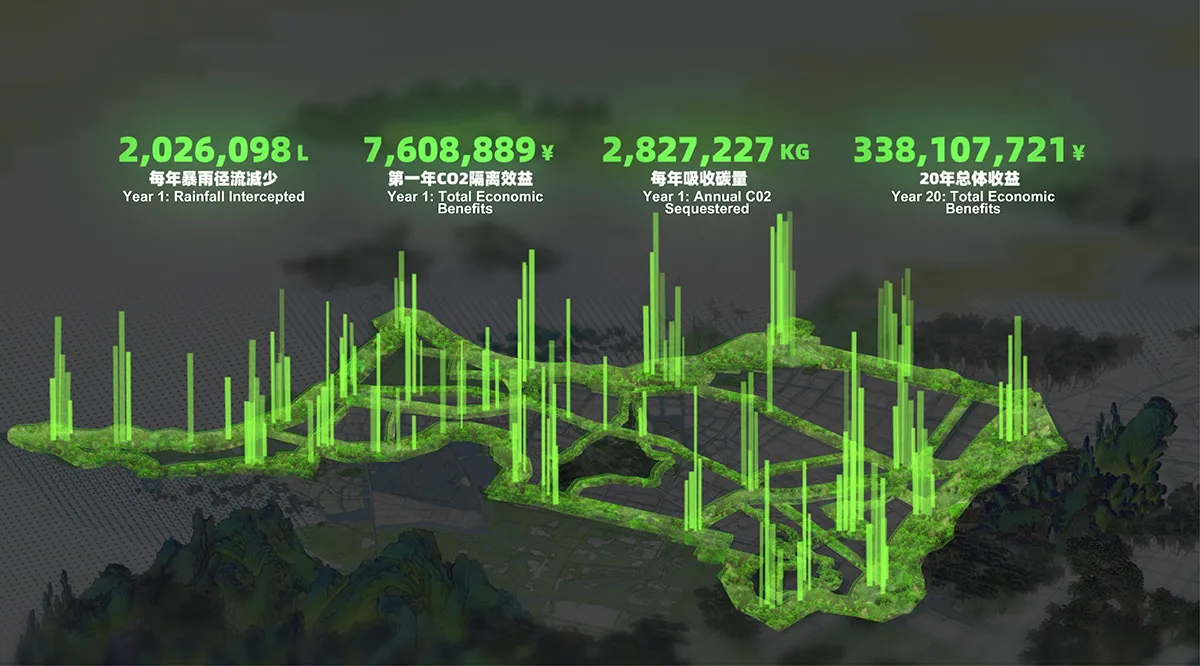
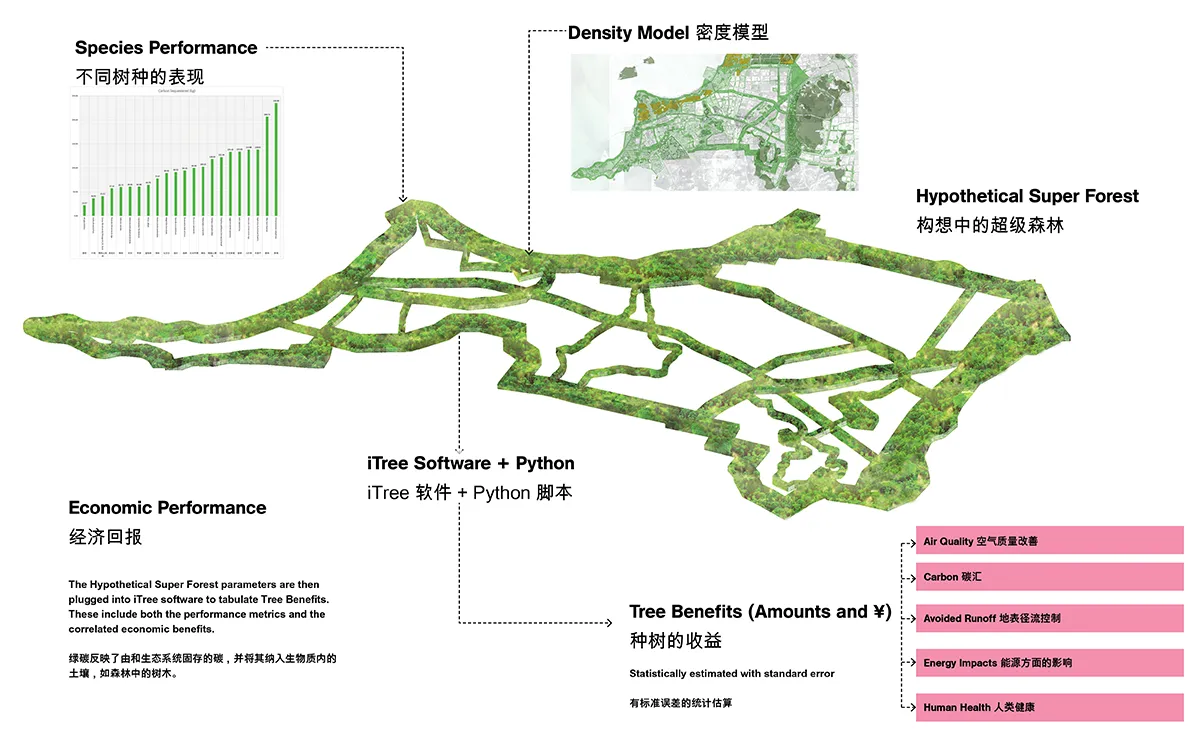
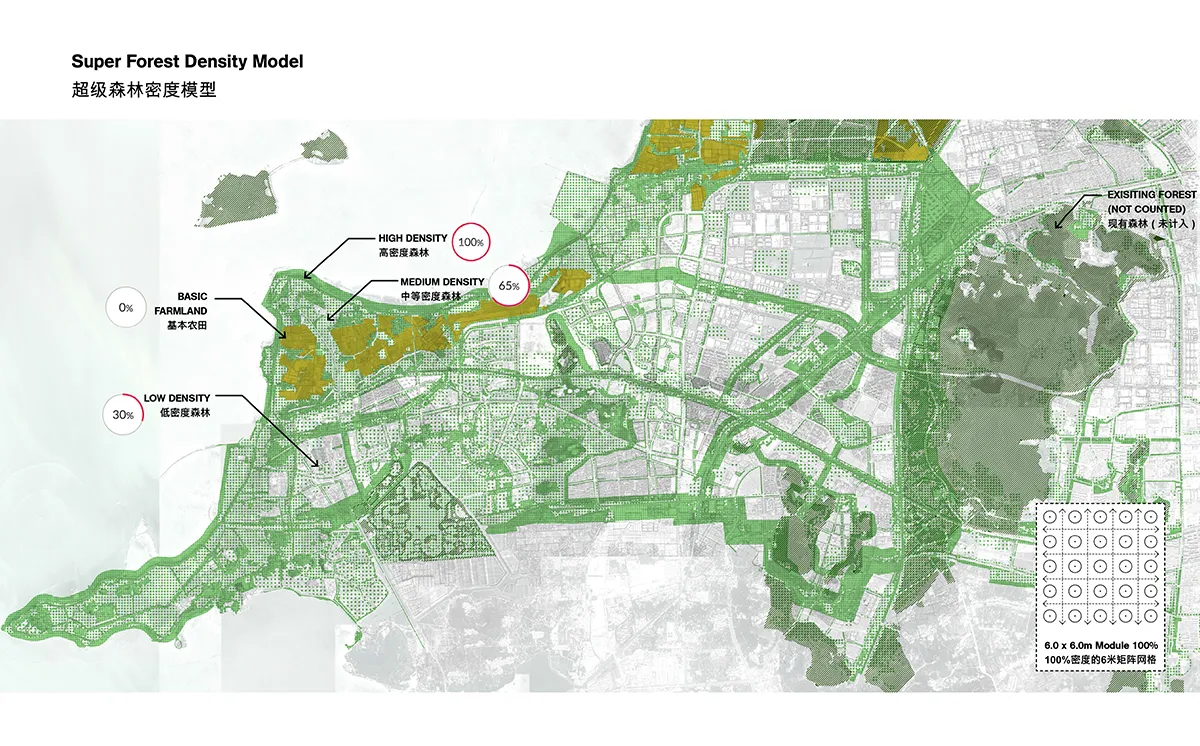
At the regional scale, Super Forest adapts existing governmental land-use plans by analyzing and optimizing land types for maximum forest canopy coverage. Utilizing i-Tree software, the project models local tree species to assess carbon sequestration and stormwater runoff capture. Theoretical forest compositions are applied across the region, with performance metrics calculated to ensure ecological efficacy. Through natural capital accounting and alignment with local carbon markets, projections indicate that the forest’s ecological services will offset implementation costs within a decade.
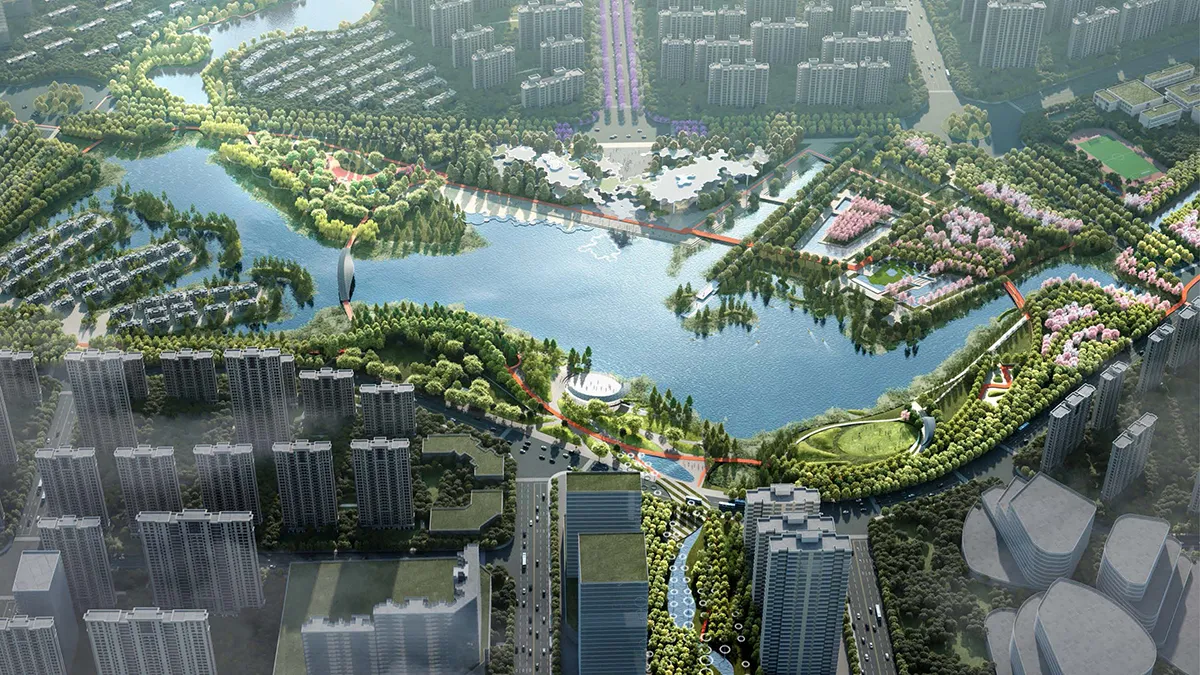
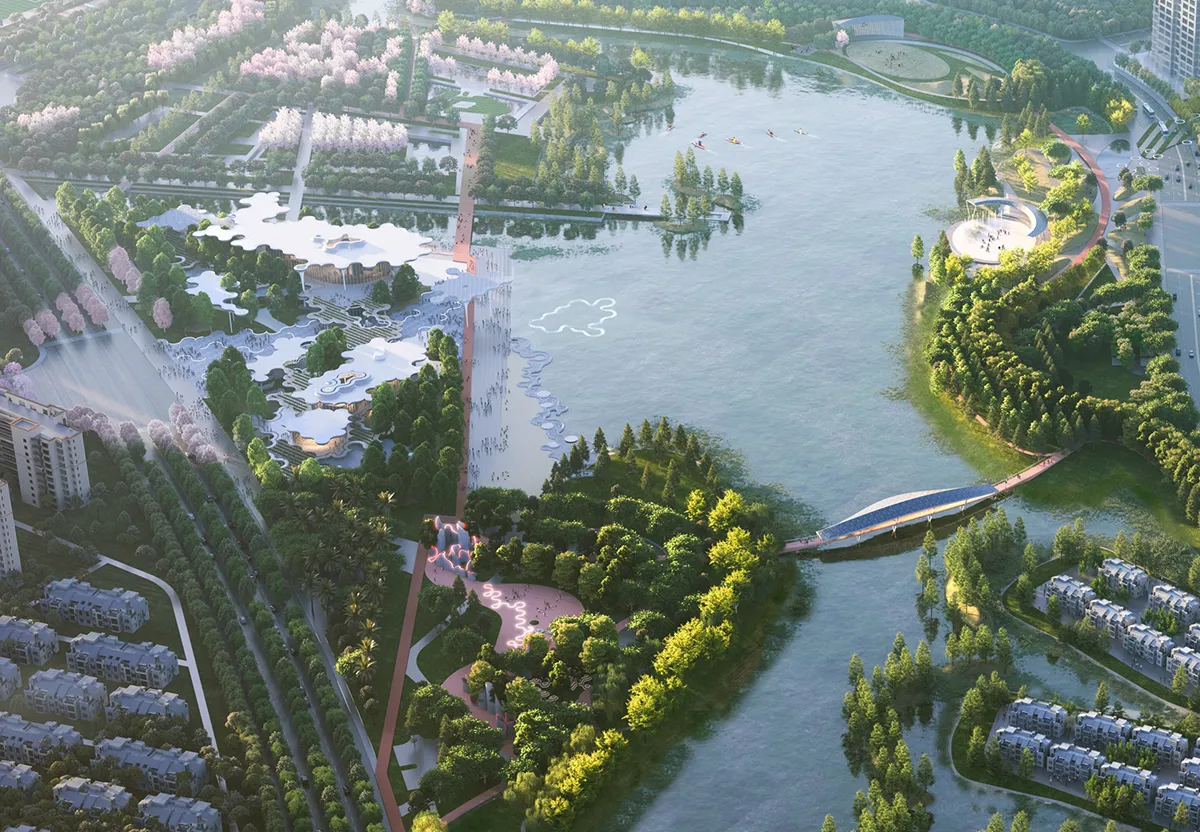
Zooming into the urban fabric, the Nobel Park renovation exemplifies the Super Forest principles at a detailed scale. The design introduces a super forest node interconnected by grand boulevards, planted bike paths, and ‘green roads.’ A key water body within the district, the park’s circulation is reorganized to enhance lake accessibility and enjoyment. Strategic relocation of a bridge expands the lake’s visual and physical presence, fostering a deeper connection between visitors and the aquatic environment.
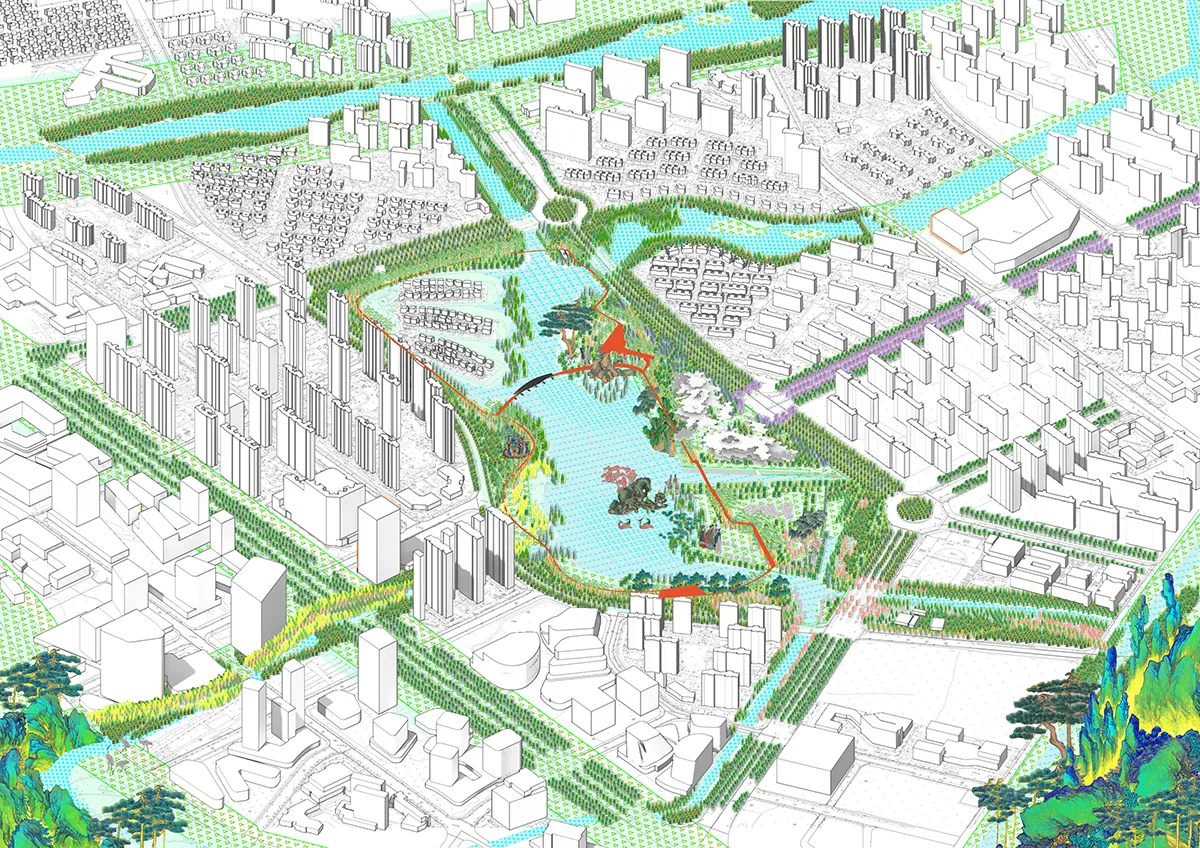
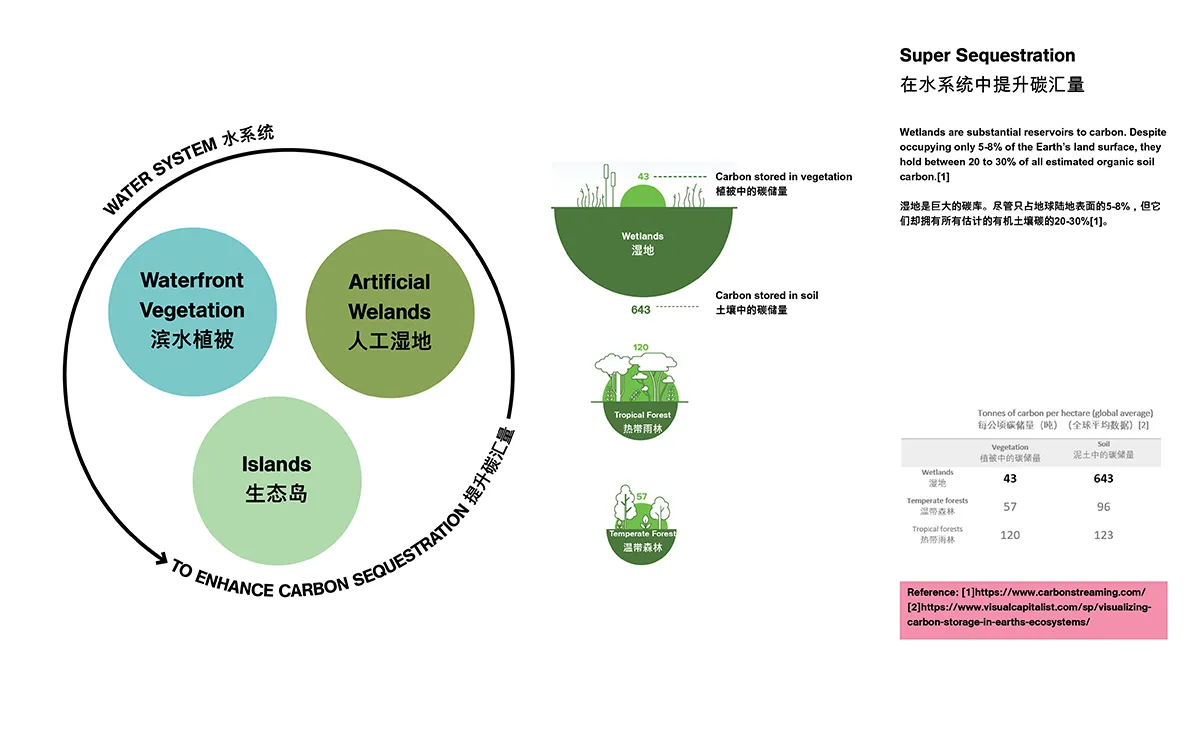
To amplify climate benefits, the park’s design focuses on water quality enhancement. Recognizing wetlands as superior carbon sinks, the renovation replaces hard lake edges with terraced wetland steps, increasing habitat diversity and ecological function. The shoreline is extended through the creation of new islands, further enriching the park’s biodiversity and resilience.
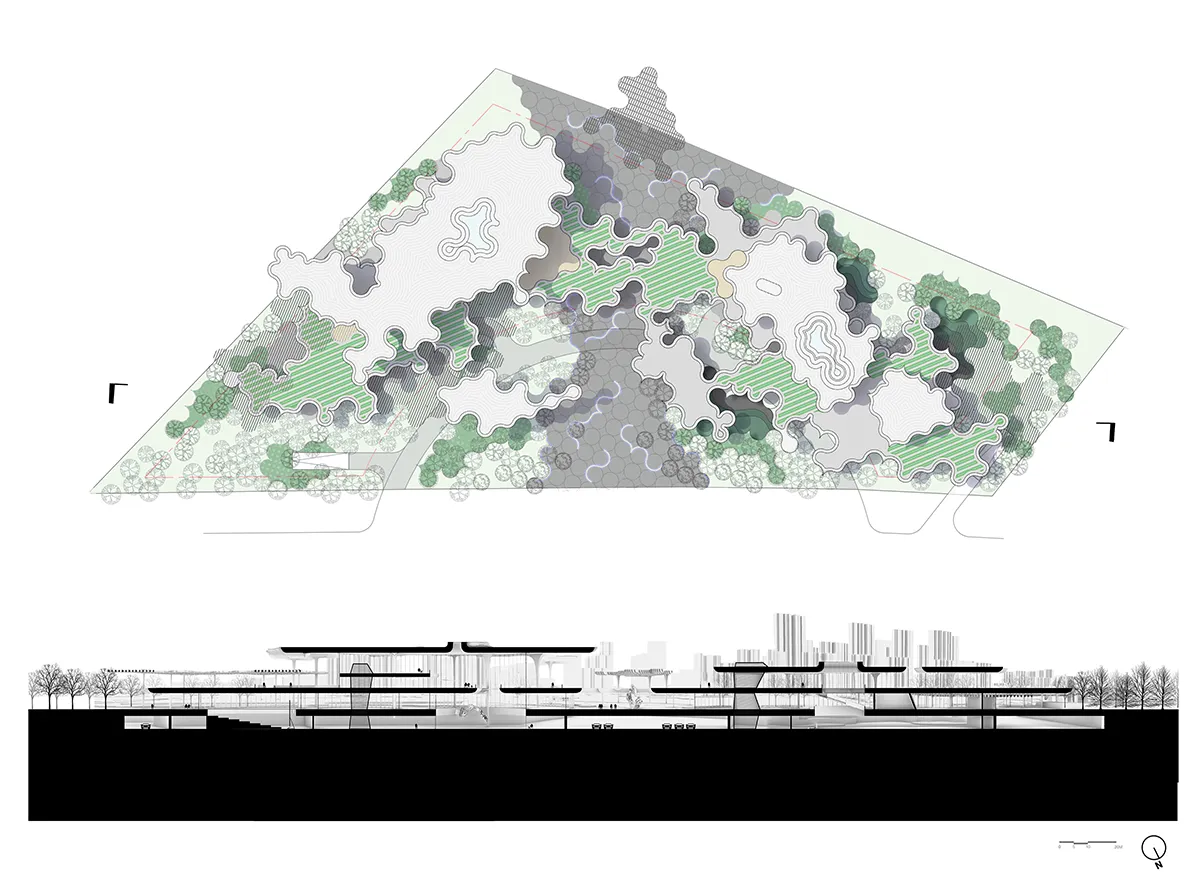
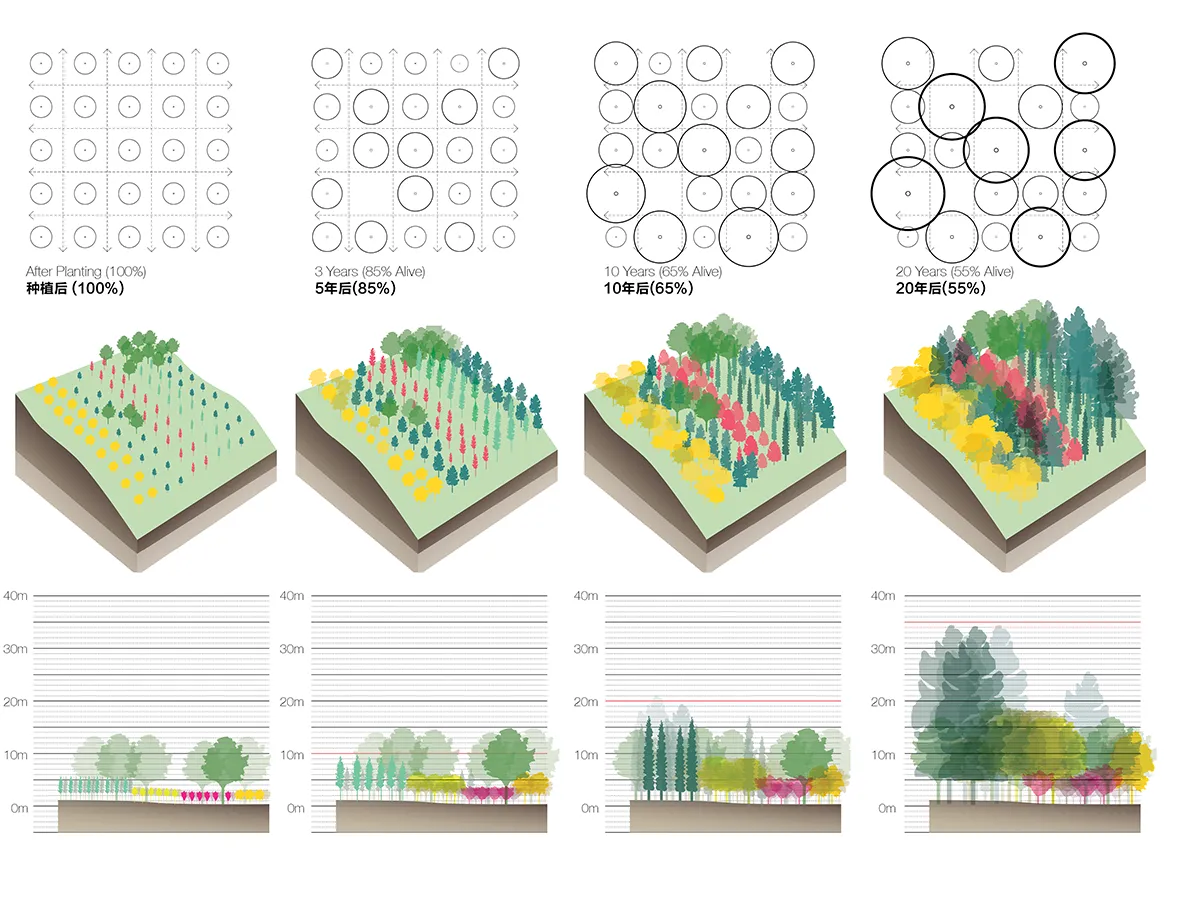
At the architectural scale, the Super Hall serves as an educational and exhibition center within the Science City, embodying the Super Forest ethos. Inspired by the 6x6m Super Forest module, the building’s design mimics an eroding stone dissolving into the forest canopy. Interior spaces are consistently paired with contemplation landscapes, ensuring an immersive green experience. Sustainable design strategies include soaring columns for natural daylighting, louvers to reflect sunlight and reduce heat gain, passive ventilation systems harnessing lake breezes, and conifer plantings to shield against winter winds.
Super Forest exemplifies a forward-thinking approach to landscape architecture, integrating digital tools and ecological principles to address climate change proactively. By linking species selection, climate modeling, and biodiversity planning with tangible economic and environmental outcomes, the project provides a replicable model for decision-makers. As artificial intelligence and data-driven methodologies become increasingly integral to planning, Super Forest positions landscape architecture at the forefront of sustainable, adaptive design.
Suzhou Super Forest
Location: Suzhou, Jiangsu Province, China
Designer Credit: Ballistic Architecture Machine, Martha Schwartz Partners
Collaborators/Other Consultants: Ren Xiangyu (Environmental Engineering)
Client: Suzhou Science and Technology Management Committee
Image Credits: BAM
Shortlisted in the 2025 WLA Awards – Concept – Masterplan and Urban Design