

Article by dwg.
When urban growth presses against natural edges, landscape architecture is asked to do more than provide a visual amenity. It must reconcile ecological function with everyday use. Rainey Street Trailhead in downtown Austin, Texas, offers a compact example of how nature-based design can support access, habitat, and long-term stewardship within a high-density district.
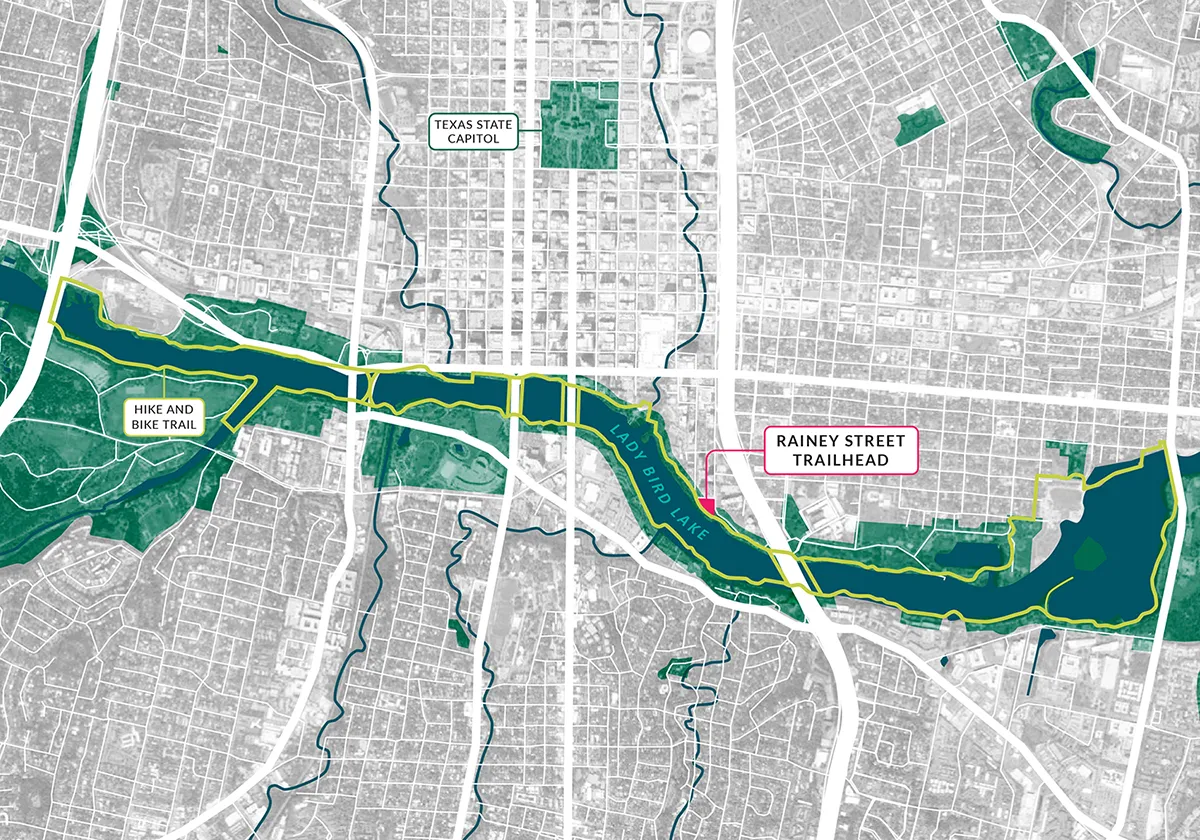
Located at the transition between the Rainey Street District and the Ann and Roy Butler Hike and Bike Trail along Lady Bird Lake, the project was developed in collaboration with The Trail Conservancy and shaped through community engagement. The site operates as a gateway, connecting neighborhood streets to one of Austin’s most heavily used trail systems while addressing ecological repair along the lake’s edge.
Ecology as Structure
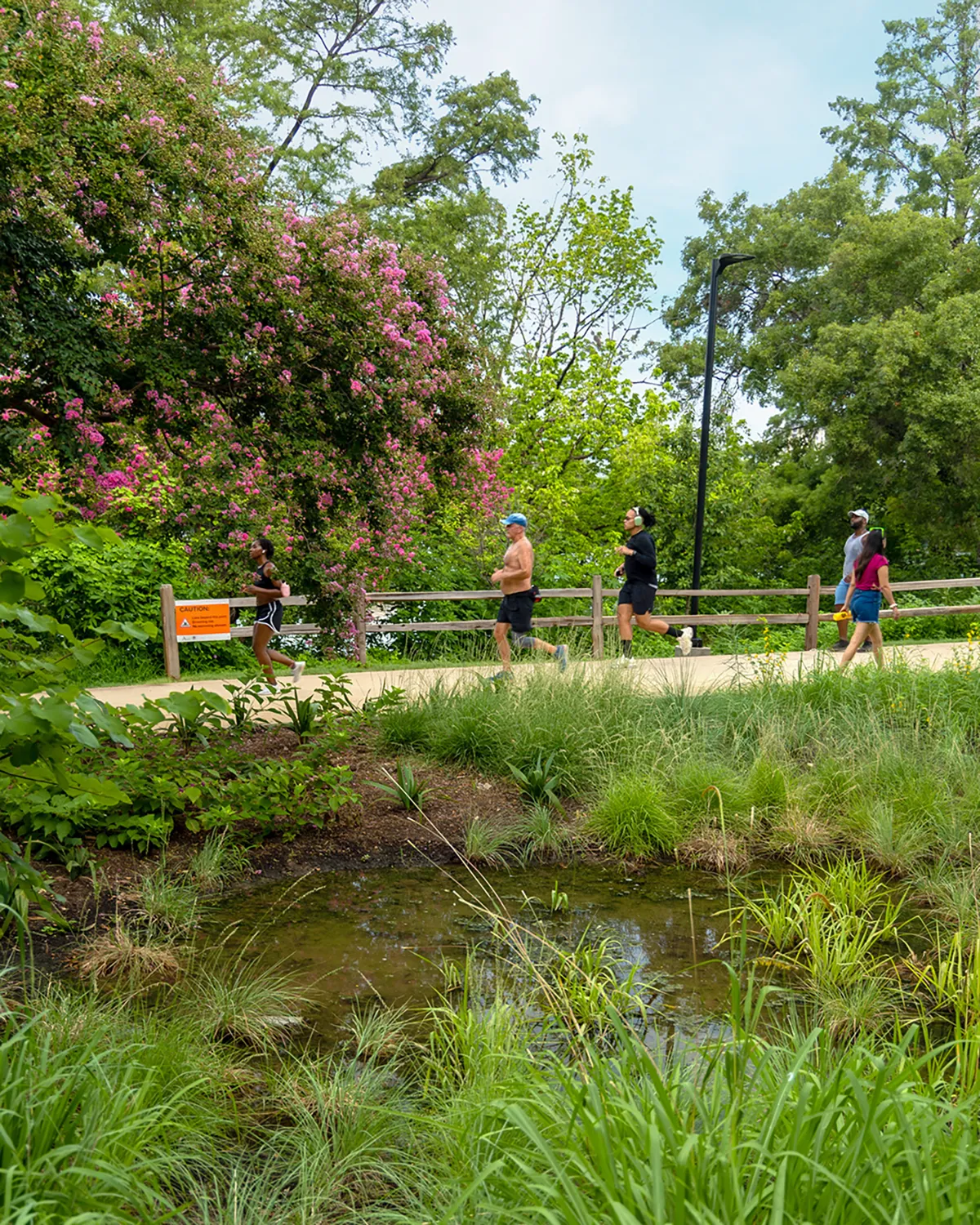
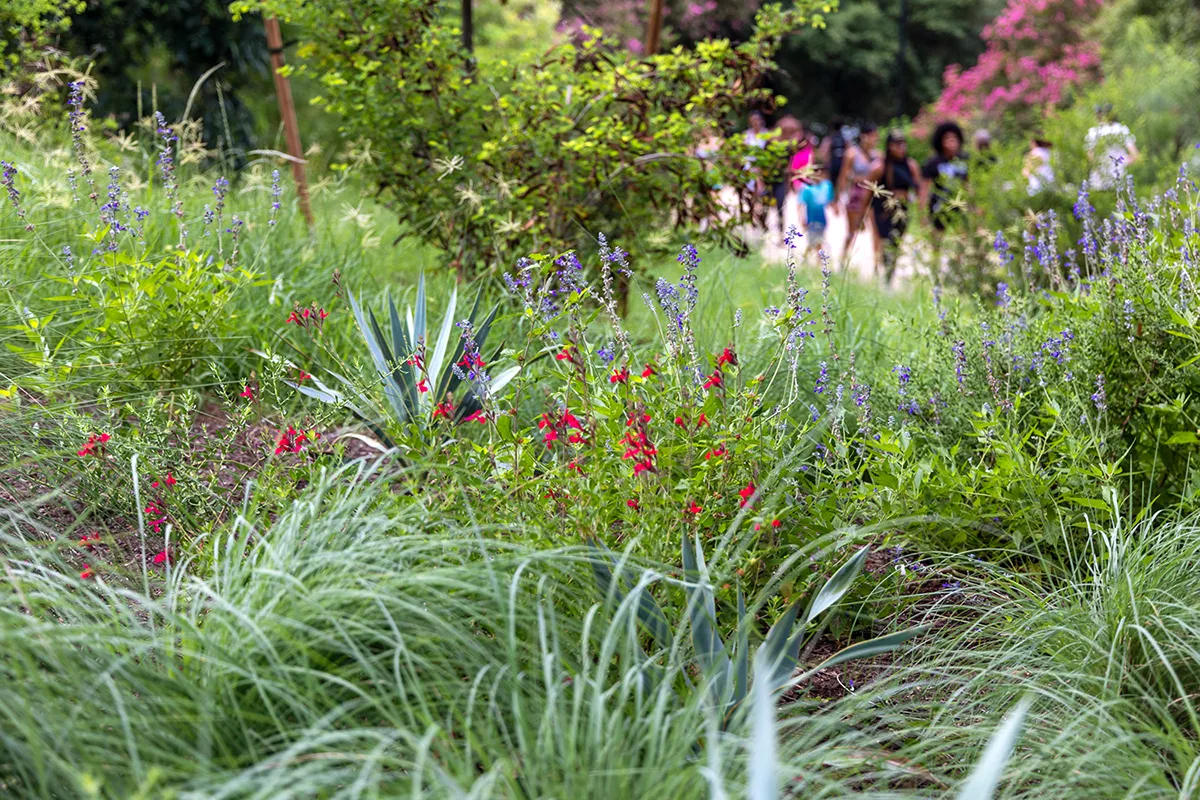
The landscape is organized around a sequence of Central Texas plant communities, moving from upland savanna through riparian woodland to wetland at the shoreline. This transect establishes a clear ecological logic across the site. Planting is not treated as ornament. It defines spatial character, supports biodiversity, and reinforces the site’s position within a larger watershed system.
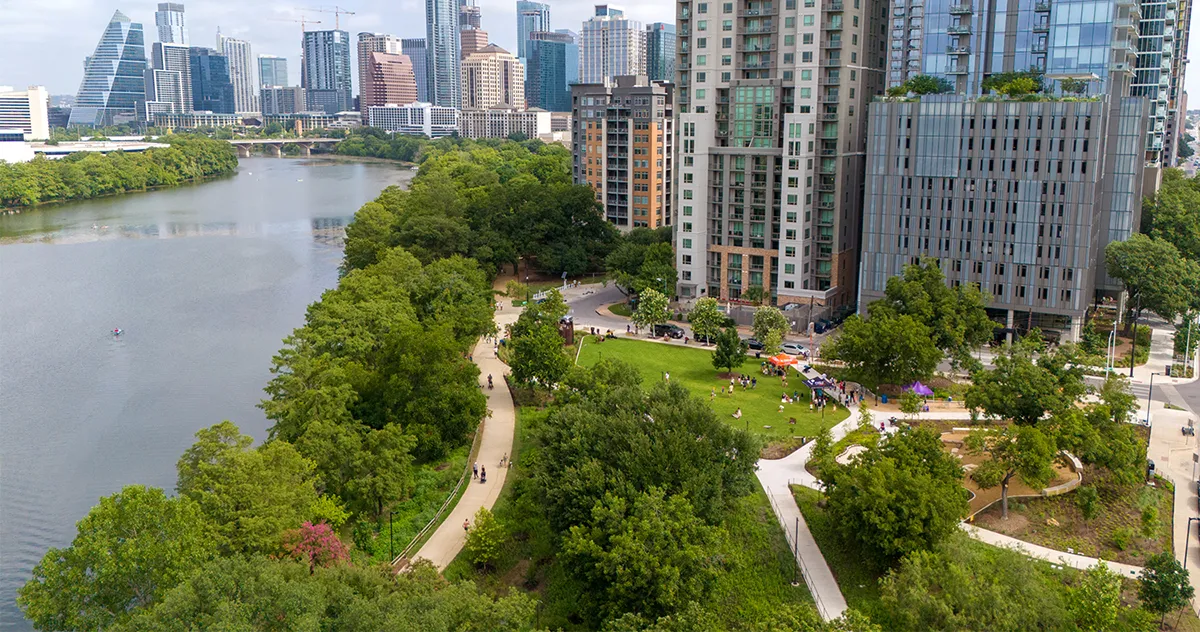
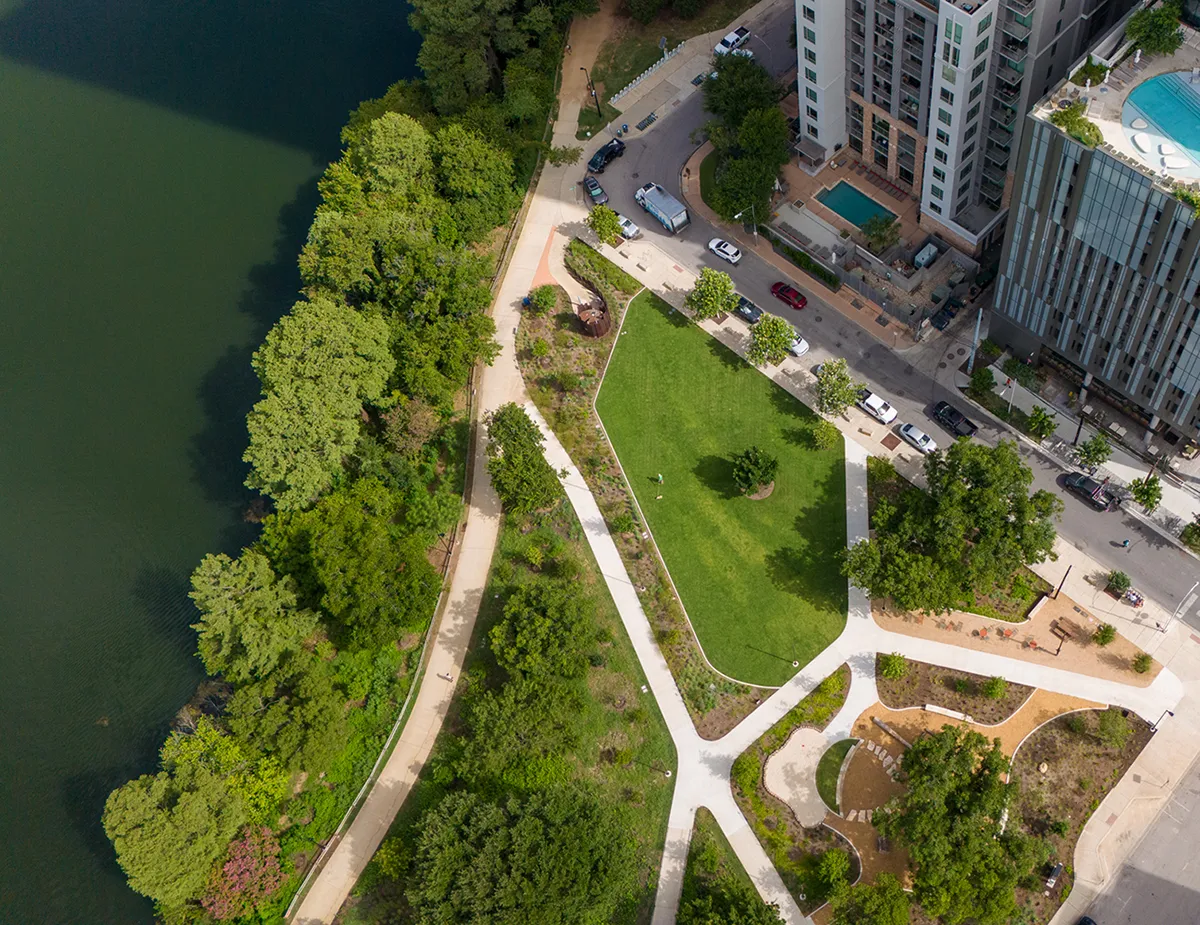
Existing trees were preserved where possible, invasive species were removed, and planting density was increased to strengthen habitat value. In a location where heavy foot traffic can quickly degrade soil and vegetation, the design clarifies circulation and edges to reduce informal paths and erosion. Ecological repair and user movement are considered together.
Hybrid Infrastructure in Daily Use
The completed project includes a central lawn, shaded seating areas, enhanced lighting, a nature-based play space, and a multi-use floating dock that formalizes shoreline access. Each element serves multiple functions. The lawn accommodates informal gathering and neighborhood activity. The dock supports recreation while protecting sensitive banks from unmanaged entry. Shade structures and planting improve comfort during Austin’s extended heat season, extending usability across the year.
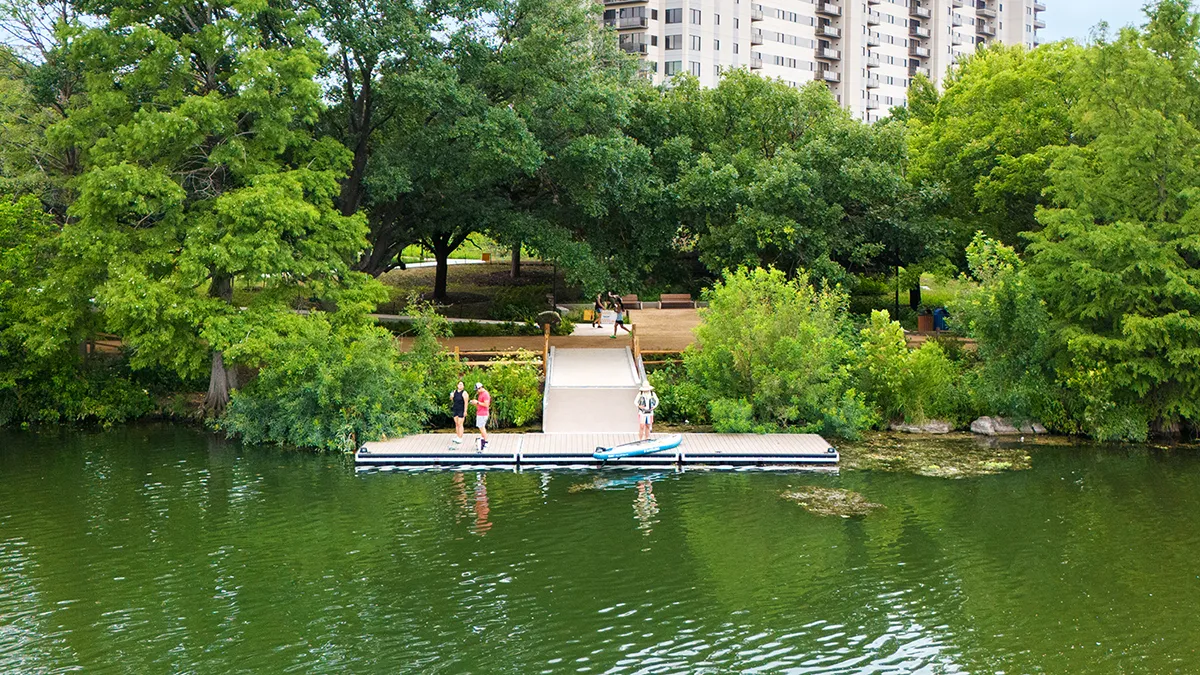
Rather than separating recreation, infrastructure, and habitat into distinct zones, the project integrates them. Circulation routes support both commuters and recreational users. Lighting enhances safety while maintaining a restrained presence within the landscape. Public access is framed to protect ecological systems rather than compete with them.
Nature-Based Play
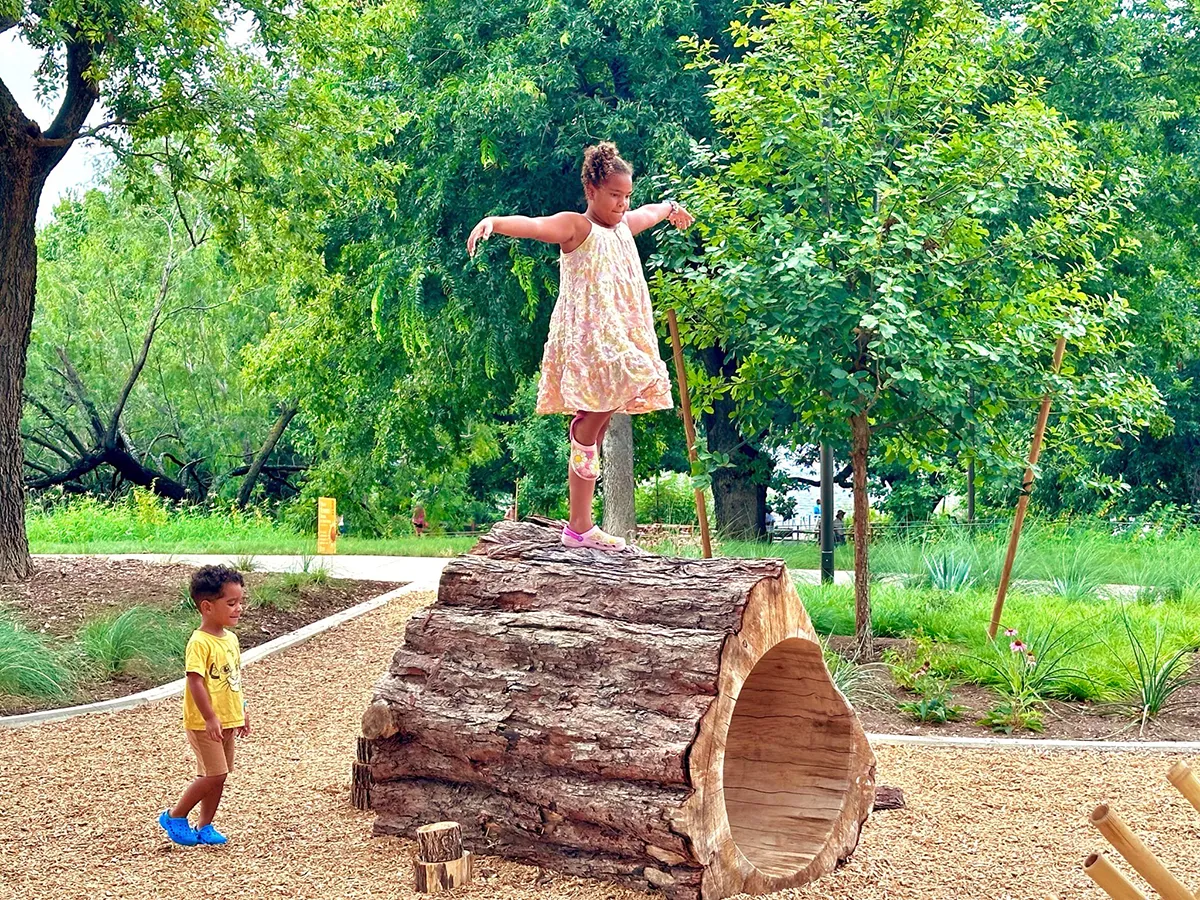
Rainey Street Trailhead includes the first nature play area along the Butler Trail system. Constructed with reclaimed natural materials and surrounded by native planting beds, the space encourages open-ended play and exploration. Sensory planting introduces children to pollinator species and regional ecology through direct experience.
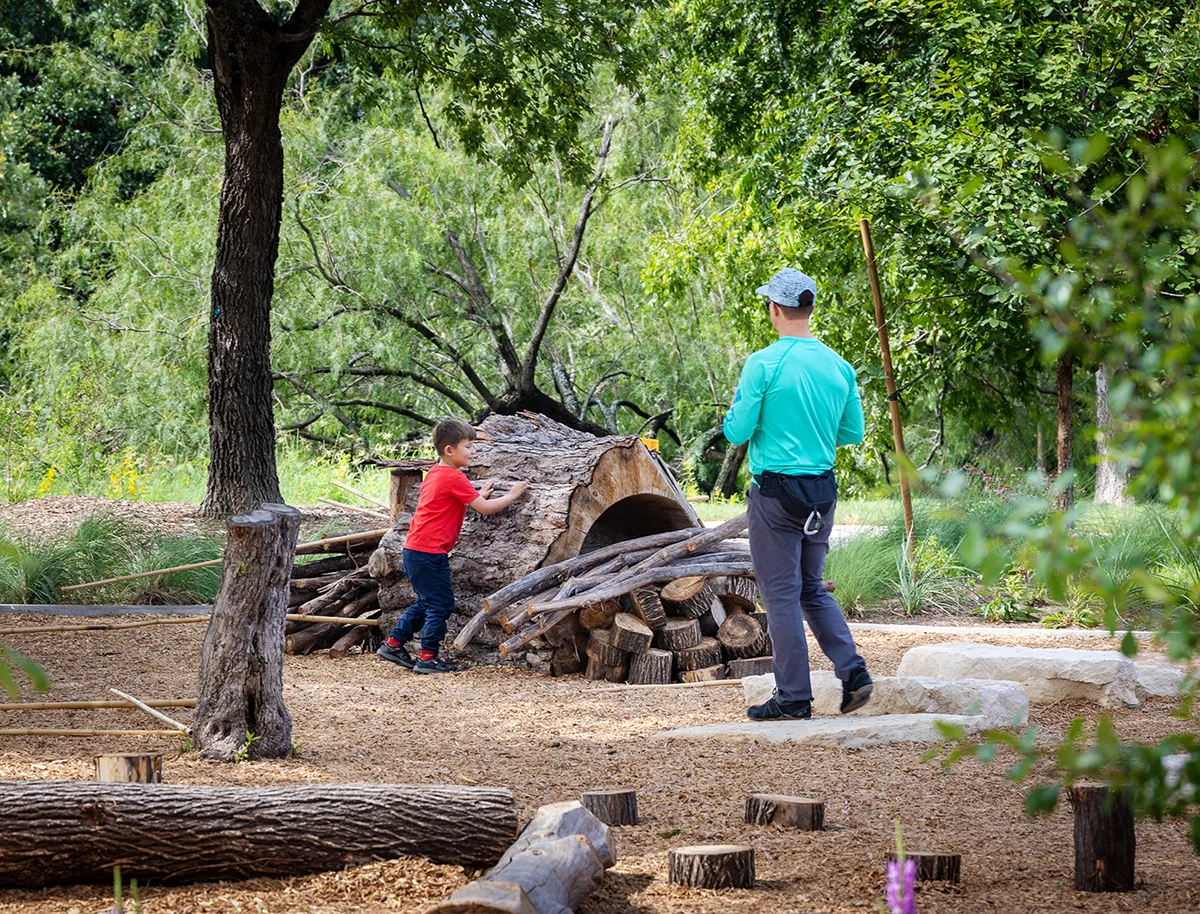
This approach treats play as part of the site’s ecological narrative. It supports physical engagement while reinforcing habitat systems rather than replacing them.
Stewardship as Ongoing Work
Long-term performance in a downtown waterfront park depends on consistent care. Plant establishment, seasonal stress, erosion, and user pressure are predictable conditions. Stewardship strategies were considered from the outset, with maintenance practices aligned with the site’s ecological framework.
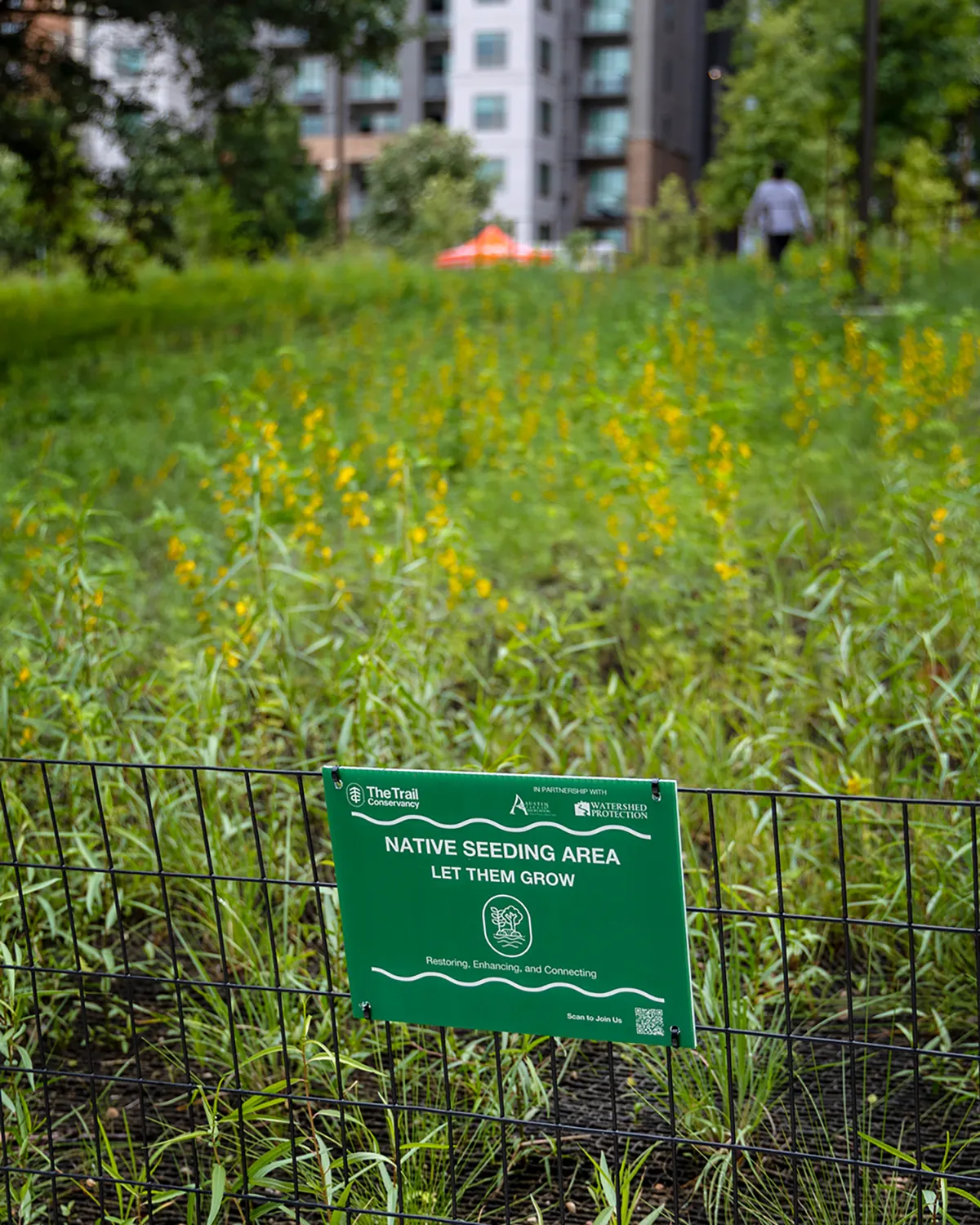
Invasive management, soil monitoring after storm events, and adaptive planting care are part of the project’s operational reality. The Trail Conservancy’s role as a nonprofit steward of the trail system supports ongoing oversight and advocacy for maintenance resources. The collaboration between nonprofit and municipal partners strengthens the project’s durability over time.
A Replicable Model
Rainey Street Trailhead is modest in scale, yet its impact lies in its clarity. Community priorities were translated into a legible ecological structure and an accessible public space. The project demonstrates how compact sites can support habitat, access, and recreation within growing urban districts.
As cities continue to densify along waterfronts and trail systems, projects of this scale offer a grounded model. Nature-based solutions become meaningful when they are specific, durable, and integrated into daily routines. Rainey Street Trailhead reflects that approach, balancing ecological function with the lived rhythms of the city.
Article by dwg.
Images | John Hart Asher; and dwg.