
Winner of the Outstanding Award in the 2025 WLA Student Awards – Graduate category
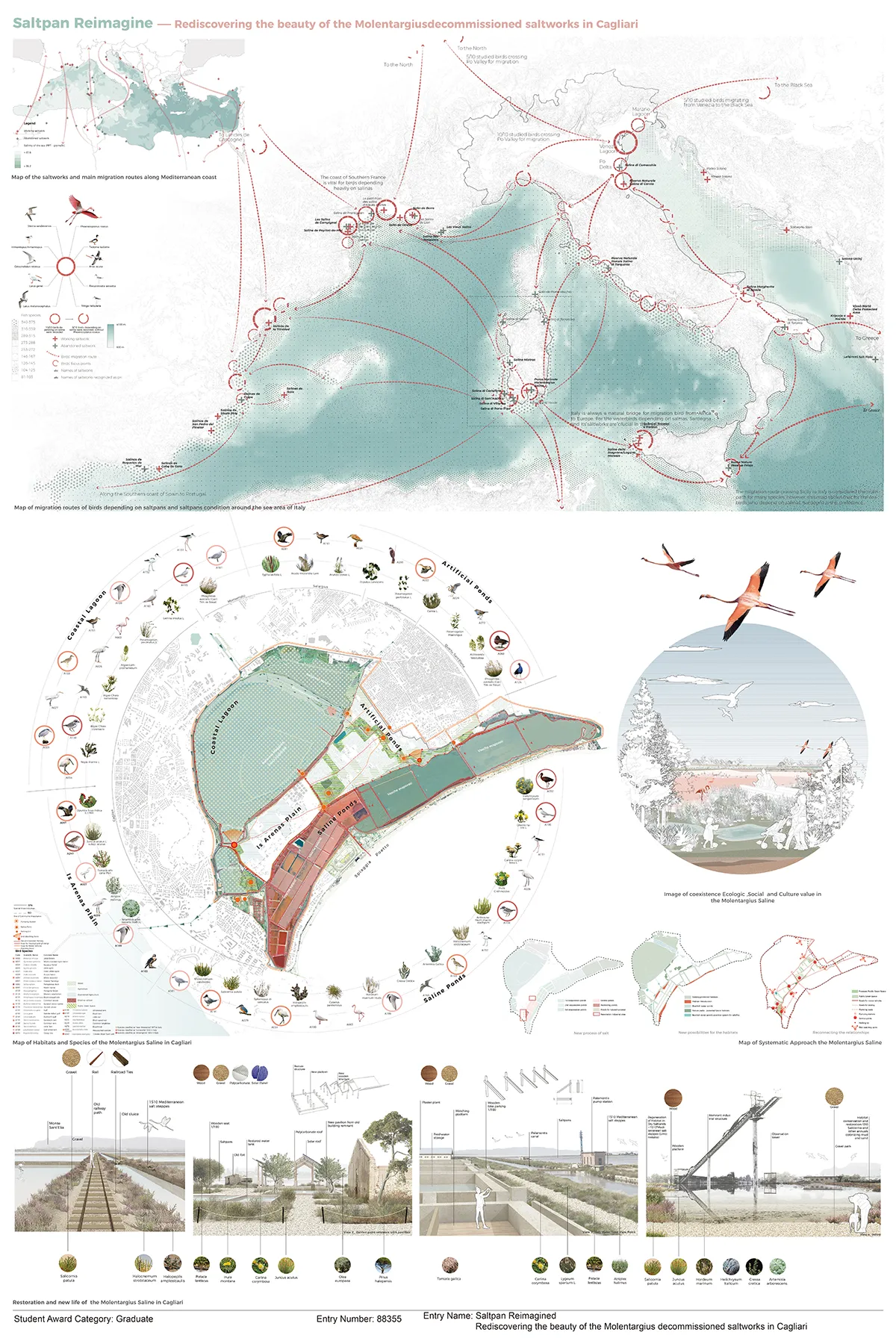
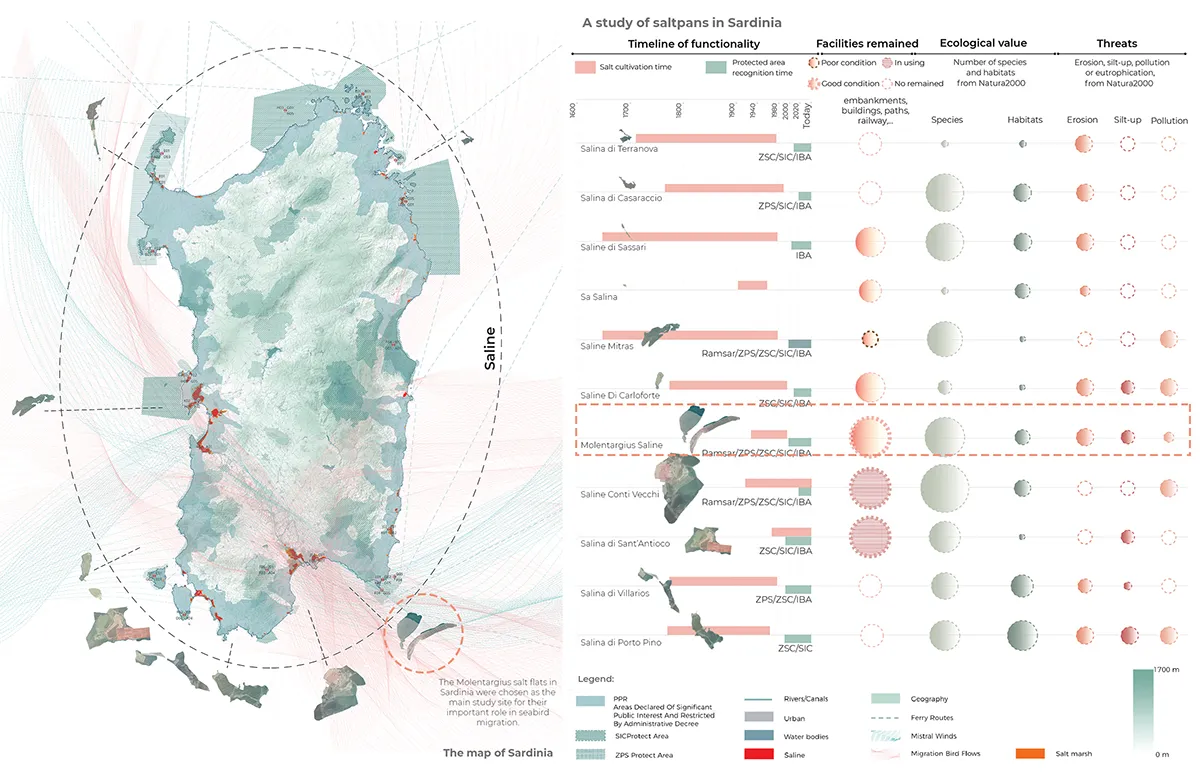
Across the Mediterranean, salt pans have long shaped both landscapes and livelihoods, intertwining industry with ecology while serving as vital habitats for migratory birds traveling between Africa and Europe. As many saltworks ceased operations, they entered a transitional phase in which nature reclaimed space, water levels shifted, and past and present became intertwined. Saltpan Reimagined captures this moment, reimagining abandoned salt pans not as relics of the past but as evolving ecosystems where history, biodiversity, and cultural memory converge. The project focuses on the Molentargius salt pans in Sardinia—once a prosperous center of salt production in the heart of Cagliari—now transformed into a crossroads of memory and renewal. With the decline in salt production, salinity levels in the ponds became unstable, creating ecological challenges for local wildlife and reshaping habitats used by migratory birds.
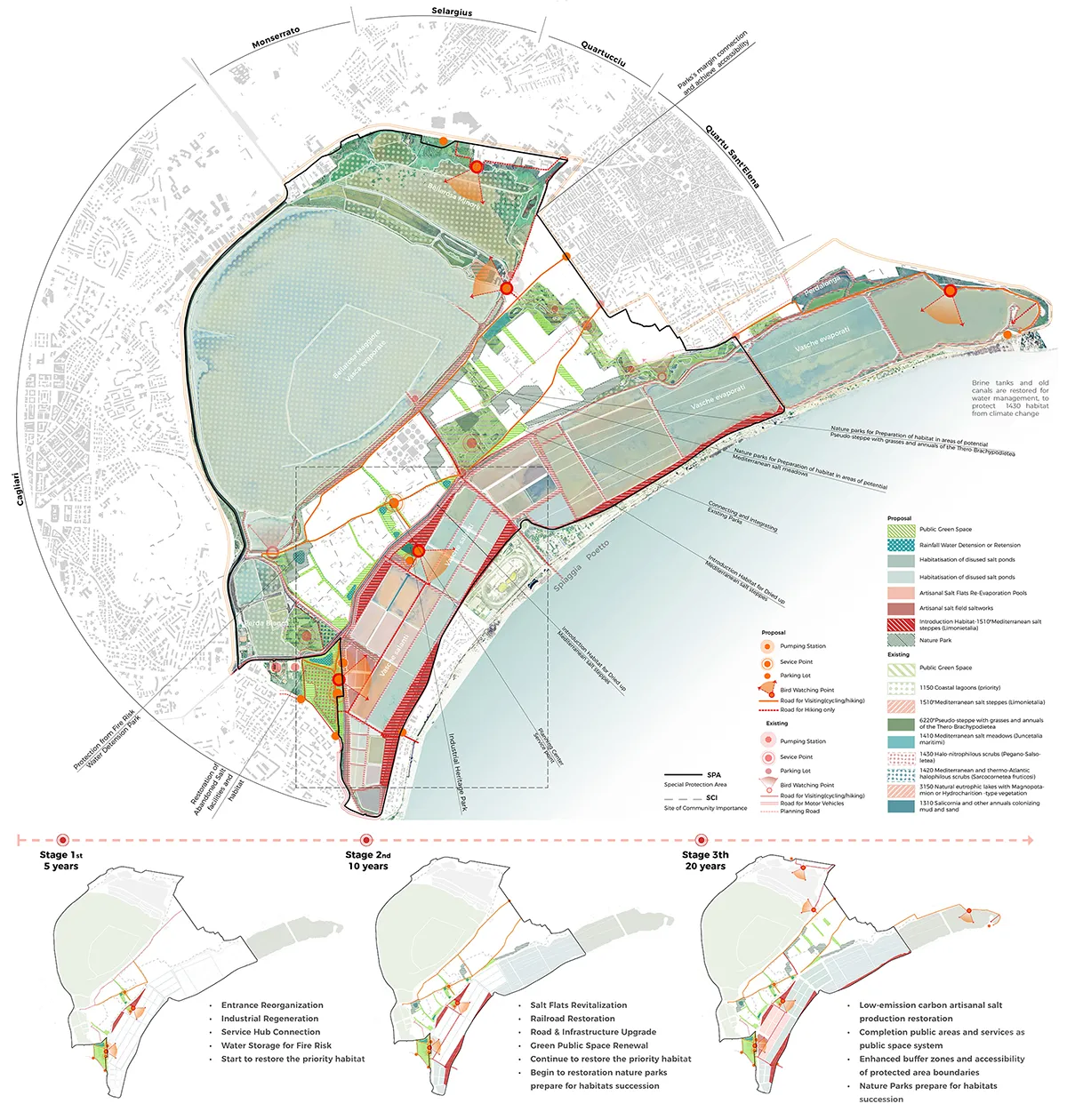
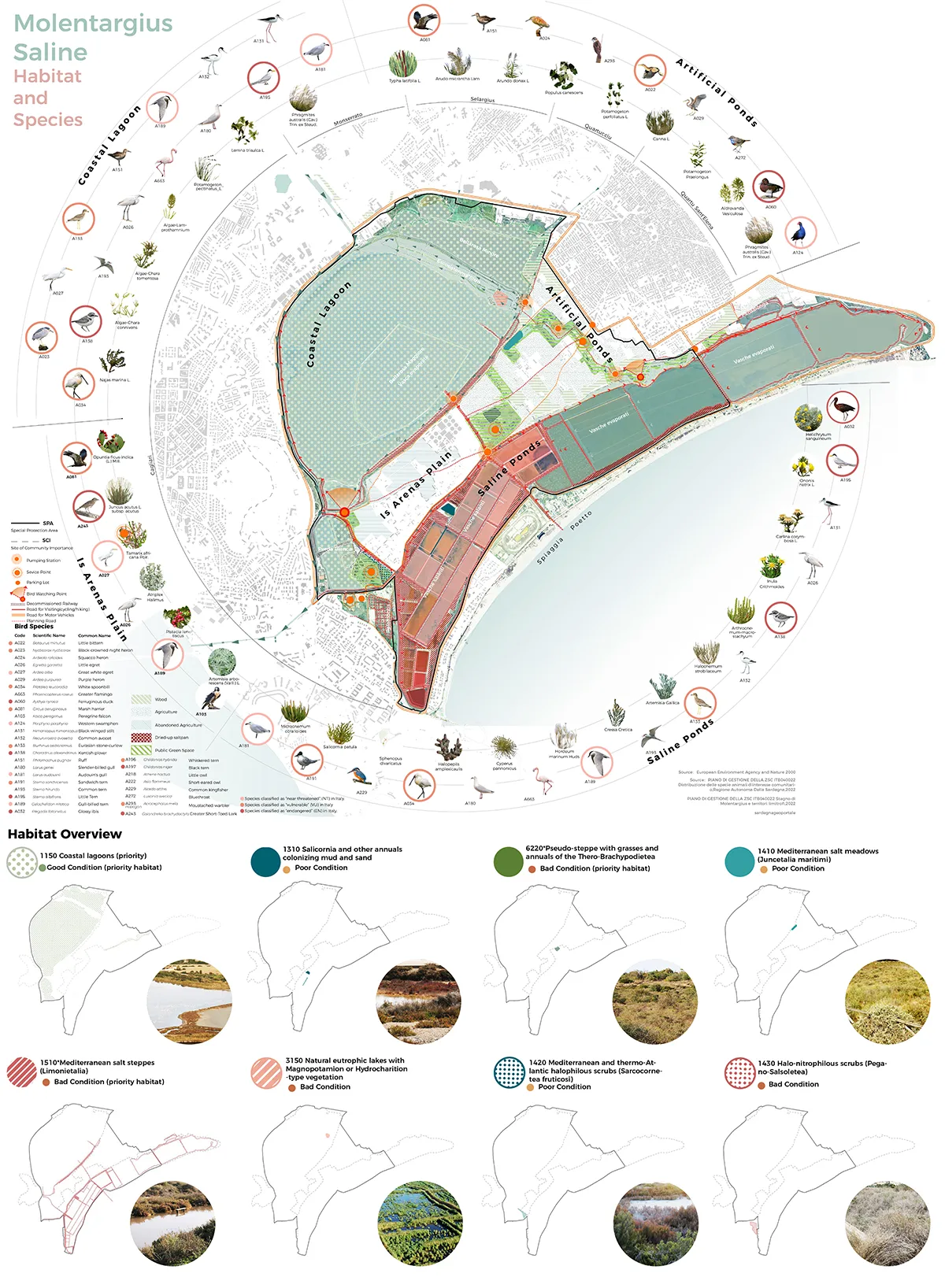
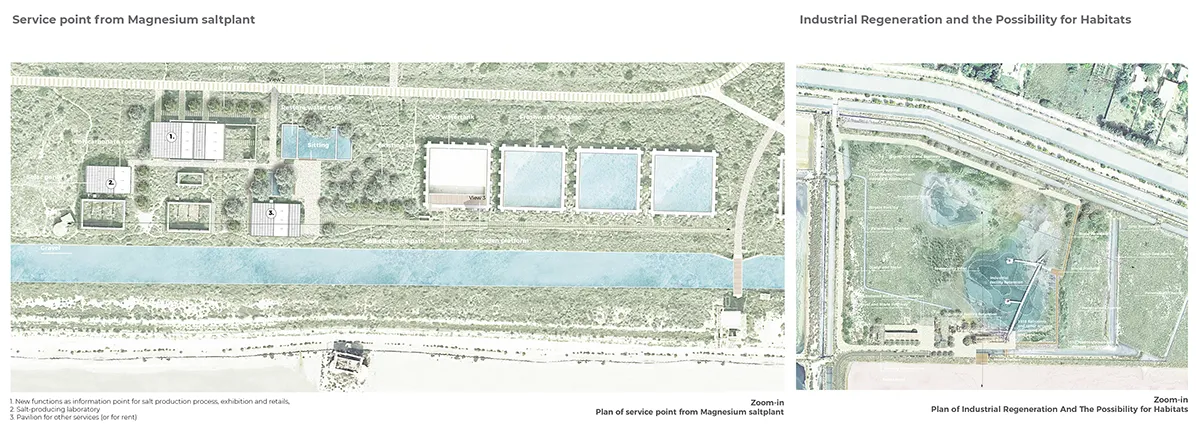
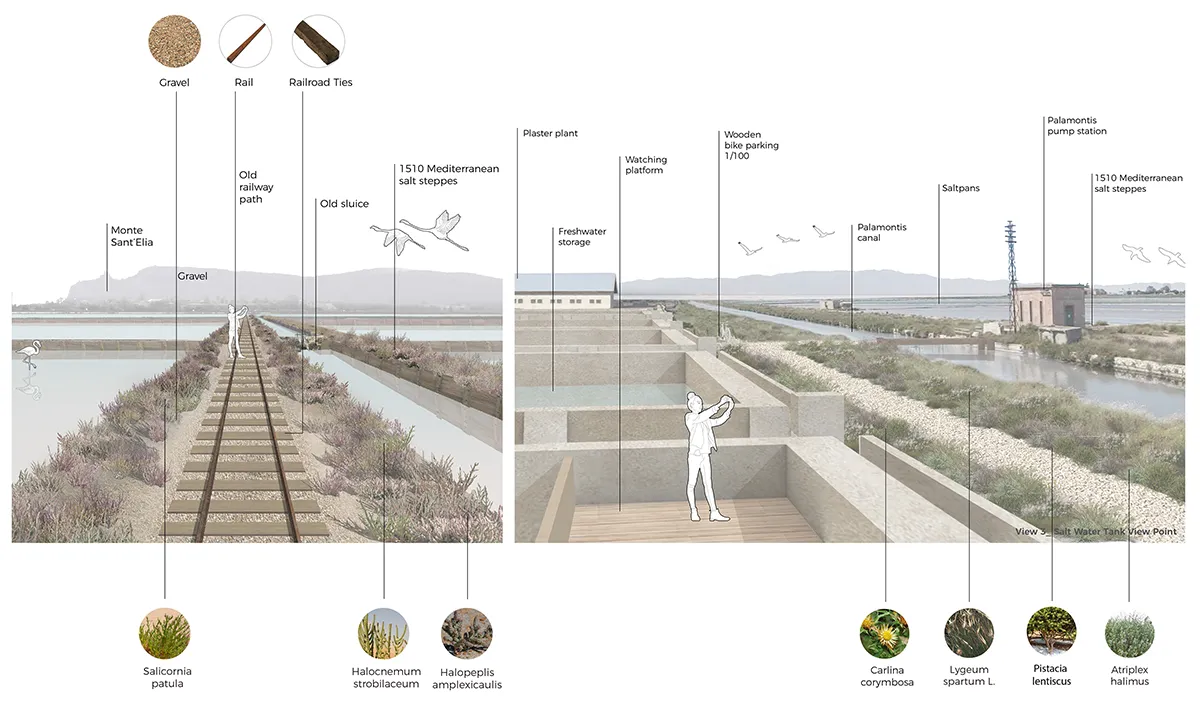
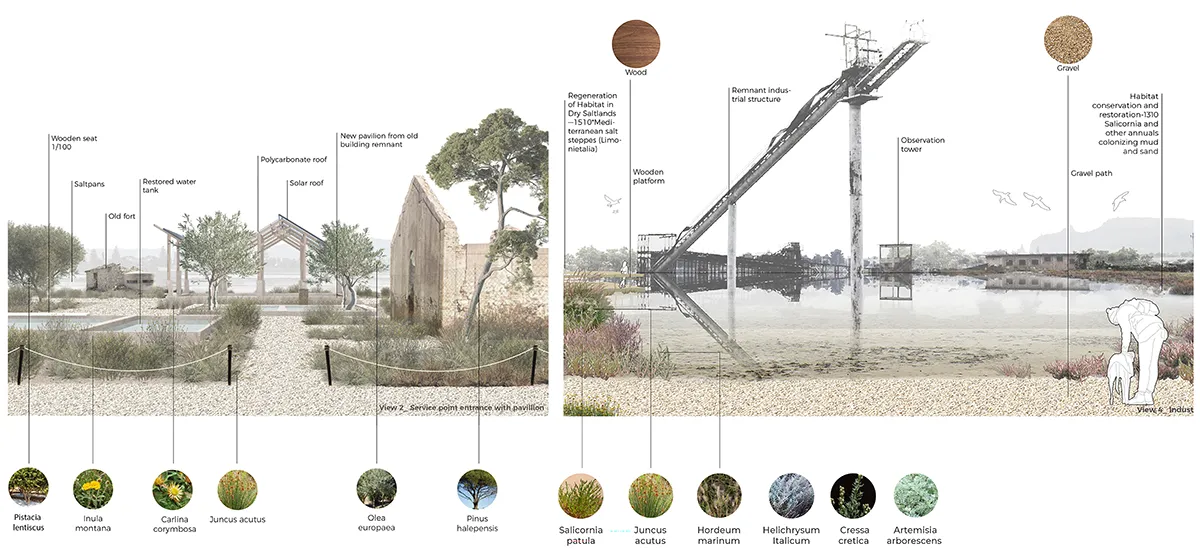
As a context-sensitive restoration project, Saltpan Reimagined prioritizes the protection and regeneration of these fragile ecosystems through minimal intervention, ensuring that the site’s topography, microclimate, and cultural traces are not erased but reactivated through targeted spatial and ecological strategies. Rather than imposing change, the project “listens to the whispers of salt”—the fluctuation of water levels, the crystallization of minerals, the flight paths of birds—allowing natural rhythms to guide a process that harmonizes past heritage with contemporary ecological needs. The proposed strategies are organized into four main actions: Protection, Restoration, Regeneration, and Valorization. Specifically, the project seeks to safeguard sensitive areas, control invasive species, and reserve water for fire prevention; partially restore the artisanal salt production system to stabilize salinity and preserve its cultural-educational value; and encourage vegetation growth in certain abandoned ponds to diversify habitats. It also envisions regenerating the landscape with new public spaces and infrastructure, and valorizing its heritage through adaptive reuse of industrial structures, transforming them into parks and community spaces. In addition, a system of freshwater ponds, supported by repurposed canals and reservoirs, is proposed to increase humidity and reduce wildfire risks under climate change.
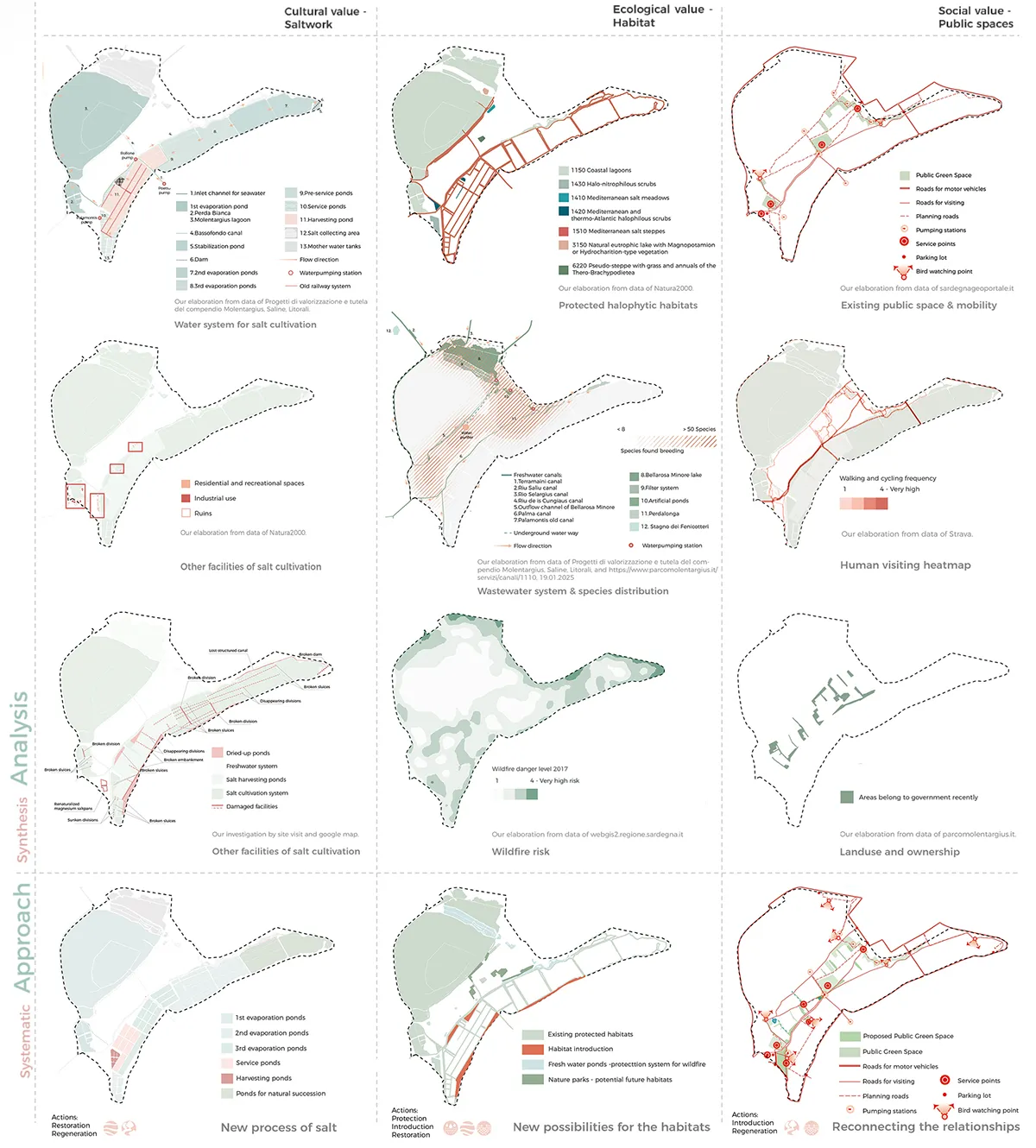
The implementation plan unfolds in three phases (5, 10, and 20 years). The ultimate goal is to create a renewed landscape where salt, birds, and people continue to co-shape the story of Molentargius—ensuring that the echoes of the past endure within a coastal environment that is constantly evolving.
Saltpan Reimagined: Rediscovering the Beauty of the Molentargius Decommissioned Saltworks in Cagliari
Students: Bui Thi Nhung & Huang Wenhui – Politecnico di Milano;
Supervisor: Chiara Geroldi