
Winner of the Outstanding Awards in the 2025 WLA Student Awards – Graduate category
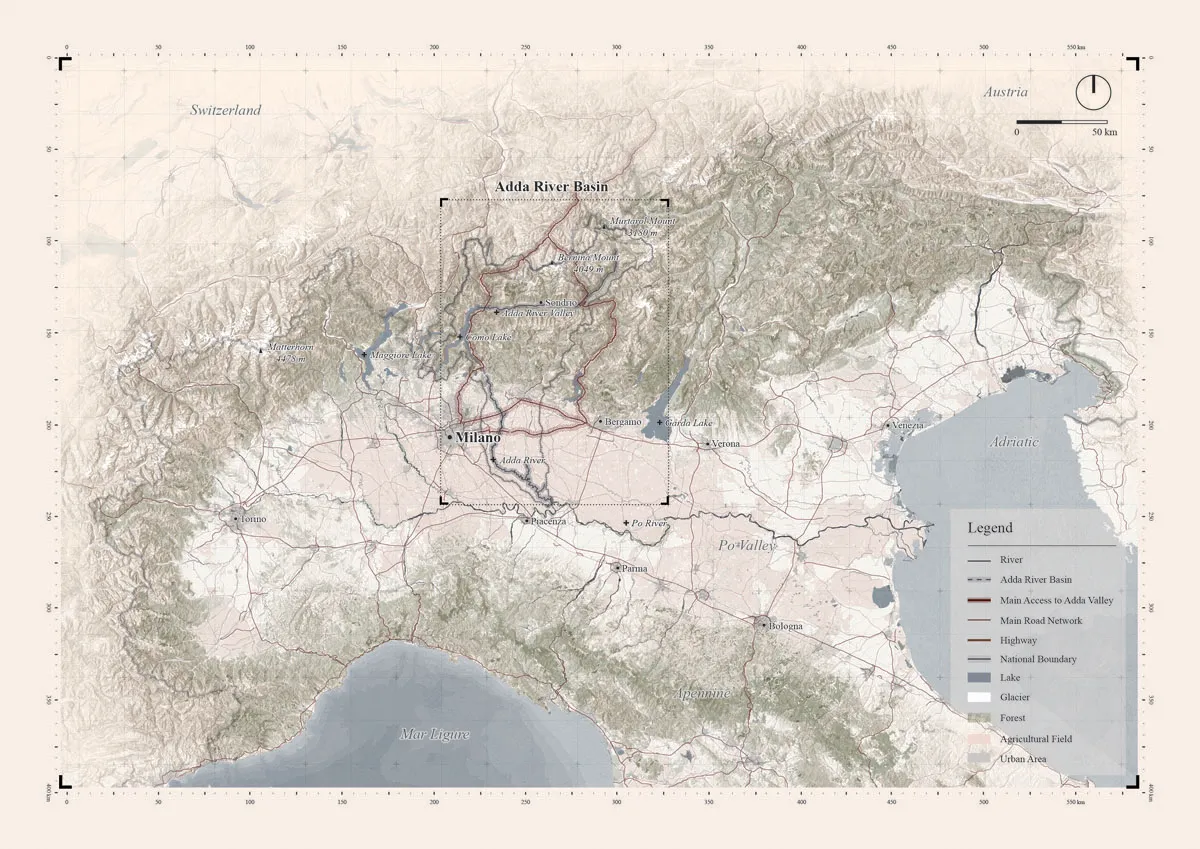
The Upper Adda River Basin in northern Italy is a landscape of contrasts. Situated between the Alps and the Po Plain, it is shaped by fast-flowing mountain rivers, fertile agricultural fields, and a long history of industrial activity. Among these rivers, the Adda stands out not only for its ecological value but also for its cultural proximity to Milan, Lombardy’s largest city. The valley tells a layered story: hydropower once fueled regional growth, quarries supplied materials for construction, and vineyards defined its agricultural identity. Yet decades of exploitation and land-use change have left scars in the form of abandoned sites, degraded habitats, and fragmented mobility networks.
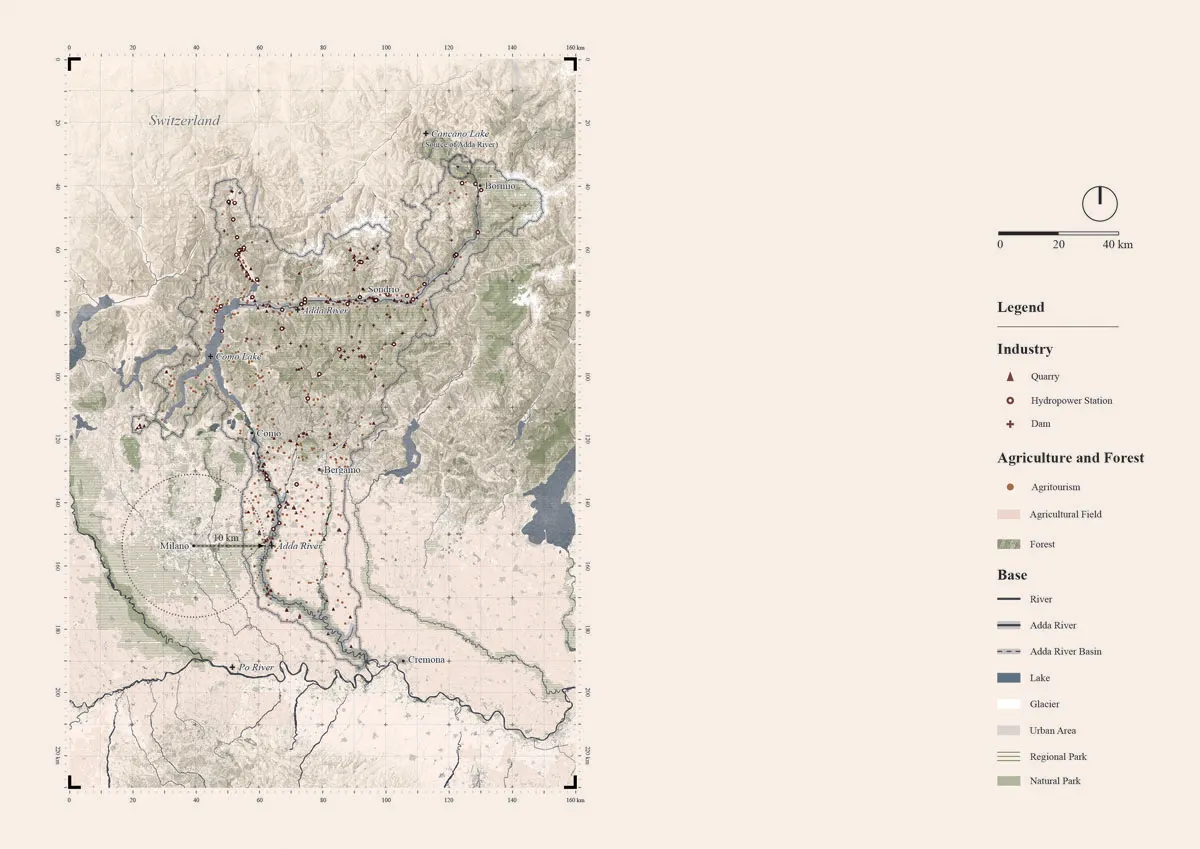
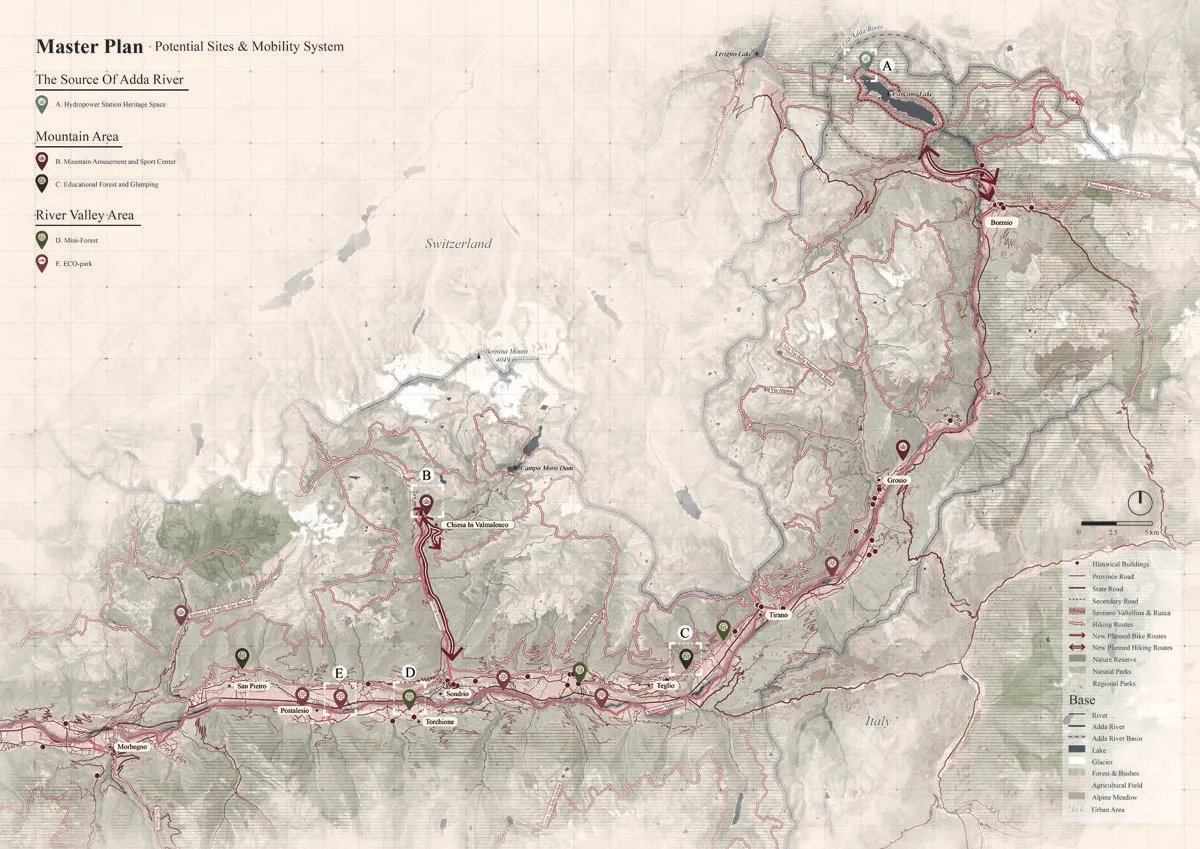
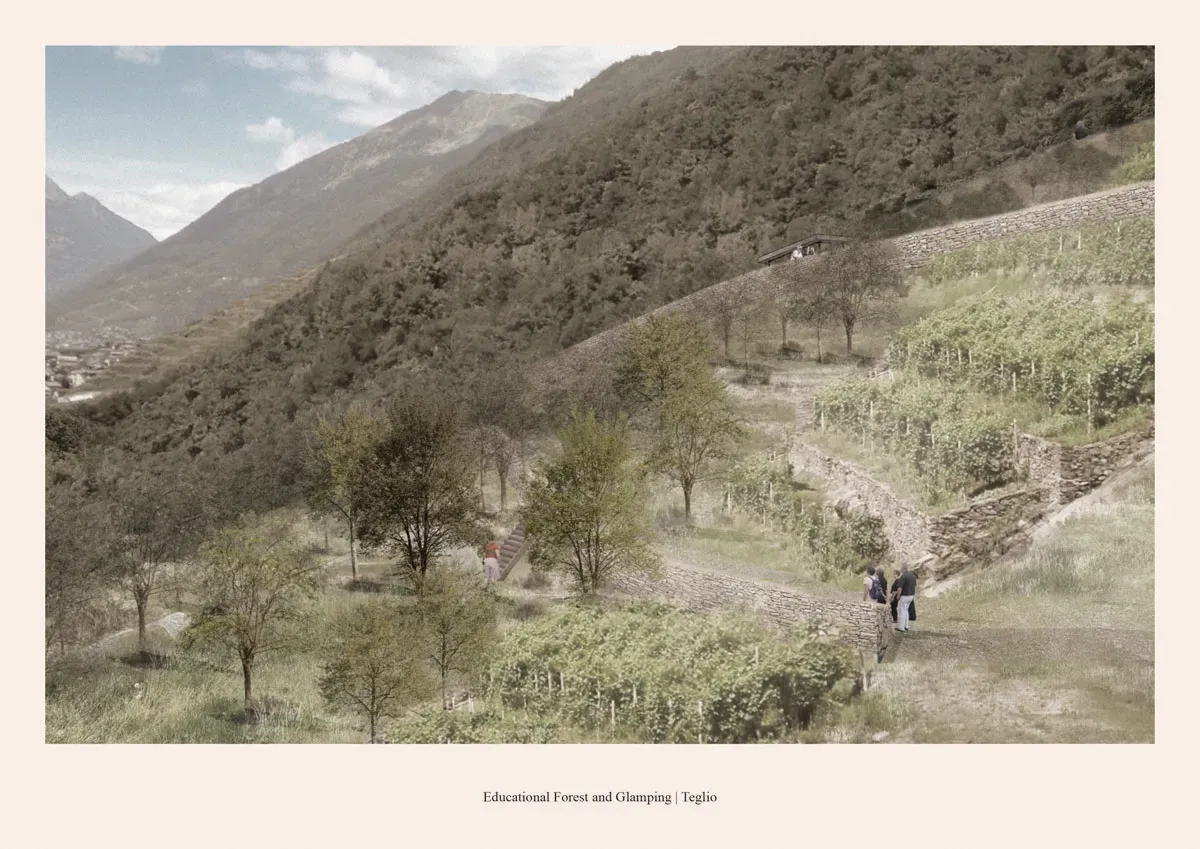
This project responds to these challenges by proposing an ecotourism network structured around five ecological hubs, each reinterpreting abandoned hydropower stations, disused quarries, or rural accommodations as inclusive public destinations. Instead of treating these places as isolated interventions, the design weaves them into a connected system, supported by cycling paths, hiking trails, and existing roads. The aim is to create a framework where ecological recovery, cultural reuse, and recreational experience are interdependent.
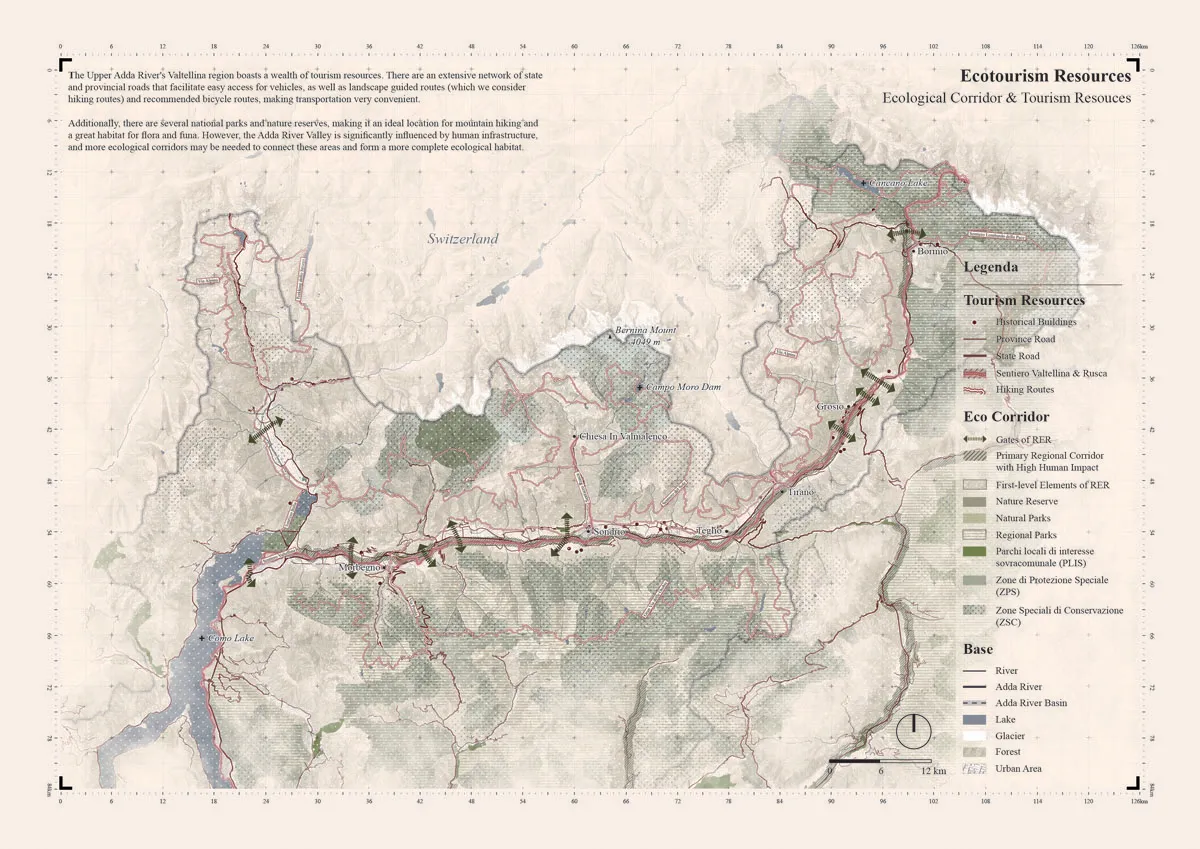
The design strategy rests on two complementary principles: restoration and reuse. Restoration addresses the degraded river system and its surroundings. River corridors are widened to reestablish floodplains, improving hydrological resilience while reducing flood risk. Native vegetation is reintroduced along riparian edges, in wetlands, and in rewilded forests to enhance biodiversity and climate adaptation. Former extraction landscapes—such as sand piles and quarry terraces—are reshaped into grasslands, shoals, and ecological patches, creating new habitats for birds, fish, and small mammals. Reuse focuses on the valley’s cultural and architectural heritage. Decommissioned hydropower stations are transformed into heritage galleries or ecological gardens. Industrial steel frames, once used for sand transport, become observation towers covered in vertical greenery. Farmhouses are adapted to host agritourism activities, linking local food culture with sustainable tourism.
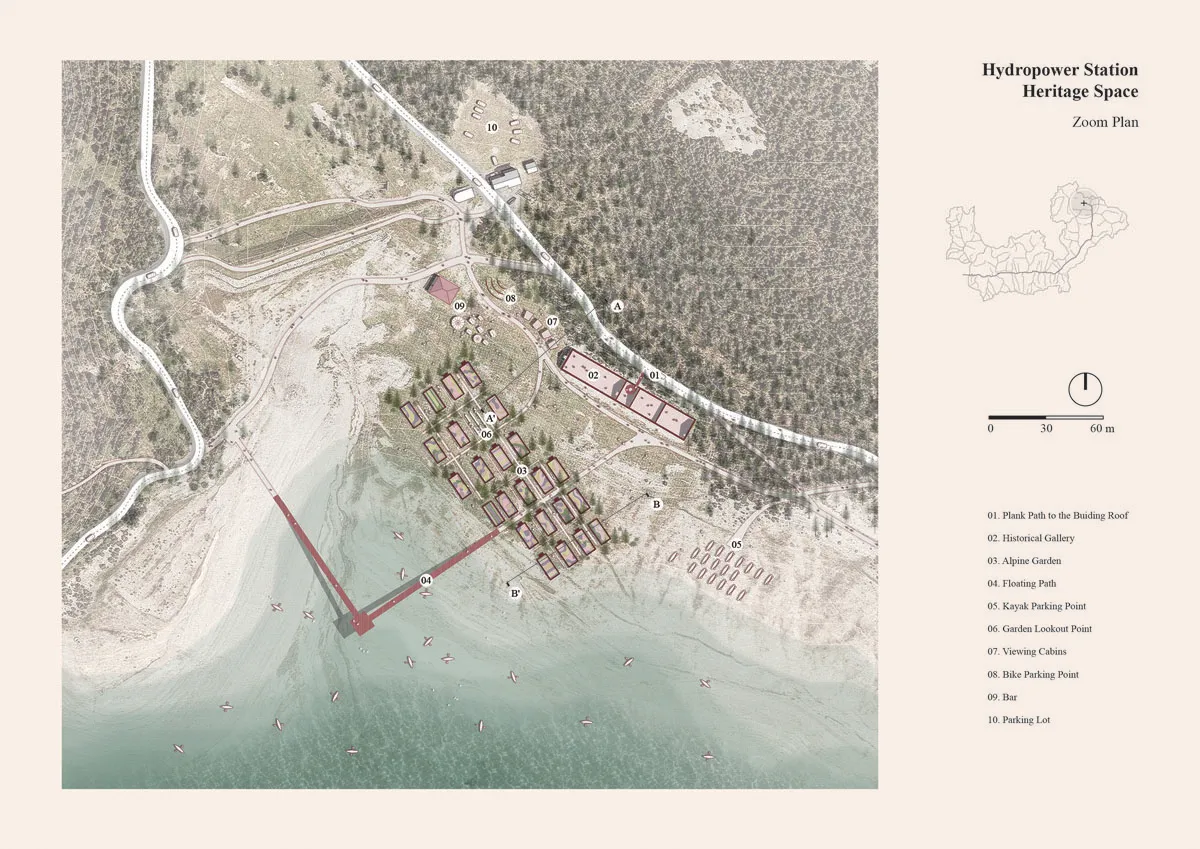
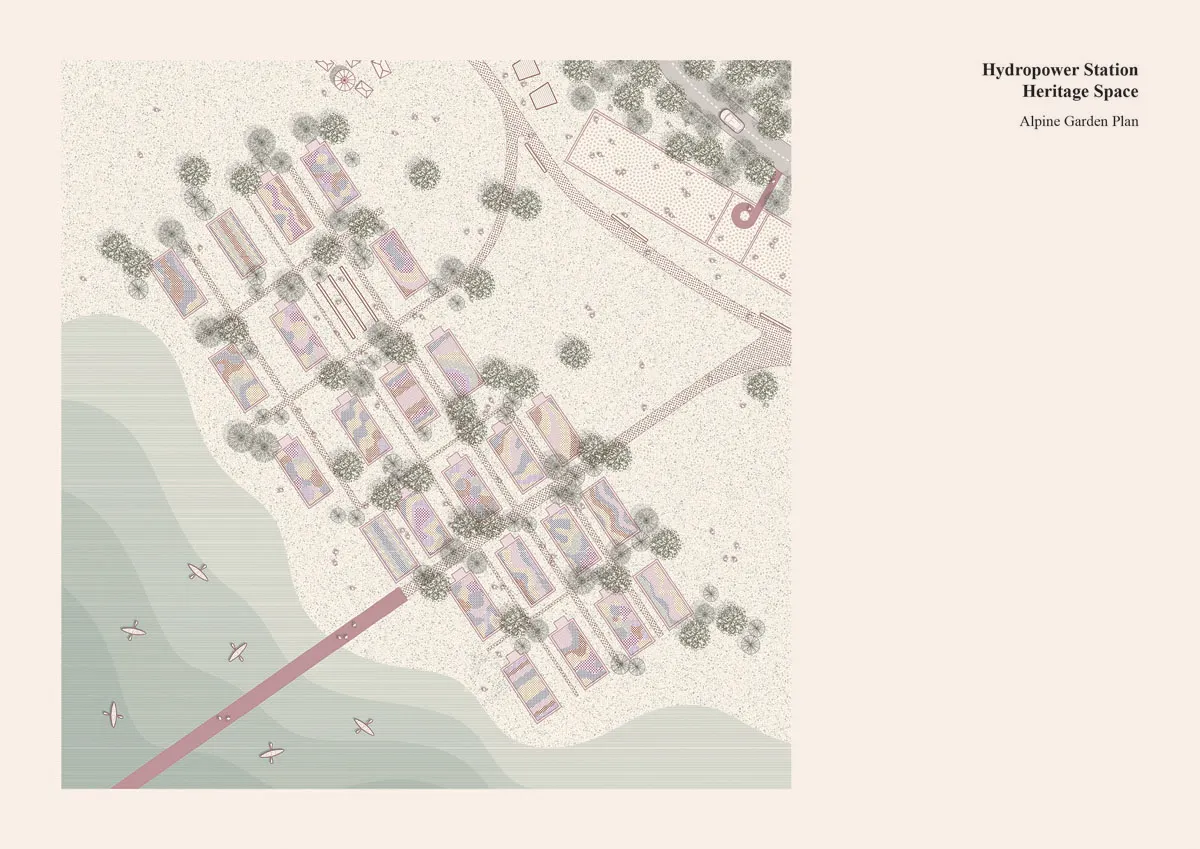
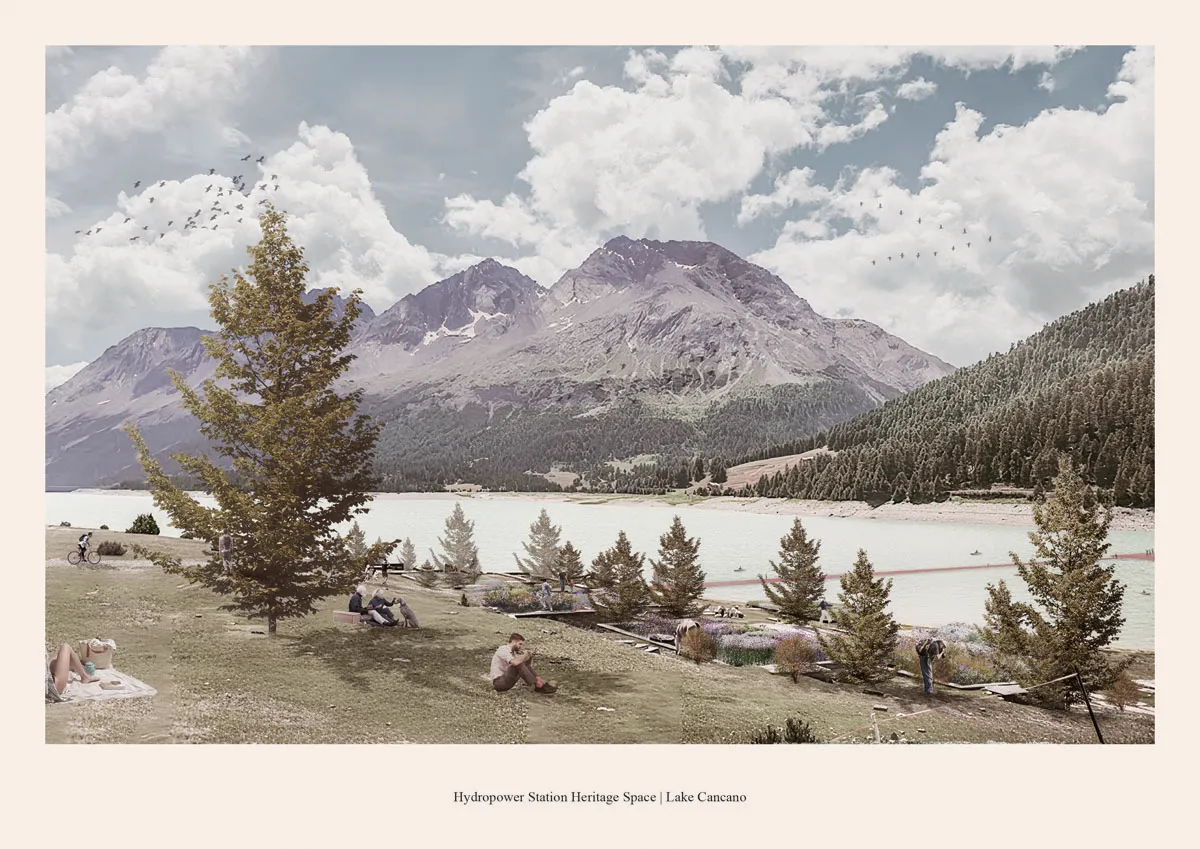
The five hubs act as anchors within a broader mobility system. New bicycle routes and walking paths connect them with regional parks, nature reserves, and rural landscapes. Together, they form an ecotourism network that is easily accessible from Milan, encouraging slow travel and outdoor recreation. Visitors can move across the valley, experiencing a sequence of landscapes that reveal both its natural richness and its industrial memory. Beyond tourism, the project highlights the role of landscape architecture in shaping resilient post-industrial territories. By reimagining neglected sites as active ecological and cultural nodes, the Adda River Basin demonstrates how regions in transition can find new
value. The proposal bridges the gap between historical land-use practices and contemporary environmental imperatives, showing that ecological integrity, cultural identity, and socio-economic development need not be in conflict.
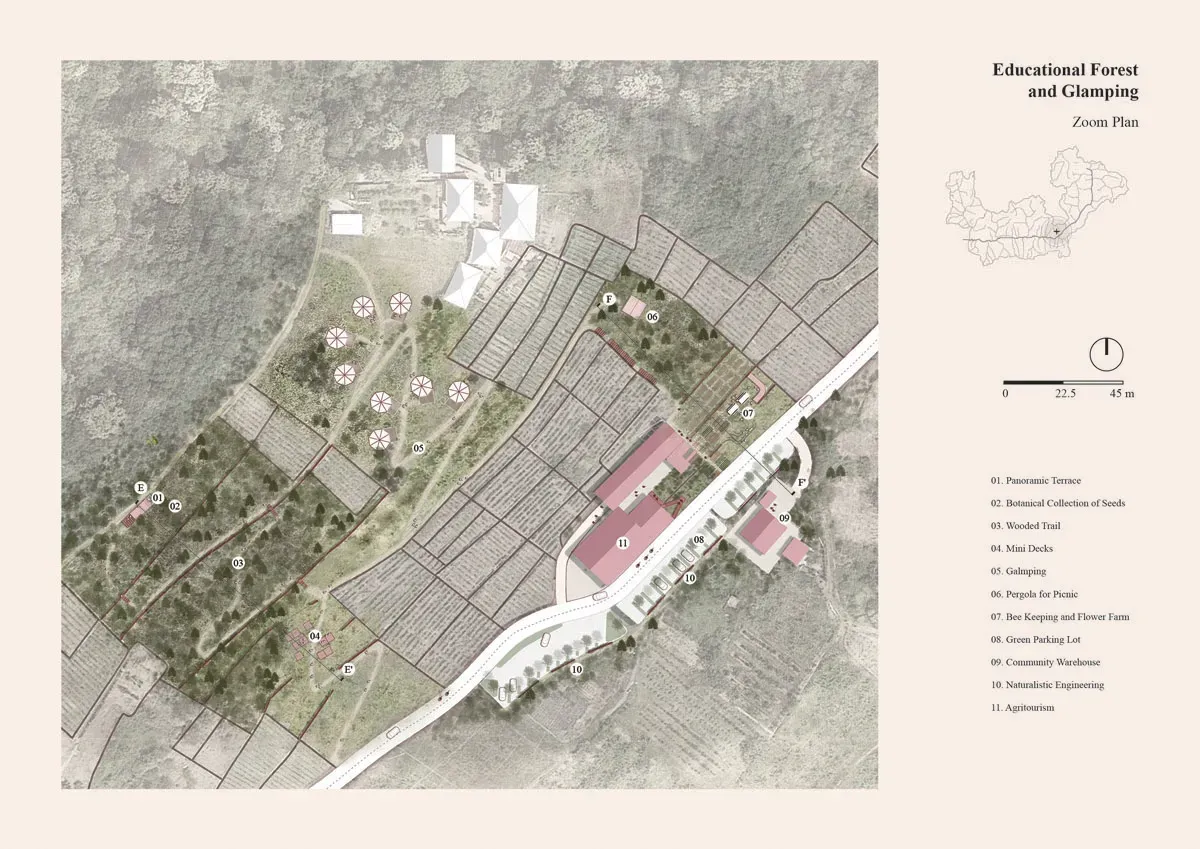
Ultimately, the vision is not only about repairing damaged landscapes but about building an inclusive network of people, places, and ecologies. The Adda Valley is reframed as a living laboratory of transformation, where restoration and reuse together create a sustainable model for future riverine landscapes.
Inclusive Hubs Create New Adda Ecosystems
Students: Jisheng Zhang & Xinni Ma – Politecnico di Milano;
Supervisors: Gangemi Sara, Mattia Tettoni