
Winner of the Outstanding Award in the 2026 Student WLA Awards – Design category
A celebration of sediment flow Lake Walensee, Switzerland
BACKGROUND
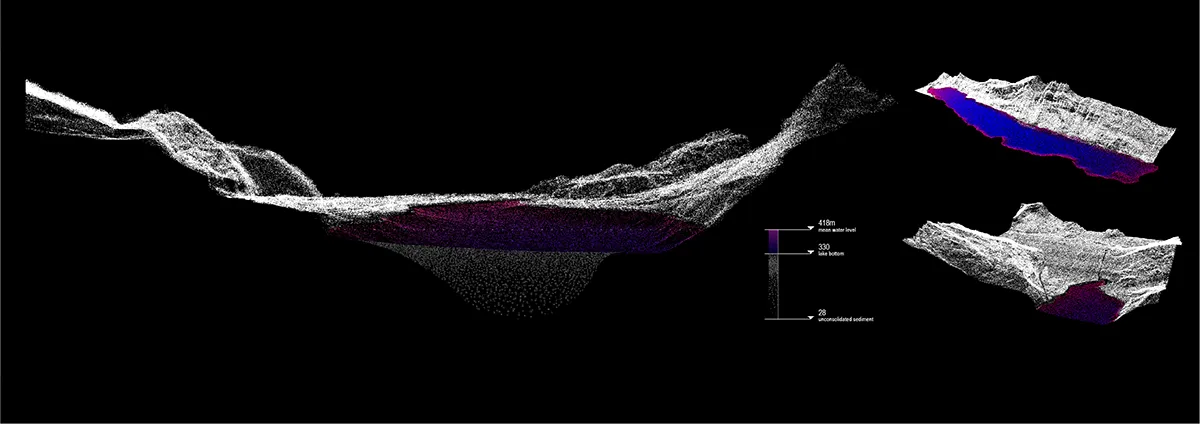
Since the 19th Century, the construction of the Escherkanal has been changing Lake Walensee physiology. Millions of tons of sediments have been redirected into the bottom of the lake, unconsolidated sediments pile up as deep as 300 meters under the lakebed. By the current speed the lake would be filled up with sediments in the next 400 years. To guarantee a good health of the lake, its deepness needs to be preserved to facilitate the seasonal mixing of water for oxygenation and nutrient cycle. Therefore, the sediment coming from the canal should not be thrown into the lake in an uncontrolled way as of today.
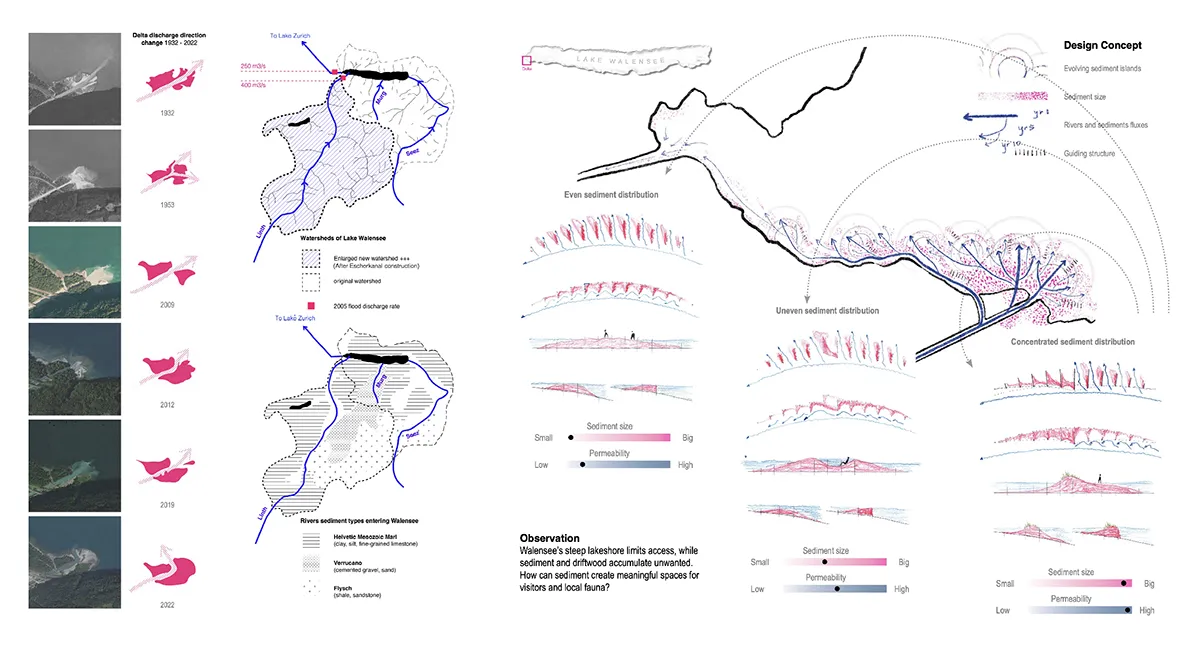
The project aims to resurface the sediment brought by Escherkanal from the alps and create a new chain of islands above the water surface. New shallow islands form along the shore between the delta and the outlet, serving lake visitors, fauna and flora.
VISION
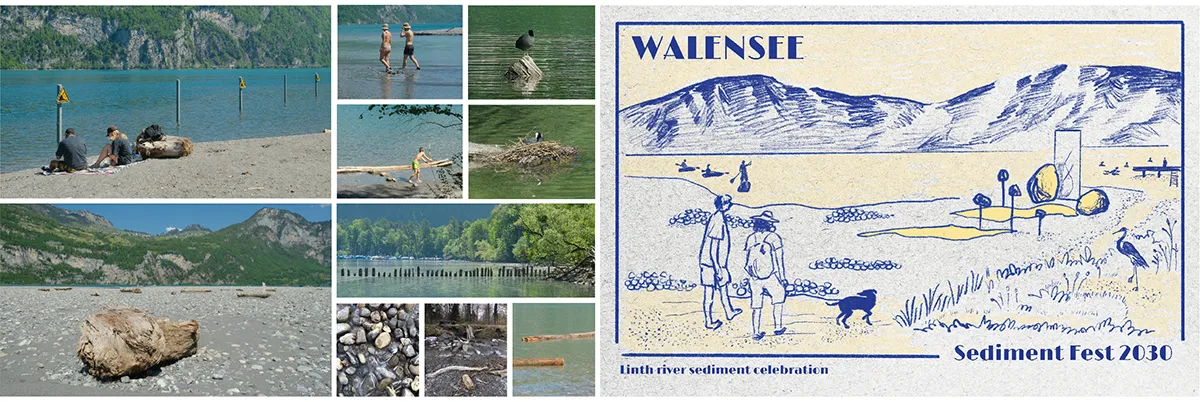
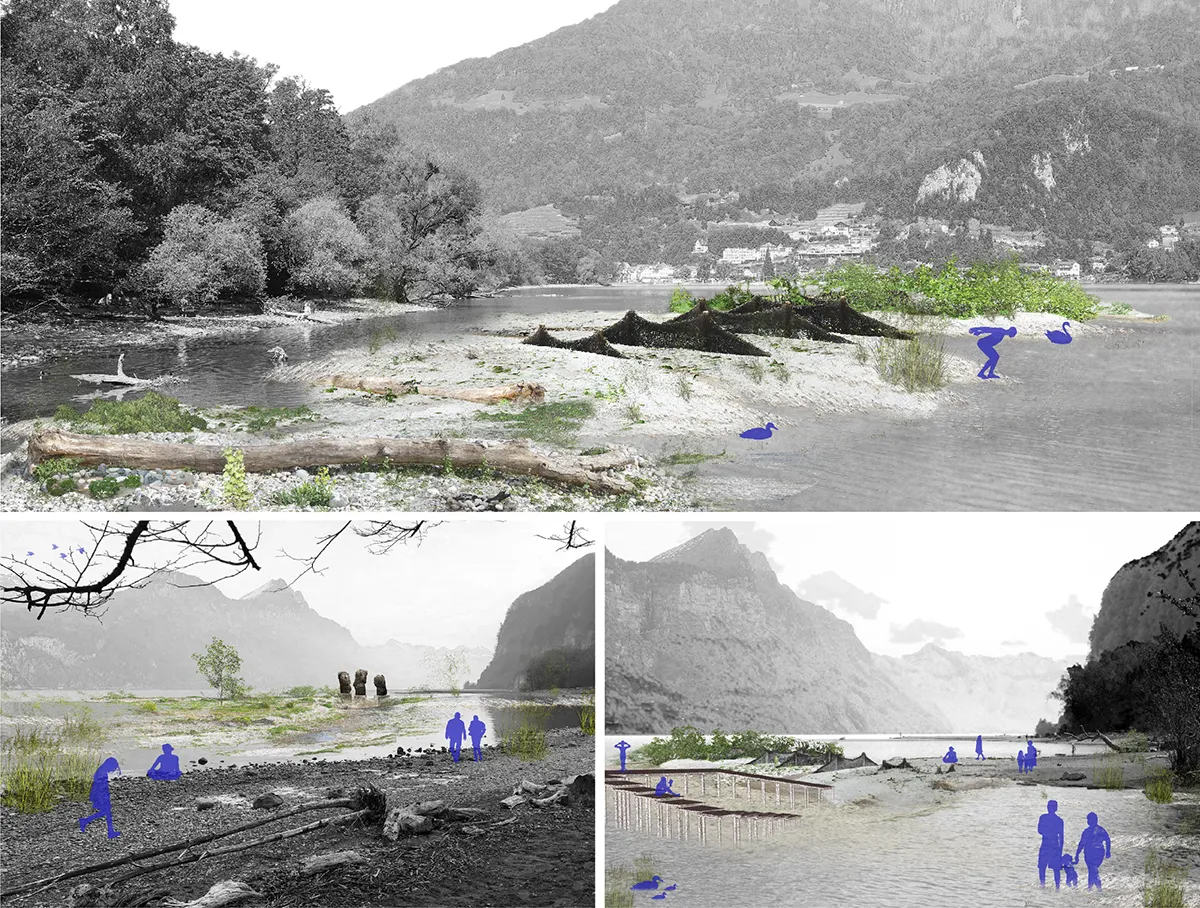
Instead of dumping the sediment invisibly under the carpet (lake bed), we turn it into opportunities, creating new public space, new shore habitats for biodiversity and a sediment festival. We bring the sunken sediment to life for lake visitors. Sediments come to life again by resurfacing at water level, colonised by plants and ultimately inhabited by wildlife.
DESIGN STRATEGY
Guiding structures are put in place to split the main river flow into multiple branches, slowing the current and allowing sediments to build up. This allows sediments to accumulate along the shoreline rather than in the deeper parts of the lake. They gradually alter the direction of the water flow, slowly transforming the formerly fixed shoreline into a living, shifting zone. The plan cannot be read as fixed or finished, but represents a transitional phase that is never static.
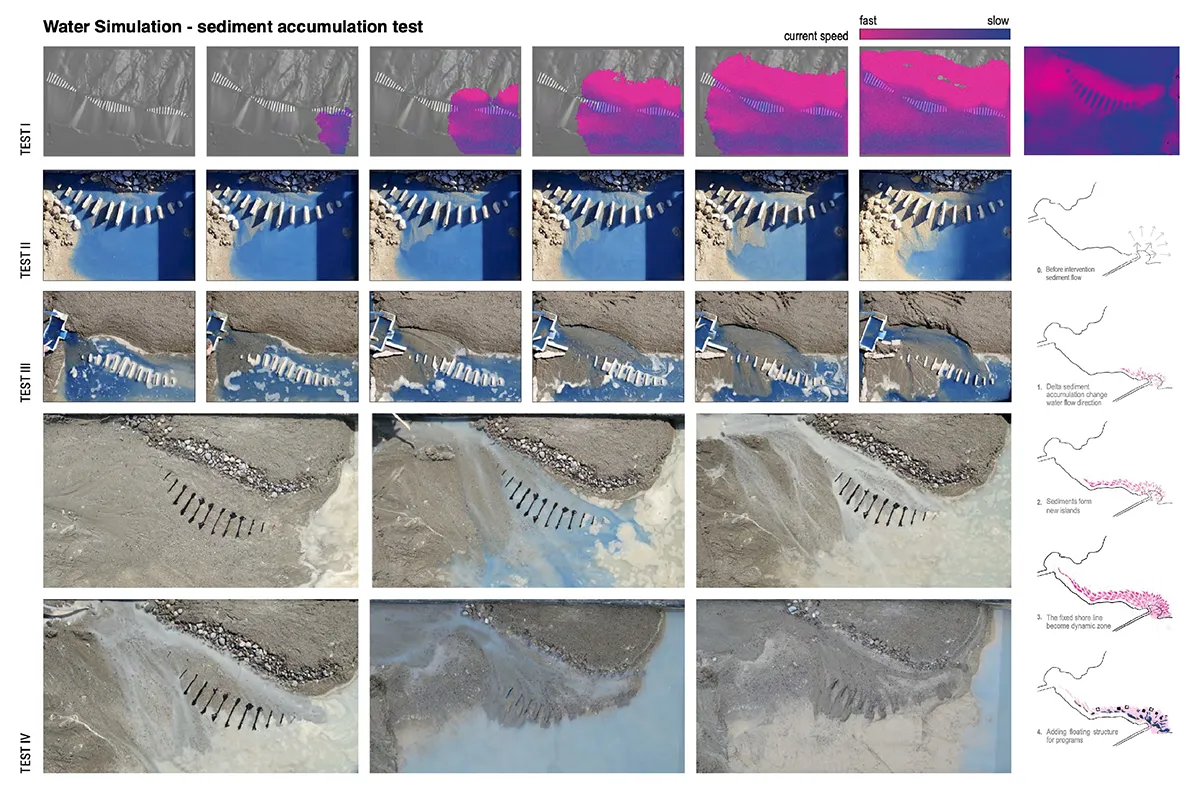
PROTOTYPE/ SIMULATIONS
The guiding structures consist of standing poles (driftwood) with fabrics stretched between. Walensee used to be a hotspot for fabric production; using this local production can help trap sediments while letting water pass through.
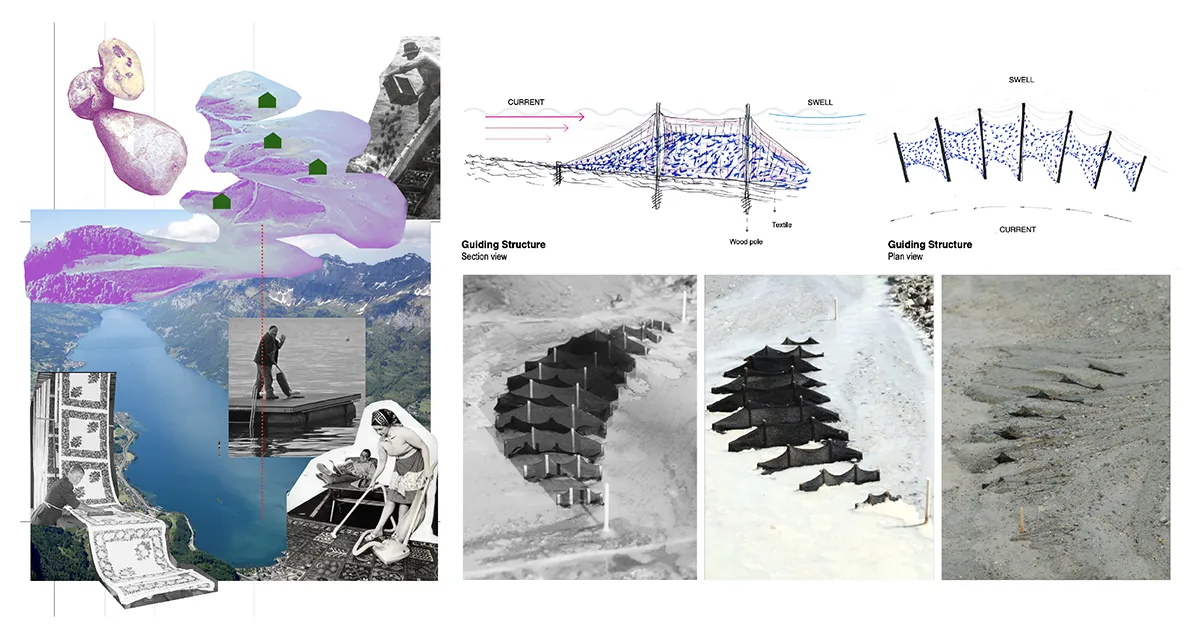
Variations in water height directly influence sediment deposition; hence, we tested our prototypes under different current speed conditions. From simulations, we studied the form, speed and amount of sediment gathered between the shoreline and the guiding structures we proposed.
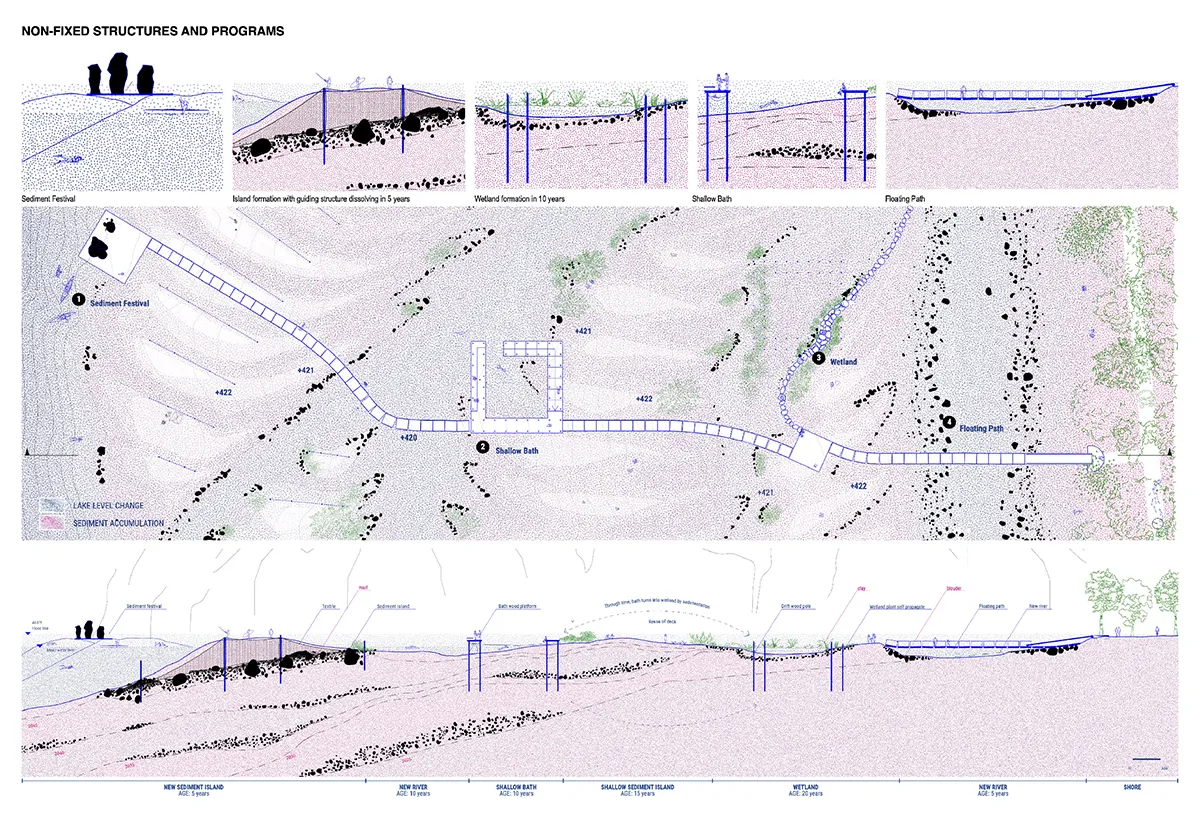
AN EVOLVING LANDSCAPE THROUGH TIME
Non-fixed floating paths and platforms allow humans to access some islands, adapted to changing lake water level throughout seasons. Once bathing space becomes too far away from the water due to the constantly growing shoreline, it turns into a wetland, creating space for biodiversity.
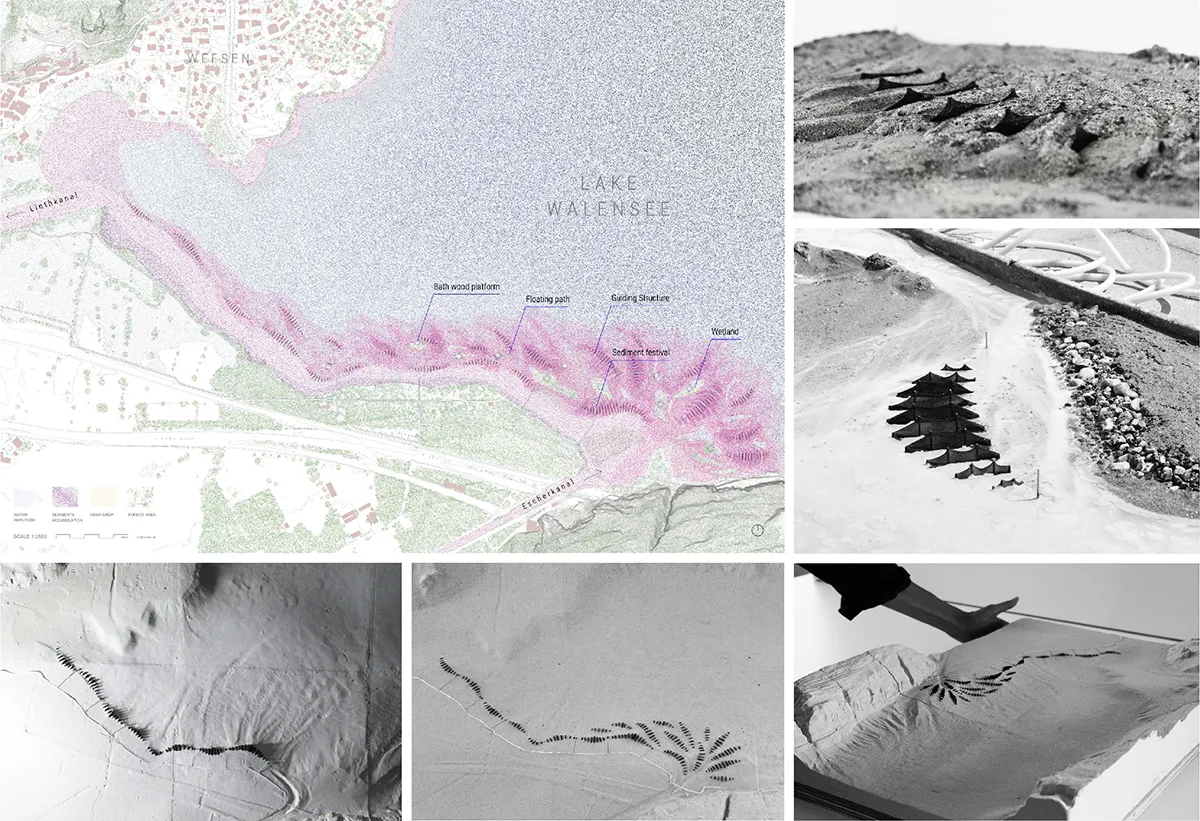
An annual Sediment Festival invites land art artists and the public to engage in the sediment shaping process. The festival not only transforms perceptions towards sediments, but also generates income for the local community. By involving non-architect visitors in the design and creation of sediment-based artworks, the festival becomes a platform where ecological processes, human creativity, and community life intersect.
Keep Carpet Dusty
Students: Sabrina HoiYan Young & Nils Hayoz (ETH Zurich)
Supervisor: Martina Voser (ETH Zurich)