
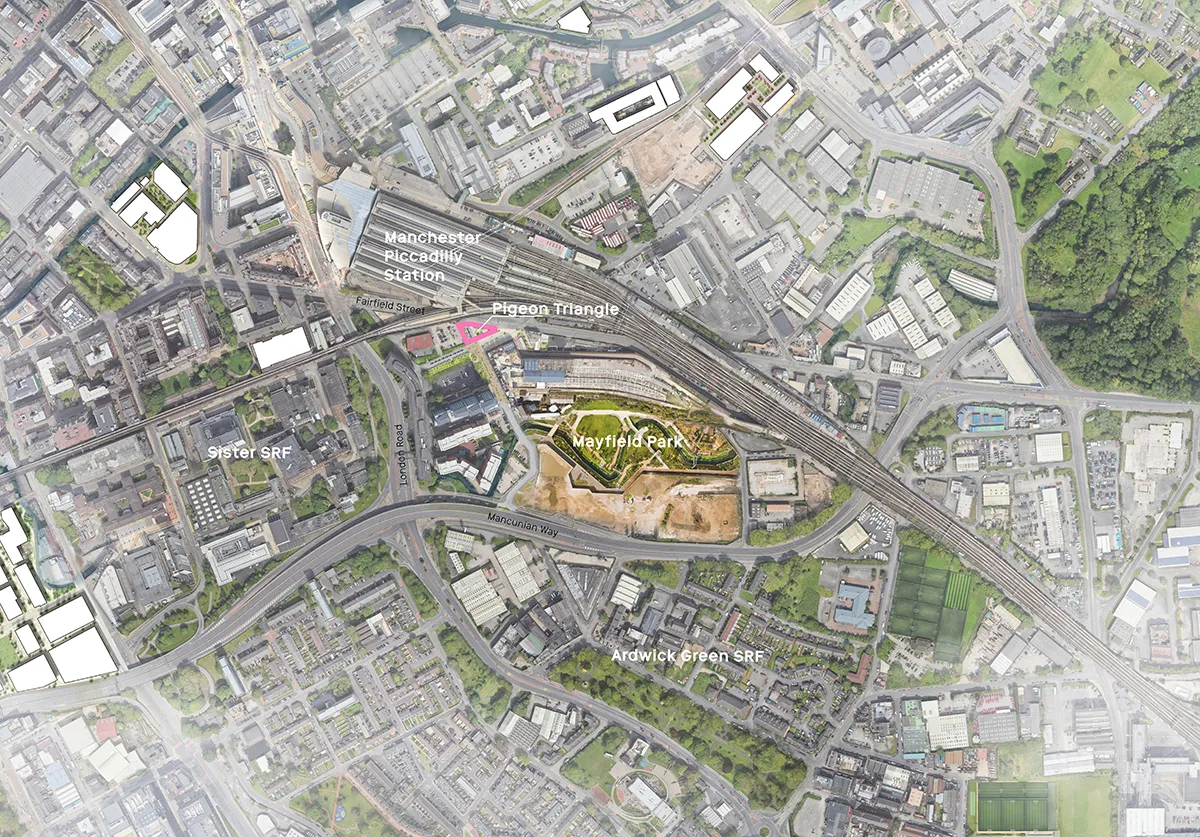
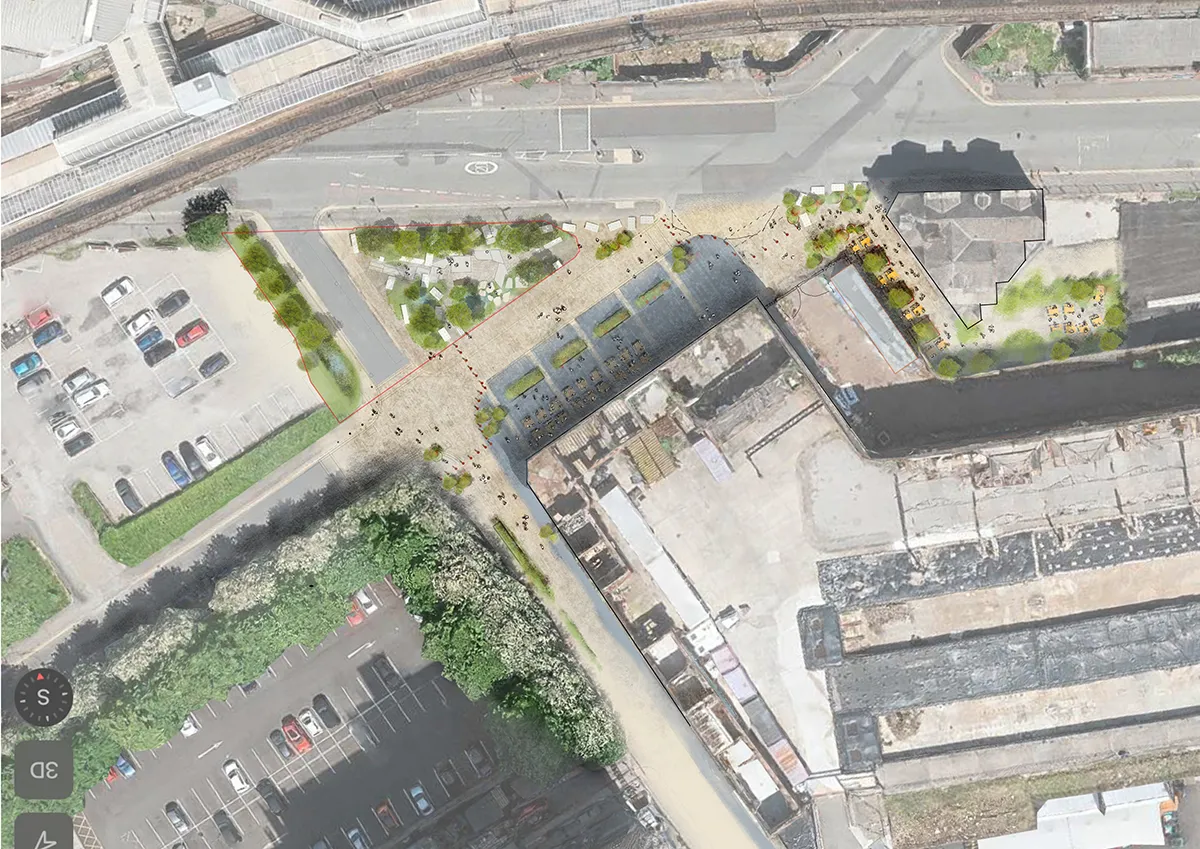
Pigeon Triangle is a new public space in Manchester, UK, that is supported by consented pedestrianisation works along sections of Baring Street and Travis Street, marking a significant step in transforming the Mayfield Threshold into a pedestrian-friendly, accessible arrival point and interface with Manchester city centre.
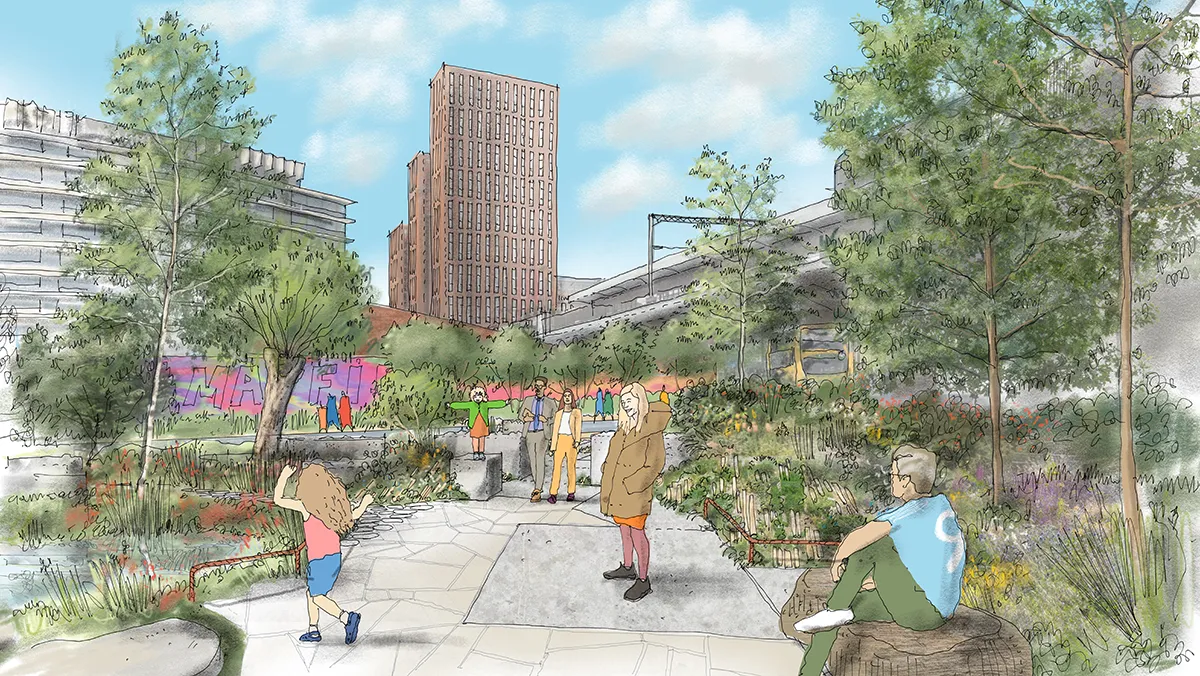
The site, which has existed largely as a traffic island since our involvement began in 2016, will redefine how the city arrives at Mayfield. Our design intends to create a micro-dose of everything that has made the award-winning Mayfield Park so authentically rich and successful, while introducing new layers of innovation.
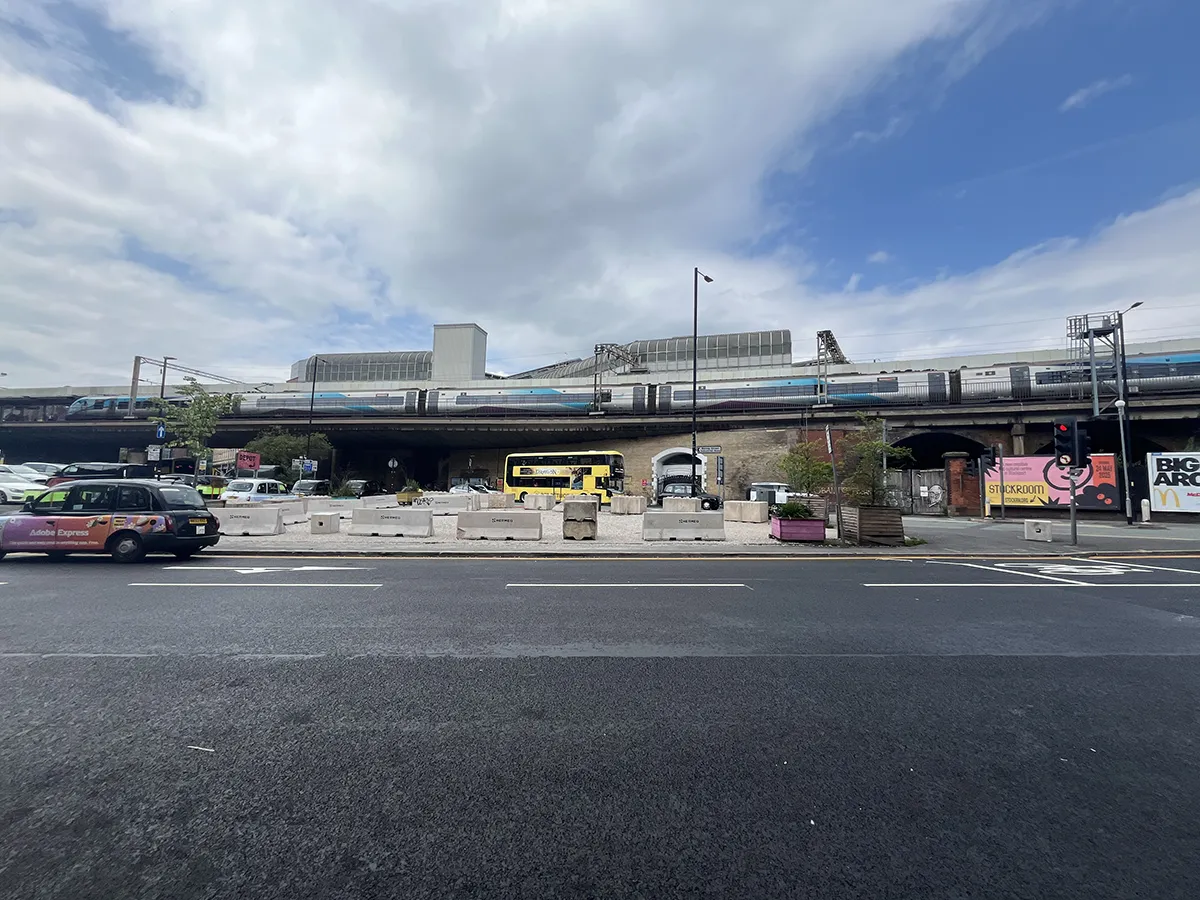
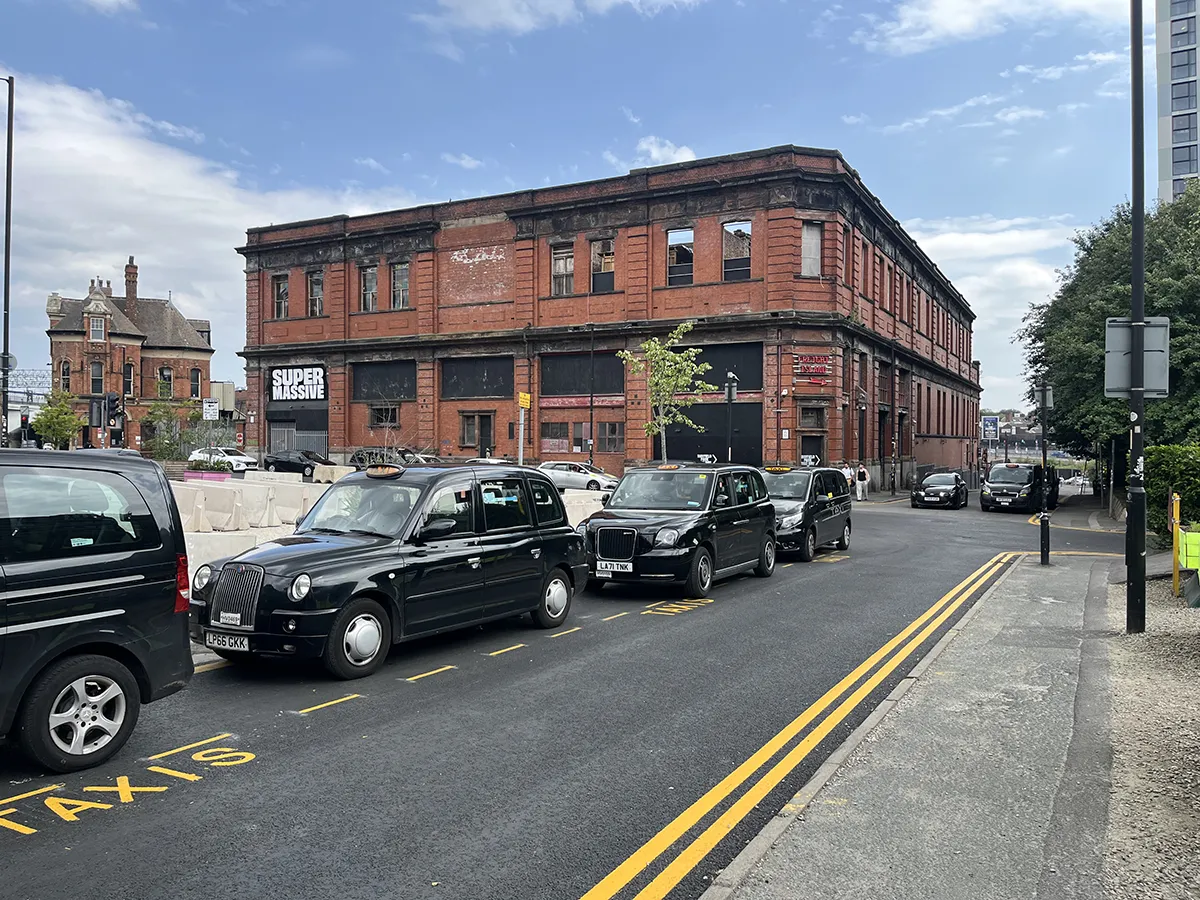
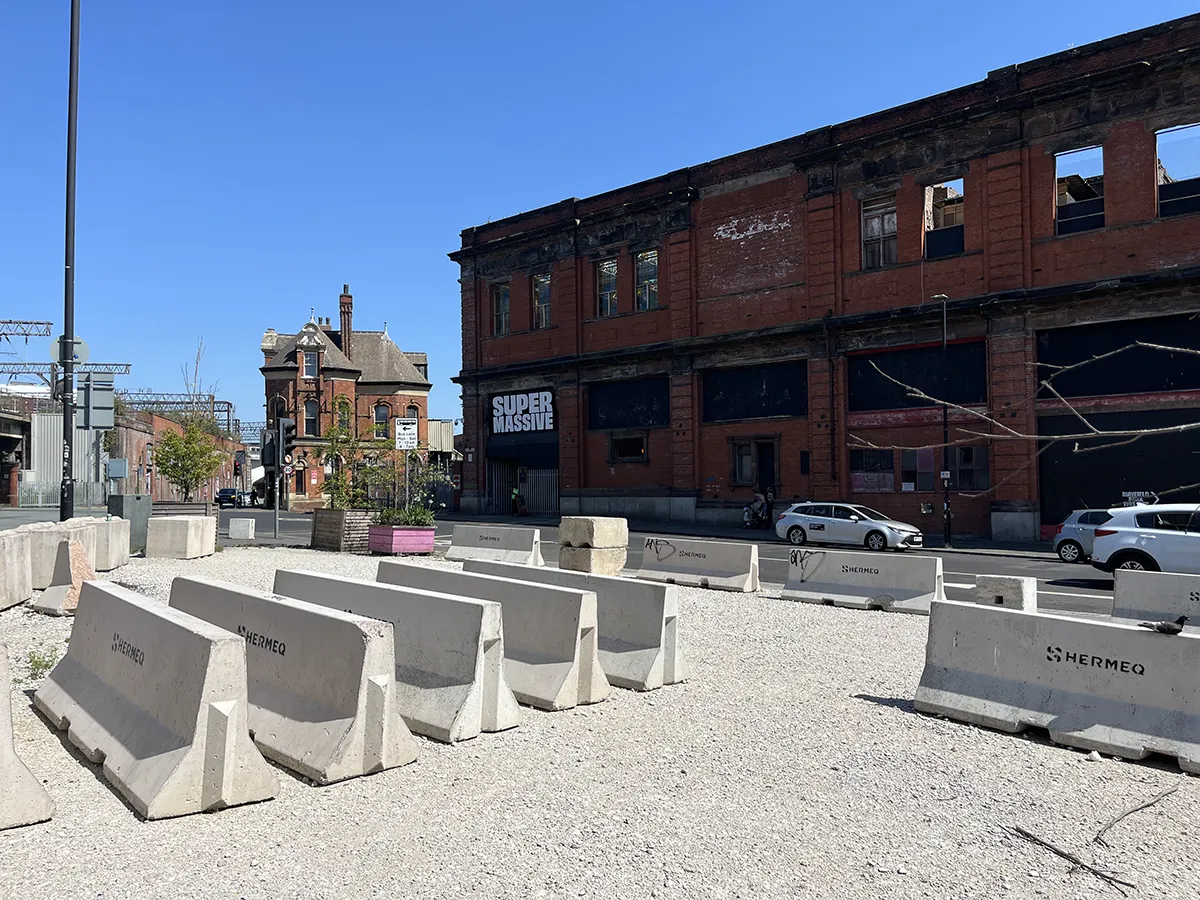
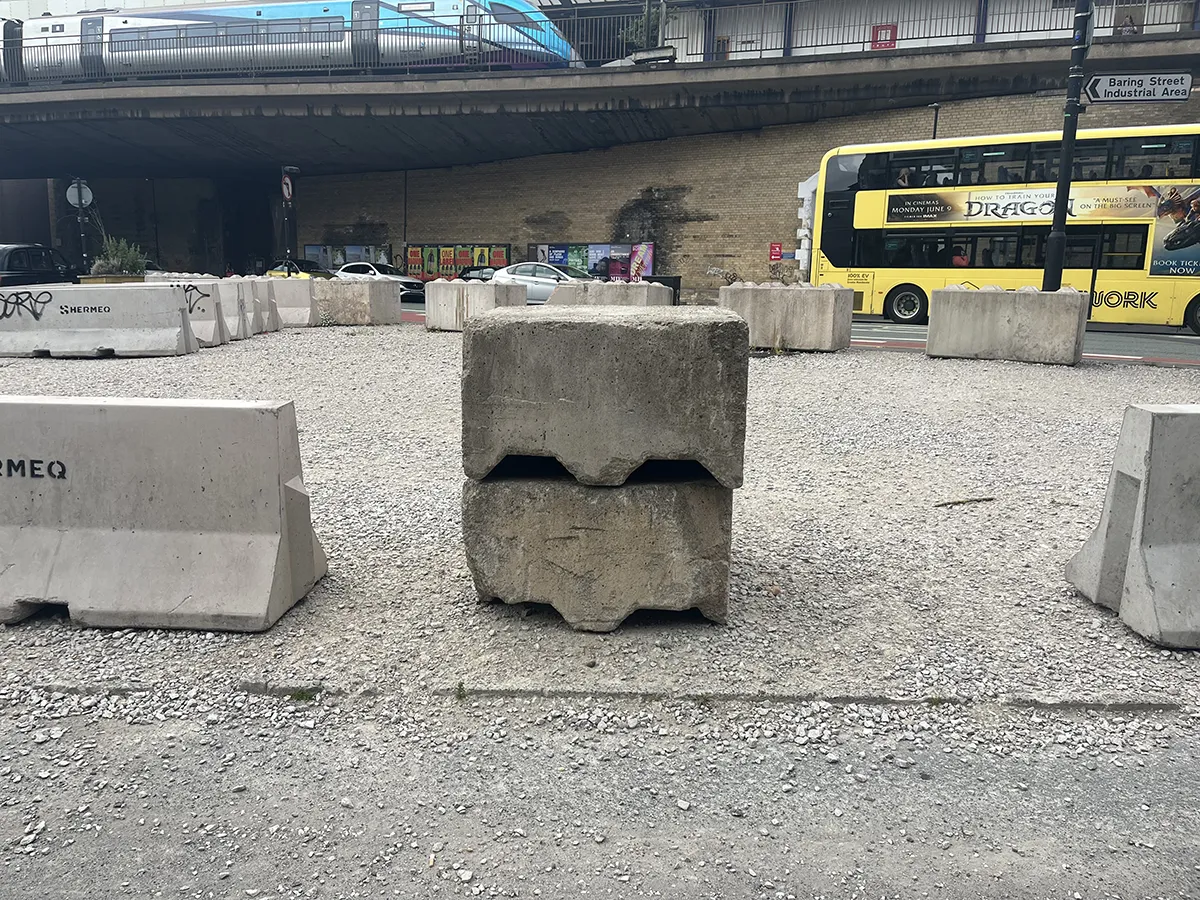
Pigeon Triangle – Existing Site | Images: Courtesy of Studio Egret West
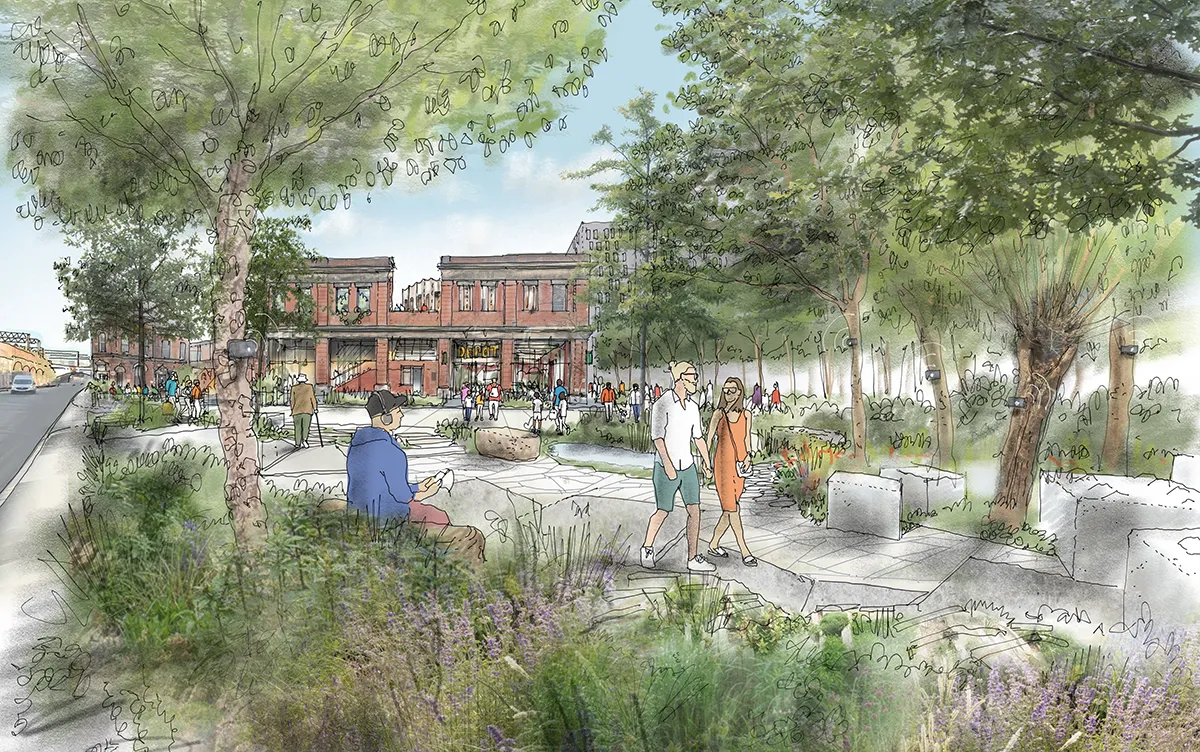
Recently described by the Manchester Evening News as a ‘tiny park with a funny name,’ Pigeon Triangle has also been noted for its intention to relocate the Avanade Intelligent Garden, originally designed for RHS Chelsea Flower Show by Tom Massey Studio and Studio Weave. At first glance, this portrayal appears apt. Yet behind the light-hearted headline sits an intensely focused and highly intricate design that challenges conventional approaches to public realm delivery. Rather than simply relocating an RHS show garden, the scheme reimagined by SEW borrows selected elements from the show garden as the first layer of a wider and more varied reuse strategy. Then endeavours to stitch these gifted objects into a more Mancunian and Mayfield inspired setting. The project takes Mayfield’s established commitment to reuse, local material sourcing, and site-inspired detailing to a new level, using even the smallest sites to demonstrate a radically conscientious way of making urban space.
A Threshold Between City and Nature
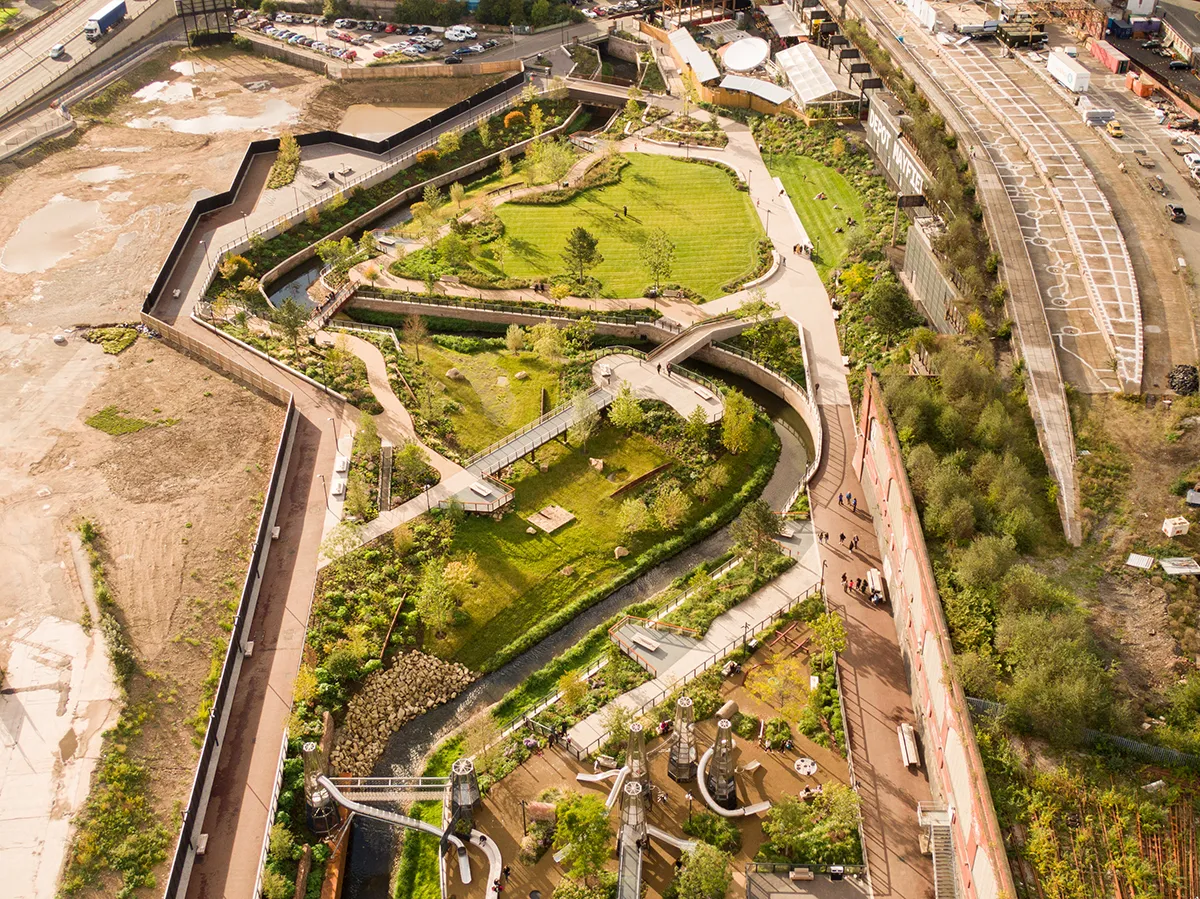
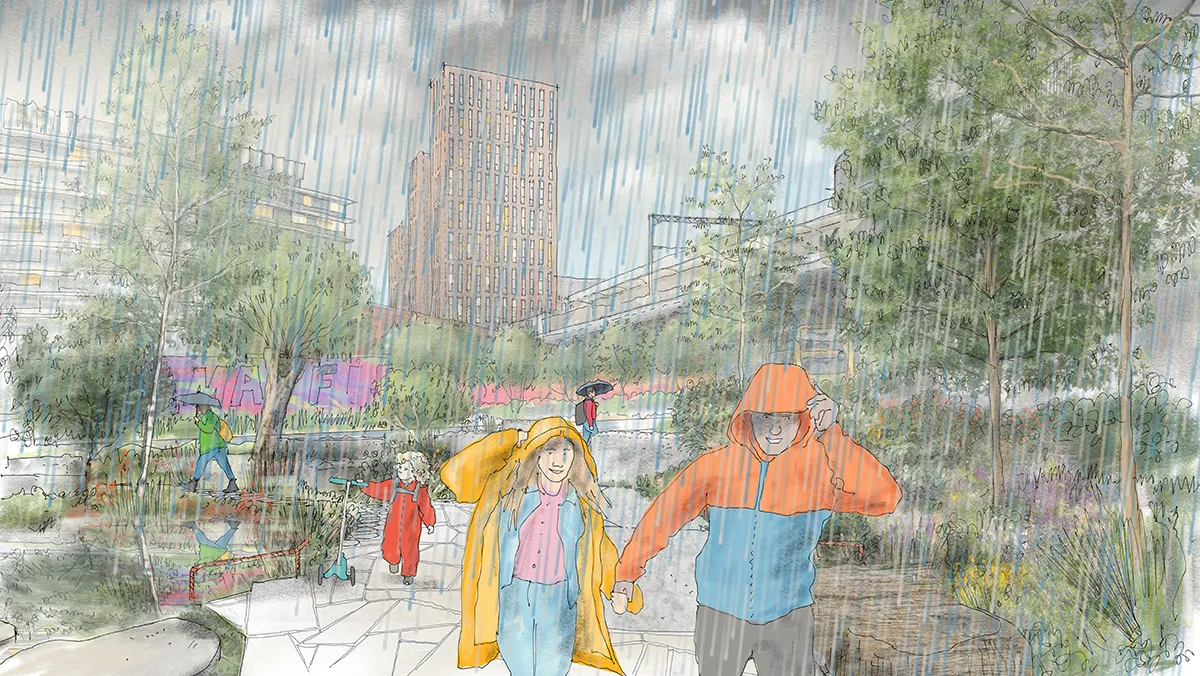
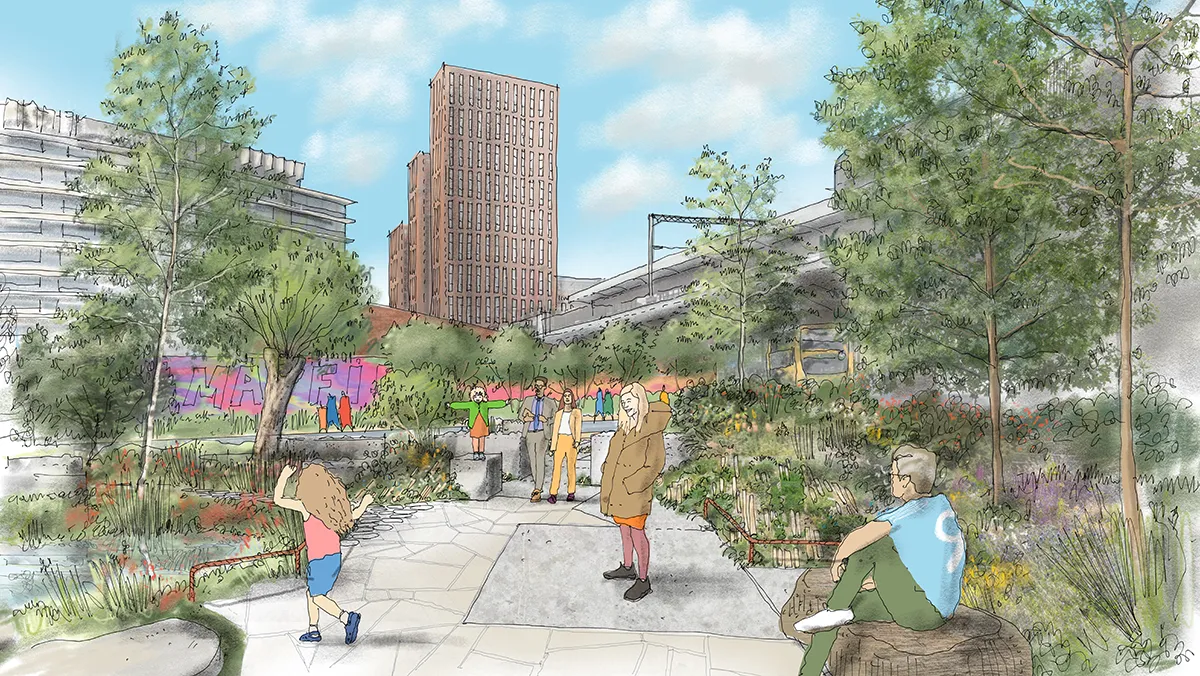
The design weaves nature into an intensely urban setting, creating an ecological stepping stone that softens the city’s hard infrastructure while remaining unapologetically urban in character. This approach builds on the principles that underpin the award-winning Mayfield Park, combining robust, durable, industrial elements with wild, diverse planting and water management to create places that feel authentic, resilient and alive.
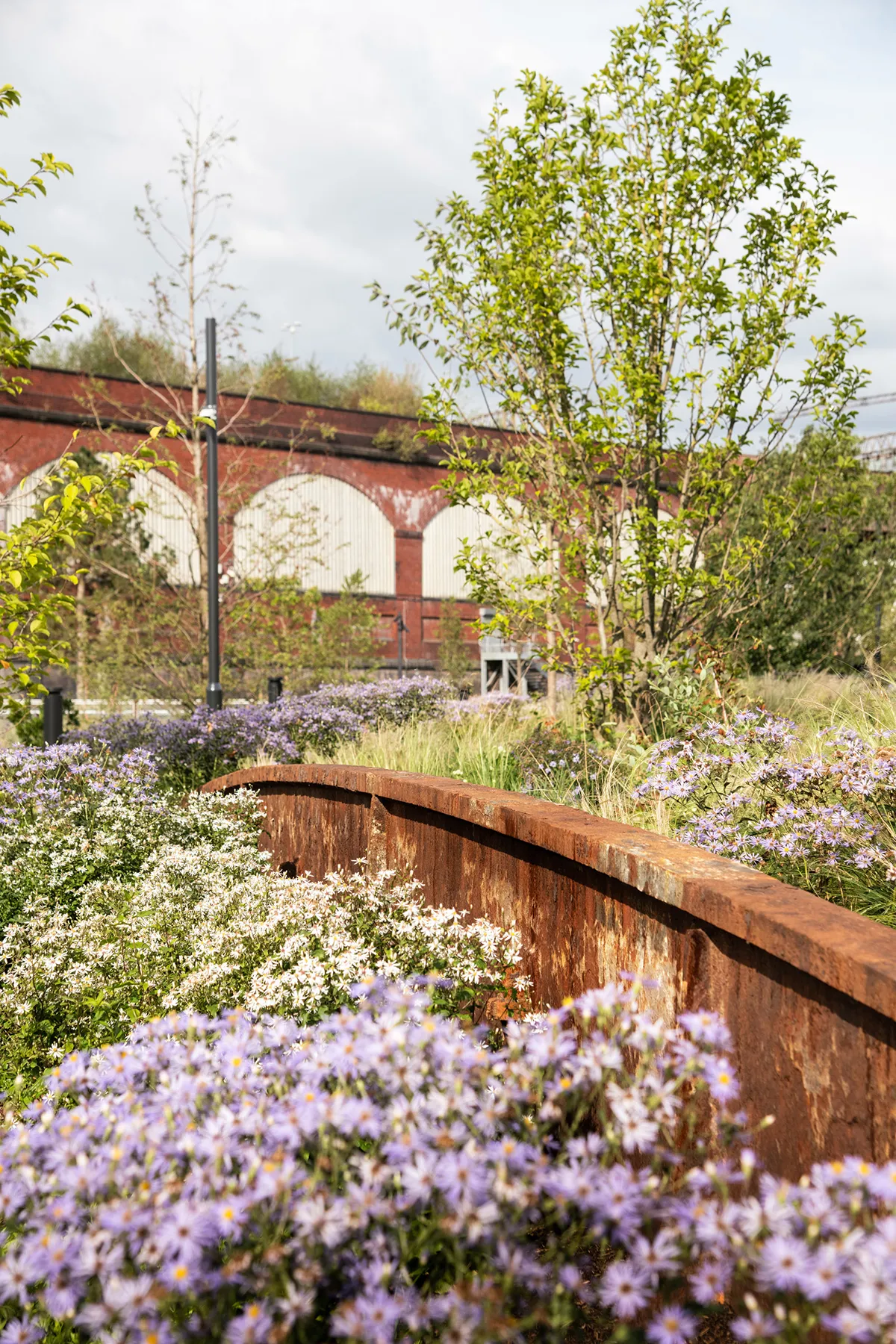
It is precisely this juxtaposition of city and nature that defines the Mayfield landscape. Pigeon Triangle intensifies this contrast, distilling it into a compact, richly detailed space that celebrates the site’s post-industrial heritage while responding to the urgent need for greener, more ecologically vibrant urban environments. Through the design of Mayfield Park, we demonstrated that by accentuating the site’s industrial character within the hard landscape, and simultaneously amplifying nature and designed ecologies within the soft landscape, the relationship between the two becomes more evocative. Industrial and wild can be beautiful together, the weight and robustness of industrial detailing heighten the intricacy and delicacy of nature, and vice versa.
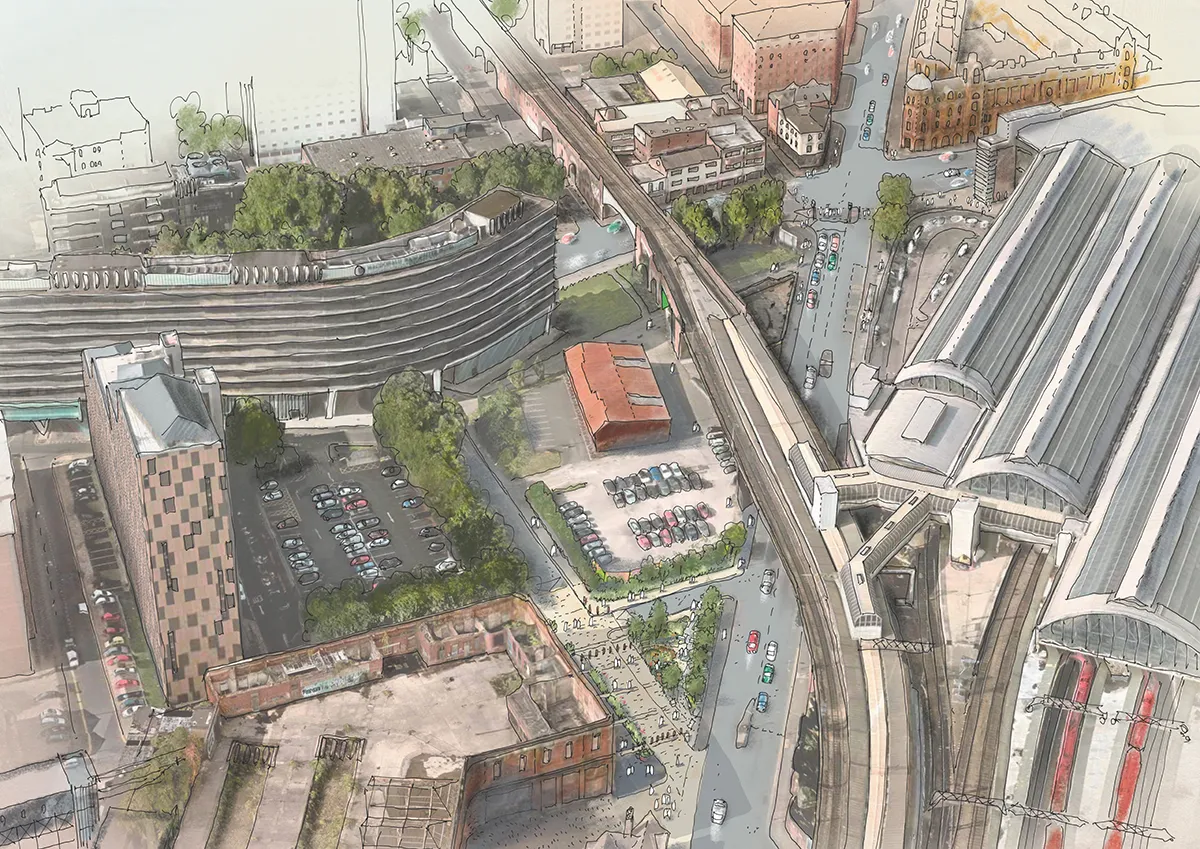
Though small when viewed in isolation, Pigeon Triangle is intended to extend the park towards the city centre and Piccadilly Station. As such, the description of a ‘tiny park’ is not entirely accurate, this is less about creating something new in isolation and more about growing the existing park. Mayfield Park, which opened in 2022, was the first city-centre park in Manchester for over 100 years, and Pigeon Triangle represents its next outward step. Other planned phases will do the same and one day the notional boundary of the original first phase of Mayfield Park will be blurred to such an extent that the park will be ubiquitous, buildings set in a post-industrial parkland.
Rooted in Local Character
Rooting the site within its immediate context has been central to shaping the design. From the earliest phases of the Mayfield project, reuse and local material sourcing have been fundamental in establishing a strong sense of place. This ethos continues at Pigeon Triangle, where the public realm is conceived not as a decorative layer but as a continuation of the site’s material and industrial narrative.
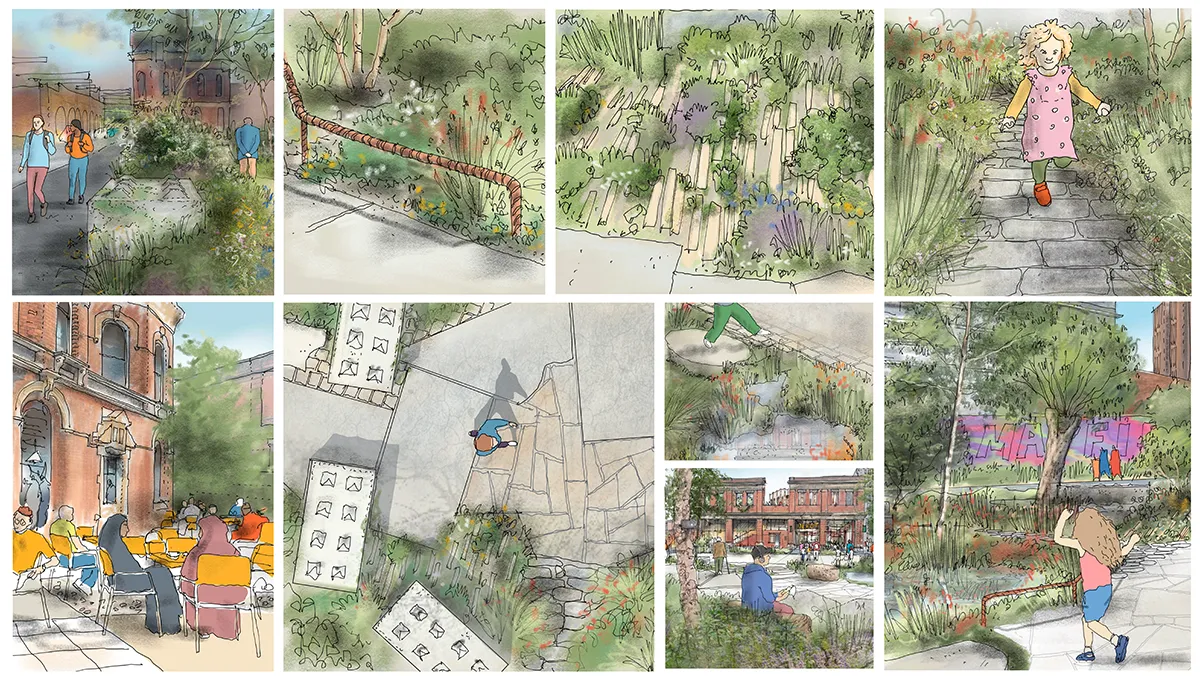
Stone paving and cobbles are intrinsic to the area’s heritage, evident both in historic ground surfaces and in the architectural language of nearby buildings. The adjacent former ticket office façade, with its stone lintels and horizontal banding, exemplifies stone as a defining local material. Beneath the surrounding highways, original stone cobbles still survive under layers of macadam. These are currently being carefully extracted and stored for reuse across the wider Mayfield regeneration, with a small proportion allocated for Pigeon Triangle.
For the newly pedestrianised highway works, a highways-adoptable stone has been selected to deliver a historically sensitive yet contemporary public realm. Within the garden itself, the design seeks to dissolve boundaries between highway and landscape, using stone consistently to ensure the space feels seamlessly embedded within its urban context rather than visually set apart.
Local Stone, Crafted with Care
In keeping with Mayfield’s strong local-sourcing narrative, new materials are specified from as close to the site as possible. Central to the scheme is the use of Woodkirk sandstone, a Yorkshire-quarried material traditionally categorised as Yorkstone. This sandstone has been used for paving for over two centuries and is deeply embedded in Manchester’s streetscape heritage.
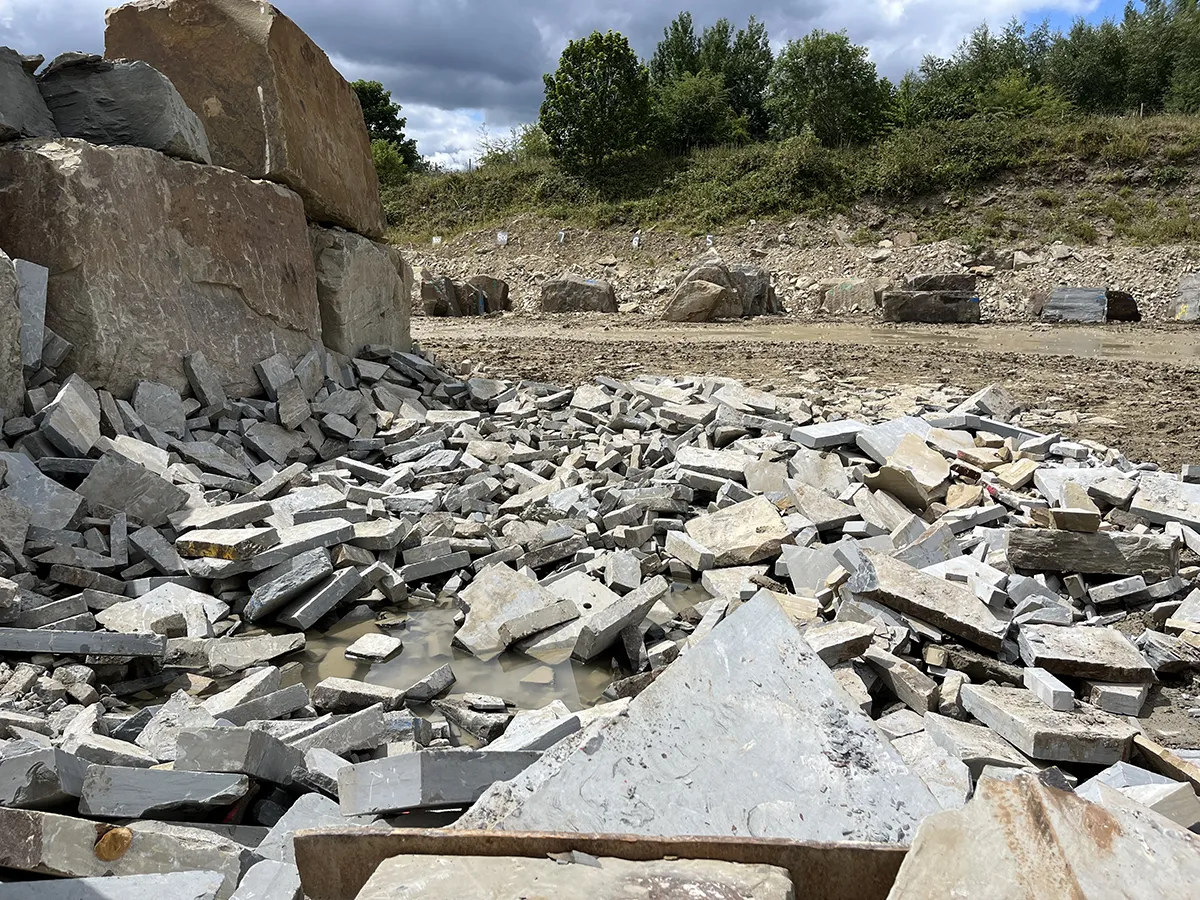
Sourced from a quarry near Morley in West Yorkshire, approximately 30 miles from the site, Woodkirk sandstone offers subtle natural colour variation without the harsh tonal contrasts found in some other Yorkstones. With an estimated 50-year supply remaining, and supplied by Bolton-based Hardscape, the stone balances longevity, provenance and sustainability.
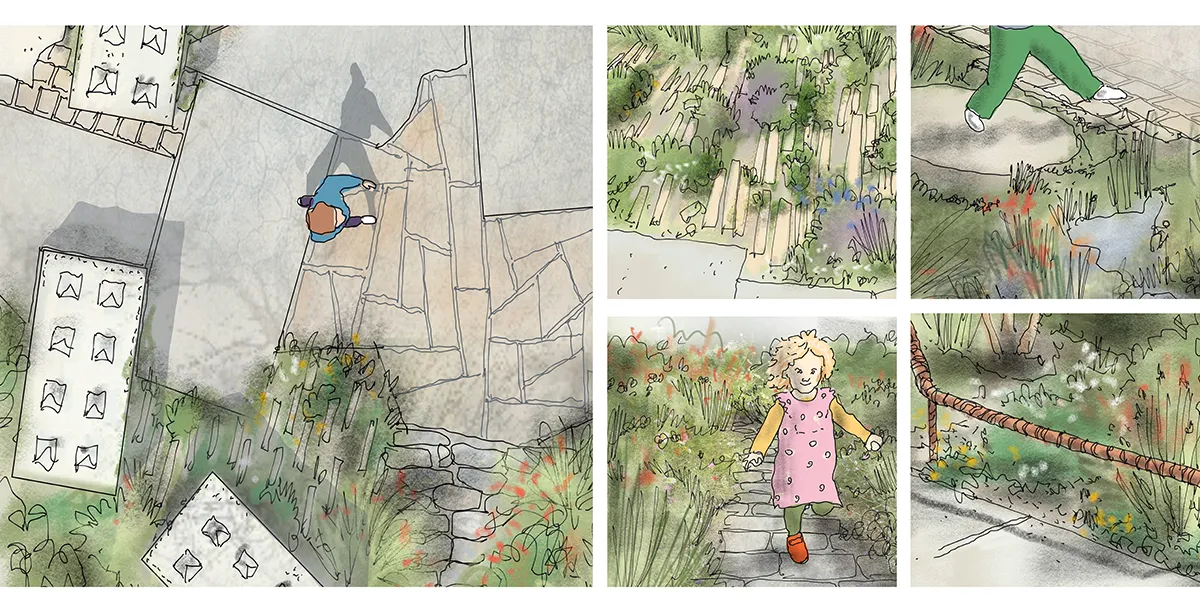
Within Pigeon Triangle, Woodkirk sandstone will be used across a range of bespoke applications, including setts, mosaic paving and crevice-garden slabs. These finely crafted elements provide durability while reinforcing a strong sense of place through material continuity and detail.
Designing Through Reuse
Beyond locally sourced stone, much of Pigeon Triangle is constructed from recycled, reclaimed, and waste materials sourced both on and off site. This commitment to circularity extends the material economy pioneered at Mayfield Park and demonstrates how even the smallest public spaces can meaningfully reduce reliance on less sustainable virgin resources.
In 2020, the original Mayfield Park benefited from a larger site, allowing materials and artefacts to be readily harvested and making a robust reuse strategy relatively easy; the site effectively became our quarry. For Pigeon Triangle, opportunities for reuse are far less abundant or obvious. In these contexts, creative reuse often depends on a willingness to embrace imperfection and pursue less obvious avenues. A strong reuse-led design process should deliberately remain open to alternative forms of salvage.
Recycled concrete slabs and stepping stones have been salvaged from the former Tom Massey RHS show garden and are already stored on site; they will be reintroduced into the design as a central pathway. Their raw, industrial aesthetic complements the character of the adjacent depot and supports informal movement and play, continuing Mayfield’s principle of ‘play on the way.’
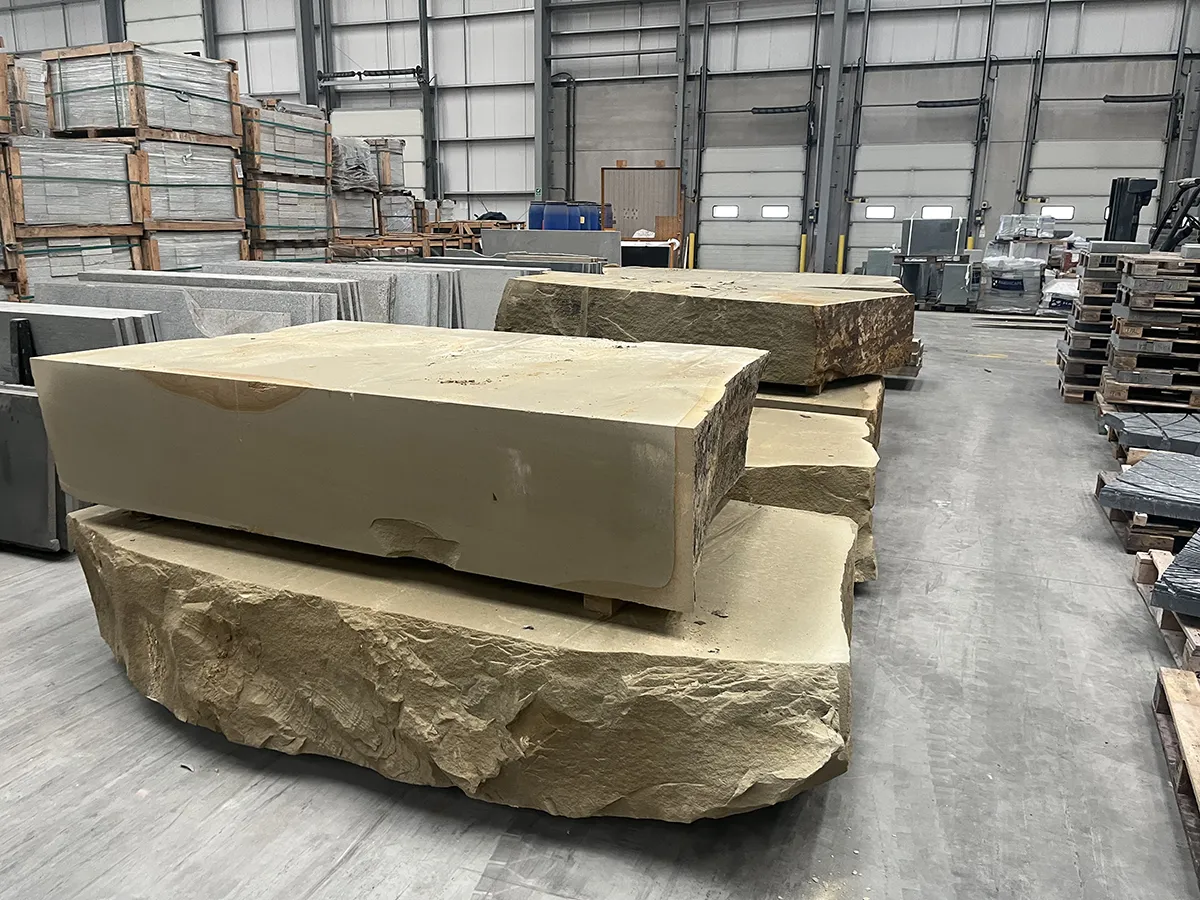
A visit to a Yorkshire stone quarry in the summer revealed the scale of sandstone scraps and offcuts generated during paving production. A chance conversation with a quarry foreman, who had proudly laid a “crazy-paving” patio at home using offcuts, sparked the idea of reusing waste material from the highway works. These offcuts are repurposed into irregular mosaic paving and vertically laid slabs that form a characterful, robust surface and a crevice garden. What would otherwise be discarded becomes a series of bespoke, tactile moments within the landscape.
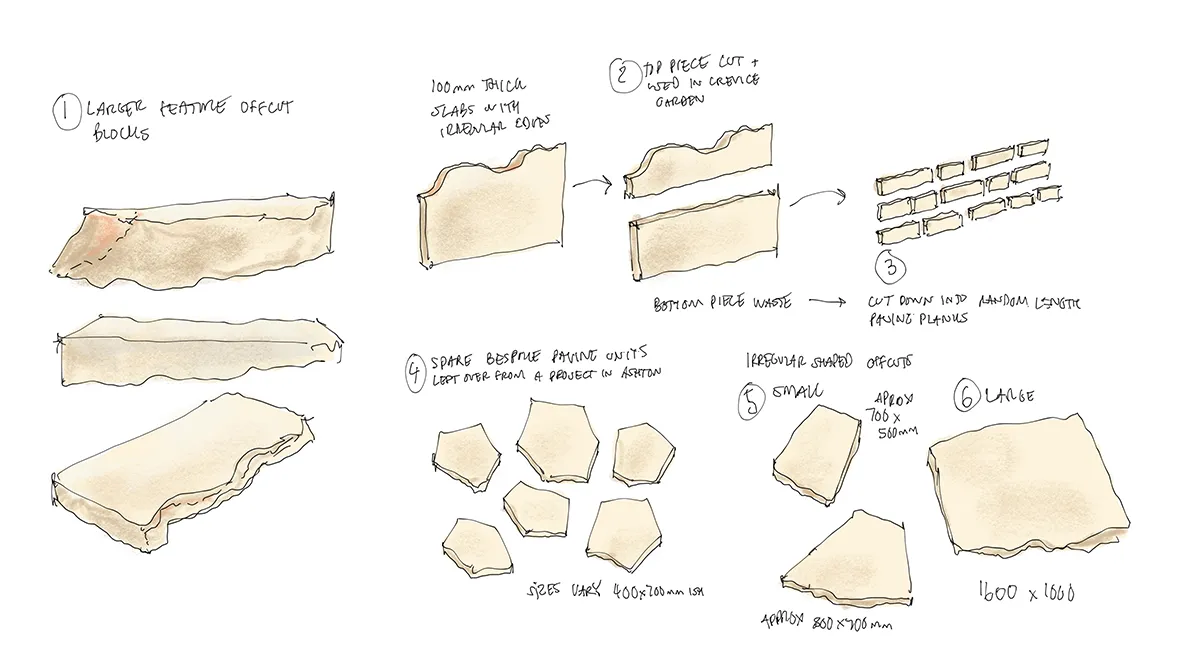
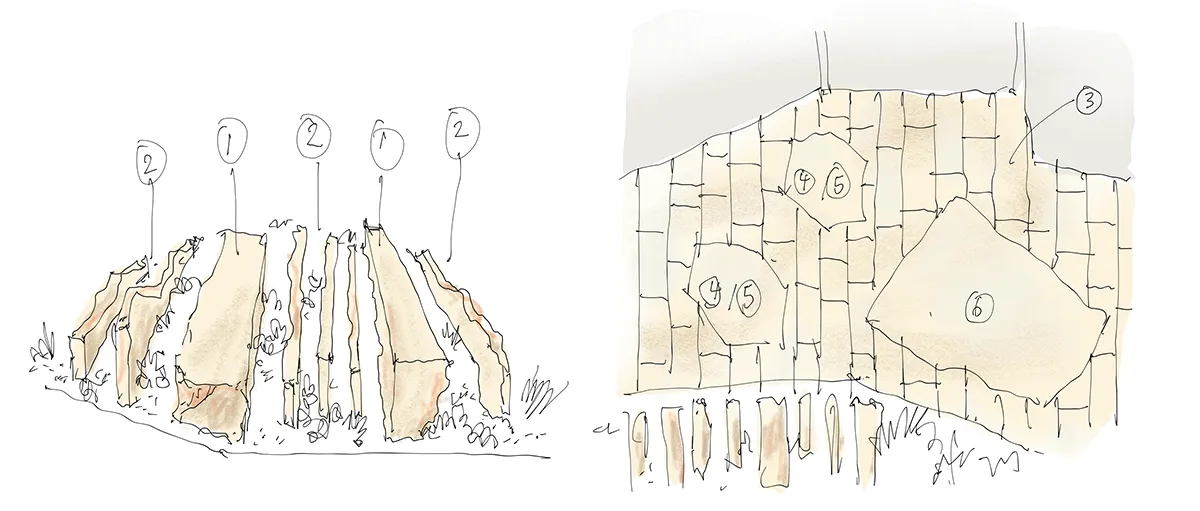
Reclaimed Manchester cobbles, lifted from Baring Street and Travis Street during the highways works, are reused to create informal play routes through planting. Even existing concrete hostile vehicle mitigation blocks are retained and reimagined ,complete with existing graffiti tags. Rather than replacing them with new bollards, the design redistributes and integrates these elements within landform and planting, creating an “urban block garden” that remains rooted in the site’s recent history while meeting modern safety requirements. If you blur your eyes enough and forget the former application of these concrete barriers, it begins to blend with planting and looks like a more traditional rock garden, a feature of many celebrated English gardens like Chatsworth in Derbyshire or Newby Hall in North Yorkshire, where stone reclaimed from old buildings and industrial uses form the rugged ‘rock’ components.
A Small Space, Made with Care
Pigeon Triangle may be compact, but the design focus has been even more intricate and thorough because of this. Every surface, junction and detail is the product of a careful, design-led process that champions reuse, local sourcing and bespoke craftsmanship. In doing so, the project challenges the assumption that meaningful sustainability and material innovation are only achievable at scale.
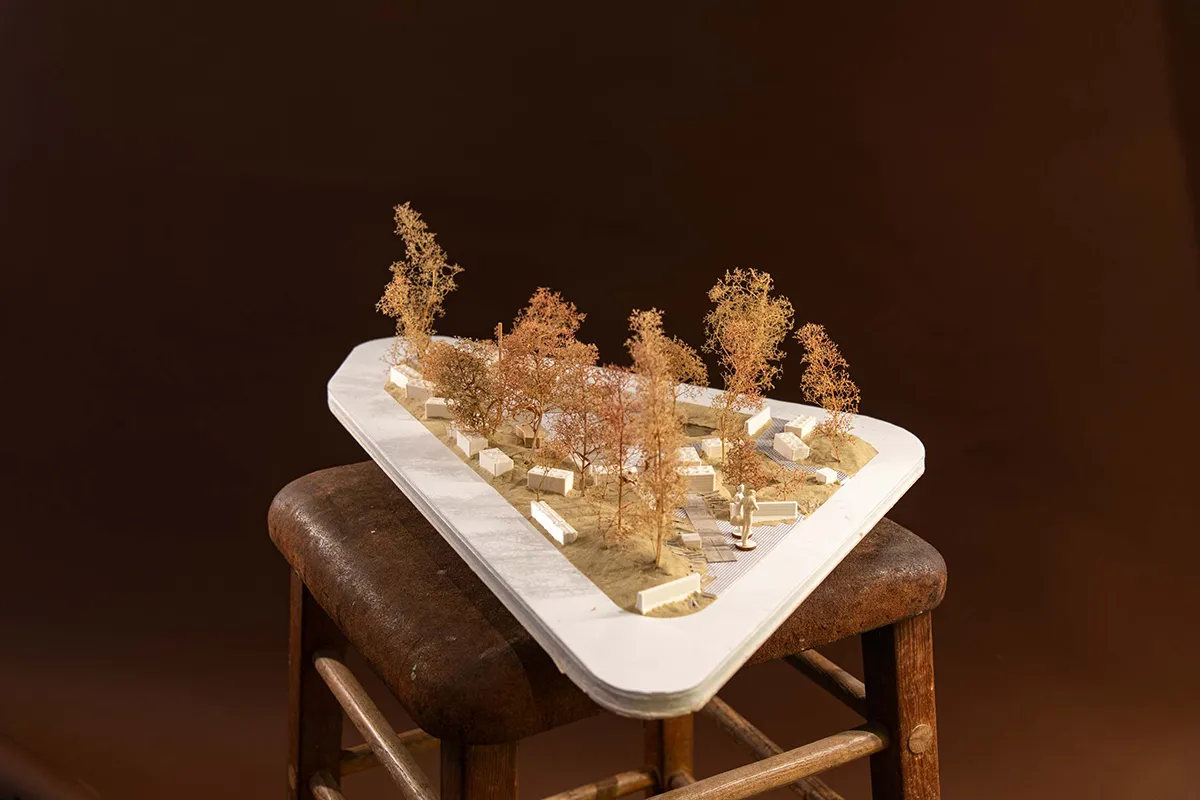
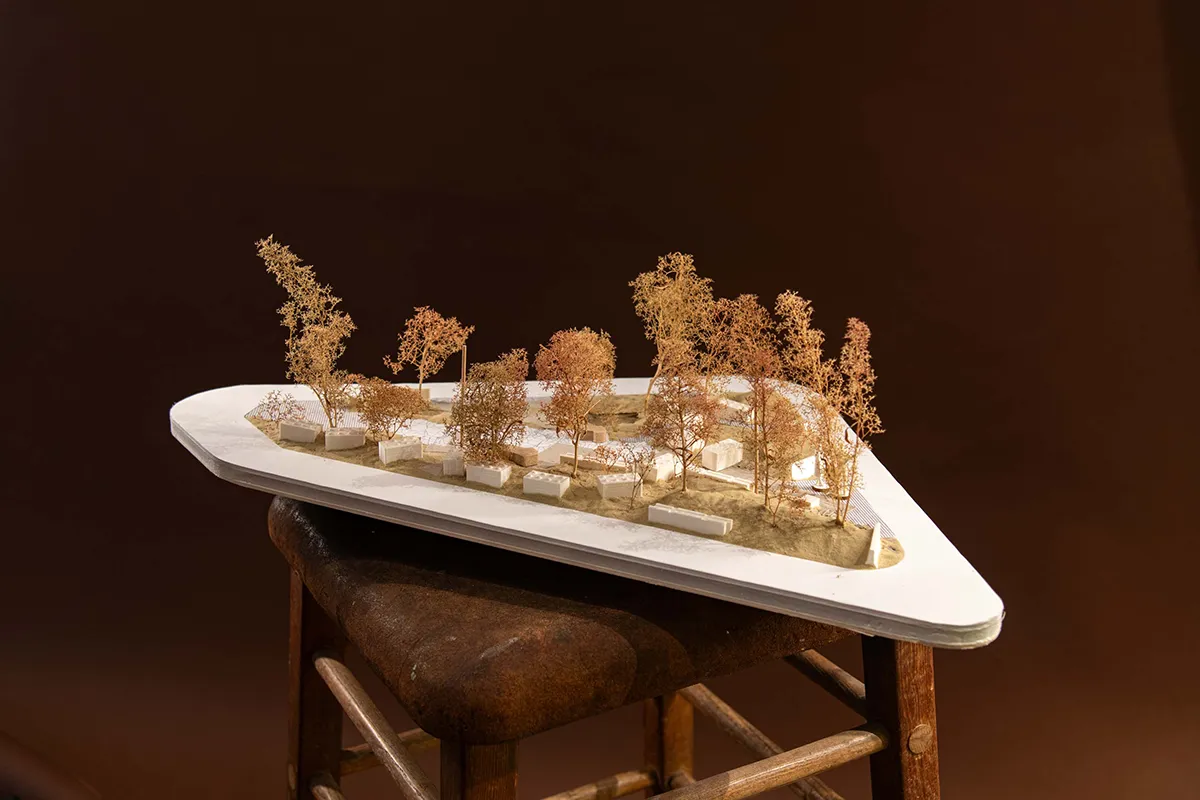
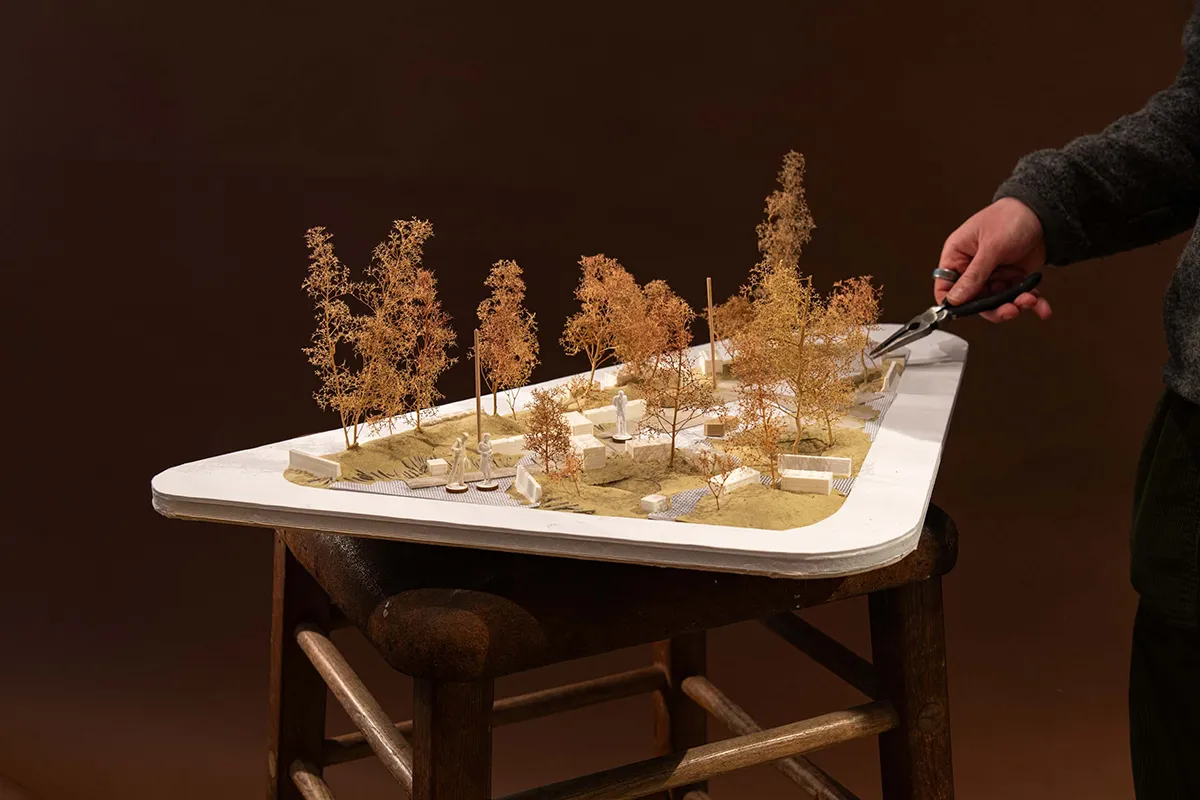
This is a micro-dose of the larger Mayfield Park, an amuse-bouche for those first stepping into the Mayfield Estate, announcing a shift in focus towards an environment that celebrates its heritage while actively reinventing it through innovation. Pigeon Triangle demonstrates how a small public space, shaped with intent and intelligence, can become a powerful expression of place, a fitting arrival point to Mayfield and a microcosm of the wider regeneration’s ambition.
Pedestrianisation works are currently underway, with Pigeon Triangle scheduled to follow upon the granting of planning permission. We look forward to another exciting year on site in Manchester.
Article by Duncan Paybody, Landscape Director, Studio Egret West.
Pigeon Triangle
Designer: Studio Egret West
Illustrations: Duncan Paybody, Landscape Director, Studio Egret West.
Photography: Courtesy of Studio Egret West (unless otherwise captioned)