
Article By: Gretchen Wilson, ASLA, PLA, LEED AP, WEDG Principal, Co-Founder, Landscape Architect at Dig Studio
As temperatures continue to rise across the globe, conversations about climate resilience tend to be focused on large-scale solutions: renewable energy, water conservation, transportation systems, and emissions reductions. These are important and necessary conversations, undeniably. Yet one of the most immediate and effective tools for climate adaptation is something landscape architects have been harnessing for generations.
Shade.
About 1.7 billion people are exposed to extreme heat in cities worldwide. Concrete surfaces, dense development and limited vegetation compound that exposure through the urban heat island effect, which can make cities as much as 10°C, or 18°F, hotter than surrounding areas.
For decades, shade was largely viewed as a comfort feature within parks and public spaces. It made a playground more enjoyable, a plaza more inviting, or a trail more pleasant on a warm afternoon. Today, however, communities are beginning to appreciate shade more deeply. In cities experiencing longer heat waves, hotter summers, and more intense urban heat island effects, shade is increasingly functioning as public infrastructure.
This shift has important implications for landscape architects. If shade is infrastructure, it can no longer be treated as an aesthetic enhancement added near the end of the design process. It must be considered alongside circulation, programming, ecology, water management, and long-term operations as a foundational element that shapes how people experience public space.
Shade Is a Public Service
Landscape architects have always understood that people experience places through their bodies as much as through their eyes. Temperature, sunlight, wind, sound, and texture all influence how comfortable a space feels and how long people choose to stay.
Extreme heat amplifies the importance of those factors.
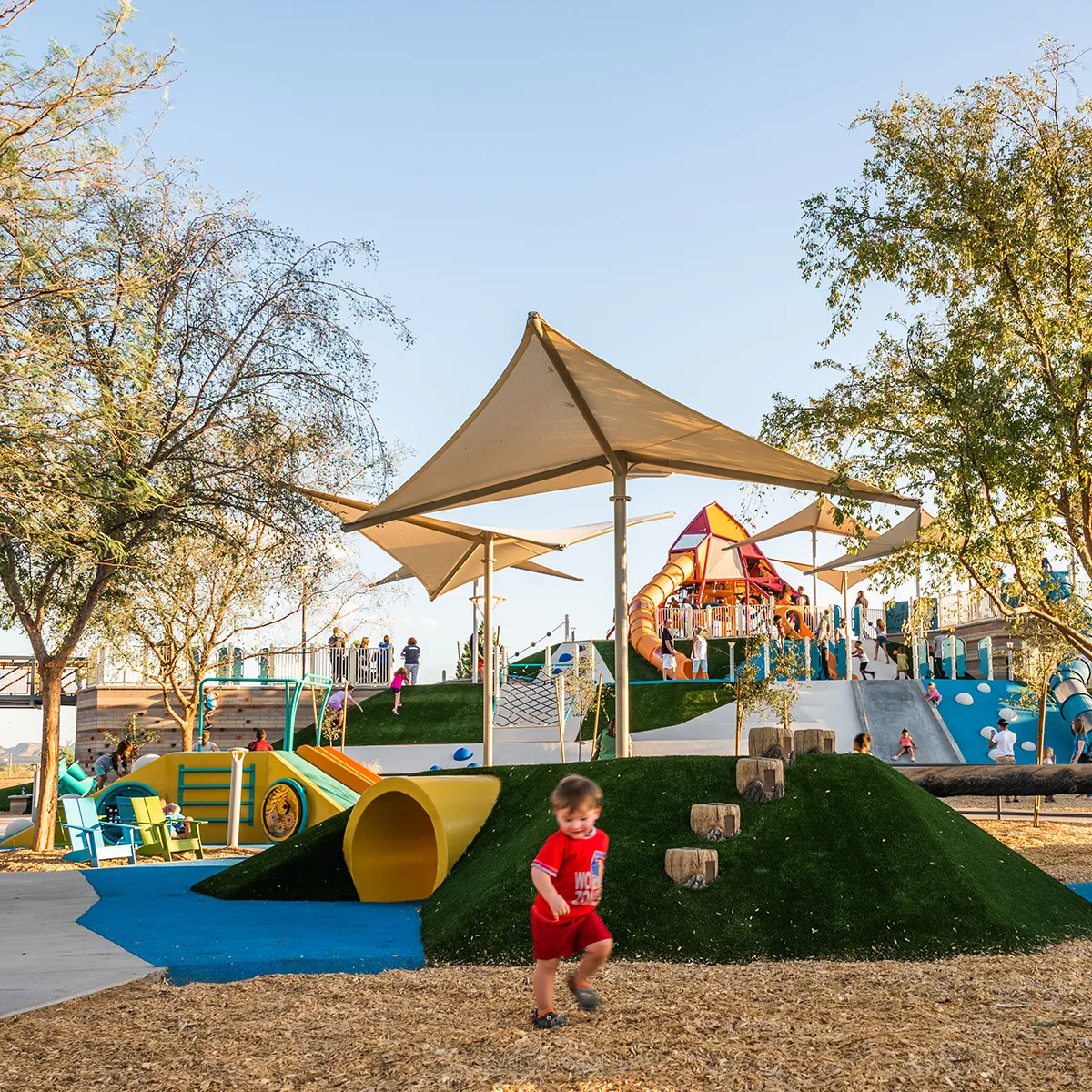
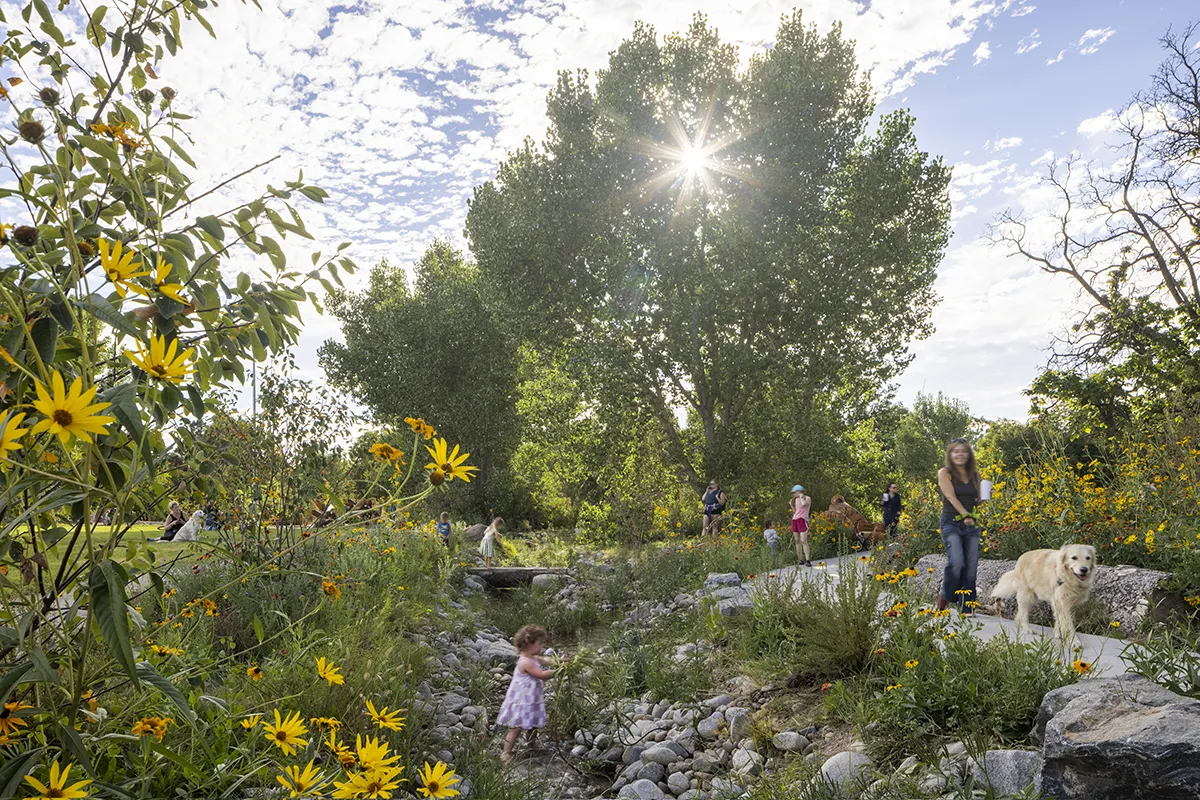
As many cities across the globe experience hotter and longer summers, these differences are becoming increasingly important. Parks and plazas that once remained active throughout the day may now see use concentrated in the morning and evening hours. Gathering spaces with generous canopy cover often become the most heavily used areas of a park, while exposed spaces sit empty during periods of peak heat.
Thinking about shade through the lens of accessibility also broadens how we define inclusive design. Heat can be a significant barrier for older adults, young children, outdoor workers, and people whose health conditions make regulating body temperature more difficult. A space may meet every technical accessibility requirement, but if it becomes uncomfortable or unsafe during extreme heat, it is not fully accessible in practice.
This challenge is compounded by the fact that tree canopy is not distributed equally. A 2026 study of nine cities across four continents found a consistent pattern of shade inequality: lower-income and peripheral neighborhoods generally received significantly less sidewalk shade, despite facing greater heat vulnerability. The pattern appeared in cities ranging from Belém and Rio de Janeiro to Amsterdam, Hong Kong, Stockholm and Sydney. The stakes are significant: Extreme heat causes more deaths globally than any other extreme weather hazard, contributing to an estimated 489,000 deaths annually between 2000 and 2019.
As temperatures continue to rise, thoughtfully designed parks, civic plazas, playgrounds, and streetscapes can provide some of the most accessible forms of relief, supporting public health, social connection, and overall quality of life.
For that reason, shade should be viewed not simply as a design feature, but as a public service.
Trees Are Cooling Infrastructure
If shade is infrastructure, then trees are among the most effective infrastructure investments a community can make.
Beyond reducing direct solar exposure, trees cool surrounding air, lower surface temperatures, improve air quality, intercept stormwater, create habitat, and contribute to the physical and psychological well-being of people using a space. Their benefits extend far beyond aesthetics.
Recent research continues to quantify those benefits. A 2025 study found that increasing urban tree canopy by 10% can reduce local air temperatures by approximately 0.8°C, while larger canopy gains can produce even greater cooling effects.
But generating a canopy that can produce shade takes time. That’s where strategies from history offer some valuable lessons.
And any strategy for planting a meaningful canopy must start with the systems needed to support the long-term growth and health of the canopy. Species selection, soil volume, root health, irrigation, and long-term maintenance all influence whether a tree ultimately delivers the canopy and cooling benefits communities need. If shade is infrastructure, then the underground systems that support tree growth must be viewed as infrastructure as well.
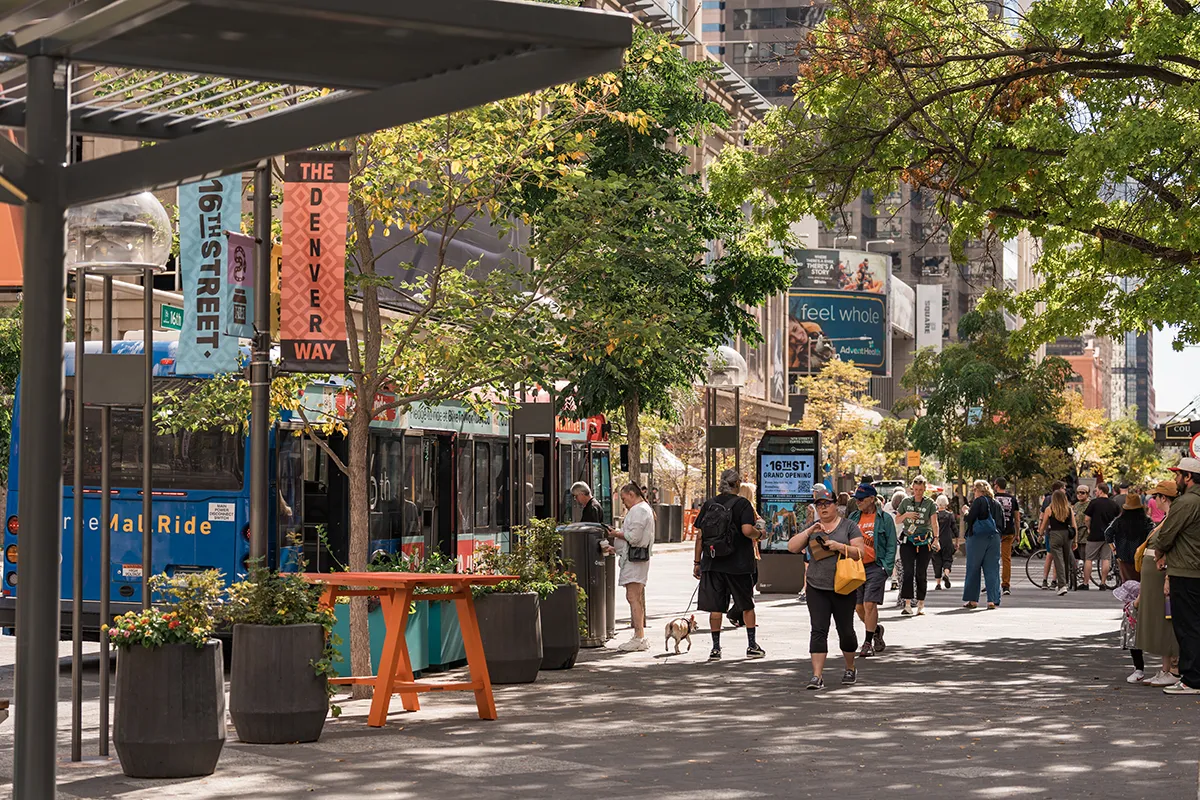
In Denver, Colorado in the United States, the city’s transformation of its I.M. Pei-designed 16th Street offers a compelling example of this view. One of the most significant investments in the project is largely invisible to the thousands of people who will eventually walk beneath it. The redevelopment includes one of the country’s largest installation of suspended paving systems for trees, creating underground space for roots to grow beneath one of the city’s busiest pedestrian and transit corridors.
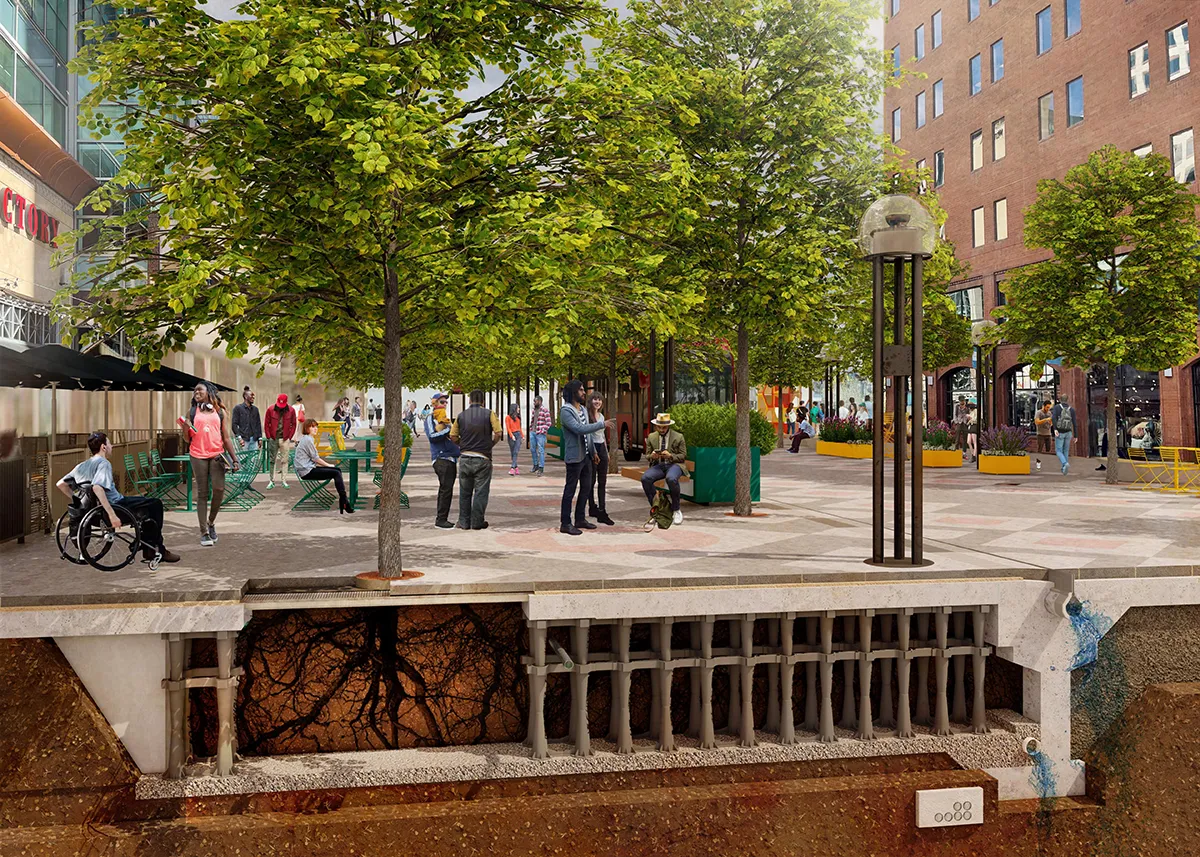
The system supports 220 mature trees representing 10 species that were contract-grown specifically for the project. By providing the soil volume and structural support necessary for healthy root development, the project is creating the conditions for larger, healthier, and longer-living tree canopies over time, reflecting a broader shift in thinking about urban cooling that recognizes that meaningful shade does not happen by accident. It requires planning for the canopy a city wants decades into the future.
Designing Shade as a System
While trees remain the foundation of most cooling strategies, one of the most important lessons emerging from climate-responsive design is that planting trees and designing canopy are not the same thing.
Tree canopy, shade structures, building orientation, surface materials, understory planting, and water all influence how people experience a place. The most successful projects recognize that these elements are interconnected and design them accordingly.
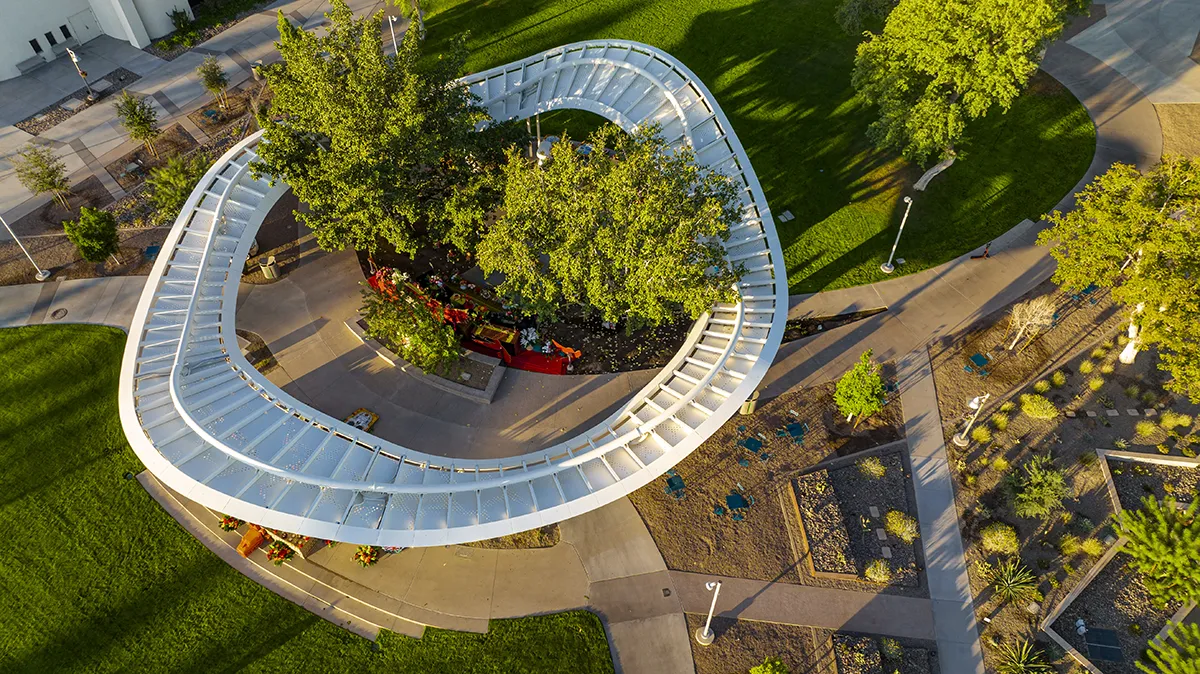
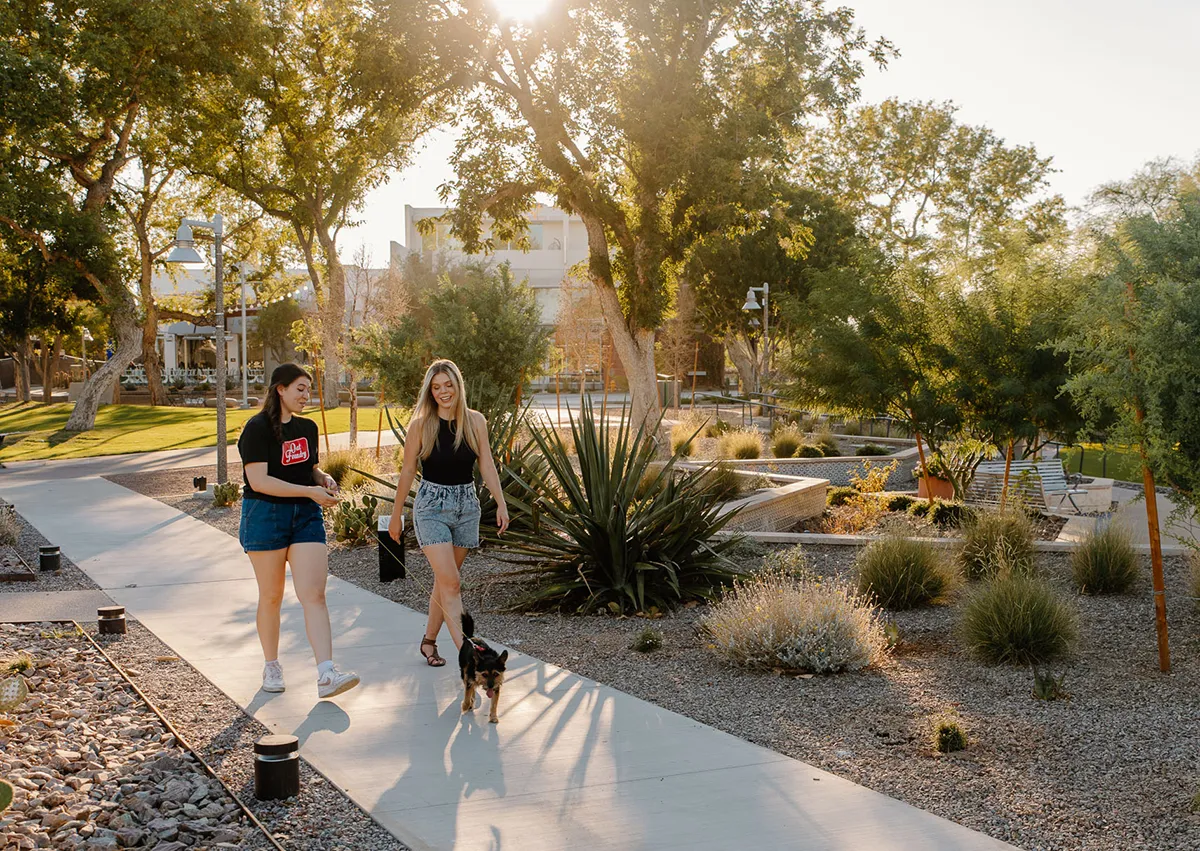
In the U.S., Scottsdale Civic Center in the state of Arizona illustrates the value of this layered approach. The project combines expanded tree canopy, shade structures, water-conscious planting, and strategic landscape improvements to create cooler gathering spaces while reducing municipal water consumption by approximately 5.8 million gallons annually.
Mechanical shade structures can provide immediate relief while trees mature. Dense canopy can deliver long-term cooling while supporting habitat and ecological function. Surface materials can influence radiant heat. Water features can provide both physical and psychological cooling. Together, these interventions create environments that remain comfortable even as temperatures rise.
The Relationship Between Shade and Water
As communities work to expand tree canopy coverage, another challenge inevitably emerges: reduced availability of water.
Many regions facing extreme heat are simultaneously grappling with drought, water restrictions, and increasing pressure on limited resources. The future of urban cooling therefore depends not only on creating more shade, but on doing so responsibly.
This is where some of the most innovative work is occurring.
Across the desert state of Arizona, communities have spent decades exploring ways to support large-scale public landscapes while reducing dependence on potable water. Gilbert Regional Park operates entirely on reclaimed water and includes an on-site well backup system. Heroes Regional Park in Glendale uses reclaimed water from an adjacent urban lake, eliminates potable water use for irrigation, incorporates more than 800 trees, and captures stormwater for supplemental irrigation.
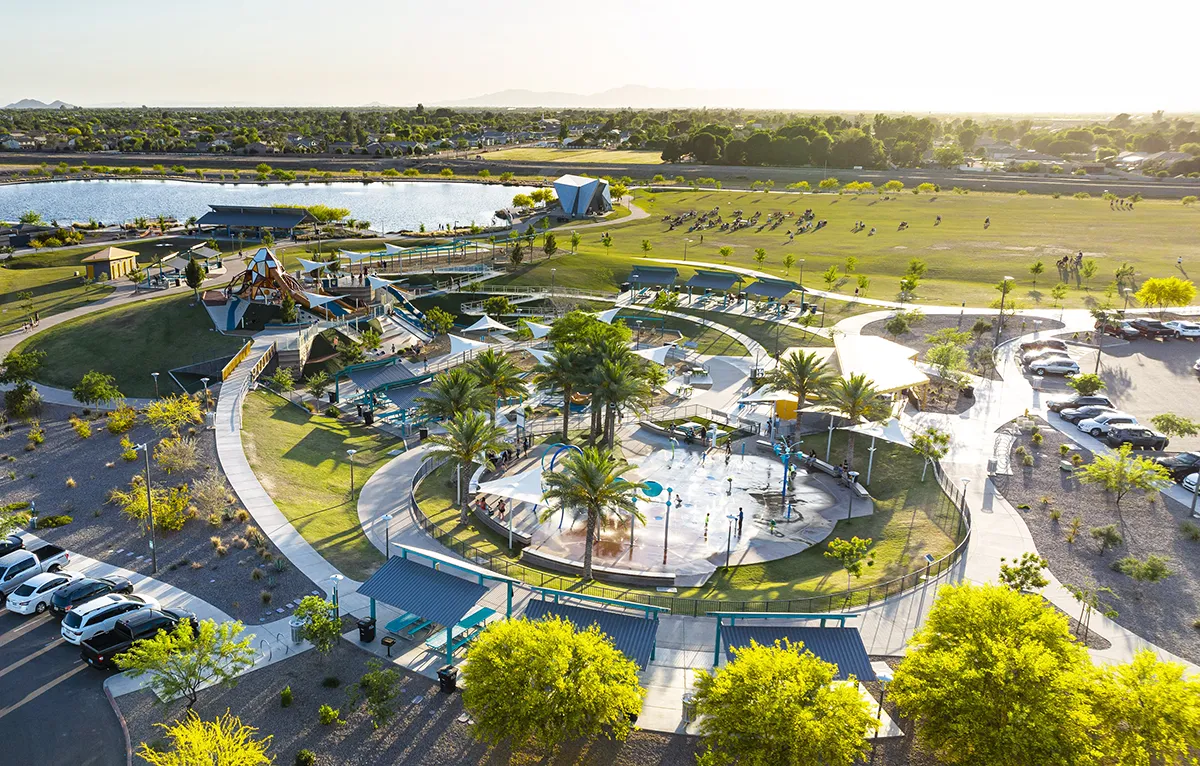
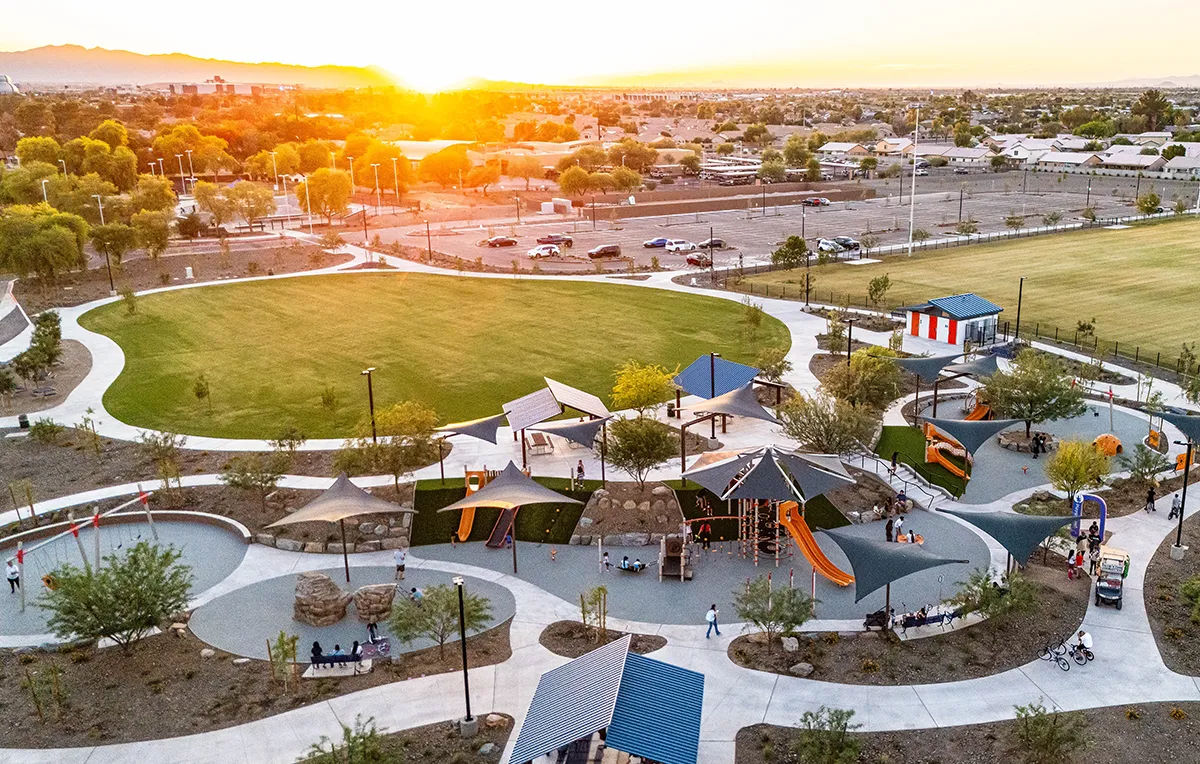
These projects demonstrate that shade trees and water conservation do not have to be competing priorities. With thoughtful planning, communities can create landscapes that support cooling, recreation, habitat, and water efficiency simultaneously.
Landscape architects have always designed on long timelines. Extreme heat simply raises the stakes of those decisions. As a result, shade is increasingly being recognized not as an amenity, but as an essential component of public infrastructure—one that supports public health, strengthens climate resilience, and makes everyday life more comfortable and accessible.
Article By: Gretchen Wilson, ASLA, PLA, LEED AP, WEDG Principal, Co-Founder, Landscape Architect at Dig Studio