
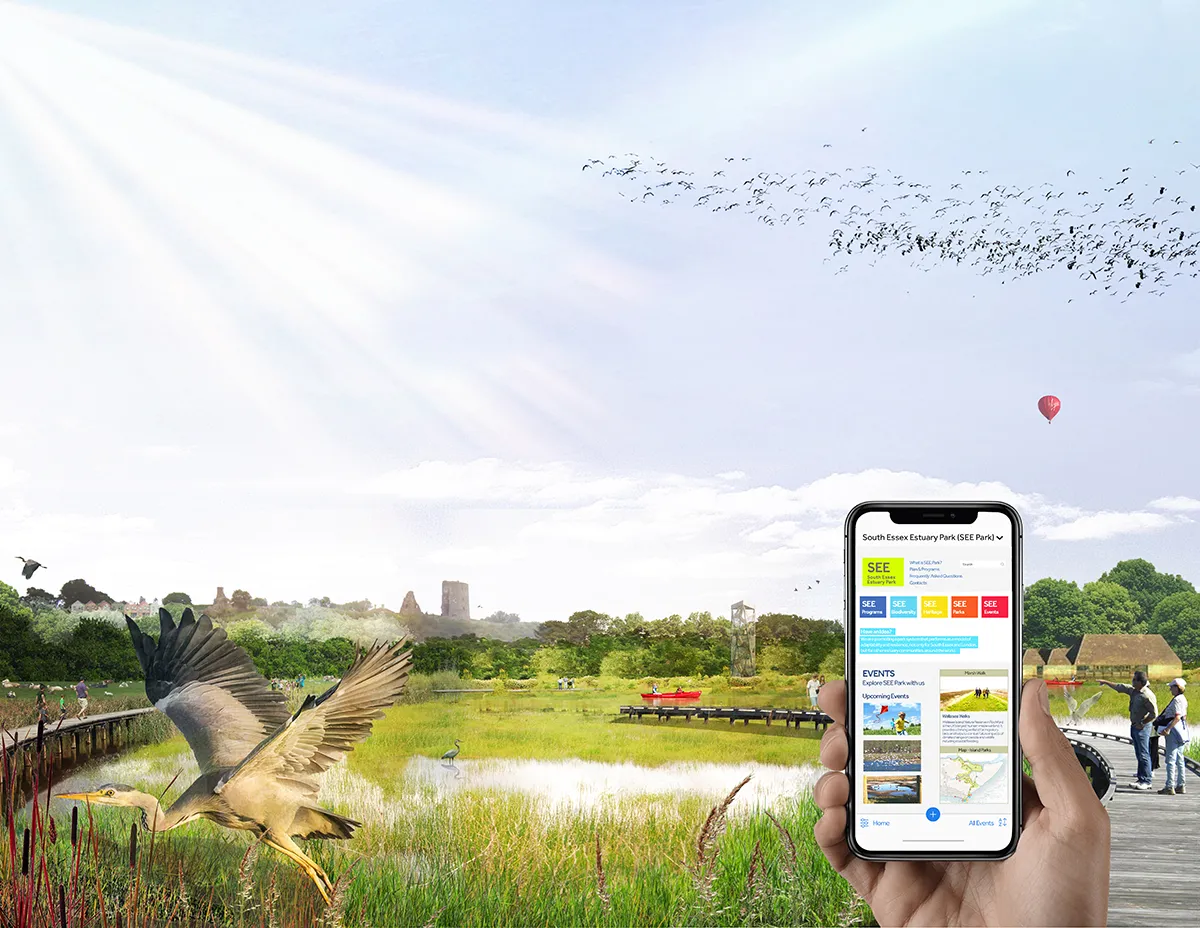
SEEPARK presents a radical vision to transform South Essex—long marginalised as London’s industrial and waste hinterland—into a thriving parkland system spanning 70,000 hectares. Developed by a coalition of six local authorities, this strategic study reframes a degraded estuarine landscape into a resilient, future-ready region that addresses climate breakdown, ecological collapse, and social inequity through integrated green and blue infrastructure (GBI).
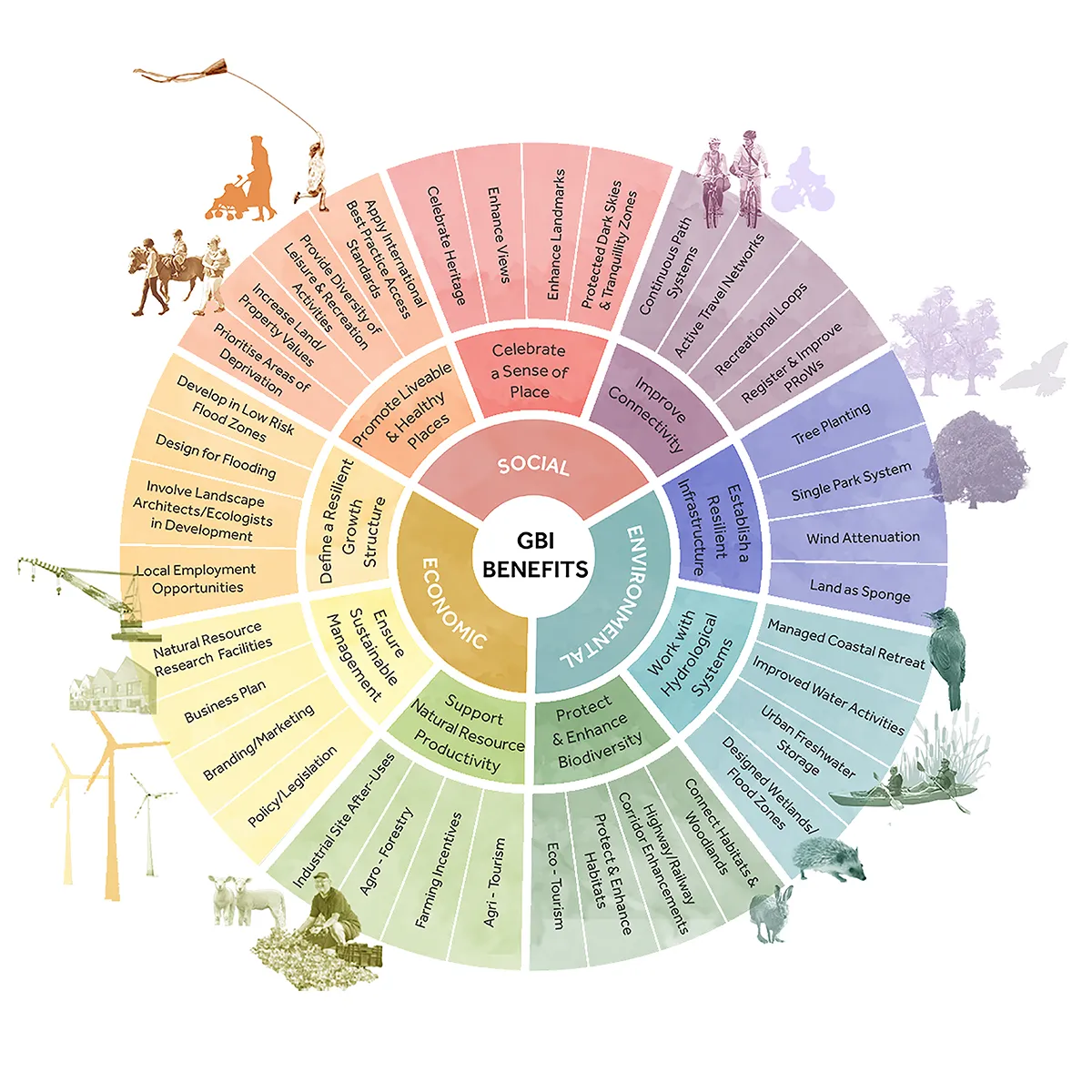
Once home to marshes, wetlands, and woodlands, much of South Essex’s estuarine landscape became London’s dumping ground—lost to infill, agriculture, extractive industry, and numerous landfill sites. SEEPARK reclaims and reimagines this land, setting a new standard for landscape-led planning. It envisions a living infrastructure that places nature at the heart of regional development, where people, wildlife, and water systems co-exist and thrive. As the CEO of the Association of South Essex Local Authorities remarked, “SEEPARK is a game-changer for South Essex, reshaping not only our landscape but our identity.” This is a cultural, ecological, and infrastructural reawakening.
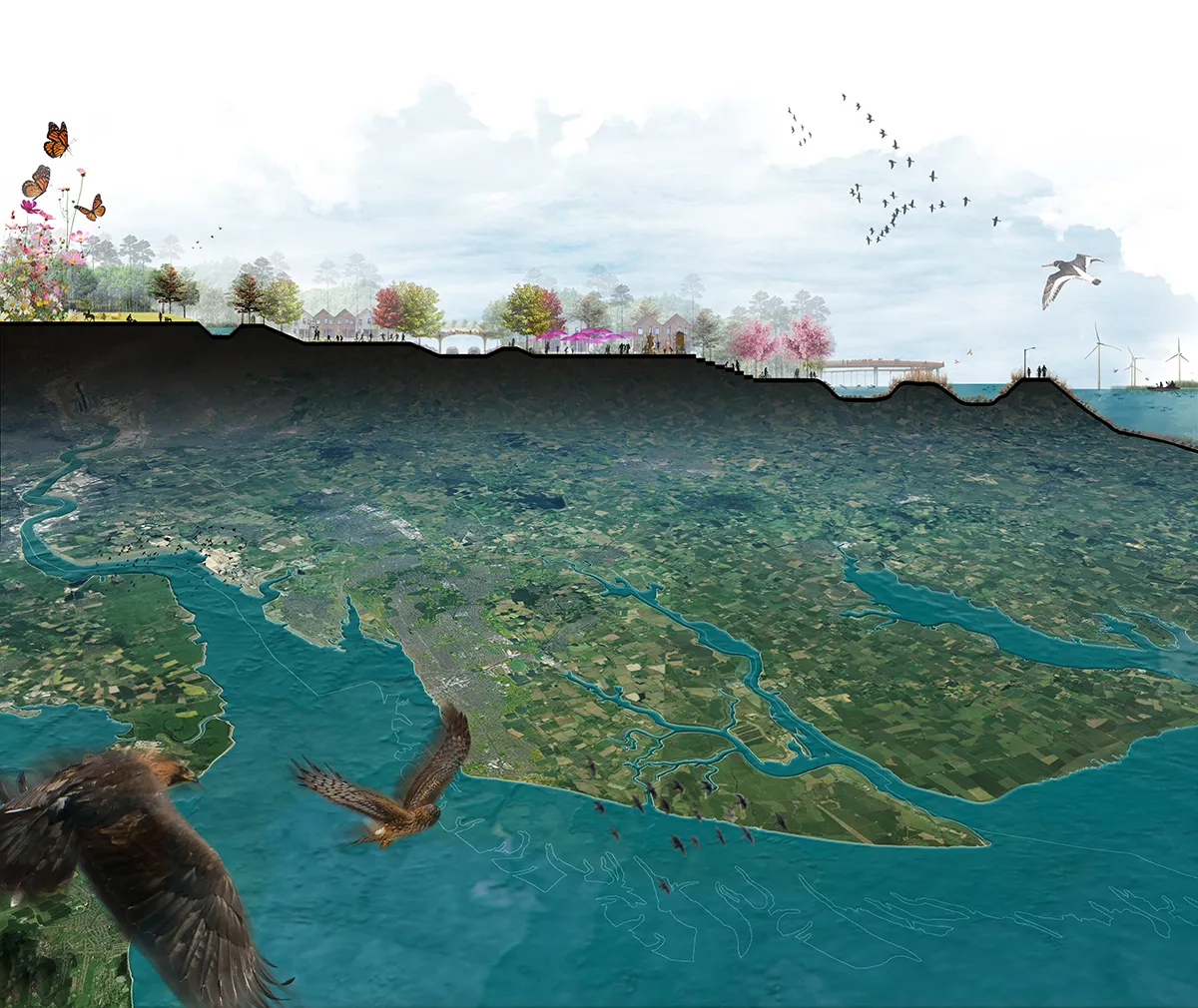
Located within the Thames Estuary—home to the UK’s highest temperatures, rising sea levels, and vanishing habitat—the project confronts environmental precarity with bold, actionable planning. It proposes 23,000 hectares of habitat restoration, including 12,500 hectares of absorptive marshland to buffer against flooding. It connects 550km of greenways and 200km of continuous waterfront paths, enabling active travel and ecological movement. It guarantees access to high-quality green space within 350 metres of every home. And it promotes eco-tourism, green jobs, education, and carbon offsetting, supported by a natural capital valuation of £7.2 billion. SEEPARK not only mitigates environmental risks but enhances the quality of life for local communities, offering recreational spaces, healthier air, and improved mental well-being through abundant access to nature.
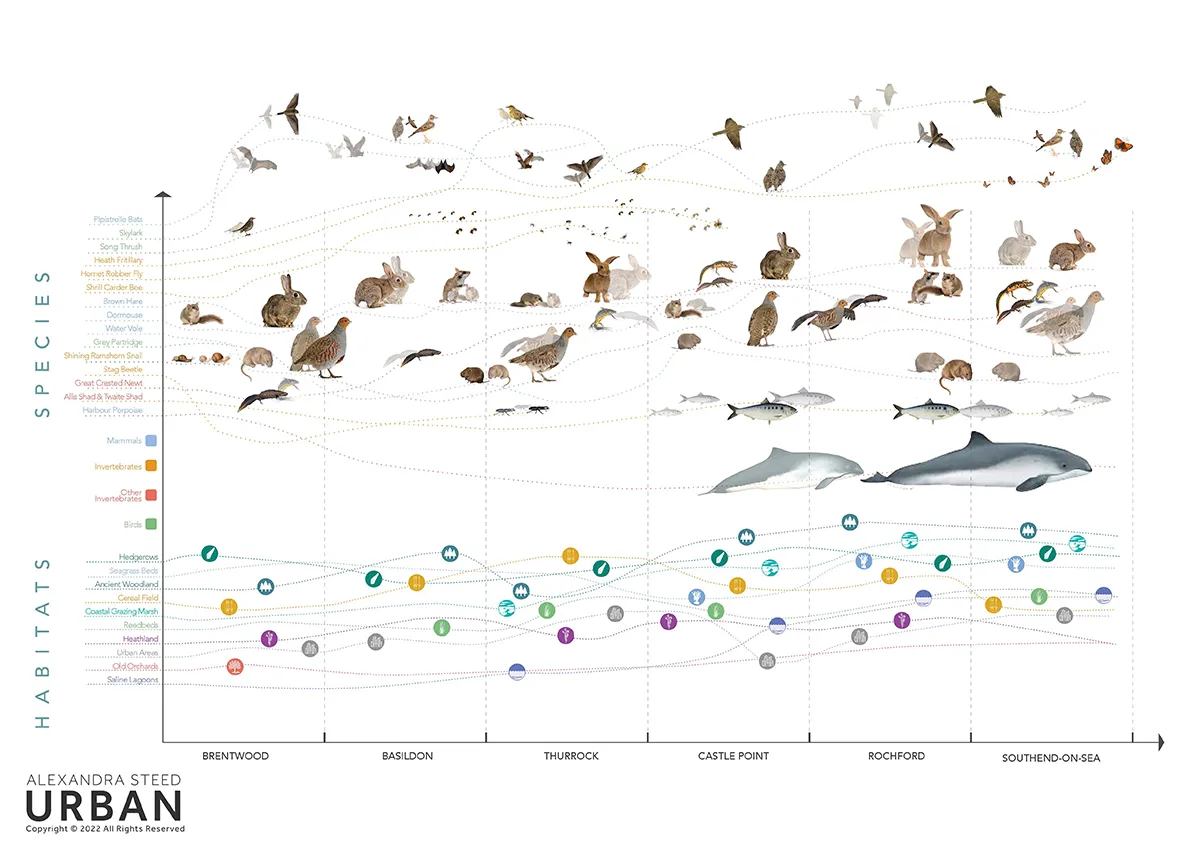
The long-term benefits of SEEPARK extend far beyond ecological restoration. By investing in South Essex’s natural capital, the project aims to create a sustainable, thriving region that contributes to the UK’s climate and biodiversity goals. The integration of green infrastructure with urban regeneration provides a model for creating resilient, low-carbon communities that can withstand future environmental pressures. SEEPARK also fosters a deep sense of ownership among local residents, encouraging community-led stewardship of green spaces and creating a lasting legacy of environmental care.
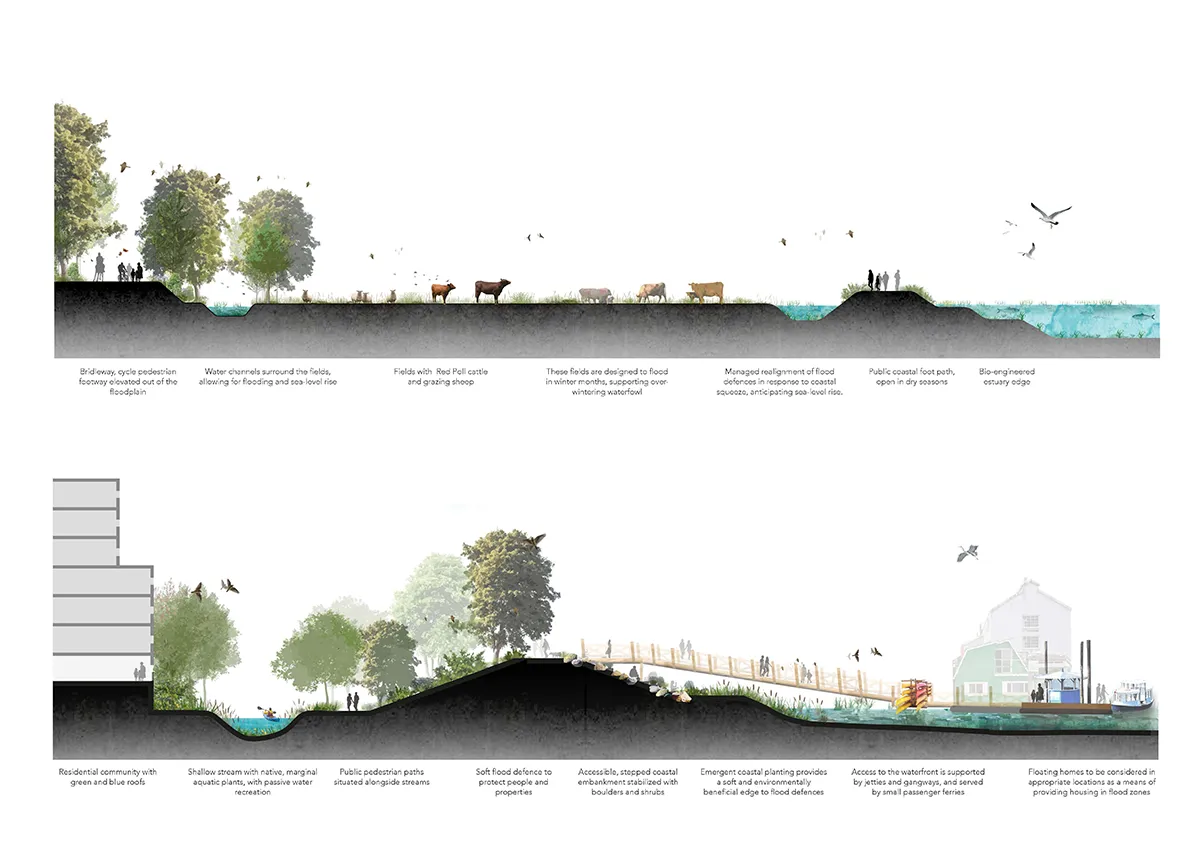
Crucially, this is not a conceptual vision. The study provides a rigorous framework, built on months of GIS analysis, policy review, stakeholder engagement, and site visits. It offers detailed district-level strategies, implementation plans, and alignment with national and global goals, including the UK Environment Act and the UN SDGs. Through a powerful set of ‘Key Moves’—habitat restoration, water system integration, landscape connectivity, and sustainable agriculture—the project maps a replicable model of place-based climate resilience.
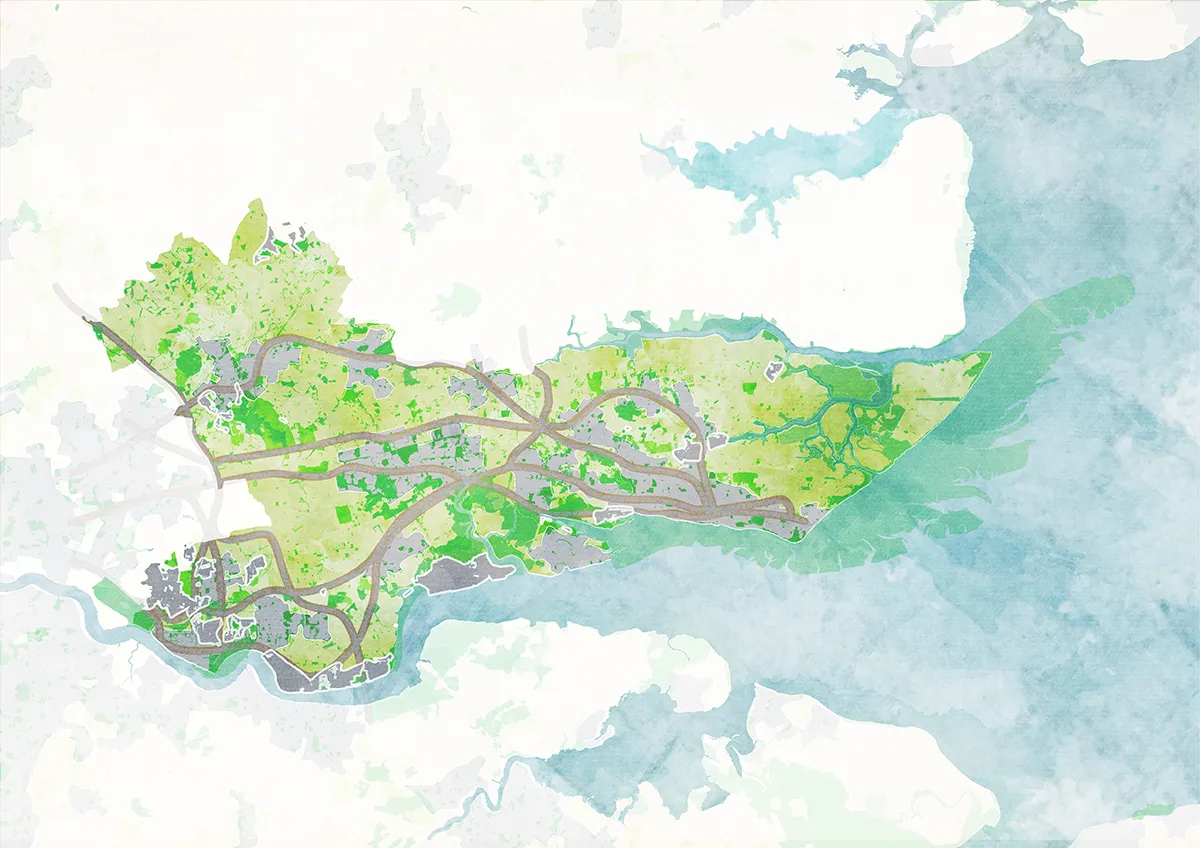
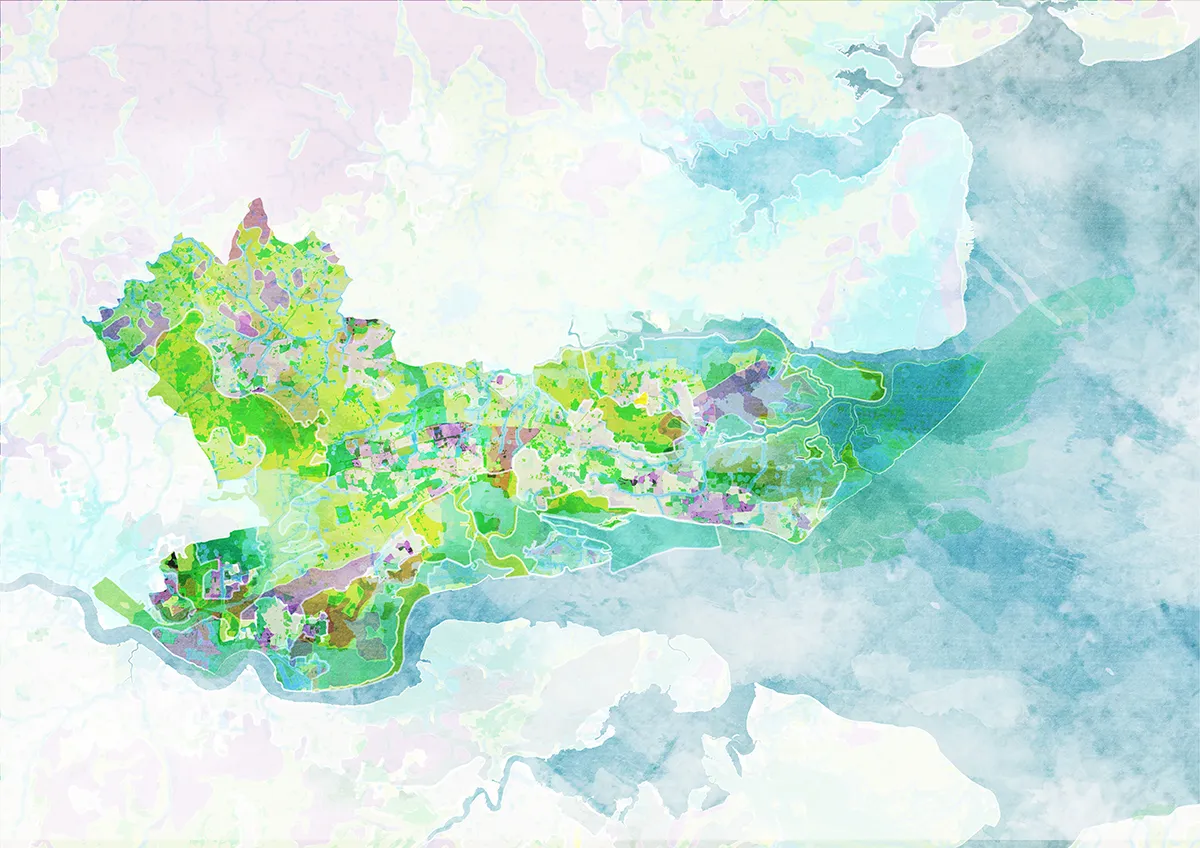
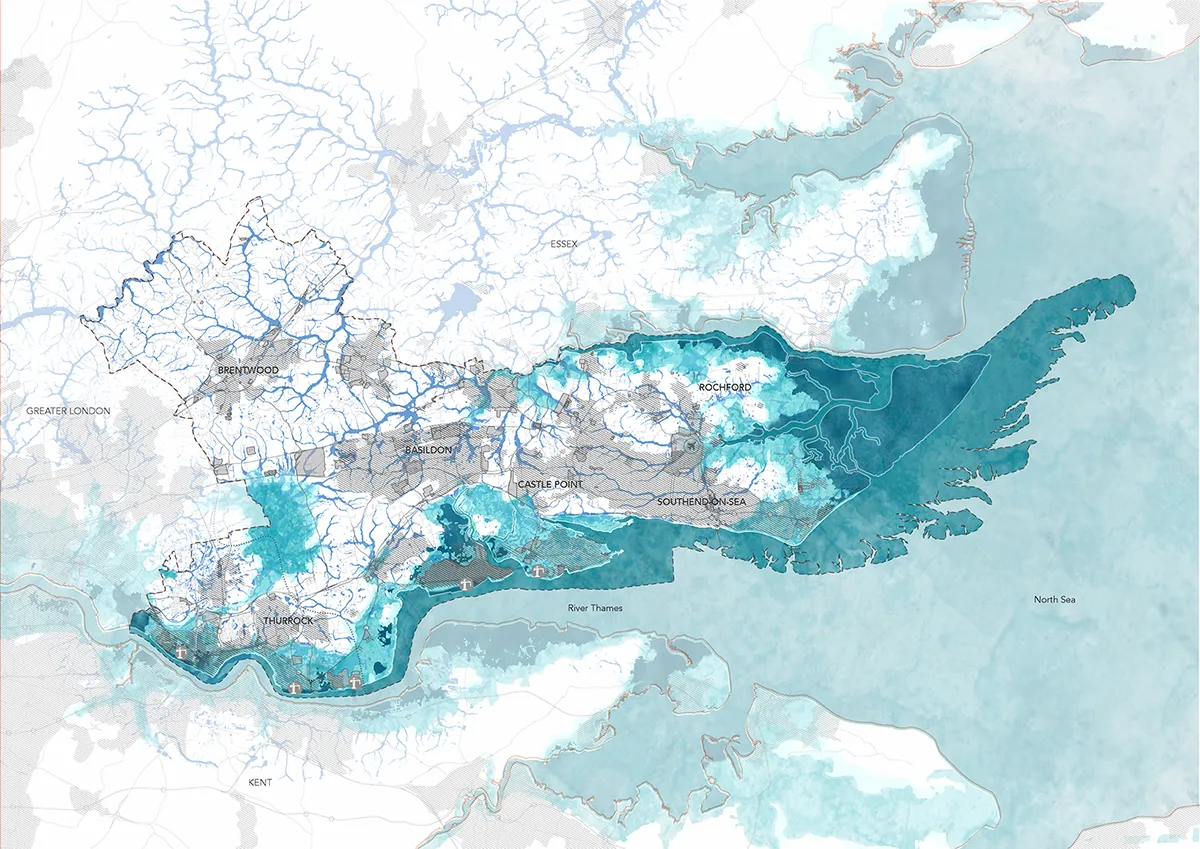
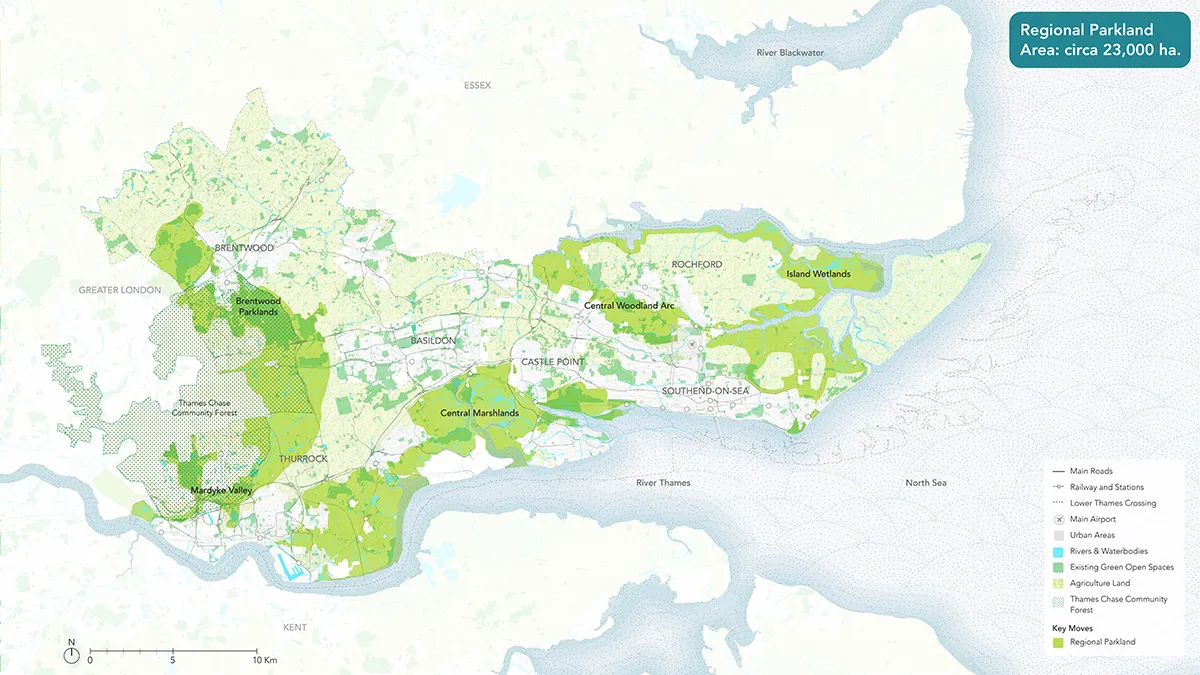
What makes SEEPARK stand out is its holistic, justice-oriented approach. It acknowledges the past exploitation of the land and communities, and uses landscape to catalyse restoration—not only of ecosystems but of health and well-being, regional identity, and pride. It proposes a unifying framework for green investment and long-term stewardship, repositioning South Essex as a vital contributor to London’s and the UK’s climate strategy.
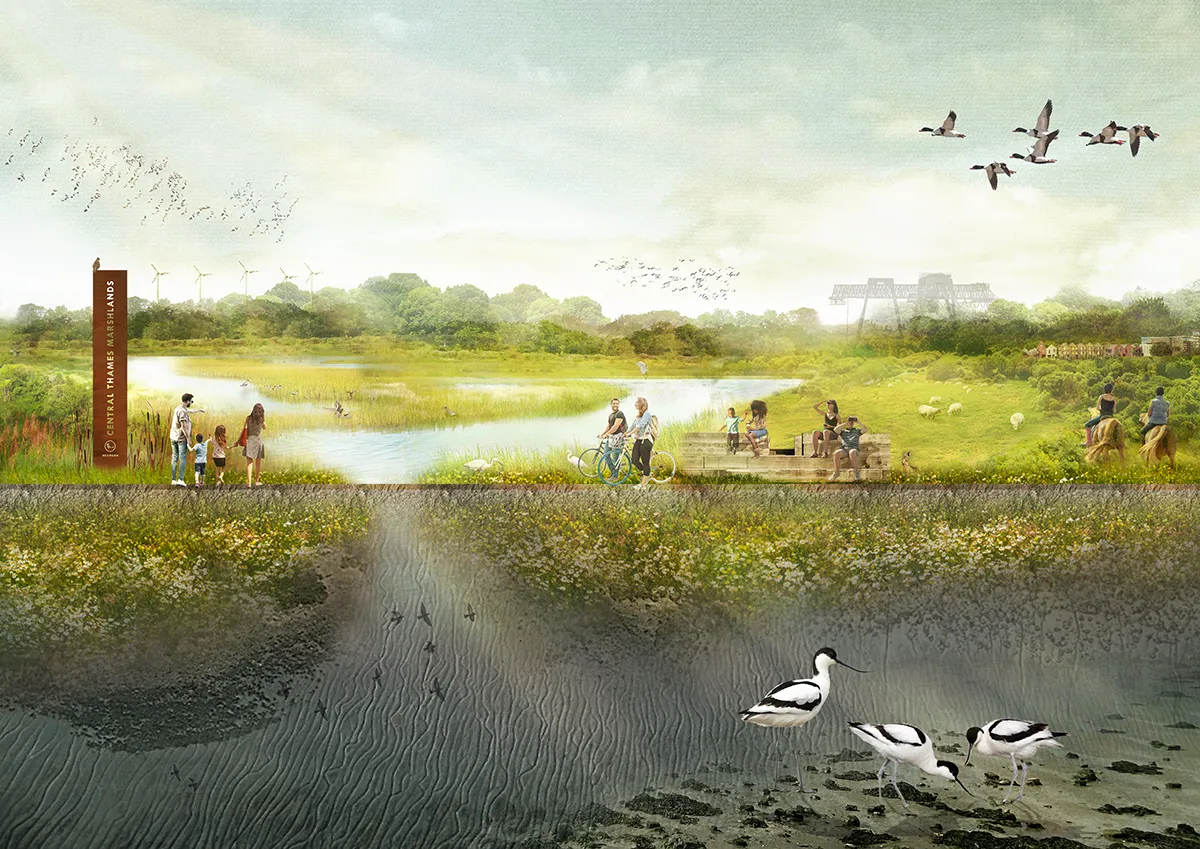
SEEPARK is already influencing regional and national policy and is being rolled out as a foundational element of the emerging Joint Spatial Plan. It sets the stage for a new kind of cultural landscape—one that honours forgotten ecologies, heals fractured places, and offers a compelling, scalable model for estuarine and post-industrial regions around the world.
SEEPARK
Location: South Essex, UK
Design Firm: Alexandra Steed URBAN
Collaborators:
Prior + Partners
Jam Consult
Green Infrastructure Consultancy
Image Credits: Alexandra Steed URBAN