
Rooted in the team’s visionary ‘Growing Streets’ concept, the design places streets and public spaces at the very beginning of city-making – shaping not only how the neighbourhood looks, but how it lives, grows, and connects.
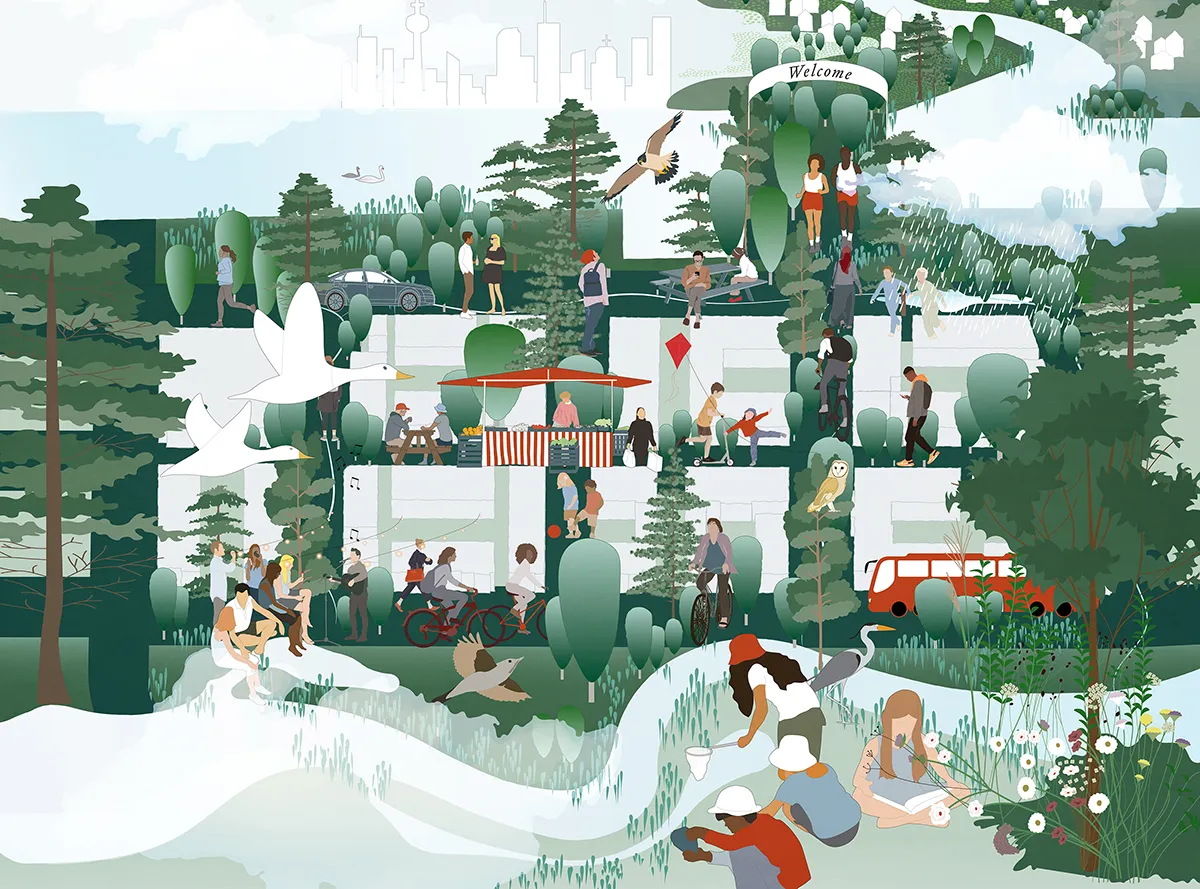
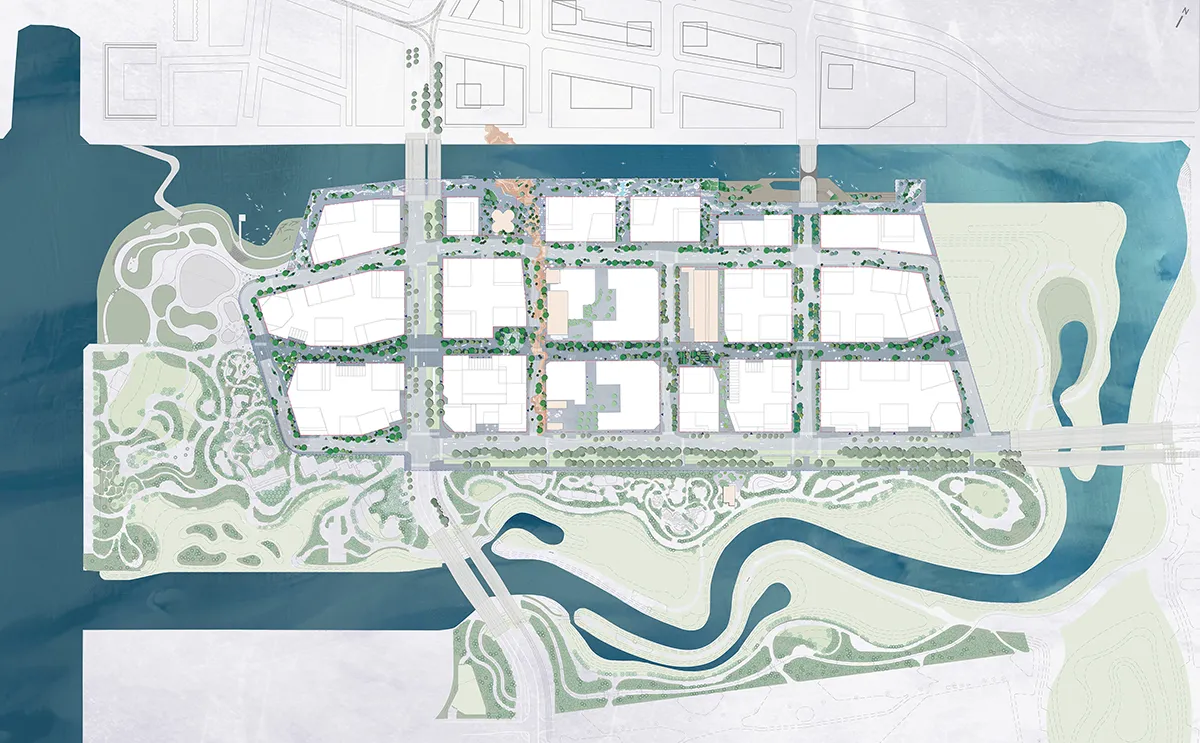
SLA and GHD have, together with Waterfront Toronto, unveiled the design for the public realm and streetscapes of Ookwemin Minising – Toronto’s new 39.8-hectare island community in the Port Lands.
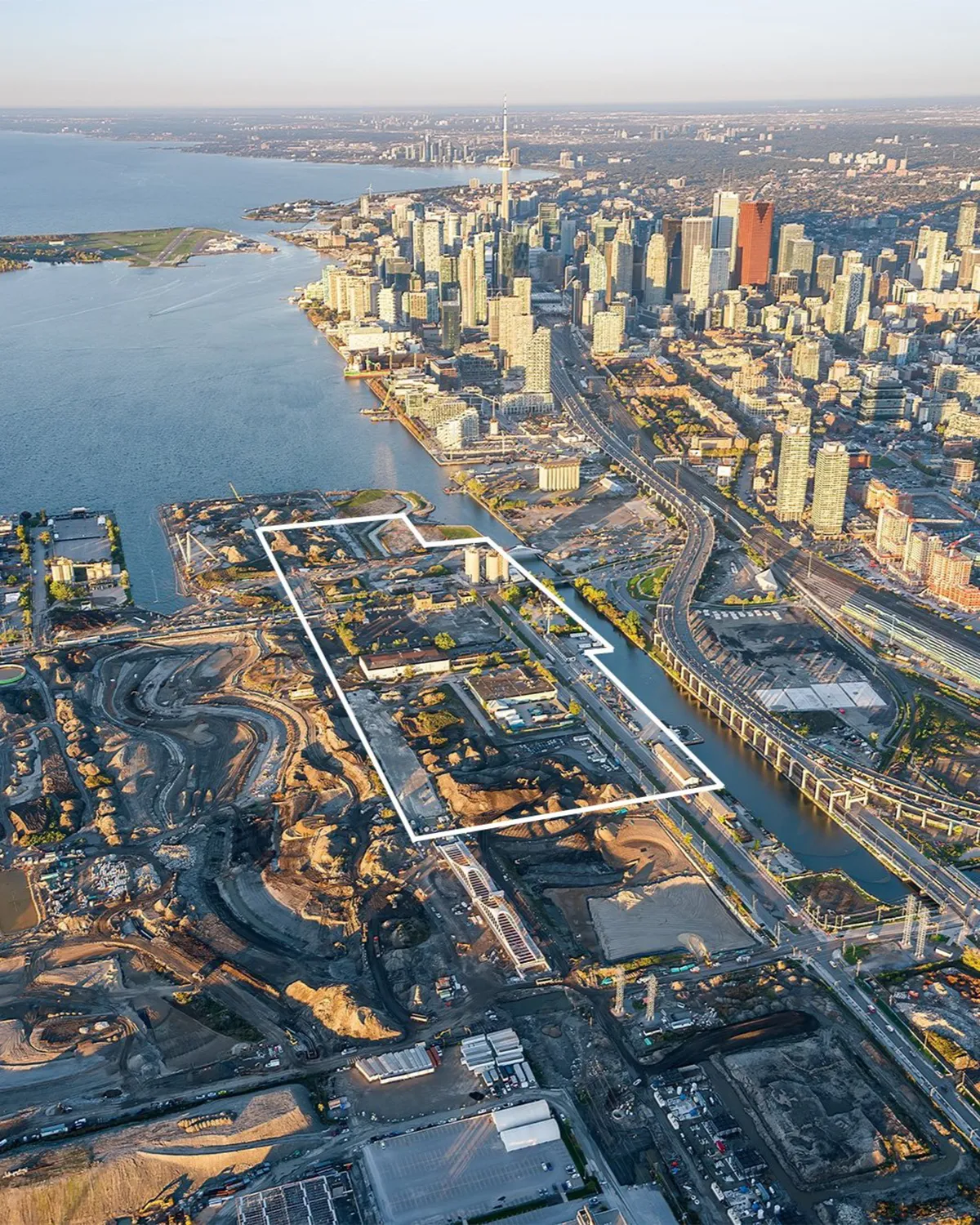
The design team consists of GHD (prime consultant and technical lead) and SLA (design lead for urban realm and landscape), as well as Trophic Design (indigenous design), Allies and Morrison (architecture and massing), Transsolar (sustainability and low-carbon infrastructure), Monumental Projects (public engagement and community outreach), and Level Playing Field (accessibility services).
Growing Streets: a living urban ecosystem
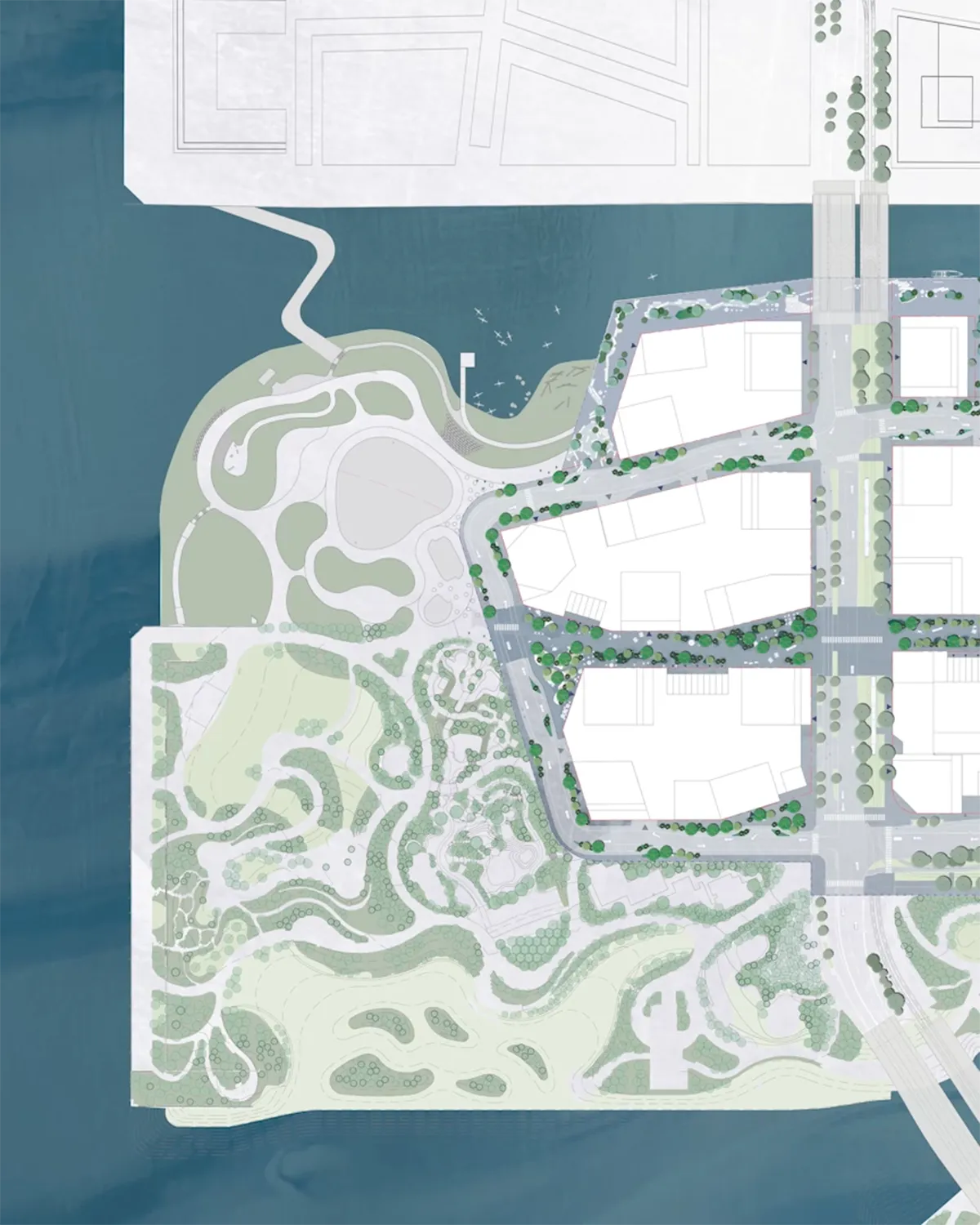
The team’s ‘Growing Streets’ concept reimagines streets as dynamic, living systems that evolve like ecosystems over time. The design is structured around five sitewide strategies – including Living Legacy, Local Character, Prioritise Nature, Strategic Density, and Everyday Mobility – and expressed through six distinct character spaces, from the vibrant retail life of Villiers Street to the nature-rich Centre Commons and the culturally significant Ookwemin Street.
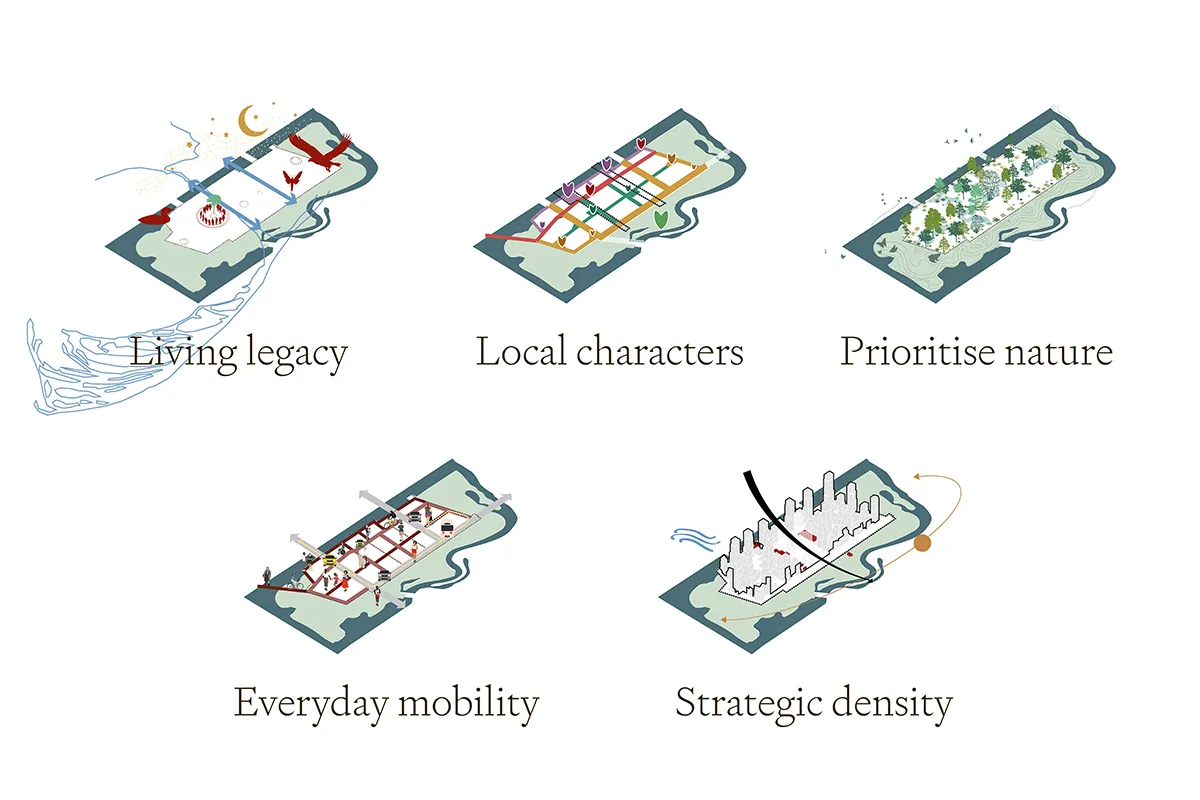
Each space is designed to offer unique experiences while contributing to a cohesive urban landscape that supports biodiversity, climate resilience, and social life.

“In Ookwemin Minising, we start with life between buildings,” said Rasmus Astrup, Design Principal and Senior Partner at SLA. “By designing streets and public spaces first, we create the conditions for a truly great neighbourhood – one where nature, culture, and everyday life are deeply intertwined. ‘Growing Streets’ is about designing urban spaces that evolve over time, that invite people in, and that allow both community and ecology to flourish together.”
A livable, resilient neighbourhood with a unique sense of place
The vision for Ookwemin Minising is to create a nature-led neighbourhood where buildings, streets, and landscape work seamlessly together and where daily life unfolds in close connection with nature. Streets are designed to prioritise walking, cycling, and soft mobility, while integrating green infrastructure, planting, water, and social spaces into everyday urban experience.
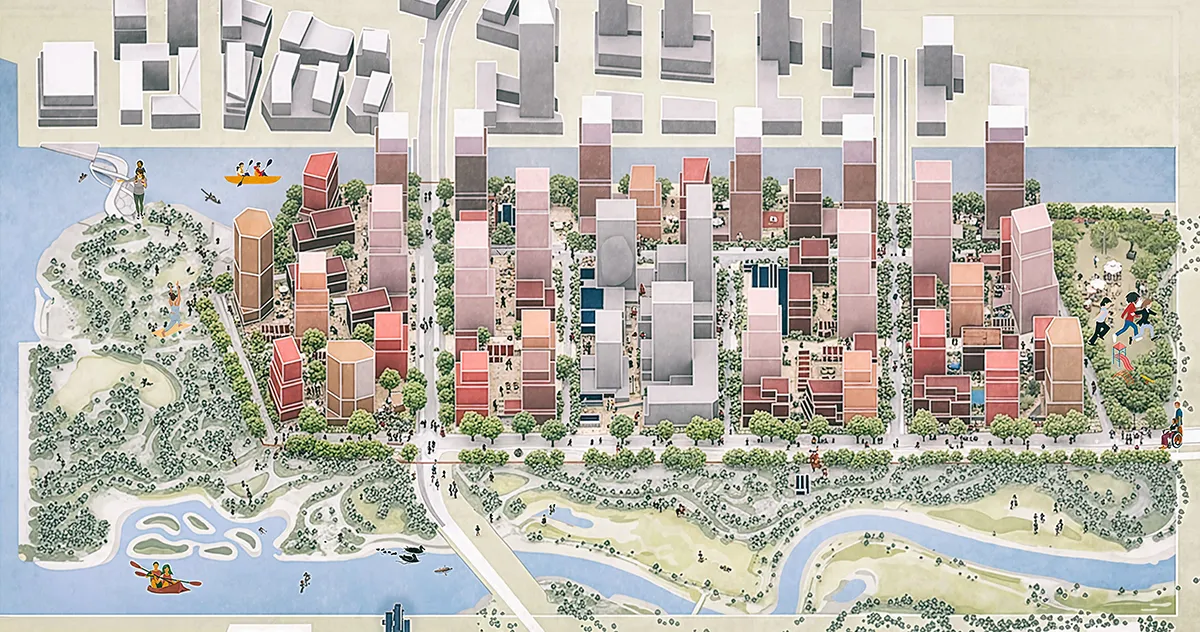
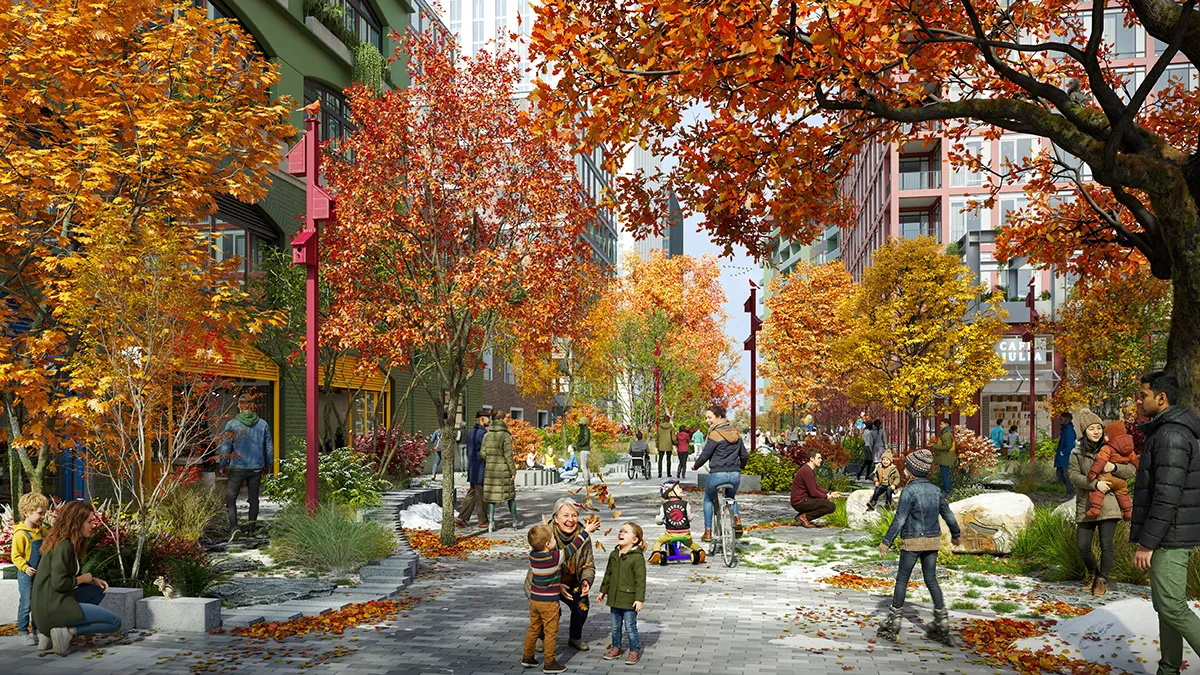
At the heart of this vision lies Centre Commons – a 760-metre-long, fully pedestrianised public space, set to become Canada’s longest and most ambitious year-round car-free space. With more than 400 trees, Centre Commons is conceived as the social and ecological spine of the new neighbourhood, running east-west across the island: A place for play, gatherings, markets, and everyday encounters, where community life can take root and evolve over time.
Designing with history, ecology, and Indigenous presence
The public realm design is deeply rooted in the site’s history and in its ongoing transformation from an industrial waterfront to a restored river landscape. Developed in close collaboration with Indigenous co-designers Trophic Design, the design reflects a “Living Legacy” approach, embedding Indigenous knowledge, storytelling, and spatial practices into the city’s fabric.
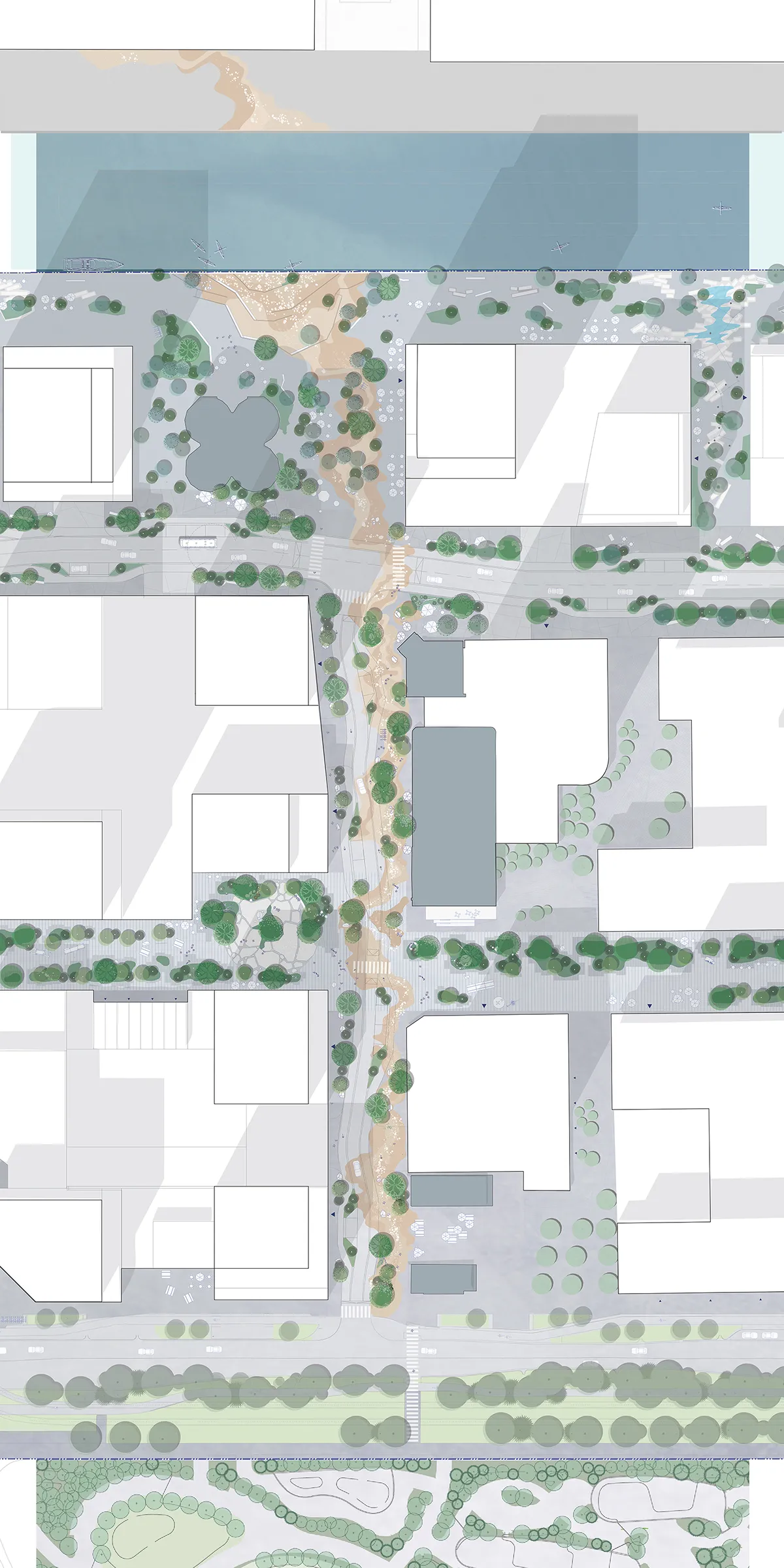
A key expression of this is Ookwemin Street and The Sandbar Trail, which trace the historic shoreline and Carrying Place Trail through materiality, alignment, and landscape. Through stone inlays, planting strategies, and interpretive elements, the design makes Indigenous values and memory visible and tangible throughout the everyday experience of the Ookwemin Minising streetscape.
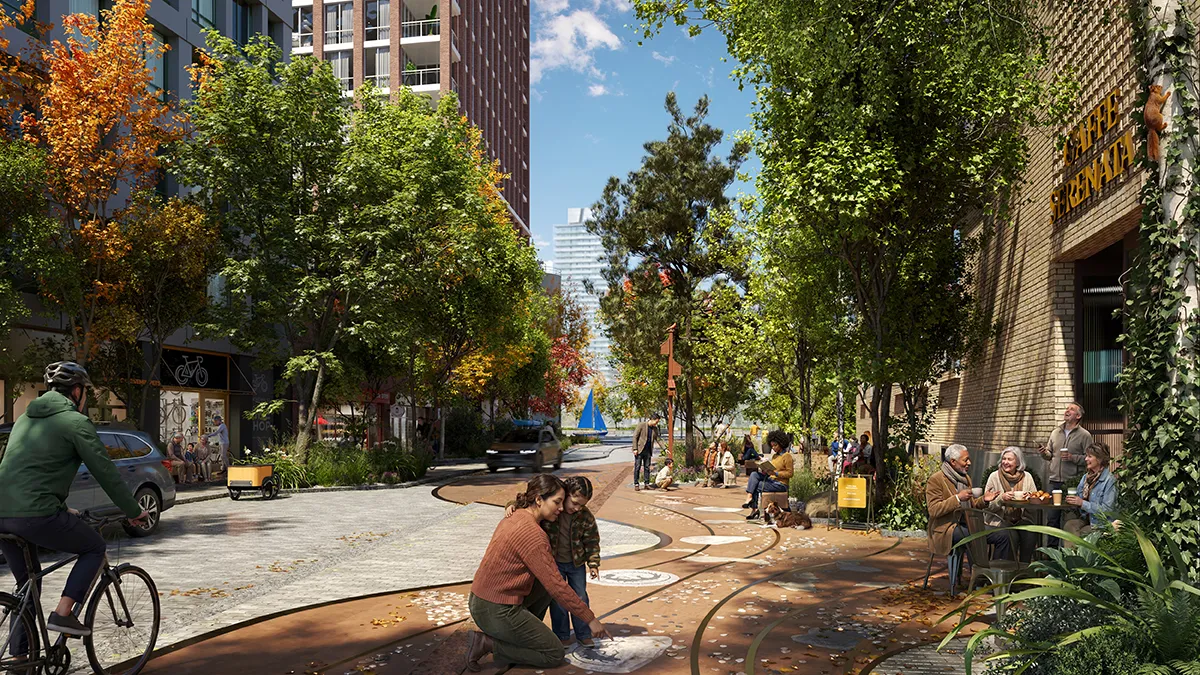
Designing the city from the ground up
At Ookwemin Minising, the design process begins with streets, urban spaces, and the public realm, forming the foundation from which buildings and community life emerge.
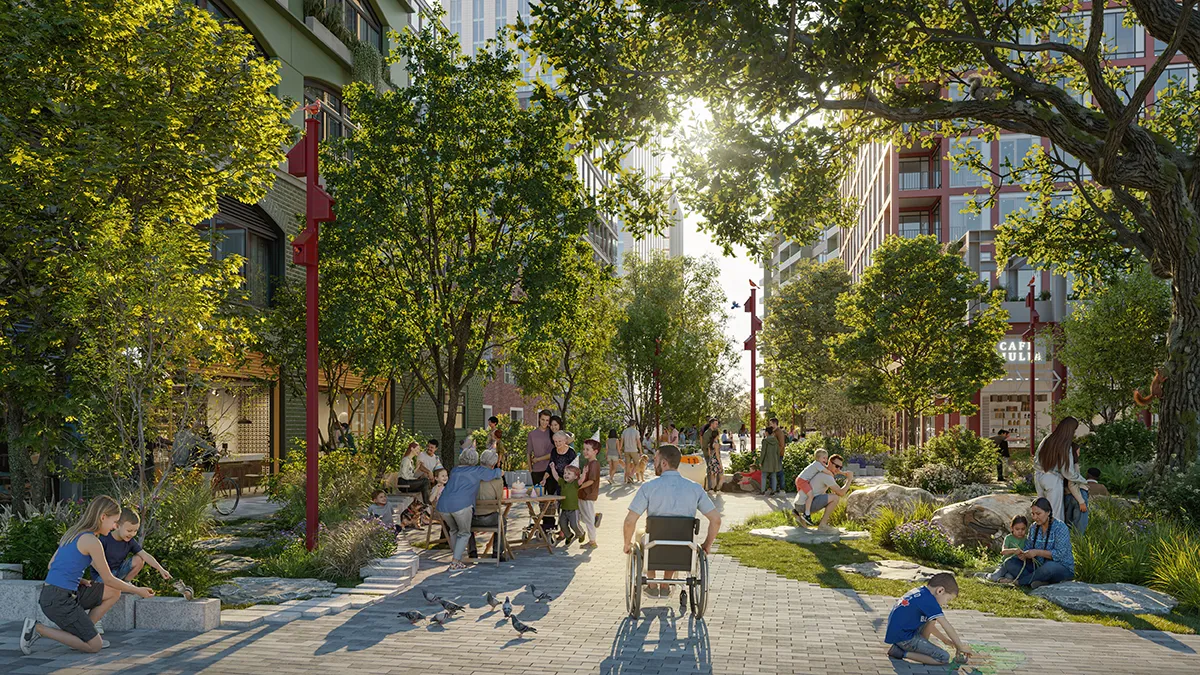
This approach has enabled the team’s architecture and massing lead Allies and Morrison to unlock a 27% increase in density compared to earlier plans – supporting a total of 12,000 new homes (including up to 3,000 affordable units) – without compromising the quality or quantity of public space.
By prioritising people-first streets and vibrant public life, the design demonstrates how excellent public realm design can directly support a more livable, inclusive, and sustainable city.
Nature at the core of climate resilience
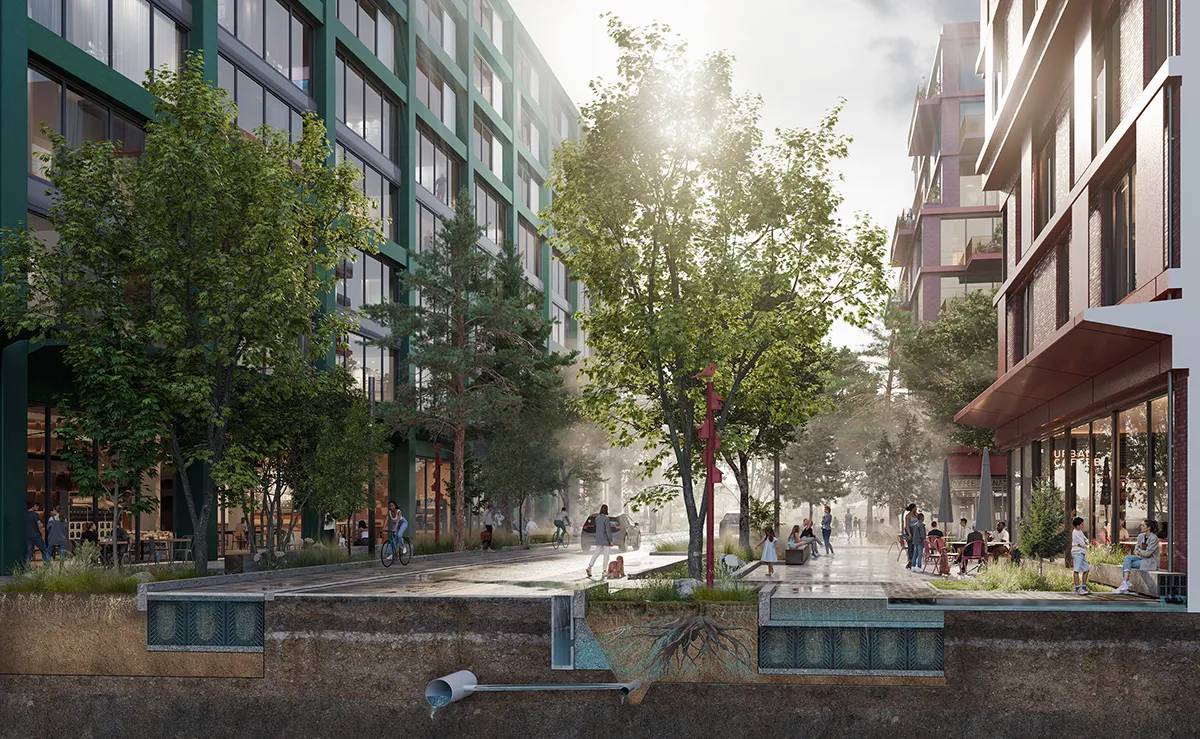
The streets of Ookwemin Minising are designed to perform as infrastructure – managing stormwater, reducing urban heat, and supporting biodiversity – while also creating beautiful and meaningful public spaces.
Rainwater is captured, filtered, and reused through integrated green infrastructure, while diverse planting strategies create habitats for local species and improve microclimate comfort year-round.
“This project demonstrates how infrastructure and public space can work as one integrated system,” said Chris Hunter, GHD Chief Executive Officer for the Americas. “By embedding climate resilience, water management, and low-carbon strategies directly into the streetscape, we’re creating infrastructure that not only performs at a high level, but also enhances everyday life and supports long-term sustainability.”
A new North American model for city-building
Spanning 39.8 hectares of mixed-use development and designed to support approximately 21,000 residents and 2,900 jobs, Ookwemin Minising represents a new North American model for dense, green, and livable urban development – comparable in scale to downtown Toronto, yet rooted in nature.
From intimate courtyards to expansive public commons, the design creates a layered and diverse public realm where “quirky” moments, seasonal change, and everyday interactions bring richness to daily life.
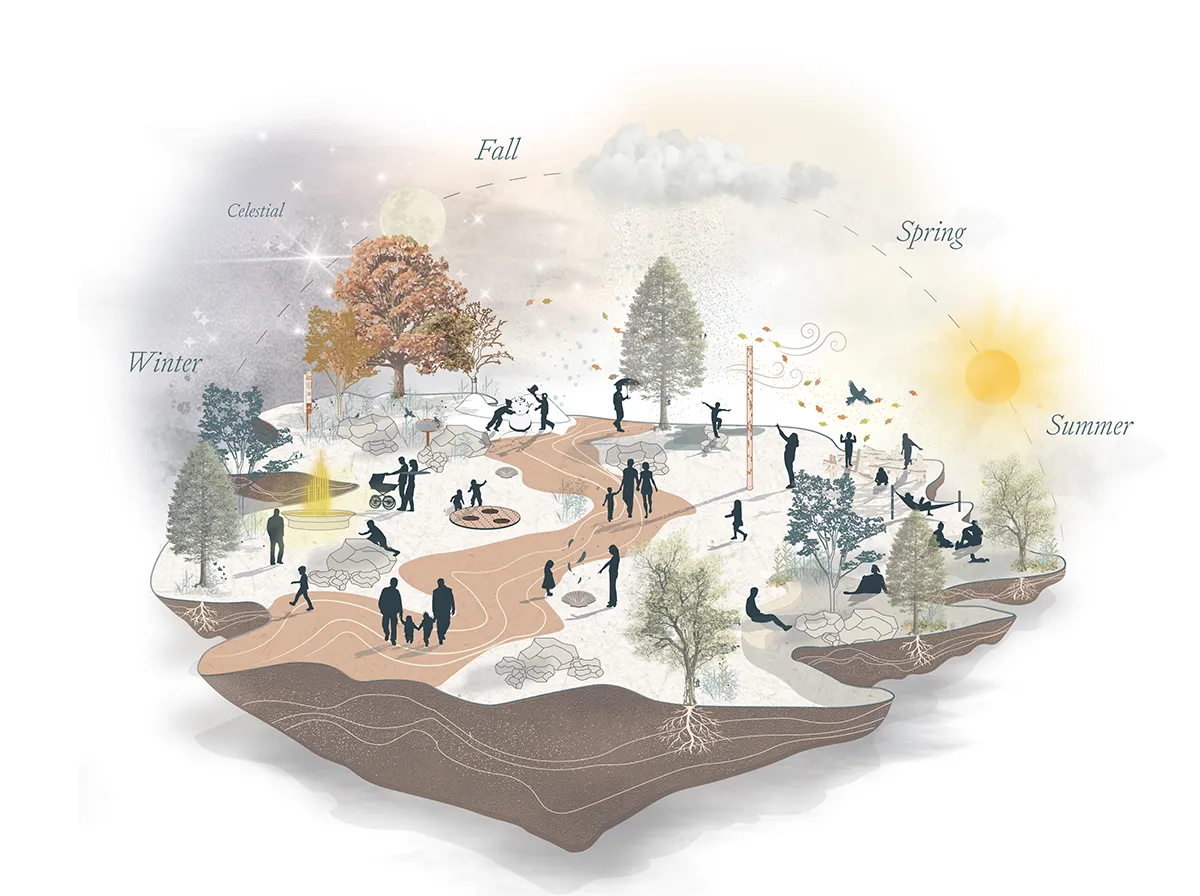
“This is urban design at its most alive – where trees, water, wind, soil and people grow and flow together. The streetscape design of Ookwemin Minising is not just about infrastructure, it’s about creating a living cityscape that breathes with the seasons, nurtures biodiversity and supports everyday life in inspiring, joyful ways,” said Rasmus Astrup, Design Principal and Senior Partner at SLA.
With first occupancy expected in the early 2030s, Ookwemin Minising sets a new benchmark for how North American cities can grow – starting with the public realm, shaped by nature, learning from Indigenous values, and guided by the everyday life of its residents.
The Project Team
GHD (prime consultant and technical lead): Engineering design services, planning services, environmental services and construction administration
SLA (Design lead): Design lead for urban realm and landscape architecture
Trophic Design: Co-designer with SLA for Indigenous landscape design and knowledge
Allies and Morrison: Architecture and massing
Transsolar: Sustainability and low-carbon infrastructure systems
Monumental Projects: Public engagement and community outreach
Level Playing Field: Accessibility services
Image Credits: GHD, SLA, Trophic, Allies and Morrison;