
From an abandoned Shopping Centre to a Social and Ecological town square.
The future Plaza de la Villa is located in Santa Brígida, in Las Palmas de Gran Canaria (Canary Islands), on a plot previously occupied by a half-built shopping centre, whose construction was halted by the courts. The failed execution of what was initially planned as a central space with a community and cultural character has hindered the town’s development for more than a quarter of a century, leaving residents widely disappointed.
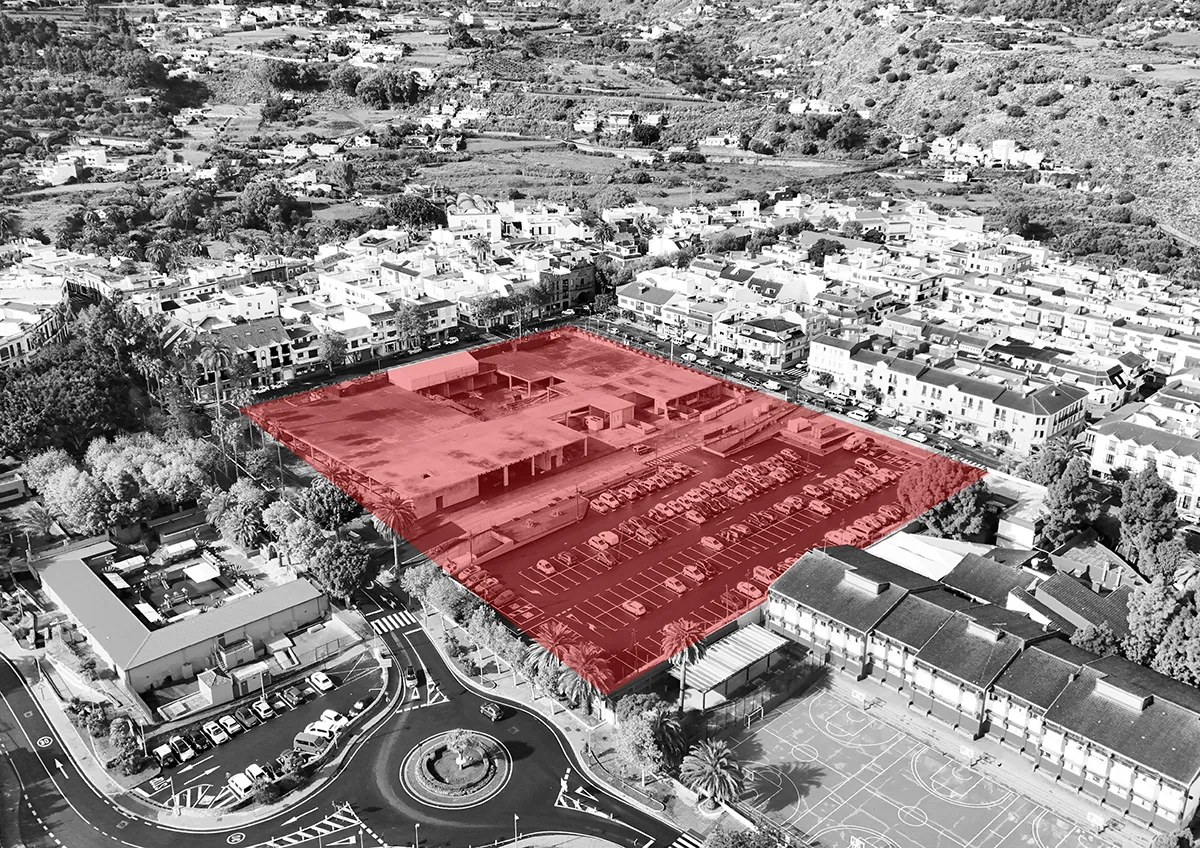
Once the property was reclaimed, the local government relaunched the project with a distinctly social and environmental focus. The process began with an intensive citizen-participation initiative led by a team of community engagement consultants. They worked alongside a group of urban and landscape designers who transformed the open dialogue with the community into spatial, functional, and landscape solutions, fostering a highly collaborative and productive exchange.
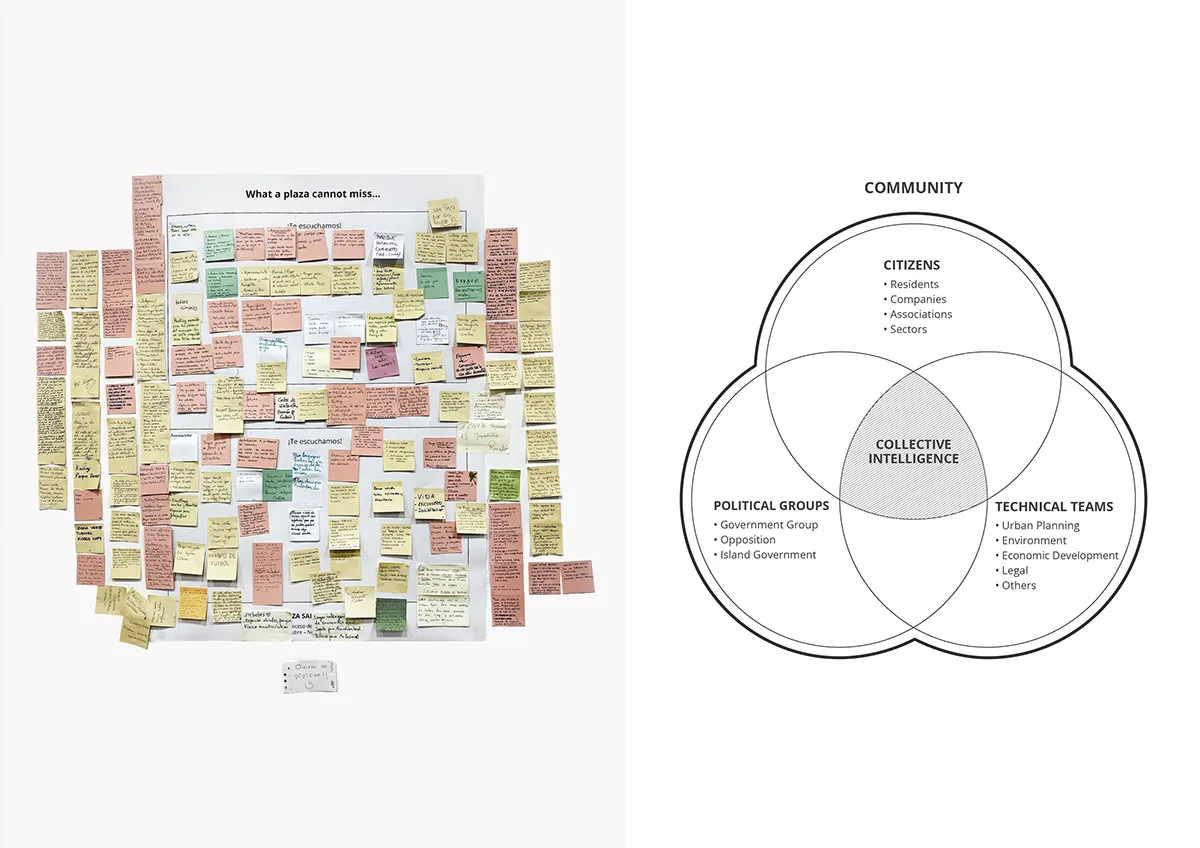
From this participatory process, several core ideas emerged that guided the planning and design. The goal was to modulate the space so that the resulting areas matched the town’s scale. Most of the existing structure would be preserved, and it was agreed that the space should reflect a rural, small-town character.
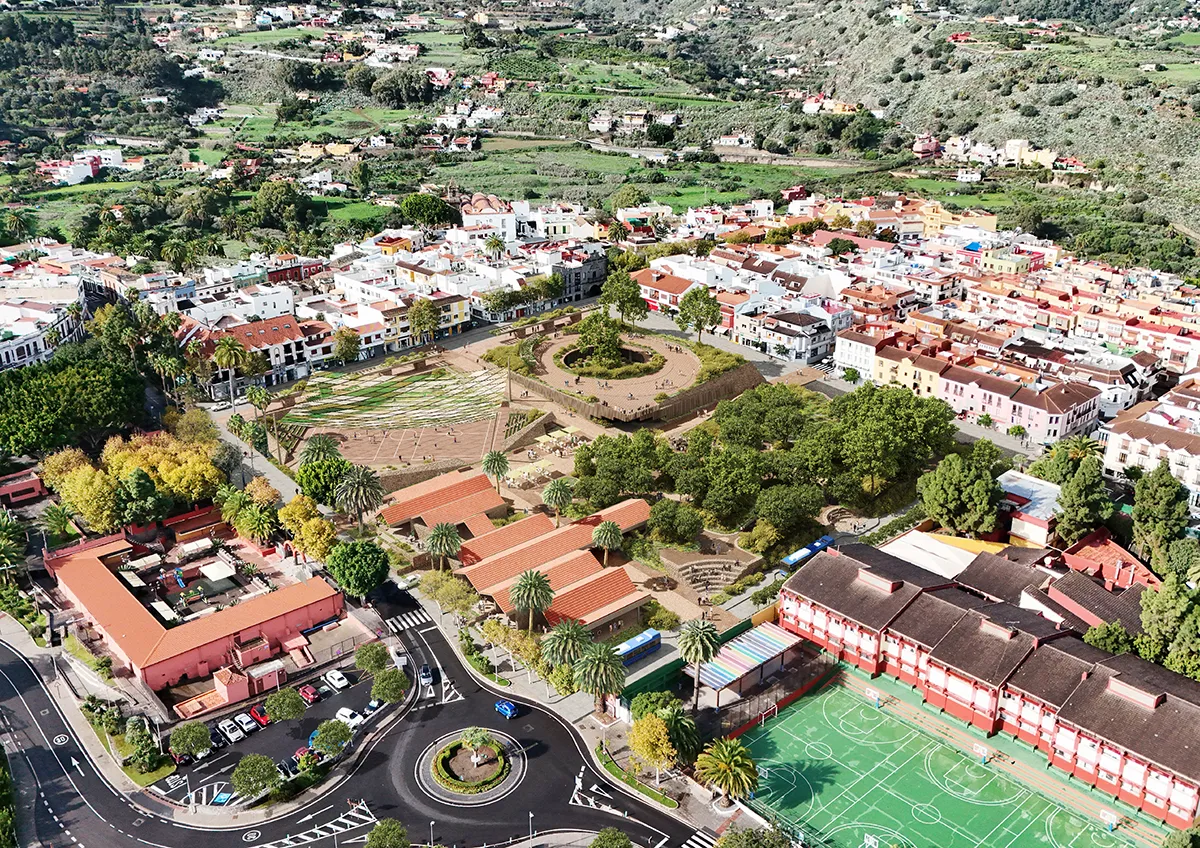
The intervention strategy consists of breaking down the plot’s enormous size—four times the town’s average public space—into smaller areas that echo existing ones. This results in four plazas and a boulevard that connects them to the surrounding urban fabric and to nearby cultural and social facilities. Preserving the existing half-built structures shapes the final layout and design, while the demolition material is reintegrated into the site, promoting a zero-waste design.
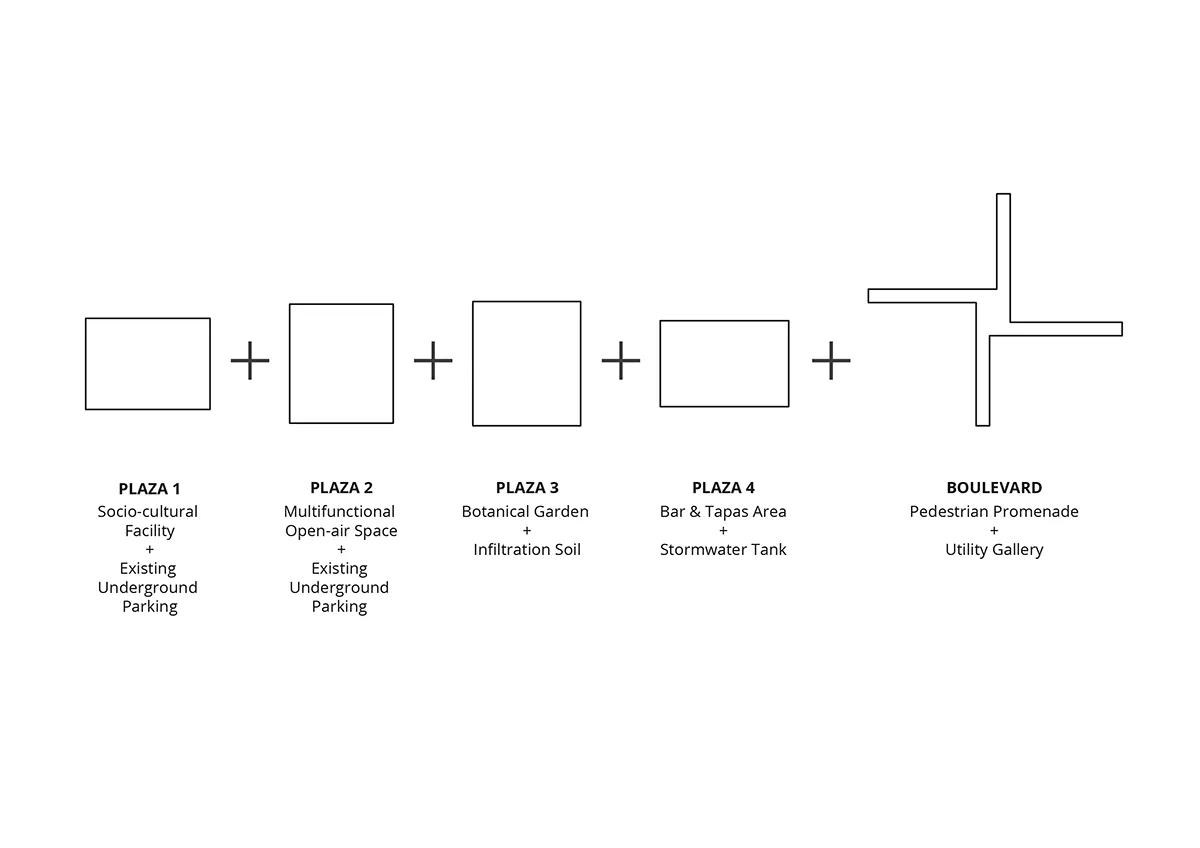
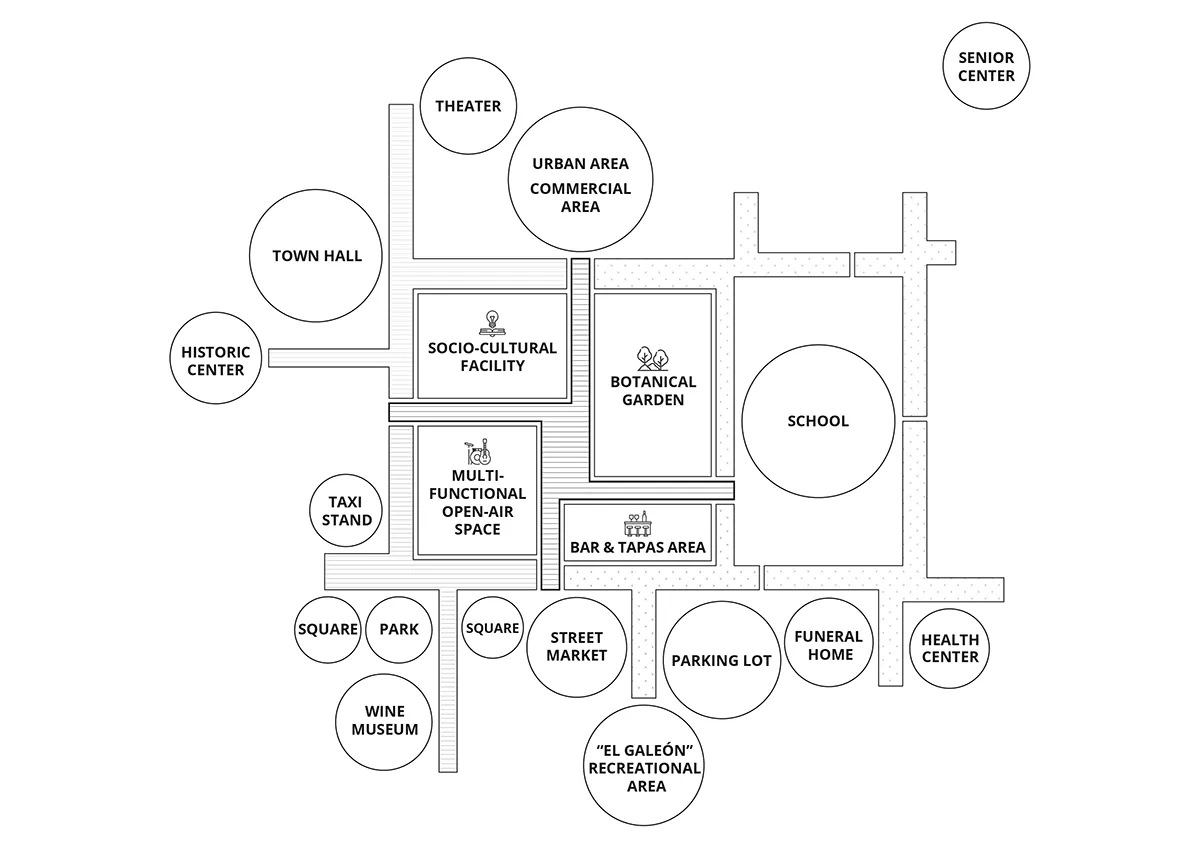
The first plaza reuses the existing structure to accommodate a socio-cultural facility for training, workshops, and events. Its rooftop is transformed into a public space that interacts with the adjacent Town Hall, giving the building a stronger and more monumental presence. A new circular courtyard, cut into the existing slab and equipped with a ramp, connects the plaza to the lower level where additional cultural and social facilities are located.
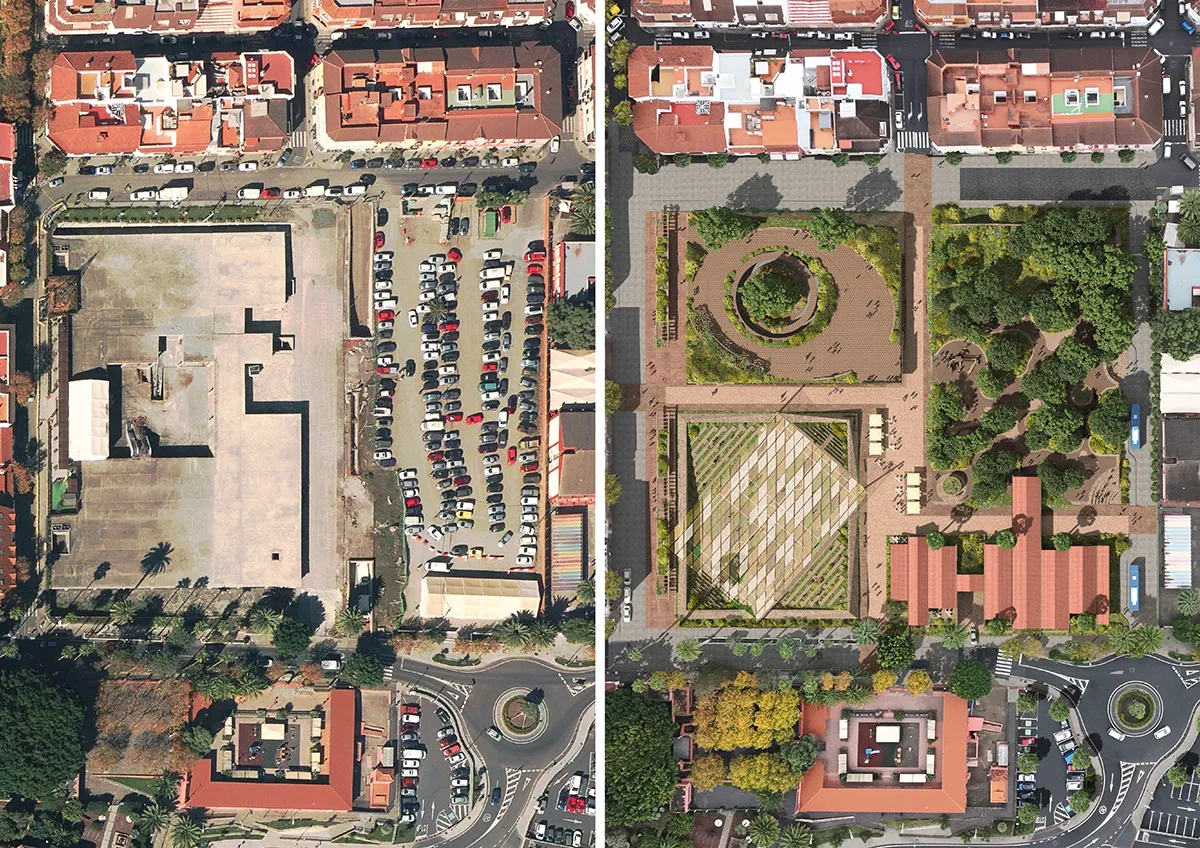
The second plaza emerges from the partial demolition of a floor slab, creating a versatile open-air space shaded by a textile canopy. Below, the existing underground parking is preserved and restored to use.
The third plaza is conceived as a botanical garden that celebrates and revives the municipality’s floral heritage, embodied in its well-known flower festival. Designed in a circular pattern of stairs and gentle slopes, it creates an organic, soft landscape that contrasts with the other plazas.
The fourth plaza is dedicated to food and wine tasting, reflecting the town’s winemaking tradition. Its roof structure integrates the retrofitted remains of old wine cellars (known as “Lagares”) that were at risk of collapse, giving them a renewed purpose within this lively tapas area.
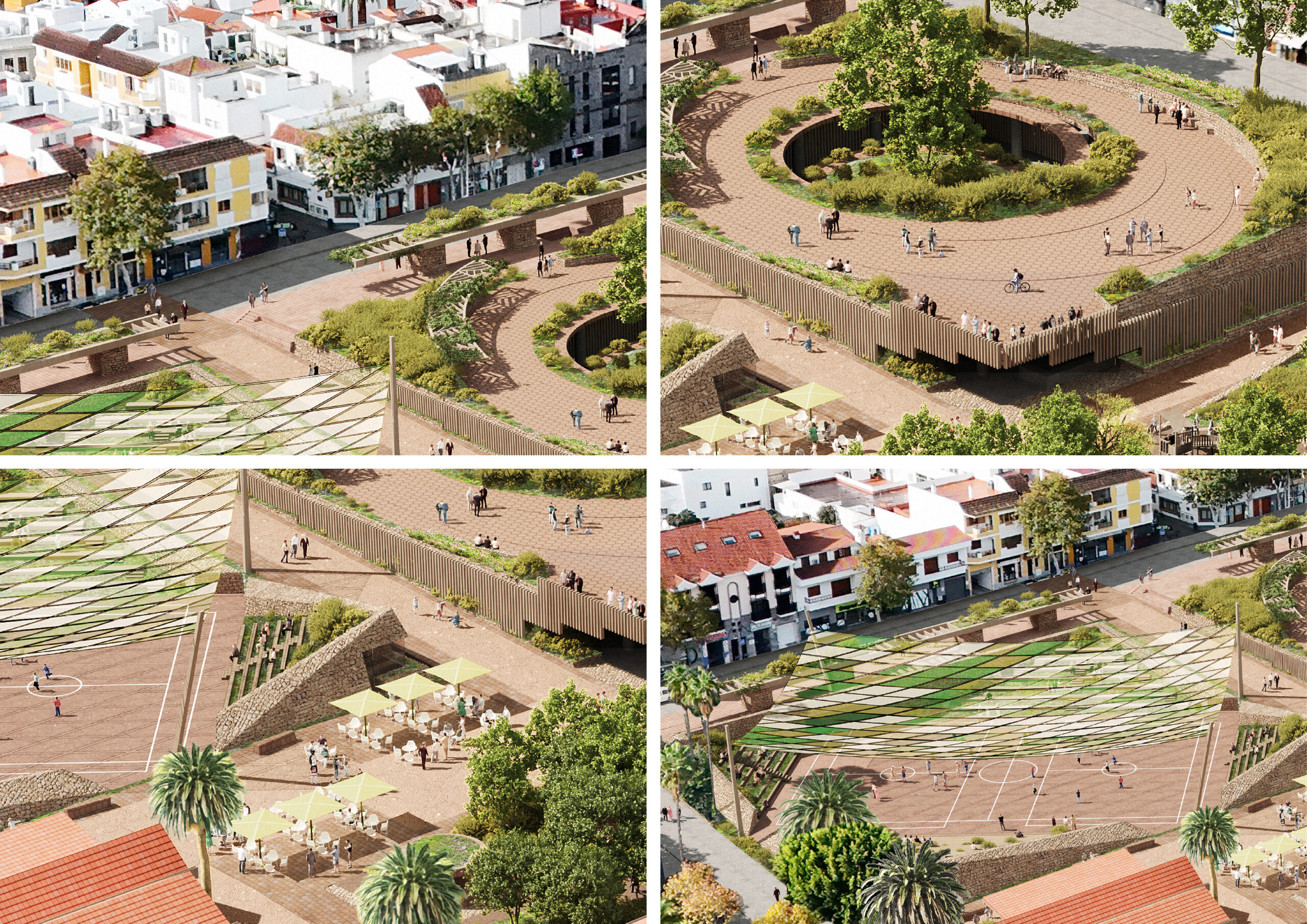
Completing the layout, a cross-shaped boulevard links the four plazas, enabling movement in all directions and forming a central gathering place. This social cross-point invites people to meet, stroll, and enjoy a drink at the surrounding kiosks and terraces.
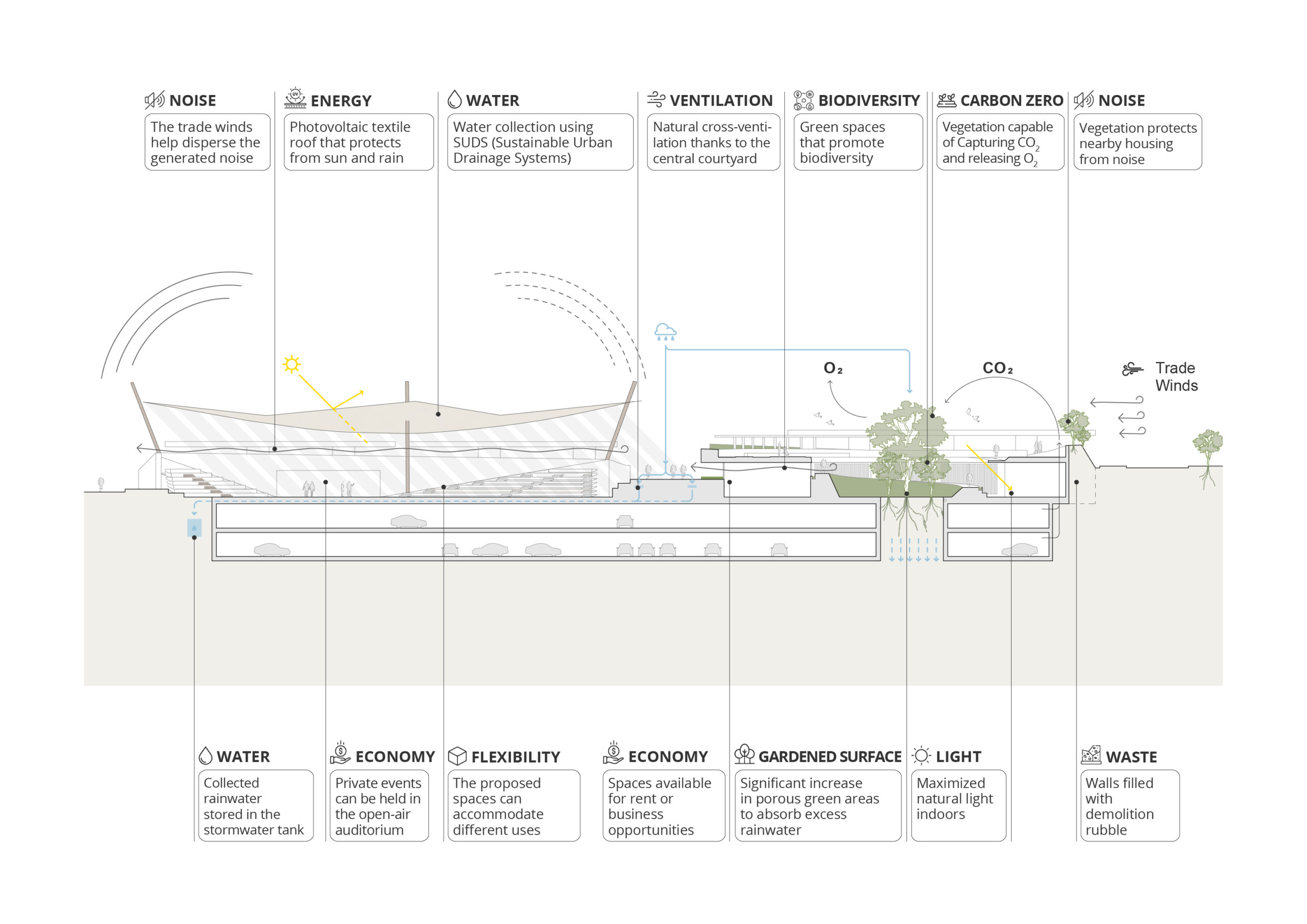
The sustainability plan integrates rainwater collection systems for irrigation, a botanical garden that enhances biodiversity and sequesters CO₂, rooftop solar panels to generate renewable energy, and the leasing of bar and restaurant spaces to support the local economy. Together, these measures create a public space that is self-sustaining.
After six months of meaningful collaboration among neighbours, municipal teams, and local leaders, the project was unveiled at a vibrant community gathering. The response was pure excitement—a shared vision that finally transformed a long-standing conflict into hope for the future. This is the power of collective voices and thoughtful landscape design coming together.
Santa Brígida Town Square
Location: Santa Brígida, Las Palmas de Gran Canaria, Canary Islands
Designer Credit: LPA Studio
Client: Cabildo de Gran Canaria
Collaborators/Other Consultants: Instituto20grados (Social Engagement)
Image Credits: Gad López (Render)
Shortlisted for the 2025 WLA Awards – Concept – Public Space category