

Alia Riverside Park is a proposed urban park situated at the intersection of dense residential development and the tranquil riverfront, creating a space for dialogue between humanity, nature, and the cosmos. This park is not merely a green area within the city—it is an architectural embodiment of unity and interaction among three essential elements: the urban, the natural, and the cosmic. The park itself becomes the fourth element—a place where these forces coexist and enrich one another.
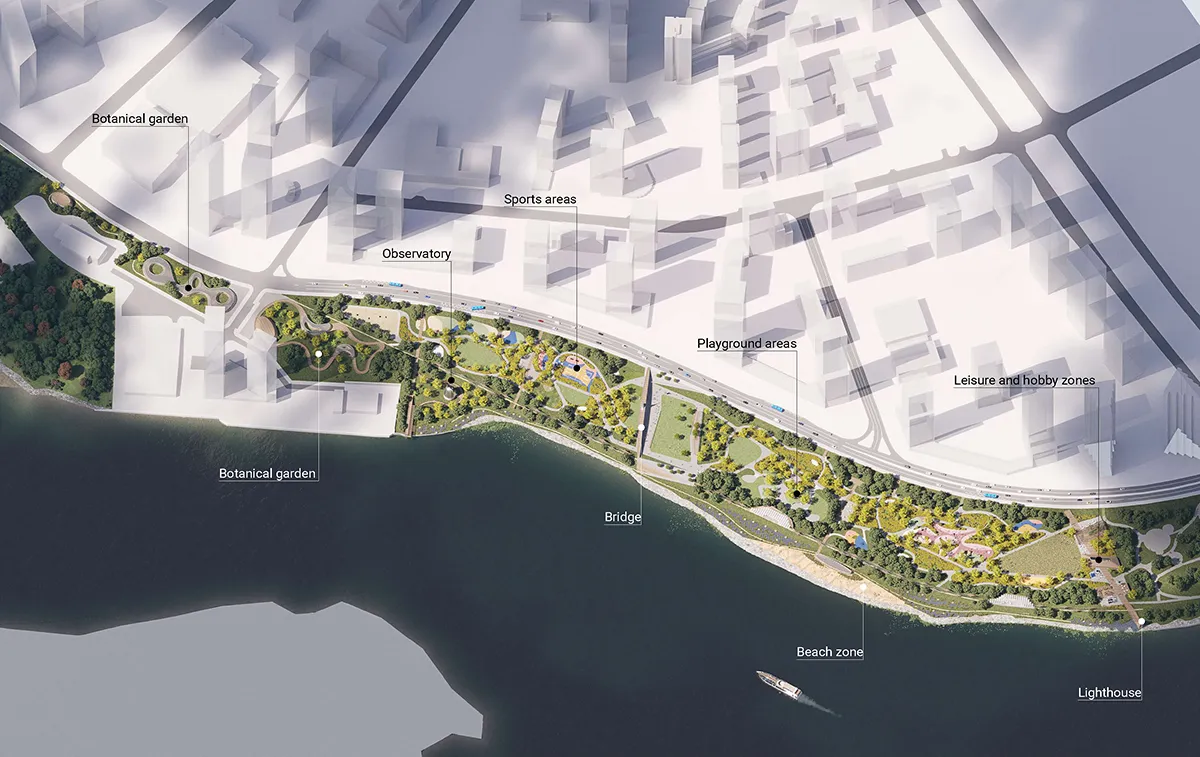
To the east, the park is bordered by dense residential housing, symbolizing human life—its daily rhythms, dynamism, and need for community. To the west lies the river, reflecting the stars upon its surface and embodying the cosmos—infinite, serene, and profound. Between them stretches the park’s green fabric, filled with trees, shrubs, and gardens that form a gentle transition between these two worlds.
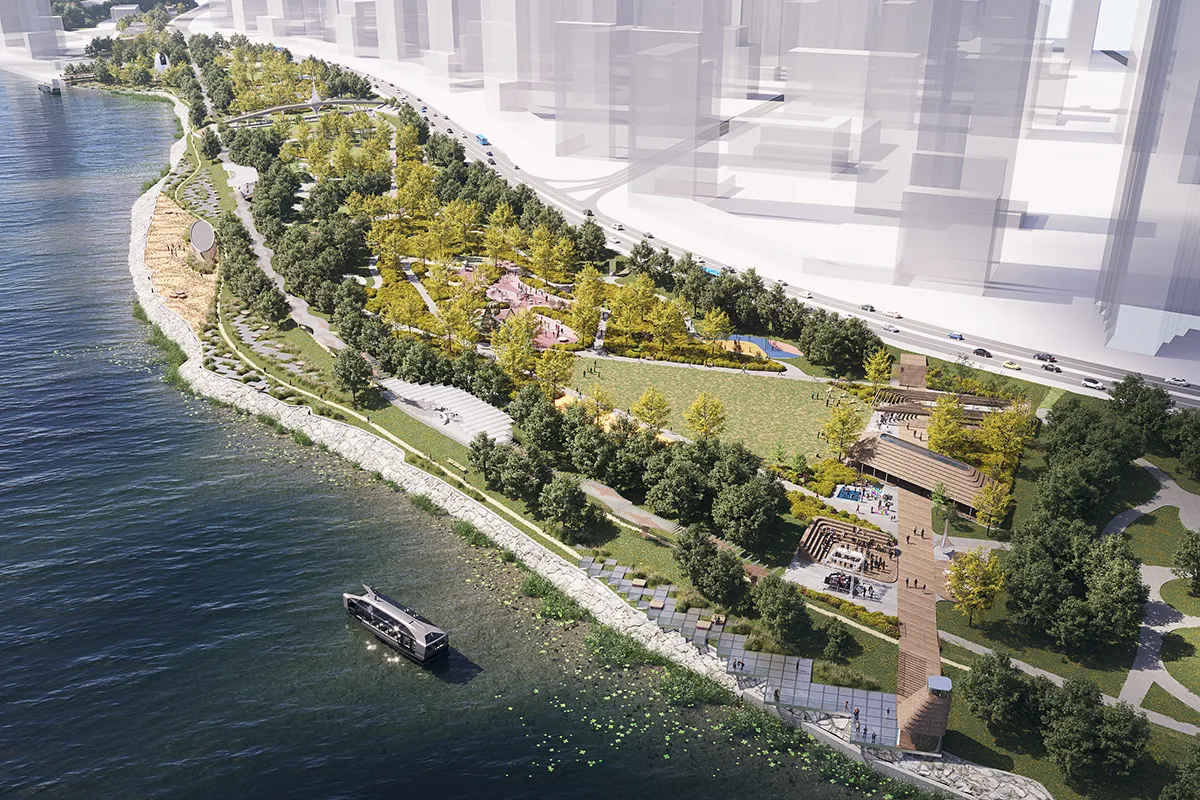
Great attention is given to creating enclosed natural groups and systems where biocenoses (ecological communities) form and are inaccessible to humans. Impenetrable shrub plantings (Rosa rugosa, Cornus alba, Berberis vulgaris, Spiraea × vanhouttei, Crataegus sanguinea, etc.), trees (Pinus sylvestris, Picea abies, Crataegus mollis, Prunus padus, Acer platanoides, etc.), and perennial plants (Lythrum salicaria L., Nepeta faasenii, Sedum spectabile, Ligularia przewalskii, etc.) allow birds, mammals, amphibians, and insects to thrive without human interference.
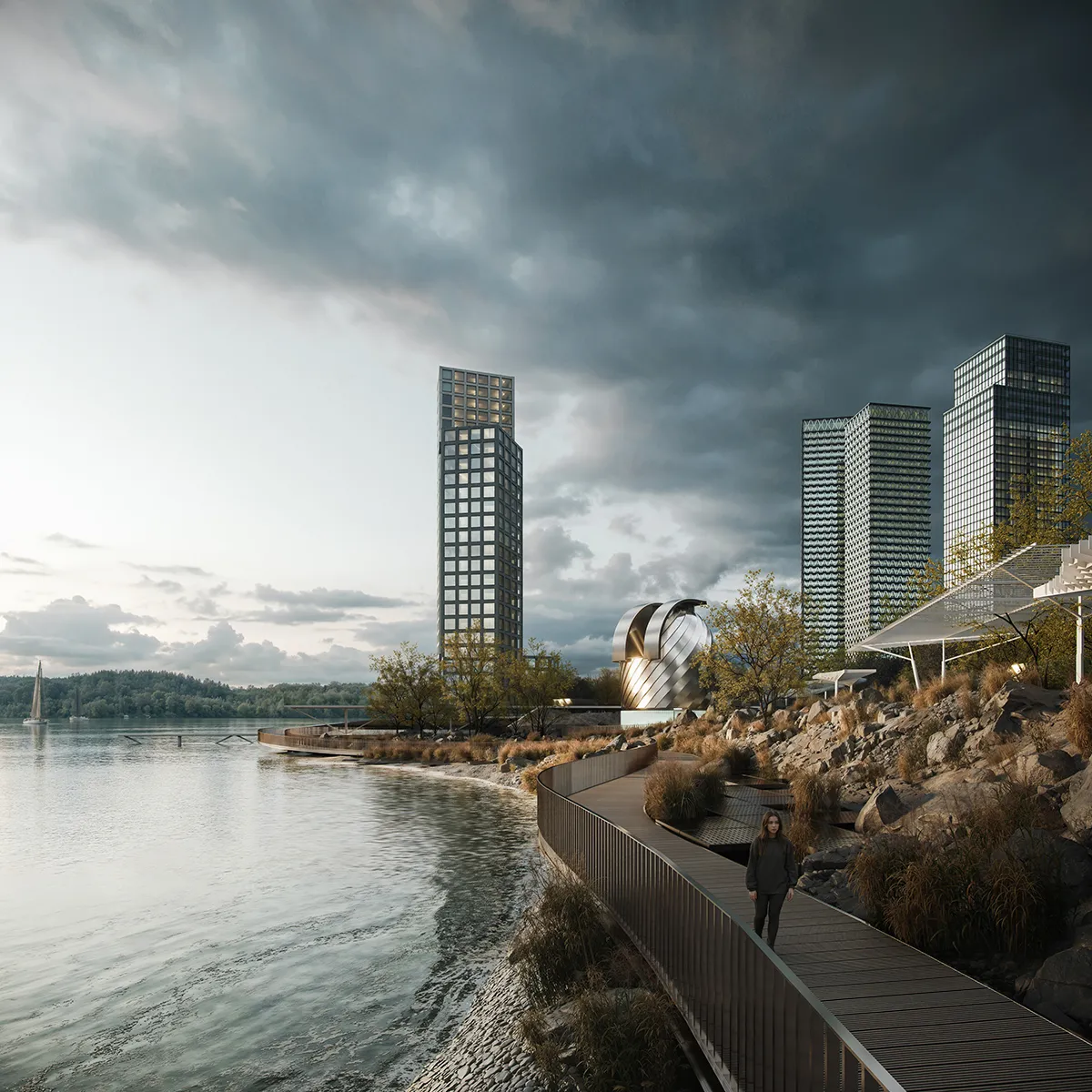
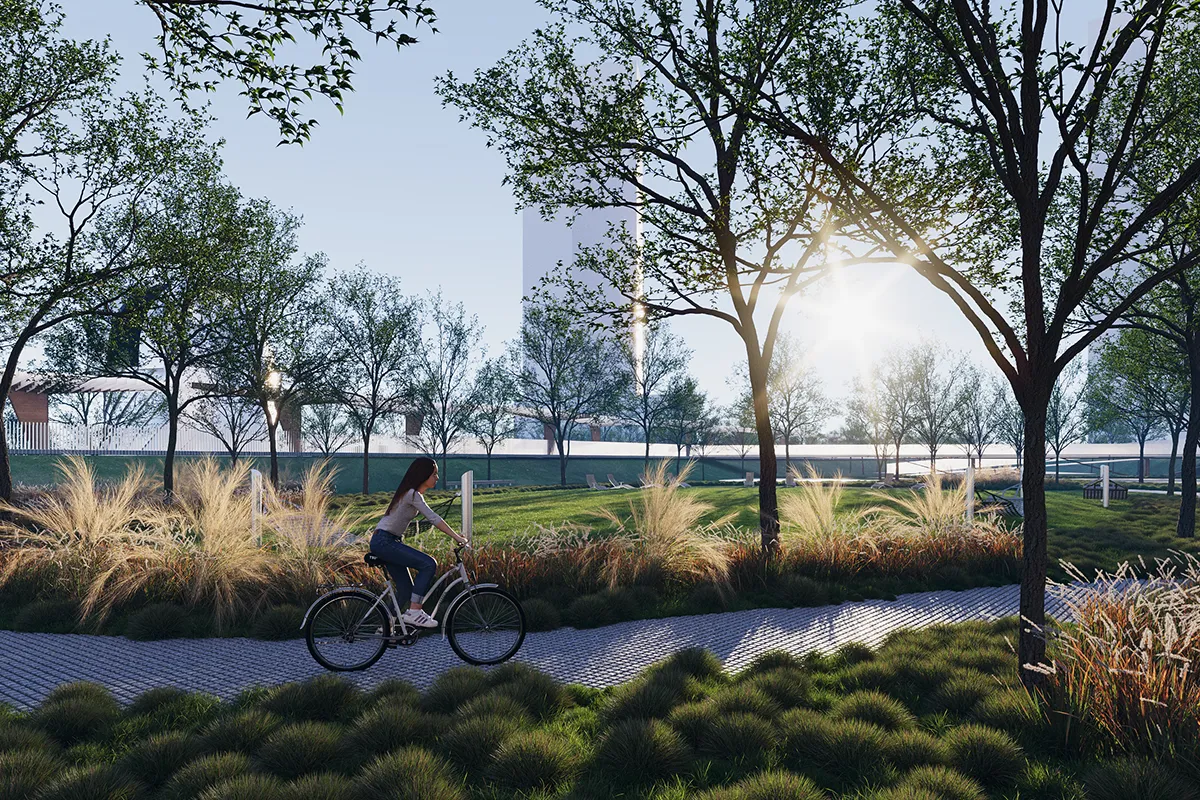
Some species include: Erinaceus roumanicus (Eastern European hedgehog), Mustela nivalis (least weasel), Castor fiber (Eurasian beaver), Asio otus (long-eared owl), Dendrocoptes medius (middle spotted woodpecker), Erithacus rubecula (European robin), Rana temporaria (common frog), Natrix natrix (grass snake), Zootoca vivipara (viviparous lizard), Pelophylax ridibundus (marsh frog), Polyommatus icarus (common blue butterfly), Bombus pascuorum (common carder bee), Prionus coriarius (a longhorn beetle), and Catocala nupta (red underwing moth).
Moscow implements urban programs to monitor and replenish species, fostering the development of sustainable ecosystems.
The park is organized as a system of interconnected spaces, linked by three main entrance zones that serve as natural extensions of the existing recreational axes from the adjacent residential area. These entrances act as “gateways” to a new quality of urban space, inviting residents to engage in diverse scenarios of rest, interaction, and discovery.
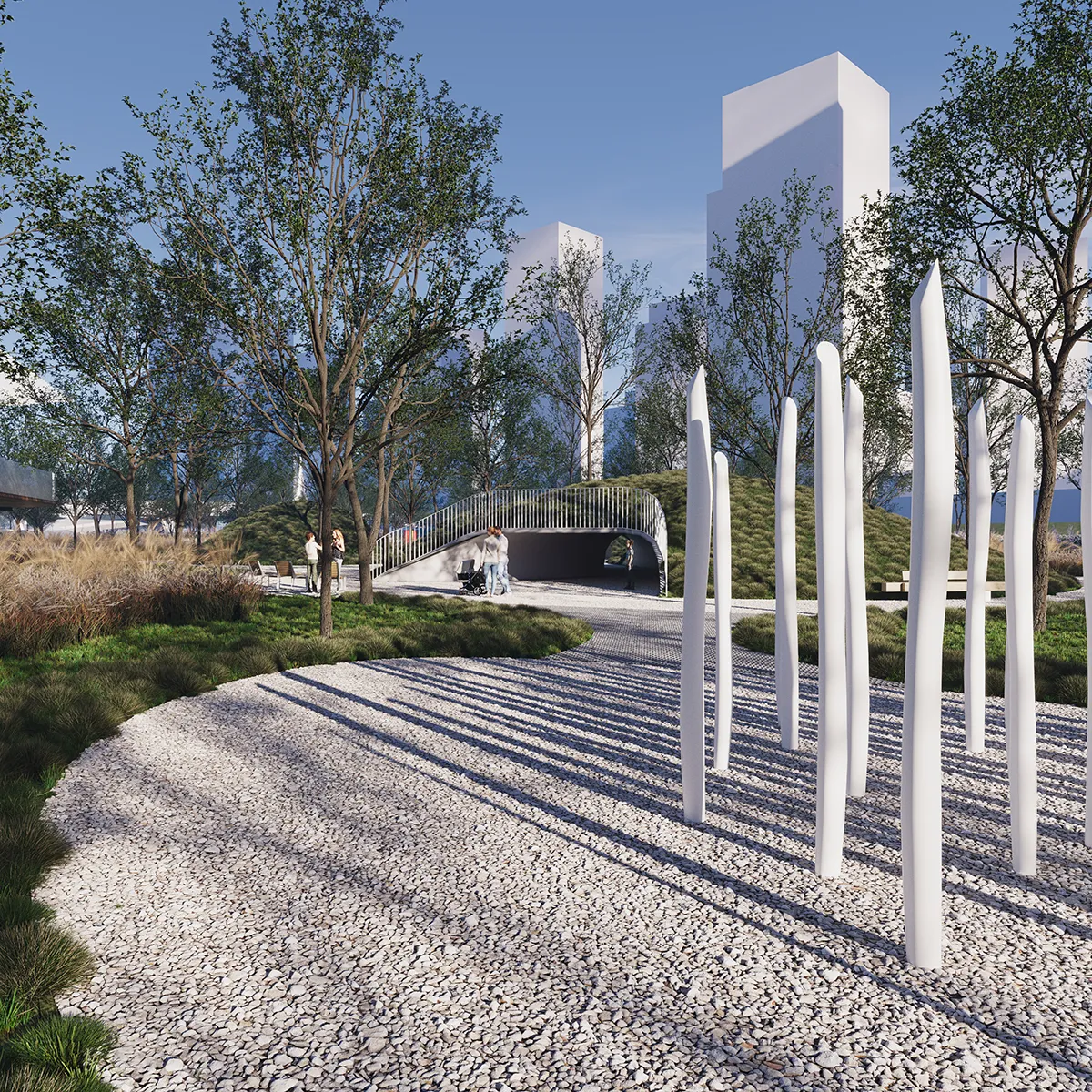
At the heart of the design lies the main pedestrian axis, connecting the residential quarter with the river via a bridge that spans the entire park, emphasizing its continuous, unifying nature. Along this axis is the central square—the civic heart of the park—where flows of people, events, and life converge.
The park’s architectural framework is defined by a pergola that runs along the existing embankment, serving as a spatial thread that ties together different functional zones while accentuating the landscape’s horizontal layout.
The park features:
- An observatory, symbolizing the connection to the cosmos and opening the sky to the city’s inhabitants;
- A botanical garden, showcasing the site’s natural richness and offering educational value;
- Leisure and hobby zones, fostering creativity and self-expression;
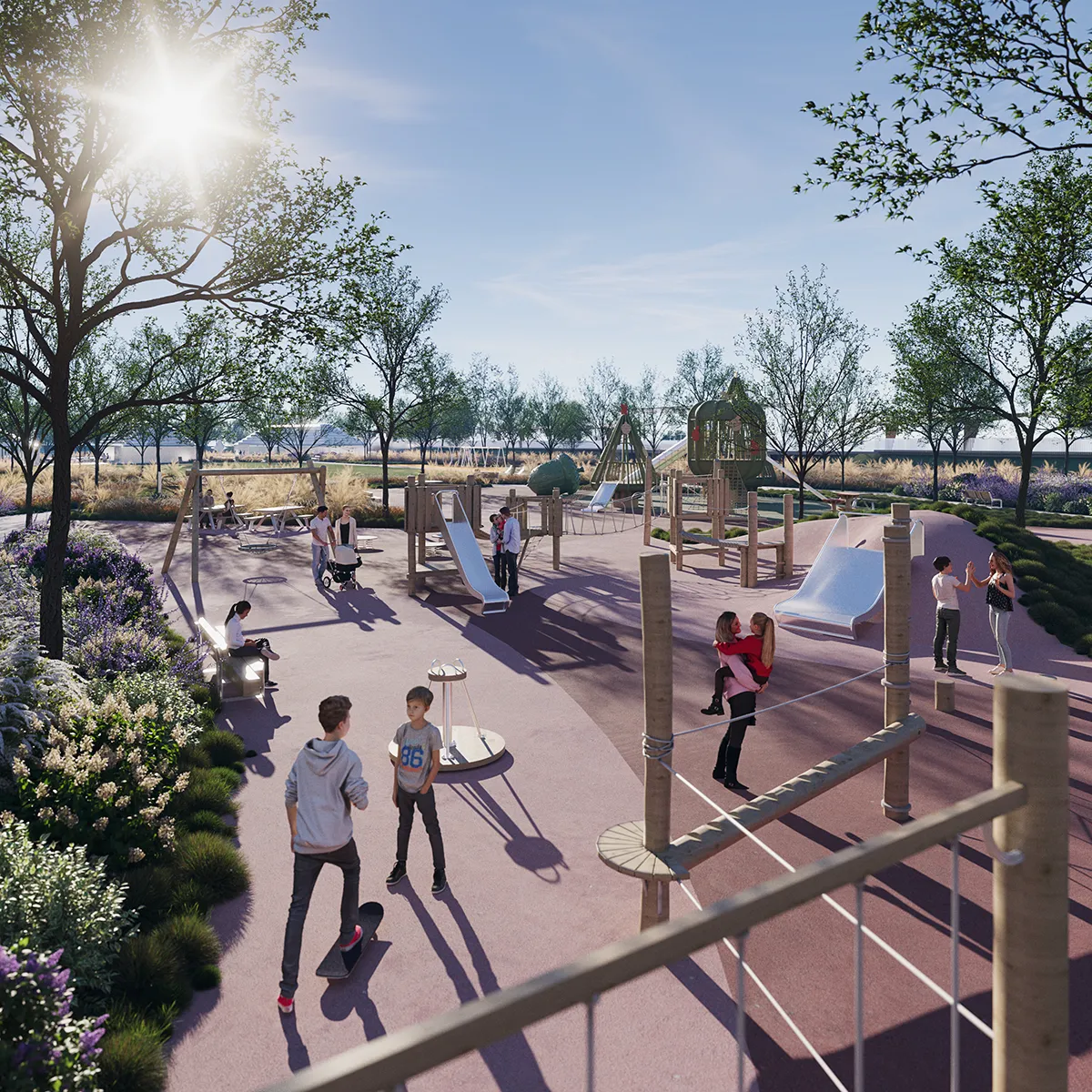
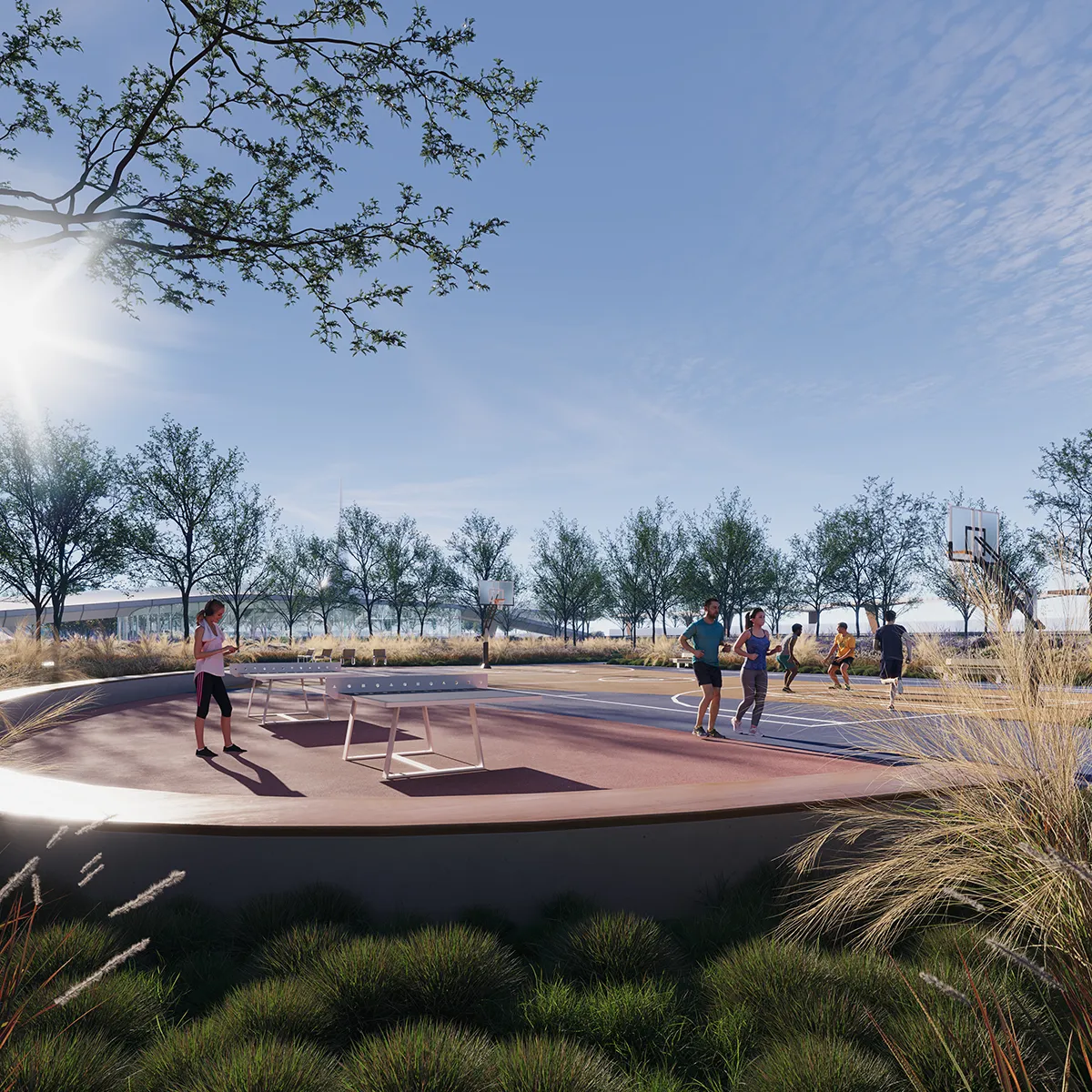
- Sports and playground areas, providing active recreation for all ages;
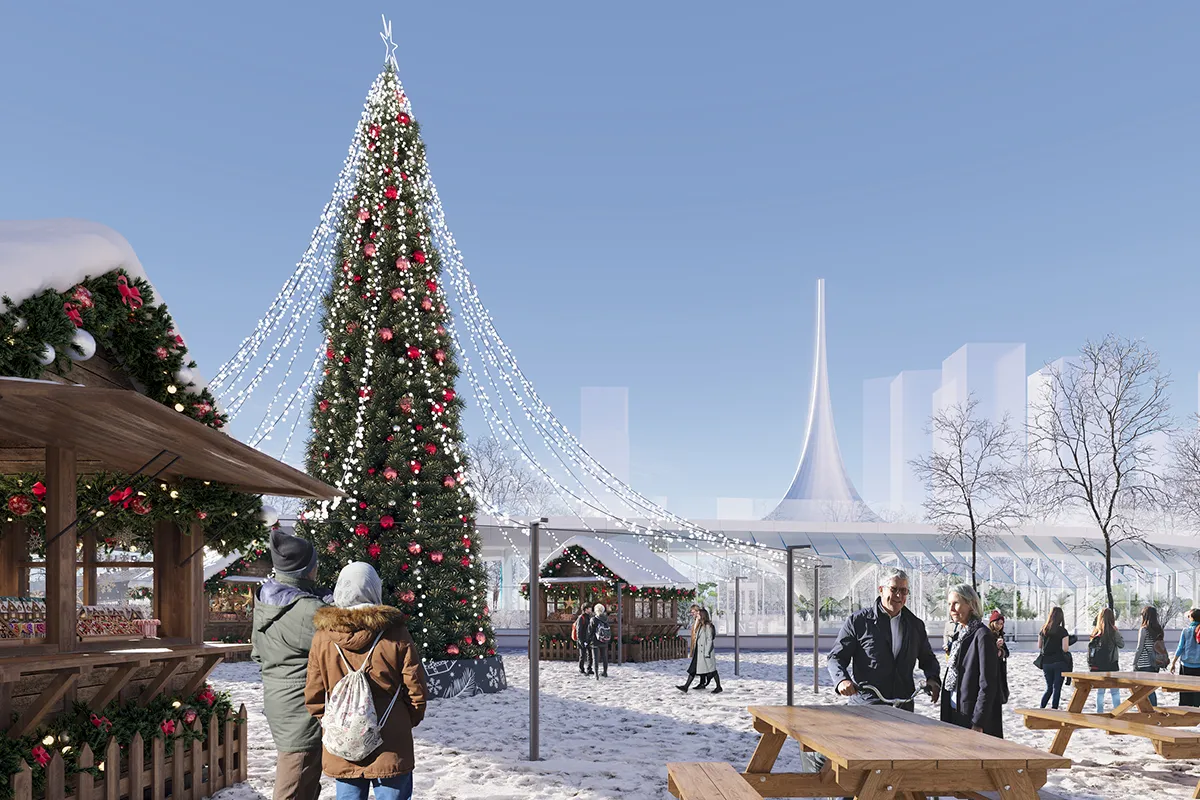
- A beach zone, enhancing interaction with the water and seasonal appeal.
Thus, the proposed park becomes a synthetic space where the boundaries between urbanity, nature, and the universe blur, allowing visitors to feel connected simultaneously to the city, to nature, and to the cosmos. The park is a place of balance and inspiration—a bridge between worlds.
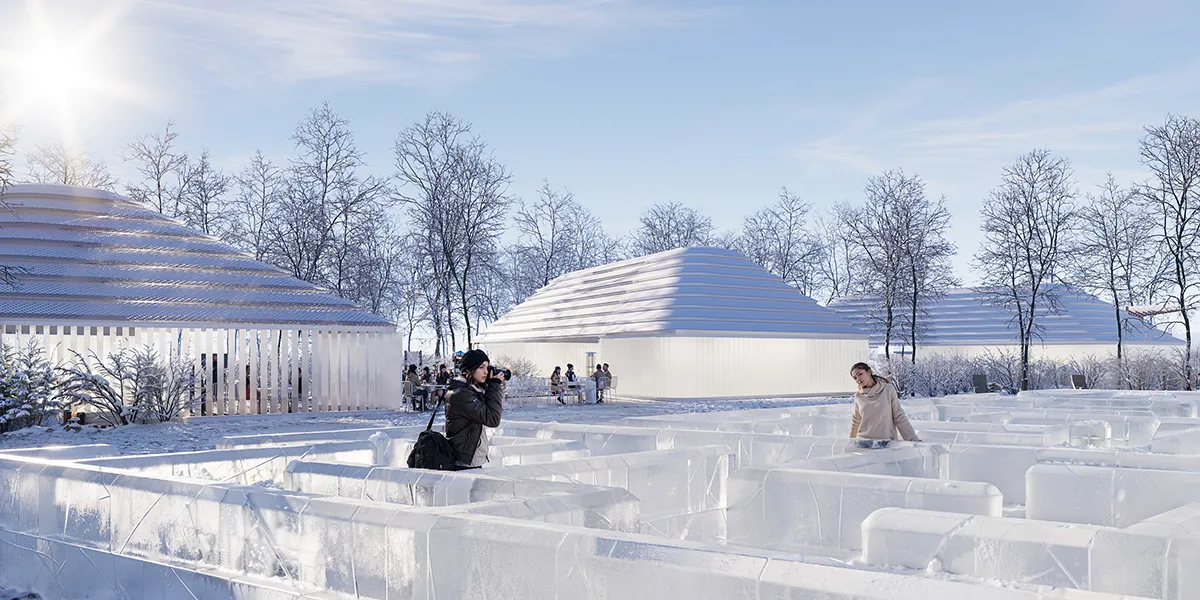
Alia Riverside Park
Location: Pokrovskoye-Streshnevo, Moscow, Russia
Design Firm: VIEWGA
Image Credits: VIEWGA
Shortlisted in the 2025 WLA Awards – Concept – Public Space category