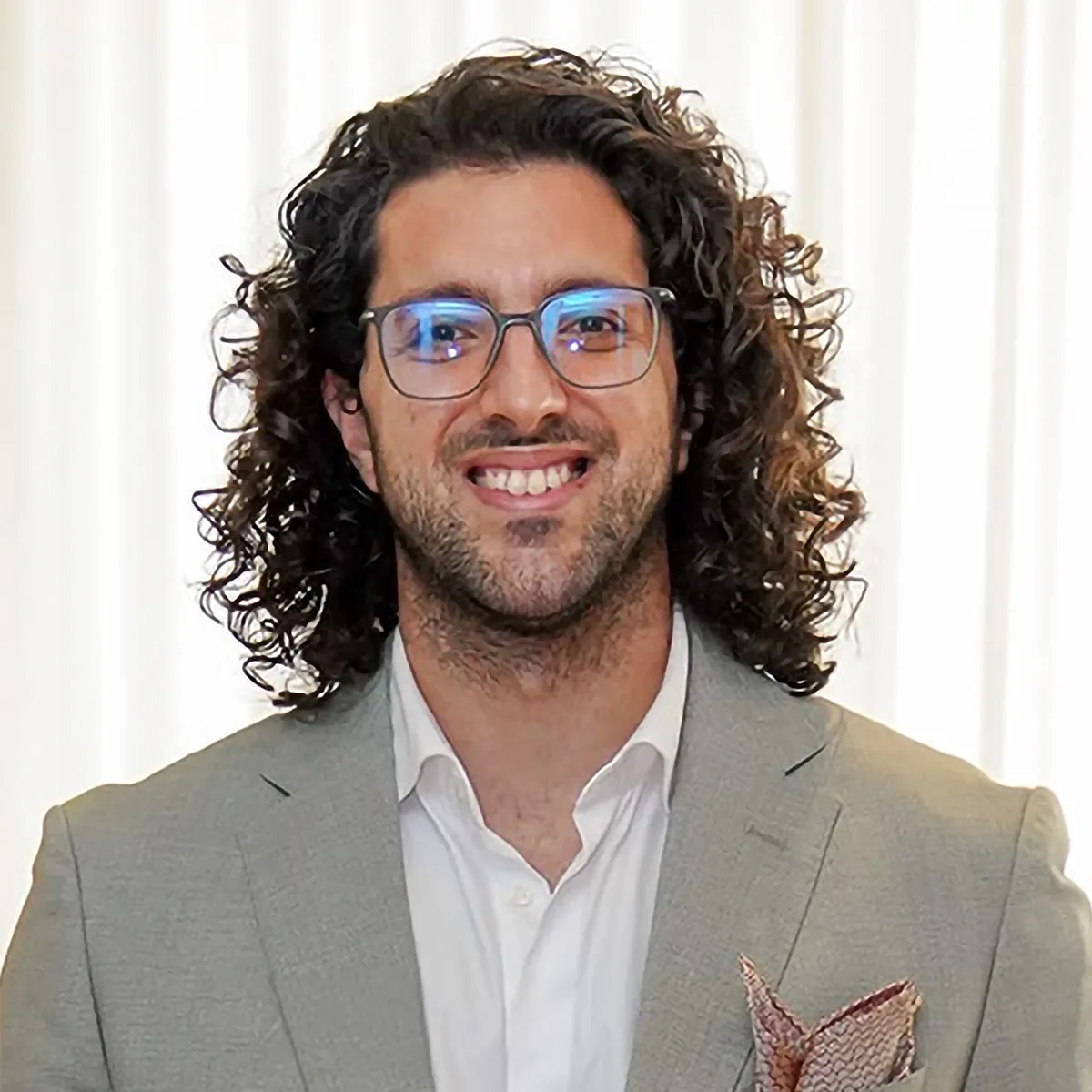
Mohamed Abdelwahab, a certified and award-winning Landscape Architect, works at Insite across the Middle East, Asia, and Europe. He holds a Master of Advanced Studies in Landscape Architecture and a Bachelor’s in Architectural Engineering and Environmental Design. His background in both fields shapes his approach, balancing spatial thinking and technical skills. His projects include public, residential, commercial, waterfront, transport, and ecological works, with a focus on clear design from concept to construction. He collaborates with clients and teams to maintain design quality throughout all stages. WLA recently had the opportunity to hear Mohamed’s thoughts on client relationships and managing large-scale projects.
WLA | As a client-facing leader at Insite, what is your approach to client management?
I try to build a relationship with the client early. The better you understand how they think, what pressures they are under, and what a successful project is for them, the smoother the project tends to run.
I also try to be open and clear from the beginning about expectations, timelines, responsibilities, and what is realistically achievable. I’m happy to be flexible and accommodate reasonable requests where I can, but there also comes a point where you need to hold your ground to protect the team and the quality of the work.
WLA | How do you balance a client’s commercial goals with design excellence?
I don’t think that good design and commercial goals must clash. Some of the best projects are the ones where the design responds to the budget constraints rather than try to fight them.
A big part of the job is understanding what really matters to the client and where the design can have the most impact. Sometimes that means simplifying certain elements so that the bigger part of the budget can be focused where it will genuinely improve the experience of the spaces.
WLA | What are the biggest challenges in delivering complex, large-scale landscapes in the UAE today, and how is your team overcoming them?
There are quite a few. Tight budgets and delivery schedules are the most common, especially when projects also have ambitious designs. On top of that, balancing the evolving client requirements with authority expectations can be tricky to navigate.
I believe we can deal with that by being very clear early on about priorities, phasing deliverables as needed, and ensuring coordination happens early on. Many problems become more manageable when identified early.
WLA | How do you maintain long-term client relationships in the Middle-East market?
First, you need to consistently deliver work that makes the client happy and that your team is proud of. That is the foundation of any successful relationship in our field.
Second, being honest. Problems happen on projects all the time. Delays, coordination issues, and changing requirements. Trying to hide them usually makes things worse. Being upfront about issues early, while also presenting a mitigation strategy builds confidence.
Third, flexibility matters. Clients are often under a lot of pressure themselves. Helping them where you can, even beyond the contractual scope at times, shows that the relationship is not purely transactional.
Finally, I think regular catch-ups should happen. Not only calling when there is a problem to solve or to discuss project updates, but also to stay connected. Over time, that creates stronger relationships, and that usually leads to repeat work.
WLA | How do you translate client expectations into actionable inspiration for the designers?
I actually don’t think this is a very difficult part of the process. Designers generally want to create exciting and livable places.
The key is to take all the initial information, whether it be project vision, commercial objectives, operational requirements, or user needs, and simplify them it into a clear set of project objectives. Once that is clear, the team will have something tangible to start designing.
WLA What does a successful project look like to you?
To me, a successful project is one where the client feels we exceeded expectations, the team feels proud of what we produced, and the project is commercially healthy for the practice.
It is also important that the project leaves the team better than when it started, whether that is through learning something new or growing in confidence.
WLA | What advice do you give to rising designers who want to transition from the “drawing board” to a client-facing leadership role?
Try to look beyond the design itself. Being a strong designer is important, but leading projects is about understanding the bigger picture. Understanding the client, the program, commercial constraints, coordination requirements, and stakeholder management. Those, combined with a good understanding of your own team, will help you determine which decisions need to be made and when.
Once you understand how projects are actually delivered, you become much more confident in front of clients. You are not just presenting ideas, you’re also guiding the process and making commitments the team can stand behind.
WLA thanks Mohamed for taking the time to give insights into working in the Middle East and managing clients and projects.