
Priory Park demonstrates how biodiversity enhancement can become the primary organising principle for the renewal of an established public park. Rather than viewing ecology as an isolated environmental objective, the project adopts a landscape-led approach that integrates habitat restoration, water management and community aspirations into a single design framework.
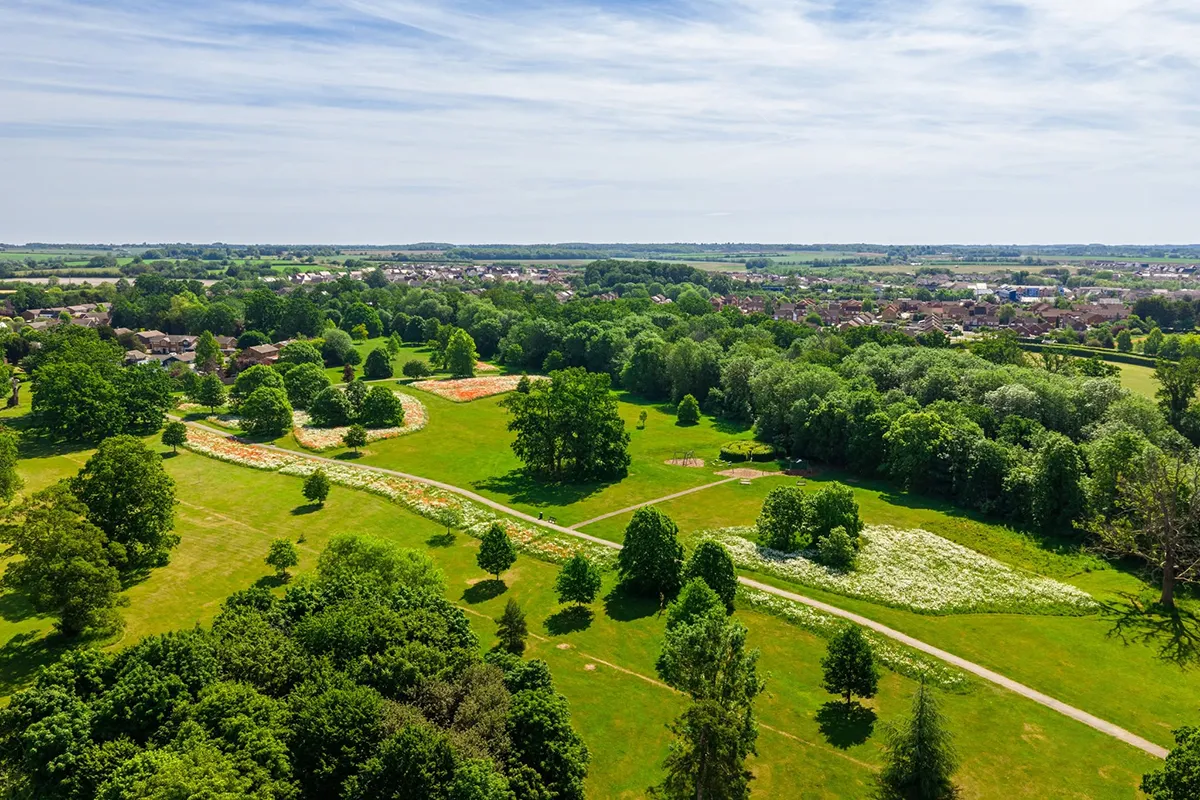
The project began with an extensive public consultation undertaken by Huntingdonshire District Council. The consultation revealed overwhelming support for increasing biodiversity within the park, with residents consistently identifying priorities such as wildflower meadows, woodland enhancement, additional tree planting, orchards, and habitats for wildlife. Instead of using this feedback to validate a predetermined proposal, the design process allowed community aspirations to directly shape the landscape strategy. Public engagement therefore became an active design tool rather than simply a statutory requirement.
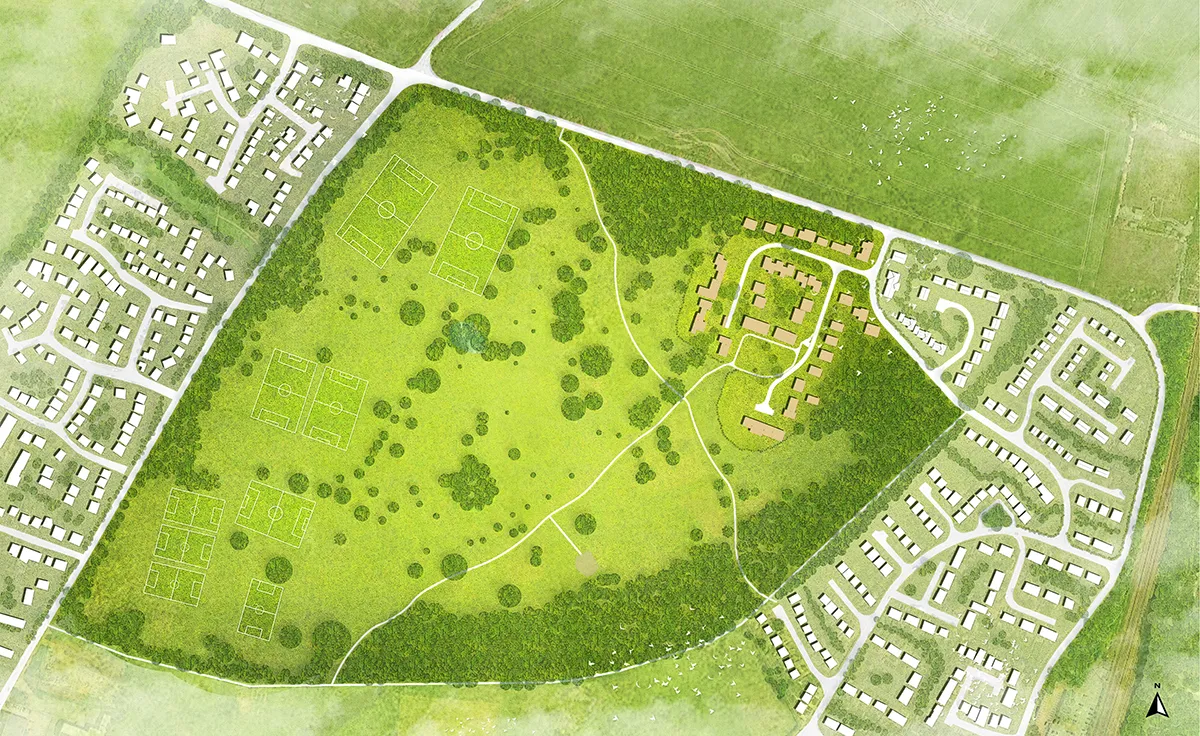
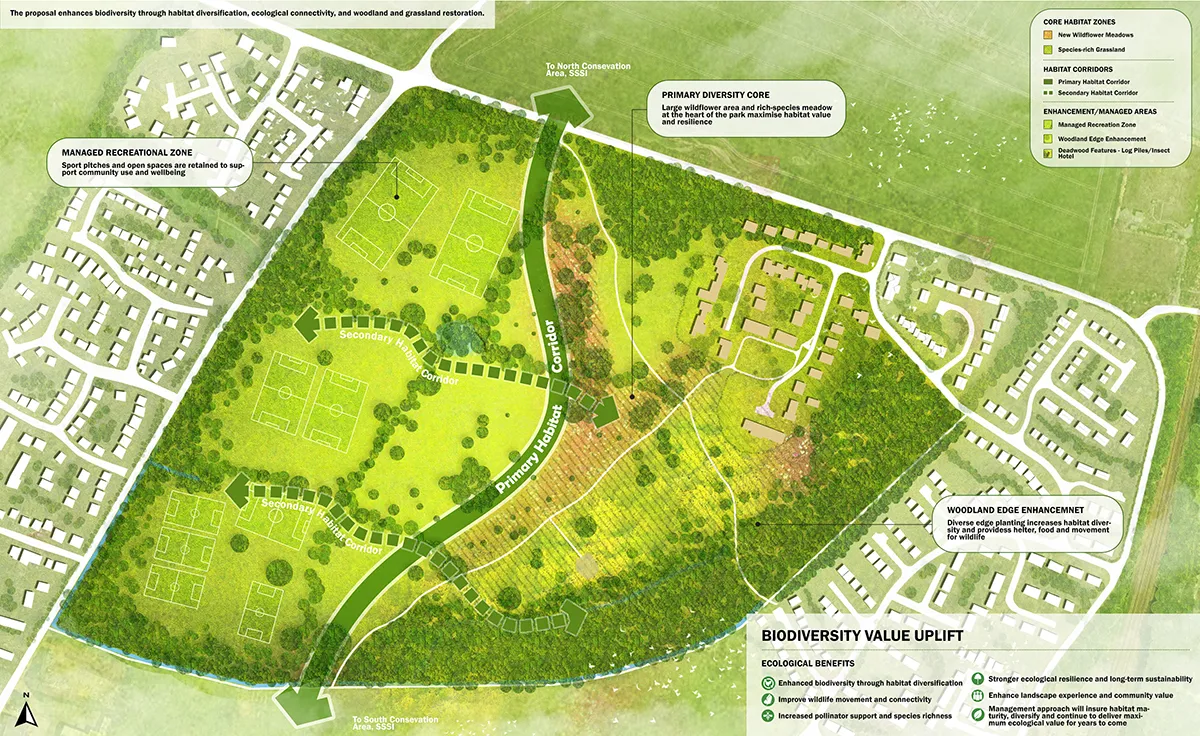
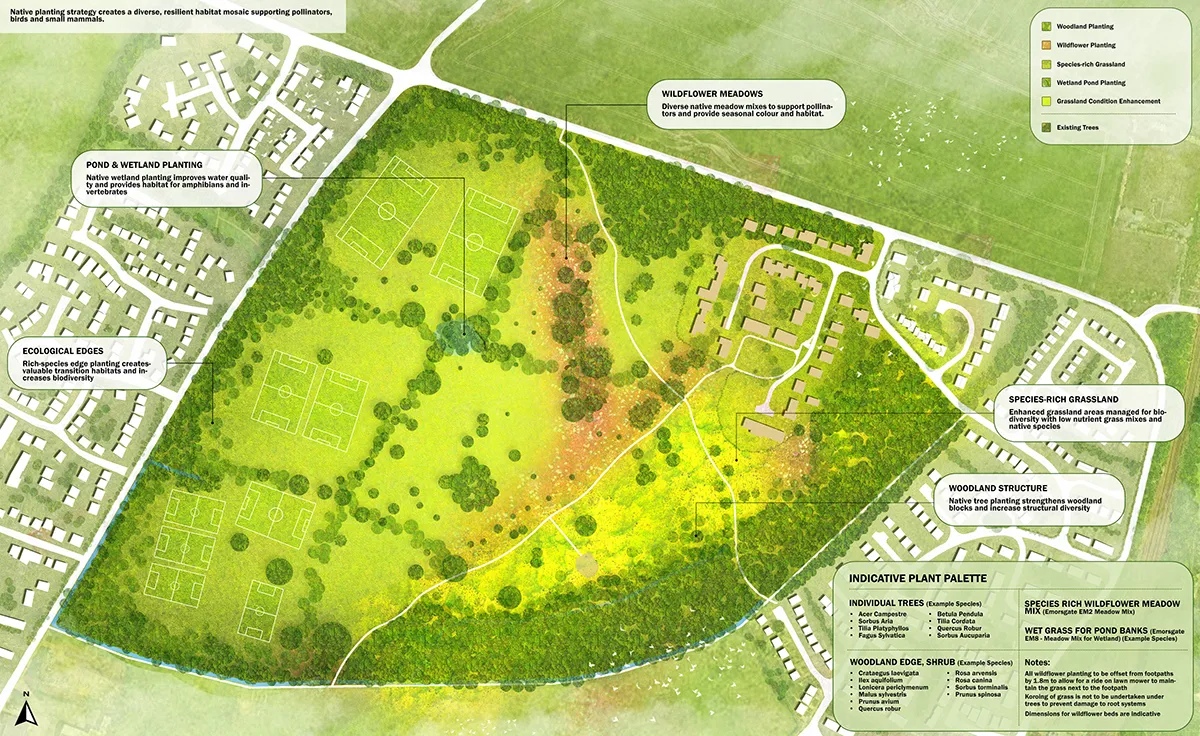
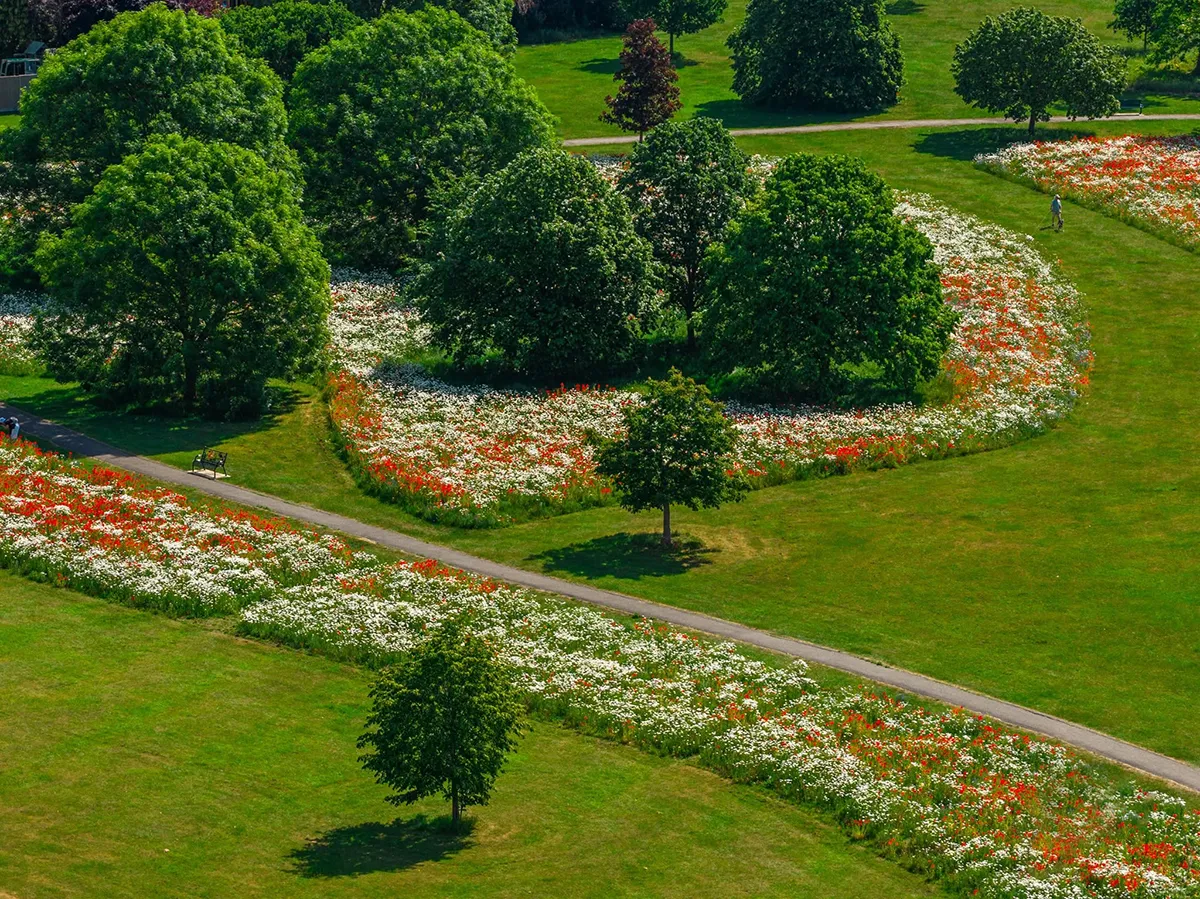
Ecological connectivity forms the backbone of the masterplan. Existing mature trees, woodland edges, and grassland were analysed to identify opportunities to strengthen habitat networks across the site. New habitats were positioned to reconnect fragmented ecological corridors, allowing movement for pollinators, birds and small mammals while increasing habitat diversity throughout the park. Rather than creating isolated biodiversity areas, ecological interventions are woven into the everyday recreational landscape so visitors experience nature as an integral part of the park.
Water also became a key ecological driver within the design. Existing drainage patterns and low-lying areas informed opportunities to retain and slow surface water naturally within the landscape. Planting in these wetter environments contributes to both biodiversity and climate resilience by increasing habitat variation and supporting natural infiltration and seasonal water storage. The integration of water-sensitive landscape design enhances ecological performance while reinforcing the park’s natural character.
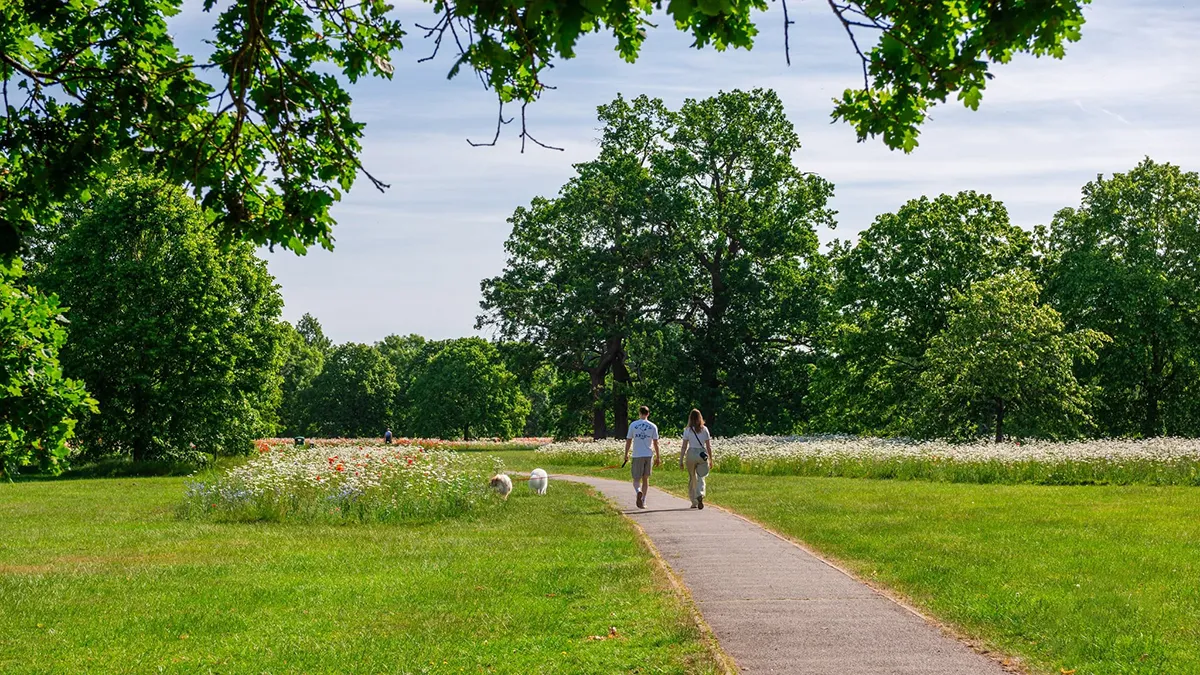
The landscape balances ecological restoration with everyday public use. Existing circulation routes and recreational spaces remain central to the park while new habitats provide changing seasonal experiences that encourage visitors to engage more closely with nature. Meadows, woodland margins and orchard spaces create opportunities for education, informal recreation and wildlife observation without reducing accessibility.
Rather than introducing a new identity, the design reveals the ecological potential already present within Priory Park. By combining community participation, habitat restoration and water-sensitive landscape design, the project demonstrates how public parks can become more resilient, biodiverse and socially valued in response to contemporary environmental challenges.
Technical Information
The planting strategy was developed to maximise habitat diversity, improve long-term resilience and reduce maintenance requirements while complementing the park’s existing landscape character.
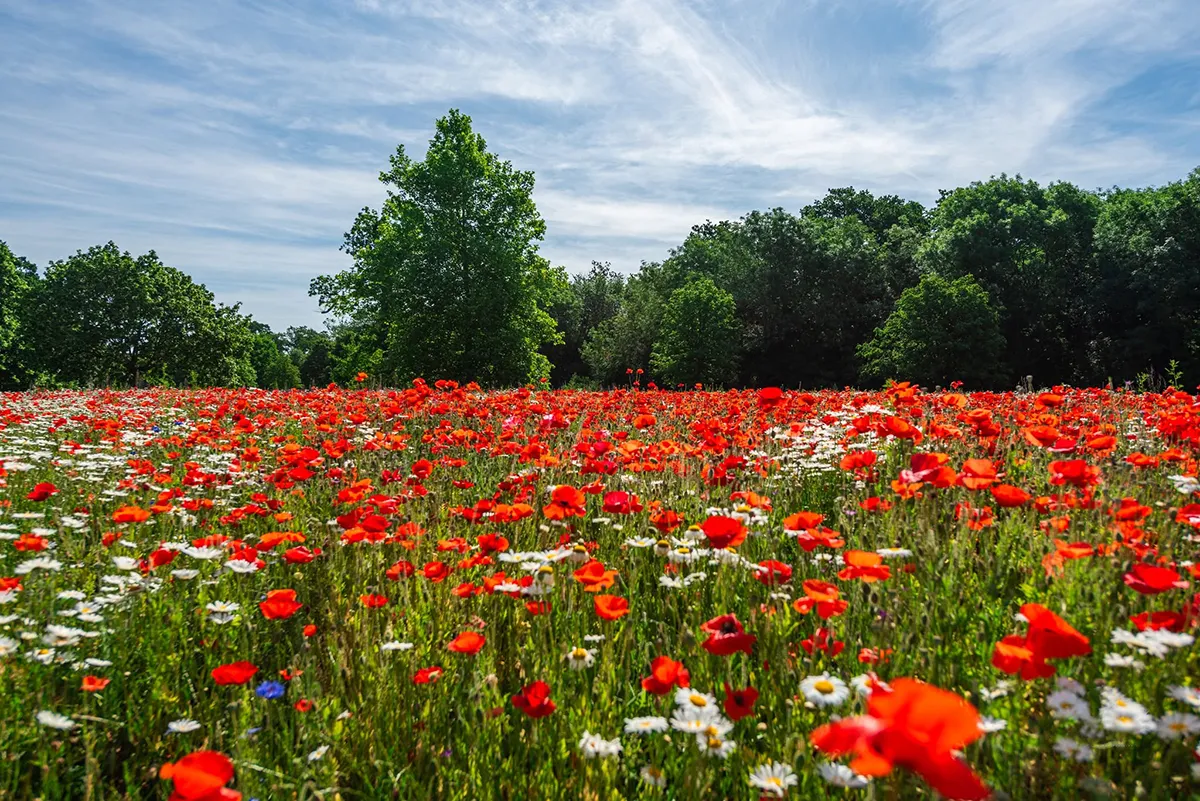
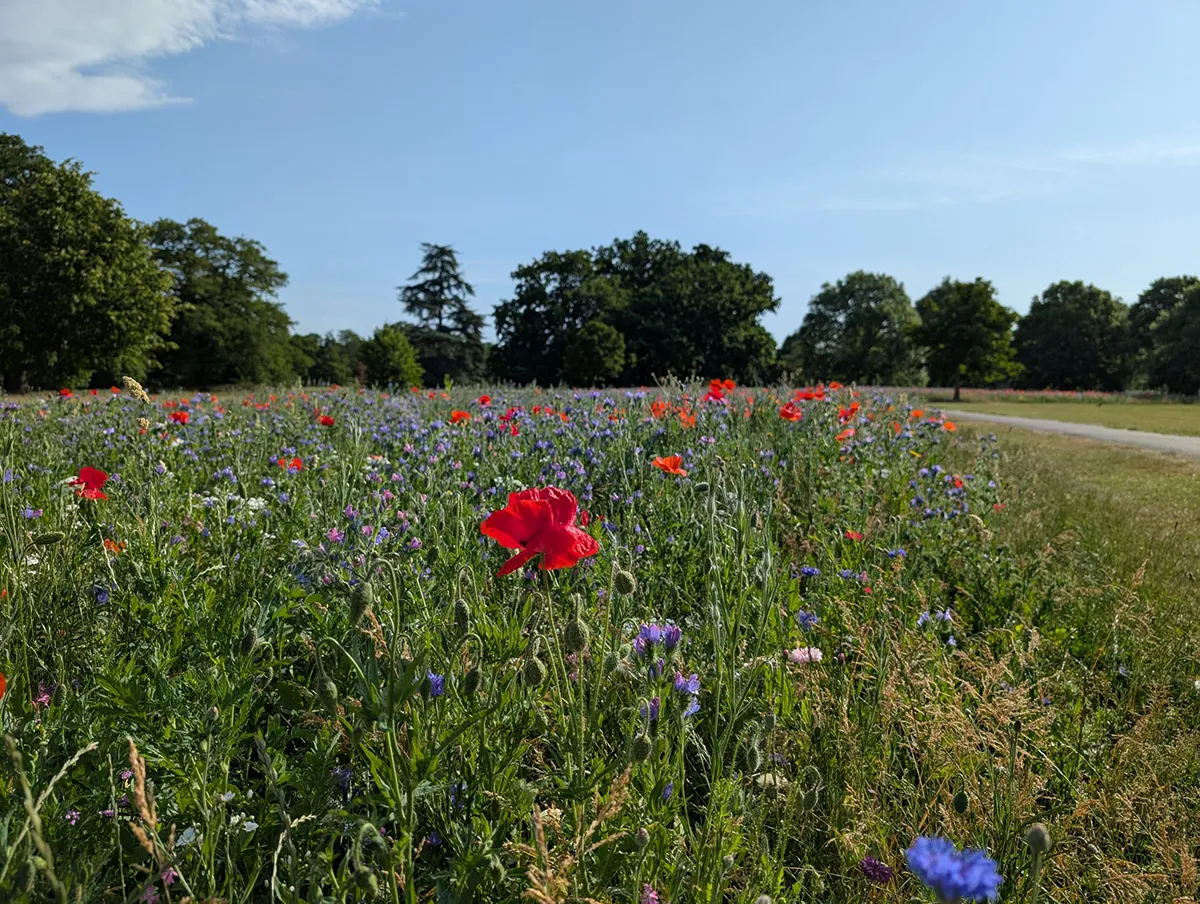
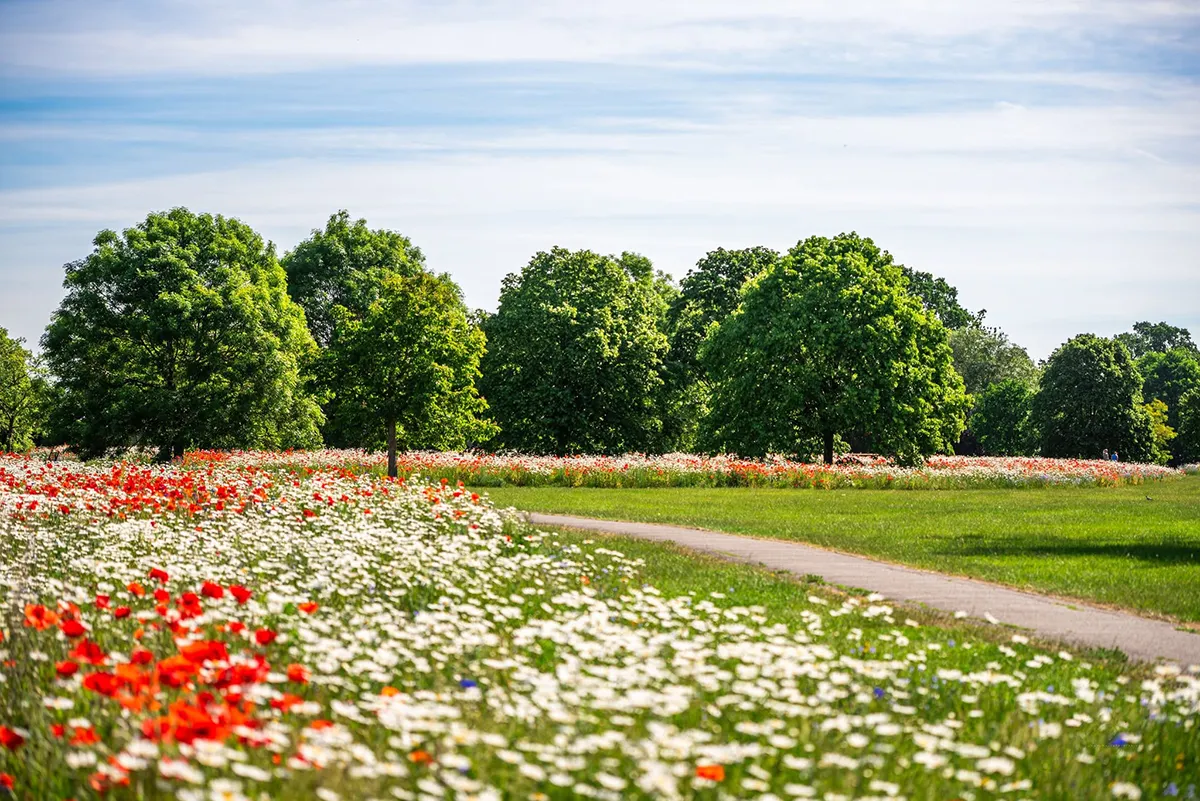
Large areas of intensively managed amenity grass were selectively converted into species-rich wildflower meadows using native grass and perennial mixes appropriate to local soil conditions. These meadows provide seasonal colour, support pollinating insects and reduce mowing frequency compared with conventional parkland grass.
Woodland enhancement focused on strengthening existing tree groups through supplementary native understorey planting and the establishment of woodland edges. Layered planting incorporating canopy trees, small trees, shrubs, and ground flora creates structurally diverse habitats that provide food, shelter, and nesting opportunities for birds, mammals, and invertebrates throughout the year.
Additional native tree planting increases canopy cover while reinforcing ecological links across the park. Orchard planting introduces productive landscapes that contribute to biodiversity, reflect local landscape character, and encourage community engagement.
Wetland and moisture-tolerant planting palettes were introduced around existing drainage corridors and low-lying areas to improve ecological function and support natural water attenuation. These planting communities provide habitat variation while increasing the landscape’s resilience to periods of both heavy rainfall and summer drought.
Habitat enhancement measures include native hedgerows, deadwood retention, bird boxes, bat boxes and pollinator-friendly planting distributed throughout the site to increase ecological value at multiple scales.
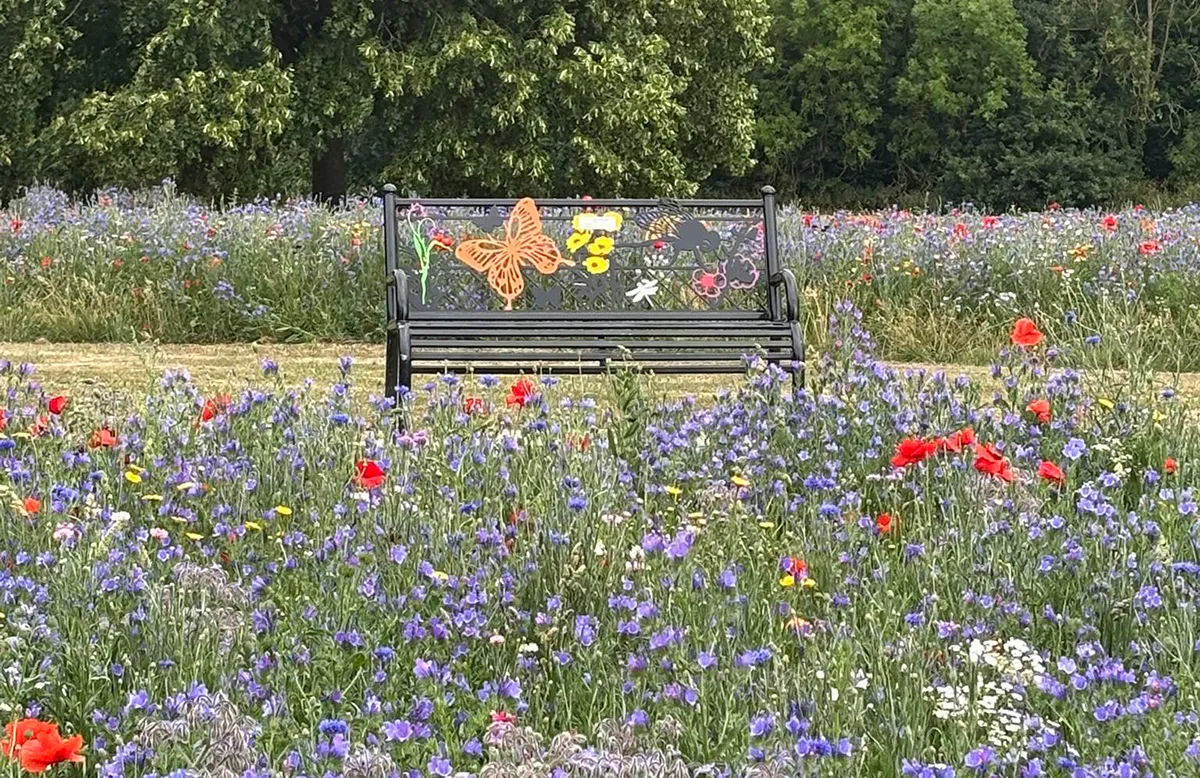
Plant species were selected primarily from native and climate-resilient palettes to provide year-round ecological interest, seasonal succession and long-term adaptability while minimising maintenance inputs. The project was designed by epd Landscape for Huntingdonshire District Council, with construction delivered by Glendale Countryside Ltd.
Priory Park
Location: St Neots, Huntingdonshire, United Kingdom
Landscape Architect: epd Landscape (part of the Glendale Group)
Client: Huntingdonshire District Council
Lead Landscape Architect: Yuwei Chen
Project Director: John Nuttall CMLI
Main Contractor: Glendale Countryside Ltd
Tree Supplier: Specimen Tree Ltd
Image Credit: Yuwei Chen
Text: Yuwei Chen
Photography: The St Neots Gallery