
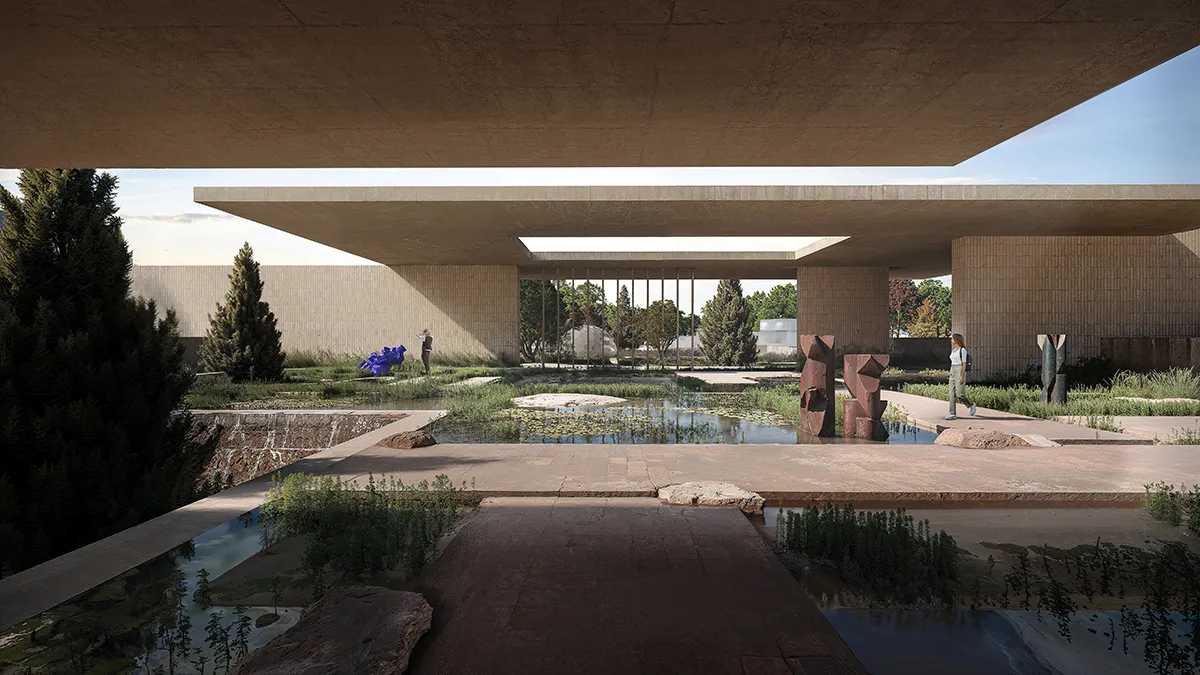
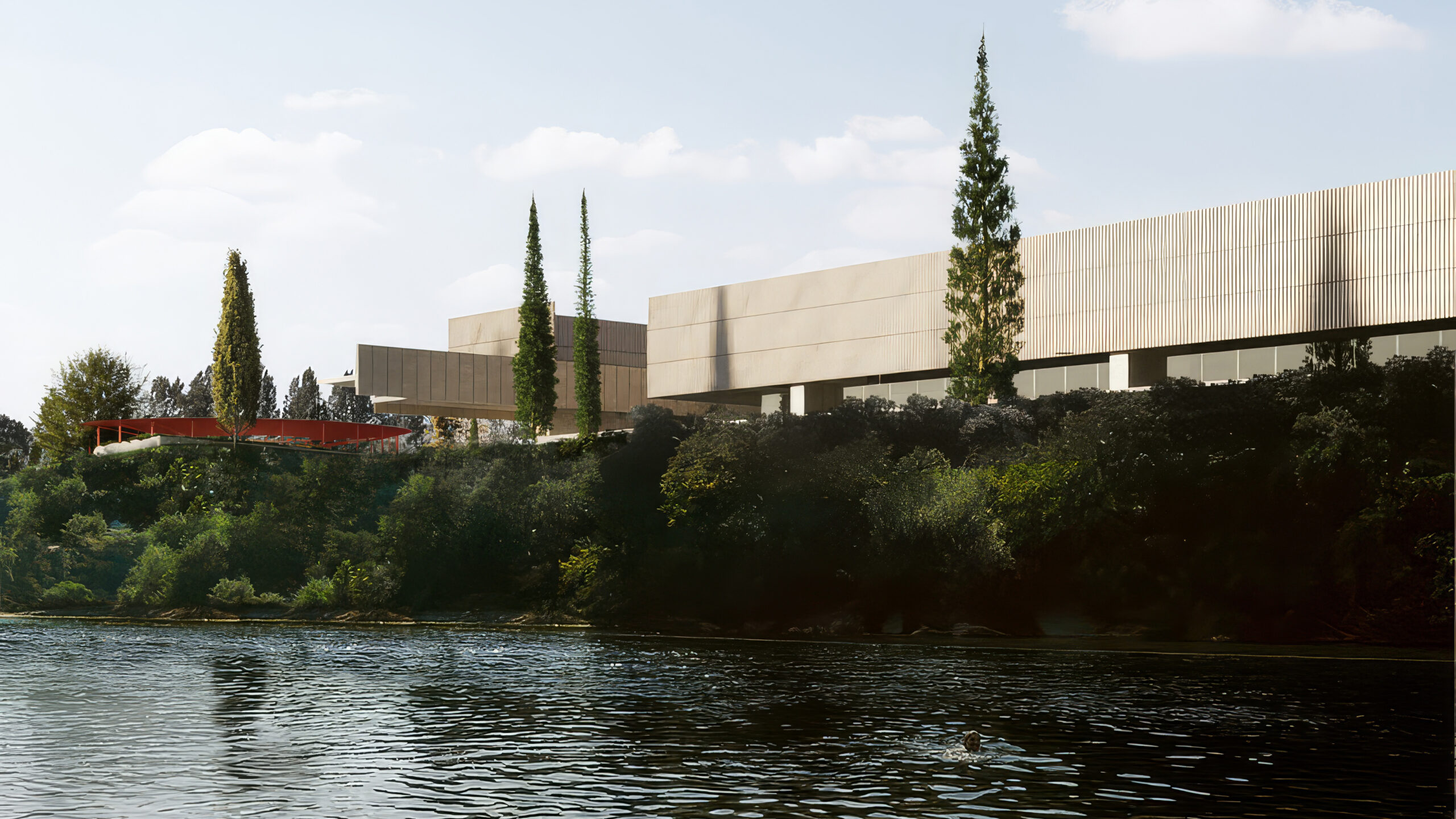
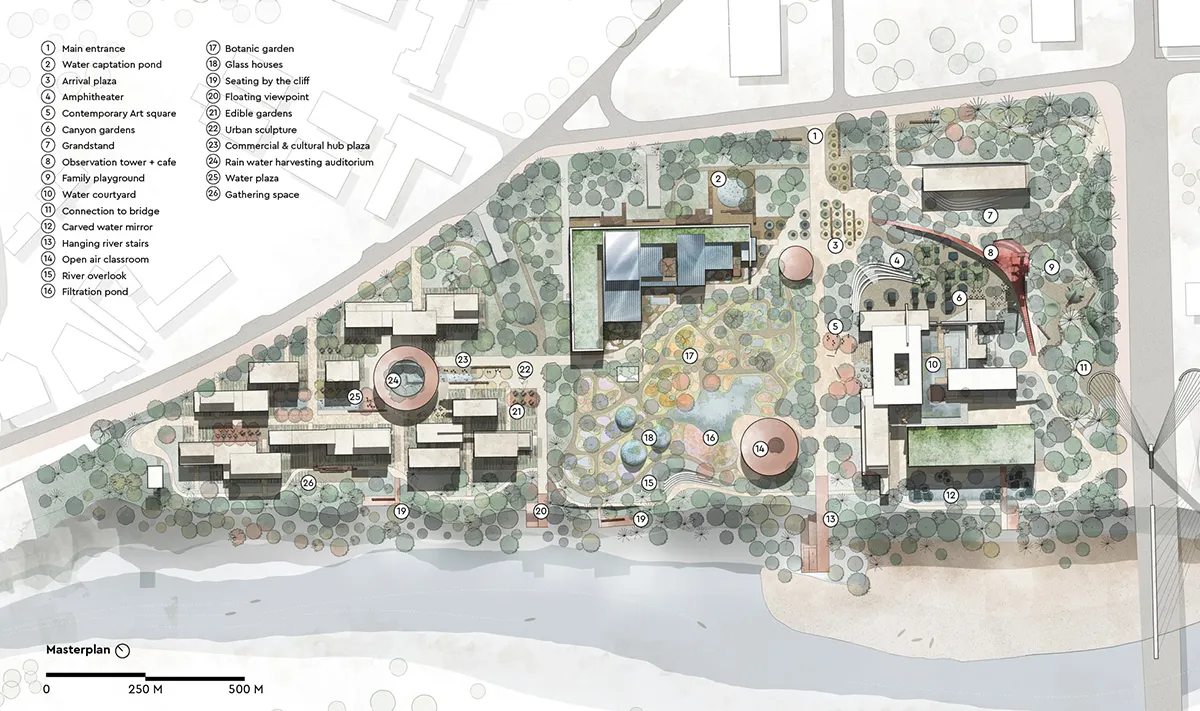
The landscape design proposal for the Museum of Contemporary Art, the Museum of Natural History, and the Park of Culture & Arts (Podgorica, Montenegro) aims to establish a profound physical and conceptual relationship with the surrounding biomes. This involves leveraging and expanding upon both Gorica Hill’s Mediterranean forest and the natural banks of the Morača river.
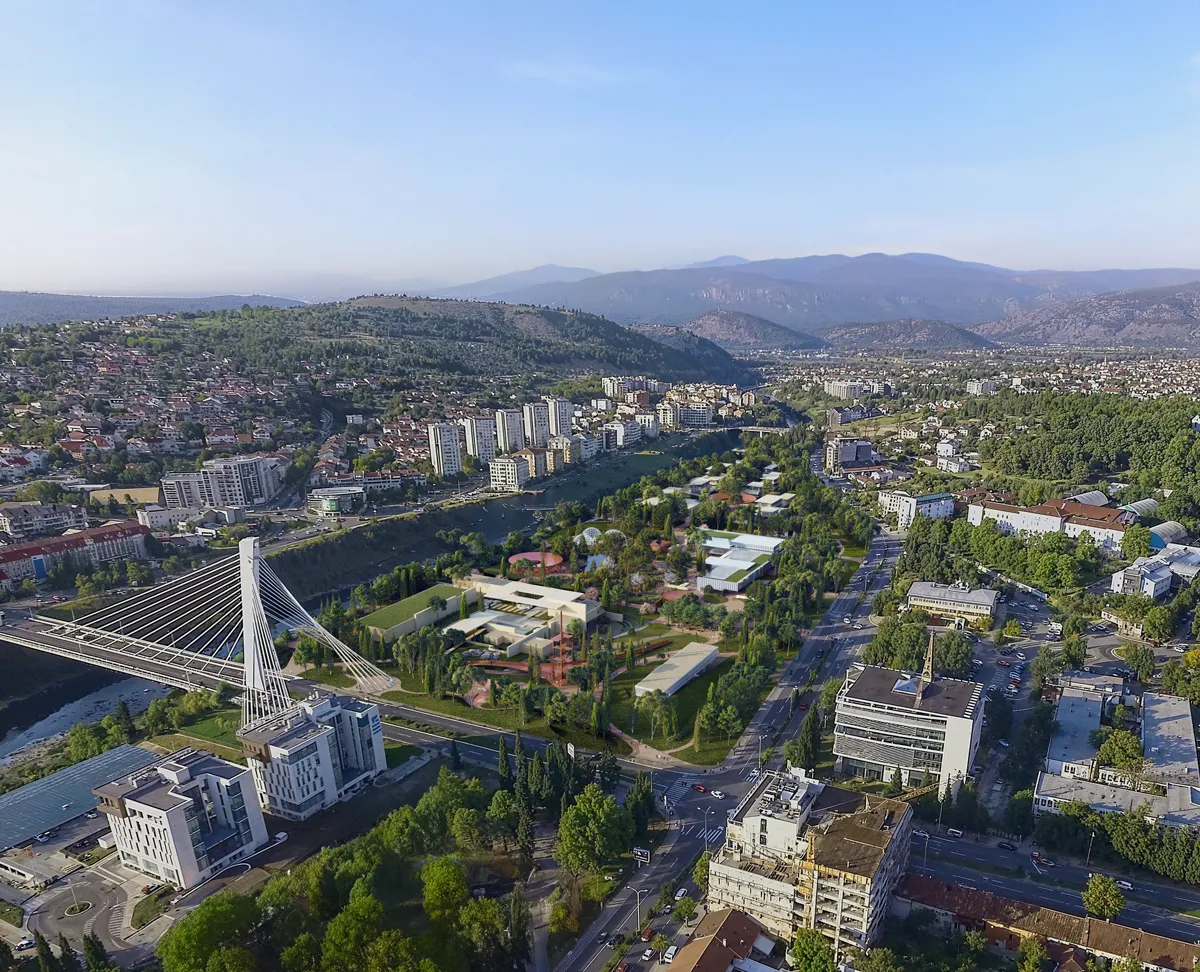
Our objective is to create a green natural buffer around our plot, protecting it from the urban environment of the nearby streets while also functioning as a natural corridor. This green belt forms the Park of Arts and Culture, which integrates and enhances the Morača river’s linear park on its western side.
The design establishes a central pedestrian corridor, a guiding pathway for visitors to navigate through the main open spaces, such as native species gardens, educational and cultural hubs, and the Rainwater Auditorium, while simultaneously connecting to the Millennium Bridge and the nearby Njegosev Park.
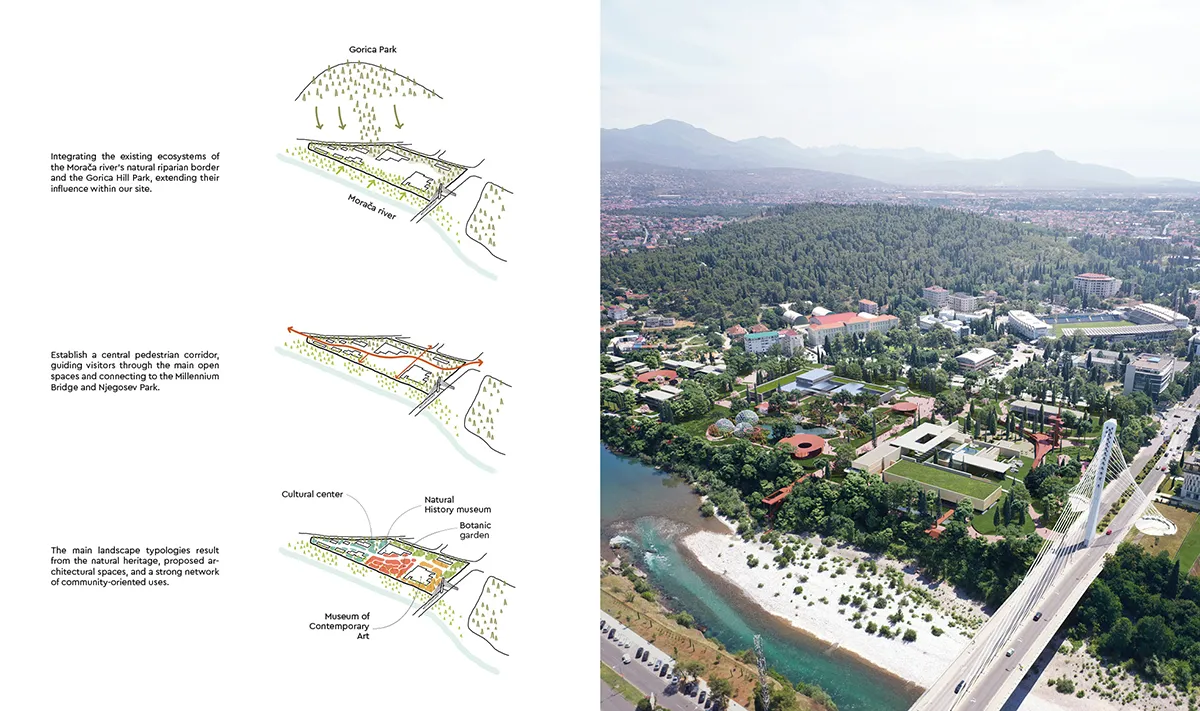
The primary focus lies in utilizing native and locally available plants, as well as maximizing the preservation of existing valuable trees. The softscape design will provide a contrasting variety of textures and colors that evolve with each season, distinctly defining the character of each landscape space typology. These typologies can be subdivided into the Main Pedestrian Axis, Canyon Gardens, Museum of Contemporary Art Gardens, Natural History Museum Gardens, Botanic Garden, Commercial & Cultural Hubs, Riverfront Park, and the Green Belt.
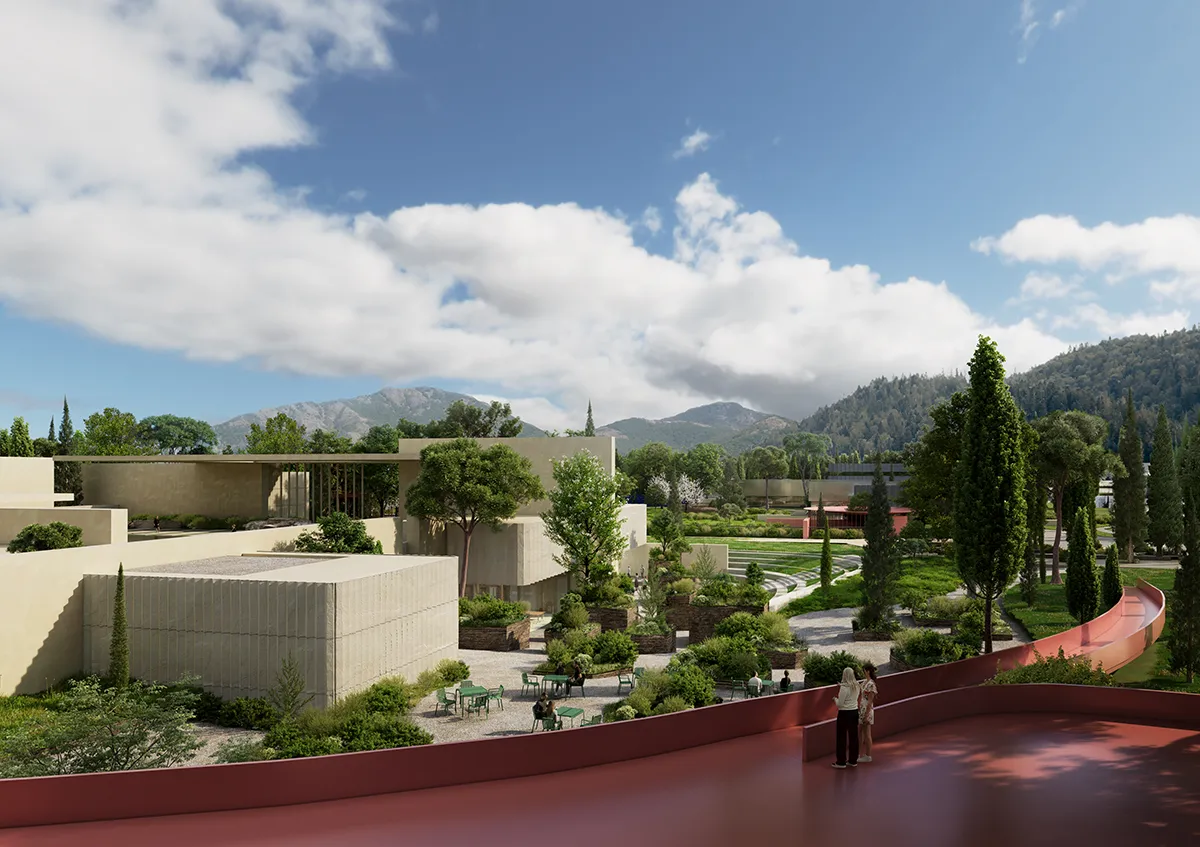
The Park of Arts & Culture and the overall landscape are conceived as integral pieces of blue-green infrastructure within Podgorica’s expanding urban fabric. Every outdoor area serves as part of a broader natural system.
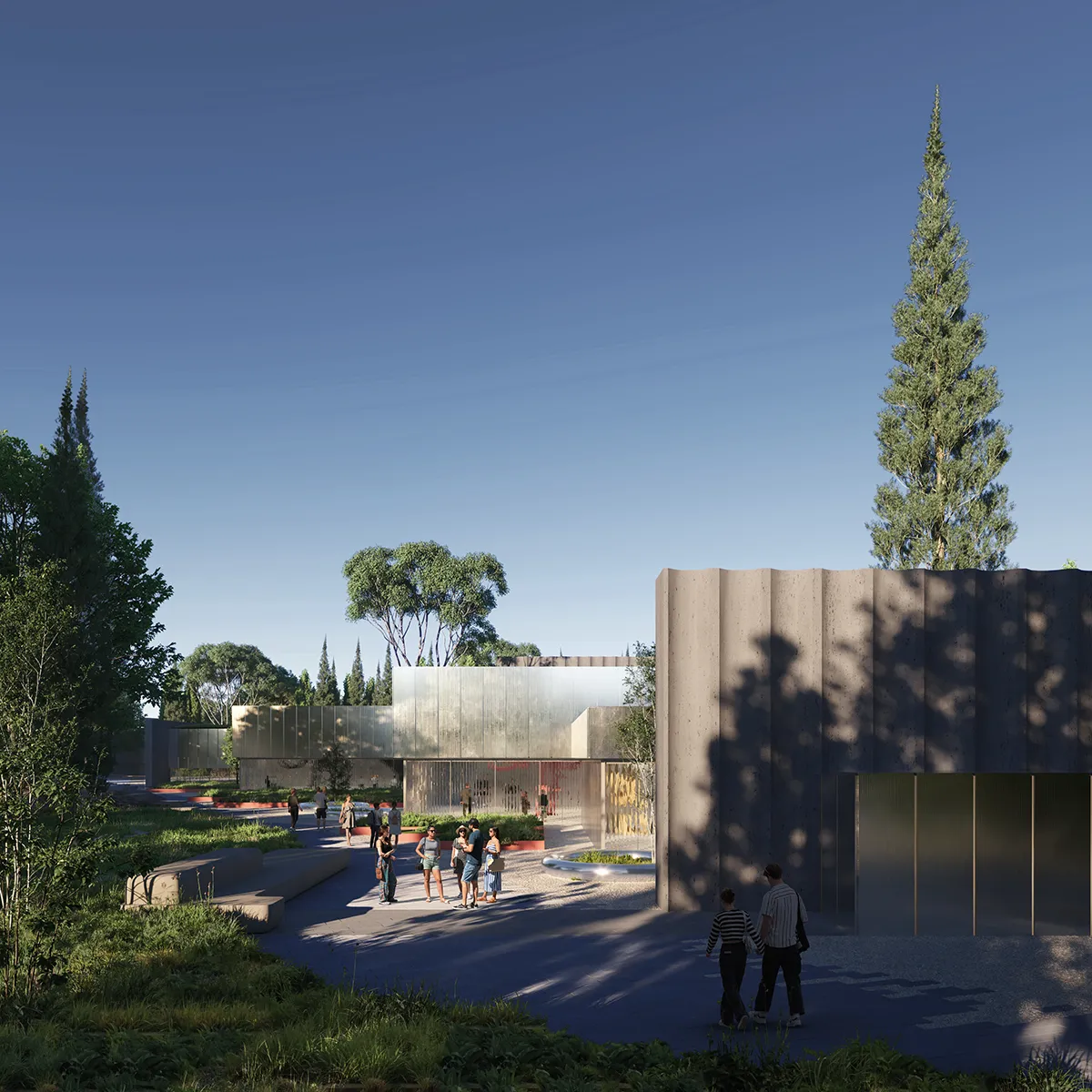
Implementing rainwater harvesting systems enables the storage and reuse of rainwater. This recycled water is then used to irrigate green spaces and maintain indoor water features. Additionally, we employ indoor water filtration and recycling systems to reduce potable water consumption and conserve water resources.
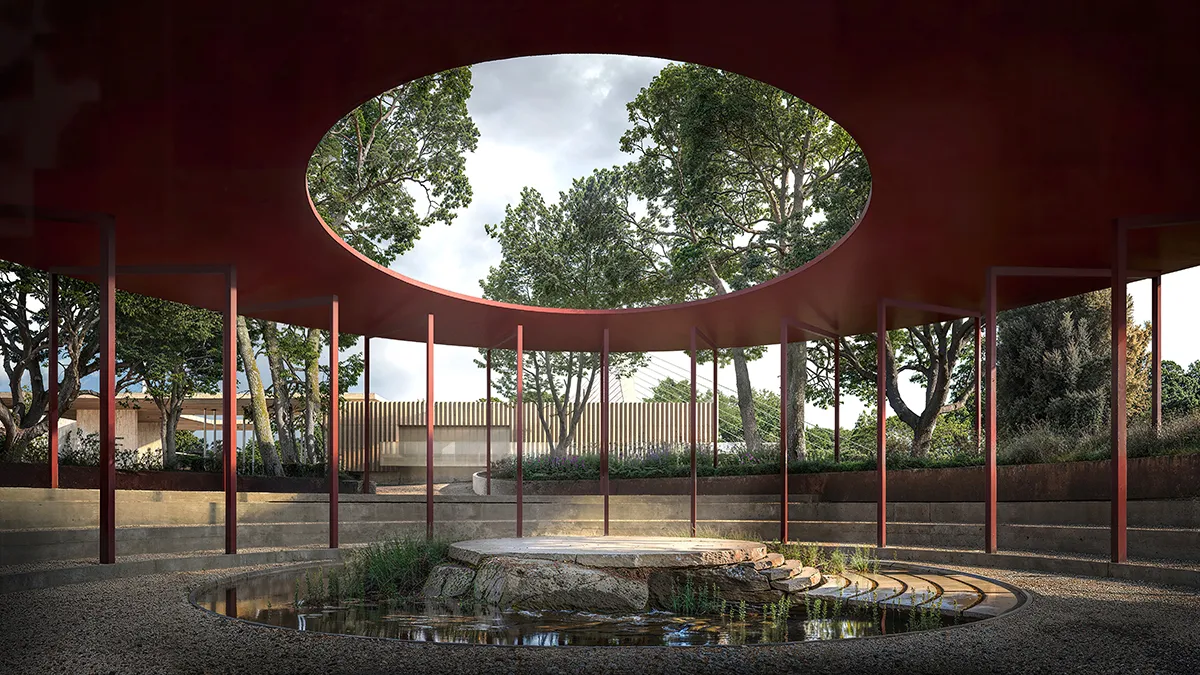
The proximity to the Morača river enhances the necessity of preserving the natural leveling and its runoff towards the river, ensuring that the natural soil infiltration filters the water and ensures its quality when it joins the main watercourse. With 88% of free soil available, we have several advantages for implementing Sustainable Urban Drainage Systems (SUDS).
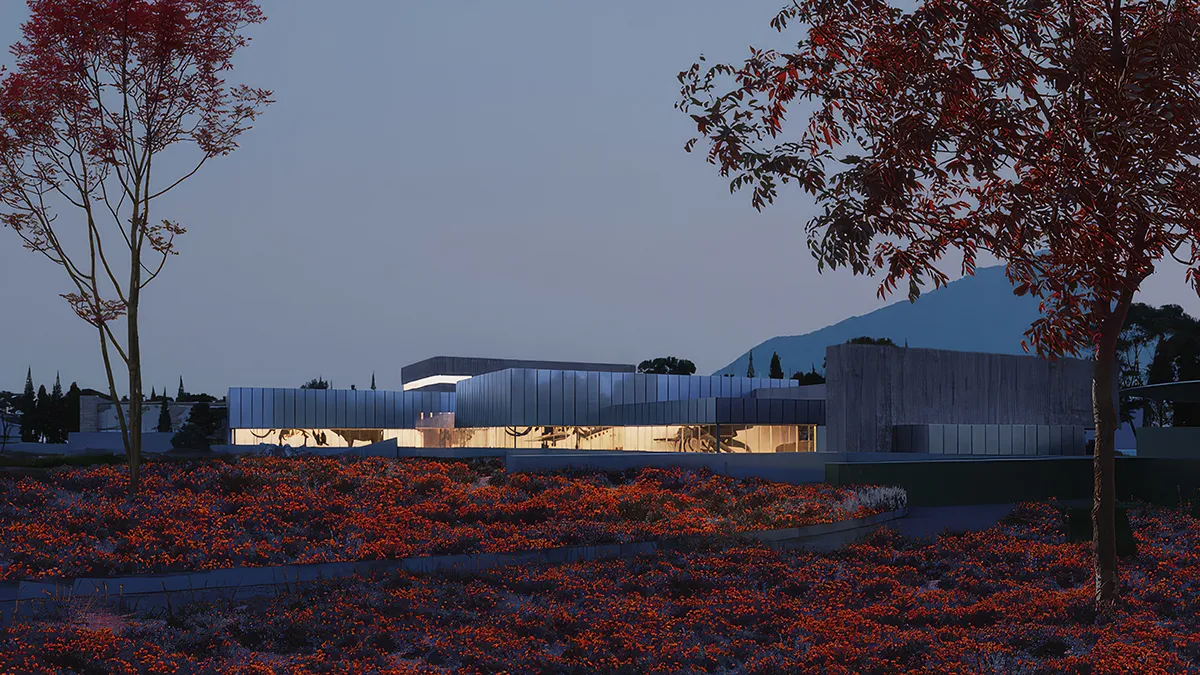
Inspired by the materiality and geological characteristics of the Morača river canyon, our strategy involves exposing the natural soil in areas where levelling is required. This approach allows us to retain the existing trees in their original locations, transforming them into sculptural elements that contribute to the site’s identity. Furthermore, this method not only preserves the area’s ecological integrity but also highlights the original nature and geological history of the Morača River canyon.
Podgorica Museum
Location: Podgorica, Montenegro
Landscape Architecture: LJ-Group
Architecture: CBH Architects
Image Credits: 3D renders: EDiT & Bura Studio
Shortisted in the 2025 WLA Awards – Concept Public Space category