
Urban Regeneration Through Rooftop Transformation: A Model for Sustainable Density
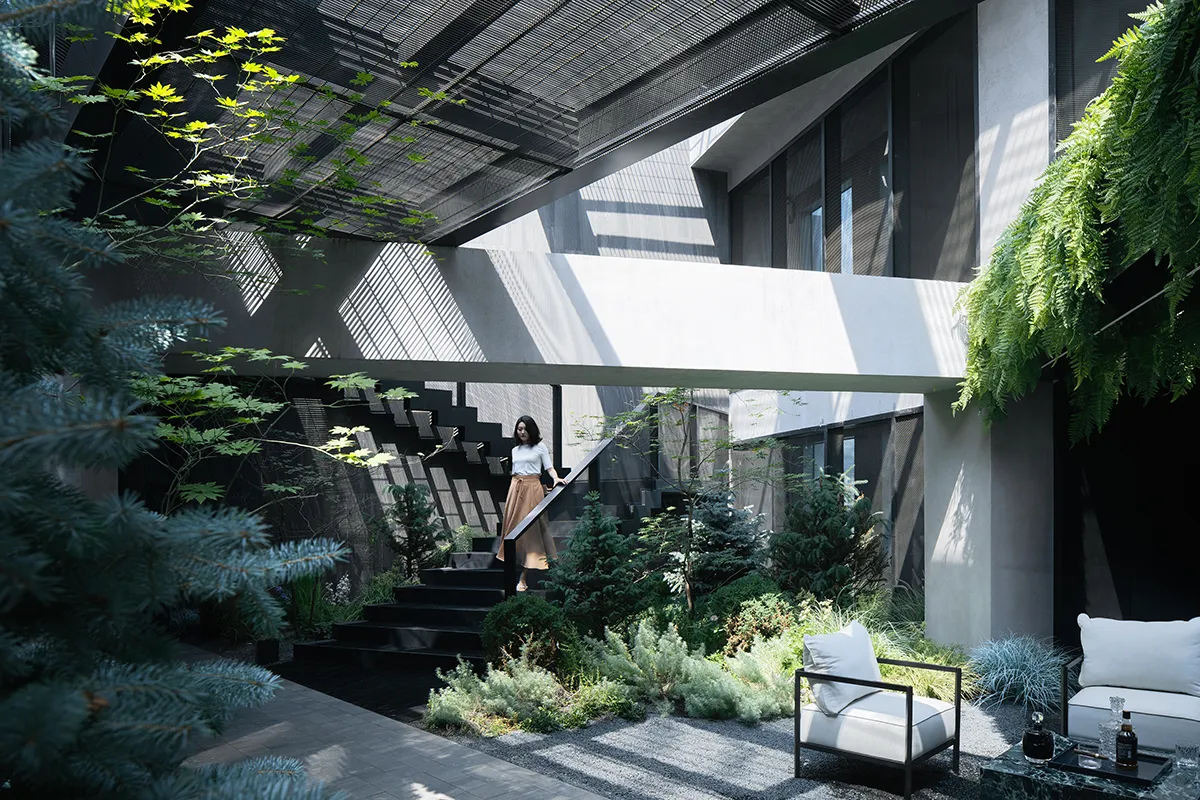
In Shenyang’s dense urban core, a visionary 1,000㎡ rooftop renovation project redefines neglected architectural spaces as vibrant, livable landscapes. By transforming an abandoned equipment roof into two distinct penthouse gardens, this project challenges conventional urban design, proving that technical constraints can inspire innovation rather than limit creativity.
Constraints as Catalysts for Design
The site’s complexities of Opus One dictated the design approach. Decades-old ventilation infrastructure created an irregular grid of obstacles, while aging beams and columns imposed strict spatial limitations. The harsh northern Chinese climate further complicated the vision, as traditional rooftop gardens in Shenyang often prioritize hardiness over lushness. Additionally, logistical challenges arose from the rooftop’s location on an occupied building—every material had to be transported via the existing freight elevators, which required meticulous planning.
Rather than viewing these constraints as barriers, the design team treated them as opportunities. The result is a masterclass in adaptive reuse, where structural challenges inform the project’s most inventive solutions.
Spatial Reconfiguration: Elevating Possibilities
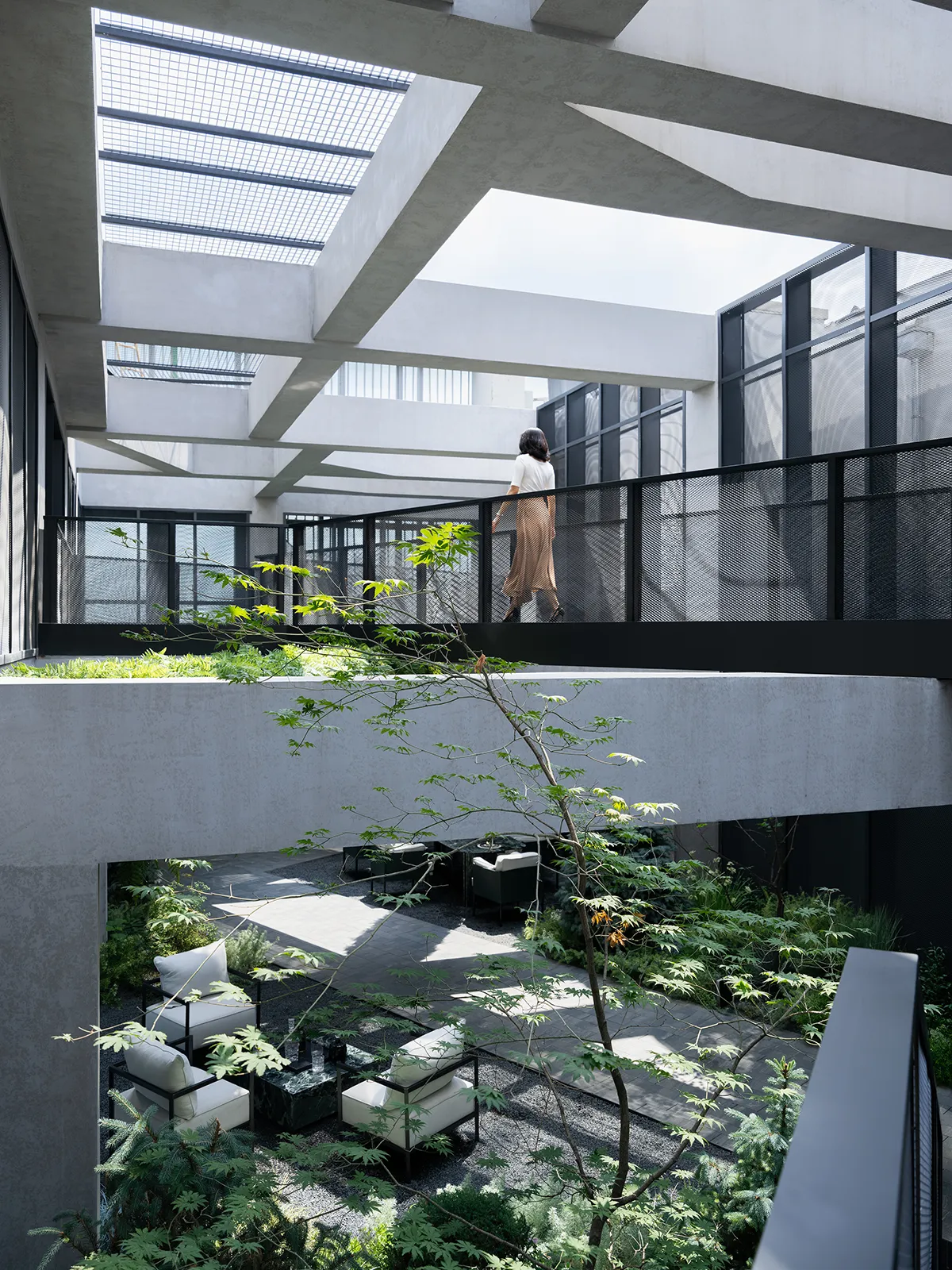
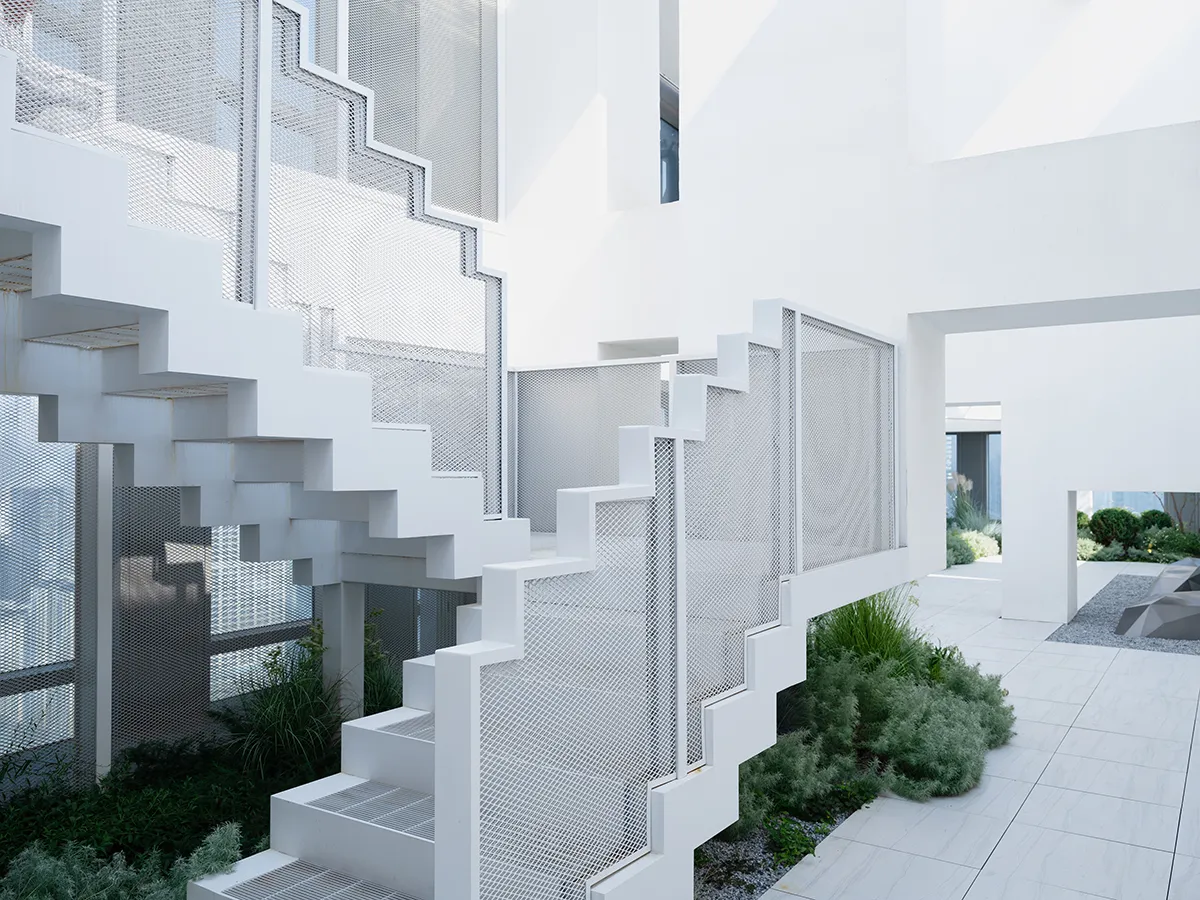
A key innovation was elevating the entire platform by 0.45 meters. This subtle yet strategic intervention solved multiple problems: it provided adequate soil depth for planting, improved drainage, and concealed necessary equipment beneath walkable surfaces. The existing three-level beams were repurposed into floating corridors, adding vertical dimension and creating dynamic viewing platforms.
Transport limitations led to another breakthrough—a modular construction system where every component was prefabricated to fit within the building’s freight elevator. This precision engineering ensured seamless assembly while minimizing on-site disruption.
The Black Garden: Sculptural Drama
The western portion of the roof houses the Black Garden, a space defined by mystery and theatrical sequencing. Diagonal pathways weave around structural columns, forming interconnected volumes that feel both deliberate and organic. A floating walkway offers elevated views while maintaining privacy for those below.
Materiality plays a crucial role—blackened steel and mirrored surfaces create a sophisticated, ever-changing backdrop. At night, carefully positioned lighting transforms the garden, casting dramatic shadows across textured walls. The sunken reception area blurs the indoor-outdoor boundary, aligning perfectly with the interior living spaces. A triangular staircase, entwined with suspended plantings, serves as both a circulation element and a sculptural focal point.
The White Garden: Luminous Serenity
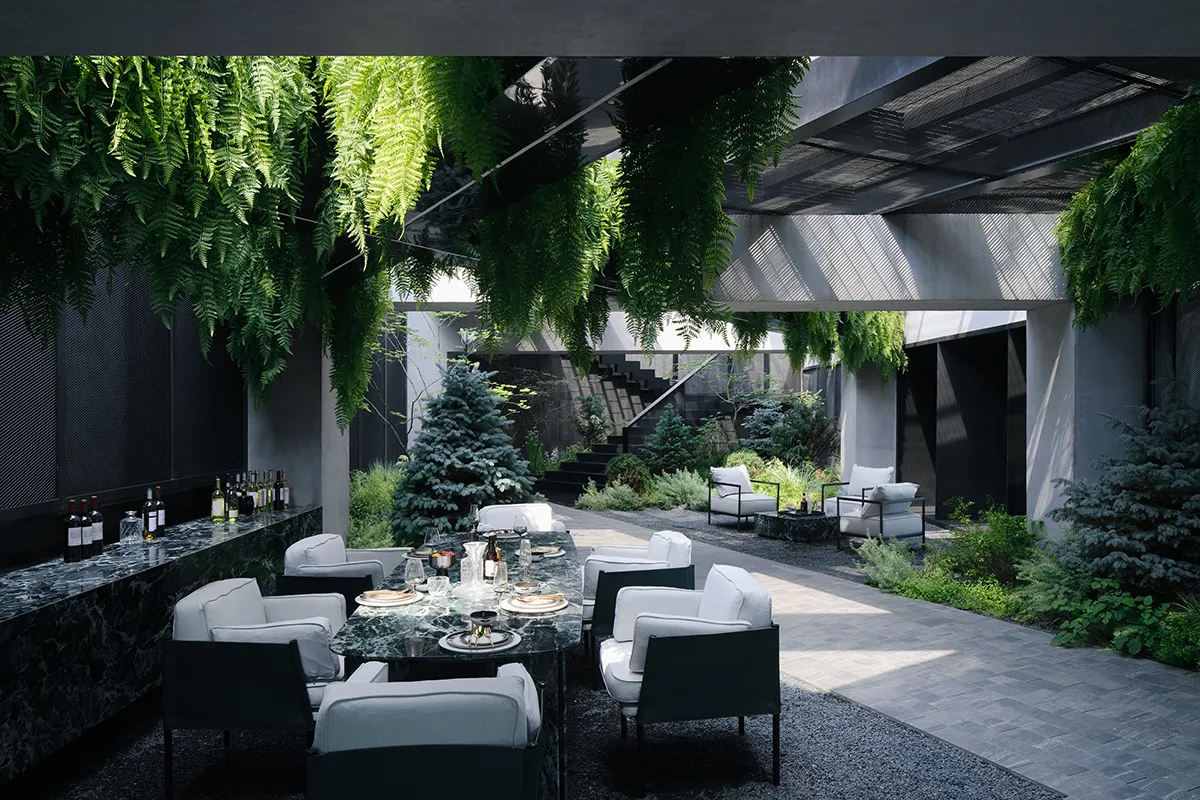
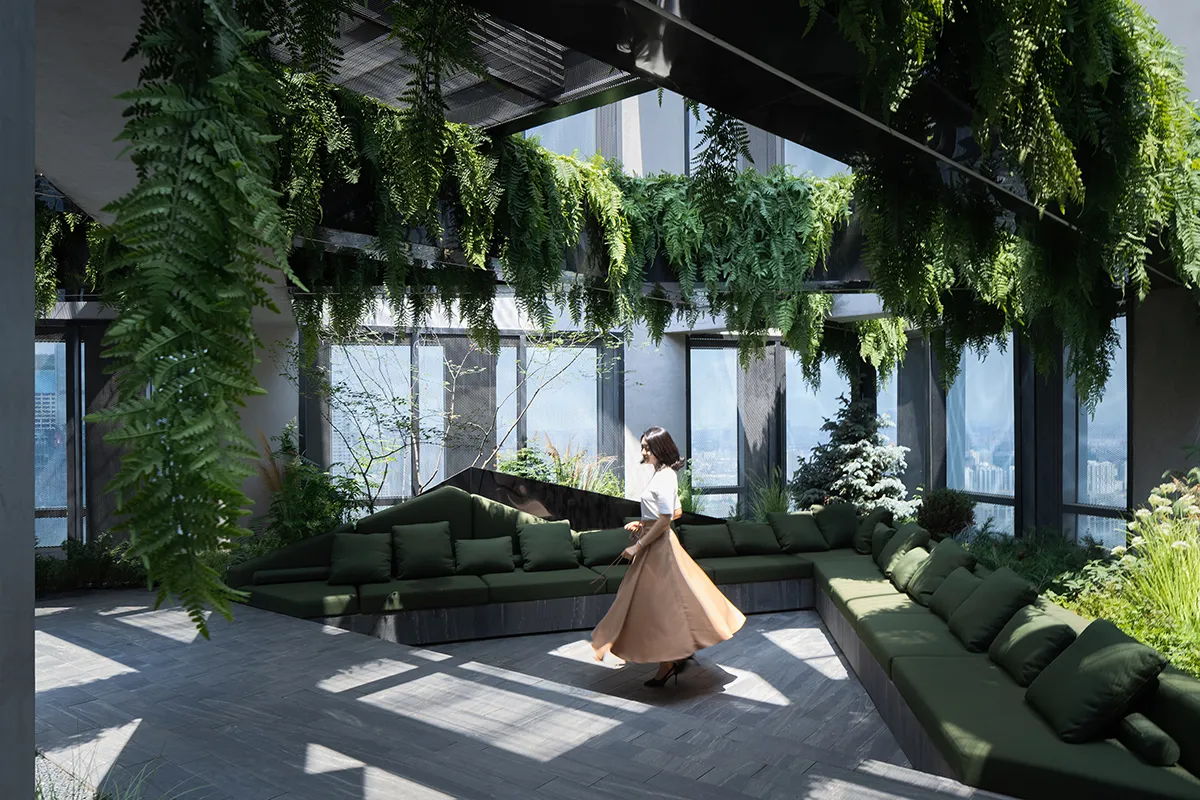
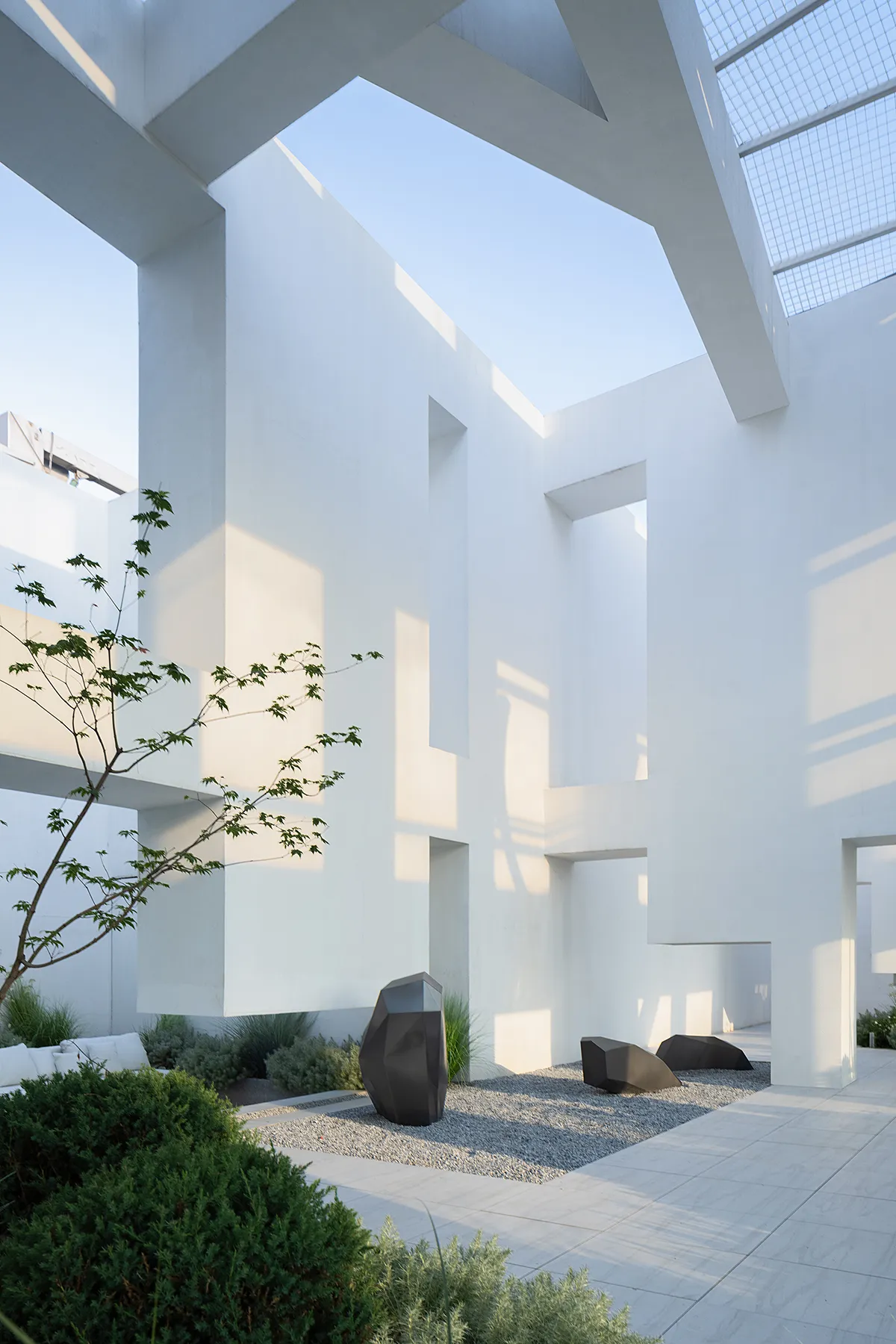
In contrast, the White Garden embraces openness and reflection, drawing from traditional Chinese garden principles reimagined for contemporary living. A dry landscape area, inspired by classical Chinese rock-and-gravel compositions, offers a meditative retreat. Existing structural elements are repurposed—beams become seating, columns transform into artful partitions.
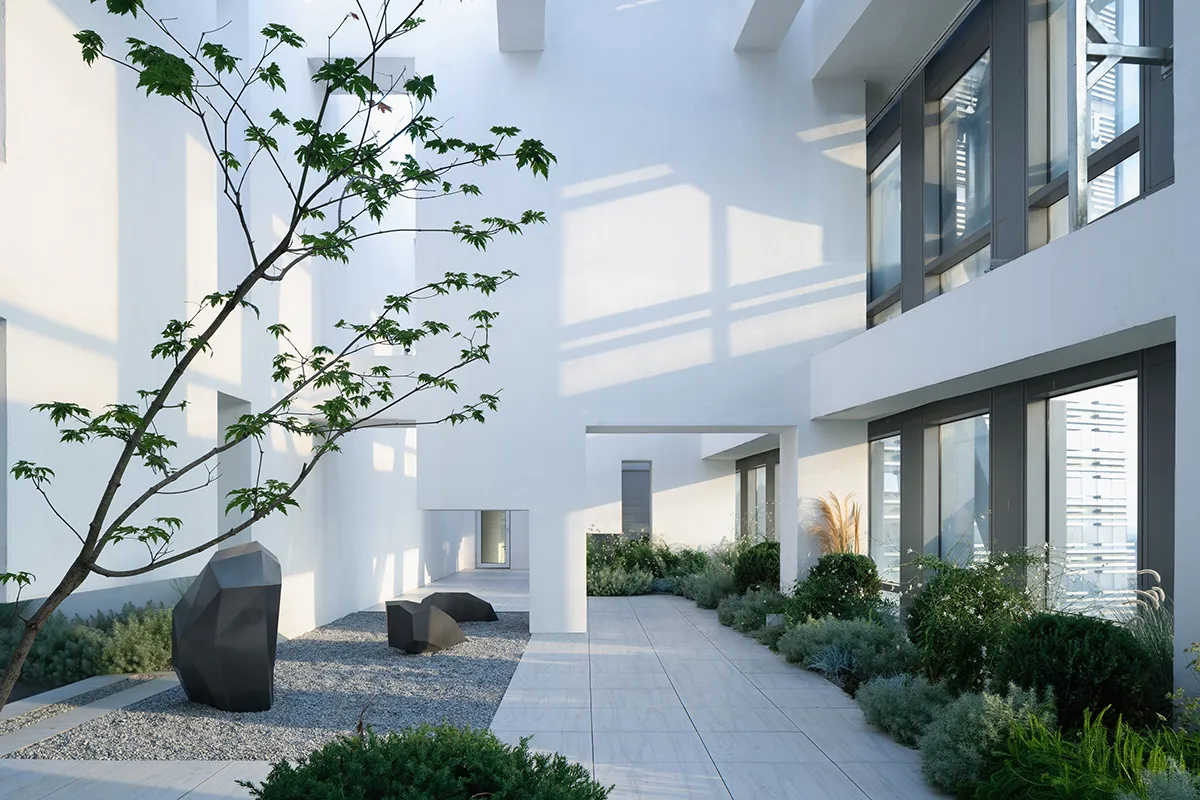
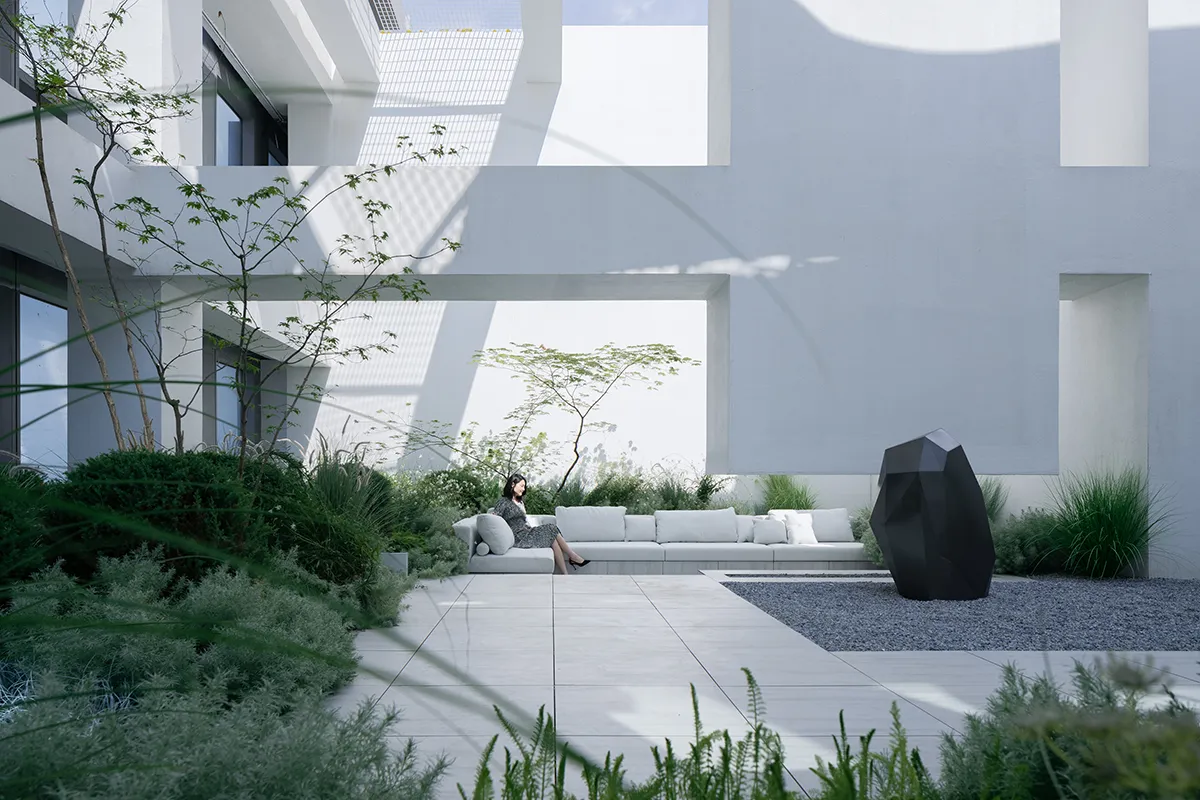
The upper-level dining area, featuring a marble cooking station, frames panoramic views of the Hun River while maintaining an intimate scale for gatherings. The interplay of light, stone, and greenery cultivates an atmosphere of tranquility.
Climate-Responsive Planting: A Hybrid Approach
One of the project’s most significant innovations is its planting strategy, tailored to Shenyang’s extreme winters. Rejecting sparse, hardy-only schemes, the team developed a hybrid system:
- Hardy real plants capable of surviving freezing temperatures
- High-quality artificial elements to ensure year-round greenery
- Microclimate zones where wind-protected plantings thrive
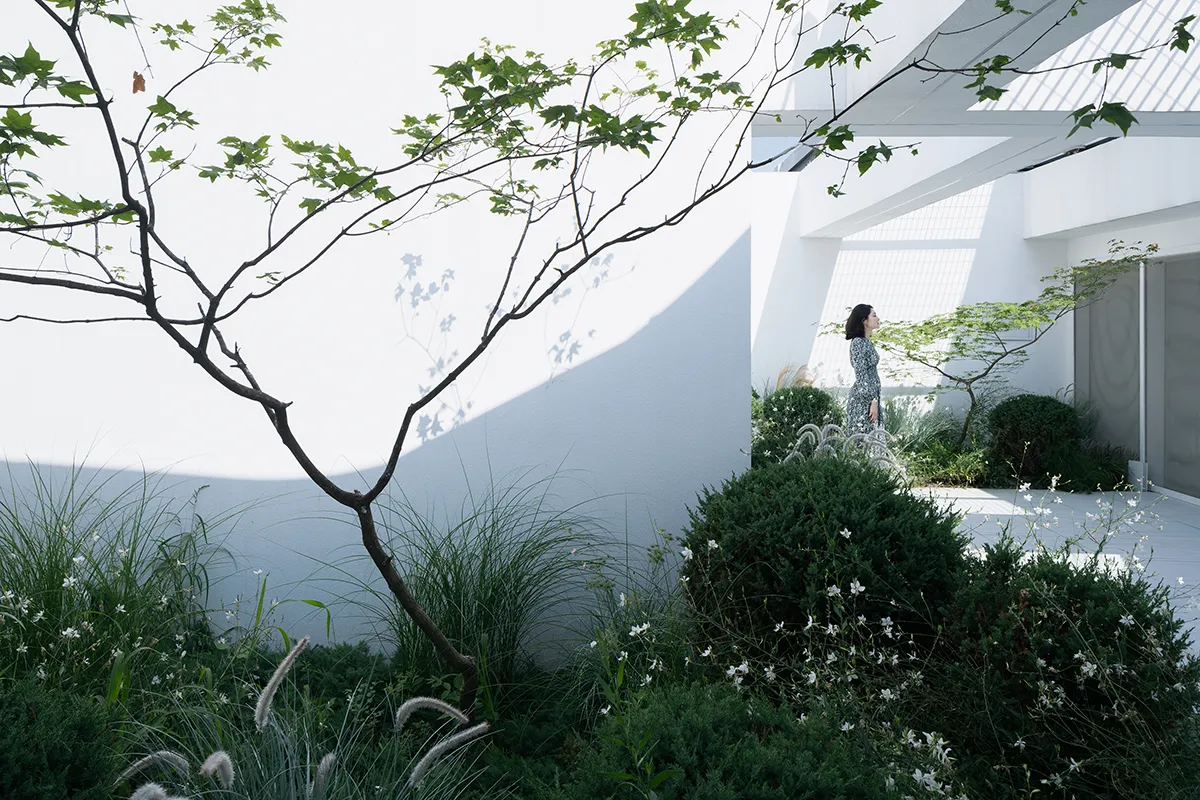
Suspended planting boxes along walkways serve dual purposes—softening hard edges while shielding delicate species from wind. The result is a lush, layered landscape that defies seasonal limitations.
Technical Precision & Sustainable Impact
Construction demanded exceptional craftsmanship. Every component, from custom planters to metal mesh screens, required exact tolerances. Drainage solutions combined elevated hardscapes with permeable gravel zones and optimized soil beds to manage runoff effectively.
Beyond aesthetics, the project delivers tangible urban benefits:
- Private outdoor space for residents in a high-density area
- Improved building insulation through added greenery
- A replicable model for sustainable urban densification
Conclusion: A Blueprint for Urban Revival
This rooftop transformation proves that even the most constrained urban spaces can become thriving landscapes. By embracing limitations as creative fuel, the project merges technical ingenuity with artistic vision. More than a private retreat, it serves as a manifesto for urban regeneration—demonstrating how overlooked rooftops across northern China could be reimagined as green oases.
In a world where cities must grow smarter, not just larger, this project offers a compelling vision: constraints are not obstacles, but opportunities waiting to be unlocked.
Opus One
Location: Shengyang, China
Design Firm: TROP: terrains + open space
Photography: Holi
Shortlist in the 2025 WLA Awards – Built Private Residential Landscape Design