
In the heart of Abu Dhabi, New York University Abu Dhabi (NYUAD) aimed to create more than just a campus. It envisioned a living, breathing landscape capable of thriving in extreme heat while nurturing intellectual curiosity, cultural exchange, and a continuously evolving, globally diverse community.
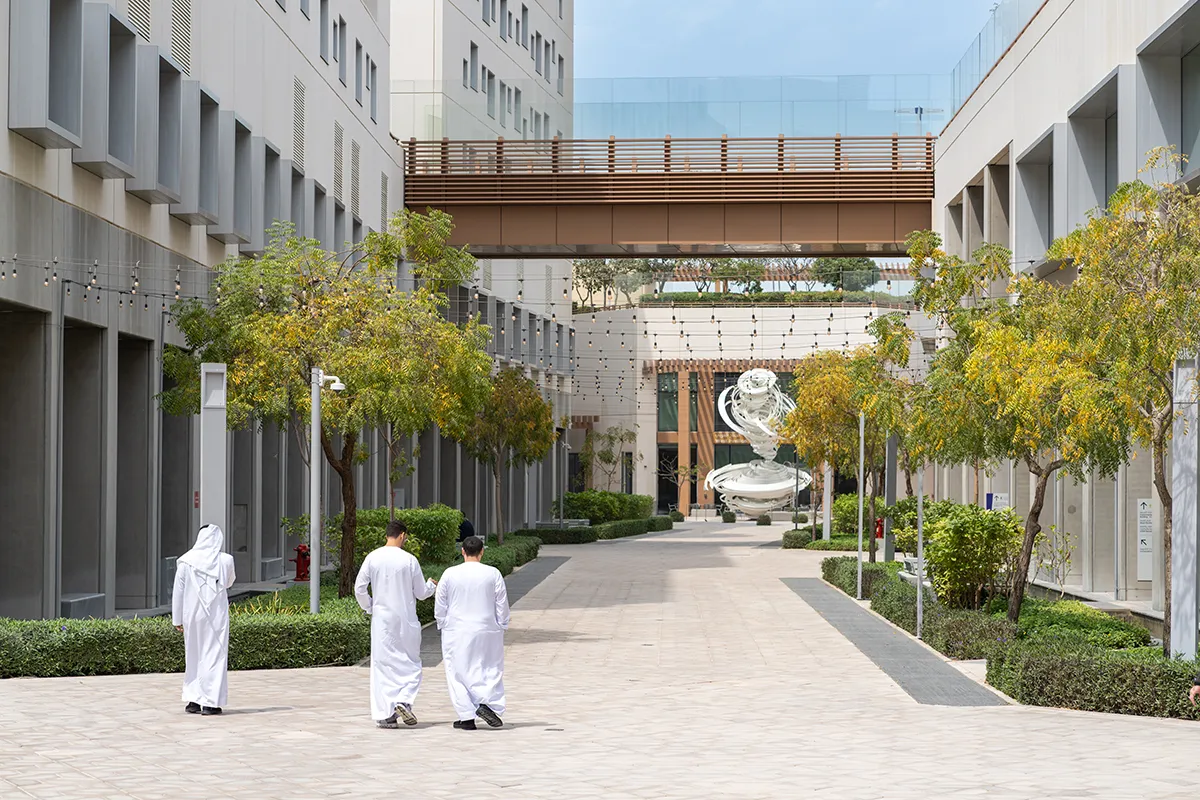
The design challenge went beyond climate. How do you encourage meaningful outdoor life in an arid environment where social spaces risk becoming underused? How do you connect academic, residential, and creative areas without losing the intimacy of a traditional campus? And how do you develop an identity for an institution that attracts students from over 120 countries, blending NYUAD’s global outlook with the UAE’s local context?
The resulting landscape performs on multiple levels: ecological, social, and spatial. Designed by Cracknell, the public realm is a high-quality, walkable framework that encourages movement, learning, and a sense of belonging. Shaded walkways, welcoming courtyards, and interconnected sky-gardens create an environment where people naturally gather, collaborate, and recharge. It supports daily life while celebrating cultural diversity and intellectual discovery.
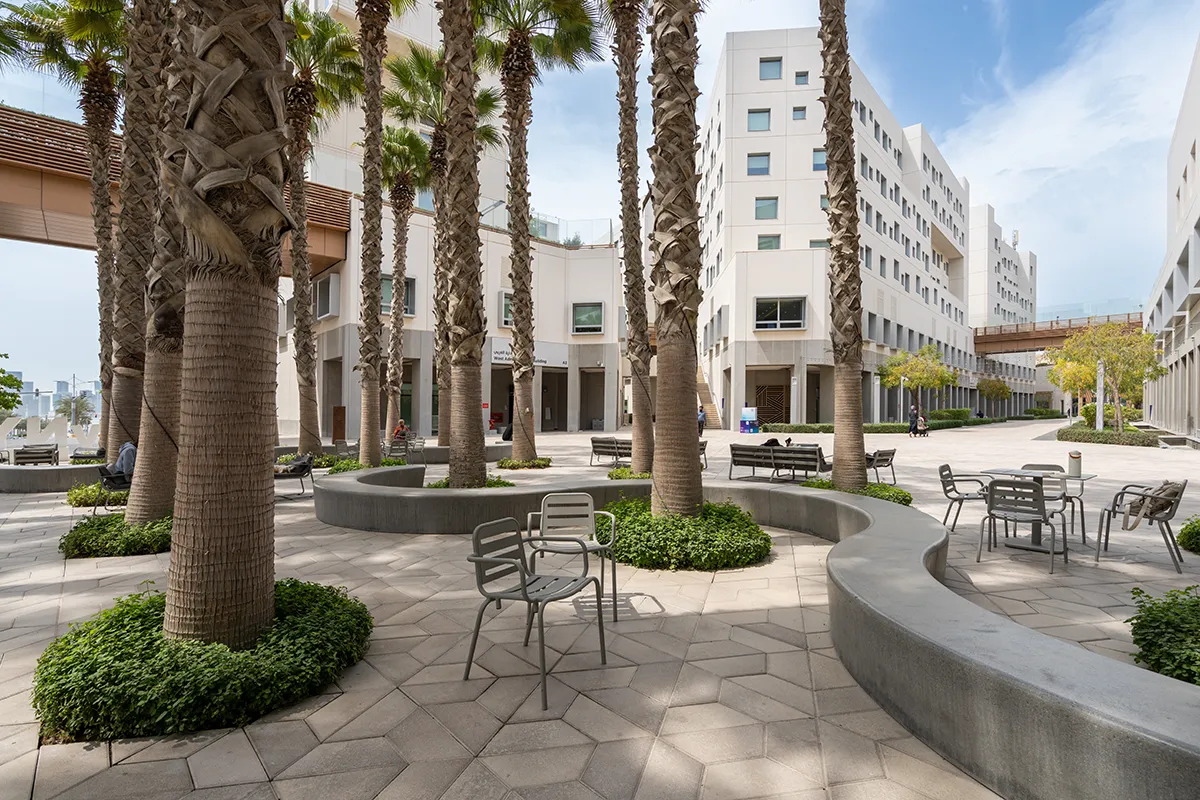
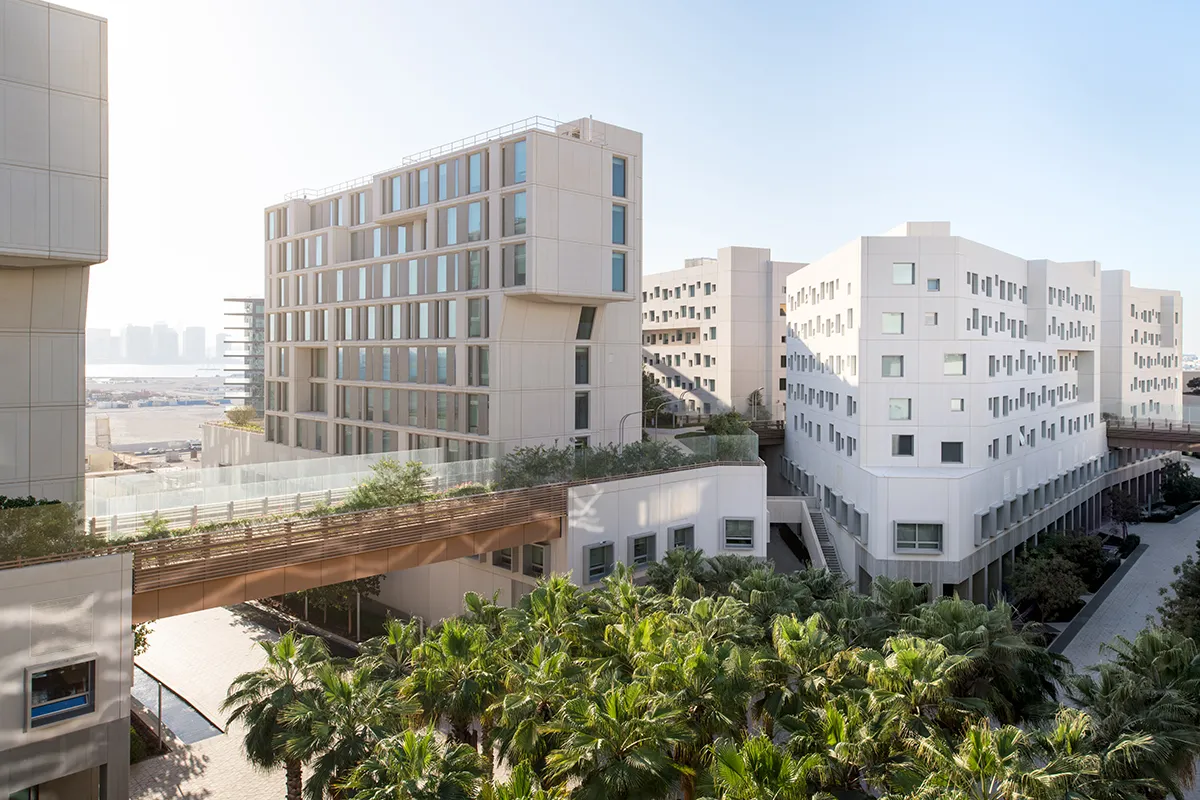
From the outset, the design prioritised microclimatic comfort through passive strategies. Wind, shade and water are used holistically to transform the site into a sequence of habitable outdoor rooms. The grand Palm Court anchors the campus, while smaller courtyards and shaded pods offer moments of pause and reflection. Elevated bridges connect residential clusters, layered with sky-gardens and viewing decks that promote wellness through movement and social engagement.
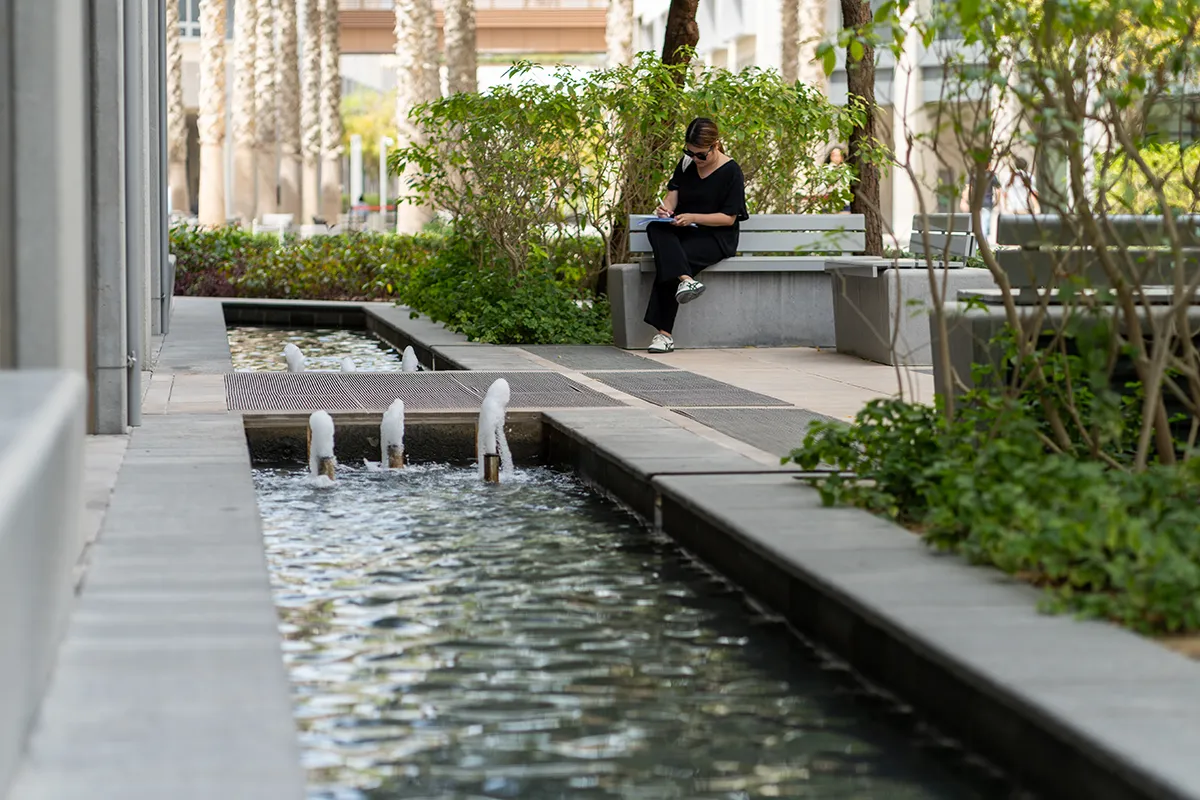
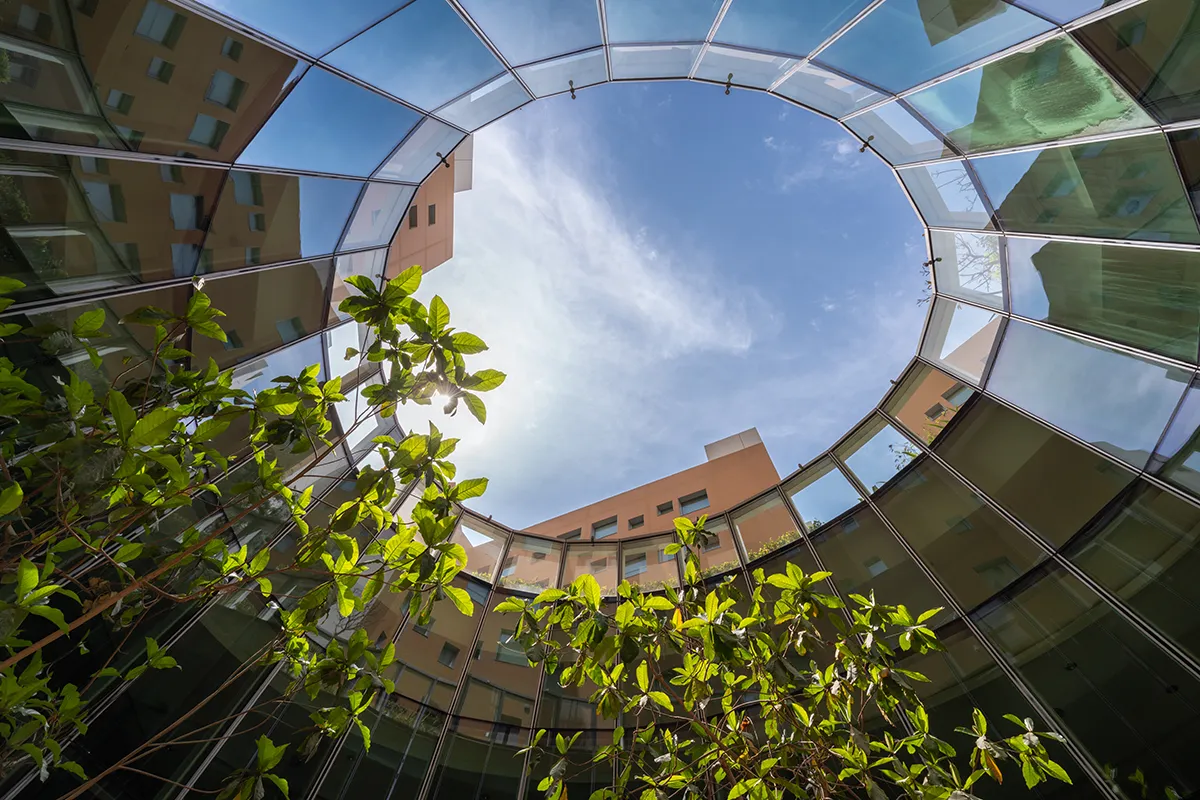
The 11.5-hectare academic campus sits within a broader 27.2-hectare community precinct. However, it is the surrounding landscapes and activated streetscapes that give the place its civic pulse. Flexible outdoor areas double as event spaces, while active and passive parklands support daily recreation. Streets lined with F+B frontages activate and energise the wider district with a youthful vibrancy, transforming the campus into a porous interface with the city. Life radiates outward, inviting participation in cultural events, public dialogue and community gathering.
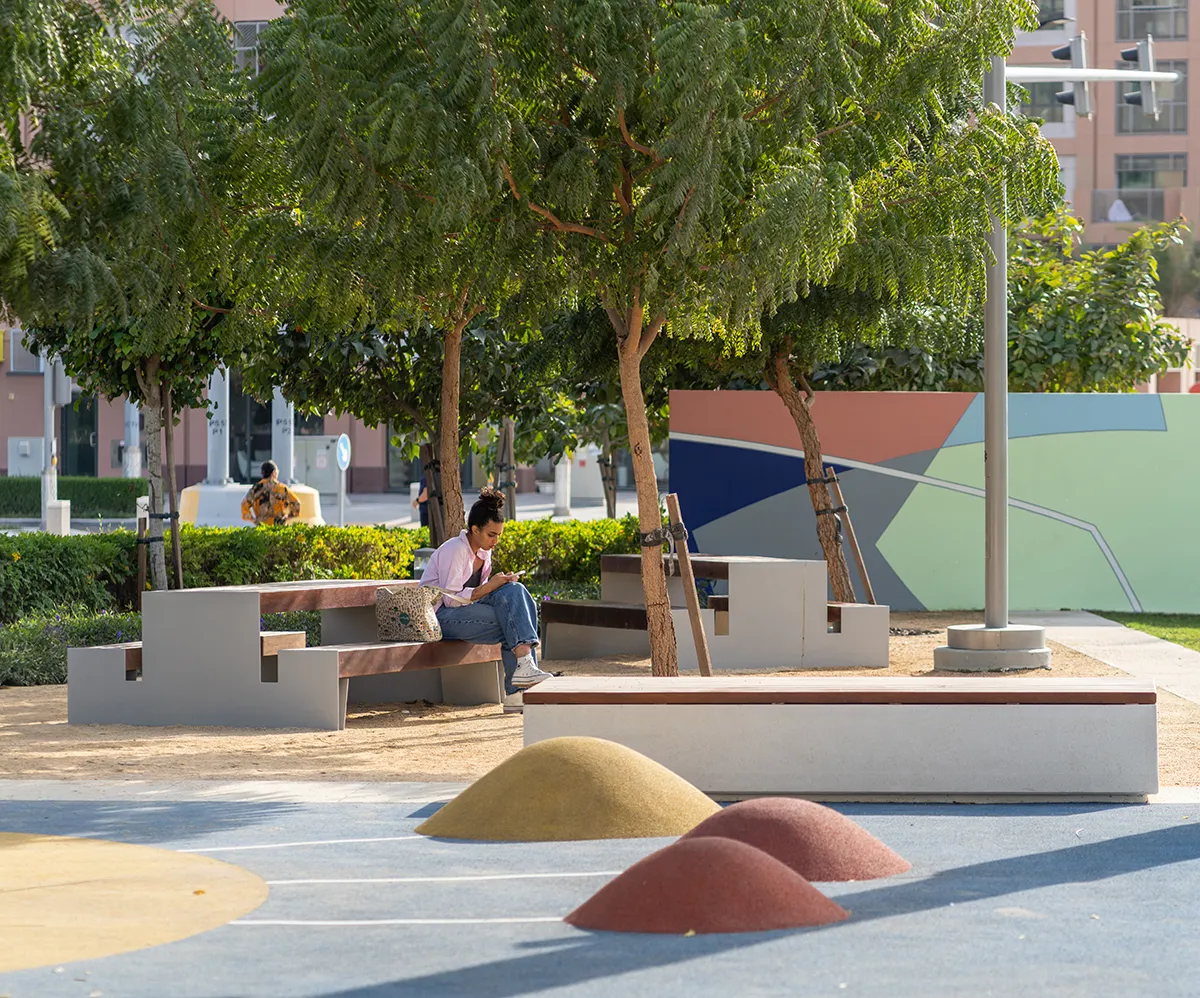
Cracknell has been involved in the project since 2010, leading the landscape design through every phase until its completion in 2025. This rare, long-term role ensured consistency in vision and design language, while enabling the public realm to develop alongside the university itself. Beginning with a blank canvas on Saadiyat Island’s Eastern Cultural District, the design evolved through close collaboration with Rafael Viñoly Architects and the broader team. Drawing inspiration from Islamic Garden traditions, the landscape combines cultural heritage with innovation and provides a space that is both regionally rooted and globally accessible.
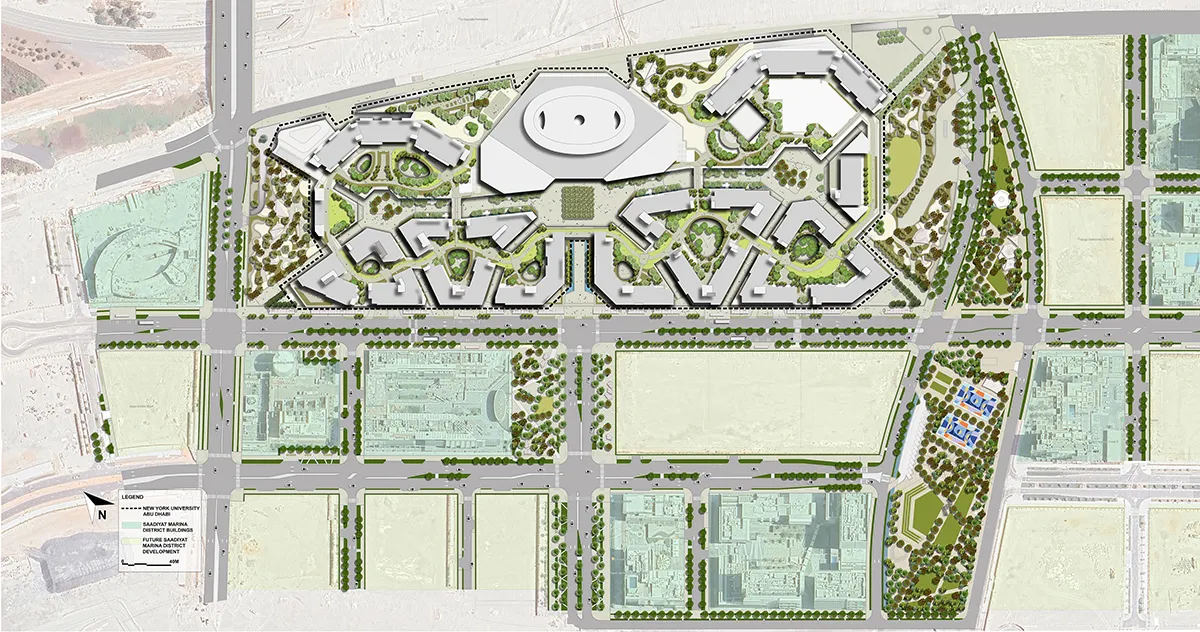
The contrast between evolving design geometries became the campus’s visual and spatial DNA, and a symbol of education, wellbeing, inclusivity and innovation in response to climate. A decade-long presence allowed new phases to seamlessly integrate into the whole. Post-occupancy feedback, user engagement and evolving needs have informed every design iteration, keeping the campus dynamic and relevant for future generations.
Sustainability is central to the project’s performance. The precinct achieves water usage of just 2 litres per square metre per day, thanks to smart irrigation systems, native and climate-adapted planting and efficient design. Shade structures, mature tree canopies and a well-calibrated circulation system reduce radiant heat and allow for year-round outdoor use. Materials were carefully selected for durability and low environmental impact.
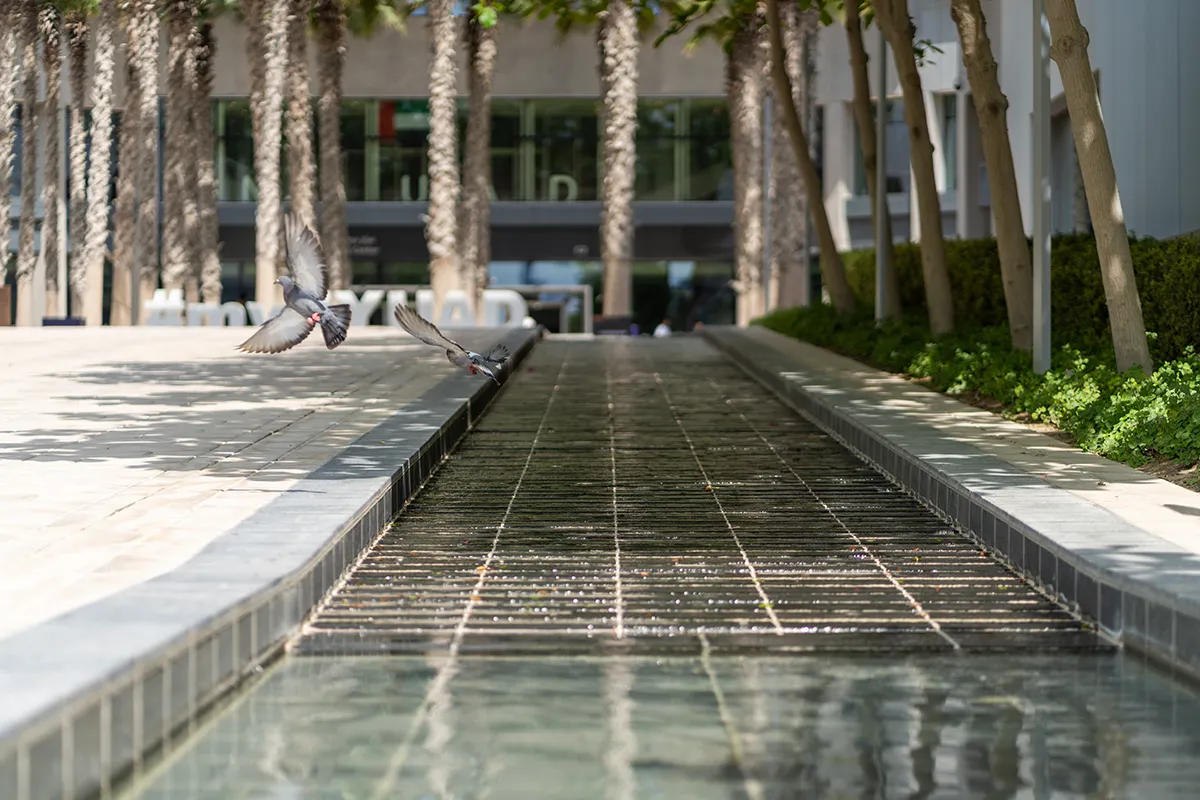
Spatial connectivity and walkability are embedded throughout. Shaded walkways, intuitive wayfinding and integrated cycle paths promote movement and comfort, making the site both legible and welcoming. Elevated bridges and sunken courtyards create an experience that is cohesive without being monotonous. Form and function align, allowing the landscape to guide and support without overwhelming.
Perhaps the project’s greatest strength is its subtlety. It is a series of thoughtful, human-scaled interventions that create a sense of ease, belonging and generosity. The landscape does not impose itself. It supports, enhances and reflects the life it contains.
NYUAD’s campus landscape sets a new benchmark for educational environments in extreme climates. It expands the role of the university beyond its institutional walls and transforms it into a civic heart embedded within the city. Through long-term thinking, cultural sensitivity and ecological wisdom, it demonstrates the power of landscape to shape not only place, but also community and identity.
NYU Abu Dhabi
Location: Abu Dhabi, UAE
Landscape Architect: Cracknell
Client: New York University Abu Dhabi; Tamkeen
Architect: Rafael Viñoly Architects
Engineering: A&D Studio Engineering Consultants; Canadian Road Transportation and Civil Engineering Consultancy
Signage and Wayfinding: Brimaxx Consultancy DMCC
Photography by Alessandro Merati ©Cracknell unless otherwise captioned.