
A new memorial park revealing the history of the Deportation of Jews from France
In Bobigny, the landscape has been given the role of narrator and curator of the place’s history. The complex, layered history is depicted in layers, similar to what one would find in a memorial park, and thus takes the visitor by the hand into the past.
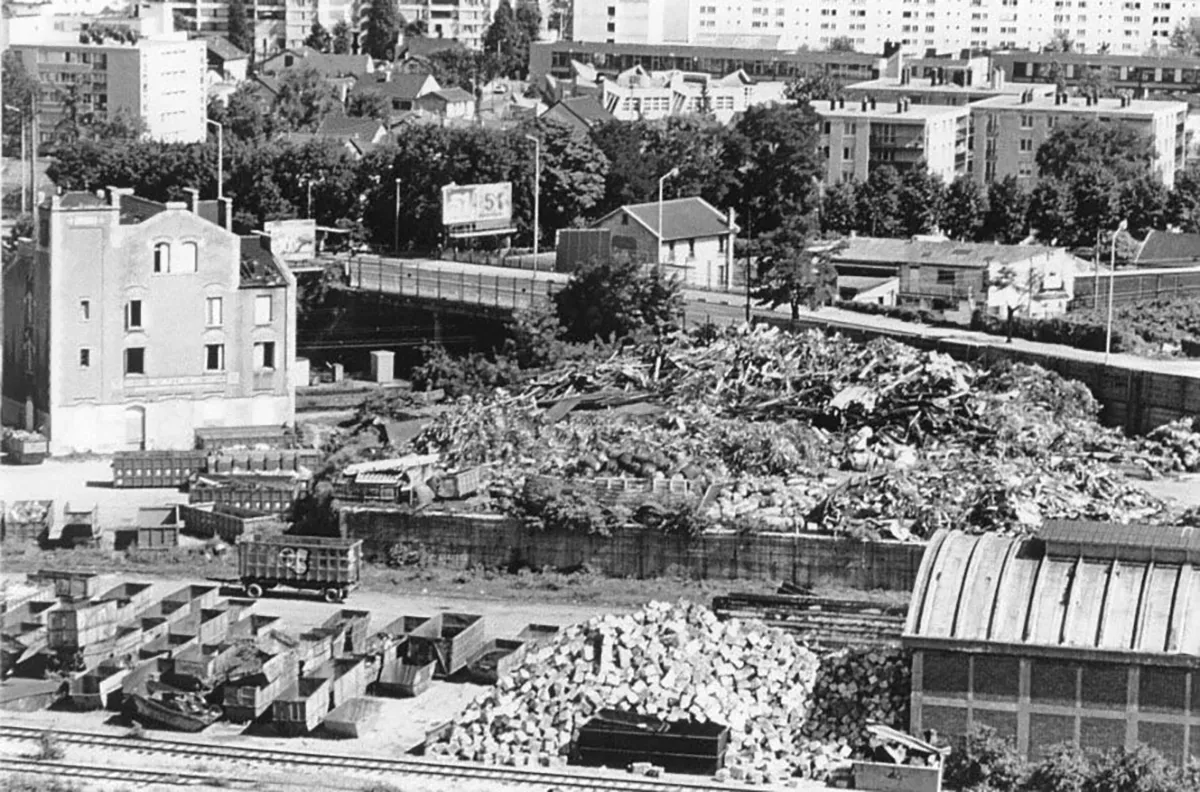
Between 1943 and the summer of 1944, around 22.500 men, women and children were deported from the Bobigny station, making this site one of the most important sites of the deportation of French Jews during the Second World War. After the war, the site was turned into a steel scrapyard and remained in use until the mid 2000’s. Paradoxically, industrial activity has protected the site for decades and enabled it to survive major urban transformations. The Bobigny station is one of the few deportation places in France that was preserved after the Second World War.
With the help of numerous partners, institutions, and foundations, the city of Bobigny later acquired the site and began the long process of creating a memorial place. OKRA, as leader of the design team comprising AAPP Architects, OTCE Engineering, AEU Ecologists, and 8’18 Lighting Designers, won the international competition in 2016 for the landscape, architectural, and scenographic enhancement of the site.
Revealing the absence, the thresholds of memory
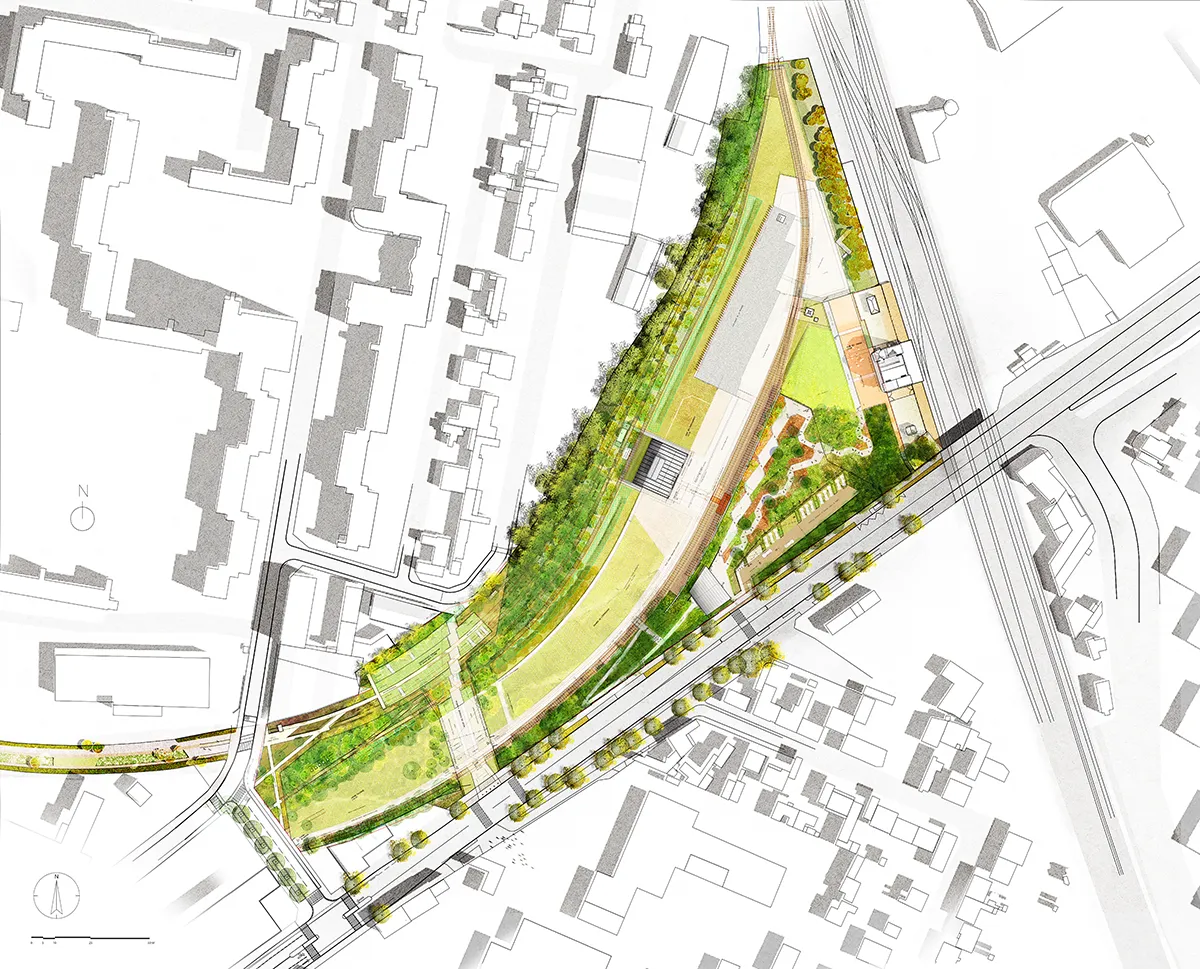
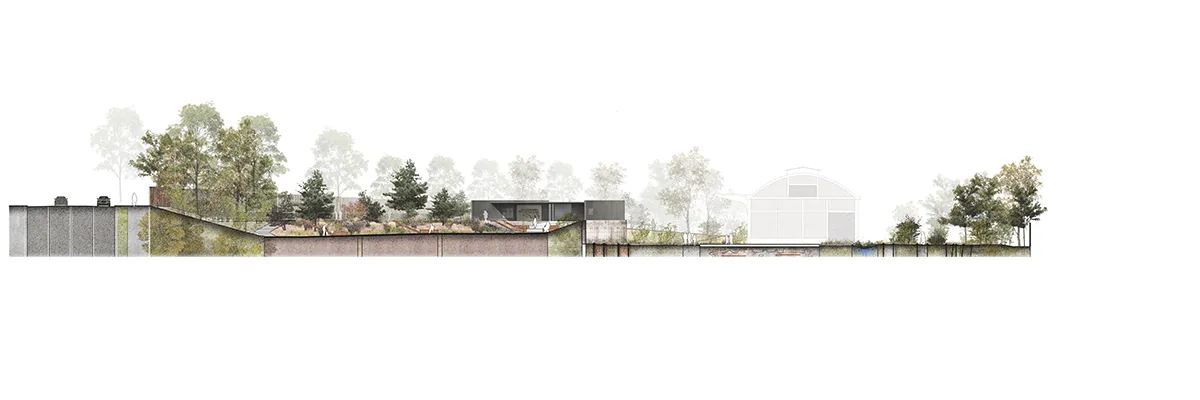
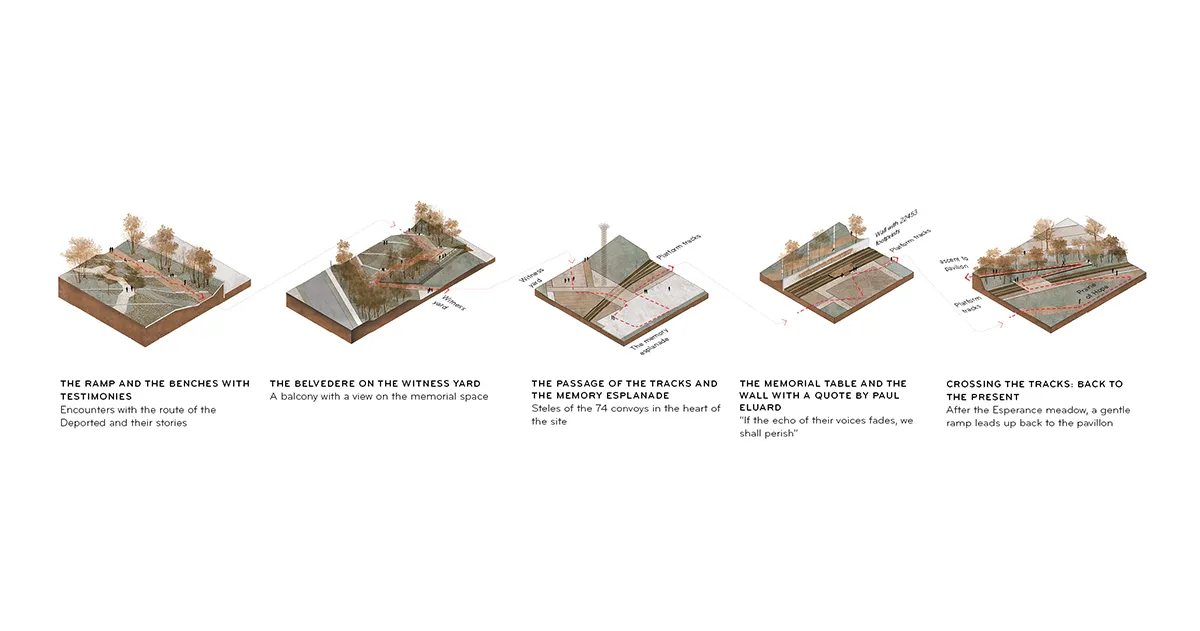
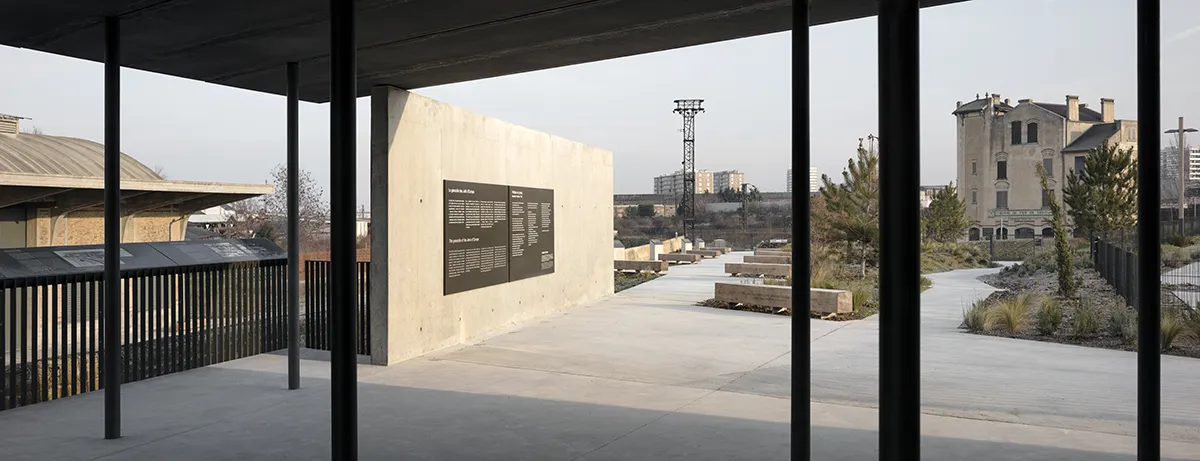
The scenography and landscape interventions have been conceived to minimise the impact on the site and to celebrate the site’s absence and emptiness. The design reveals the site’s original topography, connecting the various levels through a scenographic route and a series of thresholds. It allows a gradual experience for the visitors through different time layers and degrees of understanding of the place and its history.
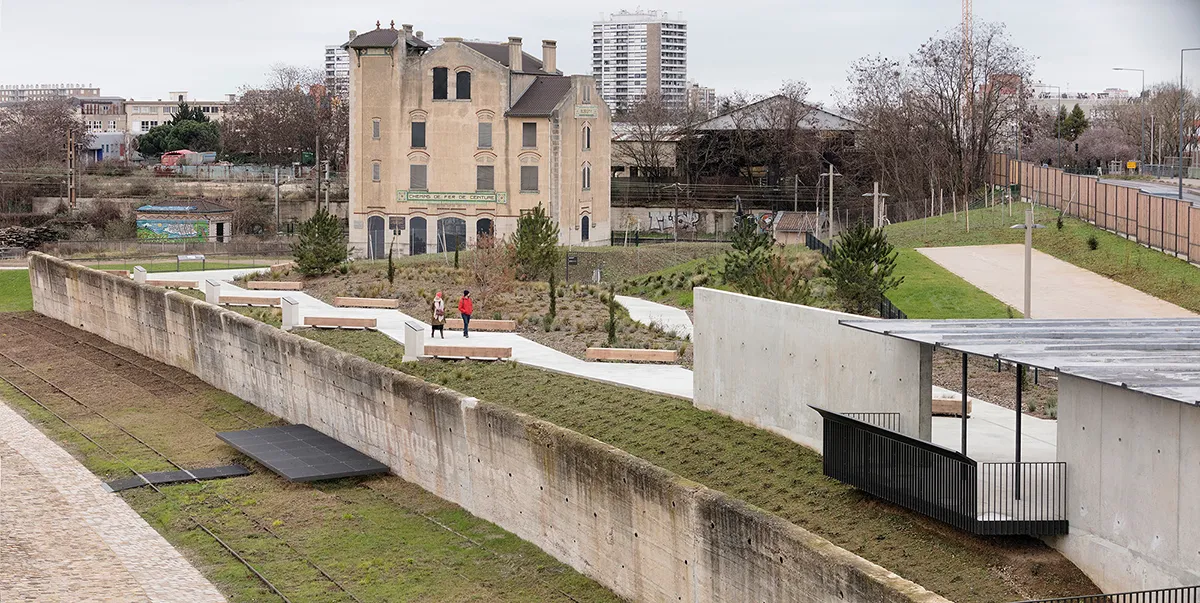
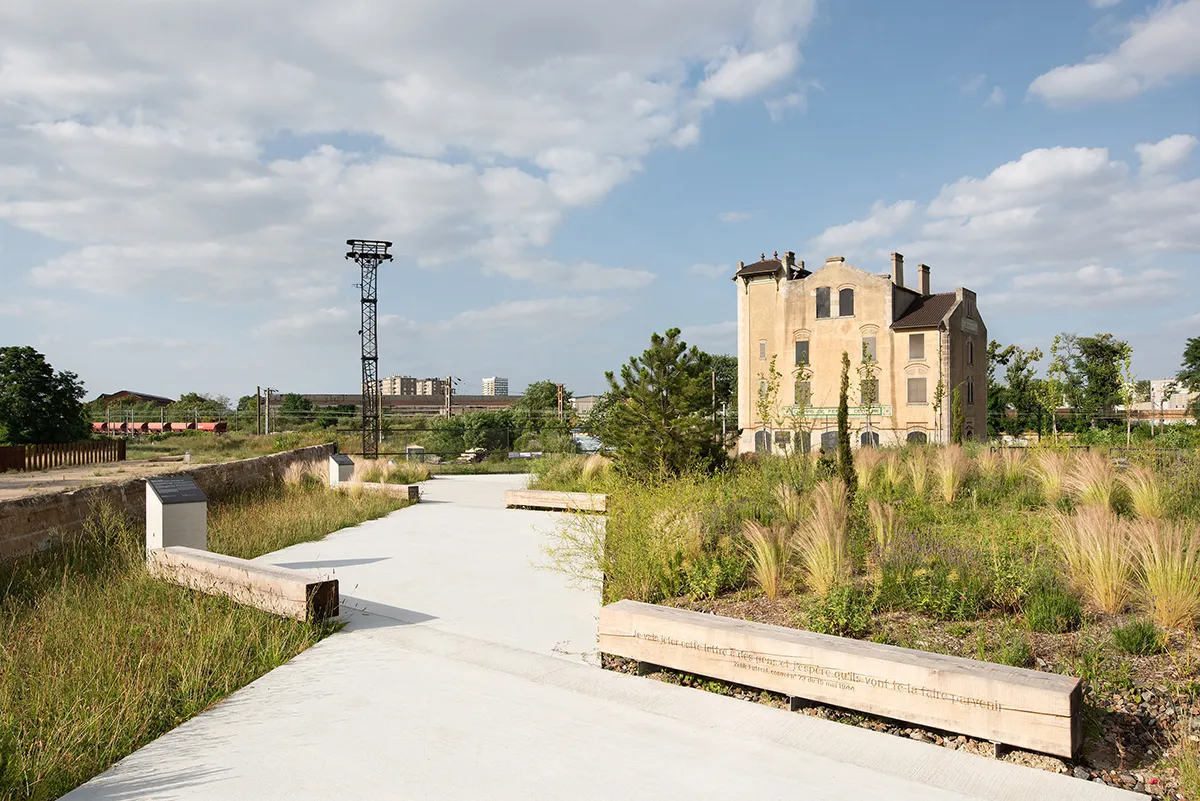
Visitors are welcome at the original address on the Avenue towards the present-day Esplanade. This space is conceived as a place of mediation between the present and the past, between the city and historical grounds. Careful incisions have been made in the topography of the platform created after the war by the metal scrap dealer to reveal the historical path of the ramp and to create views towards the site’s landmarks. A sequence of wooden benches bearing engravings of quotes and messages from witnesses and deportees allows visitors to connect with the human impact of the deportation process. The garden of the esplanade offers soothing vegetation reminiscent of Jewish traditions and a Mediterranean palette.
A place for remembrance
A long row of 75 Cor-Ten steel steles has been installed to commemorate the various deportation convoys. Based on the records and documentation set up by Serge Klarsfeld, each of them presents dates, places of departure and arrival, numbers of people, children, and survivors. The stelae allow visitors to grasp the inhuman scale of the deportation machine set up by the Nazi Germans and the number of victims.
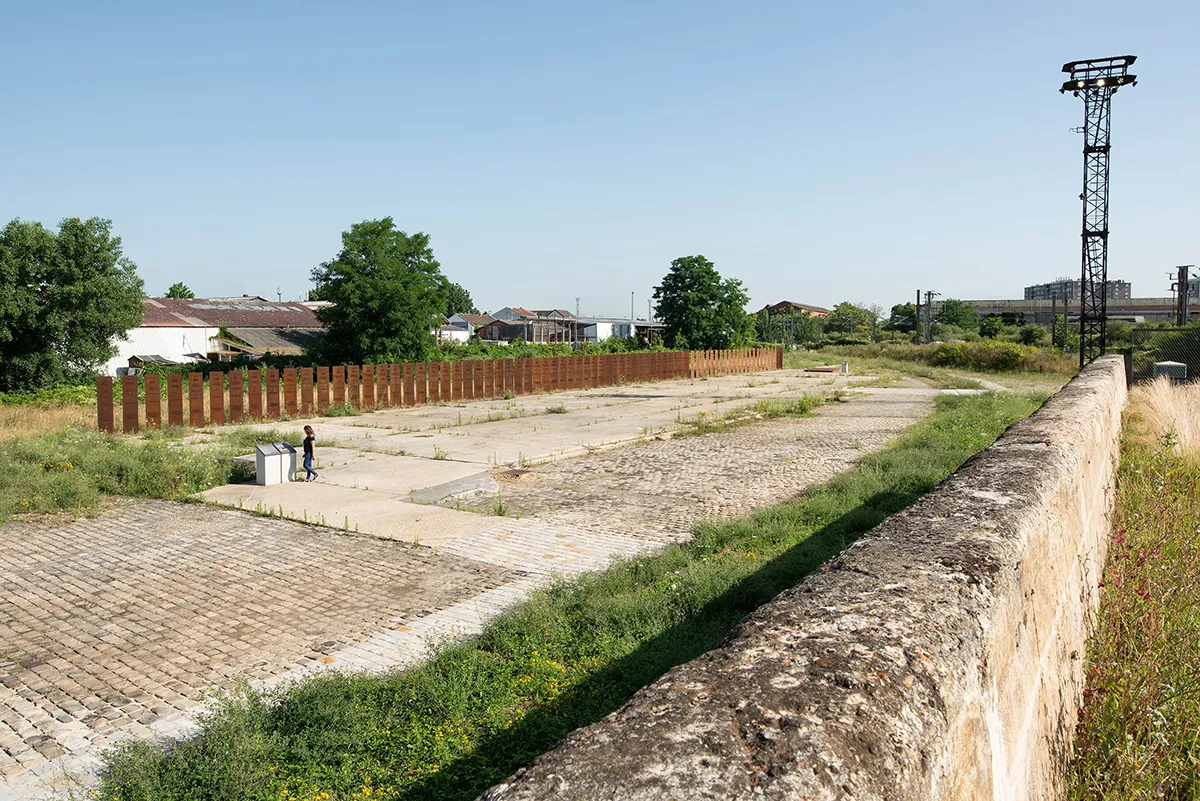
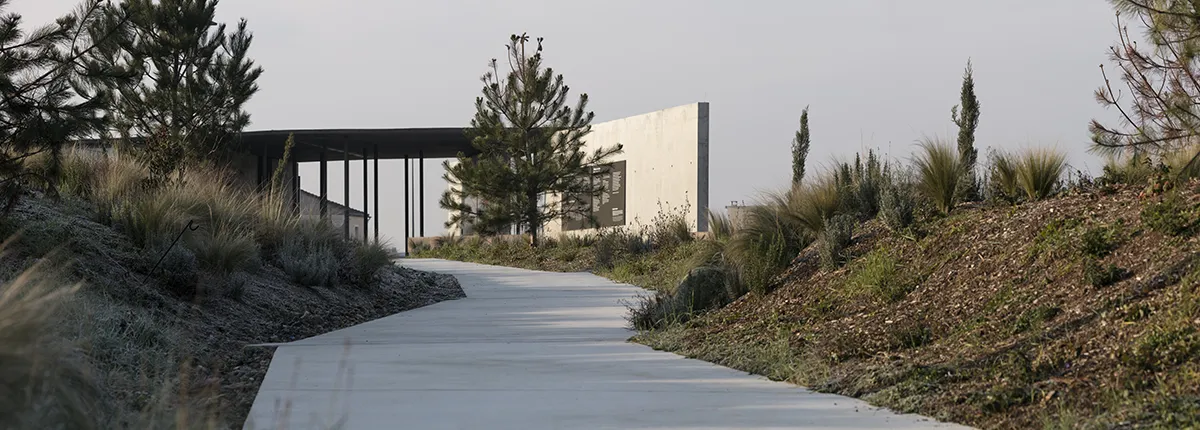
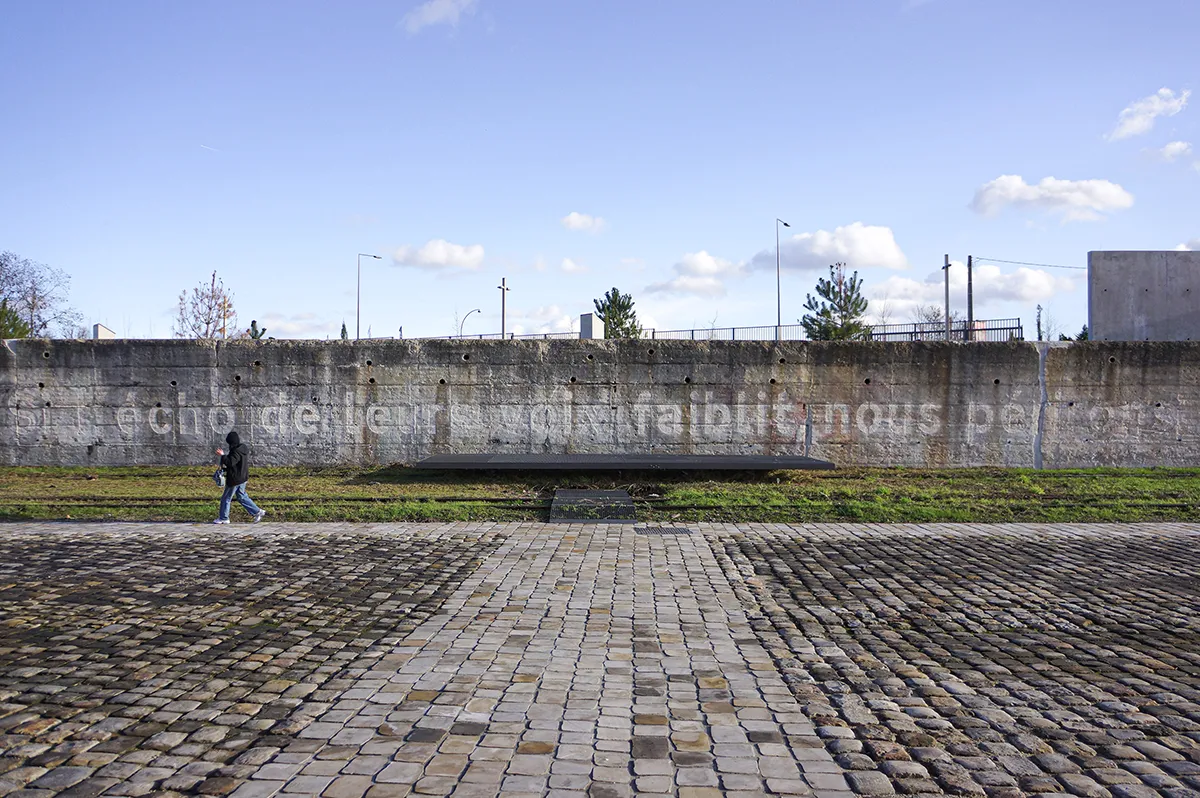
At the centre of the site, on the historical rail tracks, a humble steel pavilion has been installed. It serves as a central point for commemorations and, by its dimensions, marks the phantom of a wagon, providing a sense of scale despite the site’s absence and emptiness. On the backdrop of the long concrete wall, poured after the war by the steel scrap dealer, a quote by the famous poet Paul Eluard has been engraved: “Si l’écho de leur voix faiblit, nous périrons”, meaning ‘If the echo of their voices weakens, we will perish’.
Living heritage, a symbol of resilience
The extensive size of the goods yard is unique, as it is home to several regionally significant pioneer plant species. A new post-industrial biotope developed after the scrapyard’s closure. The design showcases the site’s ecological qualities through a targeted maintenance plan and an integrated system of vegetated stormwater swales, strengthening the site’s already rich biodiversity. The station’s landscape forms a living heritage that complements the memorial and historical aspects of the site and embodies the resilience of men and nature in the face of violence and discrimination.
Shortlisted (Finalist) in the 2025 WLA Awards – Built Large Public Space
Memory in the City
Location: Bobigny, France
Design Firm: OKRA
Collaborators: AAPP Architects, OTCE Engineering, AEU Ecologists, 8’18 Lighting Designers
Photography: OKRA (Pierre-Alexandre Marchevet), Karolina Samborska, Aitor Ortiz, Ville de Bobigny (Sylla Grinberg).