
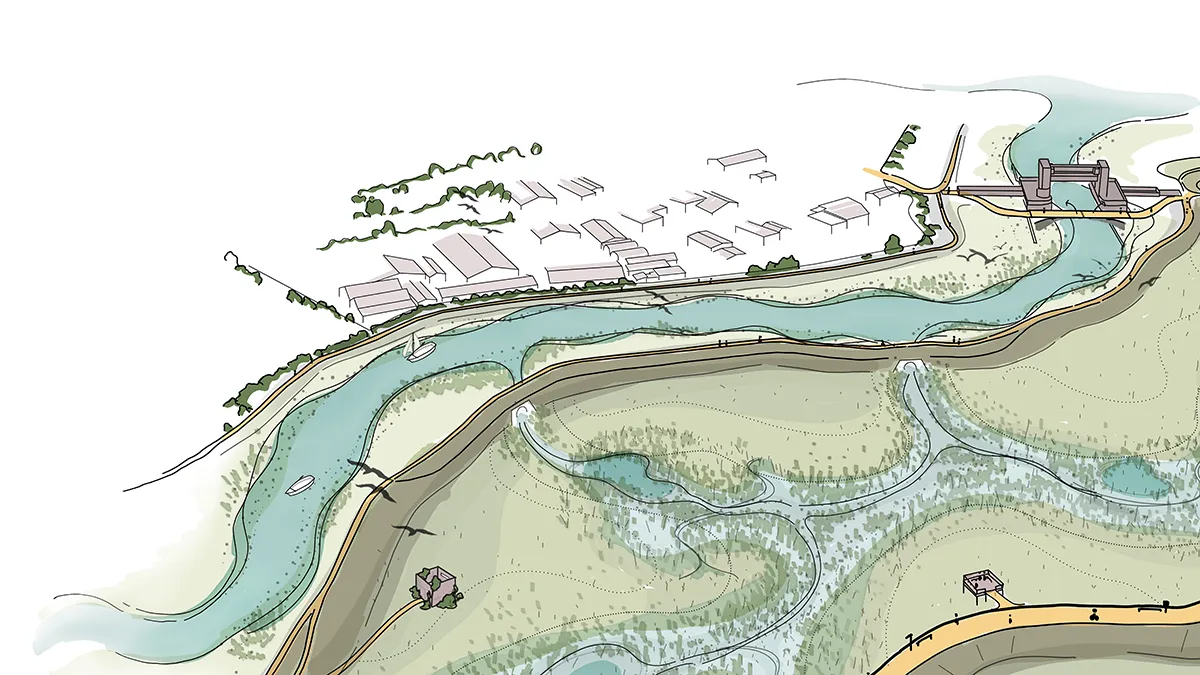
A Vision for Climate Resilience and Nature Regeneration
Dartford, one of England’s fastest-growing boroughs, faces a pressing challenge: over 90% of its land lies within flood risk zones. With climate change accelerating and urban development expanding, the need for a resilient, sustainable future has never been more urgent.
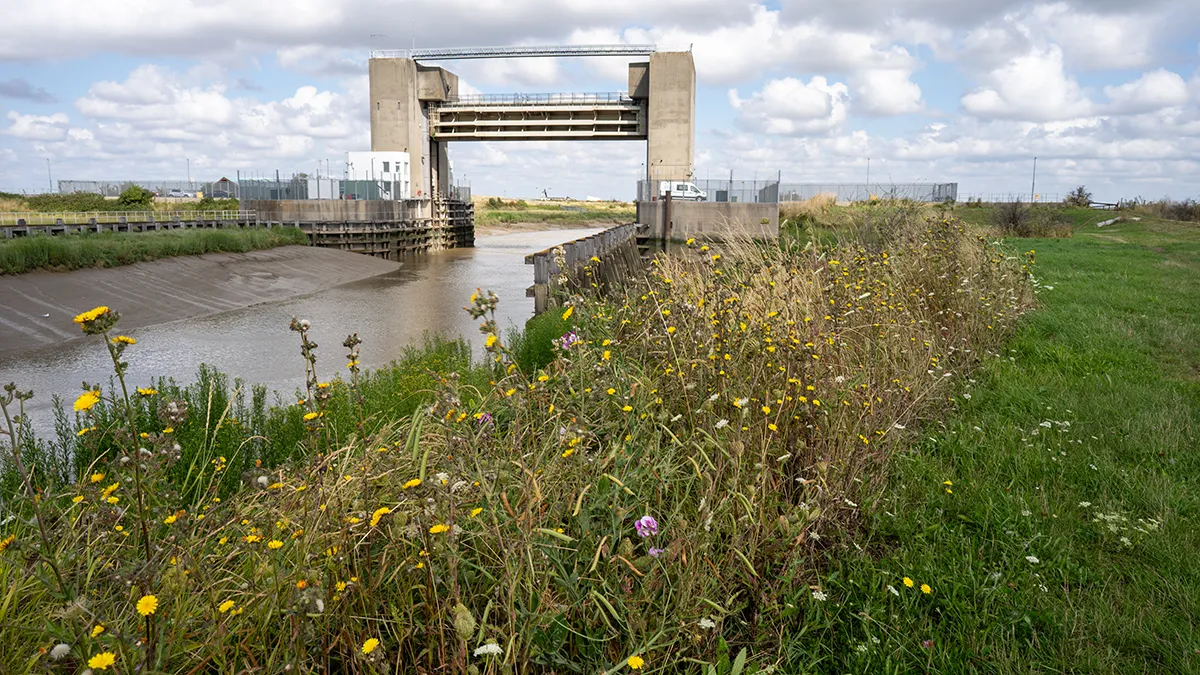
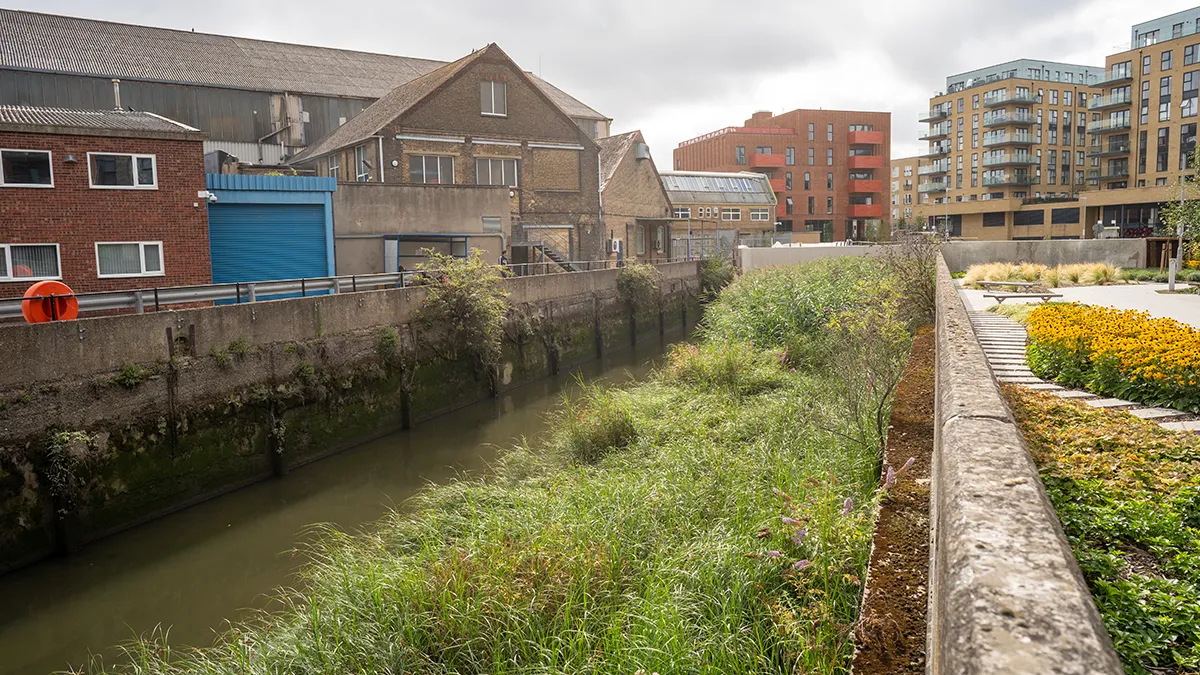
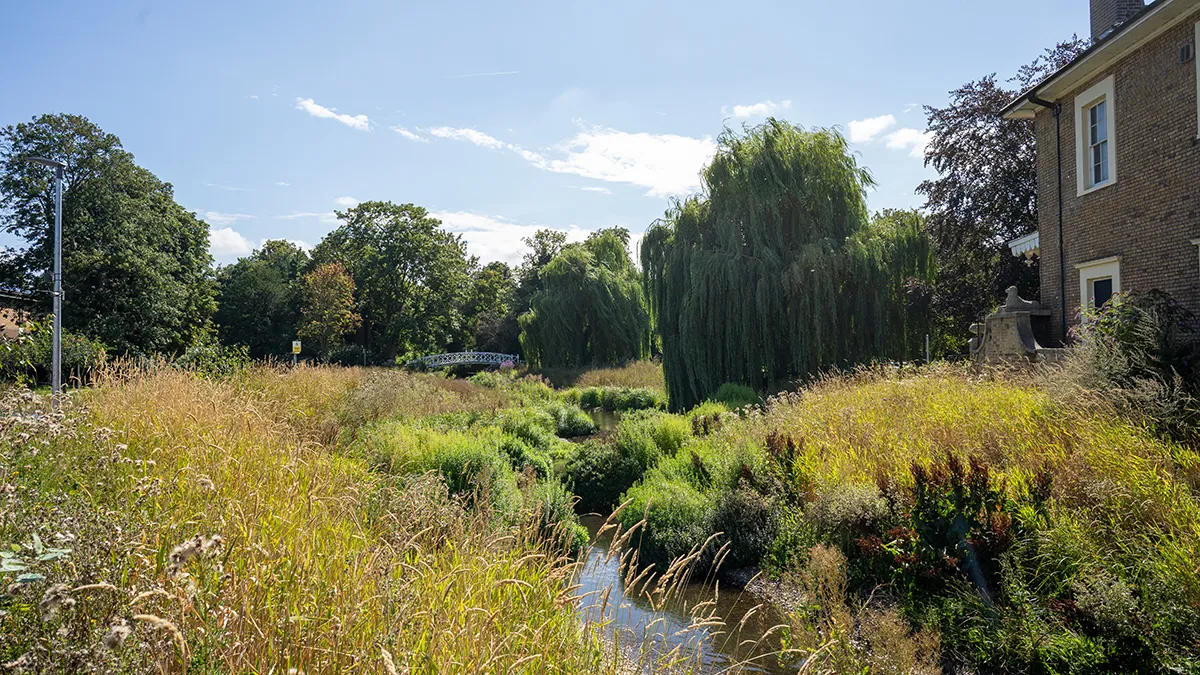
Commissioned by Dartford Borough Council, funded by the Environment Agency, and developed by Arup, the Lower Darent Riverside Strategy sets out a bold, integrated vision for flood resilience, ecological restoration, and inclusive placemaking. Adopted by the Council’s Cabinet in May 2024, the strategy aligns with the Thames Estuary 2100 Plan (TE100), a long-term framework for managing flood risk in the Thames Estuary through adaptive measures and infrastructure improvements through 2100.
Spanning 460 hectares across three distinct character areas: marshes, the town centre, and Central Park, the strategy is now embedded in the Dartford Local Plan, guiding sustainable riverside development and multi-agency investment.
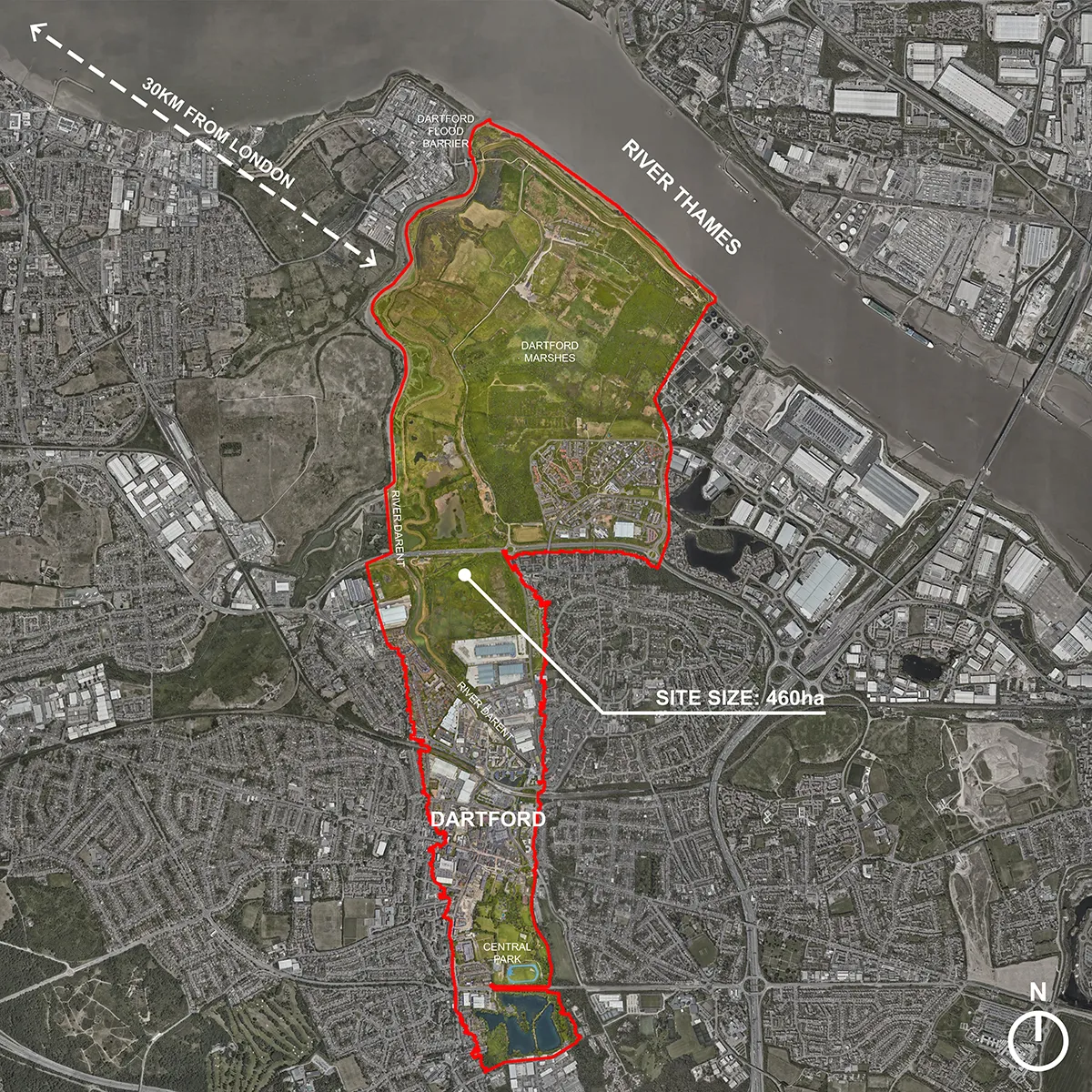
Strategic Approach and Purpose
The strategy was shaped through collaborative workshops, stakeholder interviews, policy reviews, and detailed site analysis. It transforms fragmented riverside areas and aging flood infrastructure into a cohesive placemaking framework that strengthens defences, reconnects communities, and restores natural systems.
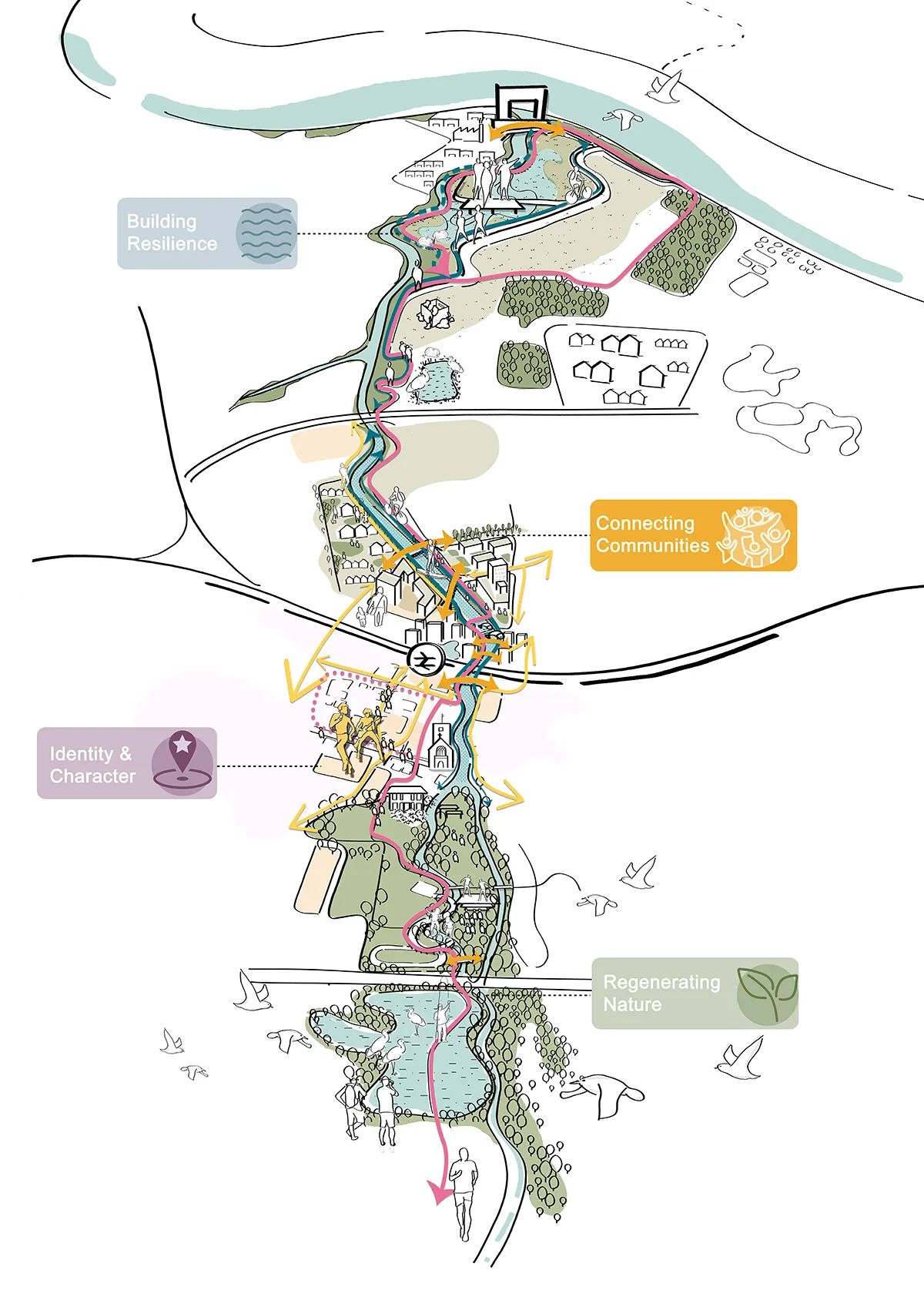
At the heart of the strategy is a commitment to nature-based solutions (NbS), which deliver flood resilience, ecological restoration, and opportunities for active travel.
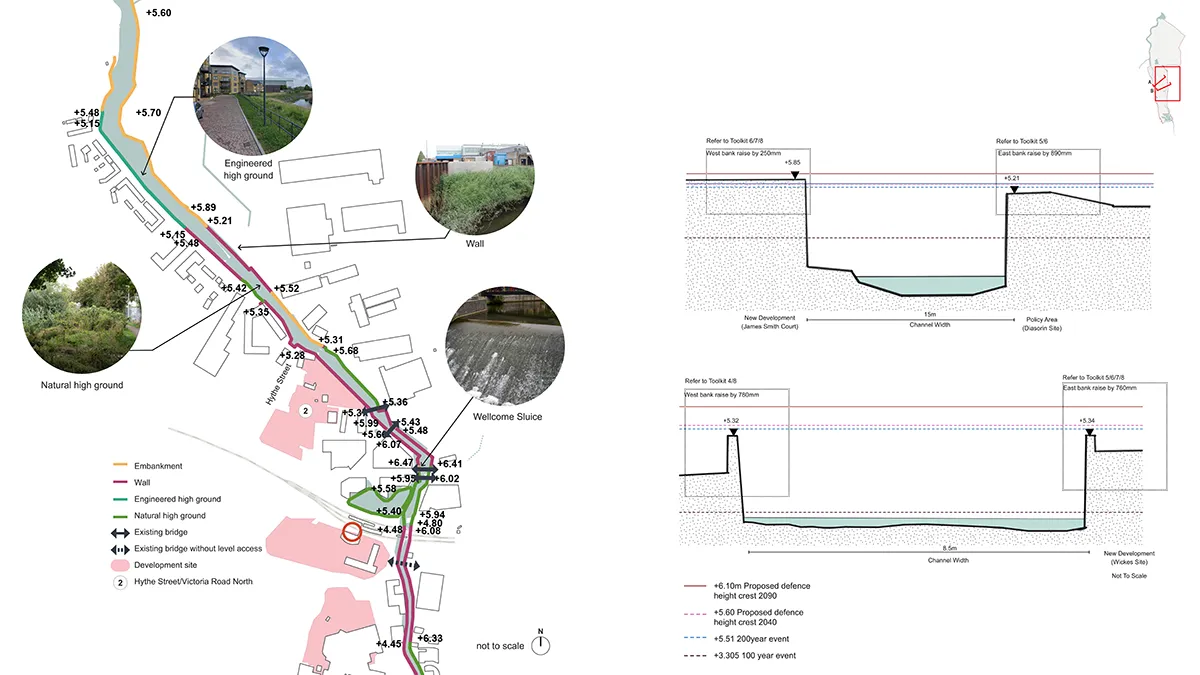
The innovative strategy serves as a key material consideration for future planning applications, offering a robust framework for a unified riverside vision. It outlines detailed design principles, adaptive management, methodologies and funding opportunities. A comprehensive toolkit of eleven illustrated typologies offers guidance on materials, maintenance, and delivery. This empowers planners, developers, and landowners to implement consistent, high-quality interventions.
Mitigating Flood Risk Through Nature
Dartford’s flood vulnerability is compounded by tidal locking and aging infrastructure. Current town centre risks are low, but rising climate threats make proactive planning critically important. The strategy proposes raising flood defences by 0.5m by 2040 and again by 2090, in line with TE2100.
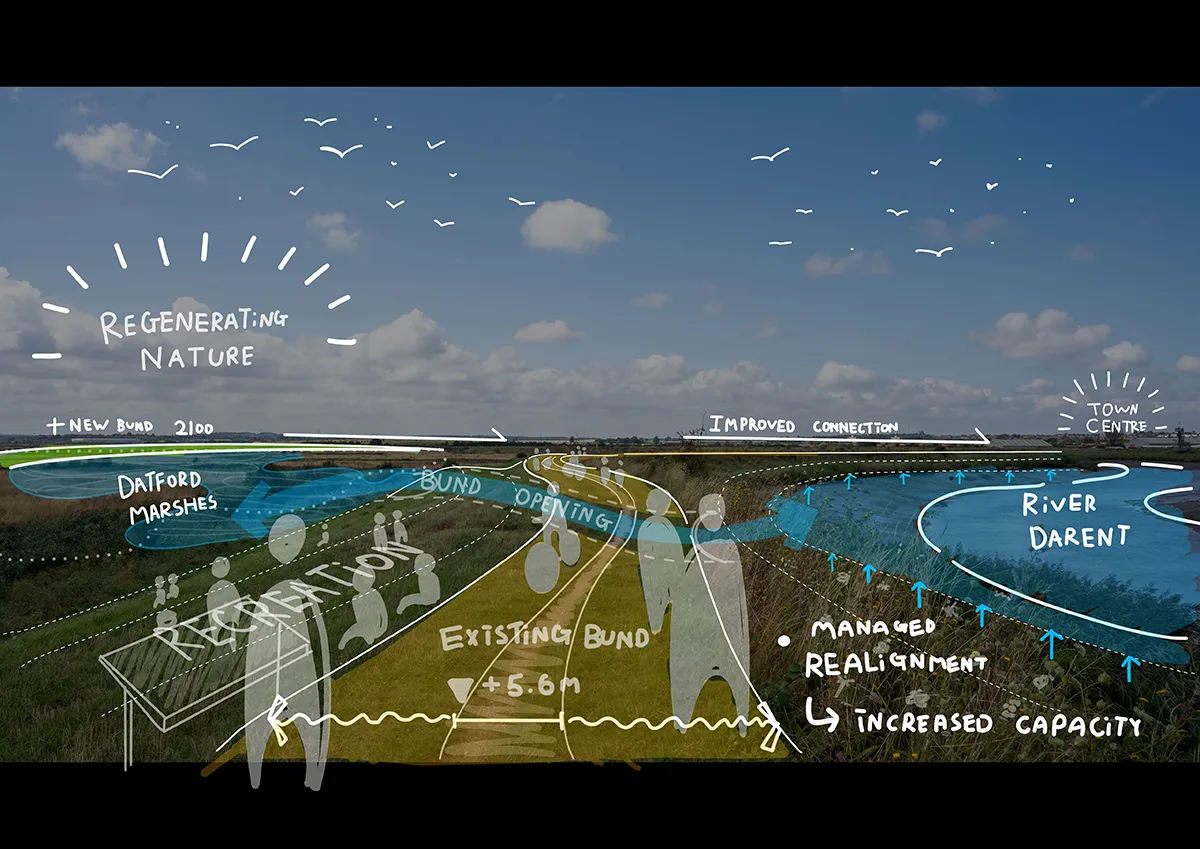
Rather than relying solely on engineered solutions, the strategy promotes NbS, re-naturalising riverbanks, reconnecting wetlands, realigning the river, and restoring seven priority habitats. These interventions enhance water storage, restore natural processes, and create diverse ecosystems. In urban areas, river edges are transformed into social spaces that increase capacity and reconnect people with nature.
Design Principles and Innovation
The strategy is built around four core principles:
- Building Resilience
- Regenerating Nature
- Connecting Communities
- Celebrating Identity and Character
These principles shape a spatial framework that avoids piecemeal development by “knitting together” defence-raising commitments. Proposed interventions include new bridges, habitat corridors, and a set-back flood defence line integrated with SuDS and active travel routes.
Sustainability and Climate Adaptation
Central to the strategy is the restoration of the River Darent chalk stream, part of a globally rare habitat, 85% of which is found in England. The strategy reintroduces natural processes, restores habitats to baseline conditions, connects to the wider blue-green infrastructure of the Thames Estuary, and provides multiple social, environmental, and financial benefits.
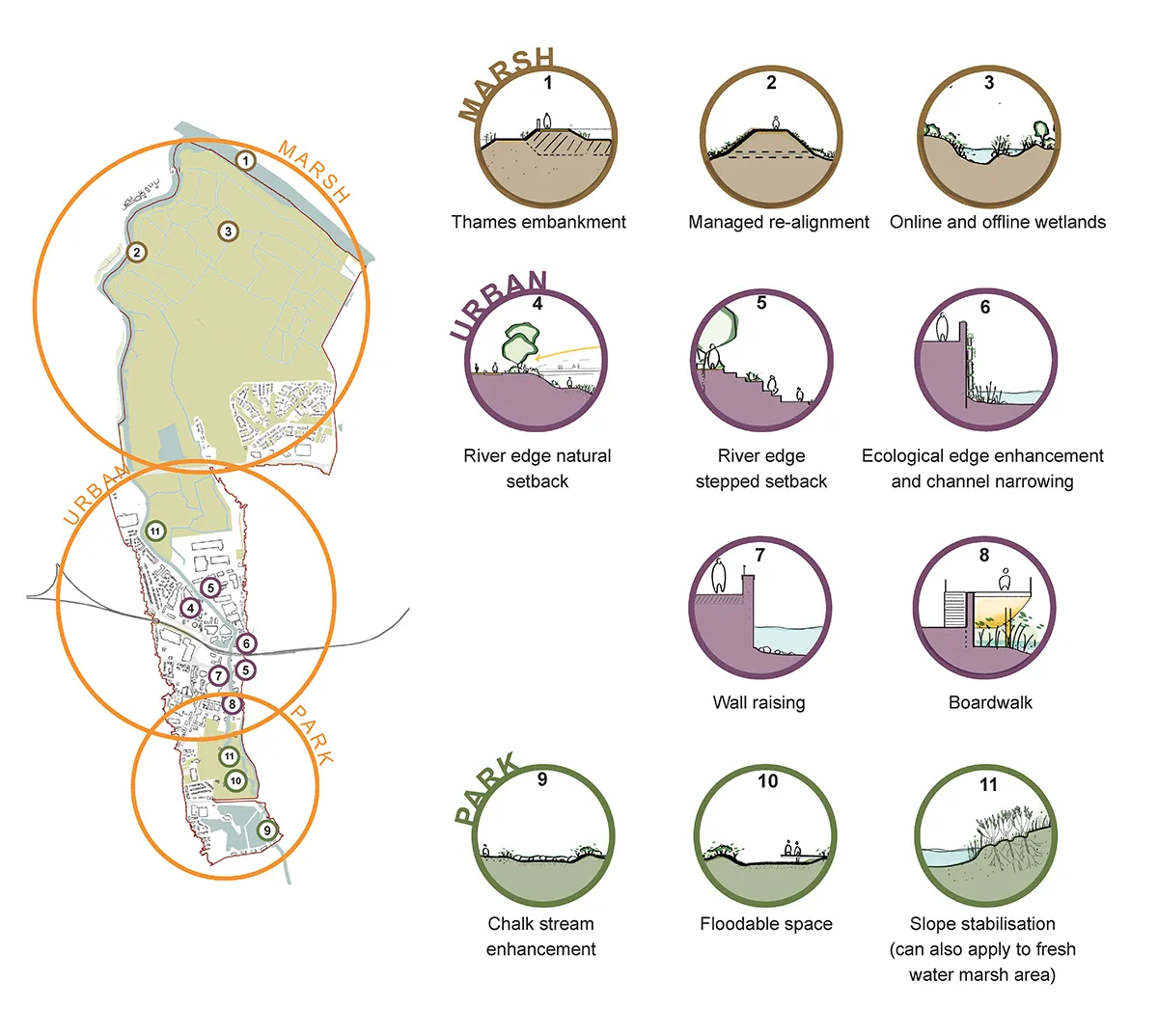
These interventions support multiple UN Sustainable Development Goals, including:
- SDG 6: Clean Water and Sanitation
- SDG 11: Sustainable Cities and Communities
- SDG 13: Climate Action
- SDG 15: Life on Land
Social Value and Regeneration
The River Darent is reimagined as the borough’s spine, transforming it from a barrier into a blue-green corridor. The strategy proposes enhanced access and connectivity, linking fragmented spaces into multifunctional landscapes that support public health, well-being, and inclusive access.
New bridges and improved pedestrian and cycle routes connect the Thames Path, National Cycle Route 1, and Darent Valley Path, strengthening ties to Dartford town centre and regional green infrastructure. The strategy unlocks investment, supports childhood health, raises land values, and reduces long-term maintenance costs. It also provides a clear methodology and toolkit to upskill planners, designers, and community stakeholders.
Legacy
Pioneering and precedent-setting, the Lower Darent Riverside Strategy redefines integrated flood and landscape planning, setting a national benchmark and delivering a replicable model for climate-resilient, across 26 councils within the TE2100 and estuarine communities in England.
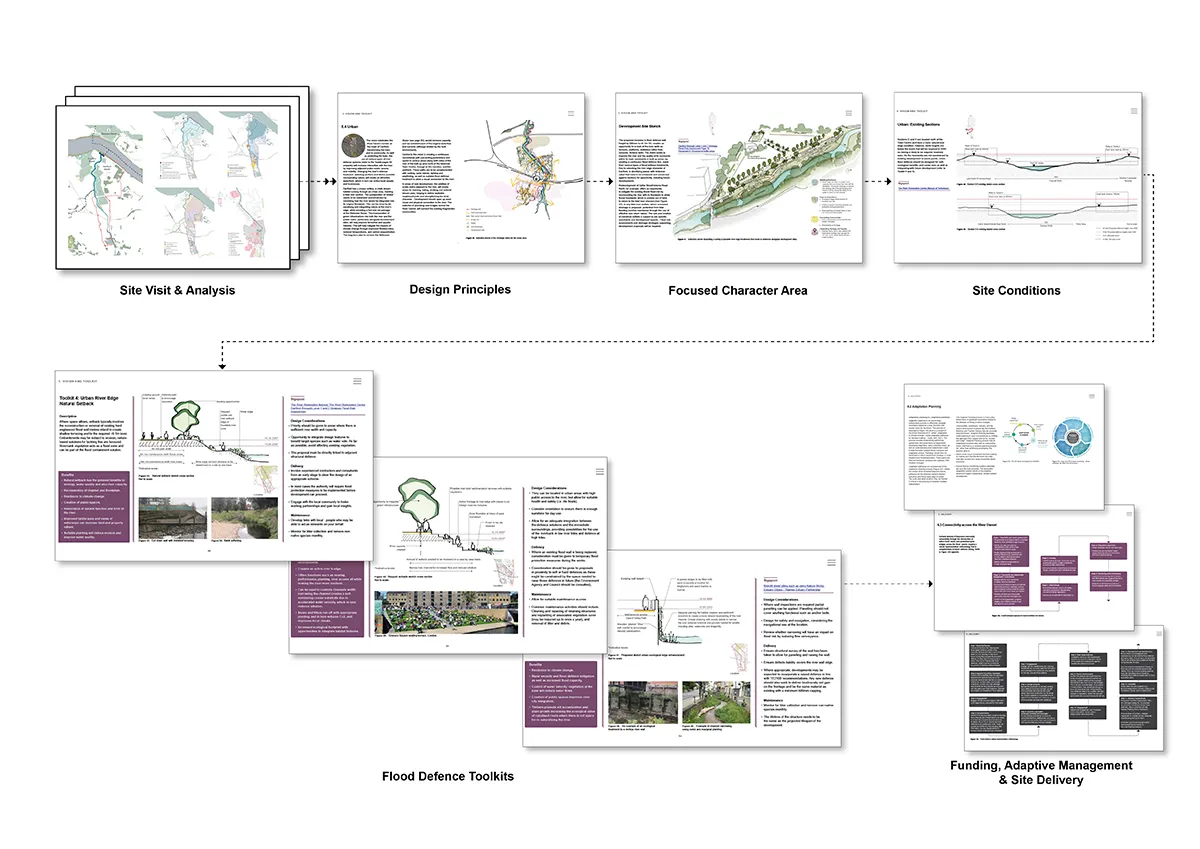
This strategy combines analysis, landscape-led design, and collaboration to shape resilient, inclusive places, revitalise nature, reconnect communities, and serve as a crucial planning tool for sustainable, future-ready development.
Lower Darent Riverside Strategy
Location: Dartford, United Kingdom
Design Firm: Arup
Client: Dartford Borough Council and Environment Agency
Images Credit: Arup
Shortlisted in the 2025 WLA Awards – Concept Analysis & Planning category