
LDA Design’s 2025-26 Bursary competition called for a vision for our towns and cities that is post-peak car. How could underused streets or spaces be reclaimed to improve the daily lives of local people? How far can our imaginations go to better meet real community needs?
The challenge was met with a record number of responses from a spread of universities, including Newcastle, Sheffield, Leeds Beckett, Cardiff, Manchester, Edinburgh, UCL Bartlett, Birmingham, Kingston and Gloucester.
This year’s winners are Dolly Marshall-Stevens, an architecture postgraduate from Cardiff; Eveline Edmunds who is studying landscape architecture and design at Leeds Beckett and Jacob Harris, an urban studies and planning undergraduate at the University of Sheffield.
LDA Design’s bursary is designed to provide support to students who might have faced challenges pursuing higher education. Each student will be awarded £2,000 and four week’s paid work experience in one of our studios.
Rewilded Roath Common: Dolly looked at the issues associated with the growing student residential areas in Cardiff. These include rising rents for permanent residents and neighbourhoods feeling increasingly transitional and transactional, as well as the cycle of waste generated at the end of the academic year when one set of students replaces the last.
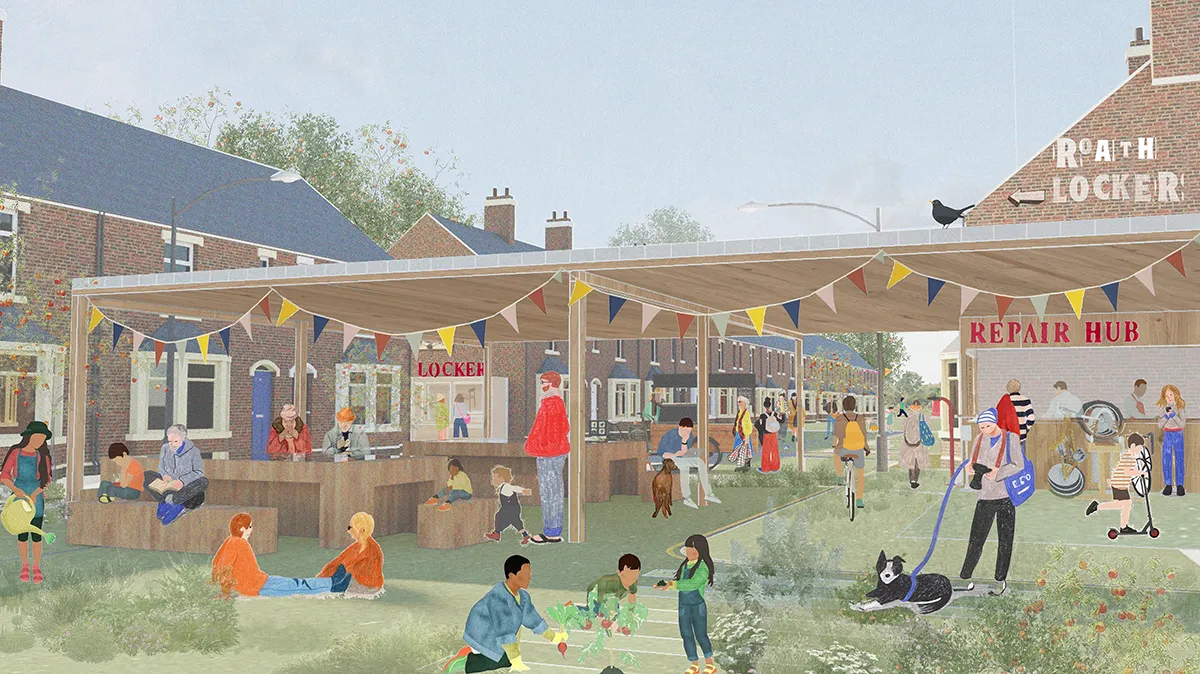
In ‘Rewilded Roath Common’, Dolly proposes reclaiming underused parking bays in residential streets to create a reuse resource spine, with nature and play woven through. Bays could be used to recycle items, with small workshops set up to support a culture of mending rather than replacing, reducing waste and building local skills. Weekly markets or swap days would bring the whole community together. Students could become active stewards, helping to foster a shared responsibility for the places where they live.
The judges thought Dolly’s idea was innovative and stronger for being landscape and people led. “Dolly not only reimagined a space, but she also presented a new way of living that felt inspirational. Her ideas were backed up by great illustrations and presented a solution to a problem we all recognise. We could even see it being proposed on Dragons’ Den.”
Rail to rural: a waiting room in nature: Eveline challenged the poor quality of spaces around railway stations where there is often little sense of arrival or of the town beyond. And of course, although rail travel is great, the car parks that surround stations are not so much, with many now oversized.
Eveline demonstrated how the West Yorkshire town of Shipley’s train station car park could be designed to provide a ‘nature dose’ – the 15 minutes in nature that has been shown to improve mood, lower blood pressure and improve quality of life. This could help to make the station a valued community space for the town, rather than just a travel node.
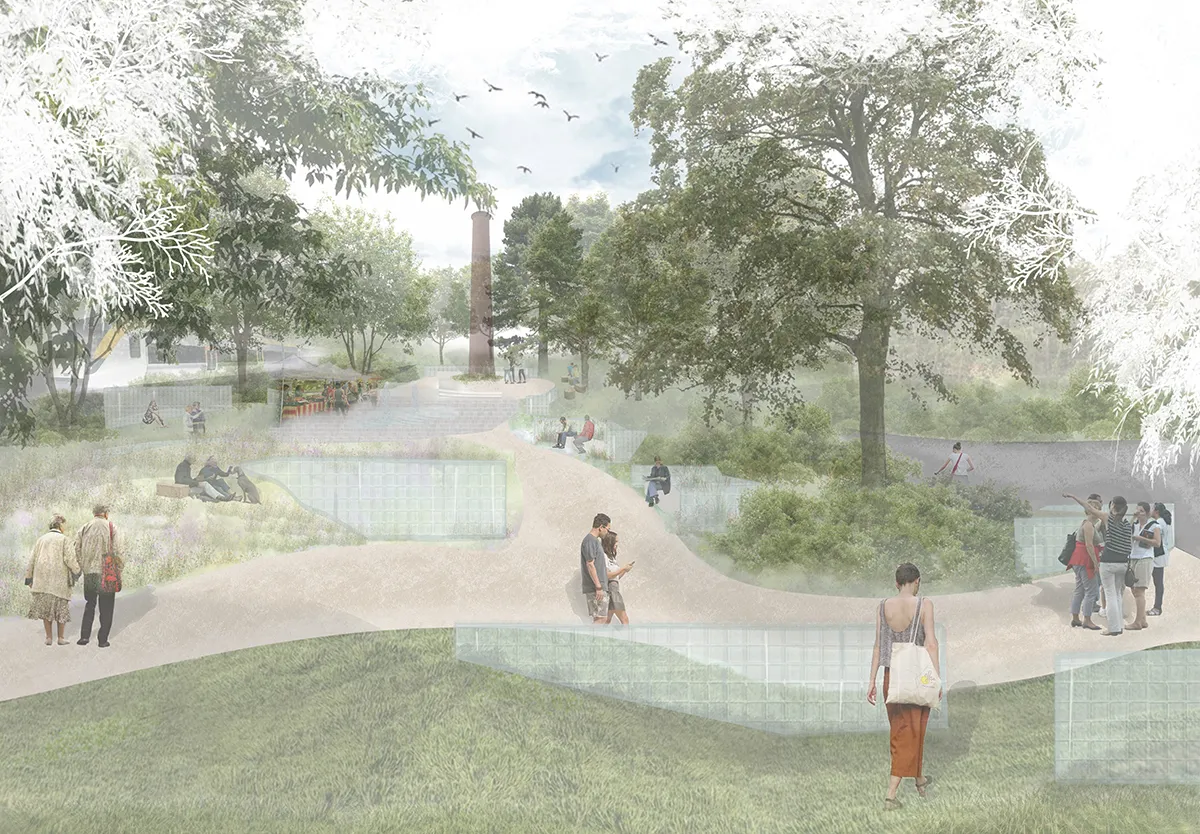
The judges thought Eveline’s design responded well to a post-peak-car world where people no longer need to drive en masse to train stations. “By making nature Shipley’s waiting room, Eveline showcased how we can go about repurposing underused and redundant space in our towns and cities. Her response to the brief was thoughtful, contextual and well explained. And who wouldn’t benefit from a nature dose when travelling?”
Circular Attercliffe: Jacob’s idea was to use the circular economy to reinvigorate the high street of Attercliffe, an industrial suburb in northeast Sheffield. His submission brought the local authority operated recycling centre – situated out of town – into the centre, taking over car parks and the high street to create a lively economy based on repair and reuse.
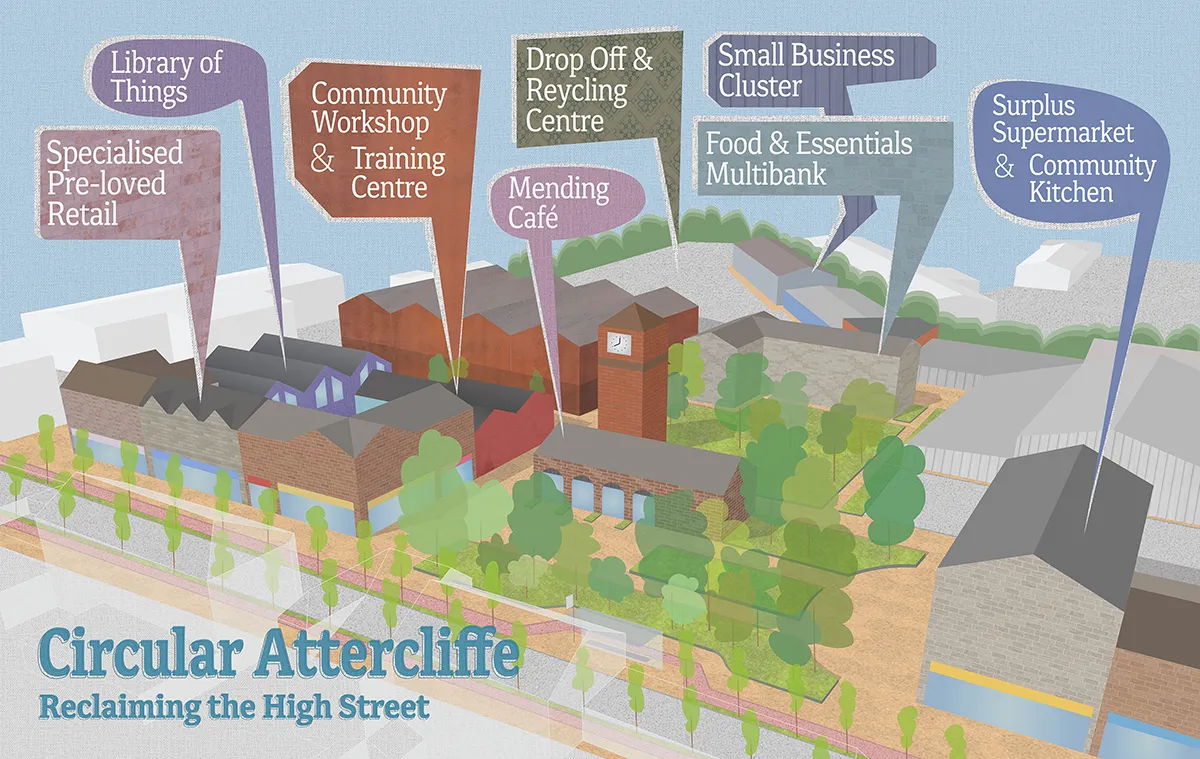
Jacob’s regenerative concept addressed key issues such as deprivation and loneliness by attracting people to the centre of Attercliffe to use the drop-off recycling centre and a new social network, including a Library of Things, pre-loved retail, a mending café, food and essentials multi-bank, surplus supermarket and community kitchen.
The judges thought Jacob’s entry had a clear graphic style and narrative. “By pitching at a strategic level, Jacob set a broad framework for change. His submission was grounded in the local context, history and need, which was exactly what we were looking for.”
Well done to all the winners and a big thank you to all those who entered.