
Winner of the 2026 WLA Awards – Award of Excellence in the Built Large Public Space category
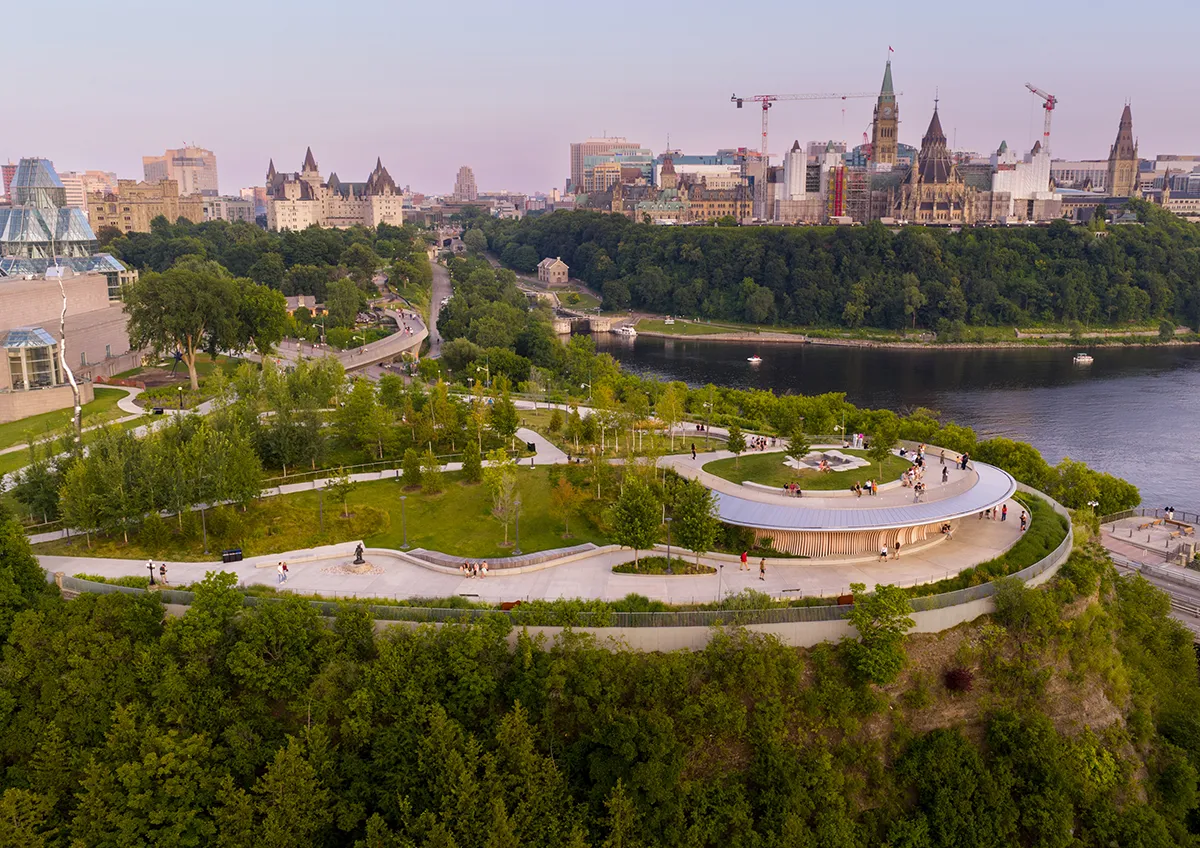
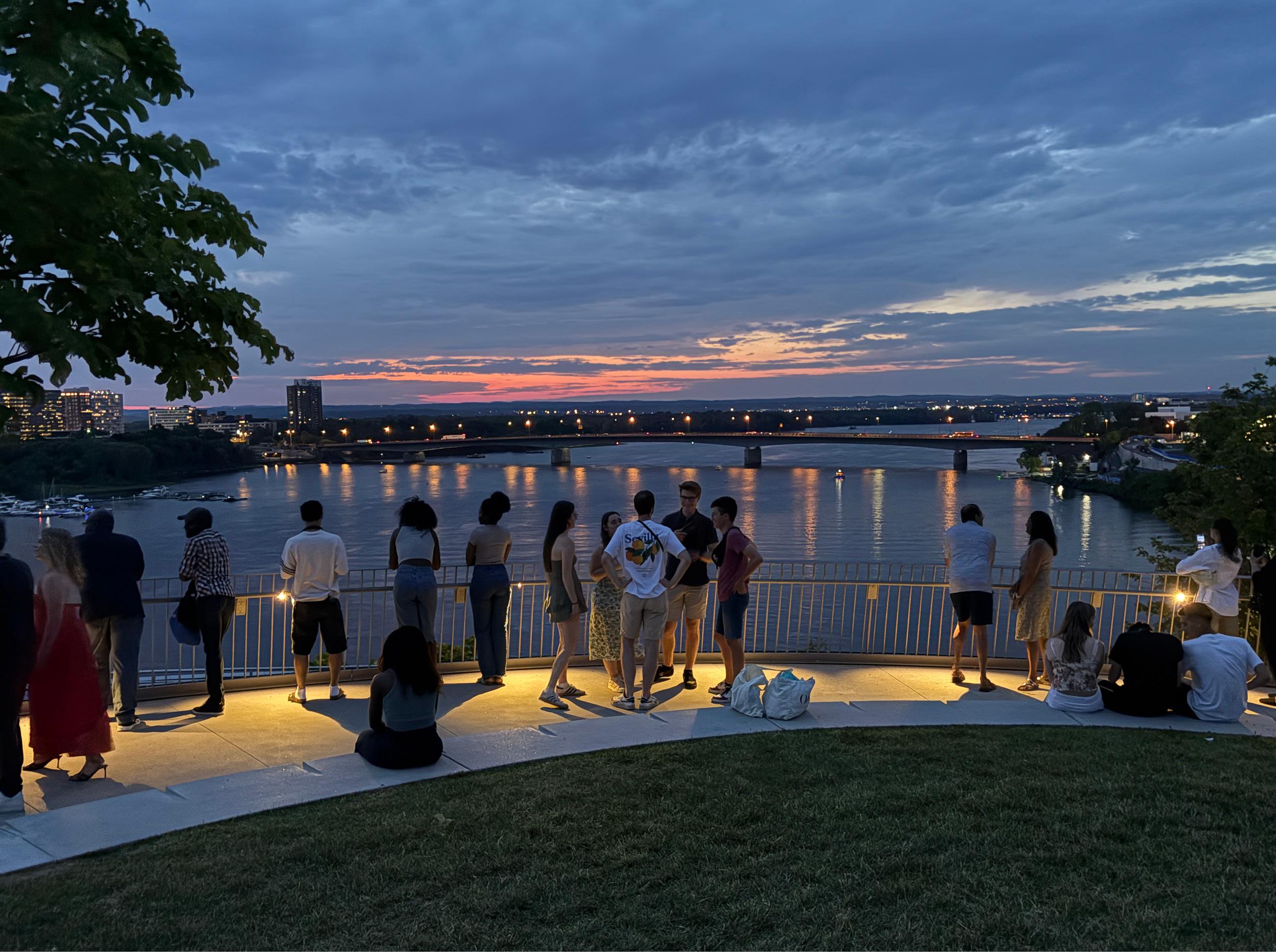
Kiweki Point is a new civic landscape in Canada’s capital, near Parliament on a formerly inaccessible promontory overlooking the Kichi Zibi (Ottawa River). The project reimagines a space long dominated by a colonial monument as an inclusive, ecologically rich public landscape that reconnects visitors to the river and reveals multiple stories of the land.
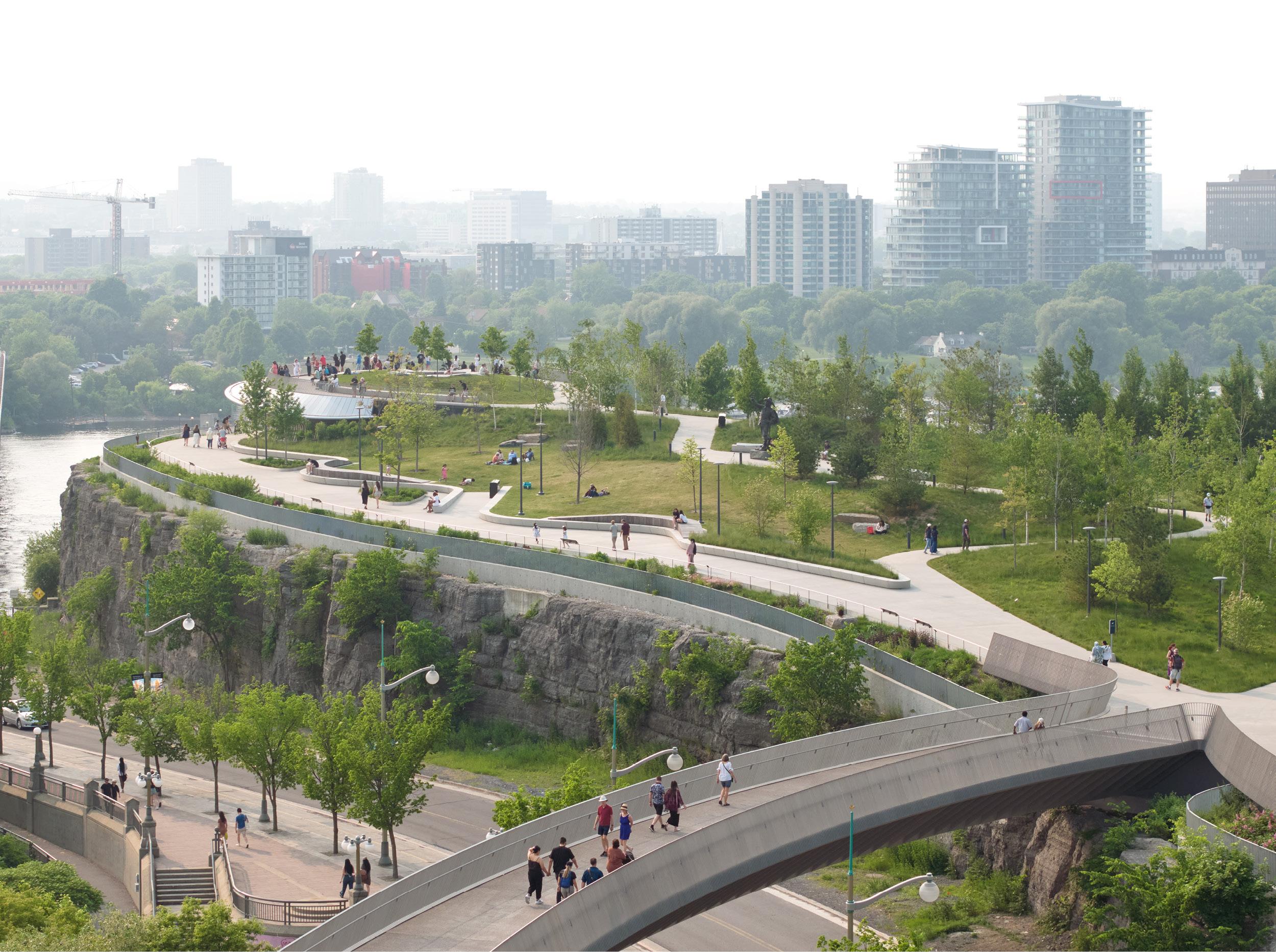
Previously known under a different name, the site offers panoramic views yet remained largely underused for over two decades. A steep, vehicle-oriented entrance encouraged unsafe crossings and severed the park from Ottawa’s public space network. At its centre, a controversial monument to Samuel de Champlain asserted a singular narrative, visually dominating the lawn and river valley. Until the mid-90s, another statue called Kichi Zibi Innini (Anishinaabe Scout) was placed at the monument’s feet.
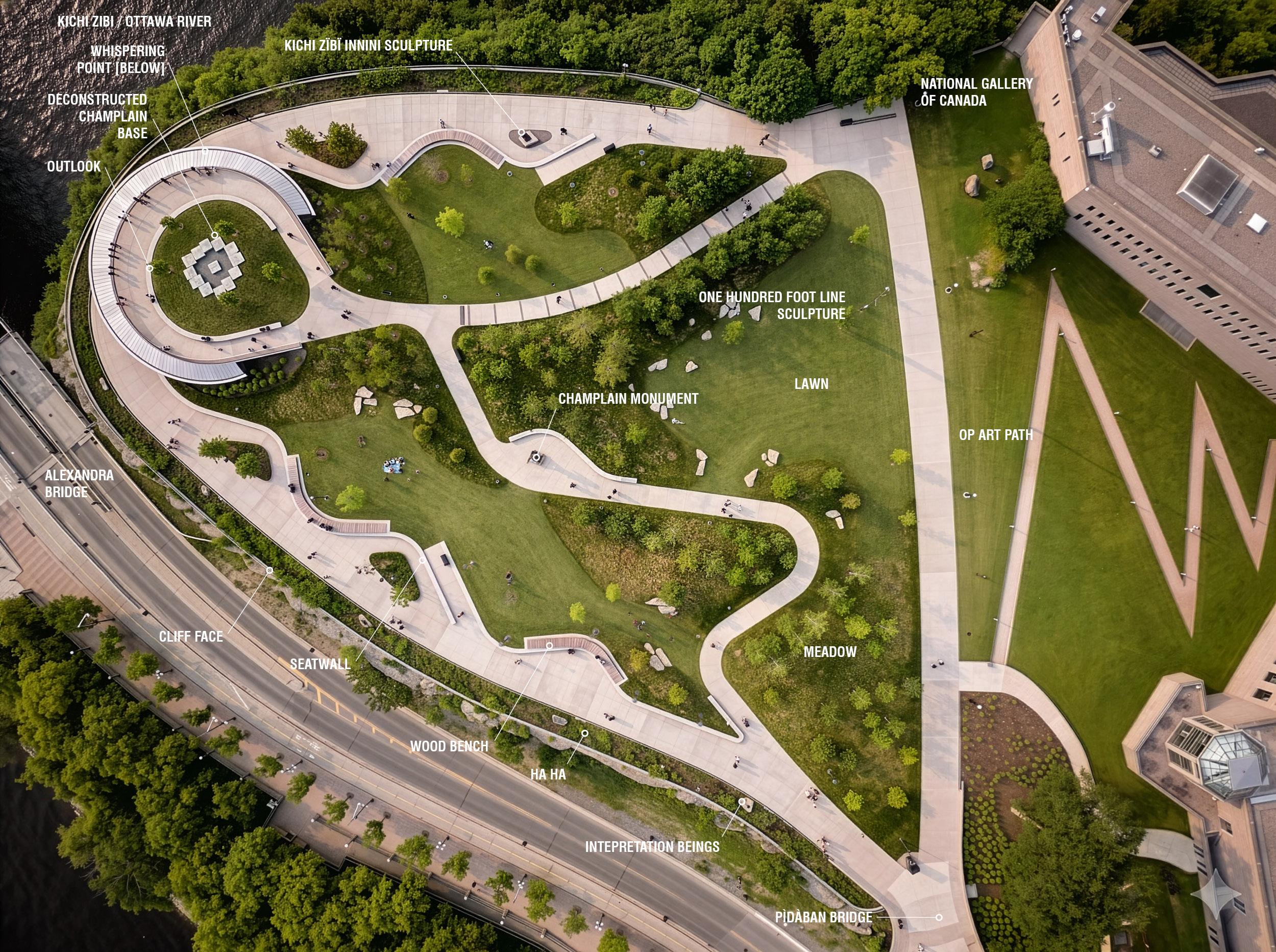
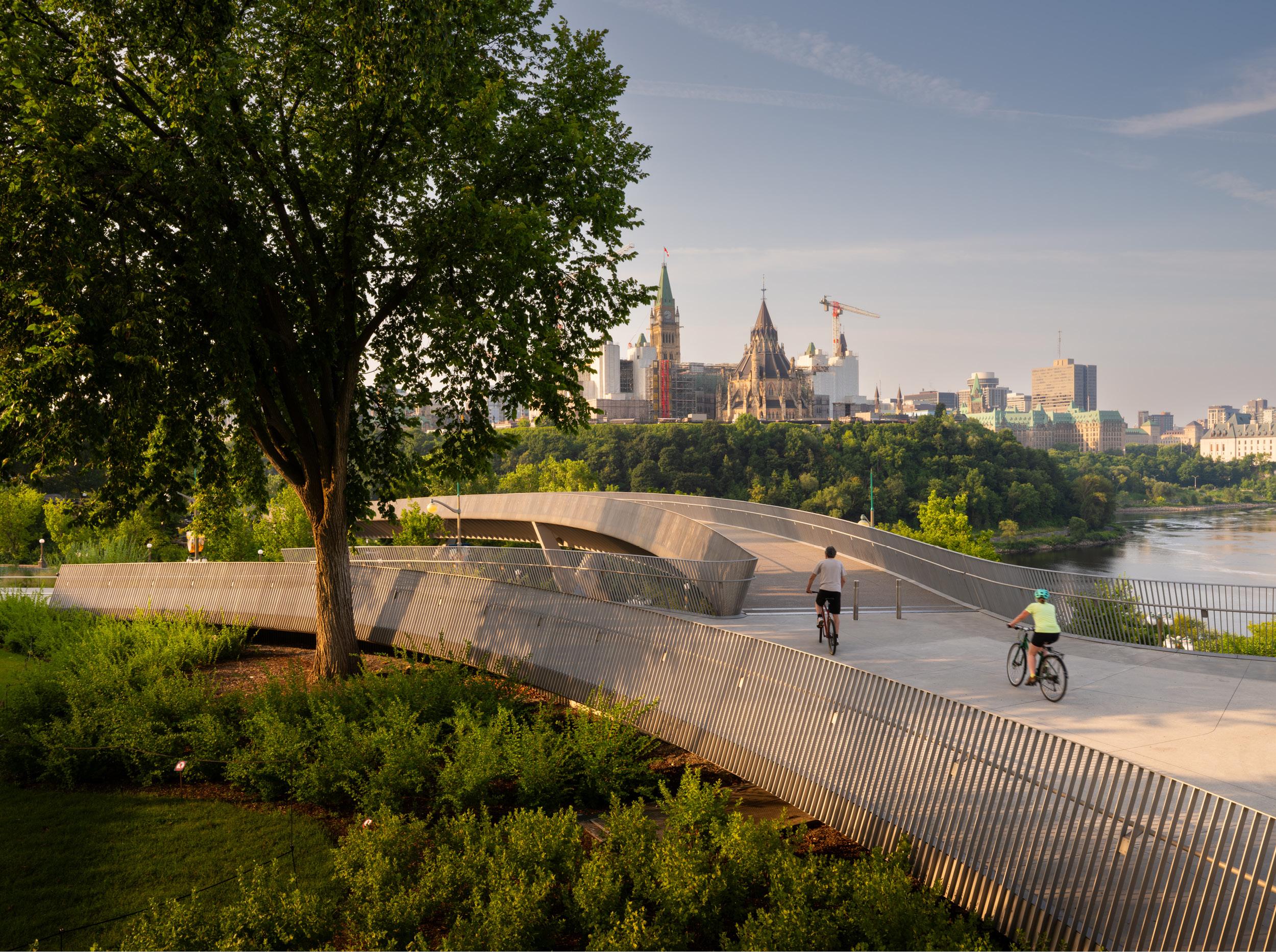
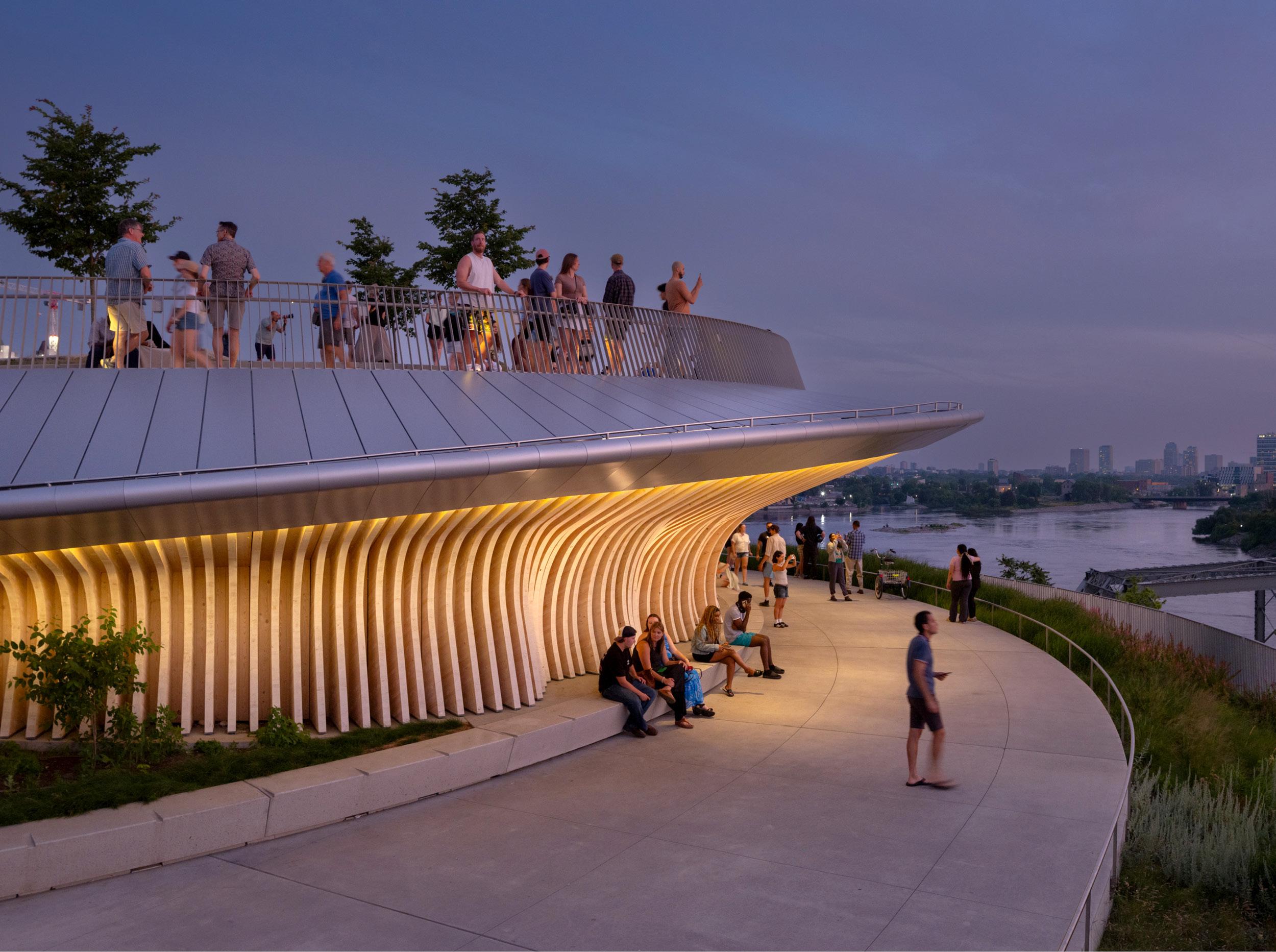
In response to these challenges, this park strengthens Ottawa’s social and environmental fabric through close collaboration with Indigenous communities. Designed for year-round use, the park enhances biodiversity, manages stormwater, and reduces operational carbon through low-maintenance, drought-tolerant planting. A new bridge establishes a critical pedestrian and cycling link to the regional open space network while navigating complex cliff conditions. At the promontory’s edge, a sculptural pavilion of Alaskan Yellow Cedar offers shelter and orients visitors toward the river.
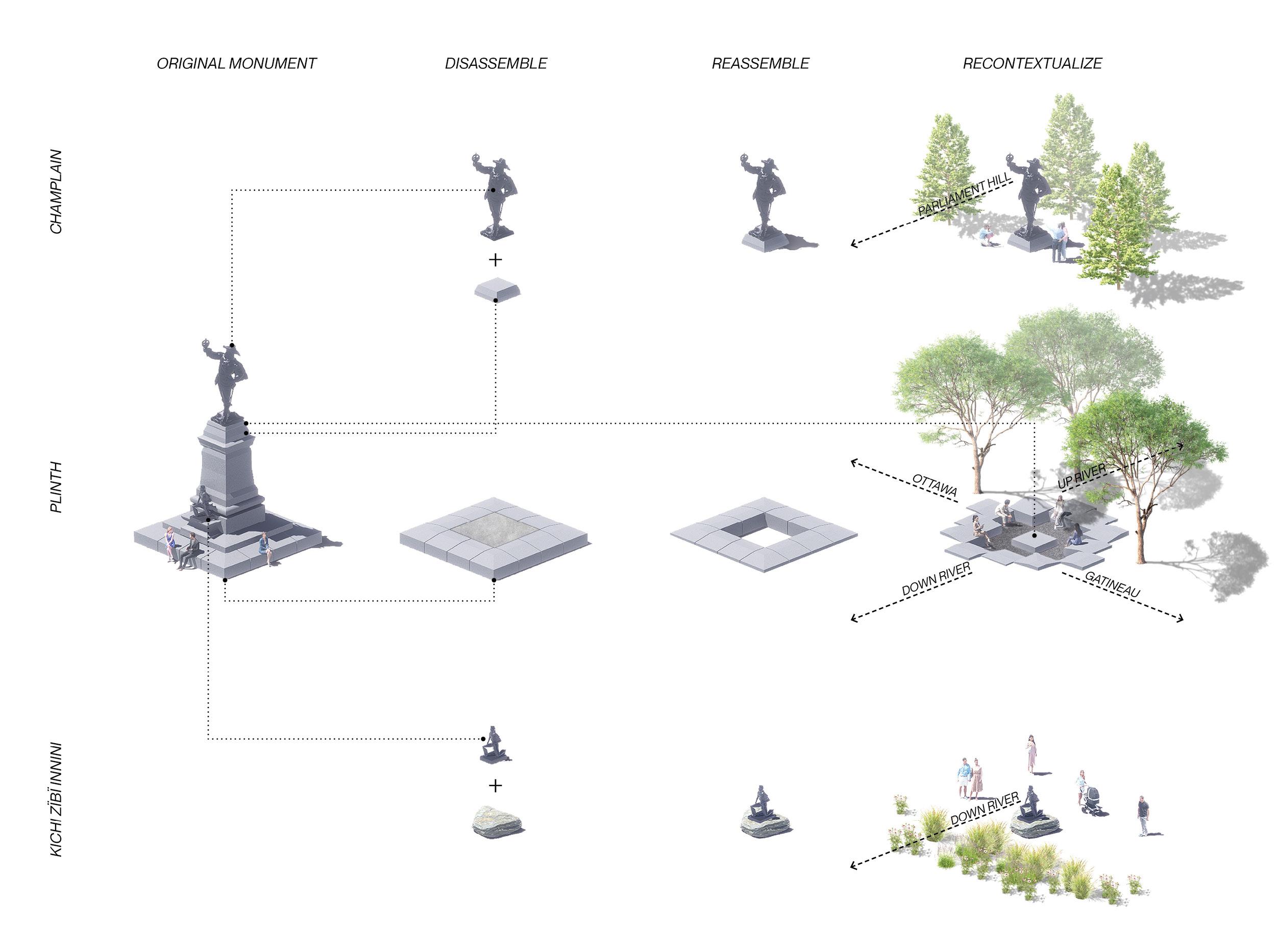
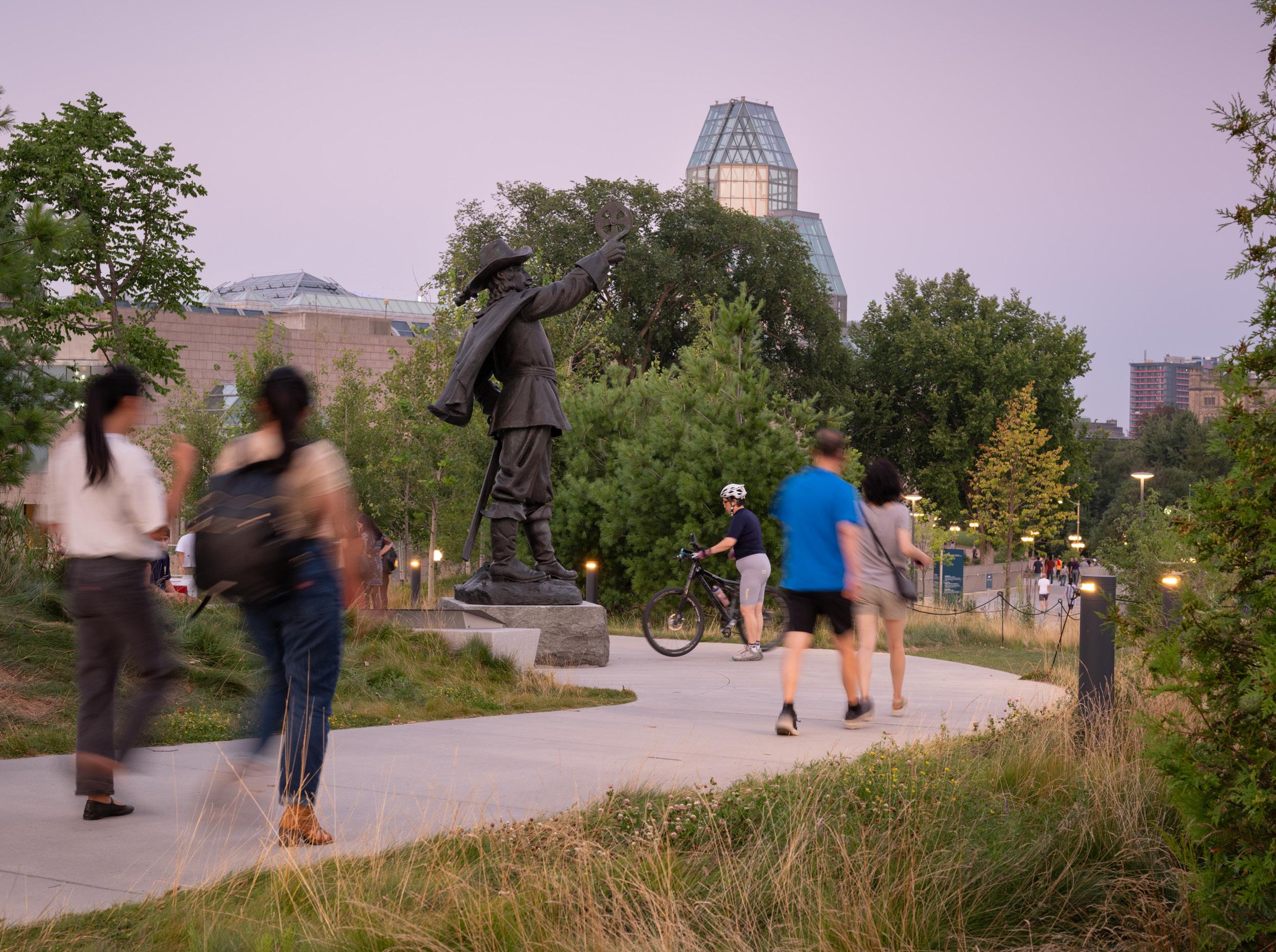
Collaboration with the Algonquins of Pikwakanagan and Kitigan Zibi Anishinabeg informed multiple layers of the design, including a new interpretive framework rooted in Algonquin perspectives. This engagement led to the renaming of the site and the bridge, and to the recontextualization of the monuments. In consultation with Indigenous communities, the Kichi Zibi Innini (Anishinaabe Scout) statue was relocated to a new site within the park. The Champlain monument was relocated to a white pine grove, its placement informed by diary accounts of Champlain’s first visit to this region, reducing its visual dominance. Its granite plinth was reused as seating for reflection and gathering.
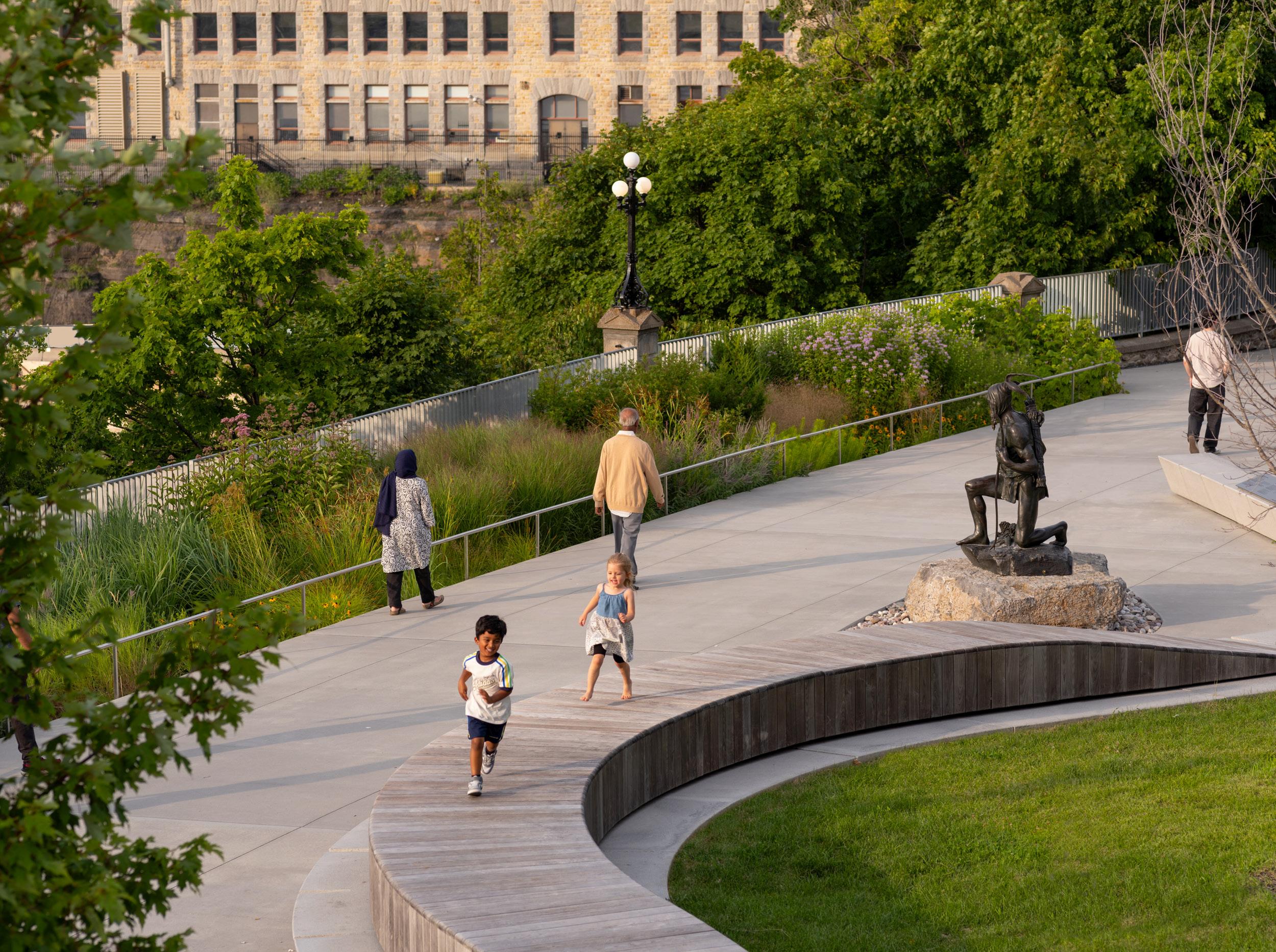
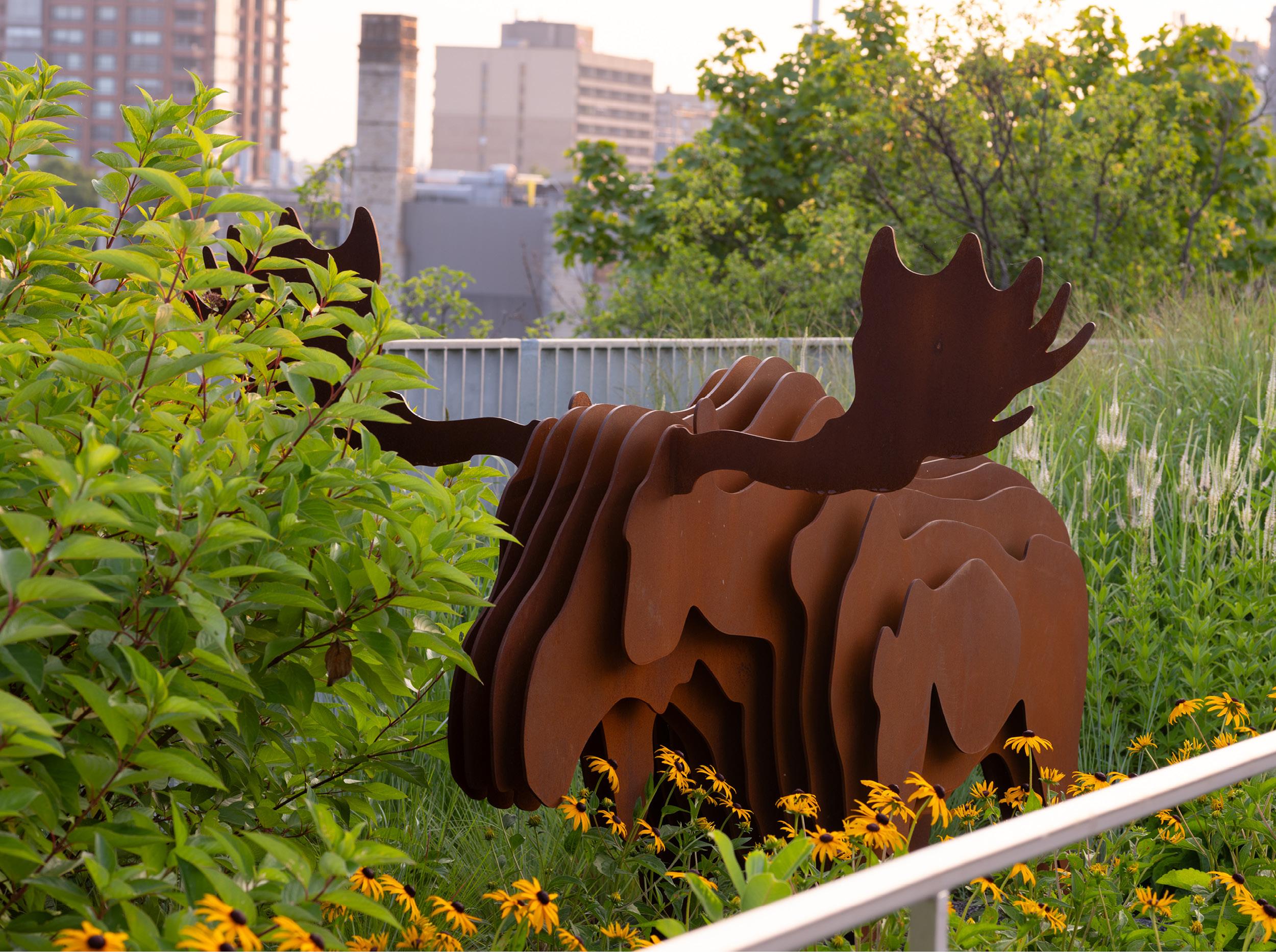
Ottawa’s horticultural legacy informed a resilient planting strategy blending ecological performance with cultural reference. A recessed ha-ha dissolves the park perimeter and conceals safety barriers, providing uninterrupted river views. Along this edge, a 1,200 m² linear garden of nearly 9,000 native and nativar pollinator plants softens the escarpment. Seven river-associated creatures, selected in consultation with Algonquin communities, are embedded in the planting and paired with trilingual interpretive panels illustrated by Algonquin artist John Tenasco.
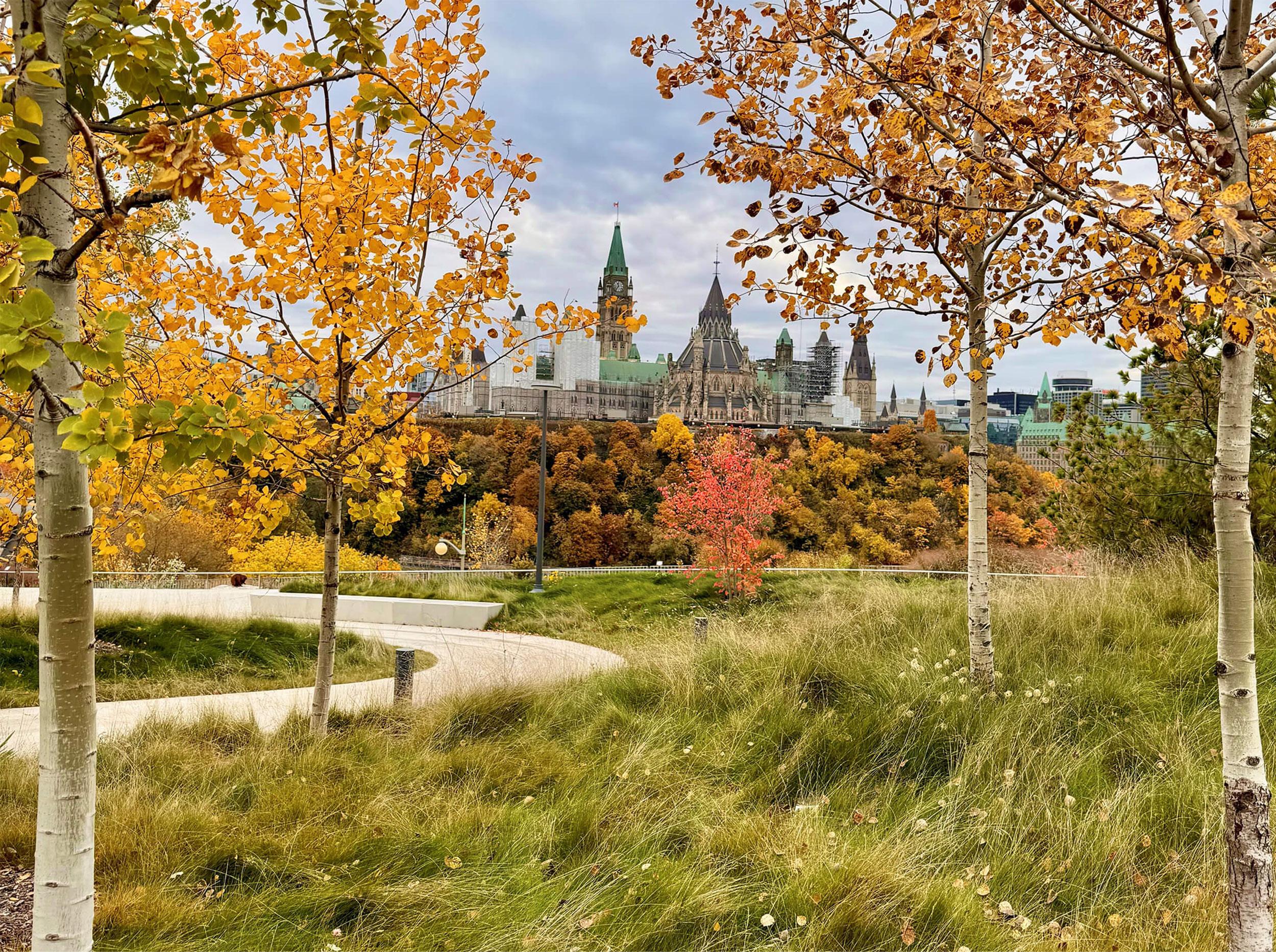
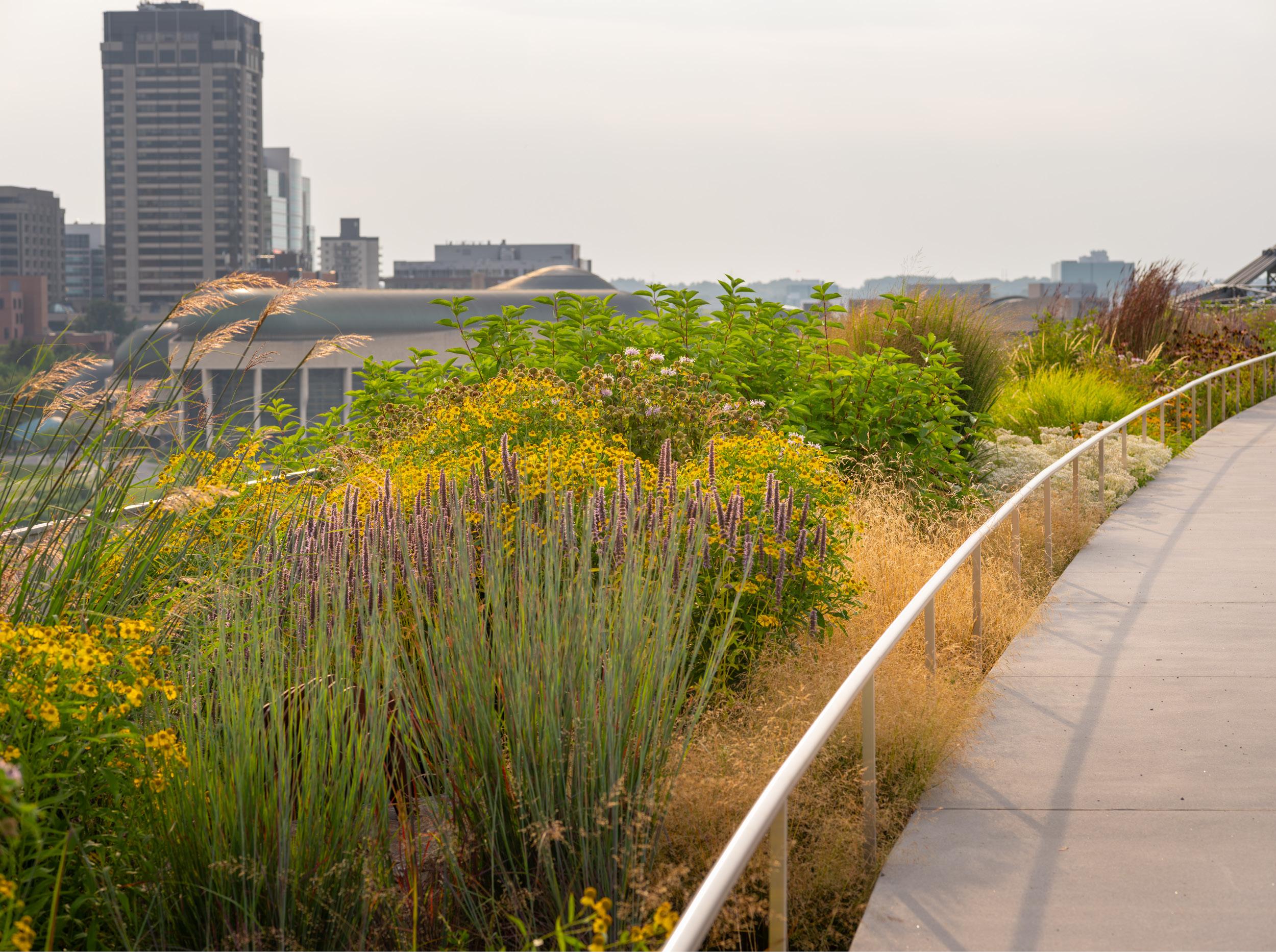
Within the park, 264 metres of seating define open meadows planted with drought-tolerant fescue requiring no irrigation and a single annual cut. The landscape includes 150 new trees, 2,100 native perennials, and 13,500 spring bulbs, providing habitat, shade, and seasonal change. Tree placement was inspired by psithurism, the sound of wind through leaves. Circulation and infrastructure preserve two 80-year-old white elms at the park gateway. This project demonstrates how landscape architecture can reconcile history, elevate community voices, and operate in an ecologically sound manner while reframing national narratives, inviting all who visit to return to the river and the land.
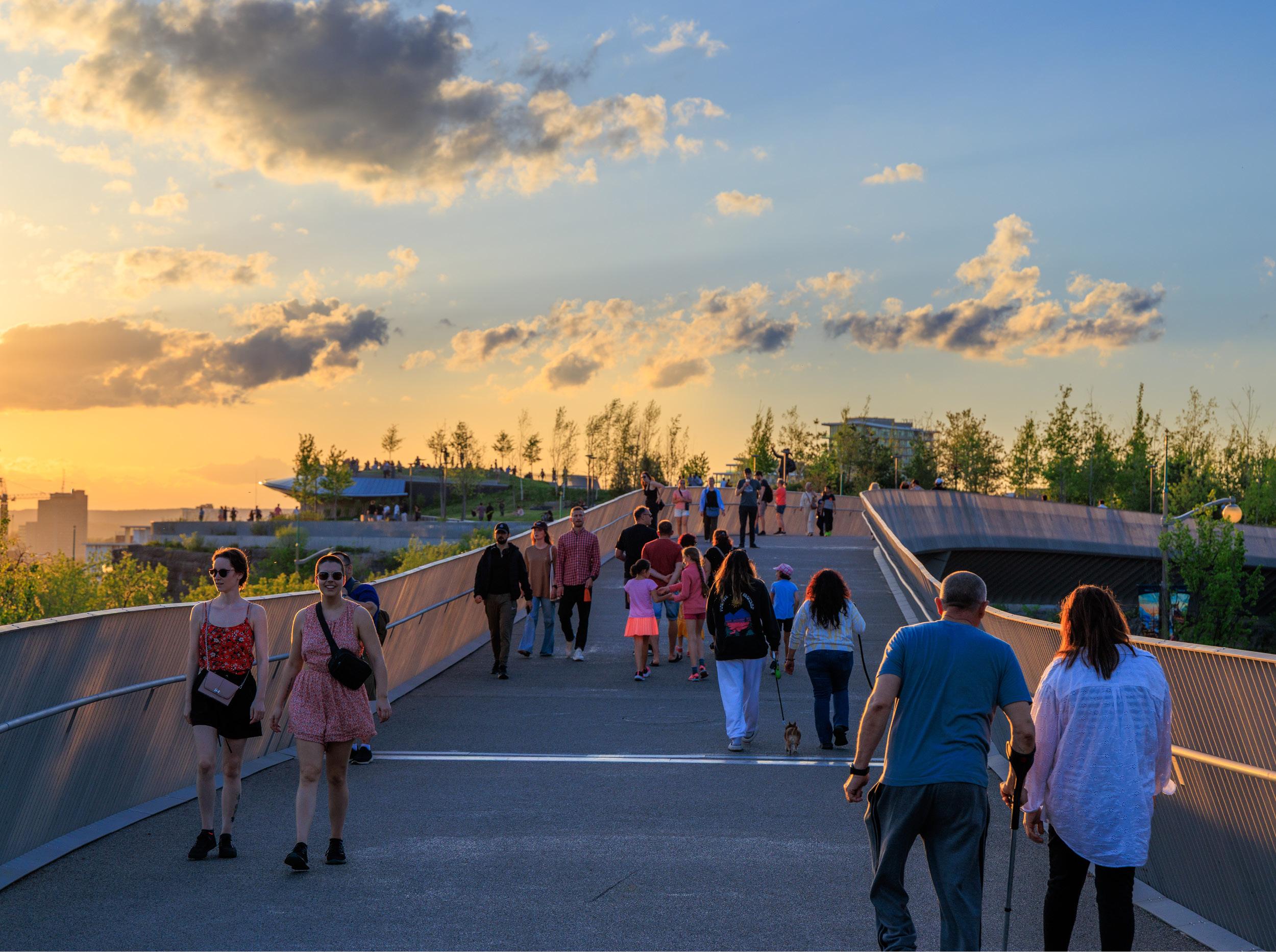
Kiweki Point: Returning to One’s Homeland
Lead Designer & Landscape Architect: Janet Rosenberg & Studio (JRS)
Architect: Patkau Architects
Structural Engineer: Blackwell Structural Engineers
Heritage: ERA Architects
Lighting: MCLD
Engineering: EXP
Transportation: CIMA
Design Assist Fabricator: Spearhead
Client: National Capital Commission (NCC)
Image Credits: Younes Bounhar – doublespace; Jeff McNeill Photography; Janet Rosenberg & Studio (JRS)